
Many Flowers in One
A marigold is hundreds of tiny flowers packed into one head. Flowers grow in clusters of many shapes, which the books call inflorescences.
Many plants carry their flowers in a cluster, which botanists call an inflorescence. In a marigold or a daisy the cluster is packed so tight that it looks like one flower. This head, a capitulum, holds many tiny flowers on one base. The ones in the middle, the disk flowers, each have their own stamens and stigma. The ones around the edge, the ray flowers, each carry one long strap of petals joined together. Other clusters are spikes, with many flowers along one stalk.
See it in our garden
- Brown-Eyed Coneflower: when it flowers, golden ray flowers around a dark brown center packed with disk flowers.
- Bush Daisy: when it flowers, each yellow daisy is a ring of ray flowers around a center of disk flowers.
- Marigold (Sayapatri): when it flowers, each pompom is a head of many small flowers, not one flower with a hundred petals.
- Plumed Cockscomb: when it flowers, each feathery plume is a cluster of many tiny flowers.
- Tuberose: when it flowers, its white flowers open from the bottom of the spike upward.
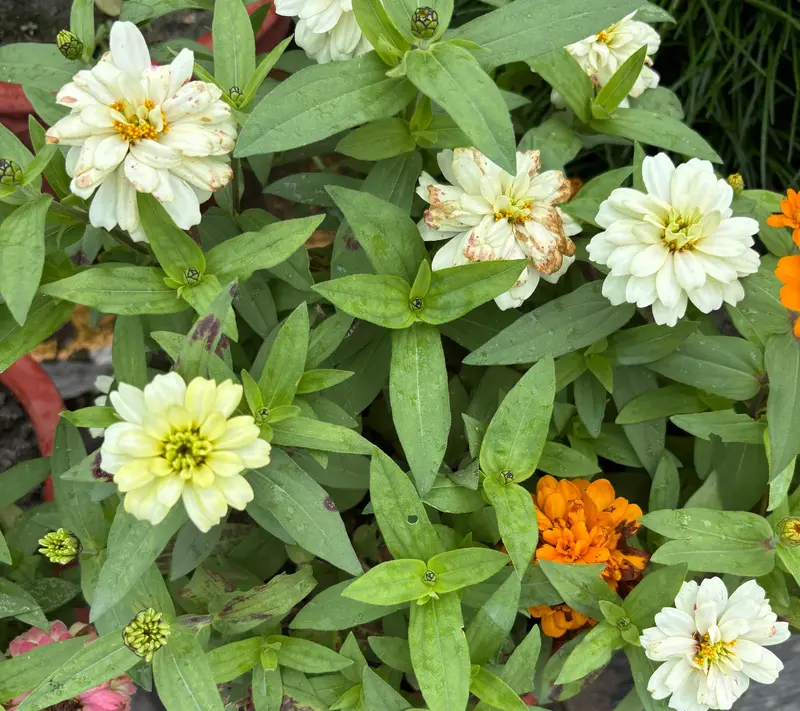
Zinnia
सुपारी / पार्वती फूल
Zinnia elegans
Each flower head is a capitulum: many small flowers on one base, ray flowers with a long petal around the edge and tiny disk flowers in the middle. A fast-growing flower from Mexico; zinnias have even been grown and flowered on the International Space Station.
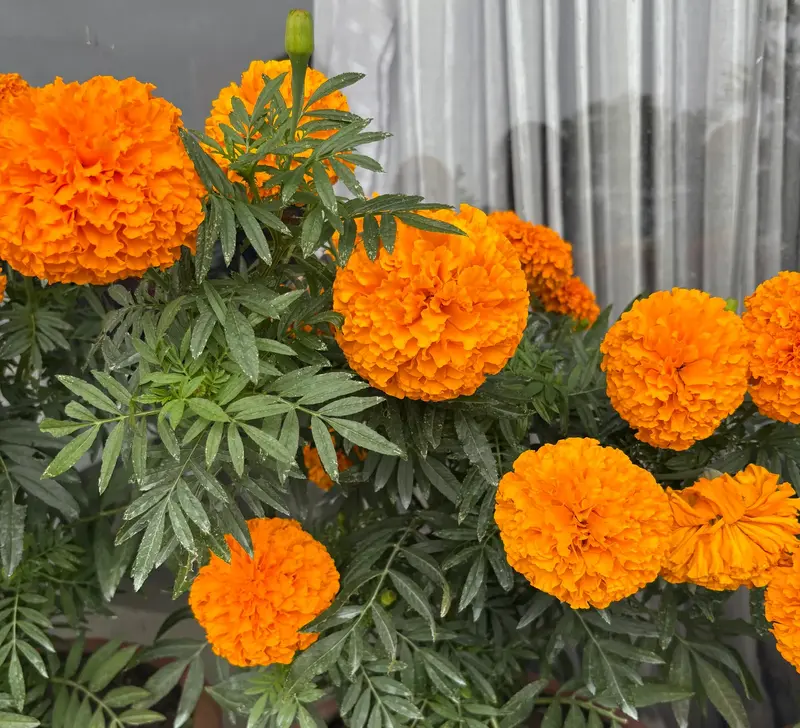
Marigold (Sayapatri)
सयपत्री फूल
Tagetes erecta
Sayapatri means “a hundred petals,” but each pompom is really a capitulum, a head packed with many small flowers, each with its own stamens and stigma. In Nepal it is strung into garlands for Tihar.
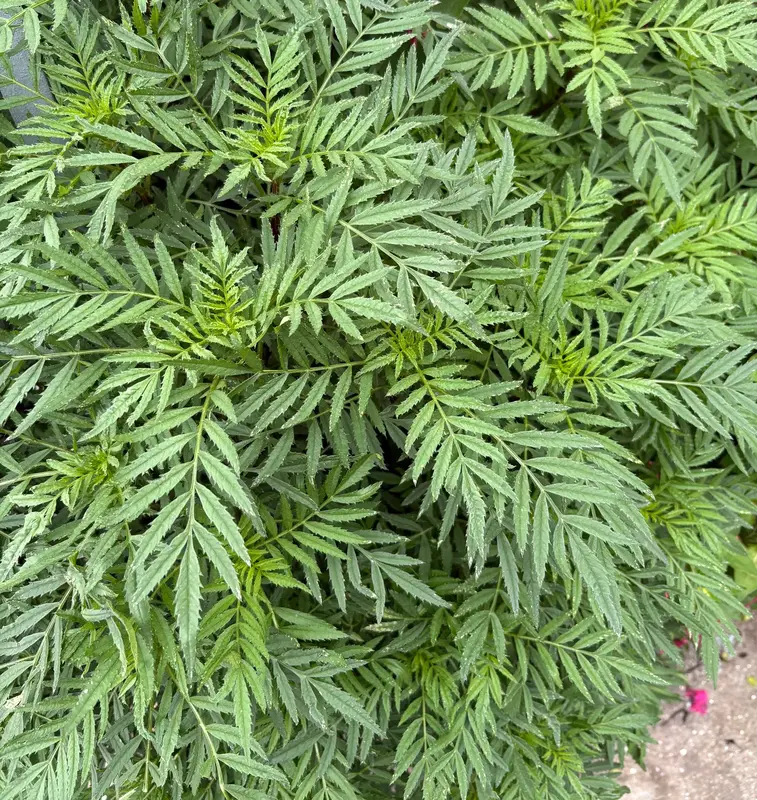
Signet Marigold
सानो सयपत्री
Tagetes tenuifolia
Its single flowers show the head pattern clearly: a ring of ray flowers around a center of tiny disk flowers. A small marigold with lacy leaves and citrus-flavored petals.
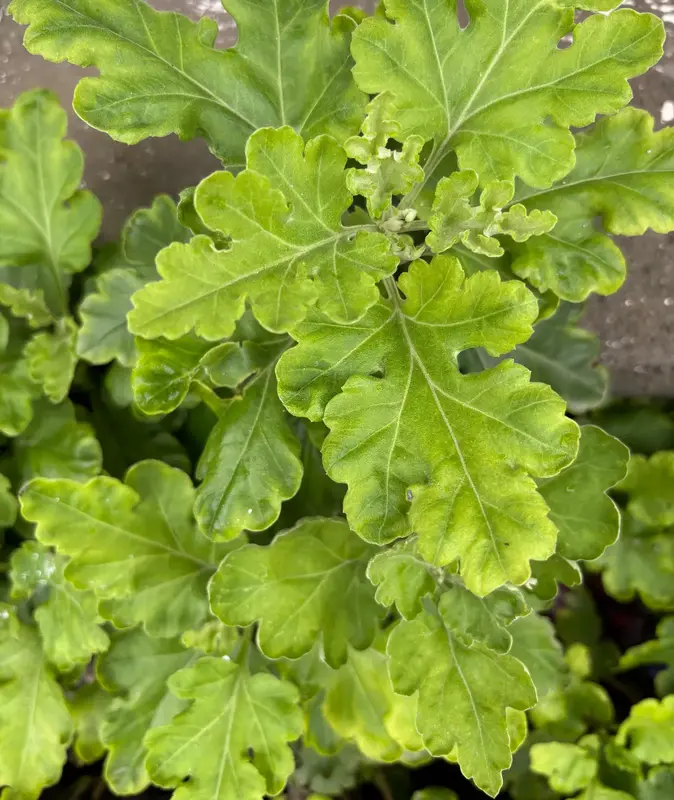
Chrysanthemum
गोदावरी फूल
Chrysanthemum morifolium
Bred in China for well over a thousand years into pompoms, spiders and buttons, every chrysanthemum is still a capitulum, a head of many tiny flowers.
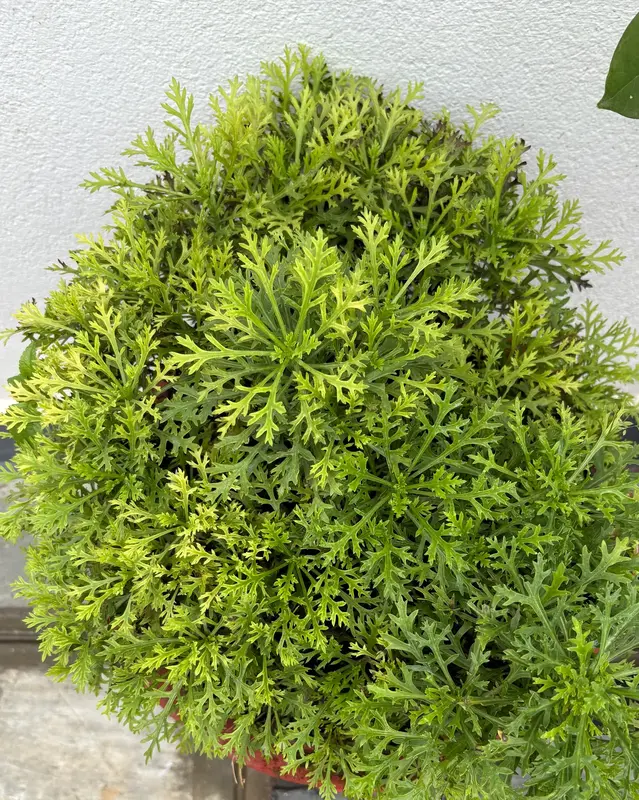
Paris Daisy
Argyranthemum frutescens
The white “petals” are ray flowers around the edge, and the yellow center is many disk flowers, each with its own pollen: one “daisy” is a whole cluster. It comes from the Canary Islands.
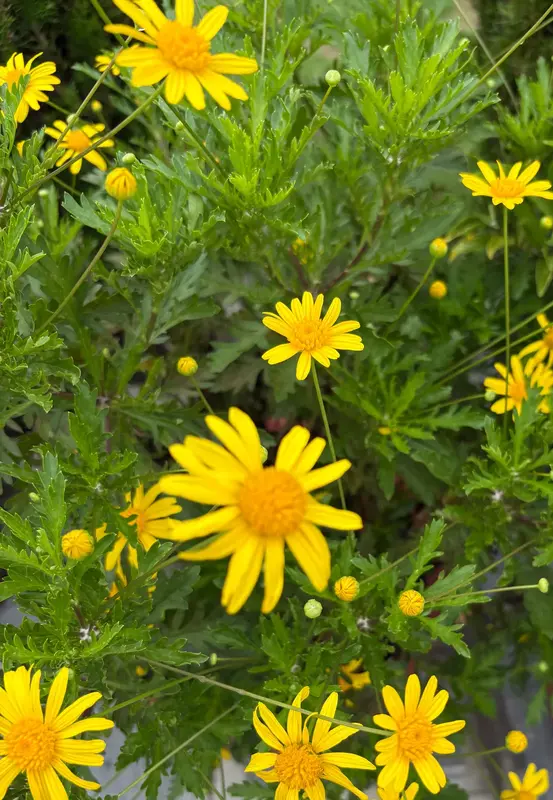
Bush Daisy
घाम गोदावरी
Euryops chrysanthemoides
A South African shrub that covers itself in yellow daisies for most of the year. Each daisy is a capitulum of many small flowers, a steady source of nectar for bees and butterflies.
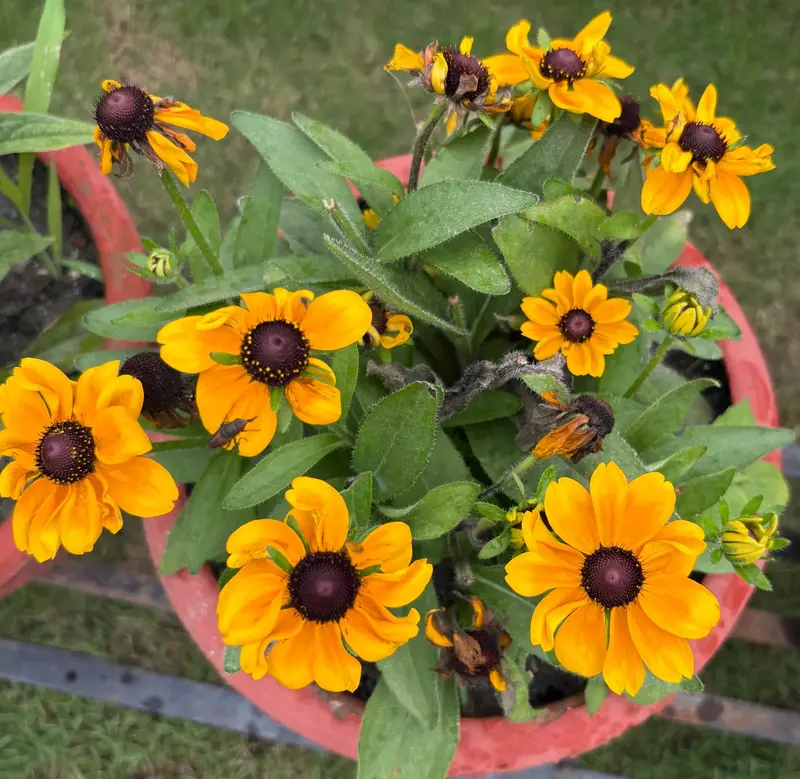
Brown-Eyed Coneflower
Rudbeckia triloba
Golden ray flowers around a dark brown “eye” made of tightly packed disk flowers: a capitulum. After flowering, birds pick the seeds out of the heads.
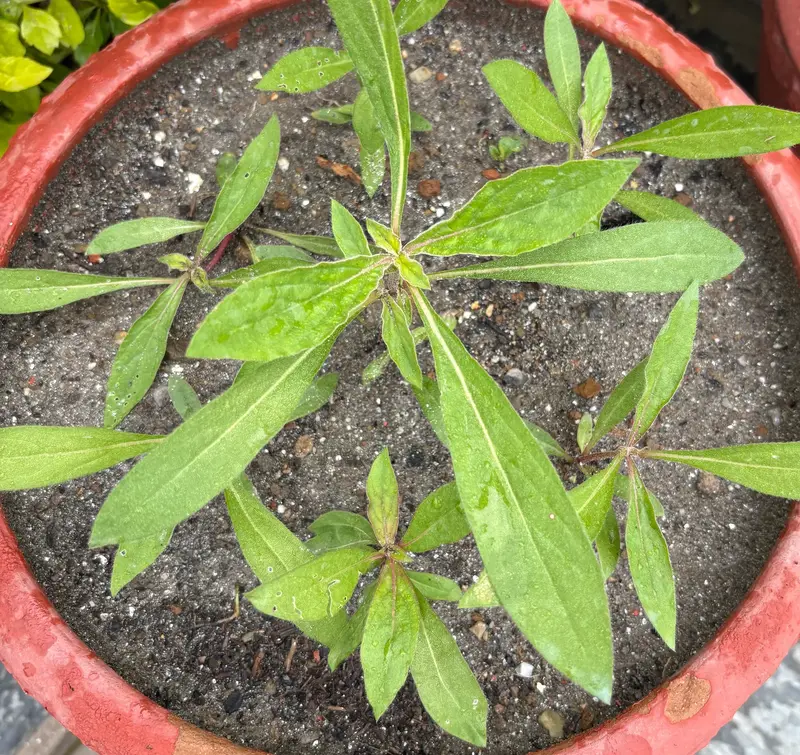
Globe Amaranth (Makhamali)
मखमली फूल
Gomphrena globosa
In Nepal this is makhamali, strung into garlands for Tihar. Each round “bead” is a head of tiny flowers wrapped in papery bracts that keep their color even when dried.
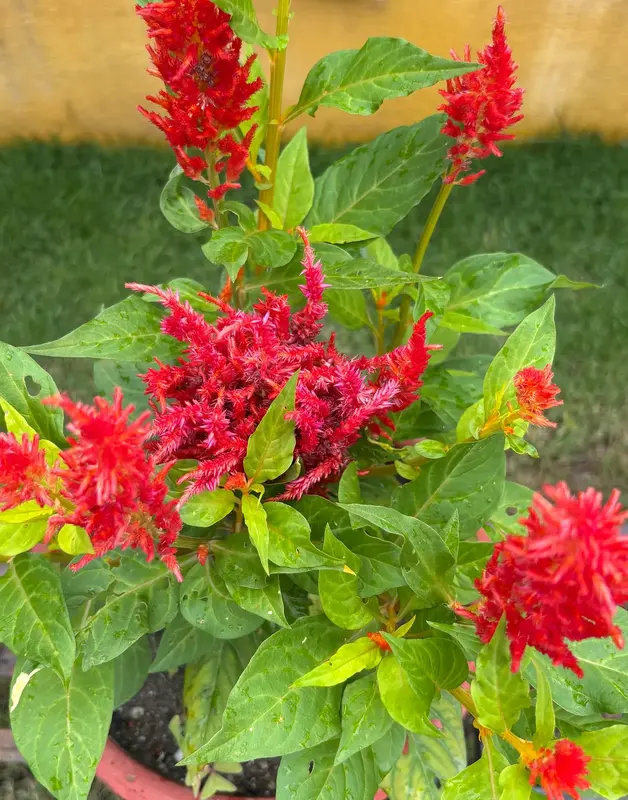
Plumed Cockscomb
चाया फुल
Celosia argentea var. plumosa
Each feathery plume is a cluster of hundreds of tiny flowers with papery parts that keep their color for weeks. It is a relative of amaranth and makhamali.
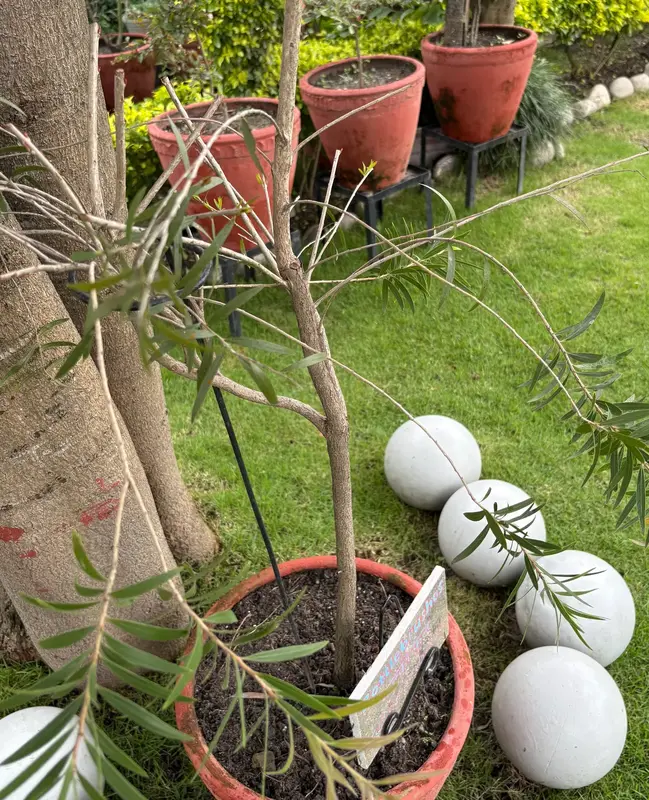
Bottlebrush
कल्की फूल
Callistemon sp.
Each “brush” is a spike, many small flowers along one stalk, and the bristles are their long red stamens. Birds pushing in for nectar get dusted with pollen. Look past the old brush: the stalk carries on growing leaves.
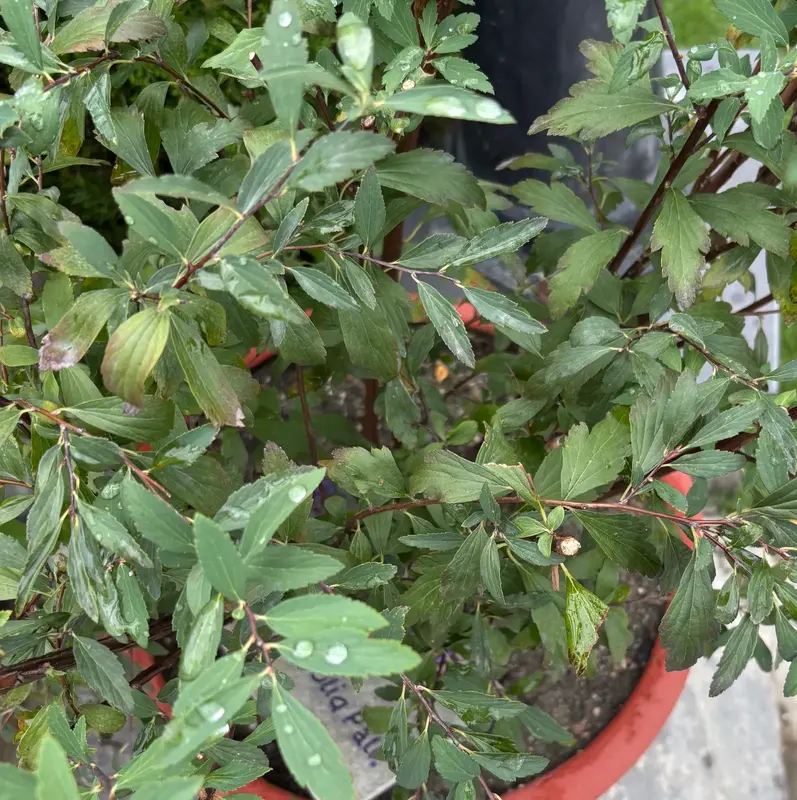
Spiraea
खरेटो
Spiraea sp.
In spring its arching branches are covered in flat-topped clusters of tiny white flowers, so many they look snowy, a feast for bees. It is in the rose family.
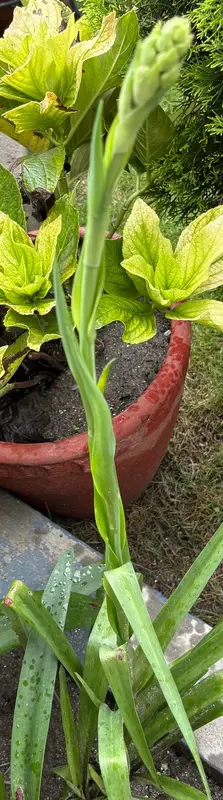
Tuberose
रजनीगन्धा
Polianthes tuberosa
Its white flowers open from the bottom of the stalk upward, a spike, and are among the most fragrant at night. Not a rose: the name comes from tuberosa, Latin for its swollen, tuber-like roots.
More in The Plant Body
The garden is alive and changes through the year. Some plants flower, fruit, or rest only in certain seasons, so what you see depends on when you visit.
See them for yourself
Every plant here grows on our campus in Bhaktapur. Walk the garden on your visit.
Book a Visit