
Leaf Shapes
A leaf can be a single blade, cut into deep lobes, or split into many separate leaflets. Leaf shape is often a botanist’s first clue to what a plant is.
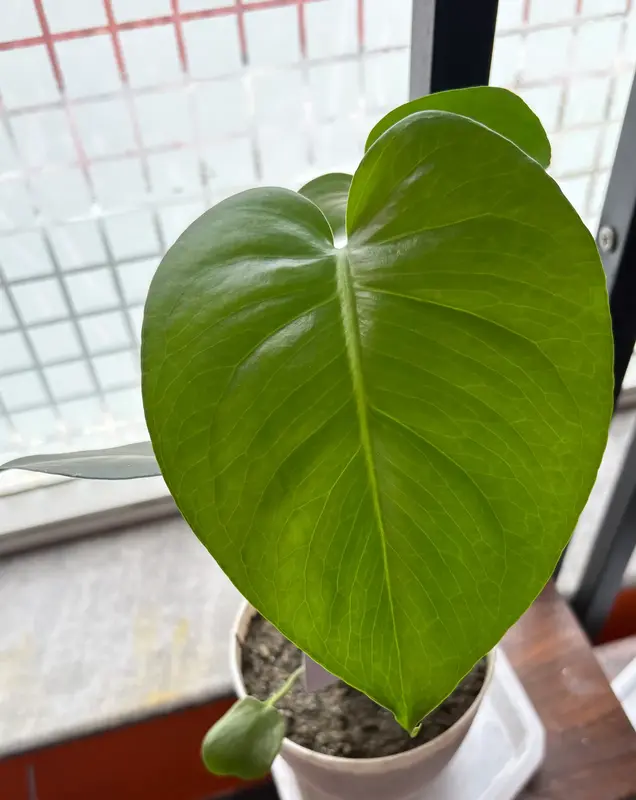
Monstera
Monstera deliciosa
Young monstera leaves are whole; as the plant climbs, its leaves grow larger, split, and fill with holes. Its ripe fruit is edible, which gives it the name deliciosa.
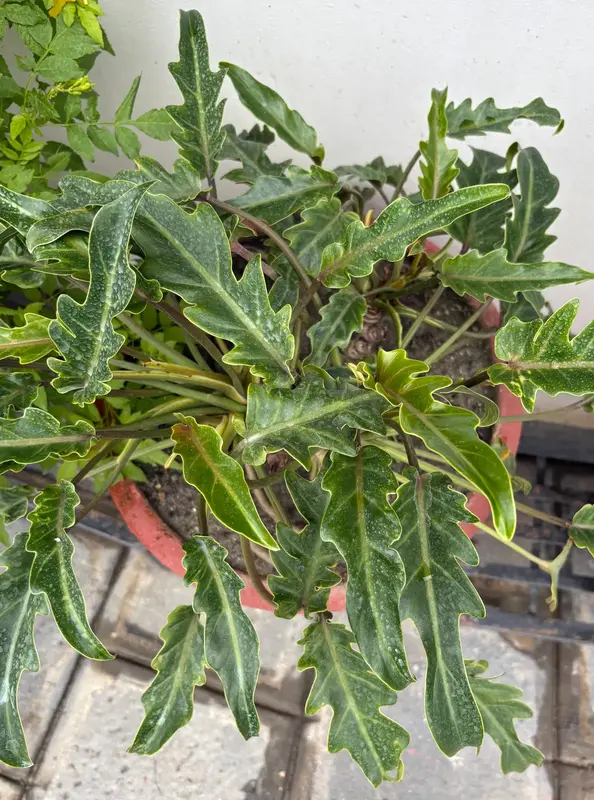
Philodendron Xanadu
Thaumatophyllum xanadu
Each leaf is cut into deep, wavy lobes. Unlike most philodendrons, it forms a neat mound instead of climbing.
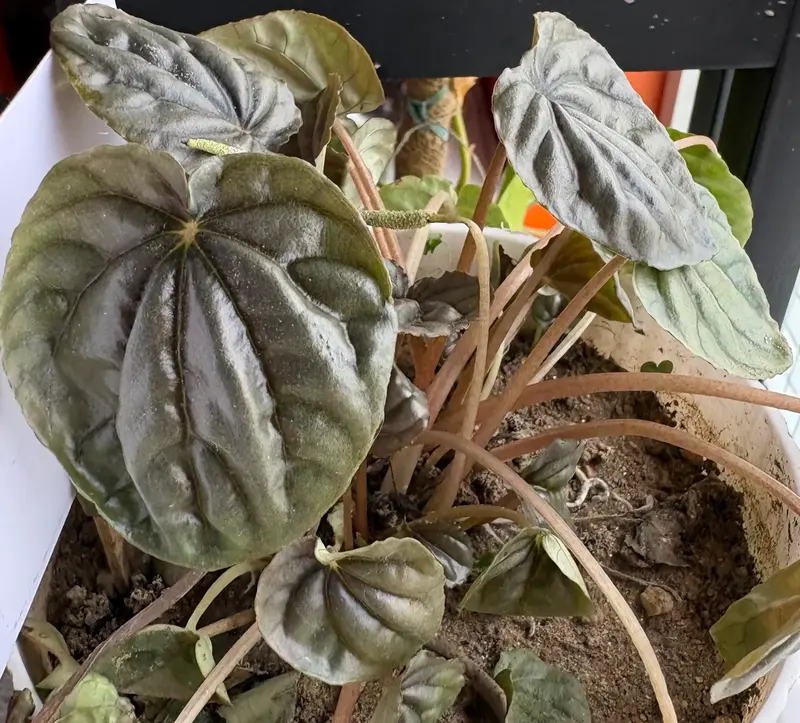
Ripple Peperomia
Peperomia caperata
Its heart-shaped leaves are deeply ridged, like corrugated paper, and its flowers are thin white spikes. It is a relative of black pepper.
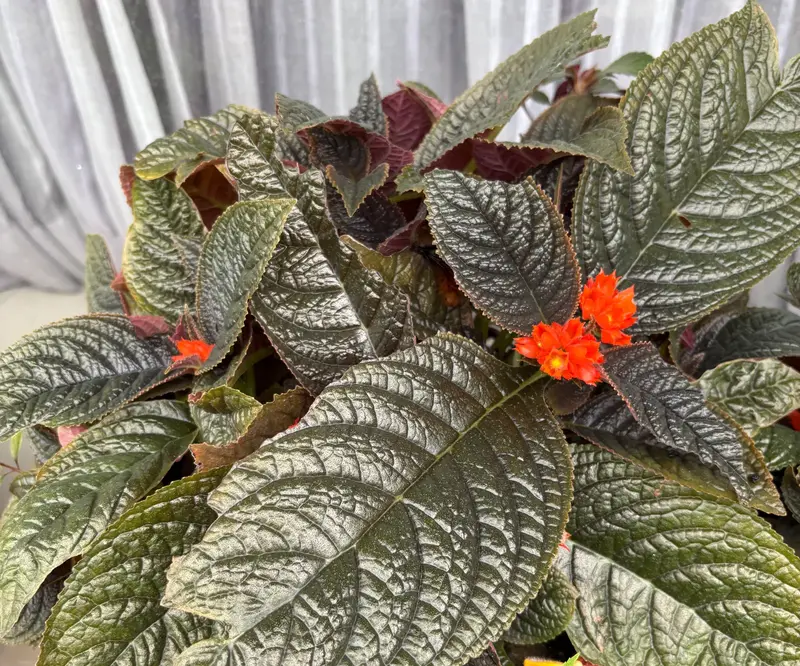
Flowering now
Sunset Bells
ताम्रपत्र
Chrysothemis pulchella
Its leaves are deeply quilted and tinted bronze, and its small yellow flowers sit in bright orange cups.
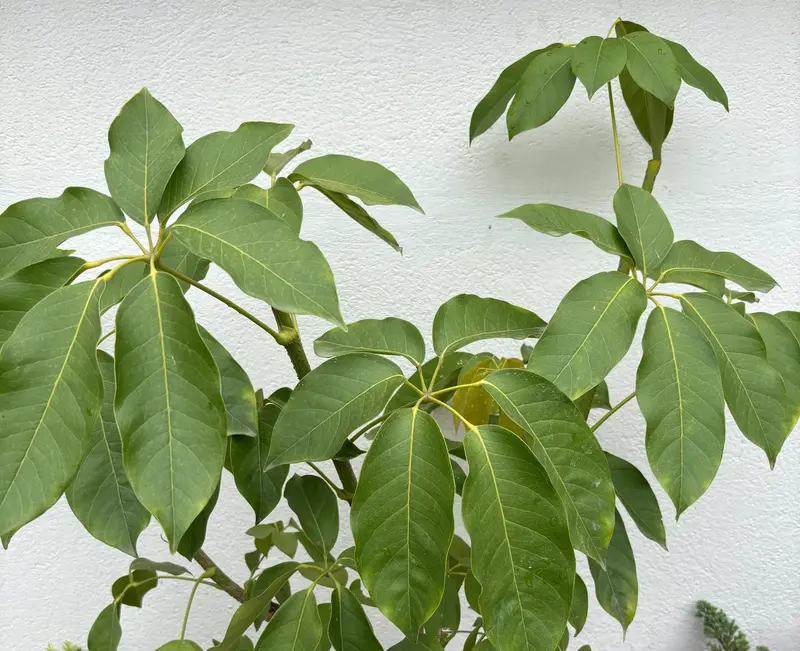
Umbrella Plant
Schefflera arboricola
Each leaf is made of seven to nine leaflets that spread out from one point, like the ribs of an umbrella.
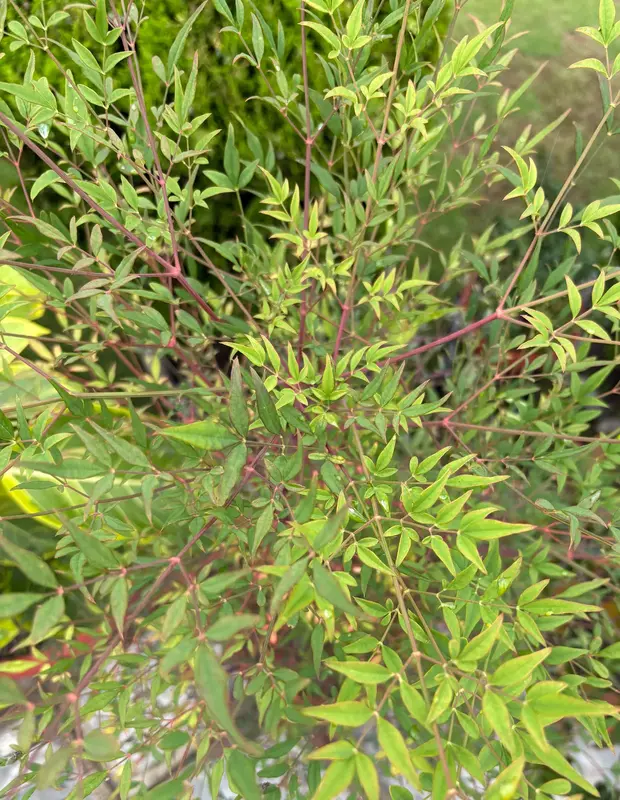
Heavenly Bamboo
Nandina domestica
Not a bamboo: what looks like a leafy branch is really one leaf, divided two or three times into small leaflets. New leaves come out red.
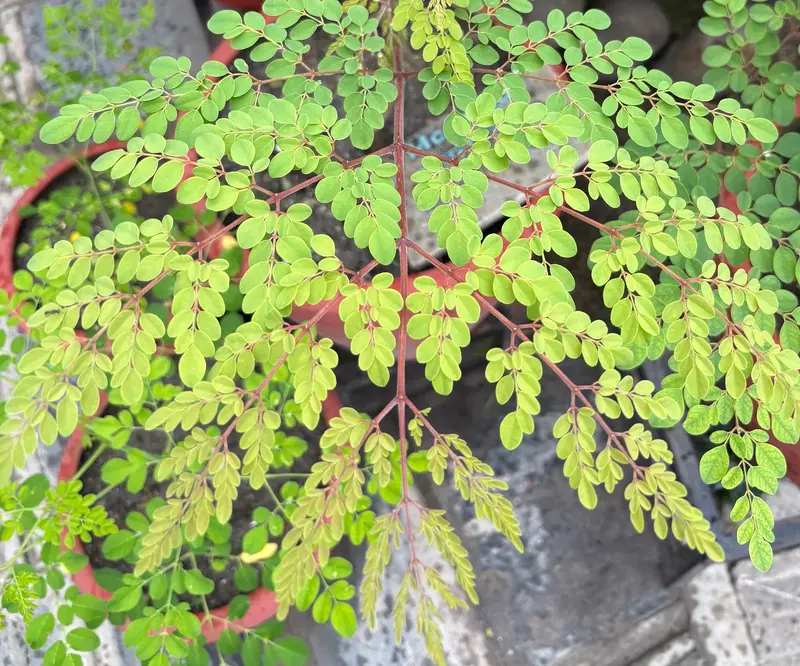
Moringa (Sajiwan)
शीतल चिनी
Moringa oleifera
Each leaf is divided two or three times into dozens of small oval leaflets. In Nepal it is sajiwan, and its leaves and long pods, called drumsticks, are cooked and eaten.
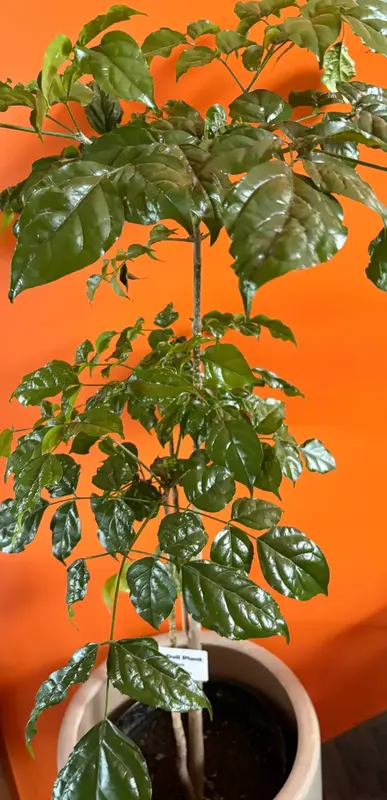
China Doll
Radermachera sinica
Each big leaf is divided, and divided again, into many small glossy leaflets, so one leaf can look like a whole branch. It is a tree from southern China.
More in Looks, Scents, and Surprises
The garden is alive and changes through the year. Some plants flower, fruit, or rest only in certain seasons, so what you see depends on when you visit.
See them for yourself
Every plant here grows on our campus in Bhaktapur. Walk the garden on your visit.
Book a Visit