
Flowers to Take Apart
Big, simple flowers where every part is easy to find: sepals, petals, stamens with their anthers, and the pistil with its stigma, style and ovary.
Most flowers have four parts in rings, from the outside in: the calyx of green sepals, which protect the bud, the corolla of colored petals, which attract insects and birds, the stamens, each an anther of pollen on a filament, and in the middle the pistil, with its stigma, style and ovary. After pollination and fertilization, the ovary grows into the fruit. In big, open flowers like these, every part is easy to find when they bloom.
See it in our garden
- Hibiscus: when it flowers, find the long column of stamens with the five small stigmas at its tip.
- Hollyhock: when it flowers, a wide, open flower with a column of stamens in its center.
- Turk’s Cap (Chili Hibiscus): when it flowers, red petals that stay twisted shut, with the stamens and stigmas poking out.
- Carnation: when it flowers, below the fringed petals, the sepals are joined into a green tube.
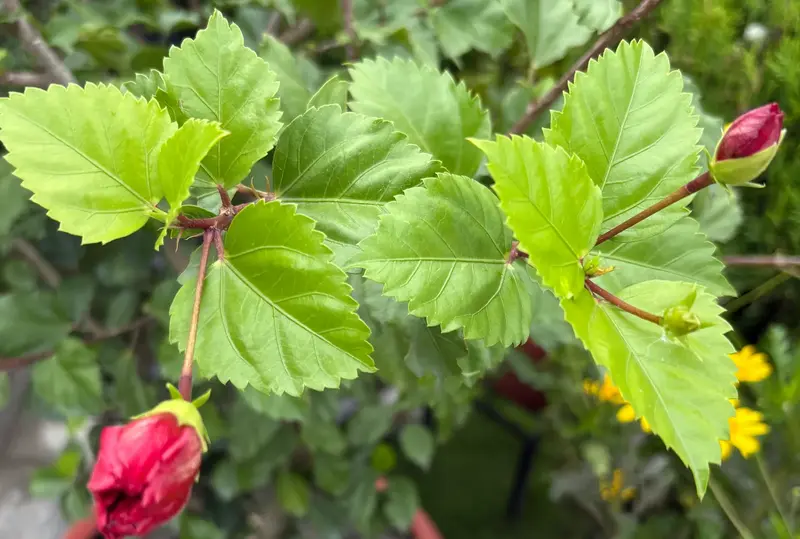
Hibiscus
जाभाकुसुम फूल
Hibiscus rosa-sinensis
The flower the books draw. Find the five sepals (the calyx), the five petals (the corolla), the column in the middle covered in stamens, and the stigma at its tip, with the ovary hidden at its base. Each flower lasts only a day.
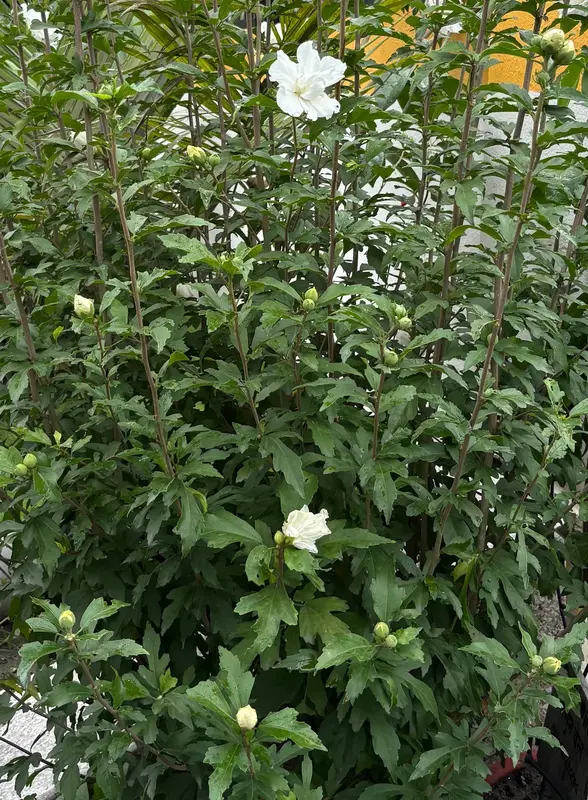
Rose of Sharon
Hibiscus syriacus ‘White Chiffon’
A hardy cousin of the tropical hibiscus with all four whorls easy to find: green sepals, ruffled white petals, a column of stamens, and the stigma at its tip. Bees visit it all summer.
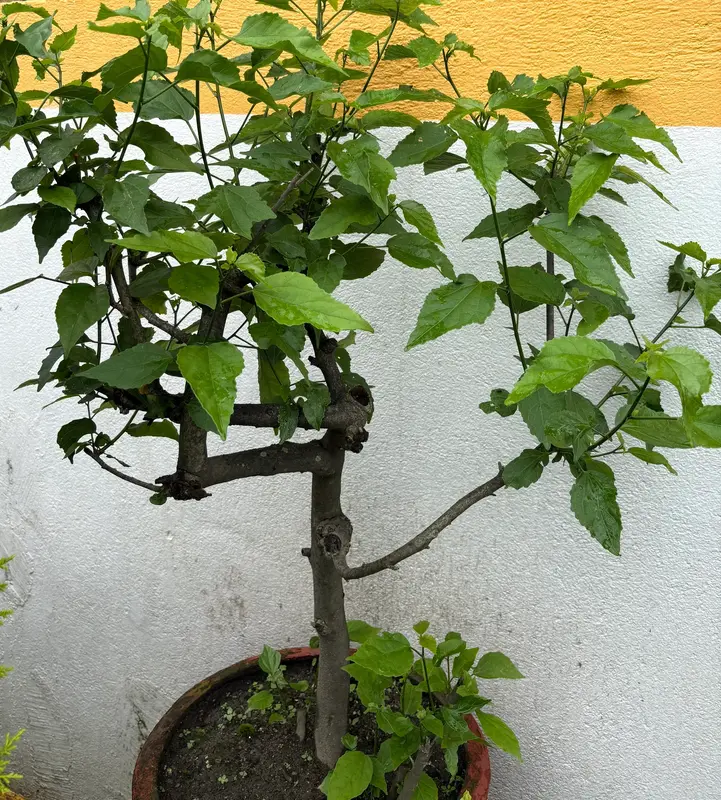
Turk’s Cap (Chili Hibiscus)
Malvaviscus arboreus
A hibiscus whose red petals never fully open, staying twisted like a chili pepper, with the column of stamens and the stigma poking out. Only a long beak or tongue can reach the nectar inside.
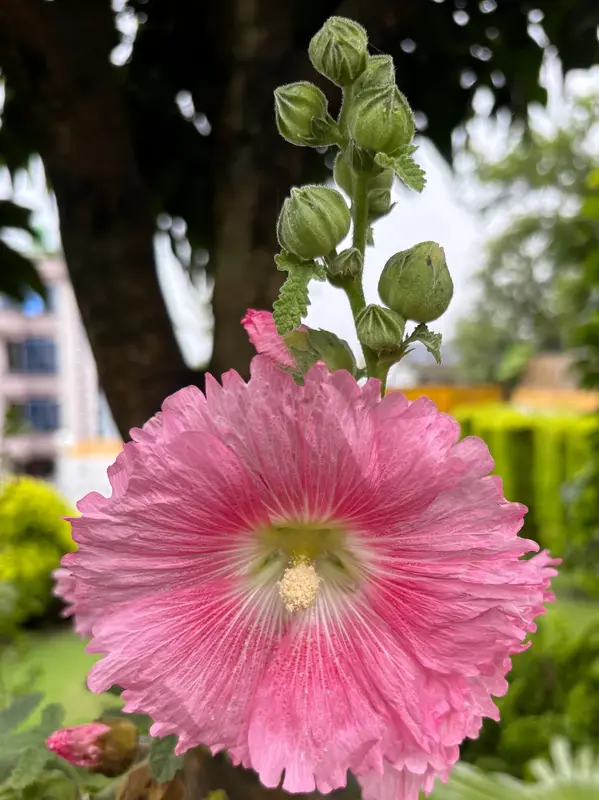
Hollyhock
Alcea rosea
Wide, open flowers where every part shows: sepals, petals, a central column of stamens, and the stigmas. Bees crawl deep into each one and come out dusted with pollen. Its spires grow taller than a grown-up.
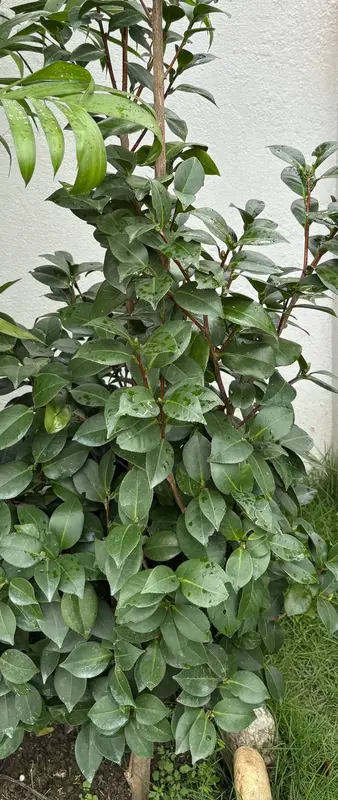
Camellia
चिनिया गुराँस
Camellia japonica
Look for the dense bunch of yellow stamens in the middle, dozens of them around the pistil. Camellias bloom in the cool months, when few other flowers are open, so their nectar is a winter treat for bees and birds. The tea plant is a close relative.
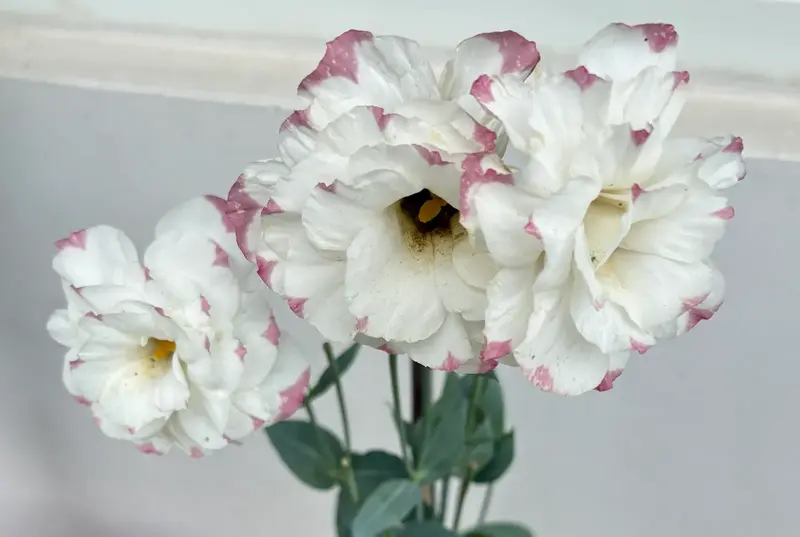
Lisianthus
Eustoma grandiflorum
Ruffled flowers with every part easy to see: sepals, petals joined at the base into a cup, five stamens and a two-lobed stigma. It looks like a rose but is a relative of the gentians, from the prairies of the southern United States and Mexico.
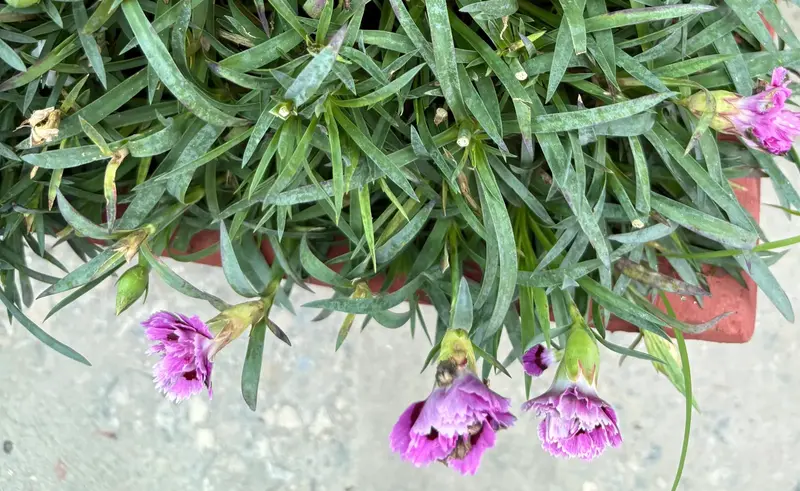
Carnation
Dianthus caryophyllus
Its petals are fringed, as if cut with zigzag scissors; below them the sepals are joined into a tube. Carnations have a spicy, clove-like scent; their species name even means clove.
More in The Plant Body
The garden is alive and changes through the year. Some plants flower, fruit, or rest only in certain seasons, so what you see depends on when you visit.
See them for yourself
Every plant here grows on our campus in Bhaktapur. Walk the garden on your visit.
Book a Visit