
On the night of 16 December 1773, a crowd of men in Boston, some of them disguised as Native Americans, climbed aboard three ships tied up in the harbor, the Dartmouth, the Eleanor and the Beaver. They hauled the cargo out of the holds and tipped it into the sea: 340 chests of tea, worth, by its owner’s reckoning, a little over £9,659. The owner was the East India Company, the same British trading company that had lately made itself the government of Bengal. The tea had come from China. The men who threw it away were British subjects, and their quarrel was with a small tax on it.
Here is the whole story in a few lines. Britain and France fought a world war from 1756 to 1763, and Britain won all of France’s land in North America east of the Mississippi. To pay for the war and guard the new land, the Parliament in London began to tax its thirteen colonies on the Atlantic coast, which had always voted their own taxes. The colonists answered that a Parliament they had no say in could not tax them. Protest turned into riot, and riot into war in 1775. In July 1776 the colonies declared themselves independent, the United States of America, with a promise that “all men are created equal”. With France’s help they won, and in 1783 Britain let them go. But the promise had edges. One person in five in the colonies was Black, nearly all of them enslaved, and most stayed enslaved. The Native nations to the west lost whichever side they chose. And women were not asked.
A war that won too much
The trouble began with a victory. In 1754 a young Virginian officer named George Washington led colonial soldiers west over the mountains into the Ohio valley, to push out the French, who were building forts there. He was outnumbered and beaten. That frontier fight grew into a war of empires, the Seven Years War, fought in Europe, at sea, in the Caribbean, in North America and in India. From 1757 it began to go Britain’s way. That year the Company’s army beat the Nawab of Bengal at Plassey, and in 1760 it beat the French in south India at Wandiwash. In 1759 British armies took Quebec, the capital of French Canada, and in 1760 the rest of it.
At the peace, signed in Paris in 1763, France gave Britain all its land east of the Mississippi, and Spain got Louisiana, to the west. France might have kept Canada instead of its small Caribbean islands, but its chief negotiator chose the islands. Martinique and Guadeloupe grew sugar and made money, and Canada had cost France money for years.
Winning was expensive. Britain had fought on borrowed money, and its lenders were beginning to wonder whether it could pay them back. It now had an enormous new territory to guard, and that territory was not empty. Many Native nations lived west of the mountains, and many had fought beside the French. When British officers took over the French forts and stopped the gifts the French had always given, Pontiac, a leader of the Ottawa, sent belts of wampum (shell beads woven into patterns, used for messages and treaties) to nations across the Great Lakes country. In 1763 they took every British fort in the west but two.
London’s answer was a line on the map. A royal proclamation of October 1763 kept all the land beyond the sources of the rivers that run into the Atlantic “for the use of the said Indians”. No colonist could buy or settle it without the Crown’s leave, and those already there were ordered off. It was meant to keep the peace. To settlers hungry for land, and to the speculators who hoped to sell it to them, it was a door slammed in their faces. Settlers crossed the line anyway.
Who may tax whom
Parliament now thought the colonists should pay part of the bill. In 1765 it passed the Stamp Act, whose own title said what the money was for: “defending, protecting, and securing” the colonies. Almost any paper used in the colonies had to carry a government stamp, bought for a fee. Court papers, deeds and licenses, newspapers and pamphlets all needed one, and so did a pack of playing cards (a shilling), a pair of dice (ten shillings) and the certificate of a college degree (two pounds). It touched almost everyone who read, traded or went to law.
The colonies already had elected assemblies of their own, which voted their taxes. Now a Parliament three thousand miles away, in which they had not one member, was taxing them directly. Virginia’s assembly declared that only it could tax Virginians. In Boston a crowd wrecked the house of the man appointed to sell the stamps. Delegates from nine colonies met that October and petitioned against it. Their case is remembered in four words: no taxation without representation. Colonists boycotted British goods, British merchants who were losing money lobbied Parliament to back down, and in 1766 it did.
It tried again with duties on goods brought into the colonies, the Townshend taxes of 1767, and sent soldiers to Boston to help collect them. On a March night in 1770 a crowd surrounded a group of soldiers, shouting and throwing snowballs, stones and clubs. The soldiers fired, and five people died. The colonial leaders who called it the Boston Massacre made sure everyone heard about it.
Then came the tea. By 1773 the East India Company was in money trouble. Parliament’s Tea Act let it ship tea straight to the colonies without the duties other traders paid in Britain, so it could undersell them. Only the Townshend tax on tea, paid in the colonies, was left. Cheaper tea should have been welcome. But to buy it was to accept that tax, and with it Parliament’s right to tax at all. Philadelphia and New York sent their tea ships home. In Charleston the tea was left on the docks. Boston threw it in the harbor.
Parliament punished Boston by closing its port until the Company was paid for its tea, and put Massachusetts under tighter royal control. Colonists called these the Intolerable Acts. On 19 April 1775 British soldiers and colonial militia clashed at Lexington and Concord, outside Boston, and the war began.
Seen from London, the case was simple. Britain had fought a long war partly for these colonists, the debt was real, and Parliament made the law for the whole empire. Seen from Boston, a government across an ocean was taking their money and their old rights of self-rule, one law at a time.
What they promised
Even after the fighting started, many colonists hoped for a deal with the king. In January 1776 a pamphlet changed the mood. Common Sense, by Thomas Paine, came out with no name on it in Philadelphia, sold everywhere and was read aloud in taverns. Paine wrote plainly, for ordinary readers. “The period of debate is closed,” he said. “Every thing that is right or natural pleads for separation.” A kingdom might well look after small islands that could not protect themselves, “but there is something very absurd, in supposing a continent to be perpetually governed by an island.” He called on Americans to make their country a home for freedom, which, he said, had been “hunted round the globe. Asia, and Africa, have long expelled her”.
In June the Continental Congress, the colonies’ meeting of delegates, asked Thomas Jefferson, a Virginian lawyer and planter, to draft a declaration of independence. Congress adopted it on 4 July 1776. Its second sentence is the one the world remembers:
We hold these truths to be self-evident, that all men are created equal, that they are endowed by their Creator with certain unalienable Rights, that among these are Life, Liberty and the pursuit of Happiness.
Governments exist to protect those rights, it goes on, and get their “just powers from the consent of the governed”, and when a government destroys them, the people may “alter or to abolish it”. That is Locke’s argument from 1689, now aimed at a king. Then comes a long list of complaints, most of them against laws Parliament had passed, all of them blamed on George III: “For imposing Taxes on us without our Consent”, for keeping soldiers among them in peacetime, for sending “large Armies of foreign Mercenaries”, the German soldiers Britain had hired. And this:
He has excited domestic insurrections amongst us, and has endeavoured to bring on the inhabitants of our frontiers, the merciless Indian Savages, whose known rule of warfare, is an undistinguished destruction of all ages, sexes and conditions.
The “domestic insurrections” meant, as Jefferson’s draft shows, enslaved people answering the king’s officers’ offer of freedom: the king, it said, was “now exciting those very people to rise in arms among us”. That draft had a longer passage on slavery, which was cut before Congress adopted the text. In it Jefferson blamed the king for the slave trade itself, saying George III had “waged cruel war against human nature itself, violating it’s most sacred rights of life & liberty in the persons of a distant people who never offended him, captivating & carrying them into slavery in another hemisphere”. Years later Jefferson wrote that it was struck out to please South Carolina and Georgia, which still wished to go on importing enslaved people, and that northern delegates felt “a little tender” too, since their merchants had been “pretty considerable carriers” of them. Jefferson himself held more than six hundred people as slaves over his life.
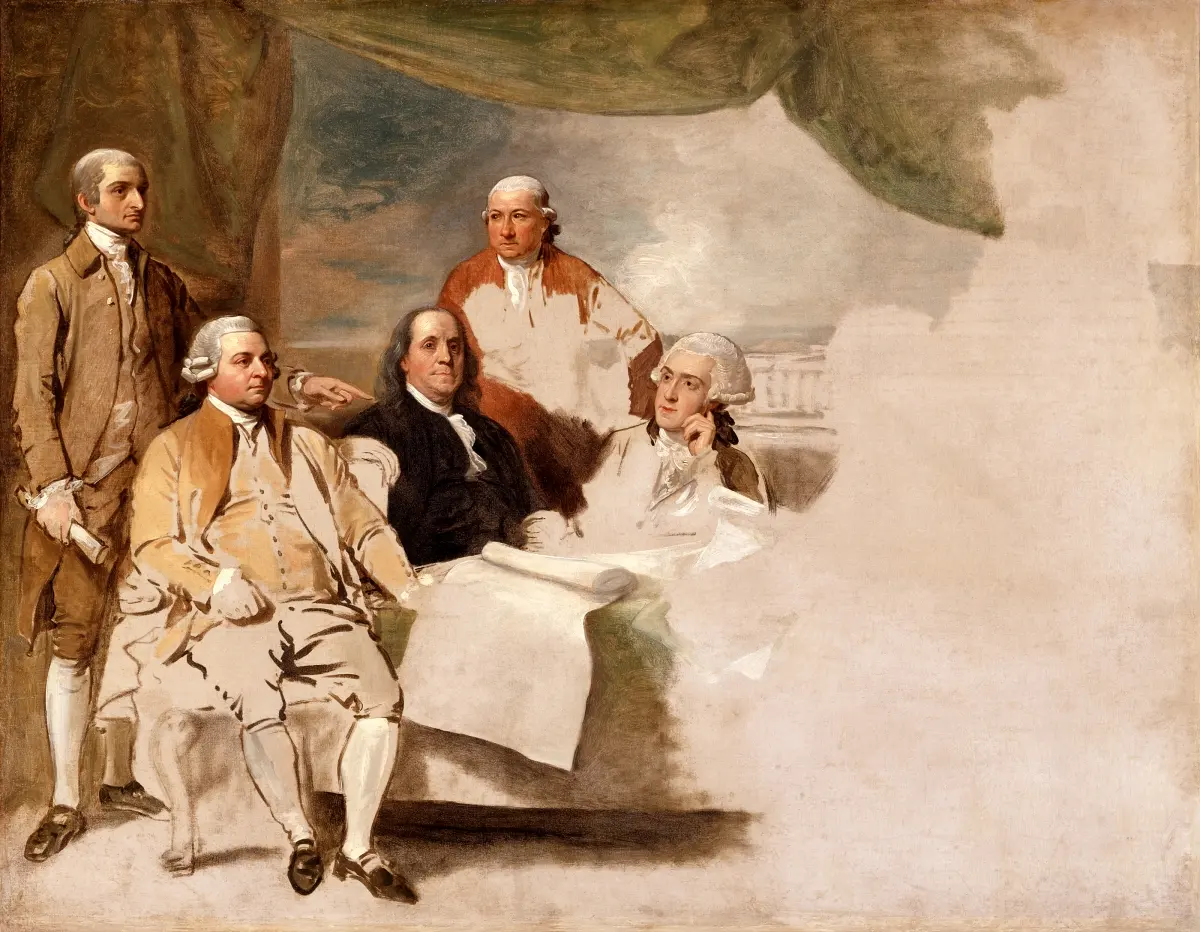
The war lasted eight years. Britain sent a large army and beat Washington, now commanding the Continental Army, around New York in 1776, but he kept his army in being. In 1777 a whole British army surrendered at Saratoga, and that persuaded France to sign an alliance in 1778. Spain joined France the next year. In 1781 a French fleet shut the sea road to Yorktown, in Virginia, while French and American soldiers dug in around it, and the British general there, Lord Cornwallis, surrendered. Peace was signed in Paris in 1783, and Britain gave up the thirteen colonies and all its land south of the Great Lakes and east of the Mississippi.
Who was left out
The colonists themselves were divided. One historian’s estimate is that about a fifth stayed loyal to the king, two-fifths backed the revolution, and the rest wavered, choosing a side, he writes, for their own safety and by their ties to neighbors and kin. When the war ended, about 60,000 Loyalists left the new country for Canada, Britain and the Caribbean, taking about 15,000 enslaved people with them. So the war was, among other things, a civil war. Three groups were left outside the promise of equality.
About half a million Black people lived in the colonies in 1775, one in every five people, and ninety-nine in every hundred of them were enslaved. In November 1775 the royal governor of Virginia, Lord Dunmore, short of soldiers, declared free the servants and enslaved people of rebels who were able and willing to fight and came to join the king’s troops. It was an offer of war, not of abolition: it freed no one owned by a Loyalist. But thousands ran to the British over the next years, and more when British armies came south. How many is argued: recent counts run from about 20,000 to 40,000, and some older estimates far higher.
One of them, Harry Washington, was a man from the Gambia River, in West Africa, whom George Washington bought in 1763 and, two years later, set to work at Mount Vernon, his estate in Virginia. In 1776 he ran to the British, and he served them for the rest of the war. In 1783, when the British left New York, he was one of about 3,000 Black refugees whose names and descriptions were written into a ledger, the Book of Negroes, as they boarded the ships for Nova Scotia. His entry names George Washington as his former owner. The British did not keep every promise. A woman named Betty was claimed by the man who had owned her, and the British handed her back.
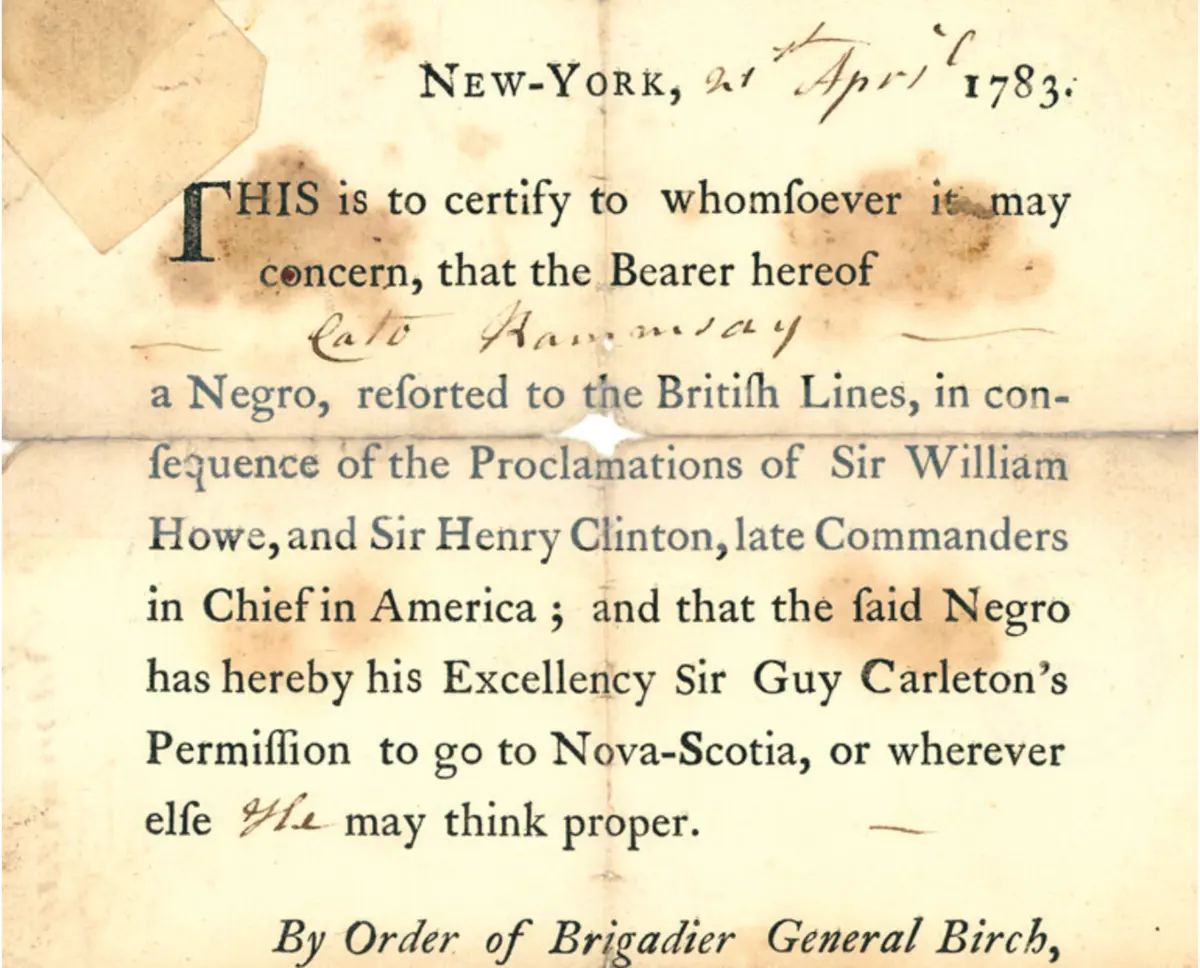
Most of those ships went to Nova Scotia, in Canada. The land the Black Loyalists had been promised came late or not at all, and in 1792 nearly 1,200 of them, Harry Washington among them, sailed on again, to a new colony for free Black settlers in Sierra Leone, in West Africa.
Black men fought on the American side too. By one estimate 5,000 to 8,000 served the American cause, as soldiers and sailors, cooks and drivers, and Virginia and North Carolina passed laws to free enslaved men who had served in the war in place of others. But in the new states, slavery began to end only in the north. In Massachusetts an enslaved woman, Elizabeth Freeman, went to court in 1781 and won her freedom under the state’s new constitution of 1780. And when the states wrote a constitution for the whole country, in 1787, they counted each enslaved person as three-fifths of a person when sharing out seats in the House of Representatives, which gave slave owners more votes. The document never uses the word slave. It says “three fifths of all other Persons”.
The Native nations knew the war was about their land. Many tried to stay out of it. Early in the war the Oneida, one of the six nations of the Haudenosaunee, the Iroquois Confederacy, sent word to the governor of New York: “We are unwilling to join either side of such a contest, for we love you both, Old England and New.” Neutrality could not last. The Confederacy split, and families split inside each nation. Most of its nations sided with Britain, their old ally, believing their land was safer under the king, while the Oneida and Tuscarora helped the Americans. At Oriskany, in 1777, Oneida fought Seneca, nation against nation. In 1779 Washington sent an army under General John Sullivan through the Haudenosaunee country, and it burned about forty towns and their crops.
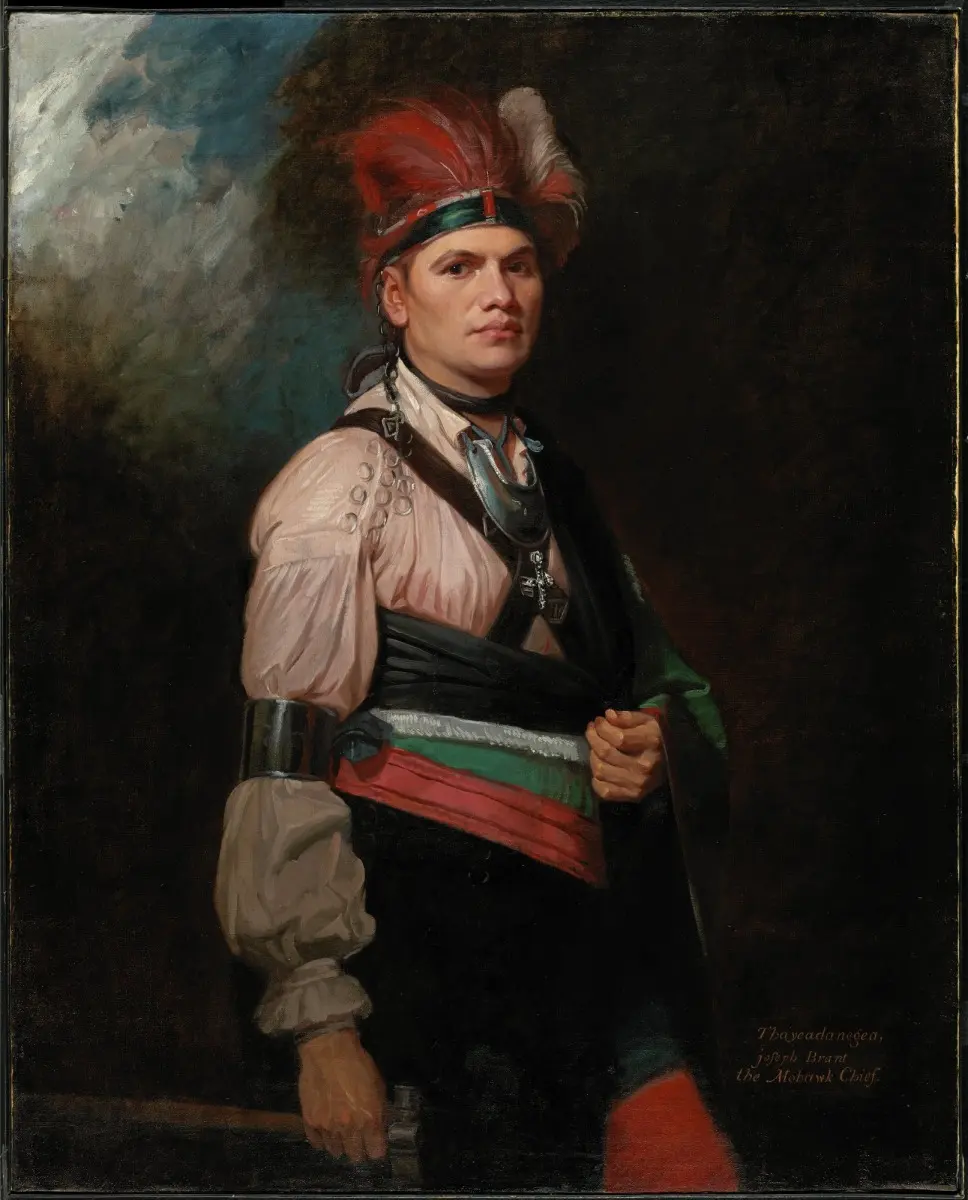
At the peace, Britain handed over all that land without a word about its Native allies. The Haudenosaunee had to make their own treaty with the United States in 1784, and gave up much of their land. The Oneida, who had fought for the Americans, lost land too. And the Declaration’s picture of “merciless Indian Savages” stuck: most Americans came to believe that the Native nations had fought for a king against liberty. As one historian of the Native side of the war puts it, “Indians fought in the Revolution for Indian liberties and Indian homelands, not for the British Empire.”
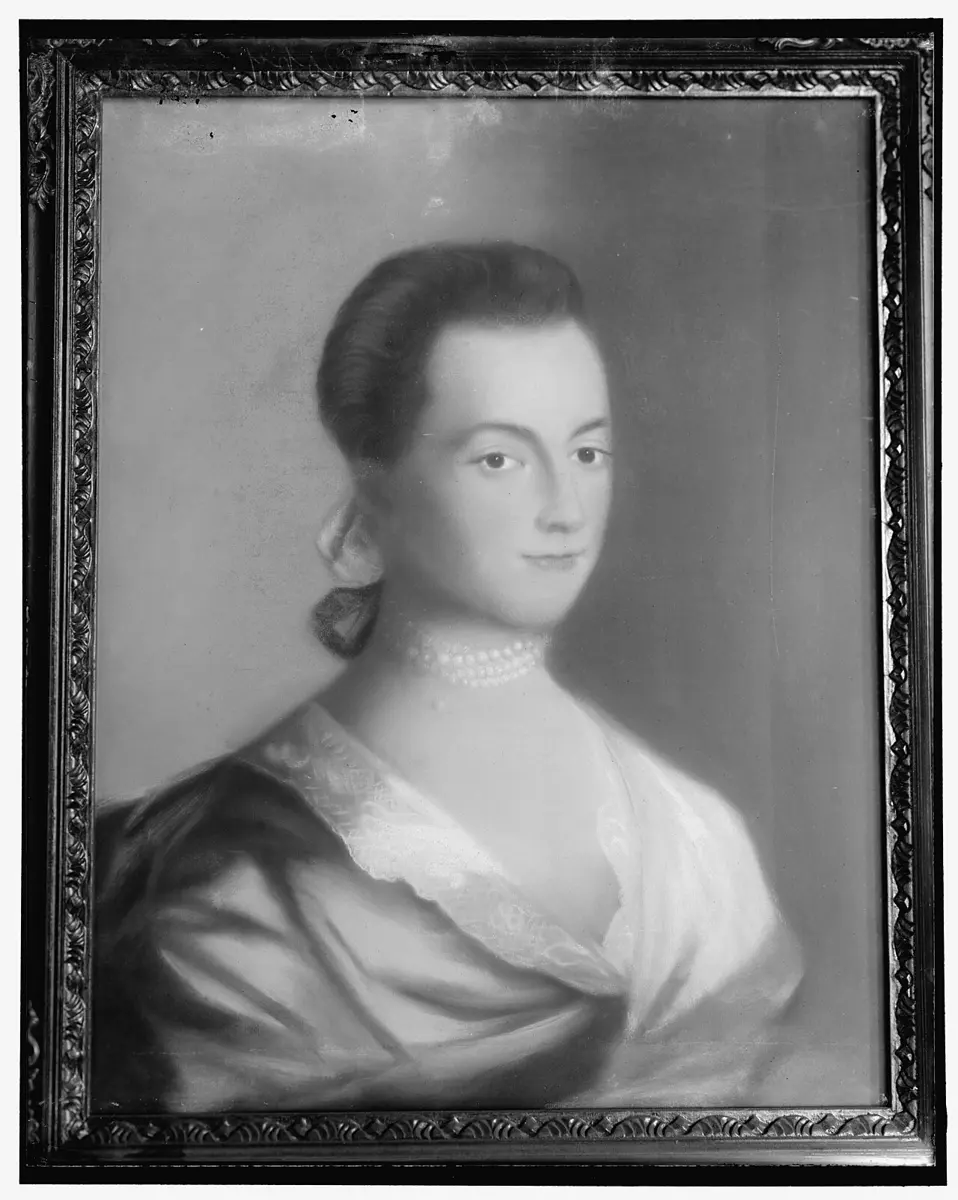
Women were the third group. In March 1776 Abigail Adams, at home in Massachusetts, wrote to her husband John, who was in Congress, that in the new laws he should “Remember the Ladies”. “Do not put such unlimited power into the hands of the Husbands,” she wrote. “Remember all Men would be tyrants if they could.” If the ladies were ignored, she warned, they would “not hold ourselves bound by any Laws in which we have no voice, or Representation”, the colonists’ own argument turned round. John wrote back, “I cannot but laugh,” and told her, “We know better than to repeal our Masculine systems.” Only one state let women vote. New Jersey’s constitution of 1776 gave the vote to property owners without saying they must be men, and women who owned property voted there until 1807, when a new law took the vote from them and from Black men too.
What changed, and what is argued
The United States became a republic with a written constitution, a president, and a Congress of two houses, the states and the national government each with powers of their own. Britain, having lost its largest colonies, turned more of its attention east. Cornwallis, the general who surrendered at Yorktown, was sent to India in 1786 as the Company’s governor-general. Britain could no longer send convicts to America, so from 1788 it sent them to Australia, about 162,000 of them before it stopped. And France, which had beaten its old enemy, had paid for the victory with money it did not have, which is part of the next chapter’s story.
How radical was all this? Historians have answered very differently. Bernard Bailyn, who read the colonists’ own pamphlets closely, argued that ideas mattered more than money: the colonists had learned to distrust power, and saw each new tax as one more step in a plot against their liberty. Gordon Wood argued that the revolution was radical after all, because it turned a society where people bowed to king, father and gentleman into one of ordinary people who expected to be treated as equals, and that this made possible the first serious movement against slavery and a better place for women. Alan Taylor, telling it from the Native nations’ and the enslaved people’s side as well as the colonists’, finds a bitter civil war, whose founders, he writes, “generated contradictions that continue to divide Americans.”
So the American War of Independence began as an argument over who could tax whom, in an empire that had grown too big and too costly after a world war. It ended with a new country built on an old English idea made universal: that government rests on the consent of the governed, and that all men are created equal. Those words have been used ever since by people the writers never had in mind, by enslaved people and women and colonized peoples everywhere. In 1776 they did not cover the enslaved, the Native nations, or women, and the people of that time knew it. Abigail Adams said so to her own husband.
Meanwhile, in Nepal: in 1775, the year the American war began, Prithvi Narayan Shah died, and in 1783, when Britain let its colonies go, Gorkha was still pushing its kingdom east and west. That story is in Prithvi Narayan Shah and Gorkha, The fall of the Valley and Ran Bahadur Shah and the campaign east and west, in Nepal’s History, for the Curious.
Found a mistake? Please tell us.