
Around January 1770, an old man stopped at a resting place on the Chandragiri pass, where the path leaves the Kathmandu Valley, and turned to look back. He was Ranajit Malla. A few weeks earlier he had been the king of Bhaktapur. Now he was on his way to Banaras, in India, to end his days there. He cried, an old account says, and then he sang:
Oh Ram! Oh Ram! How could I survive without remembering Nepal?
The evil enemy destroyed me now!!
Nobody knows whether he really sang it there: the words were written down about seventy years later. The surprise is the word “Nepal”. He didn’t mean the country on a school map. To Ranajit, and to everyone else in this story, Nepal was the bowl of land he was looking back at: Kathmandu, Patan, Bhaktapur and their villages.
The enemy was a man he knew well. Prithvi Narayan Shah, king of the small hill state of Gorkha, had been a friend of Ranajit’s son and had stayed at Bhaktapur, and Ranajit was his मितबा (mitbā), his ritual father. A story that may be Prithvi Narayan’s own tells how, as a young man, he came up to this same ridge, going the other way, and asked which was Nepal. They pointed out the three cities, and the thought stayed with him: it would be something to be king of them. Between that wish and Ranajit’s song lie about twenty-five years of war. This is how a small hill kingdom took the richest valley in the Himalaya, and why people still argue about what it cost.
Three kings and a hill king
The Valley was worth fighting for. Its people, most of them Newar, farmed rich soil and built the temples and palaces that still fill its old cities. Newar merchants carried the trade between India and Tibet, and the Valley’s silver coins went north in large numbers. An Italian priest who lived in Patan in those years counted about 24,000 houses in that city alone.
But the Valley wasn’t one kingdom. It had been divided among the Malla kings for about three hundred years, and by now there were three of them, one for each city. Jaya Prakash Malla ruled Kathmandu. Ranajit Malla, the old man on the pass, ruled Bhaktapur. Patan’s nobles kept changing their king, and once even offered the throne to Prithvi Narayan himself.
The three seldom stood together. Too often each king would rather see a neighbor weakened than help him, and Bhaktapur even called Gorkha in against the others. The Italian priest, who watched it all, thought this quarrel was what ruined them.
Prithvi Narayan didn’t win by one great battle. He won in steps.
First he took the ring. Instead of attacking the cities, he took the forts and hilltop posts around the rim of the Valley, one at a time, until every road out of it ran through his hands.
Then he shut the roads. The Valley could grow its own rice, but its salt came from outside, and so did much of its cotton.
Then he split the nobles, with promises for anyone who came over to his side.
Finally the walls fell, one by one. The hill town of Kirtipur went first, after a long siege. Kathmandu and Patan fell within days of each other in 1768, and Bhaktapur, the last, in November 1769.
Divided kings, a ring of forts, the roads shut, and then the walls. Accounts from both sides agree on that much. They disagree about a great deal else: who opened which gate, who gave which order, and how many died.
The ring and the roads
His first great prize was Nuwakot, in 1744, which gave him the road north to Tibet through Kerung. Then, in 1757, he tried a shortcut. Kirtipur, a town belonging to Patan, sits on a ridge just west of the Bagmati and looks across at both Kathmandu and Patan. His leading commander, Kalu Pande, spoke against attacking it, went anyway and was killed by arrows. Kirtipur’s people held, Jaya Prakash came from Kathmandu to help them, and the Gorkha army broke within hours. Prithvi Narayan himself got away only with the help of the men who carried him.
He learned from it. For the next five years he went back to the slow way: Palanchok and Dhulikhel to the east, then Makwanpur, Hariharpur and Sindhuli to the south, until by 1762 the ring was nearly closed.
Now he could shut the roads. Gorkha’s soldiers stood at every pass, and breaking the blockade meant death: on that, both sides agree. The Italian priest wrote that anyone caught with even a little salt or cotton was hanged from a tree, and that a whole village was put to death for supplying cotton. That is one man’s word, and he wasn’t neutral, but the shortage in the cities is hard to doubt. In 1765 Patan’s nobles made a cotton trader, Tej Narasimha, their king, perhaps hoping he could get the cotton moving again. The people who suffered most weren’t kings or generals. They were porters and small traders, and farmers whose village lay on the wrong road.
Hunger alone didn’t open the gates, though. So Prithvi Narayan sent men around the cities with promises for any noble who would change sides.
Kirtipur
He came back to Kirtipur a second time, with ladders against its walls, and failed again. His brother Surpratap lost an eye to an arrow.
The third time he didn’t storm the town. His army surrounded it and cut off its food. After six or seven months Kirtipur could hold out no longer, and one night its gates were opened from inside. The Grade 9 सामाजिक book dates this to March 1766, and so does the map here; other records put it a year later. Who opened the gates is argued too: a noble who had gone over to Gorkha, a noble whose son was being held at Gorkha, or the town’s own commander, making a deal. Which one you believe says who you think was to blame.
What came next is the most painful memory of the whole war, and Kirtipur hasn’t forgotten it. On Gorkhali orders, people’s noses were cut off. Every source that speaks of it agrees on that much, and the earliest is from the Gorkha side: a poet at Prithvi Narayan’s own court, writing about four years later, lists the cutting of enemies’ noses among the king’s deeds at Kirtipur.
What the sources argue about is how many, and why. The Italian priest, an easy walk away in Patan, wrote that the town had surrendered on a promise of pardon, and that the king then ordered its leading men killed and the noses and lips of everyone cut off, even babies; he says he saw the wounds when the people of Kirtipur came to the priests for medicine. Nepali papers written about seventy-five years later say that 865 people over the age of twelve lost their noses, in anger over Surpratap’s eye. Prithvi Narayan’s Nepali biographer, much later still, called the priest’s story the raving of a madman: in his telling, only 14 or 15 men lost their noses, for killing Gorkhali soldiers after the town had given up, and the king spared their lives.
So the numbers run from 15, to 865, to everyone. The king’s admirers have reasons to make it small. So did a priest whose mission was ruined when the Mallas fell, to make it big, and so does a town that has carried the memory for 250 years. None of the accounts was written at the time by someone with no side, and it can’t be settled here. The Grade 9 book doesn’t mention it at all.
The last three cities
With Kirtipur gone, Gorkha’s army stood at the edge of both Kathmandu and Patan. Jaya Prakash turned to the East India Company, the British trading company that by now ruled Bengal, and his messengers promised it an easy road. The Company hoped the Valley would open new trade and bring in money. On 26 August 1767, in the middle of the monsoon, Captain George Kinloch marched north from Patna with about 2,400 men.
His diary survives, so we can follow him day by day. On 23 September he took the fort at Sindhuli, and there he stopped. Two attacks on the steep hill beyond it failed against ditches, a fence, felled trees and stones thrown down from above. He turned west, ran out of food, and found the Bagmati in flood. He fell ill, and his men began to desert. His last entry, on 17 October, reports his soldiers rising against him at two in the morning, and stops in the middle of a sentence. About 800 of the 2,400 came back.
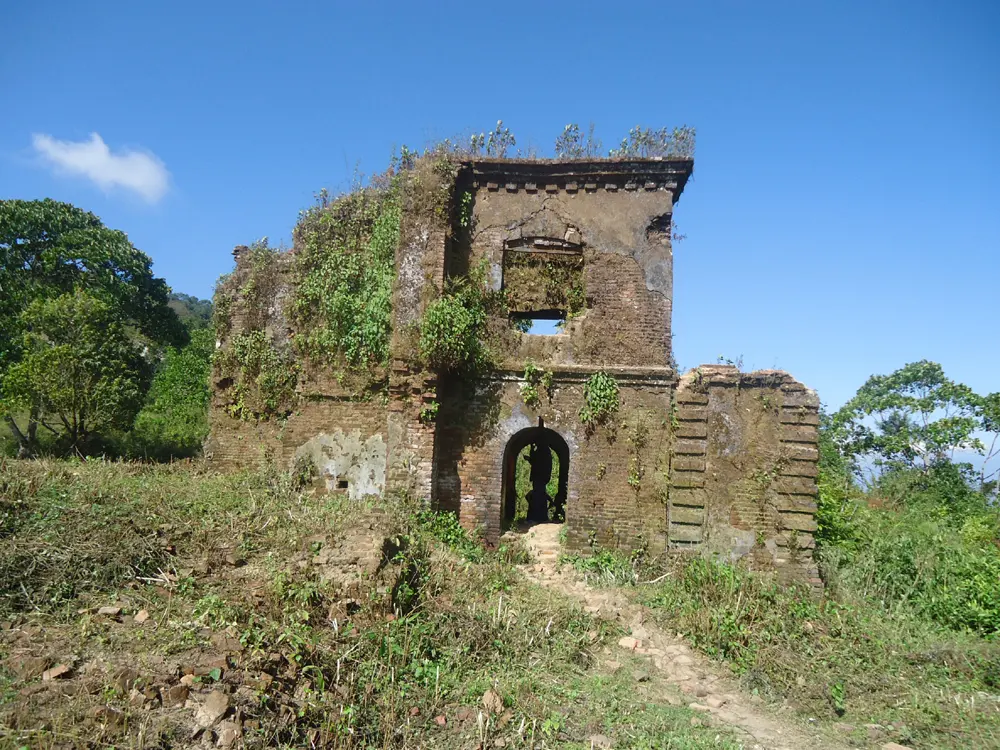
Nepal remembers it as a victory won by ordinary people: villagers giving money, food and work, and throwing bees, wasps and scorpions down on the soldiers. Kinloch’s diary has no hornets and no great battle, and the Company blamed hunger and disease. But a commander writing up a failure has his own reasons, and somebody built those defenses and threw those stones. Either way, no second army came, and the cities were on their own.
Kathmandu fell first. On 25 or 26 September 1768 the city was celebrating Indra Jatra, and Nepali accounts say the Gorkha army came in at night, in three columns, while everyone was at the festival. It’s the war’s most famous scene, and it may be true, though the two earliest accounts don’t mention a festival. What they agree on is that few fought for Jaya Prakash. He had taken treasure from the temples, Pashupati’s among them, and the city’s leading men had been won over. He escaped by the south gate.
Patan gave up within days, on a sworn promise of safety. Its leading nobles were later seized at the river and killed anyway.
That left Bhaktapur. Both defeated kings fled there, and the leaders of the city’s twenty-four neighborhoods, its tols, agreed to shelter them. Told to hand them over, Ranajit answered that he could not abandon those he had taken in.
So for a year Gorkha squeezed. Thimi changed sides without a fight, forts went up around Bhaktapur, and the crops outside its walls were carried off or burned. It was never simply one people against another. Khambu soldiers sent by Karna Sen, a king in the east, fought for Bhaktapur, while Khas, Magar and Gurung men had carried Gorkha’s campaign this far.
The end came in the second week of November 1769. Gorkha’s soldiers came in by the east gate at midnight, and at daybreak began firing on the palace. This time the city fought. By one count, 50 or 60 Gorkhalis died, and more than 1,700 people on Bhaktapur’s side, soldiers and townspeople, women among them; another count has 2,001 dead. The firing stopped when Ranajit’s bodyguard waved a white turban.
Jaya Prakash, shot in the leg, was carried to Pashupati and died within days. Tej Narasimha died a prisoner. And Ranajit took the road to Chandragiri.
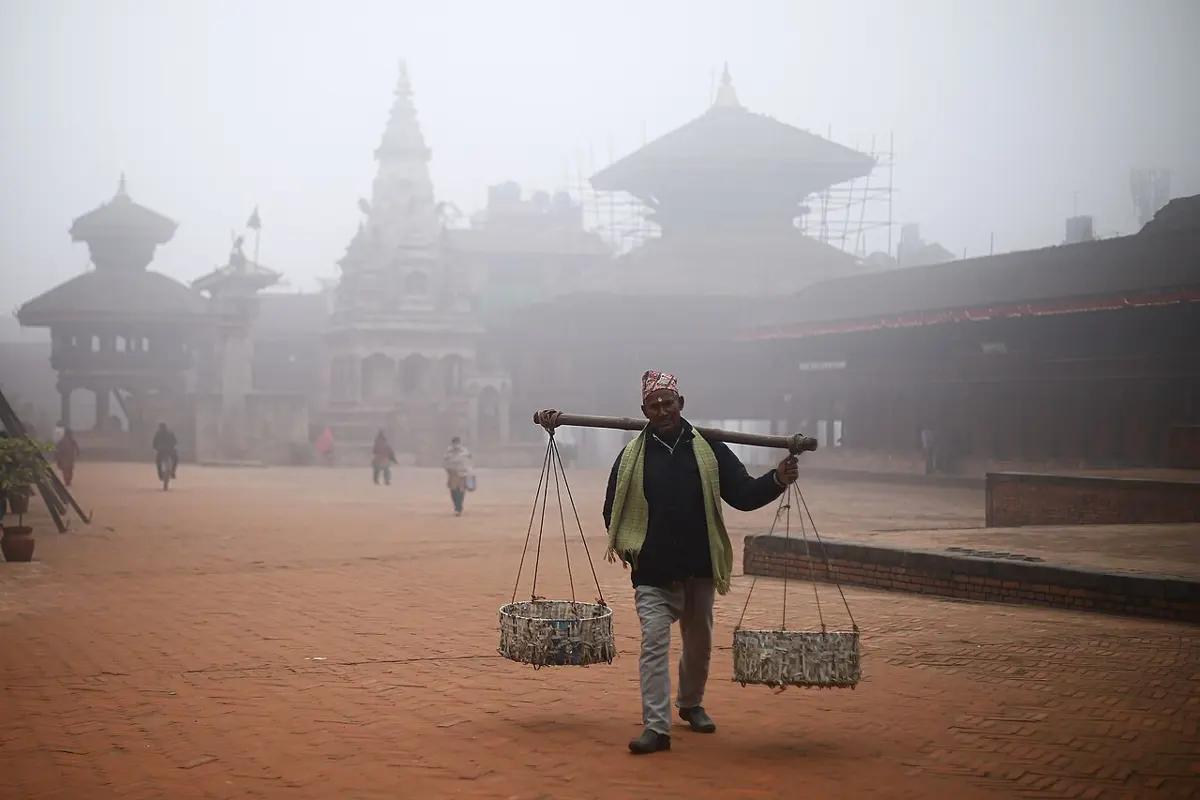
How to remember these years is another matter. At Bisket Jatra, Bhaktapur’s musicians still sing a song that carries Ranajit’s name. On Unity Day each January, a 2021 report says, people in Kirtipur hold a protest of their own and spit at a stone that stands for Prithvi Narayan Shah. The Grade 9 book calls these years एकीकरण (ekīkaraṇ), unification: many small states made into one. Others call them conquest: land taken by force from the people who held it. Many would say both: the country they love was made here, at a price. Why one campaign is remembered in so many ways is a story of its own, for Chapter 21. First, though, the walls were down and the army was still marching.
Found a mistake? Please tell us.