
In the year to mid-July 2026, Nepal’s Department of Foreign Employment gave out 792,187 permits to work abroad, a little over 2,000 for every day of the year. A permit is a paper, not a person. A worker going back after a holiday at home needs another, and anyone crossing the open border to work in India needs none at all. Still, behind most of those papers is someone flying out of Tribhuvan International Airport to the Gulf states or to Malaysia, very often a young man. About half the permits were new ones; the rest were for workers going back to a job abroad.
This book began with people walking out of Africa, somewhere around 60,000 to 50,000 years ago. Nobody knows why they went. They left no words, only stone tools, beads, and on an island in Indonesia the outline of a hand. The people at Tribhuvan can say exactly why they are going, and to the rupee what it has cost them. Between the two lies everything in this book.
The plain answer to why people leave has hardly changed. The same work pays more somewhere else, enough more to be worth a long journey. Home can’t give the young enough work, or enough pay. And someone has gone before, who knows the road and makes it cheaper for the next. What it costs is money paid before the journey, years away from a family, and sometimes a life. And all along the road, many people besides the traveler make money from it.
It is worth knowing, too, how unusual leaving still is. In 2024 the United Nations counted 304 million people living in a country other than the one they were born in. That is nearly twice as many as in 1990, but it is only 3.7 people in every hundred. Ninety-six people in a hundred live in the country of their birth. Leaving is a big step, and most people never take it.
The long road
A great many of the moves in this book weren’t chosen at all. About 12.5 million Africans were forced onto the slave ships to the Americas. Others were half chosen: the girmitiya from India who signed five-year contracts for the sugar plantations, and the लाहुरे (lāhure), named for Lahore, who went from the hills to serve in other men’s armies.
Then, in the century after 1840, came the greatest free movement of people the world had seen. The part most books tell is the Atlantic one, Europeans crossing to the Americas. Between 1870 and 1930 the United States received about 39 million arrivals. But in the same sixty years Southeast Asia received about 35 million, nearly as many, mostly from southern China and from India. They were mostly men, and most of them came home again: of the Chinese who arrived, about 64 in every hundred went back, and of the Indians about 78. Leave for some years, send money, come back, perhaps go again. It is the pattern of Nepal’s workers today, and it is much older than the Gulf.
Ireland shows what it is like when a whole country leans on leaving. After potato blight destroyed the crop in 1845, about 2.1 million people left the island in ten years, for Britain, Canada and the United States. At least 50,000 of them died on the way, at sea or soon after landing. Those who survived sent money home. The money orders that passed through the post offices rose from £460,000 in 1848 to well over a million pounds by the famine’s end, and that money helped family members follow, so that one leaving pulled the next one after it. The Times of London saw it coldly in 1852: “This mighty emigration pays for itself.”
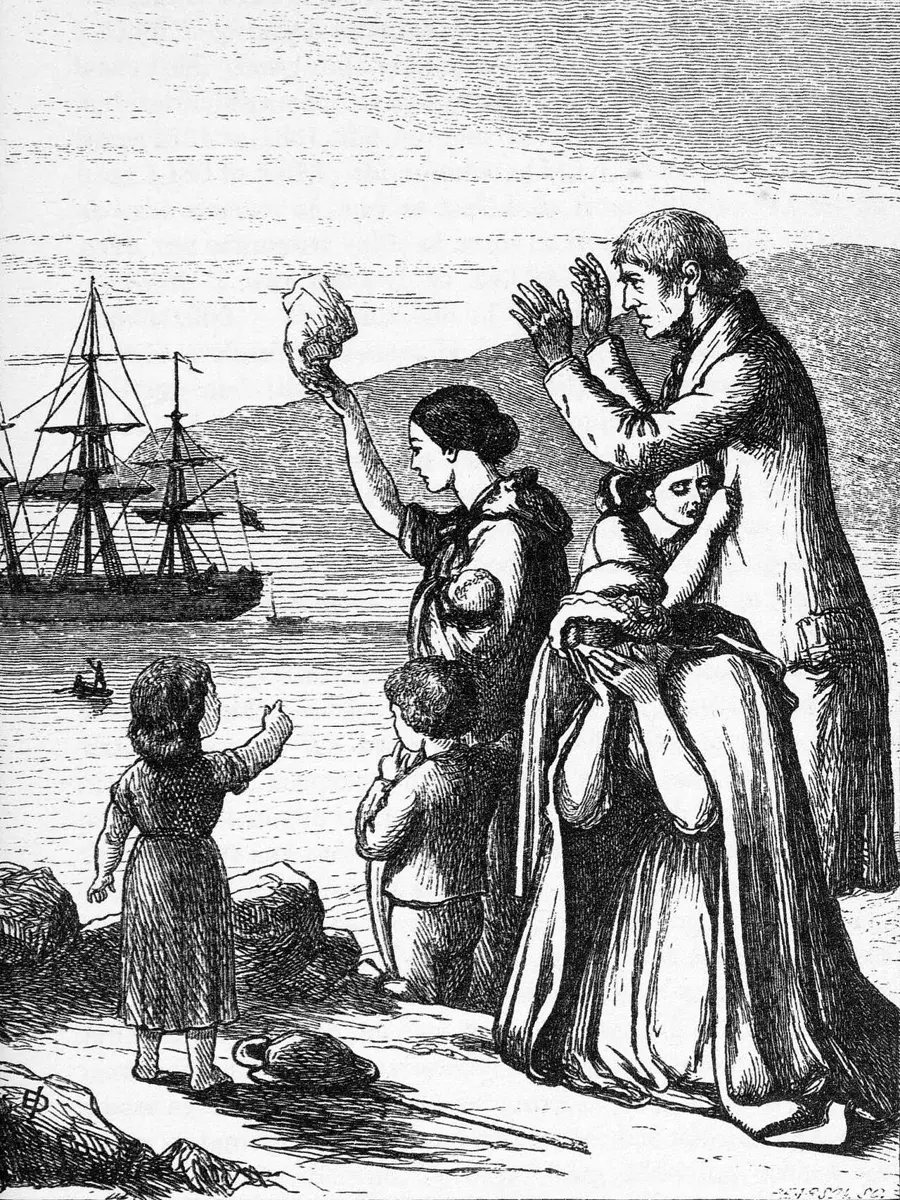
So the shape of migration that Nepal knows now was already worked out by the 1800s, on both sides of the world: the young leave, money flows back, and each one who goes makes the road easier for the next.
The Gulf
The countries most Nepali workers go to have been remade by oil. As oil money came in from the 1950s, the Gulf states began bringing in workers from abroad, at first from other Arab countries, and after the oil boom of the 1970s more and more from South Asia. The figures now are hard to take in. In 1990 about 216,000 people living in Qatar had been born abroad; in 2024 there were 2.3 million, and they made up 77 of every hundred people in the country. In the United Arab Emirates it was 74 in a hundred. Saudi Arabia, with 13.7 million people born abroad, was the third biggest home for migrants in the world, after the United States and Germany.
The rules they live under grew up with them. Kafala, Arabic for sponsorship, is what the International Labour Organization, the UN body for work, calls a whole collection of laws, regulations and customs. Under it a worker’s right to be in the country is tied to one sponsor, the employer, for as long as the contract lasts. In the ILO’s description, the worker usually cannot come into the country, quit a job or move to another one, and in some countries cannot even leave, without the employer’s permission. A worker who walks out without it, even from an abusive employer, can be treated as a runaway and lose the right to stay.
For nearly two centuries a Nepali working abroad had meant India, and the soldiers in the British and Indian armies. That changed after 1990, when the return of multiparty democracy brought easier passports, and Nepalis began going in large numbers to the Gulf, and later to Malaysia. The pull was plain. In 2023 about one young man in five and one young woman in four, aged 15 to 24, were out of work in Nepal, against about one in eight for the country as a whole. Three in every four Nepalis abroad at the census of 2021 had left between the ages of 15 and 34, and for many, the World Bank found, a job abroad was the first job they ever had.
The money that came back changed the country. In 2002 it equaled about a ninth of everything Nepal produced in a year. By 2025 it was about a third, one of the highest shares in the world. Geography, for the Curious follows where Nepal’s workers go and what their going does to the villages they leave, in People on the Move.
What it costs
The first cost is paid before the plane leaves. In 2015 Nepal’s government brought in a policy called “free visa, free ticket” for the seven countries that took nearly all its workers outside India: Malaysia and the six Gulf states. The employer was to pay for the visa and the flight, and a recruitment agency could charge a worker no more than Rs 10,000.
That isn’t what happened. In 2023 the National Statistics Office, with the ILO’s help, asked returned workers what they had really paid. For the Gulf and Malaysia the middle answer, the median, was over Rs 200,000, twenty times the legal limit. On average a worker needed more than three months’ wages abroad just to pay back the cost of getting there, and a woman four and a half. Most families don’t have that much at hand, so they borrow, often from moneylenders. When Amnesty International talked to 127 workers in 2016 and 2017, not one had found an agency that kept to the law. One man from Saptari had borrowed Rs 250,000 at 36 percent a year to pay his agent. After daily needs, paying off loans is the commonest use of the money families receive.
The second cost is freedom. Kafala is changing, unevenly. In 2020, while Qatar was building stadiums for the football World Cup, it let workers change jobs without their employer’s permission and set a minimum wage of 1,000 riyals a month, with allowances for food and housing where the employer gives neither. The head of the ILO’s project in Qatar said: “This really dismantles the kafala system.” Others found less had changed in practice: Human Rights Watch reported that workers who left an employer could still be fined, held and deported for “absconding”, and that taking workers’ passports, high recruitment fees and lying recruiters were “ongoing and largely go unpunished”.
The third cost is the body. The Gulf’s heat is hard on anyone working outdoors, on building sites and farms most of all, and Nepal’s own report on migration links it to heart disease and to failing kidneys. The Foreign Employment Board, which pays the families of workers who die abroad, counted 1,517 deaths in the year to mid-July 2025, about four a day; the police, counting the bodies brought home, made it 1,401. Over seventeen years the Board has paid out to the families of 14,843 workers. These are only the deaths it knows of. A worker who went without a permit, or to India, isn’t in its books.
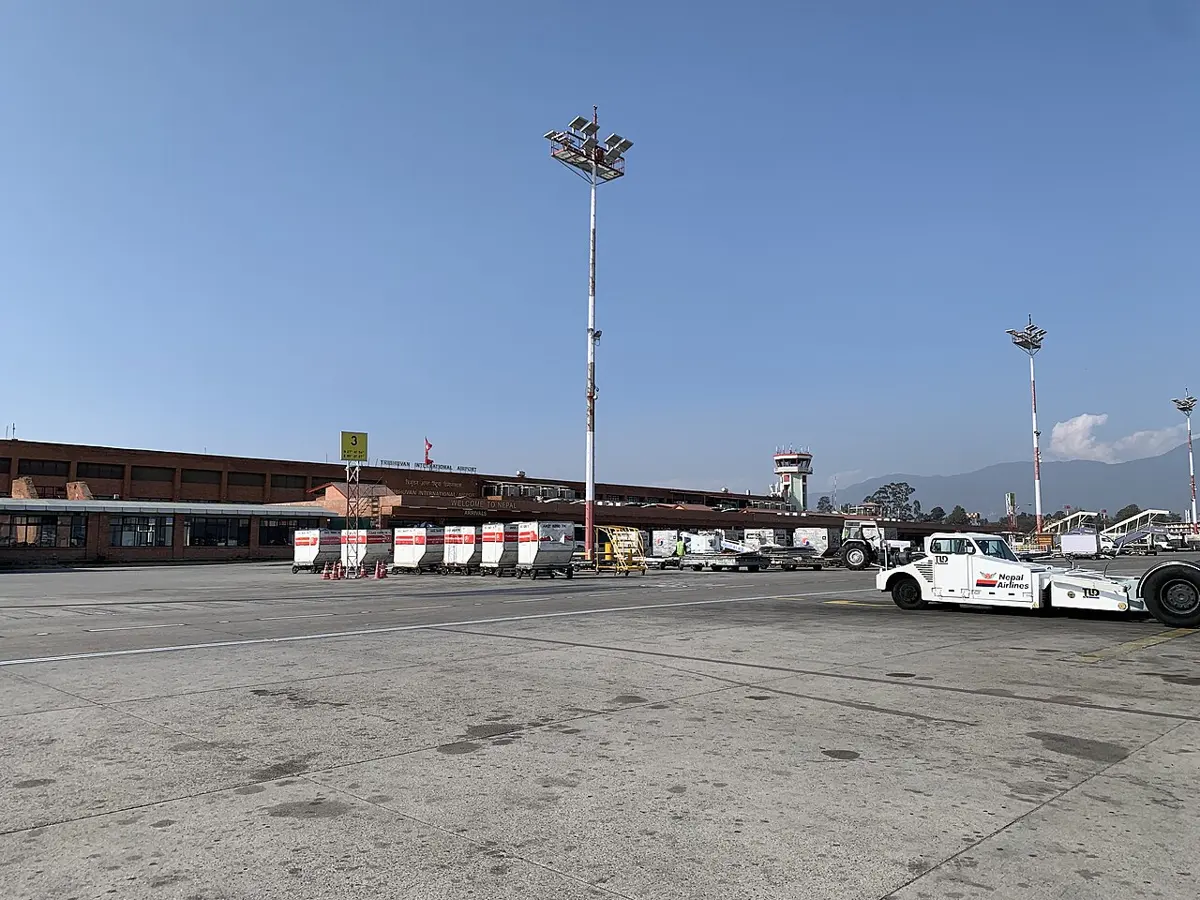
And the whole arrangement is more fragile than it looks. At the end of February 2026 the United States and Israel attacked Iran, Iran fired back at Israel and at American bases in the Gulf states, and the Gulf closed its skies. Flights from Kathmandu were canceled for days. Workers bound for jobs there, some going for the first time and some going back after leave at home, slept for two nights and more on the cold floor at Tribhuvan, with little or no money left for food. “We are lying on the cement floor,” one of them, Rajkishore Pandit, told a reporter. For seven weeks after that, Nepal gave no new permits to work in the Gulf at all.
Who gains
Plenty of people gain, and the families first. The World Bank reckons that money sent home accounts for more than three-tenths of the fall in Nepal’s poverty between 2011 and 2023. That is real, and it is why so many go.
The recruiters gain. In August 2025 Nepal’s Department of Foreign Employment had 1,697 recruitment agencies on its books, 1,040 of them active, along with 223 medical centers that test workers before they go, 143 centers for the classes workers take before leaving, and 15 insurance companies. Between the legal Rs 10,000 and the Rs 200,000 a worker typically pays lies a great deal of money. It is shared among the agencies, the middlemen who find workers for them in the villages and, some reports say, agents on the employers’ side abroad. Exactly who keeps how much, nobody has fully traced.
The banks and money transfer firms gain, though less than many think. Around the world in 2025, sending money home cost about six percent of what was sent. The United Nations has set the goal of bringing that under three percent by 2030. To Nepal it already cost about two and a half percent in 2023. The big cut is taken before the worker leaves, not when the money comes back.
The governments gain. Nepal’s banks, and Nepal Rastra Bank, the central bank, above all, filled up with the dollars and riyals that workers send. By mid-July 2026 they held enough foreign money to pay for nineteen and a half months of everything Nepal buys from abroad, nearly three times the seven months the central bank sets as its floor. And the countries that take the workers get their building done and their homes and shops run, by people whose right to stay ends with the job.
The kind of thread that once joined a glass of sweet tea to three continents runs now through a building site in Doha, a moneylender in Saptari, a bank in Kathmandu and a kitchen in the hills.
Back to the plate
So, one last time, the plate. The rice on it was first tamed in China, the lentils in West Asia, the chili in Mexico, the potato in the Andes. Each came a long way, carried by people who traded it or planted it in new ground, until nobody here could imagine a meal without it. In Nepal today the money that buys the plate has often come a long way too. Asked how they used the money sent home, seven in every ten families who receive it named daily needs first: food, clothes, the ordinary cost of living. On many plates in Nepal, the rice was first grown beside the Yangtze, and it was paid for in Qatar or Malaysia.
Things have always traveled, and so have people. What has changed is speed. The first people out of Africa spread a generation at a time, over thousands of years. Their descendants at Tribhuvan can be in the Gulf within hours, and on a phone to home that night.
People have always moved for work. The shape of it, the young leaving, money coming back and each one who goes making the road easier for the next, was already plain in Ireland and Southeast Asia in the 1800s. Most of Nepal’s workers now go to the Gulf and Malaysia, under rules that tie them to one employer. Leaving pays: it has done much to lift Nepalis out of poverty, and the money is about a third of the economy. It also costs: fees twenty times the legal limit, debts, lost freedom, and more than a thousand lives a year. And besides the families, recruiters, banks and governments, at home and abroad, all take their part. For anyone getting ready for that road, Life Skills has a series, Going Abroad, from the papers to the first weeks there.
These chapters have followed the world, from the first walkers out of Africa to the line at Tribhuvan. Nepal’s own story is told in Nepal’s History, for the Curious, and its last chapter, Who writes history, asks the question every history, this one included, has to answer: who is telling it, and how do they know?
Meanwhile, in Nepal: the लाहुरे who went to serve in Lahore and then in Britain’s wars are in Lahures and the First World War; the two million Nepalis counted abroad in 2021, and the money they send home, are in The story continues, both in Nepal’s History, for the Curious.
Found a mistake? Please tell us.