
At the end of March 1915, a soldier named Tuli Ram Gurung, at a camp for recovering Indian soldiers at New Milton, on the south coast of England, wrote a letter to a senior officer of his battalion back in India. He was describing an attack in France, probably the battle of Neuve Chapelle. When the British guns opened up, he wrote, “the fire of the cannon was just like an earthquake”. Then the Germans attacked, and lost a lot. “The piles of the killed on both sides were like heaps of slaughtered goats. I am sorry that my company lost so much.”
We know his words only because someone else read them first. The letters that Indian soldiers in France and England sent home were opened by British censors, who had the telling passages translated and copied into their reports, to see what the men were thinking and to stop bad news spreading. What survives is the censor’s English, a few lines from each, and that is how we can still hear men like Tuli Ram, from the hills of Nepal, describing a battle in Europe in the words he would have used for a village.
In Nepal a man like him was called a लाहुरे (lāhure). Between 1914 and 1918, while Britain, France and Russia fought Germany, Austria-Hungary and the Ottoman Empire, tens of thousands of them went to Britain’s war, and Nepal’s own army went to guard British India while they were away. The Rana prime minister who sent them got money and a treaty in return. The villages got some savings, a few pensions, and fewer young men. And among Nepalis who had already left home to work in India, the war years saw something else begin: the idea that the Nepali language, and a story of brave ancestors, could hold together a people scattered across the hills and plains.
Men from Lahore
The word itself is a souvenir of an older journey. In the early 1800s, many hill men went west to serve in the army of Ranjit Singh, the Sikh king of the Punjab, whose capital was Lahore. A man who came back from Lahore was a Lahori, and in the hills that became लाहुरे, a word for any Nepali soldier in a foreign army. Even now a man who serves in the British or Indian army is a लाहुरे in his village.
British recruiting began during the war with the Company, in 1815, when the Company formed its first battalions of Gorkhali soldiers (Chapter 20). For seventy years after, Nepal’s rulers did their best to keep their young men at home. Jung Bahadur wanted soldiers for his own army, and he and the prime minister after him put obstacles in the way, so British officers had to find their men quietly, without the government’s knowledge.
That changed in 1885, when Bir Shumsher became prime minister and dropped the old stiff attitude toward the British. He let them open recruiting depots just across the border, at places like Gorakhpur, and even helped collect the men himself. More battalions followed. Under Chandra Shumsher, prime minister from 1901, the British could recruit almost as they pleased, and by 1914 about twenty thousand Nepali men were serving in the ten Gurkha regiments of the Indian army.
“Gurkha” was the British word, taken from the old kingdom of Gorkha. No one in Nepal called himself a Gurkha. British officers had decided that some peoples were born fighters and others weren’t, and in Nepal they wanted mostly Magars and Gurungs from the central and western hills. This idea of “martial races” said more about the officers than about the hills. What made a young man walk down to a recruiting depot was usually simpler: pay, a pension, food, and the chance to send something home to a family whose land couldn’t feed everyone.
And soldiering was only one way out of the hills. All through the 1800s, more and more hill families lost their land or had too little of it, and young people went where there was work. The biggest pull was Darjeeling, just across the eastern border, where British planters cleared the hillsides for tea. There were 39 tea gardens there in 1866 and 177 in 1891, and by then about 88,000 of the district’s 223,000 people had been born in Nepal, most of them from the eastern hills: Rai, Tamang, Limbu, Magar, Chhetri and many others. Their parents spoke many languages at home; their children grew up speaking Nepali to each other. Others went further, to the forests and tea gardens of Assam and Burma, and into the military police the British kept there. By 1914, a great many Nepalis lived outside Nepal.
The war
When war broke out in Europe in August 1914, Chandra Shumsher didn’t wait to be asked. On 3 August, before Britain had even declared war, he wrote to the British Resident in Kathmandu that “the whole military resources of Nepal” were at the British king’s disposal.
He meant it in two ways. The first was Nepal’s own army. The first 7,500 left Kathmandu in March 1915, led by men of his own family, and over the war 16,544 men of the Nepali army went down to India. They didn’t fight in Europe. They guarded the north-west frontier, on the border with Afghanistan, and towns in what is now Uttar Pradesh, so that British and Indian soldiers could go to France and Iraq.
The second was the recruits. Chandra ordered the men on leave from the Gurkha regiments back to their units, with his government’s own messengers carrying the order to the villages and the same punishment for refusing as in his own army. And he opened the hills to the recruiters as never before, with recruiting centers inside Nepal itself. In the four years of the war about 55,000 Nepali men were enlisted into the Gurkha battalions and the military police, and many more went as laborers and porters.
The Gurkha regiments fought nearly everywhere the British did. They reached France in the autumn of 1914 and spent the winter in rain and slush, in trenches that, a British general noticed, had been dug too deep for men of their height. In 1915 they fought at Gallipoli, in Turkey, and against the Ottoman Turks in Mesopotamia, which is now Iraq, and later in Egypt and Palestine. Kulbir Thapa, of the 3rd Gurkha Rifles, was given the Victoria Cross, Britain’s highest medal for bravery, for bringing three wounded men to safety in France in 1915. Karanbahadur Rana, from Mangalthan in Gulmi, won it fighting the Ottoman army in 1918.
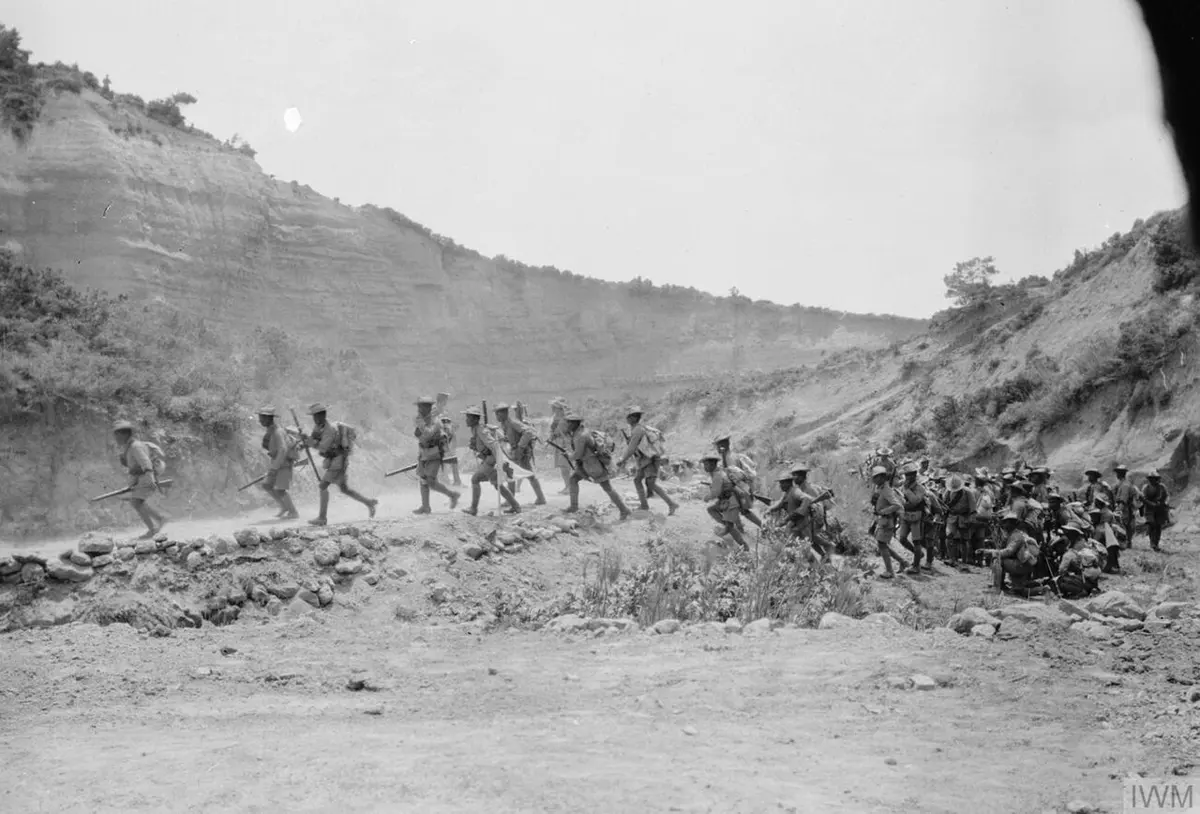
How many men from Nepal took part, and how many died? A figure of two hundred thousand is often given for those who served. It is a count, made in Chandra’s time, of every man who left the country “for all military purposes”, porters, laborers and policemen included. The soldiers in the Gurkha regiments were fewer: about twenty thousand already serving, about 55,000 more enlisted, and in all, by British counts made in different ways, between 90,000 and 100,000. More than 20,000 of them were killed or wounded. How many died is less certain: about 6,000 by the Gurkha regiments’ own museum, 10,000 by a British officer of the regiments, writing later. A figure of thirty thousand dead also appears in books in Nepal, but the records that can be read give nothing like it. So the answer depends on who is counted: tens of thousands of soldiers, far more men taken out of the hills, and deaths in the thousands.
Many letters in the censor’s reports, like Tuli Ram’s, describe the fighting. Some say what they couldn’t say. A soldier named Sham Sher Bohra, answering a friend in India who had asked how things were, wrote that it was “like being between the devil and the deep sea. When I come back to India then I will sit beside you and tell you everything.” An uncle in England wrote to his nephew in the regiment back home that if he wrote a full description he could fill a volume. “But this must not be known. Keep it secret.”
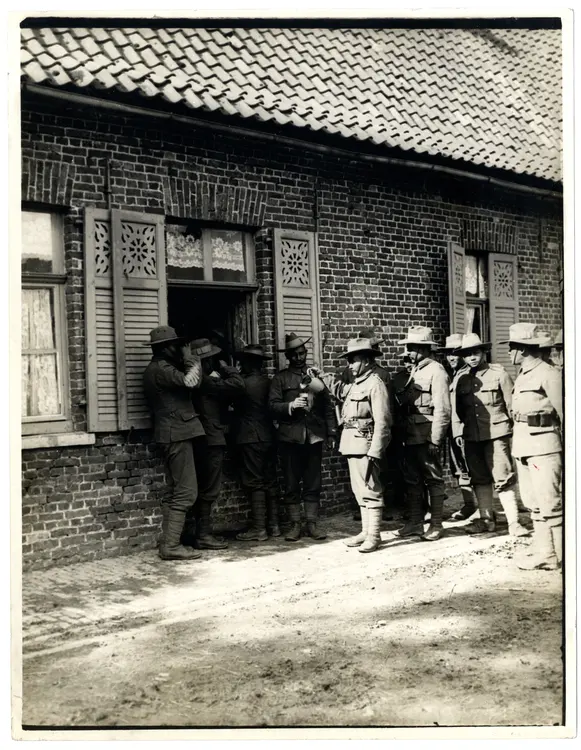
Some never came home at all. In a prisoner-of-war camp at Wünsdorf, outside Berlin, German scholars recorded the voices of their prisoners for the study of languages. In June 1916 several Gurkha prisoners were recorded. Motilal, from Harpan in Kaski, sang three songs. Jasbahadur, from Sukim in Darjeeling, sang a song he had made himself, a little over two minutes long. The shellac disc is still in Berlin. Jasbahadur never went home: he died in the camp.
The money and goods went too. Nepal gave the British cash gifts in 1914, 1916, 1917 and 1918, together well over ten lakh rupees. It gave cardamom, tea and army blankets, 31 machine guns, and two hundred thousand sleepers for India’s railways, cut from Nepal’s forests. And it lent British India a hundred and twenty-five lakhs of rupees in silver coin.
At home
What did the war look like from the villages? Very few hill families could read or write, and almost nothing written by them in those years survives. We see them only through outsiders: a British writer, the censor’s English, and a book written with the Rana prime minister’s help.
In the middle of the war a British writer, Edmund Candler, met a young Gurung soldier named Asbahadur on a troopship at Basra, in Iraq. Asbahadur had just been home on leave. He had six weeks, but after collecting his kit and pay at the depot, and walking sixteen days from Gorakhpur up to his village in Kaski, he had only four days at home before he had to start back. He told Candler that he had met very few young men of his own age. The women were doing the work in his village, and, as Candler put it, “You only met old men and cripples and boys.” His younger brother, he said, had run away to join the army at the start of the war, with their parents running after him for the best part of two nights and days. Now, Candler added, there was no need to run: there was conscription in Nepal.
On paper there wasn’t, and service stayed voluntary, though one regiment’s own history called it conscription. Either way, the pressure was real. The government’s orders went down to the villages, money and land were offered to recruiters and recruits, and one historian found that headmen and landlords, who had their own reasons to show their loyalty, often sent the poorest or most indebted men. One account says even prisoners from Nepal’s jails were sent. Families, women above all, began to resist as the dead and wounded became known, and in 1916 alone more than a thousand recruits deserted.
The government made promises to the families left behind: while a man was away, his court cases were to wait, his land was to be safe, and his overdue rent treated gently. Whether this worked in a far village, nobody recorded.
There was one more worry. A Hindu who crossed the sea was thought to lose his caste, and on coming home he needed a rite of purification, पानी पतिया (pānī patiyā), before his family could eat with him. With tens of thousands of men overseas, Chandra arranged with the Raj Guru, the kingdom’s highest priest, that every soldier who had gone with the government’s consent would be given it automatically, if he came back without delay with a British officer’s certificate that he had kept his caste rules.
Nepal’s own regiments came home from India in February 1919, and two and a half lakh rupees were shared among the men who had served. What the war meant for the hills is hard to measure. A soldier’s pay could buy a field, repay a debt or build a house, and a लाहुरे home on leave was a man who had seen the world. But a family that had lost its son lost the hands that plowed and carried, for good. And a wage earned abroad and sent home was the beginning of something that hasn’t stopped: today such money keeps a great many Nepali families going.
The bargain
In December 1919 the Viceroy of India wrote to Nepal’s king. In thanks for Nepal’s help, Britain would pay Nepal ten lakh rupees a year, forever, unless the friendship between them was broken. Nepal would have liked land, as Jung Bahadur had been given the western Tarai after 1857, but the Viceroy said that was impossible now. Chandra accepted the money, he wrote, as the best substitute for land. It was paid to his government, which under the Ranas meant into the prime minister’s hands.
The bigger prize came four years later. On 21 December 1923, in Kathmandu, Chandra Shumsher and the British envoy signed a new treaty. Its first article said that the two governments would “acknowledge and respect each other’s independence, both internal and external”. Another let Nepal bring in arms through India, so long as Britain saw no danger to India in it. For Chandra this was the point of everything: Britain, which ruled the whole of South Asia around Nepal, had now put in writing that Nepal was not one of its princely states but a country of its own. Kathmandu celebrated with two days’ holiday and lights at night.
Did the treaty change much? Nepal had never been ruled by Britain, so in one sense the treaty only wrote down what was already true, and some historians think Nepal’s dealings with the world still passed through British India until 1951. Others see it as the moment Nepal’s independence was made safe on paper.
That leaves the question Nepal’s Grade 9 book asks its readers to put to their elders: should Nepal have joined the war at all? The answers have never been the same. Seen one way, Chandra made a small, poor country useful to the empire that surrounded it, kept British goodwill, won money, arms and a treaty that recognized Nepal’s independence, and asked nothing of Nepal’s territory. Seen another way, Nepal had no quarrel with Germany or Turkey. In 1916 one Nepali wrote to the prime minister that “the people like to be recruited for their own country but not for a foreign power”. The men who fought weren’t asked; the decision was one family’s, and the money and honors went to that family, while the dead and wounded came from the villages. They fought for an empire that ruled India, and helped it hold India down. Both views can be true at once.
The same bargain was made again in the Second World War: Juddha Shumsher, Chandra’s brother, sent about 8,000 men of Nepal’s army to India and let the British recruit on a larger scale still, and more than 9,000 Gurkhas died. When the British left India in 1947, the Gurkha regiments were split between the British and Indian armies, and both still recruit in Nepal today.
Nepali, made abroad
The war years did something else, far from the trenches, among the Nepalis in India. In Banaras, where Nepali students, pandits and exiles had long lived, a weekly paper called Gorkhali began in September 1915, printed by Nepalis for Nepalis, and it argued that the language must be improved and taught. In Darjeeling a schoolboy named Parasmani Pradhan handed the vice-chancellor of Calcutta University, who was visiting his school, a petition asking that Nepali be recognized for exams, as Hindi and Bengali were. A Bengali lawyer in the party answered that Nepali was the language of coolies in Darjeeling, not fit for a university. The insult spurred Parasmani and his friends on. In 1918 the university gave way, and Nepali could be taken in school and college exams. Textbooks and grammars were needed, so Parasmani and his friends began to write them.
In Darjeeling Nepali was the language that people of many hill peoples used with each other, and that was the point. When writers there founded a society for Nepali literature in 1924, they chose the name Nepali on purpose, their chairman said, because it took in all the peoples of Nepal, Magar, Gurung, Kirati, Newar, Limbu and the rest. Until then it had usually been called the Gorkha language. Rana spies watched the Nepali presses in India; writers who criticized the Ranas wrote under false names. In the 1920s these writers made the poet Bhanubhakta the father of their language. In the 1930s and 1940s they wrote the lives of Prithvi Narayan Shah, Balbhadra and Amar Singh Thapa as the heroes of a brave nation (Chapters 20 and 21).
It seems odd that Nepal’s national language and heroes were shaped outside Nepal. But people who live among strangers often think hardest about who they are, and the Nepalis of Darjeeling and Banaras had schools, presses and readers that the Ranas wouldn’t allow at home. After the Ranas fell, Nepal’s own schools took up what they had made.
The First World War, then, reached far into Nepal’s hills. Under the Ranas, recruiting had grown into a steady business between the two governments, and in 1914 Chandra Shumsher offered everything Nepal had: its army to guard India, tens of thousands of recruits for France, Gallipoli and Iraq, and money, timber and goods. The villages paid most of the price, and the Ranas gained most of the reward: ten lakh rupees a year and a treaty that recognized Nepal’s independence in writing. Whether that was worth it is still argued. And the Nepalis in India gave Nepal its language’s name and its story of a brave nation. Many लाहुरे who came home had seen a world without Rana rule, a change that belongs to the next chapter.
The Grade 10 सामाजिक book covers the war in प्रथम विश्वयुद्धमा नेपालीको भूमिका.
Meanwhile, in the world: the First World War broke up four empires, the German, Austro-Hungarian, Russian and Ottoman, and in 1920 the League of Nations was set up to keep the peace.
Found a mistake? Please tell us.