
सुगन्धवाल: the valerian with a borrowed name
सुगन्धवाल · Valeriana jatamansi · A low herb with a scented rhizome, honeysuckle family
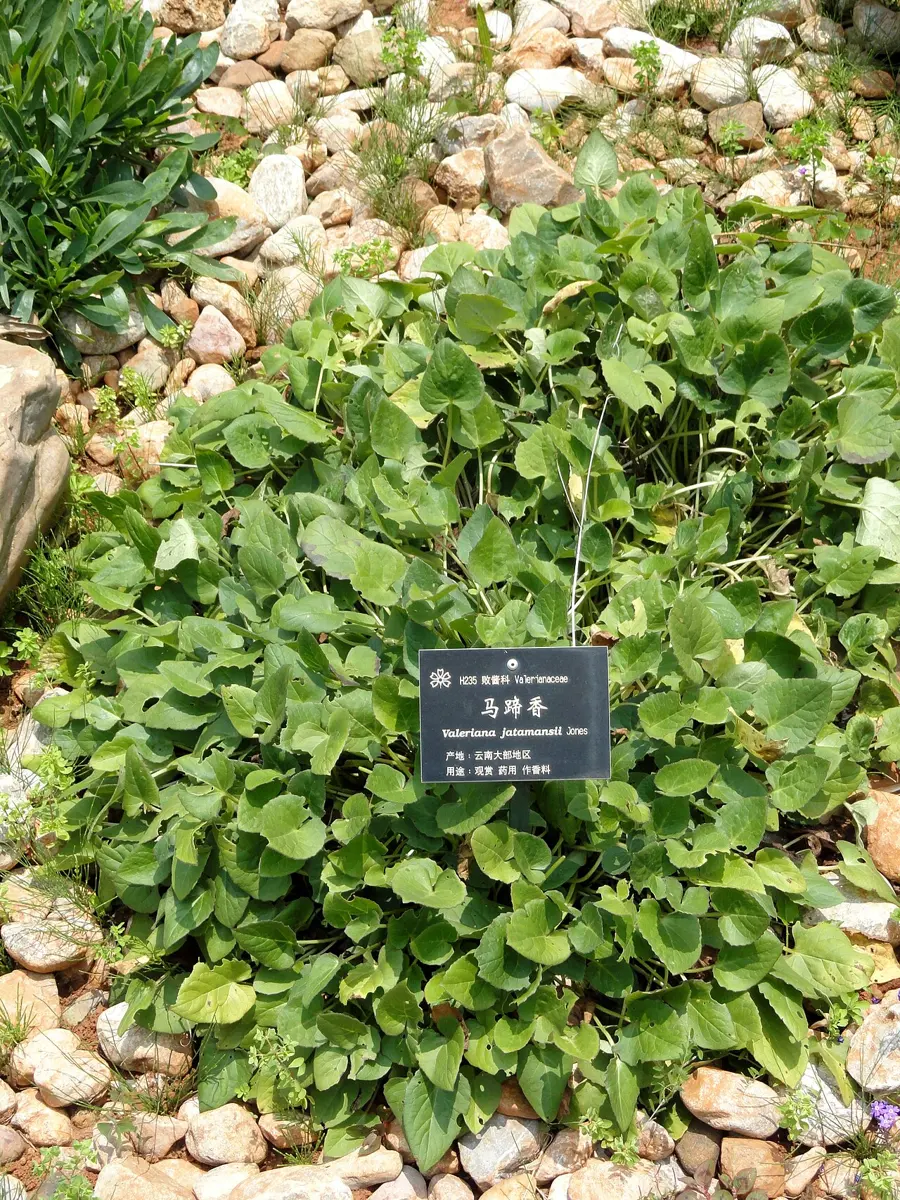
Have you ever lit a stick of incense and noticed that different sticks smell completely different? Some are sweet, some smoky, some earthy. One of the plants behind an earthy smell is a low, leafy herb of Nepal’s hills, with a short, knobbly root that smells strongly when it dries: सुगन्धवाल (sugandhawal). Its name says it: सुगन्ध (sugandha) means a sweet smell.
In some places it is also called jatamasi, the name of a quite different plant, जटामसी, of the high Himal. That mix-up is more than 230 years old, and it was made by one of the most famous scholars of his time. This page is about the plant, its story, what tradition uses it for, and what science says about valerian and sleep.
How to know it
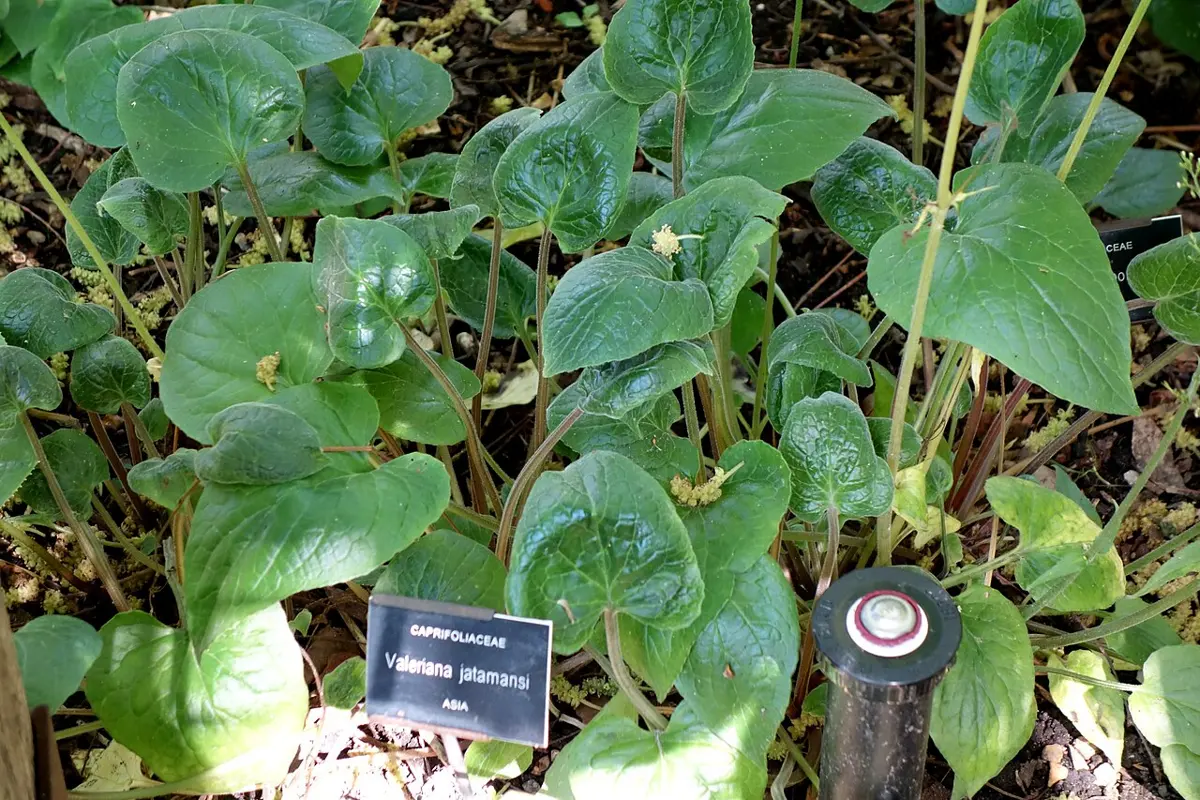
सुगन्धवाल is a small perennial herb, about 15 to 60 cm tall, which spreads by its underground stem (a rhizome) as well as by seed. Look for:
- the leaves at the base: heart-shaped or egg-shaped, 2 to 10 cm long, with toothed or wavy edges, often softly hairy;
- the stems: three to six rise from the rhizome, with a few smaller leaves on them, the top ones often lobed;
- the flowers: small and snow-white, in flat-topped bunches at the tips of the stems, from about March to May;
- the fruit: a small, velvety seed;
- the rhizome: short and thick. Dried, it has a strong smell.
It belongs to the valerians, which botanists now place in the honeysuckle family (Caprifoliaceae); they used to be a family of their own, Valerianaceae. Its older scientific name, Valeriana wallichii, is still seen in books.
Where it grows
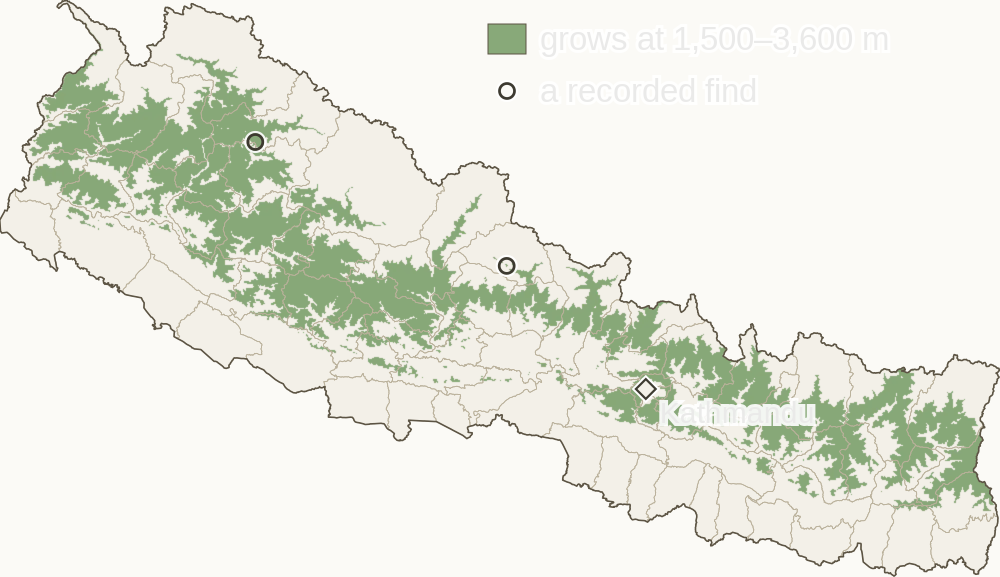
सुगन्धवाल is native to the Himalaya, from Afghanistan to southwest China, through India, Nepal, Bhutan and Myanmar. Reviews give its range as about 1,000 to 3,000 meters; another source gives 1,500 to 3,600 meters. It likes moist places: steep, rocky, grassy slopes that are left undisturbed.
In Nepal, studies of the herbs people use record it from Rasuwa and Kavrepalanchok in the center to Baitadi and Dadeldhura in the far west.
A name borrowed by mistake
Why is a valerian called jatamansi, when जटामसी is another plant altogether? The answer is a story from 1790.
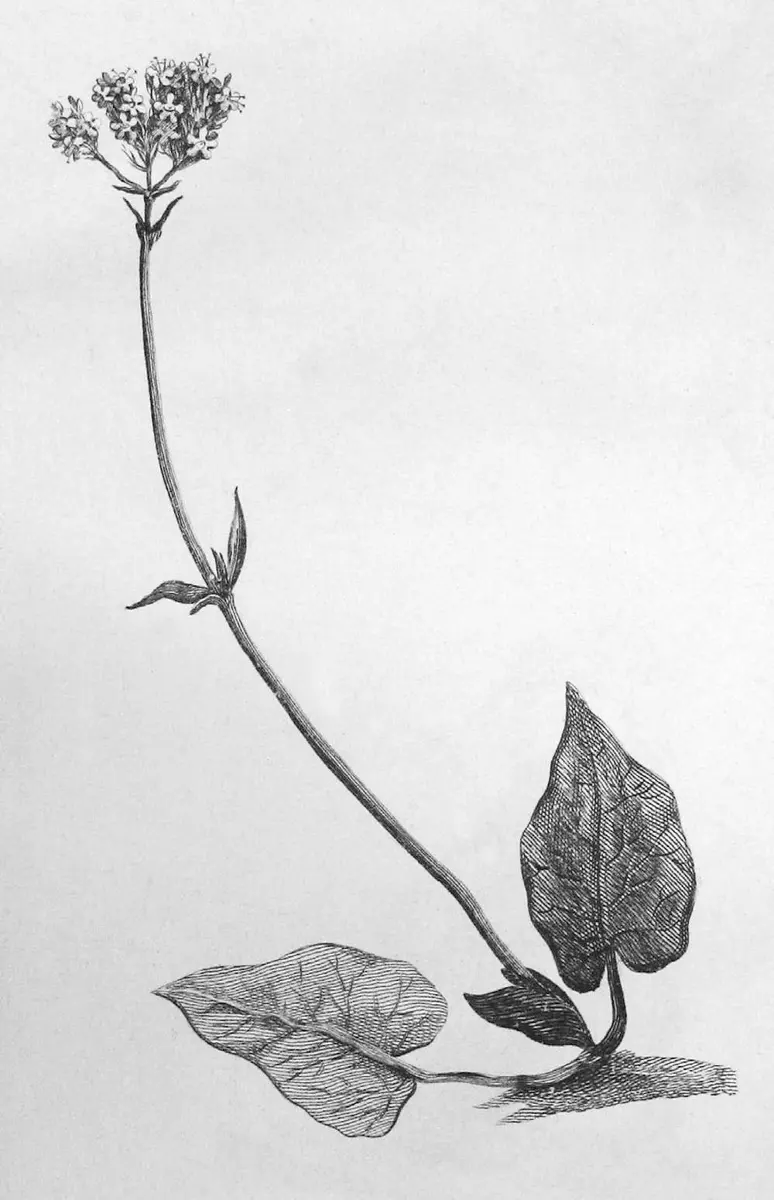
The two plants are easy to tell apart. जटामसी’s root is wrapped in shaggy, hair-like fibers, the remains of old leaves; सुगन्धवाल’s has no such fibers. Its leaves are broad and heart-shaped; जटामसी’s are long and narrow.
A trader shows you a dried root wrapped in thick, brown, hair-like fibers and says it is सुगन्धवाल. Is he right?
Pick an answer to see why.
The mix-up still causes trouble. Researchers in India read 116 scientific articles about सुगन्धवाल and checked how they named the plant: only about half were free of mistakes in its name or classification. When the name is wrong, it is hard to know which plant a study really tested.
Traditional uses
In Nepal, studies of the herbs people use record सुगन्धवाल, in tradition:
- in Rasuwa, a paste of the rhizome put on cuts and wounds and on sore joints, and the rhizome chewed for a sore throat; it is used there for coughs and colds too;
- in Kavrepalanchok, where the Tamang name is dhalin, root juice given to children for diarrhea, and the dried roots made into incense for religious use, and by healers for anxiety and sleeplessness;
- in the far west, a remedy for worms.
Beyond Nepal, a review lists it in 39 Ayurvedic preparations, and uses for headache (crushed leaves rubbed on the forehead), sleeplessness, nervous complaints and more. Its dried rhizomes go into perfumes and incense, and its oil flavors tobacco and drinks.
Valerian and sleep: what science has tested
Valerians are famous for one thing: sleep. Valerian root is sold as a herbal supplement for it, and सुगन्धवाल is used as a calming medicine too: it is in the official books of medicines of India, Britain and China. Its rhizome holds valerenic acid and a large family of compounds called valepotriates.
What do they do? In the laboratory, valerenic acid slows the breakdown of GABA, a chemical messenger that calms nerve cells in the brain. In mice and rats, chemicals from सुगन्धवाल made the animals move about less and sleep longer.
In people:
one trial gave people who couldn’t sleep the powdered rhizome in milk, and reported that they slept better; but the review that lists it gives few details, and it is a single study;
for valerian in general, the US government’s center for research on traditional medicine (NCCIH) says the evidence for sleep is inconsistent, and that there is not enough evidence that valerian is useful for any health condition. The American Academy of Sleep Medicine advises against using valerian for long-term sleeplessness in adults.
How strong the evidence is: for सुगन्धवाल itself, very little in people. For valerian in general, tested in many trials, with mixed results.
Trade and protection
सुगन्धवाल is collected from the wild and sold in Nepal’s herb markets. In March 2026, ANSAB, a Nepali organization that tracks herb prices, listed dried सुगन्धवाल at Rs 700 a kilogram in Kathmandu and Rs 650 in Nepalgunj.
The same list marks it among the herbs that Nepal bans from export without processing: it may leave the country only after being processed, and only with prior permission from the Department of Forests. The government’s own list of protected plants (2012) gives the same ban, and adds that it does not apply to farmed plants. In India it is one of the medicinal plants traded in large amounts, over 100 tonnes a year.
The IUCN Red List has not assessed it (it is “Not Evaluated”), but Nepal’s own list of threatened medicinal plants counts it as Vulnerable, and the government has chosen it for research and for developing ways to farm it.
See it at the Science Playground
सुगन्धवाल grows in our garden, labeled “Jatamasi (Indian Valerian)”. Look at the heart-shaped leaves and compare them with the photos of जटामसी on its page. Our exhibit Medicinal and Culinary Herbs of Nepal shows dried herbs and spices used in Nepal. More plants in Herbs of Nepal.
Where these facts come from
- Mabberley D.J. and Noltie H.J., A note on Valeriana jatamansi Jones (Caprifoliaceae s.l.), Blumea, 2014.
- Jugran A.K. et al., Valeriana jatamansi: an herbaceous plant with multiple medicinal uses, Phytotherapy Research, 2019.
- Valeriana jatamansi, ICIMOD database of plants of the Himalaya, checked November 2026.
- National Center for Complementary and Integrative Health, Valerian, updated May 2025.
- Uprety Y. et al., Indigenous use and bio-efficacy of medicinal plants in the Rasuwa District, Central Nepal, Journal of Ethnobiology and Ethnomedicine, 2010.
- Ambu G. et al., Traditional uses of medicinal plants by ethnic people in the Kavrepalanchok District, Central Nepal, Plants, 2020.
- Kunwar R.M. et al., Medicinal plants, traditional medicine, markets and management in far-west Nepal, Journal of Ethnobiology and Ethnomedicine, 2013.
- ANSAB, NTFPs price list, March 2026.
- Department of Plant Resources, Plants of Nepal: fact sheet, Ministry of Forests and Soil Conservation, 2012 (archived copy).
- Valeriana jatamansi: IUCN Red List category, GBIF (from the IUCN Red List), checked November 2026.
- सुगन्धवाल in the Nepali Brihat Shabdakosh (Nepal Academy).