
जटामसी: the scented root of the high Himal
जटामसी · Nardostachys jatamansi · An alpine herb with a fragrant root, honeysuckle family
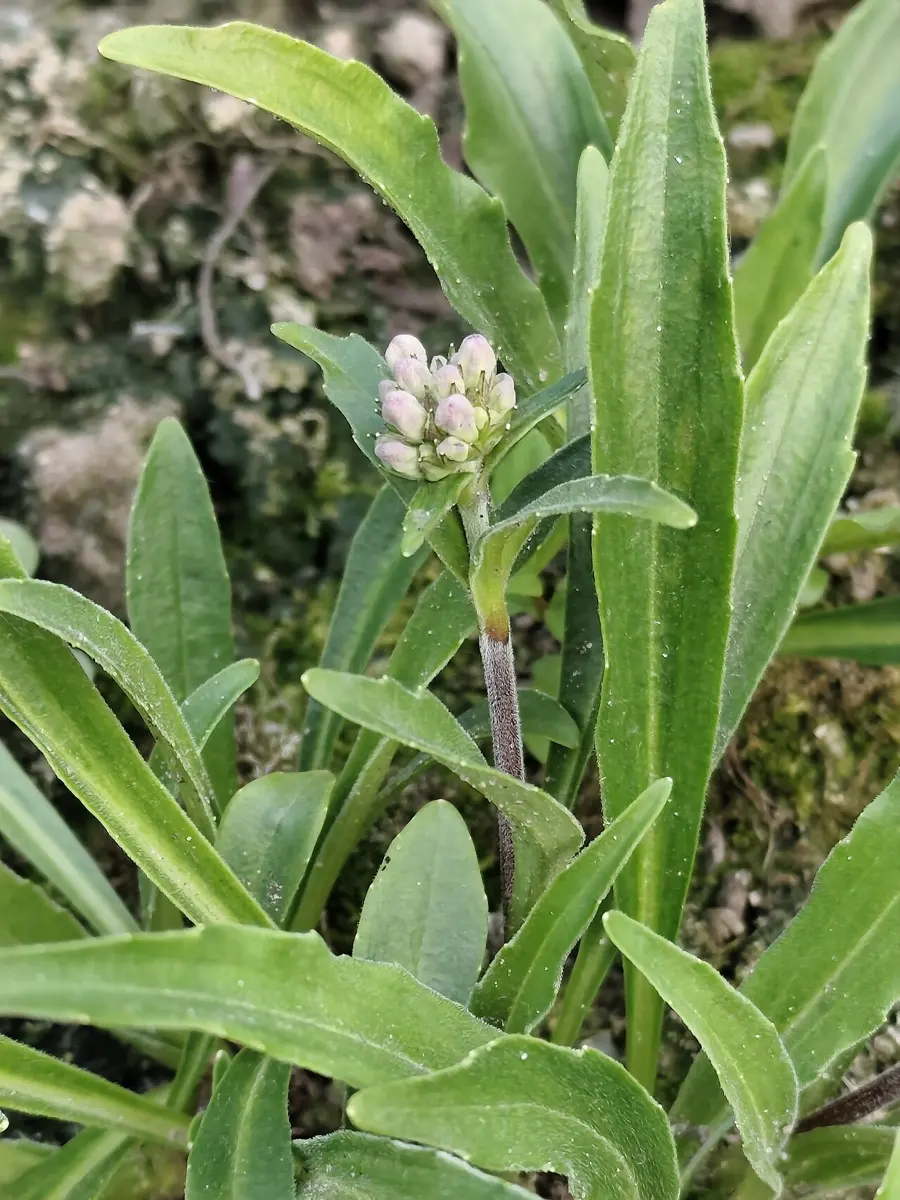
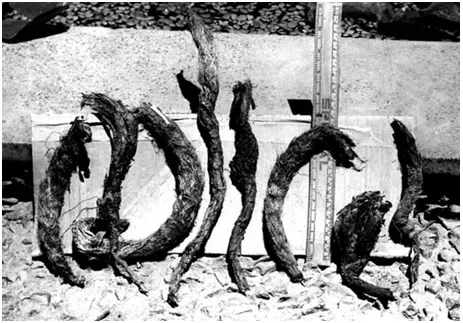
Some incense sticks and perfumes have a deep, earthy, slightly musky smell. Very often it comes from a small plant that grows on steep grassy slopes above 3,000 meters, in places like Jumla and Dolpa: जटामसी (jatamansi). The name hints at what it looks like: जटा (jata) is matted, tangled hair, and the plant’s root is covered in brown, hair-like fibers.
People have traded this root for a very long time. It may be the nard of the Bible, one of the few plants the Bible names directly as a medicine. Today it is one of Nepal’s most valuable wild herbs, and one of its most threatened.
How to know it
जटामसी is a small perennial herb, coming back year after year from its underground stem (a rhizome), and growing up to about 75 cm tall. Look for:
- the leaves: long and narrow, in a rosette at the base;
- the flowers: small, rosy, pale pink or purple, in a tight head on a short stem, from July to September; fruits follow from October;
- the rhizome: thick, dark, and wrapped in brown, hairy fibers, the remains of old leaves; it spreads and sends up new shoots, so the plant grows in dense clumps.
It belongs to the honeysuckle family (Caprifoliaceae), which today also includes the valerians. It has also been called Nardostachys grandiflora; botanists now use Nardostachys jatamansi for both.
Where it grows
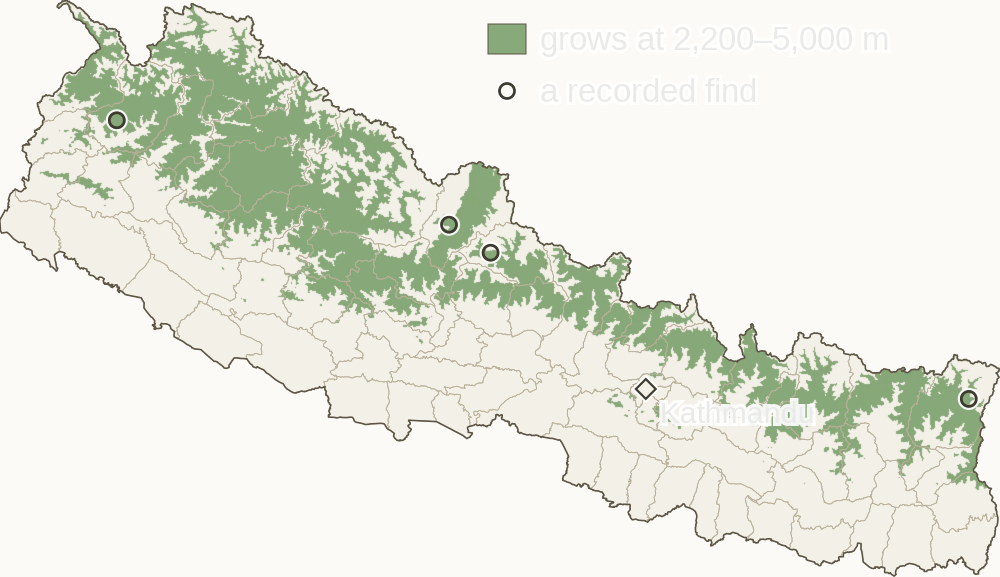
जटामसी grows across the Himalaya, from Pakistan to southern China, between about 2,200 and 5,000 meters. In Nepal it is mostly found above 3,000 meters, more in the west than the east: most of all in Jumla, Dolpa, Humla and Kalikot, and also in northern Gorkha, Rasuwa, Mustang and the southern side of Ganesh Himal.
It likes steep, open, moist slopes of grass and rock, on sandy soil, in the alpine and subalpine zones; it grows best on slopes of 25 to 45 degrees.
Old fame and traditional uses
In Ayurveda and in the Amchi (Tibetan) medicine of Nepal’s mountains, the rhizome is used as a tonic, and for headache, altitude sickness, fever, epilepsy, sleeplessness, indigestion, skin diseases and more. Studies of the herbs people use in Nepal record:
- juice of the whole plant for headache and altitude sickness in Rasuwa, where people ranked it first among their most important medicinal plants;
- a remedy for epilepsy in the far west.
Its oil, distilled from the rhizome, is valued in perfumes, incense, soaps, creams and other cosmetics.
What science has tested
Scientists have found many fragrant compounds in the rhizome, such as jatamansone, and have tested extracts in the laboratory and in animals for effects on the nervous system, the liver, blood sugar, fungi, the heart and more. Many found some effect.
Tests in people are rare. One trial (2020) gave 40 patients with mild high blood pressure either capsules of the powdered root or dummy capsules for four weeks; blood pressure fell in the jatamansi group and not in the other. That is interesting, but one small, short trial, in which the doctors (though not the patients) knew who got which capsule, is not enough to know whether it works or is safe over years.
- How strong the evidence is: very little: lab and animal studies, and one small trial in people. Not a treatment anyone should rely on.
Trade: a root worth a quarter of a family’s income
In the high villages, harvesting जटामसी is one of the few ways to earn cash. Estimates for Nepal:
- about 15,000 households harvest it, and it gives them 20 to 25% of their year’s income on average;
- a harvesting household collects on average about 106 kg of rhizome a year, over about 13 days of trips to the high slopes, between August and December;
- the rhizome passes from village traders to wholesalers and processors, and most of it goes to India (over 70% of Nepal’s exports), as raw rhizome or as oil.
How much is traded? Researchers who interviewed traders, wholesalers and processors across Nepal estimated:
| Year | Rhizome traded in Nepal (estimate) | Share from Karnali Province |
|---|---|---|
| 1997–98 | 377 tonnes | 22% |
| 2014–15 | 1,145 tonnes | 71% |
The trade tripled, and moved west, to Karnali. Prices paid to harvesters: no reliable figure (they rose over these years, but the studies we read don’t give them).
Critically endangered, and protected
Because so many rhizomes have been dug up, and its slopes are also being damaged, जटामसी is declining:
- the IUCN Red List rates it Critically Endangered (in an assessment published in 2016, based largely on data from India’s populations);
- it is listed in Appendix II of CITES, the world agreement on trade in endangered species, since 1997: it can be traded across borders only with permits showing the trade won’t harm the species;
- Nepal bans exporting the unprocessed rhizome: it must be processed, for example into oil, first;
- India has banned commercial collection of its own wild rhizomes, but remains the main buyer of Nepal’s.
Harvesting so it grows back
The government’s leaflet for harvesters gives simple rules (and more than 2,000 harvesters in Jumla and Mugu have been trained in good harvesting):
- Dig only mature plants, 3 to 4 years old, whose leaves are turning yellow, in Asoj, Kartik and Mangsir (mid-September to mid-December).
- Leave 20 to 25% of the plants in each patch untouched.
- Harvest an area only once every four or five years, in rotation, so it can recover.
Researchers who studied regrowth found something better still: if a harvester replants the top of the plant with about 2 cm of rhizome attached, the rhizome grows back fastest. Harvested this way, they calculate, Nepal’s slopes could supply far more जटामसी every year than now, while the plant recovers.
A harvester wants जटामसी on her slope to still be there for her children. Which plan fits the advice?
Pick an answer to see why.
See it at the Science Playground
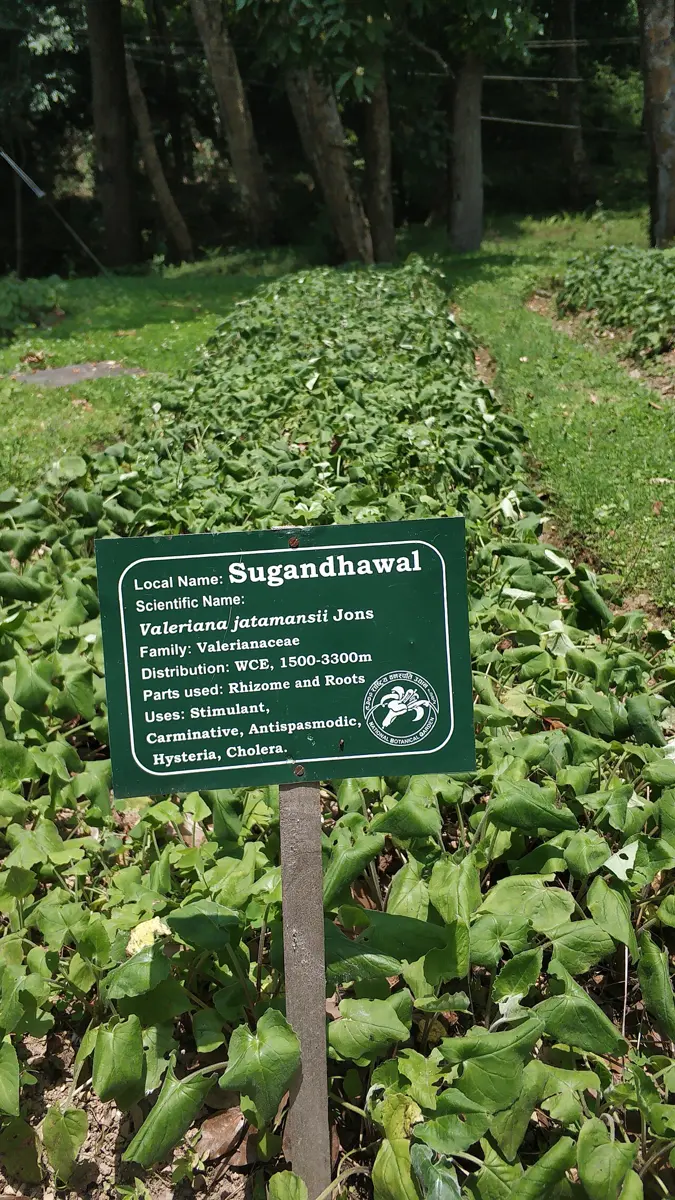
Our exhibit Medicinal and Culinary Herbs of Nepal shows dried herbs and plant products found in Nepal. In our garden, find the other jatamasi, सुगन्धवाल, and compare it with the photos on this page. More plants in Herbs of Nepal.
Where these facts come from
- Department of Forests and Soil Conservation and ANSAB, Jatamansi, leaflet, about 2019.
- Timoshyna A. et al., Succeeding with CITES: sustainable and equitable Jatamansi trade from Nepal, final report, Darwin Initiative and TRAFFIC, 2021.
- Smith-Hall C. et al., The sustainability of trade in wild plants: a data-integration approach tested on critically endangered Nardostachys jatamansi, PNAS Nexus, 2023.
- Smith-Hall C. et al., A roadmap to sustainable management of commercial medicinal and aromatic plants, fungi, and lichens in Nepal, Conservation Biology, 2025.
- Dafni A. and Böck B., Medicinal plants of the Bible, revisited, Journal of Ethnobiology and Ethnomedicine, 2019.
- Dhiman N. and Bhattacharya A., Nardostachys jatamansi: challenges and opportunities of harnessing the untapped medicinal plant from the Himalayas (abstract), Journal of Ethnopharmacology, 2020.
- Pathak S. and Godela R., Nardostachys jatamansi: phytochemistry, ethnomedicinal uses, and pharmacological activities: a comprehensive review (abstract), Fitoterapia, 2024.
- Bhat M.D.A. and Malik S.A., Efficacy of Nardostachys jatamansi in essential hypertension: a randomized controlled study (abstract), Complementary Therapies in Medicine, 2020.
- Uprety Y. et al., Indigenous use and bio-efficacy of medicinal plants in the Rasuwa District, Central Nepal, Journal of Ethnobiology and Ethnomedicine, 2010.
- Kunwar R.M. et al., Medicinal plants, traditional medicine, markets and management in far-west Nepal, Journal of Ethnobiology and Ethnomedicine, 2013.
- Ambu G. et al., Traditional uses of medicinal plants by ethnic people in the Kavrepalanchok District, Central Nepal, Plants, 2020.
- Subedi B.P., Non-timber forest products sub-sector in Nepal: opportunities and challenges for linking the business with biodiversity conservation, ANSAB.
- Nardostachys jatamansi, Species+ (CITES listings), checked October 2026.
- Nardostachys jatamansi: IUCN Red List category, GBIF (from the IUCN Red List), checked October 2026.
- जटामसी in the Nepali Brihat Shabdakosh (Nepal Academy).