
Pick up your pencil. It has mass (it pulls down on your hand) and it takes up space (you can’t push another pencil into the same place). Now pick up a shadow. You can’t: a shadow has no mass and fills no space. That simple test sorts everything around you into two kinds: matter, and things that are not matter.
In this unit you will look deep inside matter, down to the atom: what it is made of, how its electrons sit in shells, and why some atoms grab electrons while others give them away. You will learn to write the formula of a compound without memorizing it, find out why chemists arrange all 118 elements in one famous table, and write your first chemical equations.
What matter is
Think of a guitar, a toy robot, a truck, a slice of pizza, water in a pool and from a tap, a glass of juice, lava from a volcano, steam from hot tea, petrol from a pump, and chemicals in a flask. Each of these has mass and volume (it takes up space).
Anything that has mass and volume is called matter. Books, desks, houses, trees, water and even the air you breathe are matter. Heat, light, sound and shadows are not: they have no mass and take up no space. Light and heat are forms of energy; a shadow is just a place where light doesn’t reach.
Matter around us is found in three states: solid, liquid and gas. All matter, in any state, is made of tiny particles called atoms, of one kind or of several kinds.
Matter can also be sorted by what it is made of:
- Pure substances are made of one kind of thing only. Elements (such as iron, oxygen and gold) and compounds (such as water and common salt) are pure substances.
- Impure substances are mixtures: two or more substances mixed together but not joined, such as air, sea water, soil or tea.
Which of these is not matter?
Pick an answer to see why.
Atom
Activity 9.1: symbols and atomic numbers
Every element has a symbol (one or two letters) and an atomic number (a whole number that is different for every element).
Activity 9.2: inside an atom
What an atom is
Cut a piece of copper wire in half, then in half again, and again. If you could go on long enough, you would reach the smallest piece that is still copper: one atom of copper. An atom is the smallest particle of an element that can take part in a chemical reaction.
- Atoms are far too small to see, even with an ordinary microscope. Roughly five to ten million atoms side by side would make a row just 1 mm long.
- An element is made of atoms of only one kind. All the atoms in a lump of gold are gold atoms.
- The atoms of one element are different from the atoms of every other element. A gold atom is not like a copper atom.
- How an atom is built (its structure) decides how the element behaves, both physically and chemically.
Structure of an atom
An atom is made of three kinds of even smaller particles, the subatomic particles.
- At the center is a tiny, heavy core called the nucleus. Two kinds of particle are packed in it: protons and neutrons.
- The third kind, electrons, move around the nucleus in fixed paths called shells or orbits.
Proton
A proton is a positively charged particle in the nucleus. Its symbol is p⁺. A proton has very nearly the same mass as a whole hydrogen atom, and this mass is used as the unit for measuring atoms: 1 atomic mass unit (amu). So a proton has a mass of 1 amu.
Neutron
A neutron is a particle in the nucleus with no charge: it is neutral, or chargeless. Its symbol is n⁰. A neutron has almost exactly the same mass as a proton, so its mass is also 1 amu.
Electron
An electron is a negatively charged particle that moves around the nucleus. Its symbol is e⁻. An electron is very light: it would take about 1836 electrons to balance one proton. So the mass of an electron is about 1/1836 amu. (Many books write 1/1837; see the note below.)
Comparing the subatomic particles
| Subatomic particle | Symbol | Where it is | Charge | Mass |
|---|---|---|---|---|
| proton | p⁺ | in the nucleus | positive | 1 amu |
| neutron | n⁰ | in the nucleus | none (neutral) | 1 amu |
| electron | e⁻ | in the shells, around the nucleus | negative | 1/1836 amu |
An atom has as many electrons as protons. The positive and negative charges are equal and cancel, so a whole atom has no charge: it is electrically neutral.
The number of protons in an atom is its atomic number. It is the atom’s identity card: every atom with 1 proton is hydrogen, every atom with 6 is carbon, every atom with 8 is oxygen.
An atom has 9 protons and 10 neutrons. How many electrons does it have?
Pick an answer to see why.
The first 20 elements
| Element (symbol) | Atomic number = protons = electrons | Neutrons | Protons + neutrons |
|---|---|---|---|
| Hydrogen (H) | 1 | 0 | 1 |
| Helium (He) | 2 | 2 | 4 |
| Lithium (Li) | 3 | 4 | 7 |
| Beryllium (Be) | 4 | 5 | 9 |
| Boron (B) | 5 | 6 | 11 |
| Carbon (C) | 6 | 6 | 12 |
| Nitrogen (N) | 7 | 7 | 14 |
| Oxygen (O) | 8 | 8 | 16 |
| Fluorine (F) | 9 | 10 | 19 |
| Neon (Ne) | 10 | 10 | 20 |
| Sodium (Na) | 11 | 12 | 23 |
| Magnesium (Mg) | 12 | 12 | 24 |
| Aluminium (Al) | 13 | 14 | 27 |
| Silicon (Si) | 14 | 14 | 28 |
| Phosphorus (P) | 15 | 16 | 31 |
| Sulphur (S) | 16 | 16 | 32 |
| Chlorine (Cl) | 17 | 18 | 35 |
| Argon (Ar) | 18 | 22 | 40 |
| Potassium (K) | 19 | 20 | 39 |
| Calcium (Ca) | 20 | 20 | 40 |
In a neutral atom, the number of protons and the number of electrons are both equal to the atomic number, so one column is enough for all three. The number of neutrons is often the same as the protons, but not always: argon has 4 more. The last column, protons plus neutrons, you will soon meet as the atomic weight.
Bohr and Bury’s 2n² rule
Nitrogen has seven electrons. Are they all in the same shell, or in different shells? Two scientists, Niels Bohr and Charles Bury, worked out how electrons are arranged.
The shells around a nucleus are named, from the inside out, K, L, M and N. Each shell has its own energy, so shells are also called energy levels. The K shell is the first energy level, closest to the nucleus and lowest in energy; L, M and N are the second, third and fourth.
Each shell can hold only a certain number of electrons. The 2n² rule of Bohr and Bury gives that number, where n is the number of the shell:
| Shell | n | 2n² | Most electrons it can hold |
|---|---|---|---|
| K | 1 | 2 × 1² = 2 × 1 | 2 |
| L | 2 | 2 × 2² = 2 × 4 | 8 |
| M | 3 | 2 × 3² = 2 × 9 | 18 |
| N | 4 | 2 × 4² = 2 × 16 | 32 |
Electrons fill the shells from the inside out: the K shell first, then L, then M. One more rule matters for the first 20 elements: the outermost shell never holds more than 8 electrons. That is why potassium (19 electrons) is 2, 8, 8, 1 and not 2, 8, 9: the M shell could hold 18, but while it is the outermost shell it stops at 8, and the 19th electron starts the N shell.
The arrangement of electrons in the shells is called the atom’s electronic configuration. It is written as the number in each shell, inside to outside: sodium is 2, 8, 1.
Sulphur has 16 electrons. What is its electronic configuration?
Pick an answer to see why.
Drawings of atoms, like the ones in this unit, show electrons on neat round tracks. They are good for counting electrons, but a real atom doesn’t look like that. An electron has no fixed track. Scientists can only say where it is likely to be found, so they picture it as a fuzzy electron cloud: thick where the electron is often found, thin where it rarely is. Each shell is, roughly, a cloud at its own distance from the nucleus.
Valence shell, valence electron and valency
The outermost shell of an atom is its valence shell, and the electrons in it are its valence electrons. Sodium (2, 8, 1) has 1 valence electron in its M shell; chlorine (2, 8, 7) has 7.
Atoms are most stable (most “content”) when their valence shell is full: 2 electrons if the K shell is the only shell (as in helium), or 8 electrons otherwise (as in neon and argon). Other atoms try to reach this state by losing, gaining or sharing electrons:
| Valence electrons | What the atom does | Example |
|---|---|---|
| 1, 2 or 3 | loses them | sodium loses 1 |
| 4 | shares them | carbon shares 4 |
| 5, 6 or 7 | gains enough to make 8 | chlorine gains 1 |
| 8 (or 2 for helium) | nothing: already stable | neon, argon |
The valency of an element is the number of electrons its atom loses, gains or shares to become stable. It tells you how many “hands” an atom has for joining with other atoms.
- With 1–4 valence electrons, the valency is the number of valence electrons: sodium 1, magnesium 2, aluminium 3, carbon 4.
- With 5–7 valence electrons, the valency is 8 minus the number of valence electrons: nitrogen 8 − 5 = 3, oxygen 8 − 6 = 2, chlorine 8 − 7 = 1.
- With 8 valence electrons (or 2 for helium), the atom loses, gains and shares nothing, so its valency is 0. These elements (helium, neon, argon) hardly ever take part in chemical reactions.
So valency depends on the number of valence electrons, and that depends on the electronic configuration.
Why is the valency of oxygen 2?
Pick an answer to see why.
Molecular formula
A molecule is two or more atoms joined together. A molecule of an element has atoms of one kind only (oxygen gas is O₂: two oxygen atoms). A molecule of a compound has atoms of different kinds (water is H₂O: two hydrogen atoms and one oxygen atom).
The molecular formula is the short way of writing a molecule with symbols: which atoms are in it, and how many of each (the small number after a symbol). To write the molecular formula of a compound, you need to know two things: which elements it is made of, and the valency of each. Then use the criss-cross method.
The criss-cross method
Follow these steps, using magnesium oxide as the example:
- a.Write the name of the compound: magnesium oxide.
- b.Write the symbols of its elements: Mg and O.
- c.Write each element’s valency above its symbol: Mg 2, O 2.
- d.Cross over the valencies, as the arrows show.
- e.Write each crossed valency as a small number (a subscript) after the other symbol: Mg₂O₂.
Two more rules:
- A valency of 1 is not written: K₁Cl₁ is written KCl.
- If both numbers can be divided by the same number, divide them and keep what is left: Mg₂O₂ becomes MgO.
More examples
| Compound | Symbols and valencies | After crossing | Molecular formula |
|---|---|---|---|
| potassium chloride | K (1), Cl (1) | K₁Cl₁ | KCl |
| calcium chloride | Ca (2), Cl (1) | Ca₁Cl₂ | CaCl₂ |
| ammonia | N (3), H (1) | N₁H₃ | NH₃ |
| carbon dioxide | C (4), O (2) | C₂O₄ → divide by 2 | CO₂ |
| water | H (1), O (2) | H₂O₁ | H₂O |
Atomic weight and molecular weight
Atomic weight
Almost all the mass of an atom is in its nucleus: the protons and neutrons, each 1 amu. Electrons are so light that we leave them out. So the atomic weight of an element is the number of protons plus the number of neutrons in its nucleus:
A magnesium atom has 12 protons and 12 neutrons, so its atomic weight is 12 + 12 = 24 amu.
For calculations, use these atomic weights:
| H | C | N | O | Na | Mg | Al | S | Cl | K | Ca |
|---|---|---|---|---|---|---|---|---|---|---|
| 1 | 12 | 14 | 16 | 23 | 24 | 27 | 32 | 35.5 | 39 | 40 |
Molecular weight
The molecular weight of an element or compound is the sum of the atomic weights of all the atoms in one molecule. Water, H₂O, has 2 hydrogen atoms and 1 oxygen atom. Hydrogen’s atomic weight is 1 and oxygen’s is 16, so the molecular weight of water is 2 × 1 + 16 = 18 amu.
Activity 9.4: comparing two atoms
Exercise (atoms and molecules)
1. Choose the best answer
a. What is the symbol of the element shown in Figure 9.8?
Pick an answer to see why.
b. Which of these elements has a valency of zero?
Pick an answer to see why.
c. What is the atomic weight of argon?
Pick an answer to see why.
d. What is the mass of the negatively charged subatomic particle of an atom?
Pick an answer to see why.
e. Which subatomic particles are in the nucleus of an atom?
Pick an answer to see why.
f. What is the molecular formula of calcium oxide?
Pick an answer to see why.
g. The table gives the numbers of protons, electrons and neutrons in four elements. Which has the highest atomic weight?
| Element | Protons | Electrons | Neutrons |
|---|---|---|---|
| Potassium | 19 | 19 | 20 |
| Carbon | 6 | 6 | 6 |
| Oxygen | 8 | 8 | 8 |
| Argon | 18 | 18 | 22 |
Pick an answer to see why.
2. Differentiate between
Proton and electron
Answer
K shell and M shell
Answer
Valence shell and valence electron
Answer
Atomic weight and molecular weight
Answer
3. Give reasons
An atom is electrically neutral.
Answer
The valency of chlorine is 1.
Answer
4. Answer these questions
What is an atom?
Answer
Write the name, symbol and charge of the subatomic particles in an atom.
Answer
Write the molecular formulas of these compounds by the criss-cross method:
- i.magnesium oxide
- ii.sodium chloride
- iii.potassium oxide
- iv.aluminium chloride
- v.ammonia
Answer
What is a shell?
Answer
What is the 2n² rule used for?
Answer
What is a valence shell? What is an electron in the valence shell called?
Answer
What is valency? What does the valency of an element depend on?
Answer
What is meant by the valency of an element being zero?
Answer
What will be the valency of an element whose electronic configuration is 2, 8, 8, 1? Give reasons.
Answer
What is a molecular formula? What information is needed to write the molecular formula of a compound?
Answer
What is the atomic weight of potassium? Calculate the molecular weight of calcium chloride.
Answer
Complete the table.
| Element | Symbol | Atomic number | Atomic mass | Protons | Neutrons | Electrons |
|---|---|---|---|---|---|---|
| Oxygen | 16 | |||||
| C | 6 | |||||
| 11 | 12 | |||||
| 24 | 12 | |||||
| Chlorine | 17 | |||||
| K | 20 | |||||
| 14 | 14 | |||||
| Argon | 40 |
Hint
Answer
Can an atom exist without electrons? Give reasons.
Answer
Anju drew the atomic structure of sodium as in Figure 9.9. Find three mistakes in her drawing.
Hint
Answer
The nucleus of an atom has 19 protons and 20 neutrons. Which element is it? Draw the atomic structure of its atom. What information is needed to calculate the atomic weight of an element? Give reasons.
Answer
Complete the table with the number of atoms in a molecule of sulphuric acid (H₂SO₄).
| Element | Number of atoms |
|---|---|
| Hydrogen | |
| Sulphur | |
| Oxygen | |
| Total |
Answer
Classification of elements
Activity 9.5: does sorting help you remember?
As science grew, more and more elements were discovered. By the 1860s about 60 were known; today there are 118. Studying each one separately would be slow and hard to remember. So scientists looked for patterns: elements that behave alike, and ways they differ. They arranged the elements in a table of rows and columns, called the periodic table. Many tables were tried over the years; the one used all over the world today is the modern periodic table.
Modern periodic table
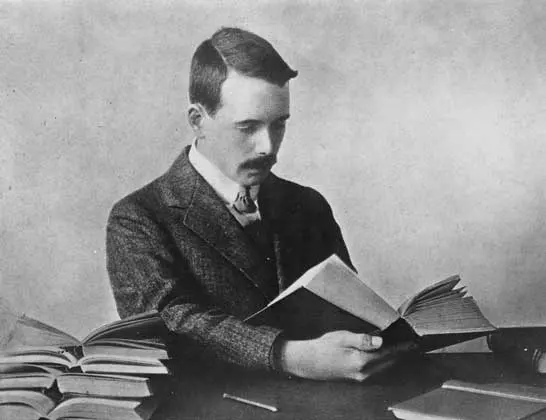
Many scientists tried to classify the elements in their own way. The breakthrough came in 1913, when the young English scientist Henry Moseley showed that each element has its own atomic number (the number of protons), and that the elements should be arranged by atomic number, not by weight. When the elements are put in order of increasing atomic number, their properties repeat at regular intervals: every so often, an element turns up that behaves like one earlier in the list. Elements with similar properties then fall in the same vertical column, and different properties lie along each horizontal row. This arrangement, the modern periodic table, is accepted all over the world and is the one used in science today.
The modern periodic law
Moseley’s discovery is summed up in the modern periodic law:
“The physical and chemical properties of elements are a periodic function of their atomic numbers.”
In plain words: as the atomic number goes up, the properties of the elements change, and similar properties come back again and again at regular intervals, like the days of the week. Lithium, sodium and potassium (atomic numbers 3, 11 and 19) are all soft, shiny, very reactive metals; each one comes 8 places after the one before.
Position of hydrogen
Hydrogen has only one electron in its outermost shell, like lithium and sodium. So it is placed in group 1. But hydrogen is a gas and a non-metal: it doesn’t have the metallic properties of the other group 1 elements. That is why some tables leave a small gap below it, or draw it a little apart.
Position of metals
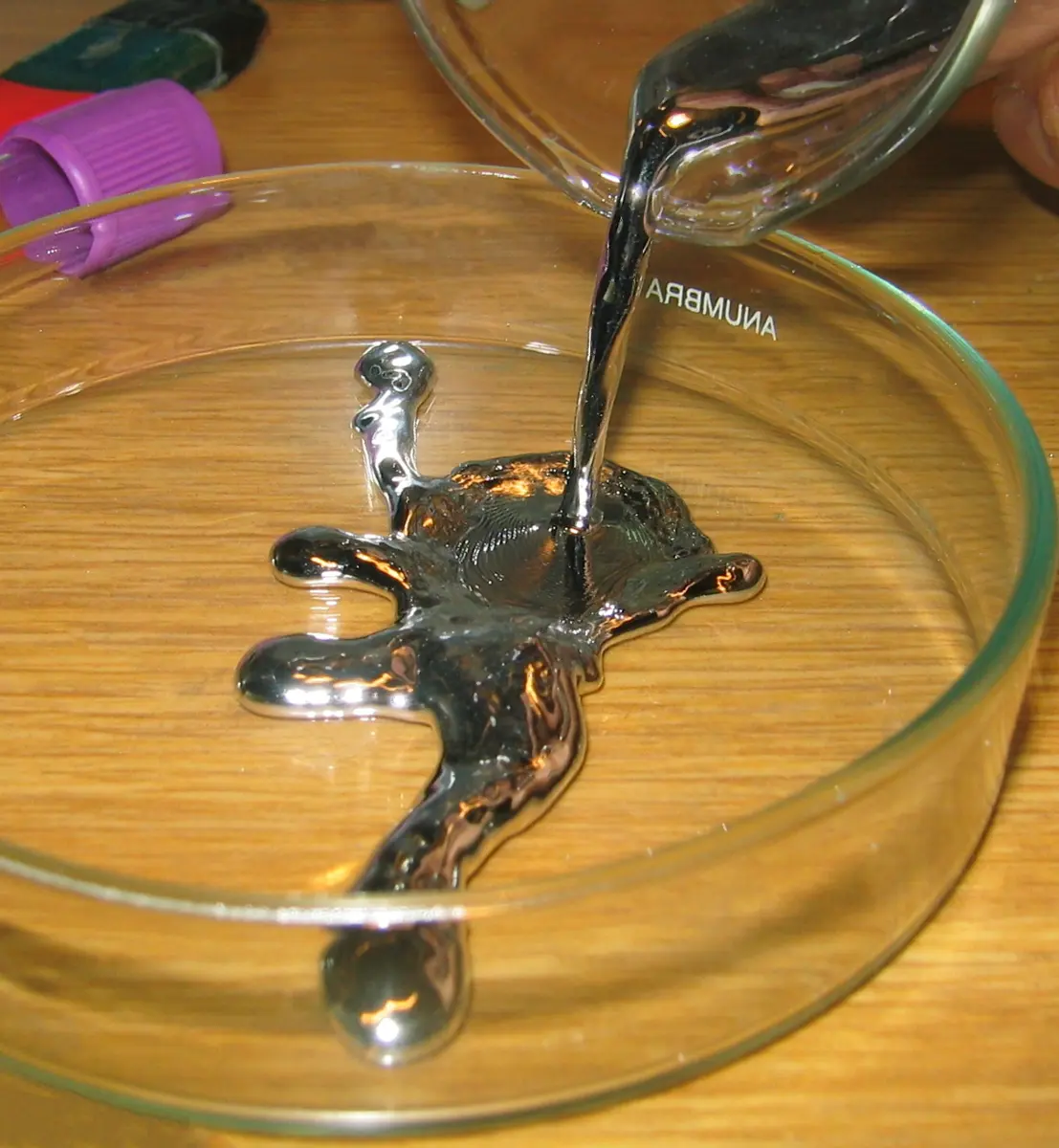
Elements whose atoms lose (give away, or donate) electrons in chemical reactions are metals. Metals are good conductors of heat and electricity. Atoms with 1 to 3 electrons in their outer shell react by losing them.
- Metals are on the left and in the middle of the periodic table: groups 1 to 12 (all but hydrogen), and the lower parts of groups 13 to 16. Most elements are metals.
- Group 1 elements have one valence electron, which they give away very easily. This makes them very reactive. They are called alkali metals (lithium, sodium, potassium…).
- Group 2 elements have two valence electrons. They are called alkaline earth metals (beryllium, magnesium, calcium…).
Position of non-metals
Elements whose atoms gain electrons in chemical reactions are non-metals. Non-metals are poor conductors of heat and electricity. Atoms with 5 to 7 electrons in their outer shell react by gaining electrons. Non-metals are on the right of the periodic table: groups 15, 16 and 17 have non-metal properties (along with carbon in group 14, and hydrogen).
The atoms of group 17 have 7 valence electrons. They need just one more electron to become stable, and they grab it eagerly, so they are very reactive non-metals. They are called halogens (fluorine, chlorine, bromine, iodine). The word means “salt makers”: chlorine and sodium make common salt.
Position of inert gases
Elements that neither gain nor lose electrons, and hardly take part in chemical reactions, are called inert gases (or noble gases). Helium has 2 electrons in its only shell and neon and argon have 8 in their outer shells: they are already stable. The inert gases are in group 18, at the far right of the periodic table.
An element has the electronic configuration 2, 8, 7. Where is it in the periodic table, and what kind of element is it?
Pick an answer to see why.
Groups and periods in the modern periodic table
In the modern periodic table, elements with similar properties are placed in the same vertical column, called a group. Elements in the same horizontal row, called a period, have different properties that change step by step along the row. The modern periodic table has 18 groups and 7 periods.
Characteristics of groups
The characteristics of a group:
- Elements in the same group have similar physical and chemical properties.
- They have different numbers of shells, but the same number of valence electrons, so they have the same valency.
- Going down a group, the atomic size increases, because each element has one more shell than the one above.
- Going down a group, the ability to give away electrons (the electron-donating capacity, or metallic character) increases, and the ability to gain electrons (the electron-gaining capacity, or non-metallic character) decreases.
Characteristics of periods
The characteristics of a period:
- The physical and chemical properties of the elements change gradually along a period.
- Elements in the same period have the same number of shells, but different numbers of valence electrons, so their valency changes along the period.
- Going from left to right, the atomic size decreases (many books add: except the inert gas at the end).
- Going from left to right, the metallic character decreases, and the non-metallic character increases.
Magnesium (2, 8, 2) and calcium (2, 8, 8, 2) are in the same group. Which is true?
Pick an answer to see why.
Chemical reaction
Changes happen around you all the time. Some just change how a substance looks or what state it is in; others make something completely new.
- A physical change does not change what a substance is made of. It can usually be reversed. Ice melting into water, water boiling into steam, and sugar dissolving in tea are physical changes: the water is still water, the sugar is still sugar.
- A chemical change changes what a substance is made of: a new substance is formed, and it can’t simply be turned back into what it was. Wood burning to ash, iron rusting, milk turning into curd and rice cooking are chemical changes.
In a chemical change, atoms join (combine), split apart (dissociate) or change partners (exchange). A chemical change in which atoms combine, split apart or exchange to form new substances is called a chemical reaction.
Which of these is a chemical change?
Pick an answer to see why.
Reactants and products
The substances that take part in a chemical reaction are the reactants. The new substances formed at the end are the products. When sodium burns in chlorine, sodium and chlorine are the reactants and sodium chloride (common salt) is the product.
A chemical equation is a way of writing a chemical reaction with symbols and formulas. The reactants are written on the left and the products on the right, with an arrow (→) between them, read “gives” or “forms”.
Chemical equation
A chemical equation can be written in words or in formulas.
- A word equation names the reactants and products in words: sodium + chlorine → sodium chloride.
- A formula equation uses their molecular formulas: Na + Cl₂ → NaCl.
Atoms are never created or destroyed in a reaction: they are only rearranged. So the number of atoms of each element must be the same on both sides of a formula equation. The formula equation Na + Cl₂ → NaCl has 2 chlorine atoms on the left but only 1 on the right. A formula equation that is not yet balanced is called a skeleton (skeletal) equation.
To balance it, we put numbers called coefficients in front of the formulas, never changing the formulas themselves:
- Put a 2 before NaCl: Na + Cl₂ → 2NaCl. Now there are 2 Cl on each side, but 2 Na on the right and only 1 on the left.
- Put a 2 before Na: 2Na + Cl₂ → 2NaCl. Now each side has 2 Na and 2 Cl.
An equation with equal numbers of each kind of atom on both sides is a balanced chemical equation. So a chemical reaction can be written in three ways: a word equation, a skeleton equation and a balanced chemical equation.
Examples
Exercise
1. Choose the correct answer
a. Who gave us the modern periodic table?
Pick an answer to see why.
b. On what basis are the elements arranged in the modern periodic table?
Pick an answer to see why.
c. Which statement about the groups is true?
Pick an answer to see why.
d. Which metal is liquid at normal room temperature?
Pick an answer to see why.
e. Which of these elements is in group 18 of the modern periodic table?
Pick an answer to see why.
f. What do argon and chlorine have in common?
Pick an answer to see why.
g. Which statement about the groups of the periodic table is correct?
Pick an answer to see why.
2. Differentiate between
Group and period
Answer
Metals and non-metals
Answer
Group 1 and group 17 elements
Answer
Word equation and formula equation
Answer
Reactants and products
Answer
3. Give reasons
Classification of elements is necessary.
Answer
Sodium and chlorine are in different groups, but both have valency 1.
Answer
The study of elements becomes easier with a periodic table.
Answer
The products are different from the reactants.
Answer
Metals and non-metals are kept apart in the periodic table.
Answer
4. Answer these questions
What is the periodic table?
Answer
Write the modern periodic law.
Answer
Explain the position of metals in the modern periodic table.
Answer
How does the metallic character of the elements change going from top to bottom in any group of the modern periodic table?
Answer
How does the metallic character of the elements change going from left to right in any period?
Answer
What is a chemical reaction?
Answer
What is a chemical equation?
Answer
How is a formula equation balanced? Explain with an example.
Answer
Write these reactions as balanced chemical equations:
- i.magnesium oxide + hydrogen → magnesium + water
- ii.calcium carbonate + hydrochloric acid → calcium chloride + water + carbon dioxide
- iii.potassium + chlorine → potassium chloride
- iv.sodium + oxygen → sodium oxide
- v.hydrogen + oxygen → water
Answer
The equation for the reaction between zinc and hydrochloric acid is Zn + 2HCl → ZnCl₂ + H₂. Write the equation if sulphuric acid is used instead of hydrochloric acid.
Answer
Part of a group of the periodic table is shown: Be, Mg, Ca (one below the other). Write any four characteristics of this group.
Answer
Worksheet: Matter: atoms and molecules (PDF, 5 pages)
Worksheet: Matter: the periodic table and chemical reactions (PDF, 4 pages)
Quiz yourself: Matter, Atoms and Reactions, Grades 5–10 →
Practice every question in the book, and keep track of the ones you miss →
A companion to your textbook, not a replacement for it: study from the book your school uses, and where the two differ, follow your teacher. Found a mistake? Please tell us.