
A magnet on a fridge door holds up a paper all by itself. A small needle in a compass always swings round to point north. Press a switch, and in a blink a bulb across the room lights up. Neither magnetism nor electricity can be seen, yet both are hard at work in every fan, phone, motor and speaker around you.
What kind of thing is a magnet? How can you tell whether something is a magnet or not? Talk about it in class. In this unit you will find out what magnets pull, where they are strongest, and how to make one, even with electricity. Then you will make electricity from a lemon, build circuits, draw them with symbols, and find out how a thin piece of wire keeps your home safe from fire.
8.1 Magnet
A magnet is a thing that pulls (attracts) iron things towards it, like iron dust, nails and pins. The pull of a magnet is called magnetic force (some books call it magnetic power or magnetic energy). Because of it, a magnet attracts some things. The things a magnet attracts are called magnetic substances.
Not every metal is magnetic. Only iron, nickel and cobalt, and the alloys made from them, such as steel, are pulled by a magnet. Copper, aluminium, brass, gold and silver are metals, but a magnet doesn’t pull them. Wood, plastic, glass, paper and rubber are not pulled either. Things a magnet doesn’t attract are called non-magnetic substances.
Magnets are used in radios, telephones, electric motors, microphones, fans, loudspeakers, generators and many other things.
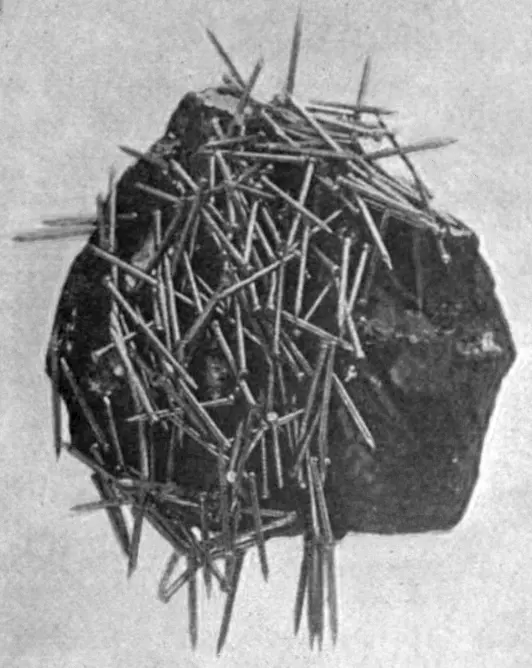
Which of these will a magnet pull?
Pick an answer to see why.
Magnetic field
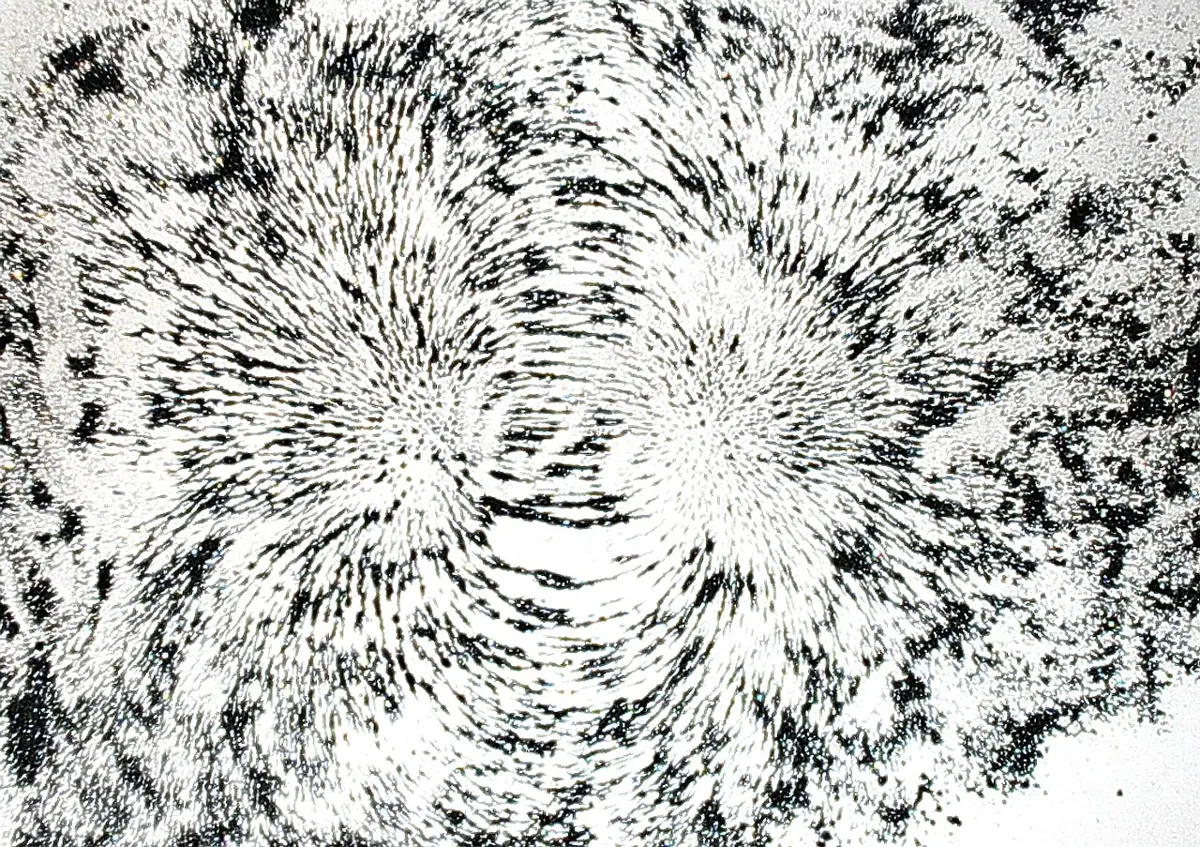
Every magnet can attract magnetic substances only up to a certain distance. Beyond that, its pull is too weak to notice. The region around a magnet in which its pull (its magnetic effect) can be felt is called its magnetic field.
A strong magnet has a magnetic field that reaches far. A weak magnet’s field reaches only a short distance.
Magnetic poles
Look again at Activity 8.1. The pull of a magnet is not the same all along it. The iron dust crowds at the two ends, and very little sticks to the middle. So a magnet’s pull is strongest at its two ends. These ends are called the poles of the magnet. Every magnet has two poles: a north pole (N) and a south pole (S).
Two more things about poles:
- Hang a bar magnet from a thread so it can turn freely. It comes to rest pointing north and south. The end that points north is its north pole. This is how a compass works.
- Bring two magnets together. A north pole and a south pole attract each other; two north poles, or two south poles, push each other away (repel). Like poles repel, unlike poles attract.
Where is the pull of a bar magnet strongest?
Pick an answer to see why.
What happens when the north poles of two magnets are brought together?
Pick an answer to see why.
Methods of making magnet
There are many ways of making a magnet. Only magnetic substances can be made into magnets: a non-magnetic substance, like copper or wood, can never become a magnet. Magnets are usually made from iron and steel. A magnet made by people in this way is called an artificial magnet. (A natural magnet is one found in nature, like lodestone.) Two ways of making a magnet are:
- a.the stroking method
- b.the electrical method
Stroking method
A magnet can be made by rubbing (stroking) a magnetic substance with a magnet. There are several ways of doing this. Here is the simplest: stroking with one pole of a magnet, always in one direction.
So by stroking a magnetic substance with a permanent magnet, always in the same direction, we can make it into a magnet.
Electrical method
Activity 8.4 shows that a magnet can be made with electricity. A magnet made by passing an electric current through a coil of wire is called an electromagnet.
An electromagnet is a temporary magnet. It is a magnet only while the current flows. Switch the current on, and it becomes a magnet; switch it off, and it stops being one. That is what makes it so useful: it can pick something up and drop it again when we want.
Change in magnetic strength of an electromagnet
The strength of an electromagnet can be changed as we need:
- More turns of wire make it stronger; fewer turns make it weaker.
- More cells (a bigger current) make it stronger; fewer cells make it weaker.
How can you make an electromagnet stronger?
Pick an answer to see why.
Use of electromagnet
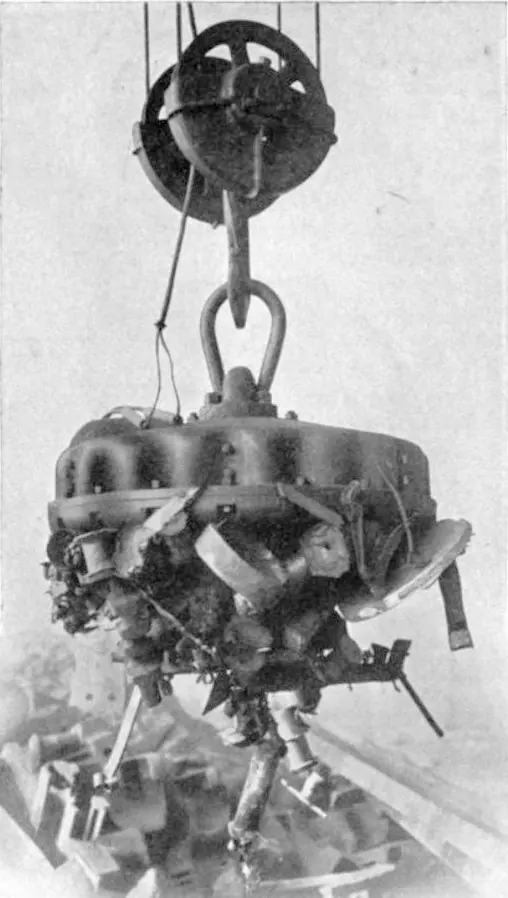
Electromagnets are used in electric fans, electric motors, electric bells and loudspeakers. Huge electromagnets on cranes lift heaps of scrap iron and steel, and drop them again when the current is switched off. Hospitals use very strong electromagnets in MRI machines, which take pictures of the inside of the body.
8.2 Electricity
Where do we need electricity? What electric things have you seen? Discuss in class.
We need electricity every day: to cook, to iron clothes, to wash clothes and to light our rooms. Telephones, televisions, radios, computers, heaters, irons, electric motors and air conditioners all run on electricity. Today most industries and factories run on electricity too. That is why electricity is one of the most important sources of energy in the modern age.
Sources of electricity
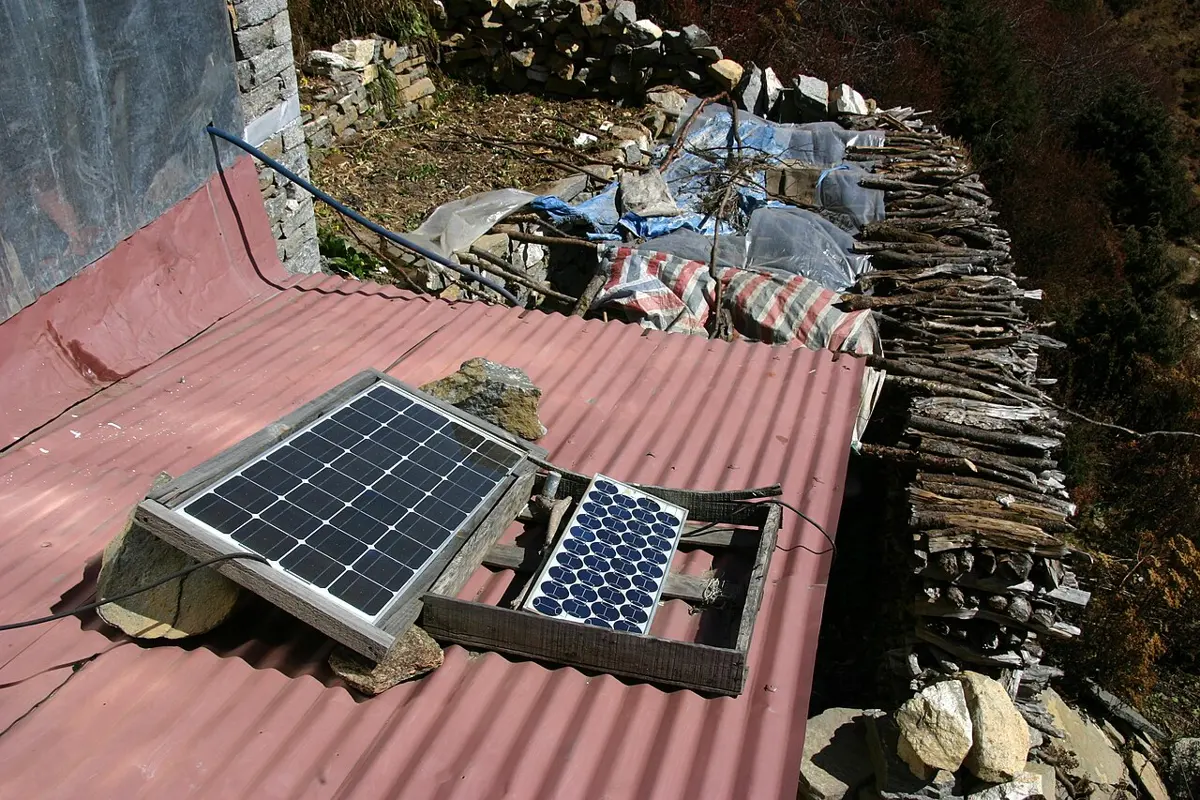
Electricity can be produced in many ways. The main devices that produce it are the cell, the photocell (solar cell), the dynamo and the generator. Devices that produce electricity are called sources of electricity.
- A cell makes electricity from chemicals inside it (a torch cell, a phone battery).
- A photocell or solar cell makes electricity from light (a solar calculator, solar panels on a roof).
- A dynamo makes electricity when it is turned, for example by a bicycle’s wheel, to light its lamp.
- A generator is a big dynamo, turned by an engine (a diesel generator) or by flowing water (in a hydropower station).
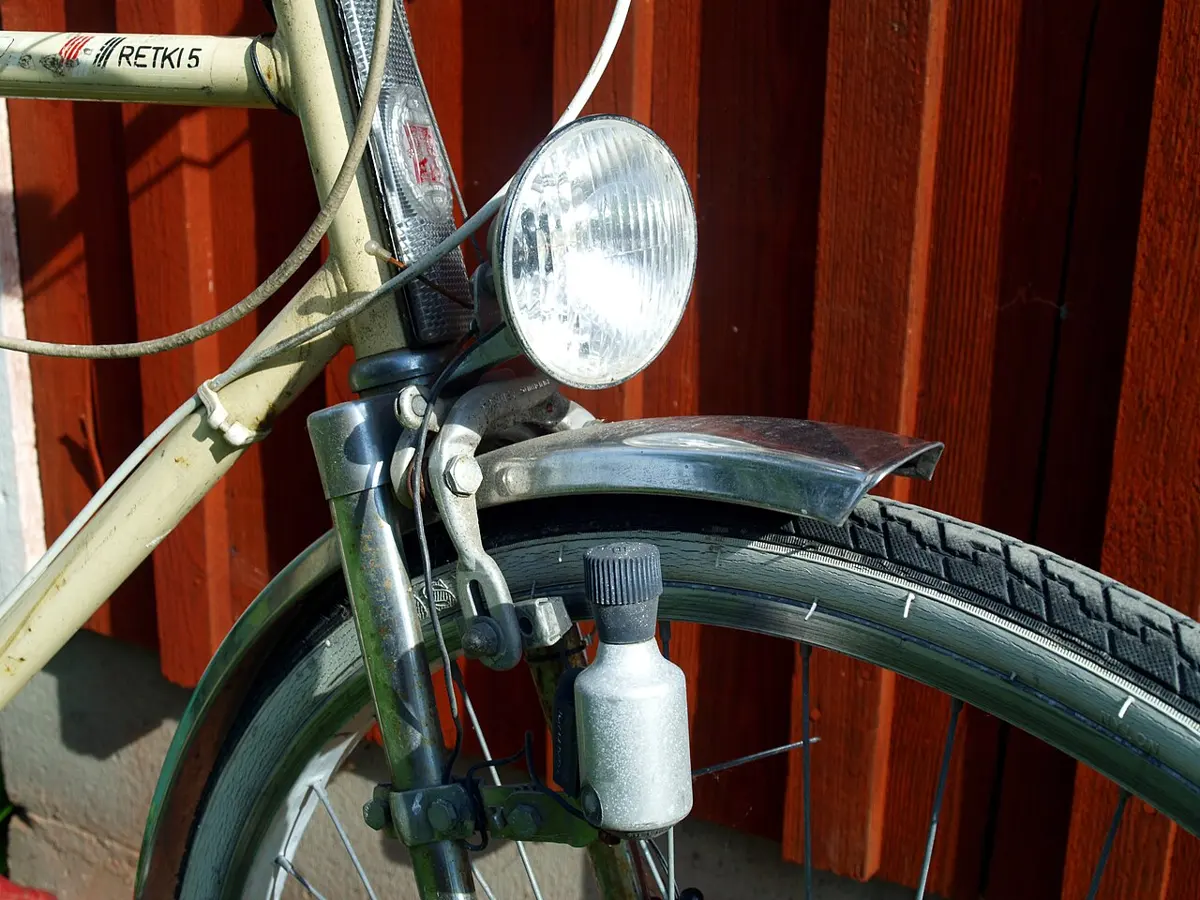
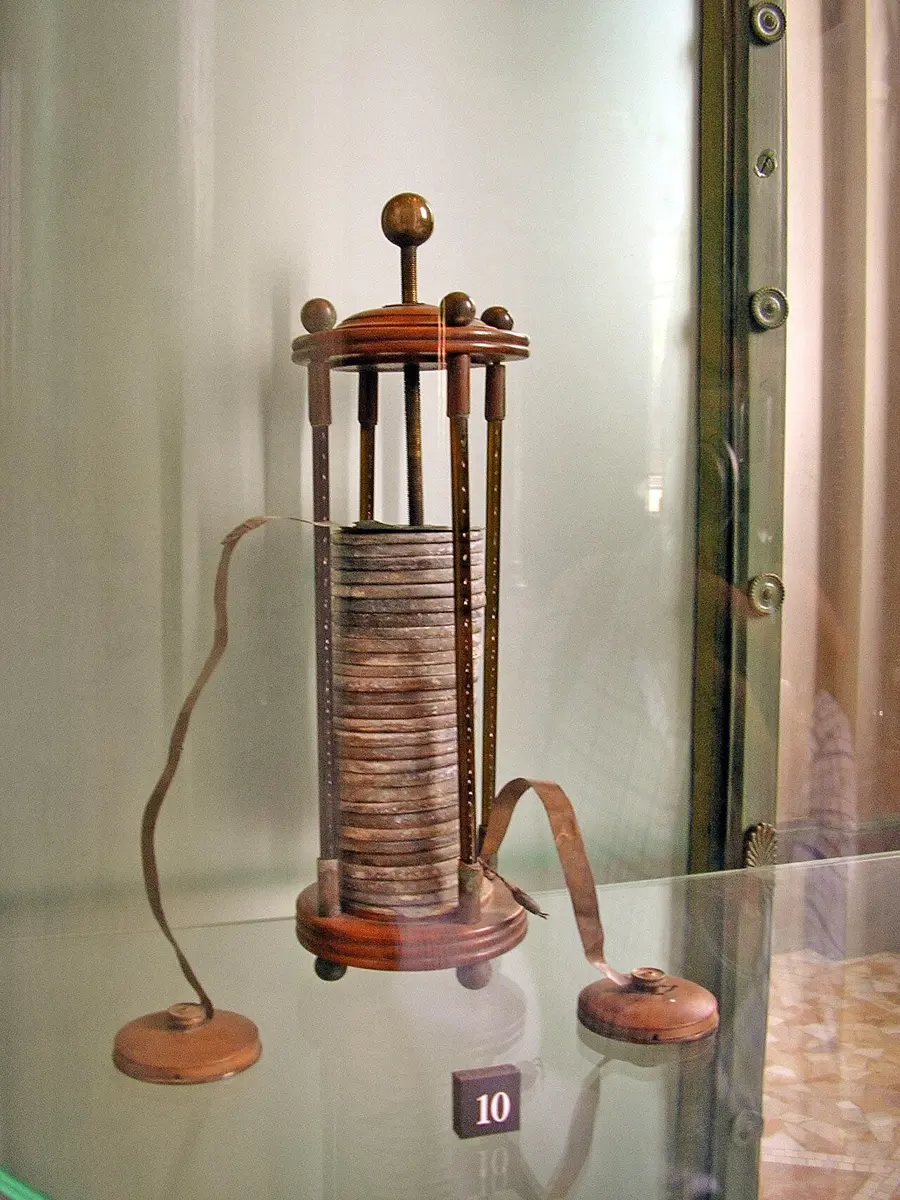
Cell
Have you seen the cells used in torches, radios and wall clocks? How do they work? Discuss it.
A cell changes chemical energy into electrical energy. Electric devices then change that electrical energy into light, heat, sound and other forms of energy. The cells we use in torches and clocks are dry cells: their chemicals are a paste, not a liquid, so they don’t spill.
Simple cell
Have you seen a simple cell? How is it made? How does it produce electricity? Let’s find out.
A simple cell is a cell made of a copper plate and a zinc plate dipped in dilute sulphuric acid. It produces electricity by changing chemical energy into electrical energy. It gives about 1 volt.
But a simple cell is not much use in daily life:
- it contains acid, so it is hard and dangerous to carry about;
- it can’t make much electricity;
- it stops working well after a short time.
Lemon: H. A. Köhler, Medizinal-Pflanzen (1887), public domain
A cell changes…
Pick an answer to see why.
Which two plates are used in a simple cell?
Pick an answer to see why.
Draw it: A potato cell
Electric circuit
Electricity is a form of energy. It can be changed into light, heat, sound and magnetic energy. We use electrical energy to light bulbs and to run heaters, fans, radios, televisions and computers.
The path along which electricity flows is called an electric circuit. A circuit must have:
- a source of electricity (a cell);
- conducting wires, to carry the electricity;
- a load (a bulb), the device that uses it.
A switch is usually added too, to start and stop the flow.
So, the continuous path made by joining a source of electricity, conducting wires and a load, so that electricity can flow through it, is called an electric circuit.
Devices that produce electricity, like a dry cell, a photocell, a dynamo and a generator, are called sources of electricity. Devices that run on electricity are called loads. A bulb, a heater, a fan, a radio and a television are loads.
Closed and open circuit
Think about Activity 8.8 again. When the switch is on, the bulb glows. Such a circuit is called a closed circuit. When the switch is off, or a wire has come loose somewhere, the bulb doesn’t glow. Such a circuit is called an open circuit.
A circuit in which electricity flows and the load works is a closed circuit. A circuit with a gap in it, in which the load doesn’t work, is an open circuit.
A torch’s switch is on, but its bulb doesn’t glow because a wire inside has come loose. The circuit is…
Pick an answer to see why.
Symbols used in electric circuit
Drawing every cell, wire, switch and bulb as it really looks, as in Activity 8.8, is slow and hard. So circuits are drawn with simple symbols instead. Here are the symbols of some important devices.
In the symbol of a cell, what does the long thin line stand for?
Pick an answer to see why.
Effects of current electricity
Electrical energy can be changed into other forms of energy to do different jobs. These are called the effects of current electricity:
- the lighting effect: a bulb gives light;
- the heating effect: a heater, an iron or a kettle gets hot;
- the magnetic effect: an electromagnet, the motor of a fan;
- the chemical effect: charging a battery, coating a spoon with silver.
Here we will look at the heating effect.
Heating effect of current electricity
When electricity flows through a coil of some metals, the coil gets very hot. Producing heat in this way is called the heating effect of current electricity. It is used in room heaters, electric kettles, immersion rods (water heaters), rice cookers and electric irons. The coil in these devices that gets hot is called the heating element. It is usually made of nichrome, an alloy of nickel and chromium, which can glow red hot for years without melting or burning away.
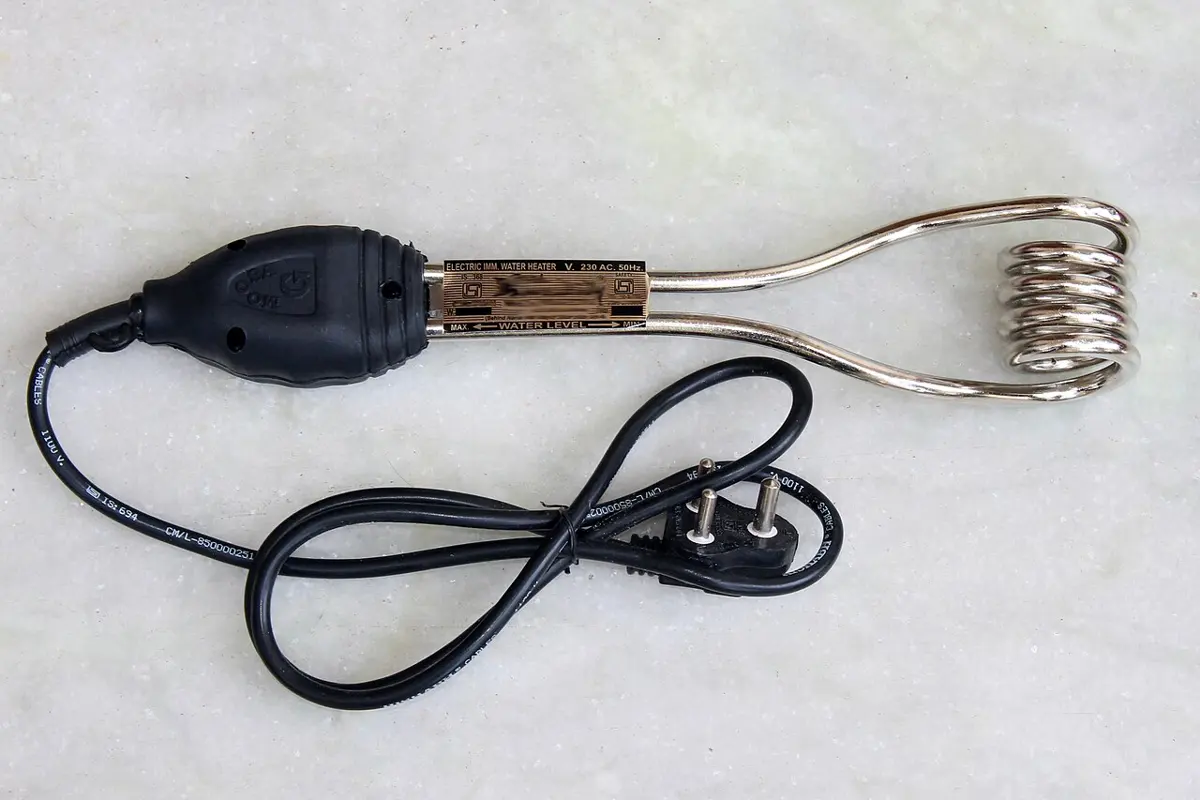
Which of these does not use the heating effect of electricity?
Pick an answer to see why.
Fuse
Sometimes more electricity flows in a circuit than it can safely carry: when too many heaters and irons are switched on at once, or when two bare wires touch. Then the wires get very hot. The devices can be damaged, and the wires can catch fire. To prevent such accidents, a fuse is put in the circuit.
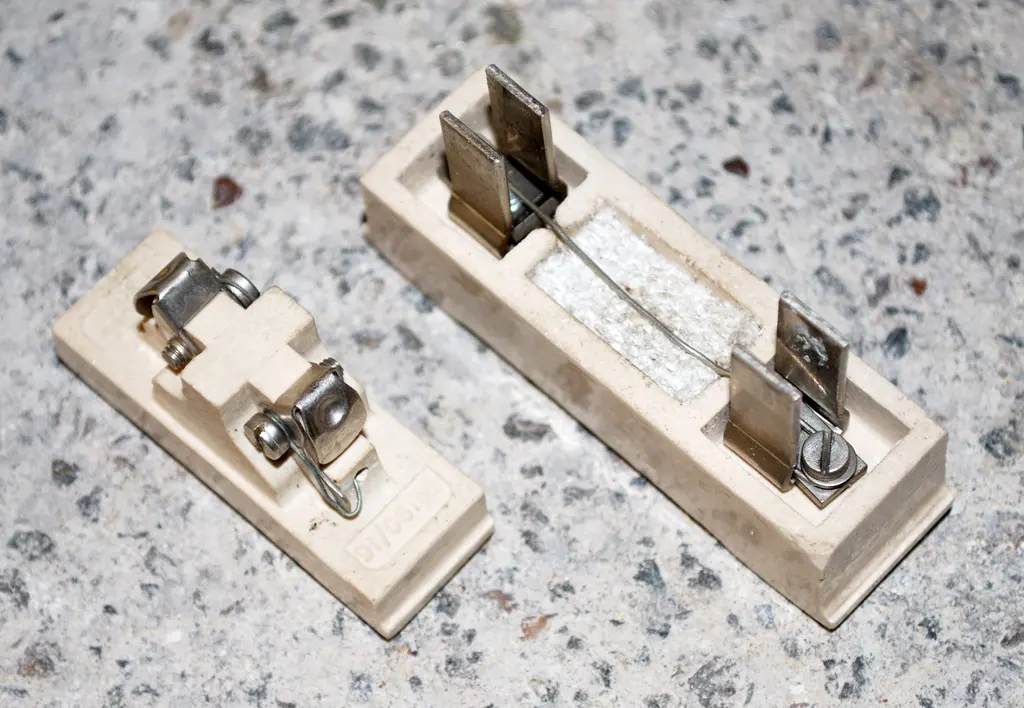
A fuse is a short piece of thin wire that melts at a low temperature. It is joined into the circuit. If too much electricity flows, the fuse wire gets hot and melts first. The circuit becomes open, and the flow of electricity stops, before the house wiring can get hot enough to catch fire.
The fuse wire is held in a holder that fits into a socket (a fuse carrier). If the fuse wire melts, the fault is put right, and a new fuse wire of the right size is fitted in the holder.
Miniature Circuit Breaker (MCB)
When a fuse wire melts, it has to be replaced, and that isn’t easy or safe for everyone. So the MCB (Miniature Circuit Breaker) was developed. An MCB is an advanced form of fuse. When more electricity flows than the circuit can safely carry, it switches itself off, and so prevents accidents. Once the fault is put right, it is simply pushed back up to switch the circuit on again.
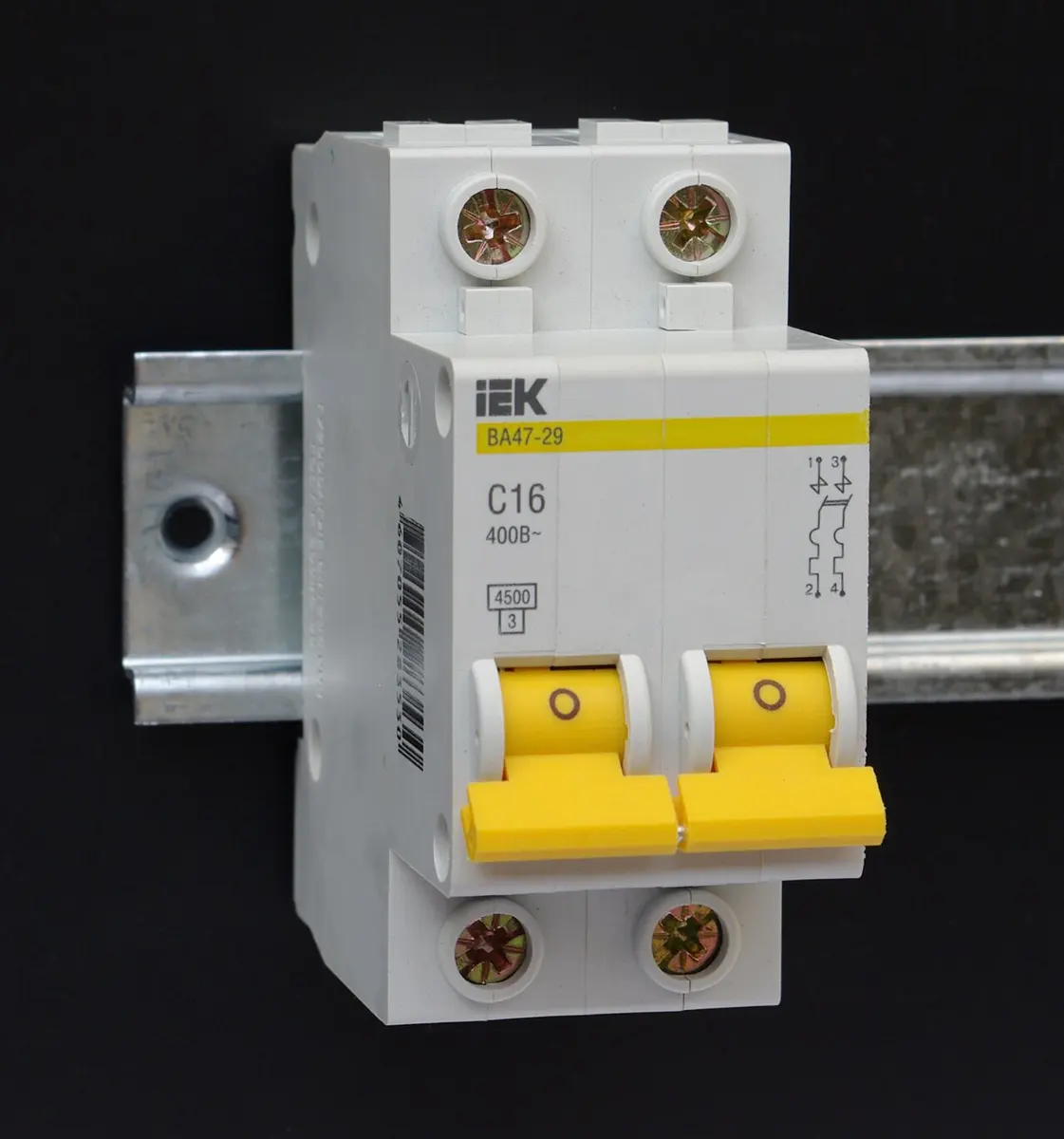
What is a fuse wire made to do?
Pick an answer to see why.
Words to know
Conductor: a substance that lets electricity pass through it (copper, iron, aluminium).
Insulator: a substance that doesn’t let electricity pass through it (plastic, rubber, dry wood).
Constantan: an alloy of copper and nickel.
Nichrome: an alloy of nickel and chromium.
Heating element: a coil of wire that gets hot when a current flows through it.
Exercise
1. Fill in the blanks with the right words
magnetic field, electromagnet, magnetic substance, dilute sulphuric acid
A substance that is attracted by a magnet is called a ______.
Answer
______ is used in a simple cell.
Answer
The region around a magnet in which it attracts or repels is called its ______.
Answer
2. Choose the correct answer
a. Which one of these is not attracted by a magnet?
Pick an answer to see why.
b. Which one of these does not produce electricity?
Pick an answer to see why.
c. Which one of the drawings in Figure 8.21 is the symbol of a cell?
Pick an answer to see why.
d. What is the job of a cell?
Pick an answer to see why.
e. Why is a fuse used?
Pick an answer to see why.
3. Write true or false
The region of attraction or repulsion round a magnet is called its magnetic pole.
Answer
Dilute sulphuric acid is used in making a simple cell.
Answer
Fuse wire melts at a low temperature.
Answer
An MCB is an advanced form of fuse.
Answer
4. Write the differences between
Closed circuit and open circuit
Answer
Fuse and MCB
Answer
5. Give reasons
An MCB is easier to use than a fuse.
Answer
A fuse is called a protective wire.
Answer
6. Answer the following questions
What is a magnetic field?
Answer
Define electromagnet. How do you make an iron nail into an electromagnet? Explain with a figure.
Answer
What is an electric circuit? What are the basic parts of an electric circuit?
Answer
What is a heating element? Give any two examples.
Answer
What is a simple cell? Explain how to make a simple cell from a potato, with a suitable diagram.
Answer
Draw an electric circuit using these symbols: a cell, a bulb, a wire and a switch.
Answer
What would you do if the fuse in your home blew while you were alone? Write your opinion.
Answer
The fuse in Ronish’s home has to be changed often. His neighbors suggest that his father use a slightly thicker copper wire in place of the fuse wire, so that it need not be changed so often and electricity can be used without any trouble. What do you think of this idea? Give reasons.
Answer
In a house, the MCB keeps falling down and cutting off the electricity. What happens if the house owner props the MCB up with a stick so that it can’t fall, and goes on using electricity? Give your suggestions too.
Answer
Electricity has become an essential source of energy today. Justify this statement with arguments.
Answer
Quiz yourself: Electricity and Magnetism, Grades 5–10 →
Practice every question in the book, and keep track of the ones you miss →
A companion to your textbook, not a replacement for it: study from the book your school uses, and where the two differ, follow your teacher. Found a mistake? Please tell us.