
A phone in your pocket can call your grandmother in another district, take a photo, play a song and tell the time. But it can also keep you awake at night and pull your eyes away from the road. How do we describe a thing, a person or a place so that someone else can see it too?
In this unit you will read about mobile phones, their uses and their dangers, and a page of surprising facts about them. You will listen to the story of Plato, a teacher who lived 2,400 years ago, and you will describe what people are doing right now with am, is, are + -ing. You will also learn when to say a, an or the, and meet five new kinds of words.
Getting started
A. Who or what are they?
The unit opens with six pictures: a tailor sewing at his machine, a teacher with her students, the pyramids of Egypt, the Great Wall of China, a barber cutting a man’s hair, and the Maya Devi Temple at Lumbini.
- a.Who or what do you think they are?
- b.What benefits do we get from them?
Model answers
B. Listen and sing
The song describes a busy crowd. Its picture shows workers of different jobs, an engineer in a hard hat, a doctor in a white coat and people in office clothes, arguing. The singer sees people gathered together, each shouting that their own job is better. Some wear aprons, some carry cameras with big lenses, and some show off machines they control from far away. On a lawn, people stand round in rows while only a few are in the middle, cheering, and a huge screen keeps flashing to show the score or the result. It sounds like a sports ground, or a fair where every worker is proud of what they do.
Listen for the rhymes at the ends of the lines: crowd and aloud, lens and distance, around and sound, again and then. (Lens and distance only nearly rhyme: they share their last sound.)
Sing the song. Name three kinds of people the singer sees.
A model answer
C. Your favorite gadget
What electronic gadget do you like most? What features of the gadget attract you? Tell your friends.
A model answer
Reading I: Mobile Phones: Uses and Abuses
Before you read
The picture beside the essay shows a smiling girl holding a mobile phone in both hands.
What is the girl doing in the first picture?
A model answer
Have you ever used a mobile phone?
A model answer
The essay, part by part
This reading is a short essay: a piece of writing that looks at one subject from different sides. Its title tells you its two sides, uses (the good things) and abuses (the wrong or harmful ways phones are used).
- The world in our pocket. A phone connects us to the rest of the world in a second. Parents don’t have to worry for hours when a child is late, and business people no longer stand in a line at a phone booth.
- A multipurpose gadget. Besides calls and text messages (SMS), a phone is a calculator, a clock, a calendar, a voice recorder, a music and video player, a camera, a game machine and a web browser.
- But misuse too. The phone is a giant step forward, but its abuses can’t be ignored: talking or texting while driving causes accidents, and some students misuse phones in ways that harm others.
- Quick and cheap. People can stay in touch from anywhere, on a bus, in the street or in a meeting, and a text costs less than a call. A phone also takes photos and videos, and opens the internet.
- Help in a hurry. Parents can reach their children, which is essential (very important) in an emergency, and business can be done from a park or a shop. Phones bring the world closer together.
- The dangers. The essay ends with health worries and with phones being a nuisance in places like a classroom. Phones with cameras can also be used to take photos or videos of people secretly, which harms their privacy.
Words from the essay
| Word | Meaning |
|---|---|
| amazing | very surprising, in a good way |
| connected | joined, able to reach each other |
| tension | worry |
| queue up | stand in a line and wait |
| multipurpose | having many uses |
| gadget | a small, useful machine |
| giant | very big |
| advancement | progress, a step forward |
| abuse | wrong or harmful use |
| overlook | fail to notice; ignore |
| convenience | being easy and saving time |
| access | get into, open and use |
| essential | very important, necessary |
| invention | something made for the first time |
| radiation | energy sent out as waves, like light or radio waves |
| blurring | becoming unclear, hard to see |
| invisible | that cannot be seen |
| nephron | a tiny filter in the kidneys that cleans the blood |
| privacy | being free from other people watching you |
A. Find the words
Find the words from the passage which mean the following.
- a.having many uses
- b.very big
- c.very important
- d.that cannot be seen
Answer
B. Complete the sentences
Complete the following sentences appropriately.
- a.A mobile phone is like a world in our pockets as ……
- b.The mobile phone can be used for many different purposes so it’s a …… equipment.
- c.Using mobile phones during driving can cause ……
- d.The price of a call is more expensive than sending a ……
- e.The invention of mobile phones has brought us …… to a single point.
Answer
C. Benefits and negative effects
Complete the following table.
A model answer
Speaking
A. Who are they?
There are two short conversations. In the first, Purnima asks who some people in a picture are, and Surya says they are small children, and they are dancing. In the second, Sujan asks the same, and Sony says they are farmers; Sujan agrees: they are digging in the field.
Act out the conversations.
A model conversation of your own
The answers describe who people are (They are farmers) and what they are doing now (They are digging).
B. Present simple or present continuous?
The two present tenses talk about different times.
| Present simple | Present continuous | |
|---|---|---|
| Form | I get up, she reads | I am getting up, she is reading |
| Use | habits and things that are always true | something happening now, or a plan for soon |
| Words that go with it | every day, always, often, usually, on Saturdays | now, at the moment, Look!, Listen!, today, tonight |
| Example | I get up every morning at 7:00. | She is reading a book now. |
So we don’t say I am getting up every morning (a habit) or She reads a book now (happening now).
Use present simple or present continuous to complete the sentences. Then ask and answer in pairs.
- a.…… (you/come) tonight?
- b.…… (he/eat) rice every day?
- c.I …… (work) at the moment.
- d.…… (he/come) to Kathmandu often?
- e.He …… (play) tennis now.
- f.They …… (not/come) to the party tomorrow.
- g.He …… (not/play) golf now.
- h.They …… (go) to a restaurant every Saturday.
Answer
C. Ask about the pictures
There are nine pictures: a teacher writing on the board, a girl drawing an elephant, a boy reading a book, a girl writing at a desk, a doctor checking a patient, someone driving a car, a woman working at a computer, children playing cricket in a field, and girls singing and playing the guitar on a stage.
Work in pairs. Take turns to ask and answer questions about the pictures.
Model questions and answers
D. Out of the window
Look out of the classroom. See what is happening. Say at least five things to your friends.
A model answer
Listening
A. Before you listen
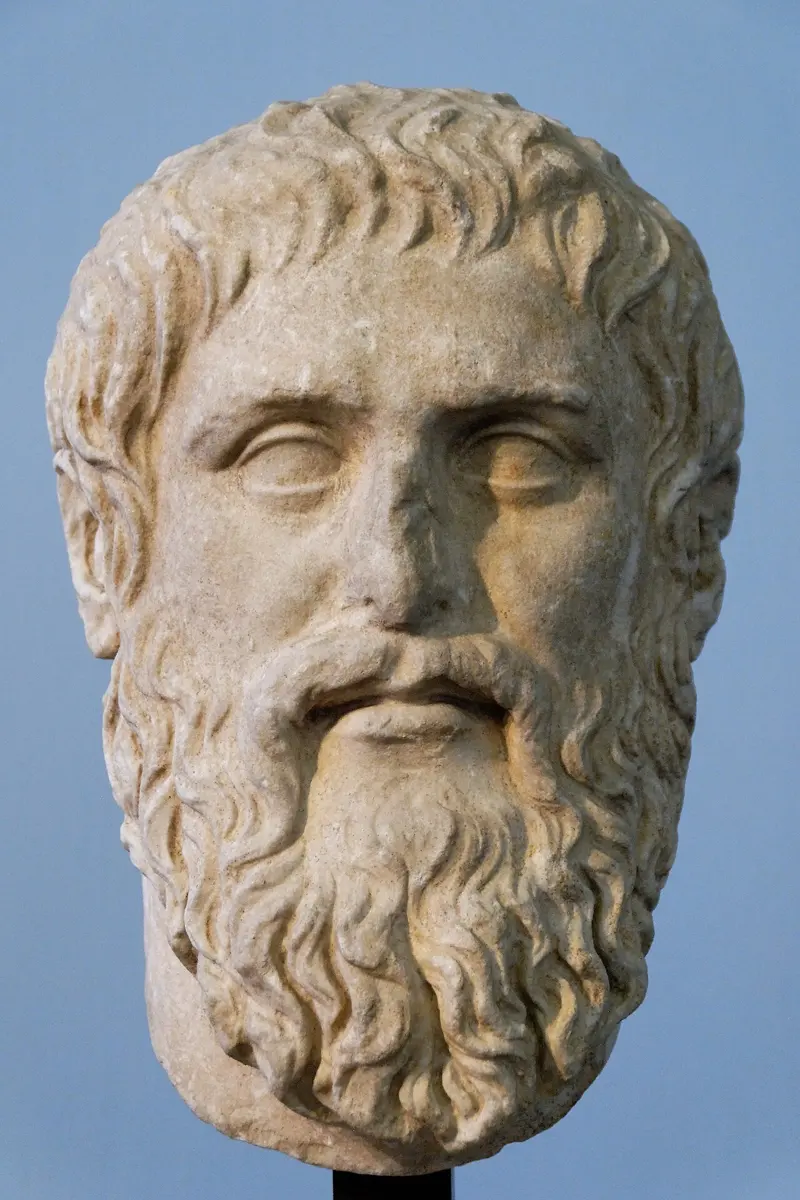
The picture shows two stone busts (statues of a head and shoulders) of old men with long beards.
- a.Who do you think these people are?
- b.Can you name any famous person from Nepal?
- c.Why is he/she famous?
Model answers
The recording
Listen once for the story, and a second time for the dates.
The recording tells the life of Plato, a great thinker of ancient Greece. He was born in Athens. The recording says he lived in the time of Pericles, a famous leader of Athens, and of bad rulers too. Once Plato was sold as a slave. Later he became a student of another great thinker, Socrates. He opened a school about a mile outside Athens, named after Academus, and called the Academy: a place of learning. Before he died, Plato handed the Academy to Speusippus, his sister’s son. The school lasted almost a thousand years, until Emperor Justinian closed it. (The recording says “Justian”; his name was Justinian.)
B. Match the dates
Listen to the recording and match the dates with the events.
| Column A | Column B |
|---|---|
| a.427 BC | i.Closing of Academy |
| b.385 BC | ii.Plato’s birth |
| c.347 BC | iii.Establishment of Academy |
| d.529 CE | iv.Plato’s death |
Answer
Put Plato’s life in order on the line.
C. Complete the sentences
Listen to the recording again and complete the sentences.
- a.Plato was once sold as a ……
- b.Plato opened a …… in Athens.
- c.The academy was the place of ……
- d.Before the death, Plato passed the responsibility of the Academy to his sister’s ……
Answer
D. A famous person near you
Do you know a famous person in your locality? Talk about his/her life and contributions.
A model answer
Grammar: the present continuous; a, an, the
A. Is, am, are + -ing
Study three sentences: He is dancing. They are playing basketball. I am singing now.
The present continuous describes what is happening now. It has two parts: am, is or are, then the verb with -ing.
| Person | be | verb + -ing |
|---|---|---|
| I | am | singing |
| he, she, it, Rohan | is | dancing |
| we, you, they, the girls | are | playing |
Spelling the -ing form:
- Most verbs add -ing: play → playing, read → reading.
- A verb ending in a silent e drops it: write → writing, dance → dancing.
- A short verb ending in one vowel and one consonant doubles it: run → running, sit → sitting, swim → swimming.
- -ie becomes -y: lie → lying, tie → tying.
B. Rewrite the sentences
Rewrite the sentences. Use is, am or are and -ing.
- a.She is busy. She …… (talk) on the phone.
- b.I …… (work) on a computer now.
- c.The man …… (play) the Madal and the girls are dancing.
- d.They …… (run) fast to win the race.
- e.The boy …… (stand) in a queue for an hour to pay the bill.
- f.All the students …… (do) their classwork.
- g.The green light is on now. Many people …… (cross) the road.
- h.The man seems strong. He …… (carry) a heavy load.
- i.My daughter is busy now. She …… (draw) a picture.
Answer
C. A, an and the
Three pictures come with three sentences: I am eating an apple. I am eating a mango. I have a mobile phone. Then: Manish is the tallest student of our class. The sun rises in the east.
These little words are called articles.
- a and an mean one, any one, often mentioned for the first time: a mango, a phone.
- a before a consonant sound: a mango, a ball, a university (“yoo”), a one-rupee coin (“wun”).
- an before a vowel sound: an apple, an egg, an hour (the h is silent), an MP (“em”).
- the points to one particular thing that both of us know about:
- there is only one: the sun, the moon, the earth, the sky;
- it was mentioned before: I saw a dog. The dog was barking.
- with superlatives: the tallest, the best;
- with the names of rivers, seas and mountain ranges: the Karnali, the Bagmati, the Himalaya;
- with some official titles: the Prime Minister, the President.
It is the sound that decides, not the letter: a uniform (“yoo”), but an umbrella.
D. Complete the sentences
Complete the sentences with a, an or the.
- a.I have got …… cap. It’s beautiful.
- b.My little sister eats …… banana everyday.
- c.Would you give me …… orange please?
- d.Mt. Everest is …… highest mountain in the world.
- e.…… Prime Minister is addressing the nation today.
- f.There is …… tall tree near my house.
- g.I need …… bottle of water.
- h.…… Karnali River is in Nepal.
- i.How far is …… sun from the earth?
- j.Look! There is …… cat on top of your house.
- k.I saw …… accident on the way to my school yesterday.
- l.I drank only …… cup of tea this morning.
Answer
Reading II: Fun facts about mobile phones
Before you read
What facts do you know about mobile phones?
A model answer
Do you know what the fear of being without a phone is called?
Answer
The facts, one by one
This reading is an infographic: facts set out in boxes with pictures, so you can read them in any order. Here is what each box says, in our words.
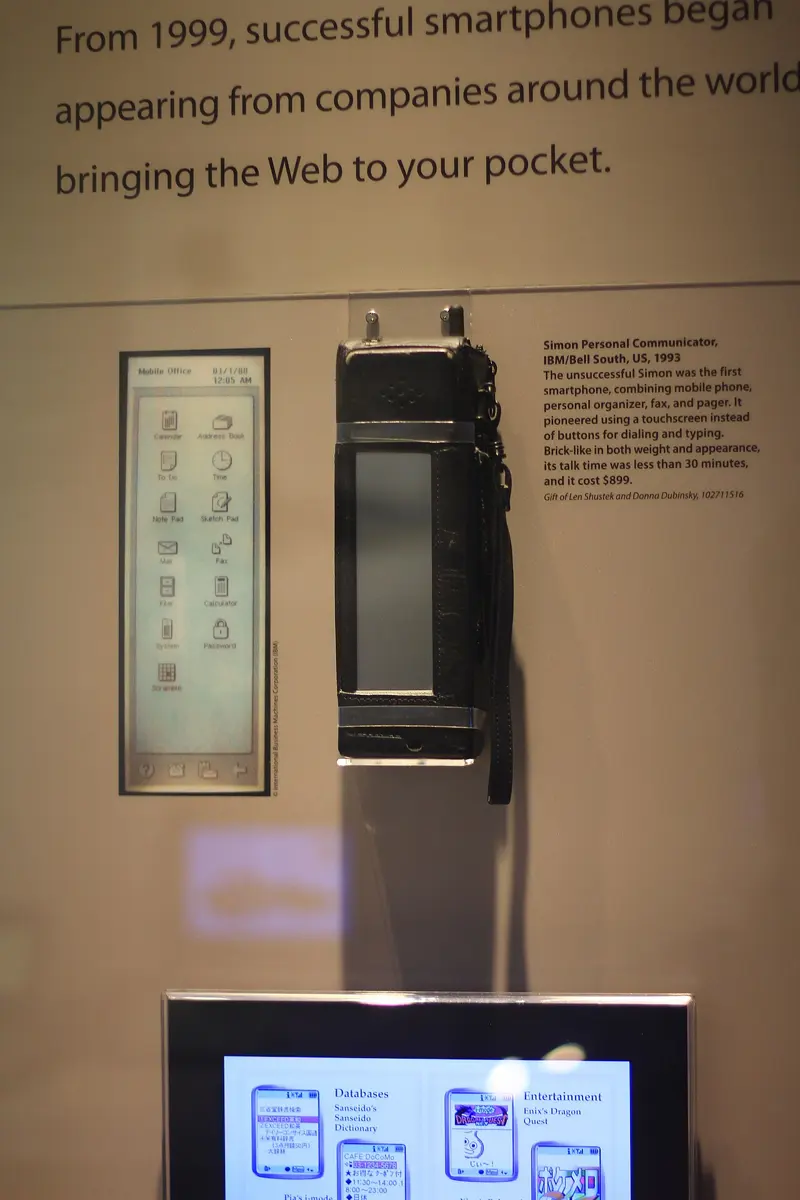
- The first smartphone, IBM’s Simon, had a calendar, an address book, a world clock, a calculator, a notepad, email, fax and games, with a keyboard on a touchscreen. It cost about $1,000. (It went on sale in 1994.)
- The first camera phone went on sale in Japan in 2000.
- Today’s smartphones are more powerful than the computers that guided Apollo 11 to the moon in 1969, and some are even used inside small, cheap satellites.
- An average person unlocks their phone at least 110 times a day.
- In Finland, people hold a mobile phone throwing contest every year.
- The first mobile phone call was made in April 1973, and the first text message was sent in December 1992.
- Old phones were heavy: the infographic says about 2.5 pounds (about 1.1 kg), while a smartphone today weighs about 250 grams.
- Ringxiety is hearing or feeling your phone ring when it isn’t ringing.
- Nomophobia is the fear of being without your phone, or without a signal.
- Scientists have found a way to charge a phone with urine.
- A ton of old phones contains far more gold than a ton of gold ore (rock dug from a gold mine).
A. Complete the sentences
Complete the sentences with correct words from the box: official · keyboard · signal · powerful · suffer
- a.Public opinion is a …… force.
- b.Her cell phone had no …… so she couldn’t call you yesterday.
- c.Farmers …… when they do not have reliable markets for their goods.
- d.My …… is not working. I can’t type on the computer.
- e.The Nepali prime minister’s …… residence lies in Baluwatar, Kathmandu.
Answer
B. Answer the questions
What was the price of the first smartphone ‘SIMON’?
Answer
When was the first phone call made?
Answer
Which are lighter: smartphones or old phones?
Answer
What interesting technology have the scientists developed to charge mobile phones?
Answer
Where do most adults keep their smartphones?
Answer
How many people own mobile phones?
Answer
C. A phone quiz
Work in two groups. Make questions based on the above infographics and organize a quiz.
Model quiz questions
Which of these does the infographic tell us?
Pick an answer to see why.
Writing
A. Correct the paragraph
The paragraph is about Alfred Nobel, the Swedish inventor who later left his money for the Nobel Prizes. It has no capital letters at the start of sentences, no full stops, and a few names written small. Put it right.
Rewrite the given paragraph correcting the errors.
A model answer
B. A busy park
The picture shows a park on a sunny day. Children are on a seesaw; two boys are kicking a football; three children are skipping with a rope; a boy is riding a bicycle; a man is walking his dog; children are flying kites near the wall; a couple is sitting on a bench; and a group of people are eating at a picnic table under a shelter.
Look at the picture and write what is happening there.
Example: People are walking around the park.
A model answer
C. Describe your gadget
When you describe an object, say what it is, what it looks like (size, shape, color), what it does, and what you like or don’t like about it.
Write a short description of your mobile phone/radio/television.
A model answer
Project work
Extra bit: word classes
Every word in a sentence has a job. A word’s class (or part of speech) tells you its job. You know nouns, verbs, adjectives and adverbs. Here are five more.
| Class | Its job | Examples |
|---|---|---|
| determiner | comes before a noun and tells which, whose or how many | The teacher asked me a question. This is a story book. There are some biscuits for you. Do you have enough flour? |
| pronoun | takes the place of a noun | Kriti is very helpful. She is helping us. |
| preposition | shows how a noun or pronoun is related to other words: where, when | The book is on the table. My house is in front of the temple. My father is in the kitchen. |
| conjunction | joins words, phrases and sentences | He went home and had his meal. Before he leaves, make sure his room is clean. I drank a glass of water because I was thirsty. |
| interjection | shows a strong feeling: surprise, joy, pain, grief | Wow! What a game! Oh, I forgot my bag. |
An interjection usually comes at the start, with an exclamation mark (Wow!) or a comma (Oh, …). It appears most in speech and dialogues.
Sort the words by their job.
In “Oh no! The bus left without us.”, which word is an interjection?
Pick an answer to see why.
Exercise
Practice the whole unit. Try each one, then open the answer.
Write the -ing form: come, sit, make, fly, swim, die, read, get.
Answer
Present simple or present continuous? Correct the mistakes.
- a.Listen! Somebody sings in the next room.
- b.I am going to school every day by bus.
- c.Look! The bus comes.
- d.My father is drinking tea every morning.
Answer
Fill in a, an or the.
- a.I bought …… umbrella yesterday. …… umbrella is blue.
- b.Sneha wants to be …… engineer.
- c.Mt. Everest is in …… Himalaya.
- d.It takes …… hour to walk to the market.
Answer
Name the class of each word in bold: determiner, pronoun, preposition, conjunction or interjection.
- a.Hurray! We won.
- b.The cat is sleeping under the table.
- c.We were tired, but we kept walking.
- d.Can I have some water?
Answer
Describe a person you know well in five or six sentences: who they are, what they look like, what they do every day, and what they are doing now.
A model answer
Printable PDFs
- Study notes 2 pages
- Harder practice questions 2 pages Answer key
Practice every question in the book, and keep track of the ones you miss →
A companion to your textbook, not a replacement for it: study from the book your school uses, and where the two differ, follow your teacher. Found a mistake? Please tell us.