
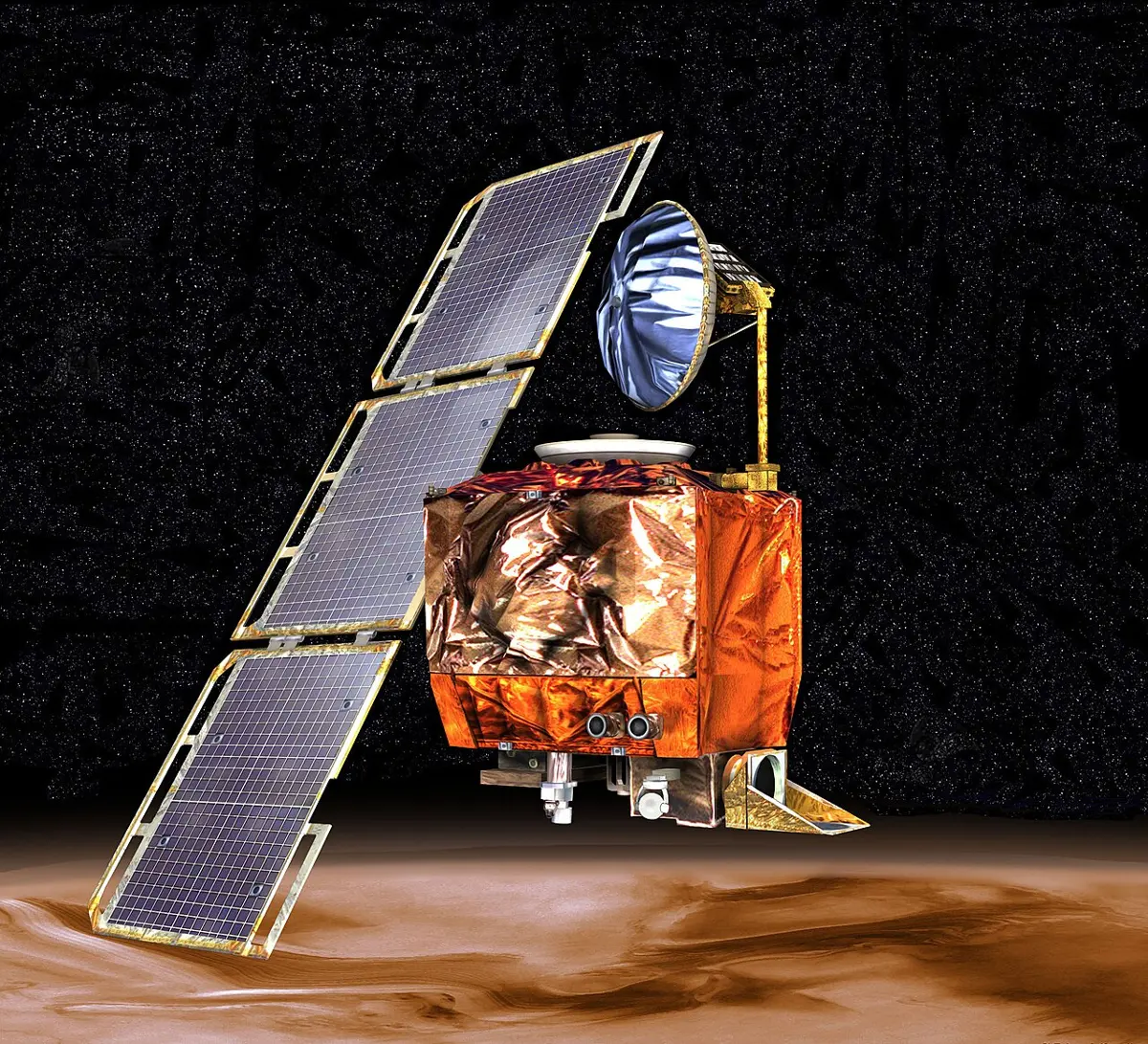
On 23 September 1999, a NASA spacecraft, the Mars Climate Orbiter, fired its engine to slip into orbit round Mars, and was never heard from again. It had flown far too low, and was probably torn apart in the Martian atmosphere. The cause was not a broken part. One team’s software reported the push of the thrusters in pound-force seconds; the team steering the spacecraft read the numbers as newton seconds. Every push was 4.45 times bigger than they thought, and nine months of small errors added up to a lost spacecraft.
A number with the wrong unit is not a small mistake: it is a different quantity. This unit is about getting quantities right: what a physical quantity is, how it is measured, the units it is measured in, how many of its digits you can trust, and its dimensions, a tool so useful that it can check a formula, or even find one, without doing a single experiment.
1.1 Introduction
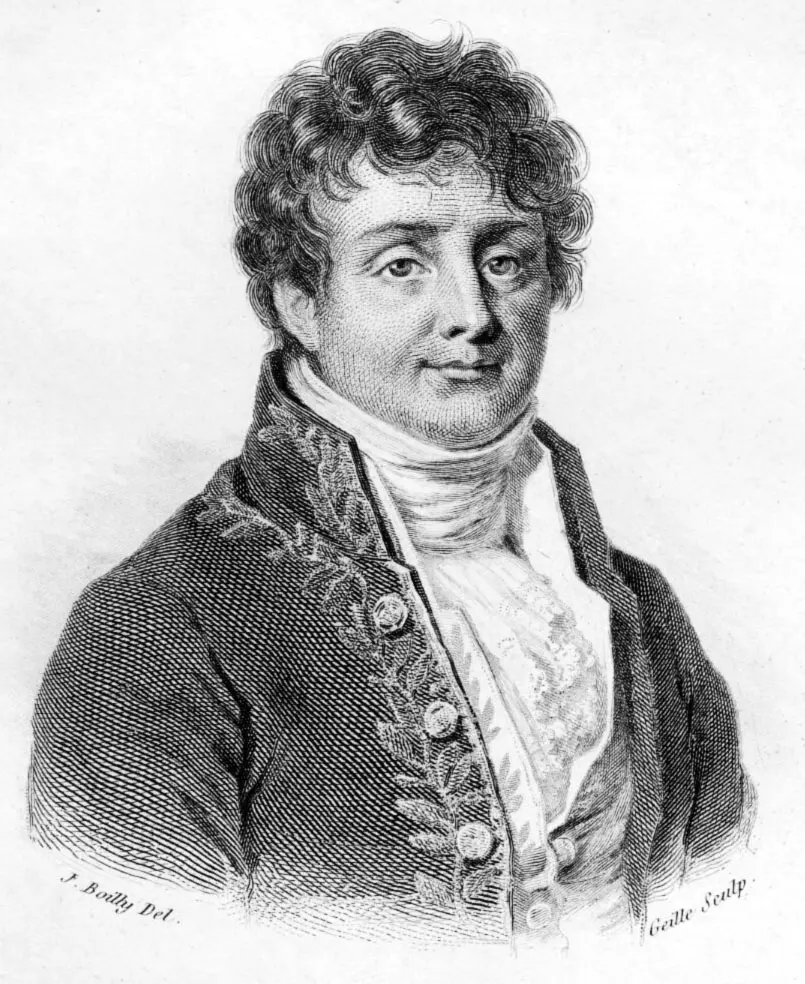
Think of what happens in nature around you: clouds forming and melting away, a rainbow, rain, a pond drying up in the sun, a storm, a cold dry winter and a hot summer. These are natural (physical) phenomena. To understand them clearly we need the laws of physics, and those laws are written in terms of physical quantities: length, time, mass, velocity, force, momentum, temperature and so on. So physics starts with measuring physical quantities, and that is where this book starts too.
What physics is
Physics is the most basic of the natural sciences: it tries to understand how the universe works, from its smallest pieces to its largest. A scientist who works in physics is a physicist.
The word comes from the Latin physica, “the study of nature”, which comes from the Greek phýsis (φύσις), “nature”. In Nepali it is भौतिक विज्ञान (Bhautik Vigyan), the science of the material world.
Everything around you, desks, the school building, trees, buses, is made of matter, and everything that happens to it involves energy: the energy of motion, of heat, of light, of sound. So physics is the science of matter and energy and how they interact. It covers the very large (stars, planets and galaxies) and the very small (atoms and electrons), and everything between: motion, heat, sound, light, electricity and magnetism, radioactivity, even space and time. Its main branches are mechanics, heat, optics (light), electricity and magnetism, and modern physics.
Physics is a quantitative science: it deals in measurements, which come with numbers. Physicists use mathematics to build models that predict what nature will do, then compare the predictions with careful measurements, and improve the models where they don’t agree. That cycle, predict, measure, improve, is why physics can send a spacecraft to Mars at all.
Physics is called a quantitative science because:
Pick an answer to see why.
1.2 Physical quantity
A physical quantity is anything in nature that can be measured: the mass of a person (87.5 kg), the height of a child (1.4 m), the time of a journey (2 hours). Kindness and beauty are real, but they are not physical quantities: there is no instrument to measure them.
Every measured value is written as a number times a unit:
where is the numerical value and is the unit. “The bag of apples is 5 kg” means 5 times the unit kilogram. The same quantity can be written with different units, and then the number changes the other way: a bigger unit needs a smaller number.
A number without its unit means nothing: “the road is 200 long” could be 200 m or 200 km.
Fundamental and derived quantities
Physical quantities are of two types.
- Fundamental (base) quantities are a small set chosen to stand on their own: none of them is defined from the others. There are seven: mass, length, time, temperature, electric current, luminous intensity (how bright a light source is) and amount of substance.
- Derived quantities are defined from the fundamental ones by multiplying or dividing them. Area is length × length; velocity is displacement ÷ time; momentum is mass × velocity, that is, mass × displacement ÷ time; force, pressure, energy and power are all derived the same way.
Two more quantities, plane angle and solid angle, are often listed beside the seven as supplementary quantities (Section 1.4).
Which of these is a derived quantity?
Pick an answer to see why.
1.3 Measurement and its need
In Aristotle’s time, more than two thousand years ago, natural science was mostly argument from what people saw and felt. Senses differ from person to person (the same water feels warm to a cold hand and cool to a hot one), so observations disagreed and people could not settle their arguments.
Lord Kelvin (1824–1907) put the modern view sharply: when you can measure what you are speaking about and express it in numbers, you know something about it; when you cannot, your knowledge is meager and unsatisfactory. A quantity enters physics only once it can be measured.
Measurement is the comparison of an unknown quantity with a known, agreed reference amount of the same kind, the unit. Measuring the length of a bench means finding how many meters long it is. In short, measurement assigns a number to a physical quantity by comparing it with its unit.
Why we need measurement:
- To test ideas. A hypothesis (“a longer pendulum swings more slowly”) can only be tested by measuring; the things measured become the variables of the experiment.
- To understand phenomena. Experiments need measurements of length, mass, time, temperature and so on.
- To check laws and theories. A law is accepted only when measurements agree with it.
It also lets people trade fairly and build things that fit: a shopkeeper’s kilogram must be the same as yours.
1.4 Unit of a physical quantity
A unit is the agreed standard amount of a quantity that others are compared with. A good unit is well defined, the same everywhere, does not change with time, and can be copied and checked easily.
Writing units correctly
The SI has rules for writing units, so that a unit means the same thing to everyone:
- A unit named after a person is written in full with a small letter: newton, joule, pascal, kelvin (not Newton, Joule). Degree Celsius is the one exception.
- Its symbol starts with a capital letter: N for newton, J for joule, Pa for pascal. Symbols of other units are small letters: m for meter (not M), s for second, kg for kilogram. (The liter may be written L as well as l, so that it isn’t mistaken for the number 1.)
- Symbols are never made plural: 5 kg, not 5 kgs; 10 m, not 10 ms (which would mean 10 milliseconds!).
- A product of units is written with a space or a raised dot: N m or N·m (newton meter).
- A quotient of units is written with one solidus (slash) or with a negative power: meter per second is m/s or m s⁻¹. Use only one slash: kg/(m s²) or kg m⁻¹ s⁻², never kg/m/s².
- Symbols are not abbreviations, so they take no full stop: 50 cm, 50 mL, not 50 c.m. or 50 m.l. (except at the end of a sentence).
- Names of units are made plural in the usual way (5 newtons, 3 henries), except lux, hertz and siemens, which stay the same.
- A prefix is joined to the symbol with no space: GHz (gigahertz), MPa (megapascal), km (kilometer).
The prefixes you will meet most in this book:
| Prefix | Symbol | Factor | Prefix | Symbol | Factor | |
|---|---|---|---|---|---|---|
| giga | G | 10⁹ | centi | c | 10⁻² | |
| mega | M | 10⁶ | milli | m | 10⁻³ | |
| kilo | k | 10³ | micro | μ | 10⁻⁶ | |
| hecto | h | 10² | nano | n | 10⁻⁹ | |
| deca | da | 10¹ | pico | p | 10⁻¹² |
1.4.1 Fundamental and derived units
The units of the fundamental quantities are the fundamental units (base units): the meter, kilogram, second, kelvin, ampere, candela and mole. The units of derived quantities are derived units, made by multiplying and dividing fundamental units. The unit of velocity is m/s; the unit of force is kg m/s², which is given its own name, the newton (N).
1.4.2 Systems of units
At different times and places people used different sets of units. The four systems you should know:
| System | Length | Mass | Time | Where it came from |
|---|---|---|---|---|
| CGS | centimeter | gram | second | the metric system; used by scientists from the 1870s |
| MKS | meter | kilogram | second | the metric system, which began in France in the 1790s |
| FPS | foot | pound | second | Britain (the British system) |
| SI | meter | kilogram | second, + four more | agreed internationally in 1960 |
In 1960, at the General Conference on Weights and Measures in Paris, the nations agreed on one system for the whole world, built on the MKS system: the SI, short for Système international d’unités, the International System of Units. Today it is used in science everywhere, and in daily life almost everywhere.
Table 1.1 The SI base quantities and units, with the two supplementary ones:
| Fundamental quantity | SI unit | Symbol |
|---|---|---|
| length | meter | m |
| mass | kilogram | kg |
| time | second | s |
| temperature | kelvin | K |
| electric current | ampere | A |
| luminous intensity | candela | cd |
| amount of substance | mole | mol |
| Supplementary quantity | SI unit | Symbol |
|---|---|---|
| plane angle | radian | rad |
| solid angle | steradian | sr |
The radian measures a plane angle: an angle in radians is the arc it cuts off a circle divided by the radius, θ = arc ÷ radius. The steradian measures a solid angle, the three-dimensional “angle” of a cone: the area it cuts off a sphere divided by the radius squared.
How the base units are defined
A unit is only as good as its definition. Since 2019, every SI base unit is defined by fixing the exact value of a constant of nature, so that a laboratory anywhere can make the units for itself (as of 2026):
- Second (s): the time taken by 9 192 631 770 vibrations of the radiation given out when a cesium-133 atom jumps between two particular energy levels (the two “hyperfine” levels of its ground state). Atomic clocks keep this time to better than a second in a hundred million years.
- Meter (m): the length of the path traveled by light in vacuum in of a second. So the speed of light is exactly 299 792 458 m/s, by definition. (1 m = 3.28 feet.)
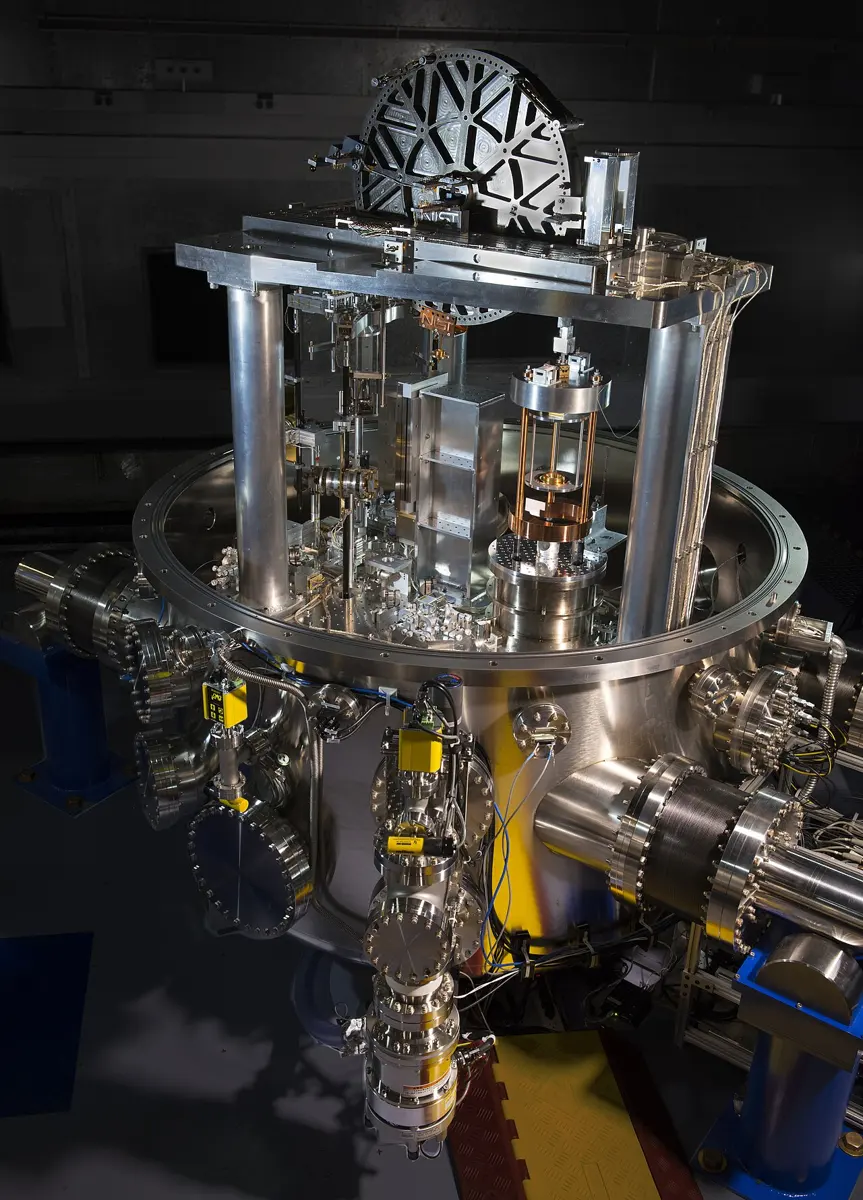
- Kilogram (kg): defined by fixing the value of Planck’s constant, J s exactly; a kilogram is measured against it with an instrument called a Kibble balance, which weighs a mass against an electromagnetic force.
- The kelvin, ampere, mole and candela are fixed in the same way by the Boltzmann constant, the charge of the electron, the Avogadro constant and a fixed brightness of green light.
Which is written correctly?
Pick an answer to see why.
1.5 Precision and significant figures
These are the two qualities of a set of measurements:
- Accuracy is how close a measurement (or the average of several) comes to the true value.
- Precision is how close repeated measurements come to one another, whatever the true value: how consistent they are, and how finely the instrument can read.
Suppose a bag of rice really has a mass of 10.0 kg.
- Readings of 9.8 kg, 10.2 kg and 10.4 kg are accurate (they cluster round 10 kg on average) but not very precise (they spread over 0.6 kg).
- Readings of 12.5 kg, 12.6 kg and 12.4 kg are precise (within 0.2 kg of each other) but not accurate: the scale has a fault that adds about 2.5 kg every time.
- Readings of 10.1 kg, 9.9 kg and 10.0 kg are both.
A faulty instrument that is wrong by the same amount every time (a scale that doesn’t read zero when empty, a stretched tape measure) spoils the accuracy without spoiling the precision: no number of repeats will reveal it. Careless reading and wobbly hands spoil the precision, and averaging many readings helps.
A student’s stopwatch reads 2.31 s, 2.30 s, 2.32 s and 2.31 s for a pendulum whose true period is 2.01 s. Her readings are:
Pick an answer to see why.
1.5.1 Significant figures
Measure the diameter of a ball with a ruler marked in millimeters, and you might read 2.64 cm. The 2 and the 6 are certain: you can see them on the scale. The last digit, 4, is your best estimate between two marks: it is uncertain, but still worth writing. The digits that are certain, plus the first uncertain one, are the significant figures of the measurement. The diameter 2.64 cm has three significant figures.
So the number of significant figures tells the reader how precisely a quantity was measured:
- A rod measured as 3.5 cm (two significant figures) with a ruler marked in centimeters;
- as 3.56 cm (three) with a millimeter scale;
- as 3.567 cm (four) with a vernier caliper or micrometer screw gauge.
Each is more precise than the one before: it pins the length down more finely. A measurement can never be more precise than the instrument it was made with, so don’t write 3.5672 cm from a ruler.
Rules for counting significant figures
The non-zero digits are easy: they always count. All the rules are about zeros:
| Rule | Examples |
|---|---|
| 1.Every non-zero digit is significant. | 21.48 has 4 |
| 2.Zeros between non-zero digits are significant. | 15.0041 has 6; 2001 has 4 |
| 3.Leading zeros (before the first non-zero digit) are not significant: they only place the decimal point. | 0015 has 2; 0.006 has 1; 0.00025 has 2; 0.0080038 has 5; 0.25 has 2 |
| 4.Trailing zeros after a decimal point are significant: someone measured them. | 5.00 has 3; 5.0 has 2; 0.200 has 3 |
| 5.Trailing zeros in a whole number with no decimal point are taken as not significant: they may only show the size of the number. | 9800 has 2; 050600 has 3 |
| 6.In scientific notation, , only the digits of count; the power of ten never does. | 1.6 × 10⁻¹⁹ C has 2; 6.62 × 10⁻³⁴ J s has 3 |
Rule 5 hides a problem: is “9800 m” measured to the nearest meter or the nearest hundred meters? Scientific notation removes the doubt: 9.8 × 10³ m has two significant figures, and 9.800 × 10³ m has four. That is one reason scientists write numbers that way.
How many significant figures are there in 0.0300 m?
Pick an answer to see why.
1.5.2 Rounding off
To round off a number to fewer significant figures, drop digits from the right until the number has as many figures as you want, and look at the first digit dropped:
- Less than 5: the digit before it stays as it is. 123.42 ≈ 123.4 (4 significant figures) ≈ 123 (3).
- More than 5, or 5 followed by any non-zero digits: the digit before it goes up by 1. 123.167 ≈ 123.17 (5) ≈ 123.2 (4); 2.4851 ≈ 2.49 (3).
- Exactly 5 (5 with nothing, or only zeros, after it): the digit before it goes up by 1 if it is odd, and stays if it is even, so that the last digit kept is even. 12.35 ≈ 12.4; 12.45 ≈ 12.4 (3 figures).
Rule 3, “round half to even”, keeps a long column of rounded numbers from creeping upward on average: half the 5s round up and half round down. (In daily arithmetic, and in many calculators, a 5 always rounds up; in physics practical work, follow the rule your teacher sets.)
1.5.3 Significant figures in calculations
A calculator gives you every digit it can, but an answer can’t be more precise than the measurements it came from.
Adding and subtracting: the answer keeps as many decimal places as the input with the fewest decimal places.
The second answer is 1.2 m because 2.1 m is known only to the nearest tenth of a meter, so the answer can’t be known more finely.
Multiplying and dividing: the answer keeps as many significant figures as the input with the fewest significant figures.
The last needs care. If the 3 is a measurement good to one figure, the answer has one figure: 4 × 10¹ (writing “40” would hide that only the 4 counts). If the 3 is an exact count (125 g shared among exactly 3 people), it doesn’t limit the answer at all: 41.7 g, to the three figures of 125.
A sample question: which of these measurements is the most precise?
Pick an answer to see why.
Uncertainty in a result
A measurement is never exact, so it is written with its uncertainty: a length of m means the true length is probably between 0.49 m and 0.51 m. The 0.01 m is the absolute uncertainty; divided by the value, 0.01 ÷ 0.50 = 0.02, it is the relative (fractional) uncertainty, or 2% as a percentage uncertainty.
When measured values are combined, their uncertainties combine too, by two rules (taking the worst case, when every error goes the same way):
- Adding or subtracting: add the absolute uncertainties. If or , then .
- Multiplying or dividing: add the relative uncertainties. If or , then .
- A power counts as repeated multiplying: if , then .
Note that subtracting still adds the uncertainties: the difference of two uncertain lengths is less certain than either.
1.6 Dimensions of a physical quantity
Every derived quantity is built from the fundamental quantities, and its dimensions say exactly how. In mechanics three fundamental quantities are enough, written in square brackets:
| Fundamental quantity | Dimension |
|---|---|
| mass | [M] |
| length | [L] |
| time | [T] |
| temperature | [K] (in the SI’s own notation, Θ) |
| electric current | [A] (or [I]) |
| amount of substance | [N] (or [mol]) |
| luminous intensity | [J] (or [cd]) |
The dimensions of a physical quantity are the powers to which the fundamental quantities must be raised to represent it. A mechanical quantity is written
- is the dimensional formula of ;
- , and are its dimensions in mass, length and time;
- the equation is its dimensional equation.
The square brackets are read “the dimensions of”. They may be left off (M L T⁻²), but are usually written.
To find a dimensional formula, start from the defining equation of the quantity, and put in the dimensions of each part.
The dimensions of the quantities in this course, worked out the same way:
| # | Quantity | Defining formula | Dimensional formula | SI unit |
|---|---|---|---|---|
| 1 | area | length × breadth | [L²] | m² |
| 2 | volume | length × breadth × height | [L³] | m³ |
| 3 | density | mass ÷ volume | [M L⁻³] | kg/m³ |
| 4 | relative density (specific gravity) | density ÷ density of water | [M⁰ L⁰ T⁰] | none |
| 5 | frequency | number of cycles ÷ time | [T⁻¹] | Hz |
| 6 | plane angle | arc ÷ radius | [M⁰ L⁰ T⁰] | rad |
| 7 | speed | distance ÷ time | [L T⁻¹] | m/s |
| 8 | velocity | displacement ÷ time | [L T⁻¹] | m/s |
| 9 | acceleration | change in velocity ÷ time | [L T⁻²] | m/s² |
| 10 | linear momentum | mass × velocity, | [M L T⁻¹] | kg m/s |
| 11 | force | mass × acceleration, | [M L T⁻²] | N |
| 12 | impulse | force × time | [M L T⁻¹] | N s |
| 13 | weight | [M L T⁻²] | N | |
| 14 | work, energy | force × displacement | [M L² T⁻²] | J (N m) |
| 15 | power | work ÷ time | [M L² T⁻³] | W (J/s) |
| 16 | pressure | force ÷ area | [M L⁻¹ T⁻²] | Pa (N/m²) |
| 17 | angular velocity | angle ÷ time, | [T⁻¹] | rad/s |
| 18 | angular acceleration | angular velocity ÷ time, | [T⁻²] | rad/s² |
| 19 | gravitational constant | [M⁻¹ L³ T⁻²] | N m²/kg² | |
| 20 | gravitational field strength | force ÷ mass | [L T⁻²] | N/kg |
| 21 | gravitational potential | work ÷ mass | [L² T⁻²] | J/kg |
| 22 | stress | force ÷ area | [M L⁻¹ T⁻²] | Pa (N/m²) |
| 23 | strain | change in length ÷ original length | [M⁰ L⁰ T⁰] | none |
| 24 | modulus of elasticity | stress ÷ strain | [M L⁻¹ T⁻²] | Pa (N/m²) |
| 25 | surface tension | force ÷ length | [M T⁻²] | N/m |
| 26 | velocity gradient | [T⁻¹] | s⁻¹ | |
| 27 | coefficient of viscosity, η | force ÷ (area × velocity gradient) | [M L⁻¹ T⁻¹] | N s/m² |
| 28 | torque (moment of a force, couple) | force × perpendicular distance | [M L² T⁻²] | N m |
| 29 | coefficient of linear expansion, α | change in length ÷ (original length × change in temperature) | [K⁻¹] | /K |
| 30 | specific heat capacity, | [L² T⁻² K⁻¹] | J/(kg K) | |
| 31 | specific latent heat, | [L² T⁻²] | J/kg | |
| 32 | thermal conductivity, | [M L T⁻³ K⁻¹] | W/(m K) | |
| 33 | Stefan’s constant, σ | (power per area ÷ T⁴) | [M T⁻³ K⁻⁴] | W/(m² K⁴) |
| 34 | molar gas constant, | [M L² T⁻² K⁻¹ N⁻¹] | J/(mol K) | |
| 35 | electric charge | current × time, | [A T] | C (A s) |
Two things in the table are worth noticing:
- Different quantities can share a dimensional formula: work and torque are both [M L² T⁻²]; pressure, stress and modulus of elasticity are all [M L⁻¹ T⁻²]. So dimensions alone can’t tell you which quantity you have.
- The SI unit of a quantity, written in base units, follows straight from its dimensional formula: [M L² T⁻²] means kg m² s⁻², which is the joule. So dimensions help you find units, and units help you catch mistakes in an equation.
The principle of homogeneity
You can add a length to a length, but not a length to a time: 3 m + 2 s means nothing. This common sense becomes a powerful rule, the principle of homogeneity of dimensions:
In a correct physical equation, every term on both sides has the same dimensions.
Only quantities of the same kind can be added, subtracted, compared or equated. Mass can be added to mass, but not to length; force can be added to force, but not to energy. In , the three terms have the same dimensions, [L T⁻¹] (since ), so the equation is homogeneous.
Kinds of physical quantity
By their dimensions, and by whether their value can change, physical quantities are of four kinds:
| Has dimensions | Has no dimensions | |
|---|---|---|
| Value can change (variable) | dimensional variables: velocity, work, power, pressure | dimensionless variables: strain, relative density, angle |
| Value fixed (constant) | dimensional constants: gravitational constant , Planck’s constant , speed of light | dimensionless constants: π, the numbers 2 and ½ |
A dimensionless quantity has no unit (or, like the angle, a unit that is a ratio of two equal units). Note that the coefficient of friction, which is a ratio of two forces, is dimensionless too, but it isn’t a constant of nature: it depends on the two surfaces.
Which pair has the same dimensions?
Pick an answer to see why.
1.6.1 Uses of dimensional analysis
Dimensional analysis has four uses:
- to check whether a physical equation is correct;
- to derive a relation between physical quantities;
- to convert a quantity from one system of units to another;
- to find the dimensions of an unknown quantity in an equation.
1. Checking an equation
Put the dimensions of each quantity into the equation and see whether every term matches.
But look at two wrong versions:
- is dimensionally correct too ([L] = [L] + [L]), yet it is physically wrong: the ½ is missing, and dimensions can’t see pure numbers.
- gives : its first term is not a length, so it is dimensionally wrong, and therefore certainly physically wrong.
So:
- An equation that is dimensionally wrong is certainly wrong.
- An equation that is dimensionally correct may still be wrong, by a pure number or by a missing term.
2. Deriving a relation
If you know (or guess) which quantities something depends on, dimensions can often find how.
The period of a simple pendulum (the time of one full swing, there and back) might depend on the mass of the bob, the length of the string, and the acceleration due to gravity . Suppose
where is a pure number. Put in the dimensions:
By the principle of homogeneity, the powers of M, L and T must match on both sides:
- M:
- T: , so
- L: , so
So
Dimensions can’t find the pure number ; experiment (or a full theory, Grade 12) gives :
The answer says something surprising, which experiment confirms: the period doesn’t depend on the bob’s mass (). A heavy bob and a light one on equal strings swing in step.
3. Converting units
A quantity is the same whatever units it is measured in: . If the quantity has dimensions , its unit in each system is built from that system’s units of mass, length and time:
4. Finding the dimensions of an unknown quantity
Every term added in an equation must have the same dimensions, so an unknown constant takes whatever dimensions make its term fit.
1.6.2 Limitations of dimensional analysis
Dimensional analysis is quick and powerful, but it can’t do everything:
- It gives no value for a dimensionless constant: the 2π in the pendulum’s period, the ½ in .
- It can’t derive a relation that contains trigonometric, exponential or logarithmic functions (, , ): their arguments are dimensionless, so they can’t be found by matching powers.
- It can’t tell whether a quantity is a scalar or a vector: work and torque have the same dimensions.
- It can’t tell which quantity it has, when two share a dimensional formula; and it can’t derive a relation when a quantity depends on more than three others in mechanics (there are only three equations, one each for M, L and T), or when a sum of terms is involved, as in .
Exercise
Choose the correct option
- Which of the following is dimensionally incorrect?
Pick an answer to see why.
- Which of the following is physically correct?
Pick an answer to see why.
- The same physical quantity measured in two different systems of units has:
Pick an answer to see why.
- Which of the following physical quantities is dimensionless?
Pick an answer to see why.
- The velocity of a particle is . The dimensional formula of b is:
Pick an answer to see why.
- If force [F], length [L] and time [T] are taken as fundamental, the dimensional formula of momentum is:
Pick an answer to see why.
- The dimensions of a light year are:
Pick an answer to see why.
- The sides of a rectangle are (0.5 ± 0.01) m and (0.2 ± 0.01) m. Its perimeter, with its uncertainty, is:
The textbook gives the options (1.4 ± 0.02) m, (1.4 ± 0.01) m, (0.1 ± 0.01) m and (0.1 ± 0.02) m, and none fits: the uncertainty of 2 × (0.5 + 0.2) m is 2 × (0.01 + 0.01) = 0.04 m, so the book’s options don’t work. The options below are corrected.
Pick an answer to see why.
- Which of these numbers has the fewest significant figures?
Pick an answer to see why.
- The number of significant figures in the measurement 0.0050 × 10⁻¹² is:
Pick an answer to see why.
- In the figure above, which set of measurements is both accurate and precise?
Pick an answer to see why.
Answer these questions
- a.Define the dimensional formula of a physical quantity.
- b.Taking force, length and time as fundamental quantities, find the dimensional formula of energy.
- c.The volume of liquid flowing per second through a horizontal pipe of length is given by , where is a dimensionless constant, is the pressure difference between the pipe’s ends, is the radius of the pipe, and is the coefficient of viscosity, [M L⁻¹ T⁻¹]. Find by the method of dimensions.
Hint
Answer
- a.The frequency of vibration of a string depends on its length , its tension , and its mass per unit length . Show by dimensions that ; experiment then gives .
- b.A force of 5 N is expressed as , where is time. Find the dimensional formulas of , , and .
- c.Using the relation in a., find the dimensional formula of frequency.
Answer
- a.How do you tell precision from accuracy? How is precision related to significant figures?
- b.Which of these measurements is the most precise, and why? i. 2 cm, ii. 2.00 cm, iii. 2.000 cm, iv. 2.0000 cm
Answer
Numerical problems
The velocity of a particle is , where is time. Find the dimensions of , and , if is in m/s and in s.
Answer
A body moving through air at a high speed feels a retarding force , where is the body’s surface area, is the density of the air, and is a dimensionless constant. Find .
Answer
The velocity of a particle is , where is time. Find the dimensions of , , and .
Hint
Answer
Find the value of 10 joules in a system whose fundamental units are 10 cm, 100 g and 30 s.
Answer
The length and breadth of a field are m and m. Find the area of the field with its uncertainty.
Answer
Convert i. 72 km/h into m/s, and ii. 20 g/cm³ into kg/m³.
Answer
The frequency of vibration of a stretched string depends on its tension , its length , and its mass per unit length . Using dimensions, prove that .
Answer
Printable PDFs
- The unit as a book (A5) 30 pages Answers as an A4 booklet, 8 sheets
- Study notes 2 pages
- Worksheet 4 pages Answer key
- Harder practice questions 2 pages Answer key
Quiz yourself: Scientific Learning, Grades 5–12 →
Practice every question in the book, and keep track of the ones you miss →
A companion to your textbook, not a replacement for it: study from the book your school uses, and where the two differ, follow your teacher. Found a mistake? Please tell us.