
In 1975 only nine blackbuck were left at Khairapur in Bardiya, the last of them in Nepal. Nobody hunts them there now, and today more than two hundred graze the same fields. A species doesn’t vanish on the day the last one dies: it slips away years earlier, as its numbers fall, its range shrinks and its herds are cut off from one another. Spotting that slide early, and stopping it, is what this unit is about.
It asks what wildlife is and why it matters, what drives species to extinction, and how they are conserved. Then it explains the IUCN Red List, the world’s scale of extinction risk, and lists the animals Nepal protects by law.
10.2.1 Wildlife
Wildlife is all the living things that live and grow on their own in their natural habitat, without being domesticated or cultivated by people: wild animals (fauna) and wild plants (flora), and also wild fungi and microbes. Tigers, elephants, rhinos, danphe and frogs are wildlife; so are rhododendrons, oaks, orchids and yarsagumba. A buffalo in a shed and the rice in a field are not: people breed and tend them. In everyday speech “wildlife” often means only wild animals, but in biology it covers wild plants too.
Importance of wildlife
- i.It keeps the balance of nature: predators control the numbers of their prey, and every species is a link in food chains and webs. Where tigers and leopards were removed, deer and wild boar multiplied and ate young trees and crops.
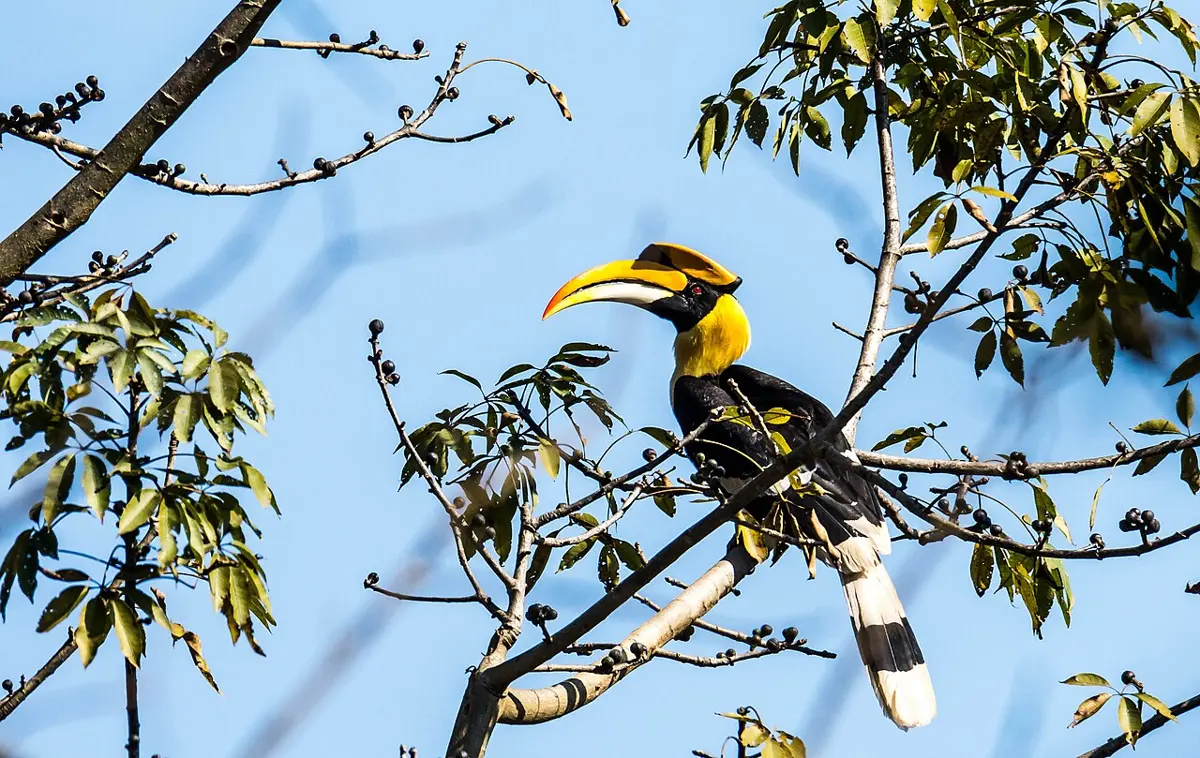
- ii.It keeps ecosystems self-sustaining: animals pollinate flowers, scatter seeds (the great hornbill plants the trees of the forest it lives in), and recycle dead matter into soil.
- iii.It gives medicines: many plants and animals have medicinal properties (sarpagandha, chiraito, the yew’s taxol).
- iv.It brings tourism and income: visitors come to Nepal to see rhinos, tigers, red pandas and birds, giving jobs to guides, lodges and drivers.
- v.It is a gene bank: wild relatives of crops and livestock carry genes for resistance to disease, drought and pests, which breeders can use.
- vi.It keeps organisms with genetic potential we have not yet discovered: new medicines, new foods, new materials.
- vii.It helps produce high-yielding, disease-resistant plants and animals, by crossing them with their wild relatives (wild rice has given cultivated rice resistance to several diseases).
It also has value of its own: the beauty, wonder and cultural meaning of wild animals and plants, many of them sacred in Nepal (the cow, the peepal, the danphe as the national bird).
Causes of extinction of wildlife
Some extinctions come from natural changes in climate, but today most come from what people do to natural ecosystems. The major causes:
- i.Habitat destruction, including deforestation: forests, grasslands and wetlands cleared for farms, settlements, roads and dams. Habitat that is left is often cut into small fragments too small for big animals.
- ii.Poaching: illegal hunting for horns, bones, skins, scales, musk and meat.
- iii.International trade, much of it illegal, in live animals and in animal and plant products (pangolin scales, tiger bones, rhino horn, orchids).
- iv.Over-exploitation: taking more than can grow back (over-fishing, over-collecting medicinal herbs).
- v.Pollution of air, water and soil: pesticides, industrial waste, plastics. Diclofenac, a painkiller given to cattle, poisoned the vultures that ate their carcasses.
- vi.Climate change, which shifts the places where species can live faster than many can move.
- vii.Human–wildlife conflict: animals killed for raiding crops or killing livestock.
- viii.Disease spread from domestic animals (rabies and distemper from dogs, diseases of livestock).
- ix.Natural disasters: floods, landslides, fires and droughts, which can finish off a species already reduced to a few places.
- x.Invasive species that crowd out, eat or infect native ones.
Conservation and management of wildlife
Conservation is the wise use of the Earth’s resources today in a way that keeps them for the future. Wildlife conservation is protecting wild species and their habitats so that they survive, above all the species at risk of extinction. It is one of the most urgent tasks for the environment, everywhere in the world.
Extinction is natural, but it is now happening far faster than its natural rate. In 1992 the United Nations Conference on Environment and Development, the Earth Summit in Rio de Janeiro, opened the Convention on Biological Diversity (CBD) for signature; Nepal signed it there and ratified it in 1993. At the time, estimates of the number of species ran up to 30 million, of which only about 1.5 million were known, and scientists warned that a large share of them could be lost within a few decades. Today’s best estimates are lower but no less worrying: about 8.7 million species of eukaryotes, about 1.2 million of them cataloged Grade 11: Unit 30, and in 2019 the world’s scientific panel on biodiversity, IPBES, reported that about one million species of animals and plants are threatened with extinction, many within decades.
Conservation strategy
At the Earth Summit and in the plans made around it, such as the Global Biodiversity Strategy (1992) of the World Resources Institute, the IUCN and the UN Environment Programme, scientists from many countries agreed on how wildlife and its habitats should be conserved and used. The main points:
- i.Study the habitats of wildlife, especially the areas critical to each species: feeding, breeding, nursery and resting grounds.
- ii.Protect those habitats, including by setting up new protected areas planned for the animals’ needs.
- iii.Keep accurate counts of the wild animals of each area, counted at least once every five years, so that a decline is noticed in time.
- iv.Make international agreements to protect the habitats of migratory species, which cross borders (the birds that winter at Koshi Tappu, the snow leopard on the Nepal–China border).
- v.Enforce the laws strictly, to stop the international wildlife trade and hunting for pleasure.
- vi.Preserve the wild varieties (wild relatives of crops and livestock) that genetic engineering and biotechnology need.
- vii.Set up national parks and wildlife reserves to conserve the natural habitats of wildlife.
- viii.Educate people about the use and importance of wildlife.
Why does a good conservation strategy include counting each species regularly, at least every five years?
Pick an answer to see why.
10.2.2 IUCN Red List
The IUCN Red List of Threatened Species, begun in 1964 by the International Union for Conservation of Nature (IUCN), is the world’s most complete inventory of the conservation status of species: how close each one is to extinction. Its main purpose is to give information on the conservation status of species and to draw attention to how much biodiversity is threatened. Its categories are meant to be an easily understood system, the same for every species on Earth, for picking out those at high risk of extinction. Experts review each species against a set of measured criteria, and the list is updated several times a year, so for the latest status of any species, look it up on its official site, iucnredlist.org.
The Red List places every species in one of nine categories:
- Extinct (EX): no reasonable doubt that the last individual has died.
- Extinct in the Wild (EW): survives only in captivity, in cultivation, or as a population planted or released well outside its past range.
- Critically Endangered (CR): facing an extremely high risk of extinction in the wild.
- Endangered (EN): facing a very high risk of extinction in the wild.
- Vulnerable (VU): facing a high risk of extinction in the wild.
- Near Threatened (NT): close to qualifying for a threatened category now, or likely to qualify in the near future.
- Least Concern (LC): assessed, and not at risk for now; widespread and abundant species such as the house sparrow and the rhesus monkey are here.
- Data Deficient (DD): not enough is known about its numbers or range to judge its risk.
- Not Evaluated (NE): not yet assessed at all. This doesn’t mean the species is safe, only that no one has assessed it yet.
The three middle categories, Critically Endangered, Endangered and Vulnerable, together make up the threatened species. By July 2026 about 176,000 species had been assessed, and about 49,500 of them were threatened.
How a species is placed
A species goes into a threatened category if it meets any one of five criteria, each with a stricter threshold for each higher category:
- A. A fast decline: how much its numbers have fallen over the last 10 years or three generations, whichever is longer.
- B. A small range: the area it lives in is small, broken into pieces, or shrinking (under 100 km² for Critically Endangered).
- C. A small population that is still declining (under 250 mature adults for Critically Endangered).
- D. A very small population (under 50 mature adults for Critically Endangered).
- E. A calculation of its chance of dying out (at least 50% within 10 years or three generations for Critically Endangered).
A species has 4,000 mature adults, but they have fallen by 85% in the last three generations, and the poaching that caused it still goes on. Under criterion A it is:
Pick an answer to see why.
The objectives of the Red List:
- i.To raise awareness of the level of threat to biodiversity.
- ii.To identify and document the species most at risk of extinction.
- iii.To guide strategies and plans for conserving threatened species, so that effort goes first where it is most needed.
- iv.To give information for global agreements, such as the Convention on Biological Diversity and the Convention on International Trade in Endangered Species of Wild Fauna and Flora (CITES, signed in 1973; Nepal joined in 1975), and for the awareness campaigns of governments and other agencies.
Which three Red List categories together are called “threatened”?
Pick an answer to see why.
10.2.3 Protected animals of Nepal
Nepal’s National Parks and Wildlife Conservation Act, 2029 (1973) lists in its Schedule 1 the animals that are fully protected in Nepal: 27 mammals, 9 birds and 3 reptiles. (The Act itself has 26 mammal entries, one of which names both of Nepal’s pangolins, so some books say 26 mammals.) Hunting, killing, capturing or trading any of them, or their parts, is a serious crime anywhere in the country, inside or outside protected areas. They are often called Nepal’s “endangered” or “rare” animals, because most of them are rare in Nepal.
Table 10.2.1 Protected animals of Nepal (Schedule 1 of the National Parks and Wildlife Conservation Act, 1973)
| Common name | Scientific name | |
|---|---|---|
| Birds (9) | ||
| 1 | Black stork | Ciconia nigra |
| 2 | White stork | Ciconia ciconia |
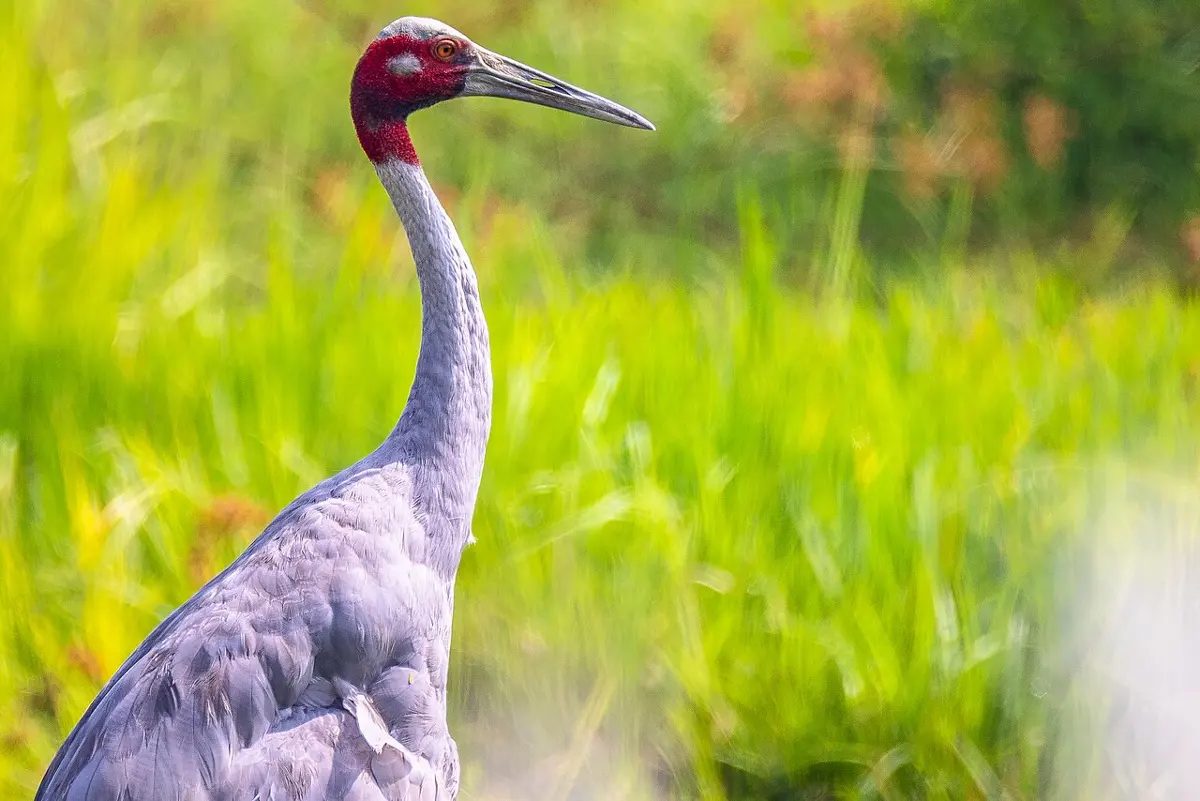
| 3 | Sarus crane | Antigone antigone |
| 4 | Cheer pheasant | Catreus wallichii |
| 5 | Himalayan monal, Impeyan pheasant (danphe) | Lophophorus impejanus |
| 6 | Satyr tragopan, crimson-horned pheasant (munal) | Tragopan satyra |
| 7 | Bengal florican | Houbaropsis bengalensis |
| 8 | Lesser florican | Sypheotides indicus |
| 9 | Great hornbill | Buceros bicornis |
| Mammals (27) | ||
| 1 | Red panda | Ailurus fulgens |
| 2 | Striped hyena | Hyaena hyaena |
| 3 | Wild yak | Bos mutus |
| 4 | Tibetan antelope (chiru) | Pantholops hodgsonii |
| 5 | Great Tibetan sheep (argali, nayan) | Ovis ammon |
| 6 | Wild water buffalo (arna) | Bubalus arnee |
| 7 | Gaur | Bos gaurus |
| 8 | Swamp deer (barasingha) | Rucervus duvaucelii |
| 9 | Musk deer | Moschus species |
| 10 | Pygmy hog | Porcula salvania |
| 11 | Asian elephant | Elephas maximus |
| 12 | Snow leopard | Panthera uncia |
| 13 | Bengal tiger | Panthera tigris |
| 14 | Clouded leopard | Neofelis nebulosa |
| 15 | Lynx | Lynx lynx |
| 16 | Leopard cat | Prionailurus bengalensis |
| 17 | Spotted linsang | Prionodon pardicolor |
| 18 | Brown bear | Ursus arctos |
| 19 | Gray wolf | Canis lupus |
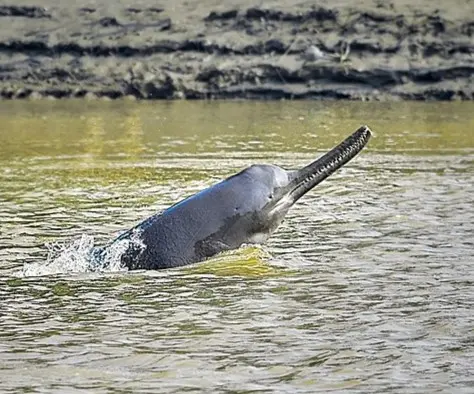
| 20 | Ganges river dolphin | Platanista gangetica |
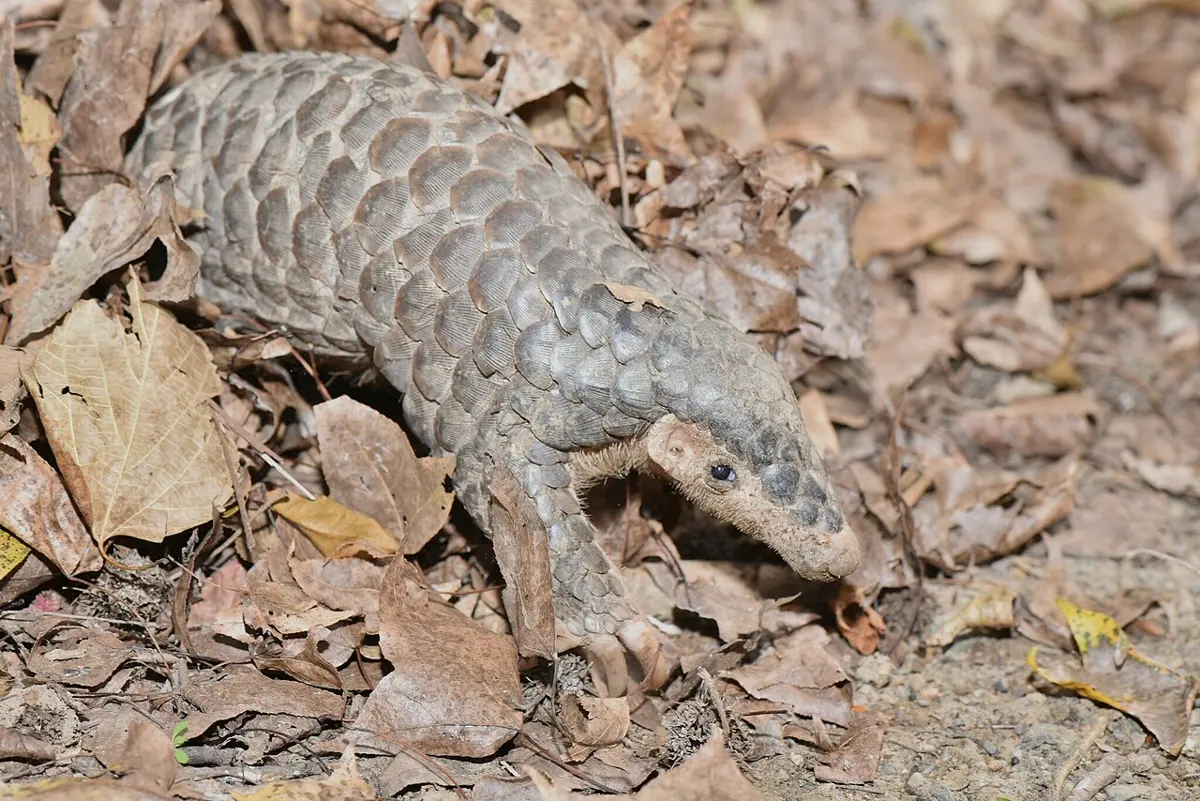
| 21 | Indian pangolin | Manis crassicaudata |
| 22 | Chinese pangolin | Manis pentadactyla |
| 23 | Assam macaque (Assamese monkey) | Macaca assamensis |
| 24 | Blackbuck | Antilope cervicapra |
| 25 | Four-horned antelope | Tetracerus quadricornis |
| 26 | Hispid hare | Caprolagus hispidus |
| 27 | Greater one-horned rhinoceros | Rhinoceros unicornis |
| Reptiles (3) | ||
| 1 | Asian rock python | Python molurus |
| 2 | Gharial | Gavialis gangeticus |
| 3 | Golden (yellow) monitor lizard | Varanus flavescens |
Which of these reptiles is on Nepal’s list of protected animals?
Pick an answer to see why.
Exercise
A. Tick the correct alternative
- Which of these regions is a biodiversity hotspot, rich in species found nowhere else and already badly damaged?
Pick an answer to see why.
- What is the primary objective of the IUCN Red List?
Pick an answer to see why.
- Which of the following is a protected bird of Nepal, and threatened worldwide (Vulnerable on the Red List)?
Pick an answer to see why.
B. Answer the following questions
Discuss the significance of biodiversity hotspots and the threats they face, with a focus on Nepal’s Himalayan region.
Answer
Define wildlife conservation.
Answer
What are the major causes of wildlife extinction?
Answer
Briefly explain the significance of the IUCN Red List.
Answer
Discuss the importance of wildlife conservation and the major threats faced by wildlife.
Answer
Explain the key components of the Global Conservation Strategy outlined during the UN Conference on Biodiversity in 1992.
Answer
Printable PDFs
- Study notes 2 pages
- Worksheet 5 pages Answer key
Quiz yourself: Environment and Biodiversity, Grades 5–12 →
Practice every question in the book, and keep track of the ones you miss →
A companion to your textbook, not a replacement for it: study from the book your school uses, and where the two differ, follow your teacher. Found a mistake? Please tell us.