
Stand on the bank of the Rapti at dawn in Chitwan and in one slow look you may see a one-horned rhino in the grass, a gharial on the sand, a kingfisher on a branch and, if you are lucky, the pug marks of a tiger in the mud. Fifty years ago the rhinos were down to about a hundred and the tigers were being shot for sport. Today both are counted in hundreds. Nothing about that comeback happened by chance: it was planned, guarded and paid for. That is conservation biology, the science of keeping the variety of life alive.
This unit begins with what biodiversity is and why it matters, then how rich Nepal is and what is eroding that richness. Then it tours Nepal’s protected areas one by one (the national parks, the wildlife reserve, the hunting reserve and the conservation areas), and ends with the world’s biodiversity hotspots and with wetlands and Ramsar sites.
10.1.1 Concept of biodiversity
Count the kinds of living things in a single handful of forest soil and you will never finish: thousands of kinds of bacteria, fungi, mites, springtails and worms. Now imagine doing that for the whole Earth, from the deepest ocean trench to the top of Sagarmatha. That variety is biodiversity.
Biodiversity, short for biological diversity (a blend of “biology” and “diversity”), is the variety of life on Earth at every level: the variety of genes within species, the variety of species, and the variety of ecosystems they form. It covers all life, from microbes to whales, in every habitat: on land, in the sea and in fresh water. In other words, biodiversity is the umbrella term for the number and frequency of genes, species and ecosystems in a given place, or for the totality of the genes, species and ecosystems of a region. It matters in natural ecosystems and in those people manage (farms, plantations, fish ponds), which give us the goods and services human society depends on.
How many species are there? Nobody knows exactly. A careful estimate (Mora and colleagues, 2011) puts the number of eukaryotic species (plants, animals, fungi and protists) at about 8.7 million. Only about 1.2 million of them had been cataloged, which means that about 86% of the species on Earth, and about 91% of those in the ocean, are still waiting to be described. The species we know live everywhere, adapted to their own places, from mountain peaks to the ocean floor and from polar ice to tropical rainforest.
Levels of biodiversity
Biodiversity is usually described at three levels.
Maize: O. W. Thomé, Flora von Deutschland (1885), Public domain, via Wikimedia Commons
Mahseer (Tor tor): traced from F. Day, The Fishes of India (1878), lithograph by Achilles, public domain
Frog: LadyofHats, CC0; catfish, eel (Steven Traver), pond snail (K8otter) and spruces: PhyloPic, CC0
a. Species diversity is the variety of species in a region: how many different species live together in a community (species richness), and how evenly their numbers are shared out. A forest with 50 kinds of tree, none of them dominant, is more diverse than a plantation of a single kind. In general, the more species an ecosystem has, the more links its food chains and webs have, and the better it can take a shock (a disease, a drought) without collapsing, because when one species fails another can take its place.
b. Ecological diversity (community and ecosystem diversity) is the variety of ecosystems in an area: of habitats, of the communities living in them, and of the interactions within them. It is the broadest level of biodiversity. The Earth has forests, grasslands, deserts, wetlands, lakes, rivers and oceans; Nepal alone, within about 200 km from south to north, has tropical sal forest, subtropical pine forest, temperate oak forest, alpine meadow and the cold desert behind the Himalaya.
c. Genetic diversity is the variety of genes and chromosomes within and between species: the different alleles of the same genes carried by different individuals of one species. Every living thing, from a microbe to a human, carries genes for its traits. In one species the genes come in different versions (alleles), so no two individuals (except identical twins and clones) are alike. Nepal’s farmers grow hundreds of local varieties of rice, from the red Marsi rice of Jumla to the fine-grained rice of the Terai: one species, Oryza sativa, with great genetic diversity. A large population keeps more of this variety: it has more alleles to start with, and more combinations of them in its offspring. A small one loses alleles by chance from one generation to the next (genetic drift: Unit 20).
A forest in Ilam has 40 species of tree, and its rhododendrons come in red, pink and white varieties. The varieties of rhododendron are an example of:
Pick an answer to see why.
Why is a crop made of a single variety (all plants genetically alike) at more risk than a field of mixed local varieties?
Pick an answer to see why.
Importance of biodiversity
Biodiversity matters for these purposes:
- i.Preserving the variety of life forms for its own sake and for the future.
- ii.Using ecosystems, species and genetic resources responsibly, so that they last: timber, fodder, fish, medicinal plants.
- iii.Sharing fairly the benefits that come from using genetic resources (when a company makes a medicine from a Nepali plant, the people who kept and knew the plant should share the gain).
- iv.Giving recreational, cultural and spiritual nourishment, for the well-being of people and society: a walk in a forest, a sacred grove, a festival flower.
- v.Keeping ecosystems working, and so keeping their free services going: oxygen, clean air and water, fertile soil, pollination, the control of pests, and the cleaning of wastewater.
Biodiversity in Nepal
Nepal covers only about 0.1% of the world’s land, yet it holds about 3.2% of the world’s known plant species and about 1.1% of its known animal species. The reason is its topography and climate: from about 60 m above sea level in the Terai to 8,849 m on Sagarmatha in about 200 km, it has every climate from tropical to arctic within a day’s drive and a few days’ walk. Its national biodiversity plan counts 6 biomes (broad kinds of natural community), 35 forest types and 118 ecosystems, sorted by altitude, climate and vegetation. Many species are endemic (found nowhere else): the spiny babbler, Nepal’s only endemic bird, and about 300 flowering plants.
Table 10.1.1 Known species in Nepal, and Nepal’s share of the world’s known species
| Group | Known species in Nepal | Share of the world’s known species (%) |
|---|---|---|
| Flora (3.2% of the world) | ||
| Angiosperms | 6,973 | 3.2 |
| Gymnosperms | 28 | 5.1 |
| Pteridophytes | 534 | 5.1 |
| Bryophytes | 1,150 | 8.2 |
| Lichens | 771 | 2.3 |
| Fungi | 2,025 | 2.6 |
| Algae | 1,001 | 2.5 |
| Flora total | 11,971 | 3.2 |
| Fauna (1.1% of the world) | ||
| Mammals | 210 | 5.2 |
| Birds | 871 | 9.5 |
| Reptiles | 137 | 1.9 |
| Amphibians | 53 | 2.5 |
| Fishes | 228 | 1.9 |
| Mollusks | 192 | not known |
| Moths | 3,958 | 3.6 |
| Butterflies | 651 | 3.7 |
| Spiders | 175 | 0.4 |
| Rotifers | 61 | not known |
| Crustaceans | 59 | not known |
| Other insects | 5,052 | 0.7 |
| Platyhelminthes (flatworms) | 168 | 1.4 |
| Fauna total | 11,861 | 1.1 |
Source: Nepal Biodiversity Research and Conservation Centre; Department of National Parks and Wildlife Conservation. The totals are the government’s (Ministry of Forests and Environment, 2018); the group counts come from several surveys made at different times, so they don’t add up exactly to the totals.
Loss of biodiversity
When a kind of plant, animal or other living thing disappears from the Earth for ever, it has become extinct. The loss of biodiversity is the decline in the variety of life: in the numbers of genes, species and ecosystems, ending in extinction. Extinction has always happened; most species that ever lived are gone. But today species are disappearing far faster than the natural, background rate, mainly because of what people do, and losing them upsets the balance of ecosystems: when one link of a food web goes, the others shift. Nepal’s biodiversity too is declining, which is why it needs everyone’s care.
The major causes of the decline of biodiversity:
- i.Habitat loss and encroachment: forests, grasslands and wetlands cleared or settled for farms, towns and roads. This is the biggest cause of all.
- ii.Poaching: illegal hunting of rhinos for their horns, tigers for their bones and skins, pangolins for their scales, musk deer for their musk.
- iii.Unsustainable use of resources: cutting timber, fodder and firewood, digging medicinal herbs such as yarsagumba and panch aunle, and fishing (sometimes with poison or electricity), faster than they can grow back.
- iv.Invasive alien species: plants and animals brought from elsewhere that spread out of control, such as Mikania micrantha in Chitwan and water hyacinth in the Pokhara lakes Grade 11: Unit 15.
- v.Human–wildlife conflict: animals that raid crops or kill livestock are killed in return.
- vi.Filling up wetlands for farms and buildings.
- vii.Climate change: as it warms, plants and animals must move uphill, and those at the top have nowhere left to go.
- viii.Overgrazing by livestock, which strips the ground cover and lets soil erode.
- ix.Natural disasters: floods, landslides, fires and droughts, made worse where forests have been cleared.
- x.Pollution, including that from large infrastructure projects (dams, highways, mines), which also cut habitats into pieces.
Why does losing habitat cost so many species? Big areas hold more species than small ones, in a regular way: the species–area relationship. Over many islands and patches of habitat, the number of species is close to
where is the area, a constant for the kind of place and usually between about 0.15 and 0.35; 0.25 is a typical value, used below. It is only a rough rule, but it lets conservation biologists estimate how many species a shrinking habitat will lose in the long run.
Using (a typical value of ), if a forest is cut down to one tenth of its area, about what share of its species can it keep in the long run?
Pick an answer to see why.
10.1.2 Biodiversity conservation
Biodiversity conservation is the protection and scientific management of the variety of life, so that it stays at healthy levels and gives lasting benefits to present and future generations. It protects the plants, animals, microbes and genes that food production and farming depend on, and the work ecosystems do: making soil fertile, recycling nutrients, controlling pests, preventing erosion, and pollinating crops and trees. Conservation means managing nature and its resources so that people today can use them and people tomorrow still have them.
There are two basic strategies, met in detail in Unit 16:
- a.In-situ conservation (in situ, “in its place”): protecting organisms in their own natural habitat, together with everything they live with, in national parks and other protected areas. Chitwan National Park is in-situ conservation of the rhinos, tigers and gharials living wild in it.
- b.Ex-situ conservation (“out of its place”): protecting organisms outside their natural habitat, in botanical and zoological gardens, breeding centers, seed and gene banks, and by cryopreservation (keeping seeds, sperm, eggs or embryos frozen, usually in liquid nitrogen at −196 °C). Chitwan’s breeding centers are ex-situ conservation, though they stand beside the park: elephants are bred at Khorsor, and gharials and vultures at Kasara, and the young gharials and vultures are released into the wild.
Gharial eggs are collected from river banks and hatched at Kasara, and the young are raised for a few years before being released into the Narayani. This is:
Pick an answer to see why.
10.1.3 National parks in Nepal
A national park is a large area set aside by law to protect wildlife and its natural habitat, for science, education and recreation. In Nepal the parks conserve the environment, its plants and animals and its scenery, and see that they are properly managed and used. They have scientific, aesthetic and ecological value. Inside them poaching, cutting trees, grazing livestock and settling are forbidden; visitors may come, which brings ecotourism. Nepal’s parks follow the standards of the IUCN (the International Union for Conservation of Nature), which counts a national park as a protected area of its category II.
Nepal has 13 national parks. Twelve were set up between 1973 and 2017 and are listed here alphabetically, as most books do; the 13th, Chhayanath (about 843 km², in Mugu), was made in 2025 from part of Shey Phoksundo Grade 11: Unit 16, so it comes last. The parks cover about 11,800 km², about 8% of Nepal (Chhayanath’s land was already inside Shey Phoksundo). Together with the reserves, the conservation areas and the buffer zones, Nepal’s protected areas cover 23.39% of the country, about 34,400 km² (the Department of National Parks and Wildlife Conservation’s figure; it was 23.2% in 2014).
- Banke National Park
- Bardiya National Park
- Chitwan National Park
- Khaptad National Park
- Langtang National Park
- Makalu Barun National Park
- Parsa National Park
- Rara National Park
- Sagarmatha National Park
- Shey Phoksundo National Park
- Shivapuri Nagarjun National Park
- Shuklaphanta National Park
- Chhayanath National Park
1. Banke National Park
Area 550 km² · set up 2010 · districts Banke, Salyan and Dang
- i.It was set up to give tigers, an endangered species, more room, joined to Bardiya across the border of the two districts, so that tigers can move between the two parks.
- ii.Besides the tiger, it protects the striped hyena and the four-horned antelope, four birds (great hornbill, black stork, Bengal florican and lesser florican) and two reptiles (the gharial and the python).
- iii.The Rapti river on the south and the Babai on the north are the park’s lifelines.
- iv.It has eight types of ecosystem, among them sal forest, deciduous riverine forest, savannas and grasslands, mixed hardwood forest, floodplain communities, the Bhabar (the gravelly belt at the foot of the hills) and the foothills of the Chure range.
- v.Recorded so far: 124 kinds of plant, 34 mammals, more than 300 birds, 24 reptiles, 7 amphibians and 58 fish.
- vi.Natural forest covers about 90% of it, mostly sal, karma, khair and sissoo.
- vii.It mainly conserves the Bengal tiger, the Asian elephant and the four-horned antelope.
2. Bardiya National Park
Area 968 km² · set up 1976 (as a wildlife reserve), a national park since 1988 · district Bardiya
- i.It is the largest national park of the Terai.
- ii.It began as the Karnali Wildlife Reserve in 1976 and became a national park in 1988.
- iii.Its vegetation is mainly forest, wooded grassland and riverine forest; about 70% of the forest is sal, with grasslands and riverine forest making up the rest.
- iv.It is home to endangered animals: the Bengal tiger, the Asian elephant, the greater one-horned rhinoceros, the swamp deer, the blackbuck, the gharial and the mugger (marsh crocodile), the Gangetic dolphin in the Karnali, and birds such as the Bengal florican, the lesser florican and the sarus crane.
- v.It shelters more than 30 kinds of mammal, about 230 birds, and many snakes, lizards and fish.
3. Chitwan National Park
Area 952.63 km² · set up 1973 · districts Chitwan, Nawalpur (Nawalparasi east of the Bardaghat Susta), Parsa and Makwanpur
- i.It is Nepal’s oldest national park, and a UNESCO World Heritage Site since 1984.
- ii.Its ecosystems range from the Churia (Chure) hills to oxbow lakes and the floodplains of the Rapti, Reu and Narayani rivers.
- iii.It is home to more than 50 kinds of mammal, more than 525 birds, and about 55 amphibians and reptiles.
- iv.It conserves endangered animals including the one-horned rhinoceros, the gaur, the Bengal tiger, the Asian elephant, the four-horned antelope, the pangolin, the golden monitor lizard and the python, and birds such as the Bengal florican, the lesser florican, the great hornbill, the black stork and the white stork.
- v.About 70% of the park is sal forest, and about 20% grassland.
4. Khaptad National Park
Area 225 km² · set up 1984 · districts Bajhang, Bajura, Doti and Achham
- i.It is the only national park of the middle mountains in western Nepal: a high, rolling plateau of grassland and forest at about 3,000 m.
- ii.Its plants fall into three zones by height: lower altitude, subtropical and temperate.
- iii.Its forests are rich in hill sal, pines, alders, Lindera, Cinnamomum tamala (tejpat), spruce, fir, hemlock, oaks, horse chestnut (Aesculus indica), maples, birch and rhododendrons.
- iv.It is home to more than 20 kinds of mammal, including the barking deer, wild boar, goral, Himalayan black bear, yellow-throated marten, rhesus monkey, langur, leopard, wild dog, jackal and musk deer.
- v.It has 135 kinds of flowering plant, about 224 medicinal herbs, and hundreds of kinds of bird, both migrants and breeders, including the danphe (Impeyan pheasant).
- vi.Its core is a place of pilgrimage: the ashram of Khaptad Baba and Sahasra Linga, at about 3,200 m.
5. Langtang National Park
Area 1,710 km² · set up 1976 · districts Nuwakot, Rasuwa and Sindhupalchok
- i.It is the nearest Himalayan park to Kathmandu, and its forests change with height: sal (Shorea robusta) low down, then chir pine, Nepalese alder, oaks, silver fir, hemlock and the Langtang larch (Larix himalaica, a larch of a few high valleys, Langtang among them), with rhododendrons (Rhododendron arboreum, R. barbatum, R. campanulatum and R. lepidotum) and mountain ash (Sorbus microphylla).
- ii.It is a habitat for the red panda, musk deer, Himalayan tahr, Himalayan black bear, snow leopard, wild dog, goral and serow, and more than 250 kinds of bird.
- iii.It is famous for Gosaikunda, a sacred lake and a Ramsar site.
6. Makalu Barun National Park
Area 1,500 km² · set up 1992 · districts Sankhuwasabha and Solukhumbu
- i.It rises from about 435 m in the Arun valley to 8,485 m on Makalu, a climb of about 8,000 m within one protected area, one of the steepest ranges of height on Earth.
- ii.It is known for its great variety of plants, animals and peoples.
- iii.It has 31 kinds of rhododendron, 47 orchids and 56 rare plants, and animals such as the snow leopard, red panda, musk deer and wild boar.
7. Parsa National Park
Area 627.39 km² · set up 1984 (as a wildlife reserve), a national park since 2017 · districts Parsa, Bara and Makwanpur
- i.It is dominated by the Churia hills, about 750 to 950 m high, running east to west through the park.
- ii.It has a subtropical monsoon climate.
- iii.Its forest is tropical and subtropical, about 90% of it sal.
- iv.Along its rivers grow riverine forests of khair and silk cotton (simal), and there are chir pines on the hills and sabai grass.
- v.It conserves endangered animals such as the Asian elephant, the Bengal tiger, the sloth bear and the leopard.
- vi.It is home to more than 500 kinds of bird, such as the white-throated kingfisher, Indian paradise flycatcher, greater racket-tailed drongo, golden-backed woodpecker and the great hornbill.
- vii.It is known for its snakes, among them the common cobra, common and banded kraits, the python and the king cobra, and for mammals such as the blue bull (nilgai), sambar, chital, hog deer, barking deer, langur, rhesus macaque, striped hyena, jungle cat and palm civet.
8. Rara National Park
Area 106 km² · set up 1976 · districts Mugu and Jumla
- i.It is Nepal’s smallest national park (the smallest protected area of all is the Krishnasar Conservation Area, 10.1.6).
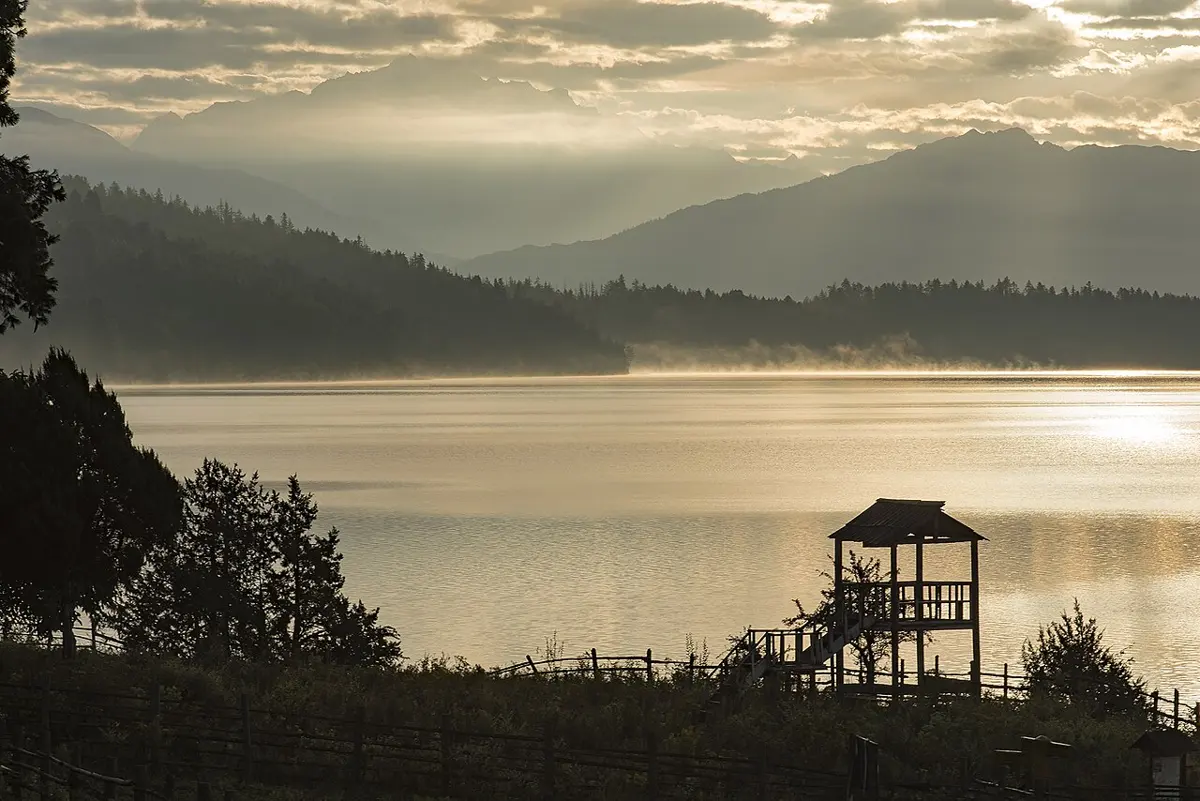
- ii.It holds Rara Lake (also called Mahendra Tal), at about 2,990 m, Nepal’s largest lake (about 10.8 km²) and its deepest (about 167 m). Some books call Phoksundo the deepest; it is about 136 m deep. Its snow trout include the Rara snowtrout (Schizothorax raraensis), found in this lake and nowhere else.
- iii.Its forest is mainly coniferous: blue pine, fir, spruce, juniper and hemlock, with oaks, birches and rhododendrons, and marshes and tussock grasslands by the lake.
- iv.It rises from about 2,800 m to 4,039 m on Chuchemara peak.
- v.It is home to about 20 kinds of mammal, such as the musk deer, Himalayan black bear, leopard, jackal, Himalayan tahr, yellow-throated marten, otter, wild dog, langur, rhesus macaque and red panda.
- vi.It has about 214 kinds of bird, including coots, snowcocks and pheasants, and in winter many water birds: grebes, mallards, common teals, red-crested pochards and gulls.
9. Sagarmatha National Park
Area 1,148 km² · set up 1976 · district Solukhumbu
- i.It holds the highest peak in the world, Sagarmatha (8,849 m), and other famous peaks: Lhotse, Cho Oyu, Thamserku, Nuptse, Ama Dablam, Pumori and Kwangde.
- ii.It was listed as a UNESCO World Heritage Site in 1979.
- iii.Its vegetation goes from pine and hemlock forests lower down to fir, juniper, birch and rhododendron, then scrub and alpine plants.
- iv.It is home to more than 118 kinds of bird, such as the danphe, snowcock, blood pheasant and red-billed chough, and mammals such as the red panda, snow leopard, musk deer, Himalayan tahr, marten and the Himalayan mouse hare (pika).
10. Shey Phoksundo National Park
Area about 2,712 km² since 2025 (3,555 km² before Chhayanath was cut from its Mugu side) · set up 1984 · districts Dolpa and Mugu
- i.It is Nepal’s largest national park, even after Chhayanath was cut from it.
- ii.It rises from 2,130 m (Ankhe) to 6,883 m (Kanjiroba Himal).
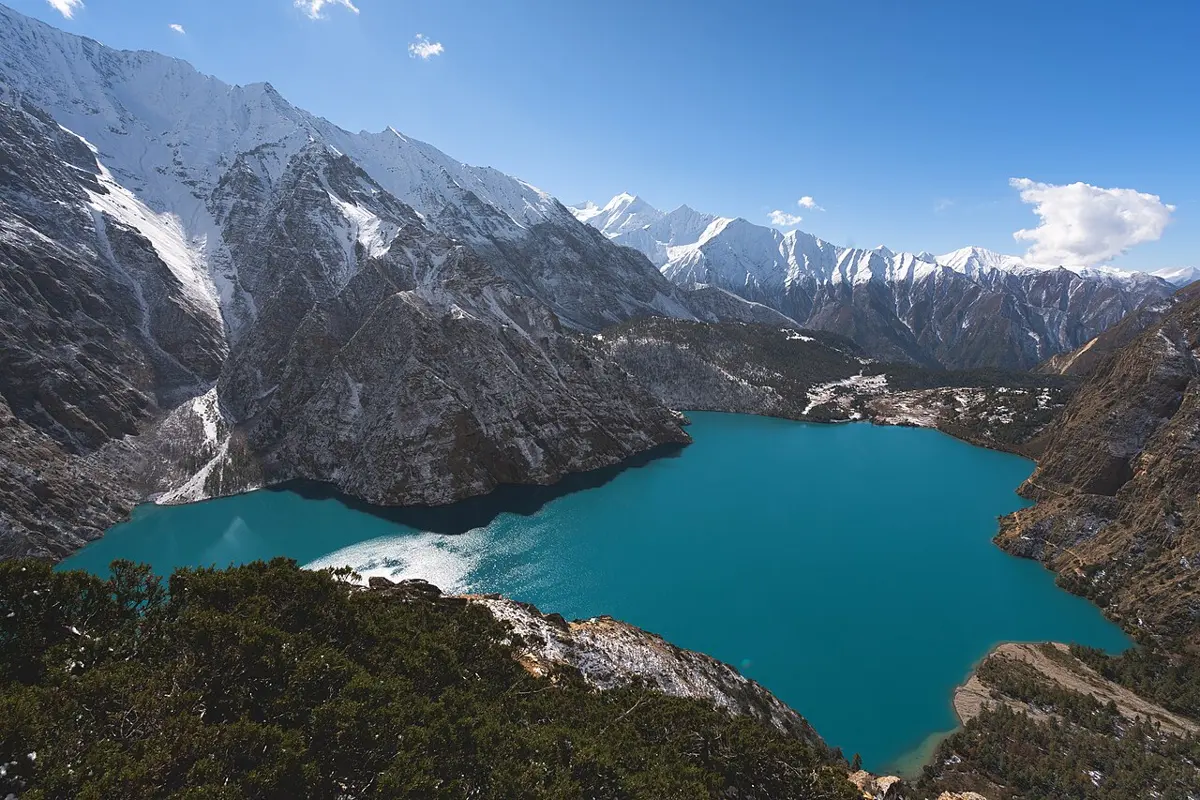
- iii.It holds Phoksundo Lake, Nepal’s second largest lake and one of its deepest (about 136 m in a 2019 survey; an older survey gave 145 m), a turquoise lake held back by an ancient landslide.
- iv.It is famous for Shey Gompa, a monastery founded in the 11th century, and for the Bon and Buddhist culture of Dolpo.
- v.Most of the park lies in the rain shadow behind the Himalaya; only about 5% of it is forest: rhododendron, caragana shrubs, willows (Salix), juniper, white Himalayan birch, silver fir, blue pine, spruce, hemlock, cedar, poplar and bamboo.
- vi.It protects 6 kinds of reptile and 29 butterflies, including high-mountain ones such as Paralasa nepalaica.
- vii.It has more than 200 kinds of bird, including the Tibetan partridge, wood snipe, white-throated tit, alpine accentor and crimson-eared rosefinch.
- viii.It is home to endangered and rare mammals such as the snow leopard, gray wolf, musk deer, blue sheep, goral, great Tibetan sheep, Himalayan tahr, leopard, jackal, yellow-throated marten and Himalayan black bear.
11. Shivapuri Nagarjun National Park
Area 159 km² · set up 2002 (a protected watershed from 1976) · districts Kathmandu, Nuwakot, Sindhupalchok and Dhading
- i.It lies on the hills round the north of the Kathmandu Valley, where the subtropical and temperate climates meet.
- ii.It protects natural forests of pine, oak, rhododendron and others, and the springs that give the valley much of its drinking water.
- iii.It is home to 177 kinds of bird, more than 9 of them threatened, 102 butterflies, some of them rare, and 129 kinds of mushroom.
- iv.Its mammals include the Himalayan black bear, leopard, jungle cat and rhesus monkey.
12. Shuklaphanta National Park
Area 305 km² · set up 1976 (as a wildlife reserve), a national park since 2017 · district Kanchanpur
- i.It was first a royal hunting reserve (1969), then a wildlife reserve (1976), and a national park from 2017.
- ii.It was set up mainly to conserve the swamp deer (barasingha). It has the largest herd of swamp deer in the world (over 2,000; 2,313 were counted in 2022) on its great open grassland, the phanta. Tigers and leopards hunt there too.
- iii.It is home to 24 kinds of mammal, about 350 kinds of bird (180 of them breeding there), 14 fish, and 10 kinds of ectoparasite and biting fly that have been studied there.
- iv.It rises from 174 m to 1,386 m.
- v.Its vegetation includes sal forest and sal savanna, and it holds one of Nepal’s largest groups of the critically endangered Bengal florican (Houbaropsis bengalensis).
- vi.Since 2012 it has had a second herd of blackbuck, brought from Khairapur and the Nepalgunj zoo (10.1.6).
13. Chhayanath National Park
Area about 843 km² · set up 2025 · district Mugu
- i.It is Nepal’s newest national park, named after the Chhayanath temple near Gamgadhi. The government decided on it in August 2025, from the Mugu side of Shey Phoksundo, and its office was set up later that year. A buffer zone of about 177 km² surrounds it.
- ii.It is high, dry country on the border with Tibet, home to the snow leopard, blue sheep, Himalayan tahr, musk deer and danphe, and to valuable herbs such as yarsagumba, jatamansi and kutki.
Which national park is the largest in the Terai?
Pick an answer to see why.
Which two national parks are UNESCO World Heritage Sites?
Pick an answer to see why.
10.1.4 Wildlife reserve of Nepal
A wildlife reserve is an area set aside to conserve and manage particular animals and their habitats. It focuses on rare, endangered or particular species, managing their habitat carefully so that their numbers grow. As in a national park, poaching, hunting, cutting trees, grazing livestock and building houses are forbidden, and entry for people and any development that could harm the animals, including tourist facilities, is restricted. Nepal now has one wildlife reserve, Koshi Tappu (the others, Parsa and Shuklaphanta, became national parks in 2017).
Koshi Tappu Wildlife Reserve
Area 175 km² · set up 1976 · districts Sunsari, Saptari and Udayapur (eastern Nepal)
- i.It has three seasons: a hot summer, the monsoon and a cool winter.
- ii.It lies on the floodplain of the Sapta Koshi and is mostly tall grassland: khar–pater grassland, with khair–sissoo scrub forest and mixed deciduous riverine forest.
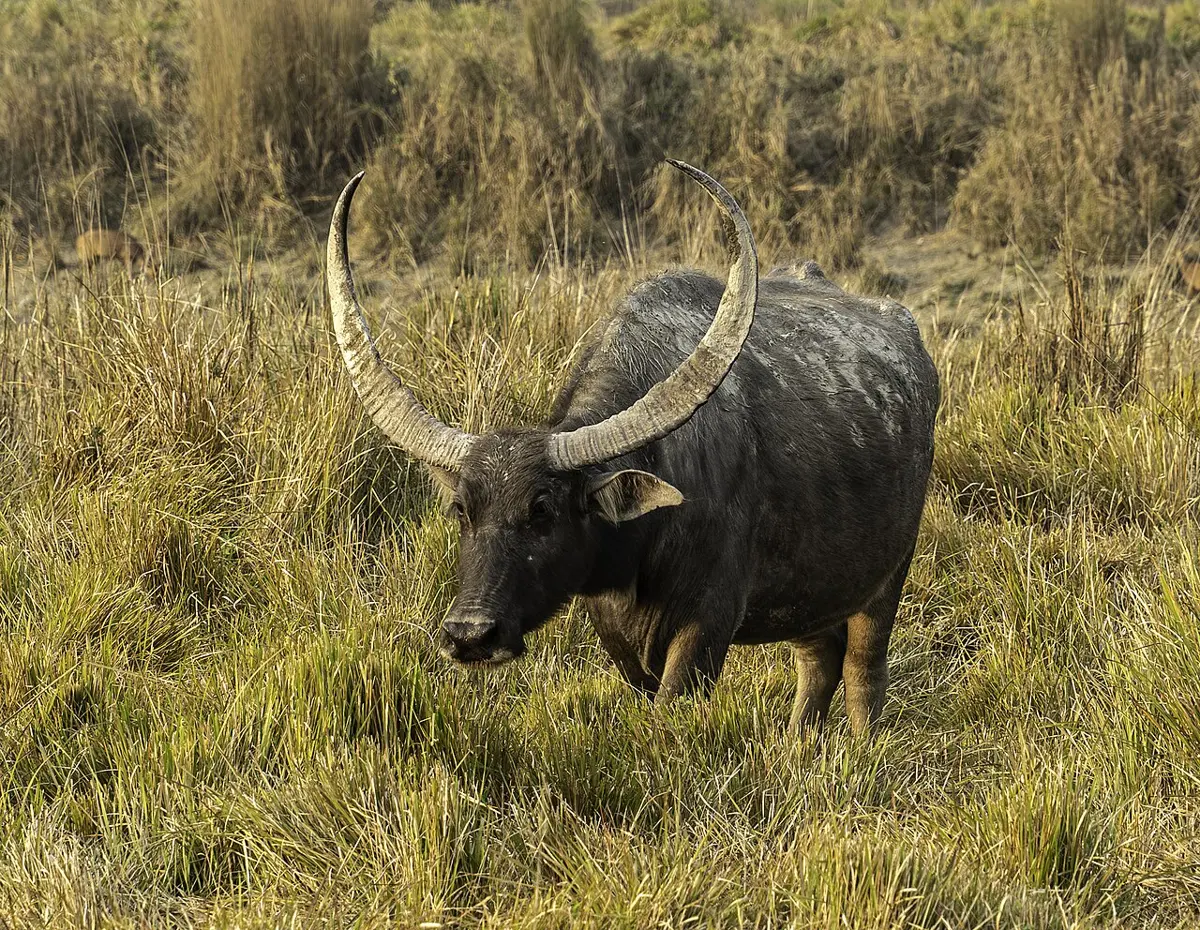
- iii.It was set up to protect the last wild population in Nepal of the wild water buffalo (arna, Bubalus arnee). Protection has worked: from about 63 animals when the reserve was set up, the herd grew to 498 in the 2021 count. It also has hog deer, wild boar, chital (spotted deer), blue bull (nilgai) and rock python, among some 20 other kinds of mammal.
- iv.The reserve and the Koshi Barrage are a resting and wintering place for migrating birds; about 485 kinds of bird have been recorded, among them 87 winter visitors and passage migrants from across the Himalaya.
- v.The Koshi river is home to about 80 kinds of fish, the endangered gharial and the Gangetic dolphin.
- vi.It was Nepal’s first Ramsar site (1987).
10.1.5 Hunting reserve
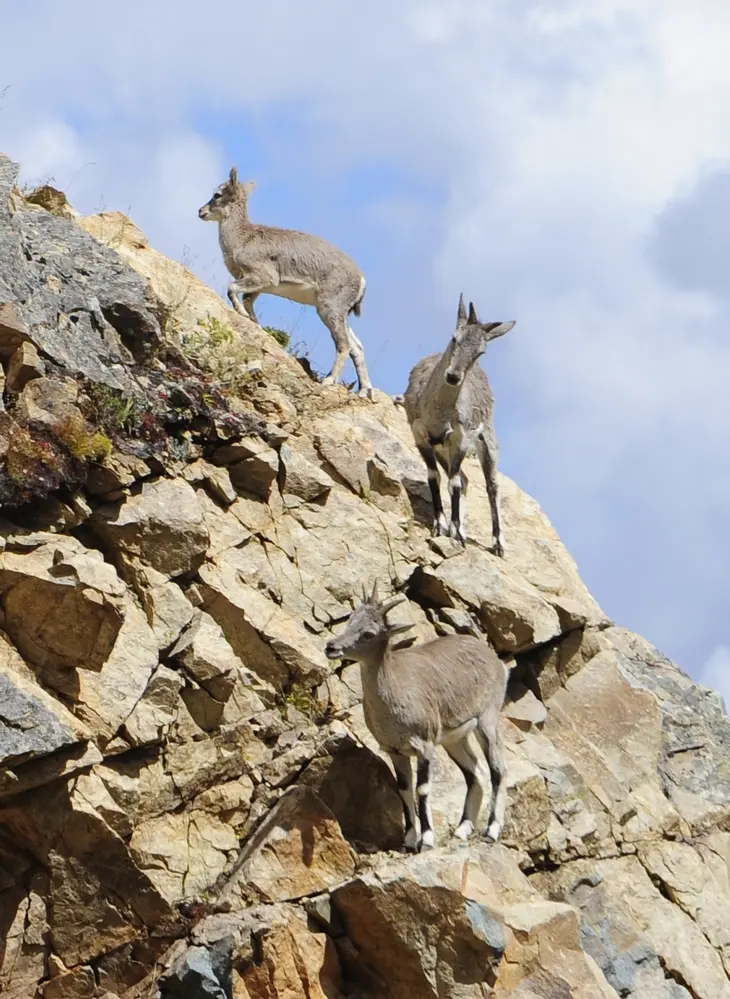
A hunting reserve is an area where hunting wild animals for food or sport is allowed by law, under license. Hunting is strictly forbidden everywhere else in Nepal, but in one hunting reserve, Dhorpatan, Nepali and foreign hunters may legally hunt a limited number of blue sheep (naur, or bharal) and Himalayan tahr, with licenses issued by the Department of National Parks and Wildlife Conservation. The fees pay for managing the reserve, and only a set number of mature males may be shot each season, so that the herds don’t shrink.
Dhorpatan Hunting Reserve
Area 1,325 km² · set up 1983 (gazetted in 1987) · districts Rukum East, Myagdi and Baglung
- i.It is the only hunting reserve in Nepal.
- ii.It rises from about 3,000 m to over 7,000 m (Dhaulagiri’s southern ridges).
- iii.Its high meadows above 4,000 m, called patans, are vital grazing for blue sheep and other plant-eaters.
- iv.It is divided into blocks for managing hunting: six in the reserve’s official description, seven in recent reports.
- v.Livestock graze in it from February to October: over 80,000 animals enter the reserve every year.
- vi.Its trees include fir, pine, birch, rhododendron, hemlock, oak, juniper and spruce.
- vii.Over half of its high land is pasture.
- viii.It is the best place in Nepal for blue sheep, the animal most sought after by hunters (852 were counted in 2007).
- ix.It is home to blue sheep, leopards, gorals, serows, Himalayan tahr, black bears, barking deer, wild boar, monkeys, langurs and hares, and 137 kinds of bird, chiefly pheasants and partridges.
- x.Its endangered and protected animals include the musk deer, wolf, red panda, cheer pheasant and danphe.
10.1.6 Conservation areas
A conservation area is a protected area where local people go on living and using the land, and nature and resources are conserved together with their livelihoods through an integrated management plan, following the principles of sustainable development. Unlike a national park, it has villages, farms and trekking lodges inside it; the people living there take part in running it. Nepal has six conservation areas, covering about 15,400 km², the largest share of Nepal’s protected land.
1. Annapurna Conservation Area
Area about 7,629 km² · set up 1986 as a project, gazetted in 1992 · districts Kaski, Lamjung, Manang, Mustang and Myagdi
- i.It is Nepal’s first conservation area and its largest protected area of any kind. It is run by the National Trust for Nature Conservation (NTNC), with the local people: the first time in Nepal that a protected area was run with its people rather than by keeping them out.
- ii.It is very rich in life: about 1,226 kinds of flowering plant, 105 mammals, 518 birds, 40 reptiles and 23 amphibians.
- iii.It holds the Annapurna Himal and the valley of the Kali Gandaki, which runs between Dhaulagiri and Annapurna I, both over 8,000 m, and so is counted among the deepest gorges in the world.
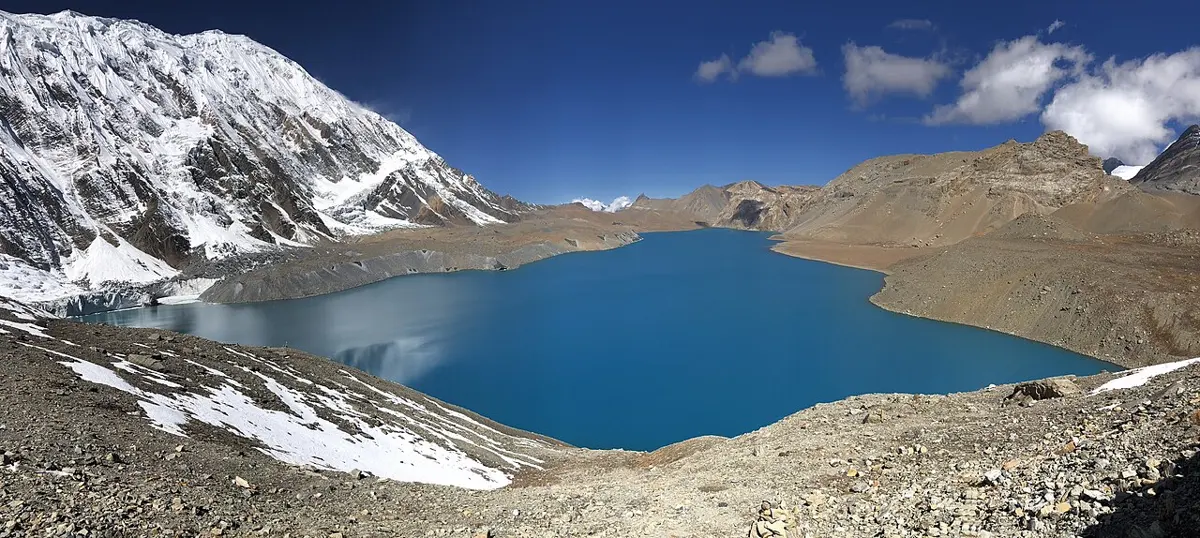
- iv.It has Ghorepani’s great rhododendron forest, often called the largest in the world, and Tilicho Lake (about 4,919 m) in Manang, often called the highest lake of its size in the world.
2. Api Nampa Conservation Area
Area 1,903 km² · set up 2010 · district Darchula
- i.It is named after two peaks, Api and Nampa.
- ii.It rises from about 539 m to 7,132 m.
- iii.It was set up to conserve the area’s unique plants, animals, biodiversity and cultural heritage.
- iv.Its range of heights gives it many climates, and many animals: the Himalayan tahr, blue sheep, musk deer (Moschus chrysogaster), common langur (Semnopithecus entellus), jackal (Canis aureus), gray wolf (Canis lupus), Himalayan black bear (Ursus thibetanus), red panda (Ailurus fulgens), snow leopard (Panthera uncia), serow (Capricornis sumatraensis) and goral (Naemorhedus goral).
- v.Its birds include the danphe (Impeyan pheasant), snowcock, blood pheasant, and red-billed and yellow-billed choughs.
- vi.It is known for valuable medicinal plants: panch aunle (Dactylorhiza hatagirea), kutki (Neopicrorhiza scrophulariiflora), yarsagumba (Ophiocordyceps sinensis, a fungus), jatamansi (Nardostachys jatamansi), sarpagandha (Rauvolfia serpentina) and sugandhawal (Valeriana jatamansi).
3. Gaurishankar Conservation Area
Area 2,179 km² · set up January 2010 · districts Ramechhap, Dolakha and Sindhupalchok
- i.Its main aim is to conserve the area’s biodiversity and culture together with the livelihoods of its people. The government handed its management to the National Trust for Nature Conservation (NTNC) for 20 years.
- ii.It has 16 types of vegetation: forests of chir pine (Pinus roxburghii), schima–castanopsis (chilaune–katus), alder (Alnus), blue pine (Pinus wallichiana), Pinus patula (planted), rhododendron, Quercus lanata oak, the brown oak Quercus semecarpifolia, lower temperate mixed broadleaf forest, fir (Abies), upper temperate mixed forest (birch–rhododendron), temperate mountain oak, East Himalayan oak and juniper, with shrubland (Rhododendron anthopogon) and moist alpine scrub.
- iii.Forest and bushes cover 44.5% of it, cultivated land 8.8%, grassland 8.6% and glaciers 2.77%.
- iv.It has about 565 kinds of plant, 77 mammals, 16 fish, 9 amphibians, 22 reptiles and 235 birds.
4. Kanchenjunga Conservation Area
Area about 2,035 km² · set up 1997 · district Taplejung
- i.Its lower forests are broadleaf, dominated by oaks (Quercus), castanopsis, Rhododendron arboreum and members of the laurel family.
- ii.It rises from about 800 m to 8,586 m on Kanchenjunga, the world’s third highest peak.
- iii.It shelters the snow leopard, leopard, red panda, blue sheep, musk deer, gray wolf and more.
- iv.In 1997 the government declared it, as a gift to WWF’s Living Planet Campaign 2000; since 2006 it has been managed by a council of its own local people, the first conservation area handed over to its community.
5. Krishnasar (Blackbuck) Conservation Area
Area 16.95 km² · set up 2009 · district Bardiya
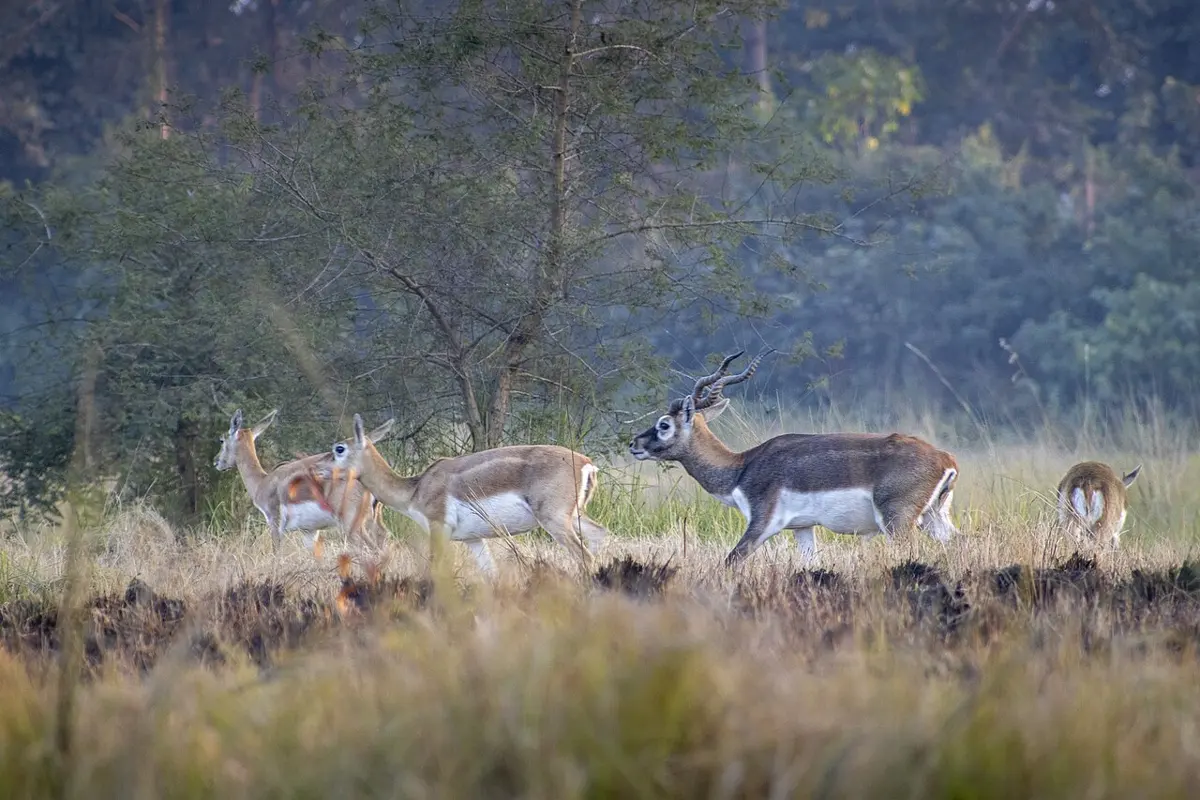
- i.It exists to protect the blackbuck (Antilope cervicapra), Nepal’s krishnasar. It is the smallest of Nepal’s protected areas.
- ii.It was the first organized effort to conserve the blackbuck, which survived in Nepal only here, at Khairapur, until a second herd was started in Shuklaphanta National Park (2012 and 2015), from Khairapur’s animals and the Nepalgunj zoo’s; it has grown to about 300.
- iii.The blackbuck at Khairapur fell to 9 animals in 1975, then rose to 177 by 1990 thanks to protection; habitat loss brought them down again, and 255 were counted in 2025.
6. Manaslu Conservation Area
Area 1,663 km² · set up 1998 · district Gorkha
- i.It is home to 33 kinds of mammal, 110 birds, 11 butterflies and 3 reptiles.
- ii.It has about 2,000 kinds of plant, 11 types of forest and over 50 useful plants.
- iii.Its climates range from subtropical to nival (permanent snow), as it rises from about 600 m to 8,163 m on Manaslu, the world’s eighth highest peak.
- iv.It has many medicinal plants.
- v.Its best-known animals are the snow leopard, Himalayan musk deer, Himalayan tahr and red panda.
How does a conservation area differ from a national park?
Pick an answer to see why.
10.1.7 Biodiversity hotspots
Biodiversity hotspots are regions that are both very rich in species found nowhere else and under severe threat. The idea was introduced by the British ecologist Norman Myers in 1988: if money and effort for conservation are short, spend them first where the most unique life will be lost soonest. Conservation International later gave the idea two strict tests. A region is a hotspot if:
- it has at least 1,500 species of vascular plant that are endemic (found nowhere else), more than 0.5% of the world’s total; and
- it has already lost at least 70% of its original natural vegetation.
Today 36 regions pass both tests. Together they once covered about 16% of the world’s land; what is left of their natural vegetation covers only about 2.4%, yet about half of the world’s plant species, and about 42% of its land vertebrates (birds, mammals, reptiles and amphibians), are found only in them. Each is threatened by logging, clearing for farms, pollution and deforestation.
Nepal lies in the Himalaya hotspot, which runs along the whole range, from Pakistan through India, Nepal and Bhutan to Myanmar and China.
The opposite of a hotspot is a region equally rich but still mostly wild. High-biodiversity wilderness areas (Mittermeier and colleagues, 2003) have at least 1,500 endemic plants too, but 70% or more of their natural vegetation is still intact and few people live in them. There are five: Amazonia, the Congo forests of Central Africa, New Guinea (with the Melanesian islands), the miombo–mopane woodlands of southern Africa, and the North American deserts. They need protection too, but they are not hotspots.
Why is the Amazon rainforest not a biodiversity hotspot, though it is the richest forest on Earth?
Pick an answer to see why.
10.1.8 Wetland
Wetlands are areas where the soil is saturated with water, or covered by shallow water, for all or part of the year: marshes, swamps, bogs, ponds, lakes, floodplains, estuaries, mudflats, deltas and shallow seas, and also rice fields. Their soils are fertile and they teem with life: fish, frogs, water birds, otters, crocodiles and the plants that feed them. They matter in the high mountains (glacial lakes, alpine bogs) and in the lowlands (oxbow lakes, the floodplains of the Terai). They give homes to fish and wildlife, including endangered species.
Nepal has about 242 recorded wetlands, covering about 743,500 hectares, about 5% of the country, and among the most productive ecosystems in the world. Some of them: Phoksundo, Koshi Tappu, Jagadishpur Reservoir, Gosaikunda, the Gokyo lakes, the Ghodaghodi lake area, Beeshazar and its associated lakes, and Mai Pokhari.
Benefits of wetlands
Besides their value for recreation and education, wetlands sustain life in many ways:
- i.They hold rich and varied ecosystems, homes for many plants and animals.
- ii.They act as natural sponges, soaking up and storing water in heavy rain and so preventing floods, then releasing it slowly.
- iii.They filter and purify water, trapping pollutants and sediment.
- iv.They offer recreation: bird watching, fishing and ecotourism.
- v.They help regulate the climate: their waterlogged soils and peat store carbon, which helps to slow climate change.
- vi.They are often fertile land for farming, supporting crops and livelihoods.
- vii.Many threatened and endangered species depend on them, which makes them vital for conserving biodiversity.
- viii.Studying them helps us understand ecosystems, biodiversity and environmental science.
- ix.Their plants bind the soil, preventing erosion and keeping banks and shores stable.
- x.They have cultural value: many are sacred or historic, such as Gosaikunda, the goal of the Janai Purnima pilgrimage.
10.1.9 Ramsar sites
The Nepali word for a wetland is simsar (सिमसार): any place where water stays, from a rice field to a marsh or a pond. The Ramsar Convention is an international treaty to conserve wetlands, adopted in 1971 at Ramsar, a town in Iran, and in force since 1975. It is one of the oldest of the modern global treaties on nature. It works to halt the loss of wetlands and to see that those left are used wisely, through international cooperation, national policies, training and the sharing of technology. (UNESCO keeps the treaty’s official text, as its depositary; the treaty has its own secretariat, in Gland, Switzerland.)
Each member country lists its wetlands of international importance: these are Ramsar sites. Nepal joined in 1988 and has 10 Ramsar sites, covering about 60,560 hectares (about 606 km², roughly 0.4% of Nepal).
Table 10.1.2 Nepal’s Ramsar sites (wetlands of international importance)
| Name | District | Area (ha) | |
|---|---|---|---|
| 1 | Koshi Tappu Wildlife Reserve | Sunsari, Saptari, Udayapur | 17,500 |
| 2 | Beeshazar and associated lakes | Chitwan | 3,200 |
| 3 | Ghodaghodi Tal | Kailali | 2,563 |
| 4 | Jagadishpur Reservoir | Kapilvastu | 225 |
| 5 | Gokyo and associated lakes | Solukhumbu | 7,770 |
| 6 | Gosaikunda and associated lakes | Rasuwa | 1,030 |
| 7 | Rara Lake | Mugu | 1,583 |
| 8 | Phoksundo Lake | Dolpa | 494 |
| 9 | Mai Pokhari | Ilam | 90 |
| 10 | Lake Cluster of Pokhara Valley | Kaski | 26,106 |
| Total | 60,561 |
Their places on the map are in the widget in 10.1.3 (its Ramsar sites button).
What makes a wetland a Ramsar site?
Pick an answer to see why.
Exercise
A. Tick the correct alternative
- What does biodiversity refer to?
Pick an answer to see why.
- Which level of biodiversity includes the interactions within ecosystems?
Pick an answer to see why.
- What is the total number of known flora species in Nepal?
Pick an answer to see why.
- How many species of birds are found in Nepal?
Pick an answer to see why.
- Which of the following is NOT a major cause of biodiversity decline?
Pick an answer to see why.
- What is the purpose of ex-situ conservation?
Pick an answer to see why.
- Which national park is mainly concerned with conserving species such as the Bengal tiger, the Asian elephant and the four-horned antelope?
Pick an answer to see why.
- Which national park is famous for being the largest in the country and for Phoksundo Lake, Nepal’s second largest lake?
Pick an answer to see why.
- How many wildlife reserves does Nepal have?
Pick an answer to see why.
- Which animal is the main target of hunting in the Dhorpatan Hunting Reserve?
Pick an answer to see why.
- Which conservation area is known for Ghorepani’s great rhododendron forest, often called the largest in the world, and for Tilicho Lake, one of the world’s highest lakes?
Pick an answer to see why.
- Which conservation area is focused on conserving the blackbuck (Antilope cervicapra)?
Pick an answer to see why.
- Wetlands occupy approximately what percentage of Nepal’s area?
Pick an answer to see why.
- What role do wetlands play in climate regulation?
Pick an answer to see why.
B. Answer the following questions
What is biodiversity?
Answer
What are the four crucial purposes served by biodiversity?
Answer
Name the three levels of biodiversity.
Answer
Briefly explain the importance of national parks.
Answer
Define species diversity.
Answer
Explain ecological diversity.
Answer
What is genetic diversity?
Answer
What are the two basic strategies of biodiversity conservation?
Answer
Can you name:
- a.the oldest national park in Nepal,
- b.the largest national park in Nepal?
Answer
Why is biodiversity important? List the reasons.
Answer
Name one species protected in Bardiya National Park.
Answer
What is unique about Shey Phoksundo National Park?
Answer
Describe the features of Shivapuri Nagarjun National Park.
Answer
Why is Shuklaphanta National Park famous, and what does it aim to conserve?
Answer
What is the primary purpose of wildlife reserves?
Answer
Which reserve in Nepal permits the lawful hunting of Himalayan blue sheep and Himalayan tahr?
Answer
Describe the features of the Koshi Tappu Wildlife Reserve.
Answer
Why is the Dhorpatan Hunting Reserve significant? Name any four animals found there.
Answer
What is the primary objective of the Gaurishankar Conservation Area?
Answer
What is the significance of the Krishnasar Conservation Area?
Answer
Describe the unique features and biodiversity of the Annapurna Conservation Area.
Answer
What role do wetlands play in ecosystems?
Answer
Define the term “Ramsar sites”.
Answer
Discuss the significance of wetlands in sustaining life and ecosystems, highlighting their benefits and importance for biodiversity conservation.
Answer
Printable PDFs
- Study notes 3 pages
- Worksheet 5 pages Answer key
Quiz yourself: Environment and Biodiversity, Grades 5–12 →
Practice every question in the book, and keep track of the ones you miss →
A companion to your textbook, not a replacement for it: study from the book your school uses, and where the two differ, follow your teacher. Found a mistake? Please tell us.