
Today the drive from Kathmandu down to the plains takes most of a day on winding hill roads. A new road is being cut straight through the hills south of the valley, over dozens of bridges and through tunnels, to make the same journey in about an hour. Will it be a blessing or a curse, and for whom?
This unit reads an article about that road, the Kathmandu–Terai/Madhesh Fast Track, and a famous poem about a city at dawn, written on a bridge in London more than two hundred years ago. Along the way you will learn to talk about how sure you are of what will happen, to choose the right future form of the verb (will, going to, will be doing, will have done and will have been doing), and to write a report on a development project and a notice.
Getting started
The unit opens with four pictures of development projects. Here is what each shows, and why a project like it matters to the nation.
| Picture | The project | Why it matters |
|---|---|---|
| A dam across a wide river, with a canal leading water away through fields | irrigation: a barrage and canal that carry river water to farms | Fields that get water all year can grow two or three crops instead of one, so farmers earn more and the country imports less food. |
| A highway curving into the twin mouths of a road tunnel in green hills | roads and tunnels | A tunnel cuts out steep, slow climbs and landslide-prone bends: journeys get shorter, safer and cheaper, and goods reach markets faster. |
| A concrete dam and power house in a deep rocky gorge | hydropower | Nepal’s rivers can make clean electricity for homes, factories, electric vehicles and cooking, and the extra can be sold to neighbors. |
| A large airport terminal with a control tower | an international airport | It brings tourists and trade straight to a region, not only to Kathmandu, and creates jobs around it. |
Reading I: Kathmandu–Terai/Madhesh Fast Track
Before you read
Look at the picture before the text (a wide road entering a tunnel in the hills) and answer.
- a.Which development project is shown in the picture?
- b.Is this project a national pride? Why?
A model answer
What kind of text it is
The text is adapted from an article by Arbind Shrestha whose full title asks a question: is the fast track a blessing or a curse? It is organized like a report: a short introduction with the facts and figures, then the benefits under headings A to E, then the drawbacks under A to C, and a conclusion. That plan, facts → benefits → problems → conclusion, is the one you will use in Writing I.
The article, part by part
1. What the fast track is
The fast track is a mega (very large) highway project of strategic importance: important for the country’s long-term plans, not only for the people who drive on it. The figures in the article:
| Length | |
|---|---|
| the whole fast track, Khokana (Lalitpur) to Nijgadh (Bara), at the East–West Highway | 72.5 km |
| road | 55.49 km |
| 87 bridges | 10.60 km |
| three twin tunnels | 6.41 km |
The journey is expected to take about one hour. (Add up the three lengths: 55.49 + 10.60 + 6.41 = 72.50 km, the whole road.)
Which of these is the length of the whole fast track?
Pick an answer to see why.
2. The benefits
The writer calls the benefits “blessings” that bring prosperity and progress, and lists five.
A. Faster economic growth. Because the road is much shorter, vehicles burn much less fuel, and the article says the saving on fuel could be worth billions of rupees. Being so close (proximity) will help the economy. It also gives a viable (workable) new route to tourists who enter Nepal across the southern border, including tourists from beyond India.
B. New skills. High bridges and twin tunnels need technology that is new to Nepal. Nepalis who work on the project will sharpen their knowledge and skills with it.
C. Jobs. The project is sure to create jobs for young people, which will help families improve their economic condition.
D. Kathmandu and the Terai within reach. A shorter road at higher speed facilitates (makes easier) the Terai people’s access to health care, education, jobs and new markets. Cheaper transportation lowers the cost of moving goods, so goods cost less for the people who buy them. It will connect the planned Nijgadh International Airport to the capital. And after natural calamities such as earthquakes and floods, it can carry food, water and medicine.
E. A less crowded valley. With the Terai an hour away, people can come into Kathmandu for its services and go home the same day, instead of settling there. That would reduce the density and congestion of the valley, the idea of a greater Kathmandu that stretches beyond the valley.
How will the fast track help reduce the use of petrol and diesel?
Pick an answer to see why.
3. The drawbacks
Then the turn: the road also brings constraints (things that limit what it can do) and burdens. The writer names three.
A. Road users and traffic safety. Nepal’s roads are already vulnerable (weak, unsafe). The fast track is designed for an average speed of about 70 km/h, and high speed, with drivers who don’t follow the rules, can cause more accidents.
B. Link roads. The fast track will work well only if smooth link roads join it to the other highways and to the cities. The roads from the fast track’s end to the city (its zero point) must be improved and widened to accommodate (make room for) the extra traffic. Without them, the jams just move to the ends of the new road.
C. The environment. Building it harms the environment: dust from blasting rock, quarrying (digging stone out of the ground) and dumping soil; and the trees cut down for it. This deforestation adversely affects the area: cutting forests lets air pollution accumulate (build up), and the land is degraded (made poorer).
According to the article, what is the main challenge once the road is finished?
Pick an answer to see why.
4. The conclusion
The fast track promises a socio-economic revolution: big changes in how people live and earn. But such a noble aim can be reached only with innovative (new) strategies and advanced technology in our transport system.
Words from the article
| Word | Meaning here |
|---|---|
| infrastructure | the basic structures a country needs: roads, bridges, power lines, water pipes |
| mega | very large |
| strategic | important for a long-term plan |
| enhance | to improve, make greater |
| prosperity | being rich and successful |
| proximity | nearness |
| viable | able to work; a real choice |
| facilitate | to make an action or a process possible or easier |
| transportation | moving goods or people from one place to another |
| calamity | an event that causes great harm and misery; calamities is the plural |
| density | how crowded a place is: people for every square kilometer |
| congestion | being too crowded; traffic jams |
| deficit | the amount by which something is less than what is needed |
| constraint | something that limits what you can do |
| vulnerable | weak and without protection; easily harmed |
| accommodate | to provide space for; to have room for |
| quarrying | digging stone out of the ground |
| accumulate | to collect or increase gradually |
| degradation | making something worse in quality: land degradation |
| innovative | using new methods or ideas |
A. Crossword
The crossword’s answers, if you are working on paper. The clues are your book’s; the grid above is our own, so its numbers differ.
Answer
B. Choose the best answers
The total length of the fast track from Khokana to Nijgadh is …
Pick an answer to see why.
Nepal can reduce its use of petroleum products after completing the fast track as it …
Pick an answer to see why.
The main challenge of the project once it is completed is …
Pick an answer to see why.
According to the writer, success in completing the project depends on …
Pick an answer to see why.
C. Answer the questions
What type of project is the Kathmandu–Terai/Madhesh Fast Track?
Answer
How is the fast track going to reduce the consumption of petrol in Nepal?
Answer
Will this project help promote tourism in Nepal? How?
Answer
How does this project contribute to developing high-skilled human resources in Nepal?
Answer
How does the project help the people living in the Eastern Terai?
Answer
D. The environment
How is the fast track likely to affect the environment? Discuss.
A model answer
Pronunciation: British and American English
These words are said differently in British and American English. Both are correct; what matters is to be clear, and to recognize both when you hear them. (Dictionaries show (r) for an r that Americans say.)
| Word | British | American | The difference |
|---|---|---|---|
| vitamin | /ˈvɪtəmɪn/ | /ˈvaɪtəmɪn/ | vit- or vite- |
| privacy | /ˈprɪvəsi/ | /ˈpraɪvəsi/ | priv- or prive- (British speakers use both) |
| schedule | /ˈʃedjuːl/ | /ˈskedʒuːl/ | sh- or sk- |
| advertisement | /ədˈvɜːtɪsmənt/ | /ˌædvərˈtaɪzmənt/ | stress on -ver- or on -tise- |
| leisure | /ˈleʒə(r)/ | /ˈliːʒər/ | lezh- or leezh- |
| mobile | /ˈməʊbaɪl/ | /ˈmoʊbl/ | -bile or -bul |
| vase | /vɑːz/ | /veɪs/ | vahz or vace |
| dynasty | /ˈdɪnəsti/ | /ˈdaɪnəsti/ | din- or dine- |
| herb | /hɜːb/ | /ɜːrb/ | Americans don’t say the h |
| produce (noun, fruit and vegetables) | /ˈprɒdjuːs/ | /ˈproʊduːs/ | prod- or prode- |
| basil | /ˈbæzl/ | /ˈbeɪzl/ | baz- or baze- |
| garage | /ˈɡærɑːʒ/ or /ˈɡærɪdʒ/ | /ɡəˈrɑːʒ/ | stress on gar- or on -rage |
| hostile | /ˈhɒstaɪl/ | /ˈhɑːstl/ | -tile or -tul |
| montage | /ˈmɒntɑːʒ/ | /mɑːnˈtɑːʒ/ | stress on mon- or on -tage |
| salon | /ˈsælɒn/ | /səˈlɑːn/ | stress on sal- or on -lon |
Speaking: how sure are you?
When we talk about what will happen, or what has happened, we often can’t be certain. English has many ways to show how sure we are, from certainly to certainly not.
| How sure | About the future or now | About the past |
|---|---|---|
| certain: yes | It’s sure to rain. It will definitely / certainly rain. It must be raining. | It must have rained. |
| probable | It’s likely to rain. It will probably rain. | It probably rained. |
| possible | It may / might / could rain. | It may / might / could have rained. |
| improbable | It’s unlikely to rain. It probably won’t rain. | It probably didn’t rain. |
| certain: no | It can’t be raining. It definitely / certainly won’t rain. | It can’t have rained. |
Note where the adverbs go: after will, but before won’t: It will probably rain. It probably won’t rain. You met must, might and can’t for working things out in Unit 4; here they are used together with the others.
A. What will happen next?
Look at the pictures and say what might happen next: what is sure to happen, and what might probably happen.
- a.A man is emptying a bag of rubbish into a river.
- b.A girl is standing on a chair, which is tipping over, reaching for a glass on top of a chest of drawers.
- c.A girl is running across a road, with a small dog behind her, and a car is coming.
Some answers
B. Two conversations
Conversation I. Yugen asks where Karan is. Each friend answers with a different degree of certainty:
- Ritik: It is two o’clock, his working time, so “he must be at his office”: he is almost sure.
- Samyog: “He might be at the canteen”: only a possibility.
- Binay: His car is still in the parking, so “he can’t have gone out”: he is sure it didn’t happen.
Conversation II. Hema asks if the price of petrol will go down.
- Dilasha is pretty sure it will go down when people use more electric vehicles.
- Crystal thinks it is unlikely to go down, because the demand for petrol is rising day by day.
- Sneha thinks it certainly won’t go down: if it does, the producers will cut production to push it back up.
“He can’t have gone out. His car is in the parking.” How sure is the speaker?
Pick an answer to see why.
C. Your own conversations
Have conversations in these situations, with expressions from the table above.
- a.The SEE schedule is going to be published.
- b.Your pet dog is lost.
- c.Grishma is not at home.
- d.Poonam is carrying heavy luggage.
- e.Tina doesn’t speak Nepali.
- f.Chhoisang is preparing for IELTS.
- g.The road has been cleared by the police.
- h.The dog is barking.
Model lines
Grammar I: Talking about the future
English has no single future tense: it uses several forms, each with its own meaning. You met them all in Grade 9; here is how to choose among them, which is what exams test.
| Form | Example | Use it for |
|---|---|---|
| will + base | I’ll help you. It will rain tomorrow, I think. | a decision made now, an offer or promise; a prediction that is your opinion; future facts |
| be going to + base | We’re going to visit Rara. Look at those clouds: it’s going to rain. | a plan made before; a prediction from a sign you can see now |
| present continuous | We’re leaving on Saturday. | an arrangement fixed with others (tickets, a meeting, a time) |
| present simple | The exam starts at 11. | a timetable: schedules of buses, flights, exams |
| future continuous: will be + -ing | This time next week, I’ll be trekking. | an action in progress at a time in the future |
| future perfect: will have + past participle | By Sunday, we’ll have arrived. | an action finished before a time in the future (often with by) |
| future perfect continuous: will have been + -ing | By noon, we’ll have been walking for six hours. | how long an action will have gone on, up to a time in the future |
The phone is ringing. — I ……… it.
Pick an answer to see why.
Don’t phone at 8. We ……… dinner then.
Pick an answer to see why.
By the end of this year, Sita ……… three novels.
Pick an answer to see why.
A. Match the sentence halves
Match the halves to make sentences.
- a.Hurry up! We’re leaving …
- b.They’ll be watching a movie in a theater …
- c.We will have arrived home …
- d.It’s definite. My friends and I are going to travel …
- e.I think he will be rich and famous …
- i.one day.
- ii.in ten minutes.
- iii.next winter.
- iv.at this time next week.
- v.by this time on Sunday.
Answer
B. Choose the future form
Complete the sentences with the correct form of the verb in brackets: the future simple, be going to, the future perfect or the future continuous.
- a.As per the schedule, the exam ……… (start) at exactly 11 o’clock.
- b.See you at the airport! I ……… (carry) an orange suitcase.
- c.Don’t worry! I ……… (not leave) without you.
- d.We certainly ……… (not finish) all the work by the end of this week.
- e.Sagun has decided that he ……… (invite) some of his friends for dinner after work.
- f.……… the receptionist ……… (remember) to call the students this afternoon?
- g.What ……… you ……… (do) at the weekend?
- h.I ……… (not work) tomorrow, so we can go shopping.
- i.If you touch the stove, you ……… (burn) yourself.
- j.Next week at this time we ……… (fly) to Dubai for a trip.
Answer
Writing I: A report on a development work
There may be different development works going on in your community. Study one of them and write a report on it. Take the text in Reading I as a sample.
Hint
A model report
How to write a report
A report tells a reader the facts about something you have studied or seen, in an organized way, so that they can understand it and decide what to do. It is written in a formal, factual style.
- Title: A Report on…, then who it is for, who wrote it, and the date.
- Introduction: what the project is, where, who runs and pays for it, and how you collected the information.
- Main body, under headings: the progress, the benefits, the problems. Use the past and present perfect for what has happened (has been laid), the future forms for what is planned (will be reaching).
- Conclusion and recommendations: sum up and say what should be done.
Reading II: Composed upon Westminster Bridge
Before you read
Look at the picture before the poem (a city of towers and domes beside a wide river, in early morning light) and answer.
- a.What is shown in the picture?
- b.What does it look like?
A model answer
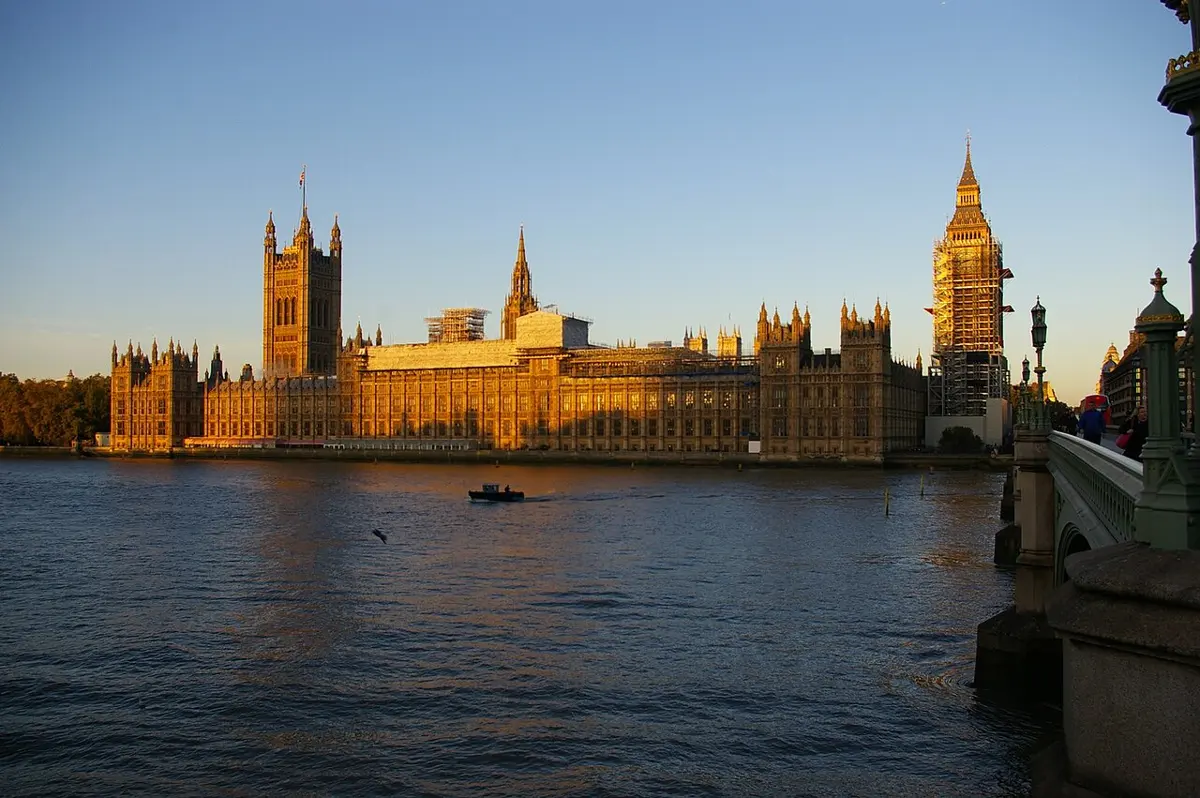
The poet and the poem
William Wordsworth (1770–1850) was one of the great English Romantic poets, who wrote about nature, feelings and ordinary life. In 1798 he and his friend Samuel Taylor Coleridge published Lyrical Ballads, which changed English poetry. He lived most of his life in the hills and lakes of north-west England, the Lake District, and became Poet Laureate, the nation’s official poet, in 1843. You may know his poem about daffodils, I Wandered Lonely as a Cloud.
So it is a surprise that one of his best-loved poems praises a city. Early one summer morning in 1802, he and his sister Dorothy crossed Westminster Bridge in a coach on their way to France. London, which he usually saw as crowded, noisy and smoky, lay silent and shining in the sunrise, and he wrote this poem about it.
The poem is a sonnet: 14 lines, each of ten syllables in a da-DUM rhythm (the BEAU-ty OF the MORN-ing). It is a Petrarchan sonnet, in two parts:
- the octave, the first eight lines, rhyming abbaabba (fair, by, majesty, wear, bare, lie, sky, air): what he sees;
- the sestet, the last six, rhyming cdcdcd (steep, hill, deep, will, asleep, still): what he feels.
The poem, part by part
Lines 1–3: Nothing on Earth is more beautiful
The speaker opens with a bold claim: the Earth has nothing to show more fair (more beautiful) than this view. Anyone who could walk past a sight so moving, so full of majesty (grandeur), without stopping would be dull of soul: someone with no feeling at all.
Lines 4–8: The city wears the morning
Now he tells what he sees. The city wears the beauty of the morning like a garment (a piece of clothing): the morning light covers it like a beautiful robe. It is silent and bare (uncovered, with no smoke or crowds). Ships on the river, towers, domes (round roofs, like St Paul’s Cathedral), theaters and churches lie open to the fields around the city and to the sky, all bright and glittering in the smokeless air: the thousands of coal fires that usually darken London have not yet been lit.
What does “This City now doth, like a garment, wear / The beauty of the morning” mean?
Pick an answer to see why.
Lines 9–11: More beautiful than the countryside
The sun has never steeped (soaked, bathed) any valley, rock or hill more beautifully in its first splendor (brilliant light) than it does this city. And he has never seen or felt a calm so deep. This is a surprise from a poet of nature: he is saying that the city, at this moment, is lovelier and more peaceful than the countryside he loves.
Lines 12–14: The sleeping giant
The River Thames glideth (glides, flows smoothly) at his own sweet will: as it pleases, with no boats hurrying on it. “Dear God!” he cries: even the houses seem to be asleep, and the city’s mighty heart, the great, busy center of the city that pumps people and trade through it like blood, is lying still. In a few hours London will wake up and become noisy again; for this moment, it is at peace.
The poet’s devices:
- Simile: the city wears the morning like a garment.
- Personification: the city wears a garment; the river glides at his own sweet will; the houses seem asleep; the city has a mighty heart.
- Metaphor: the mighty heart of the city, its busy center, which is lying still.
- Listing: Ships, towers, domes, theatres, and temples: one sweeping look across the whole view.
- Exclamations: Ne’er saw I, never felt, a calm so deep! Dear God! show how strongly he feels.
- Inversion, words in an unusual order for emphasis and rhythm: Dull would he be of soul (he would be dull of soul); Never did sun more beautifully steep (the sun never steeped more beautifully).
- Archaic (old) forms: doth (does), glideth (glides), ne’er (never), unto (to).
- Contrast: the busy city he knows against the still city he sees; the city against the countryside.
Words from the poem
| Word | Meaning |
|---|---|
| fair | beautiful (an old meaning) |
| majesty | great beauty that fills you with respect; grandeur |
| doth | does (old form); doth wear = wears |
| garment | a piece of clothing |
| bare | uncovered, plain |
| dome | a round roof on a building |
| glittering | shining with many small flashes of light |
| steep (verb) | to soak something in a liquid; here, to bathe in light |
| splendor (British splendour) | great, brilliant beauty |
| ne’er | never |
| glideth | glides: moves smoothly and quietly (old form) |
| mighty | very great and strong |
For the old forms thou, thee, thy and dost, see Unit 4’s poem.
A. Dictionary meanings
Consult a dictionary and write the meanings of these words: a. doth b. majesty c. domes d. glittering e. splendor f. glideth g. mighty
Answer
B. Complete the summary
Complete the summary of the poem with these words and phrases (one is not needed): magnificence, Westminster Bridge, straightforward, the bustling city, the countryside, the morning’s beauty, happily asleep, the most beautiful scene.
The speaker shares his impressions of the view from (a) ……… in the poem Composed upon Westminster Bridge, September 3, 1802 by William Wordsworth. He finds the city of London (b) ……… on the Earth. According to him, anyone who does not stop on Westminster Bridge to see the scene that morning must be dull. The city wins his heart because it is wearing (c) ……… .
It is early morning when he describes the majesty of the city. The landmarks visible from the bridge stand before him in all their (d) ……… in the morning light. He feels lucky that there is no London fog or smoke to hide the view.
According to him, the sun is shining on the buildings as it shines on (e) ……… . He is also surprised to feel more peace in (f) ……… of London than anywhere else. The River Thames moves slowly beneath him. He also thinks that the city is (g) ……… before another busy day.
Answer
C. Answer the questions
When was the poem composed?
Answer
According to the speaker, who is dull of soul?
Answer
How does the poet describe the beauty of the morning?
Answer
What does the word “garment” refer to? Who is wearing it?
Answer
How does the poet feel when he sees such a beautiful sight?
Answer
Why does the poet use words like valley, rock and hill?
Answer
What impression of London does the speaker create? How does he do that?
Answer
What is the main theme of the poem?
Answer
D. Your place at dawn
Does your city or village look similar to London early in the morning? Tell your friends.
A model answer
Listening: the Pan-American Highway
A. Before you listen
Look at the globe (North and South America, with a red line running down them) and answer.
- a.Which part of the world is shown on the globe?
- b.What does the red mark stand for?
A model answer
The textbook’s listening task is a short description of the Pan-American Highway. CDC’s own recording is below: read the questions in B and C first, then listen, as many times as you need. The answers are hidden under the questions; after that, practice with a report of our own that your browser reads aloud.
B and C. The textbook’s audio: answers
Answer the questions.
- a.How long is the Pan-American Highway?
- b.How many countries are connected by this highway?
- c.Where does the Darién Gap lie?
- d.Why is it not possible to drive the whole length of this highway?
Answer
Complete the sentences with the correct information.
- a.The Pan-American Highway is a network of ……… .
- b.The Pan-American Highway is the ……… in the world.
- c.The official section of the highway runs from the US–Mexico border to the capital city of ……… .
- d.The highway passes through all the major ……… .
Answer
Recall the names of the countries mentioned in the audio. Who can remember the most?
Answer
Practice listening alone
Grammar II: Futures in a text, and the future perfect continuous
The future perfect continuous is will have been + -ing. It looks back from a moment in the future and says how long something will have been going on up to then, usually with for:
- By the time we reach home, the children will have been staying alone for two hours.
- In June, my father will have been working in Qatar for five years.
- By 9 p.m., the trekkers will have been walking since dawn.
| Future perfect: will have done | Future perfect continuous: will have been doing | |
|---|---|---|
| says | that it will be finished by then | how long it will have gone on by then |
| example | By noon we will have climbed the hill. | By noon we will have been climbing for three hours. |
| with | by + time, already, a number done (three hills) | for + a length of time, since |
Next month, Grandfather ……… in this house for fifty years.
Pick an answer to see why.
By Friday, the workers ……… the new bridge.
Pick an answer to see why.
A. A Dashain visit to Karnali
Choose the correct answers to complete the text.
My uncle’s family usually comes to stay with us for Dashain, but (a) ……… (by this Dashain / this Dashain) we are going to visit them instead. They live in a village in Kalikot. I can hardly wait. I (b) ……… (will have had / will be having) a fantastic time there. School holidays (c) ……… (are going to start / will start) on Friday, and we are going to leave the following morning. At this time next week, I (d) ……… (will be trekking / will have trekked) to Rara Lake with my cousin, Sunil. He’s an experienced trekker, and I (e) ……… (am going to practice / will have practiced) rock climbing with him every day. (f) ……… (By / On) the last day of our visit, Sunil’s dad is going to take us to Manma, the district headquarters. I hope by then I (g) ……… (will have explored / will be exploring) a lot about the life of people in Karnali. I (h) ……… (will be getting / will have got) a lot of experience of trekking by the time we get back to Kathmandu after Dashain.
Answer
B. Choose the future form
Complete each sentence with the correct form of the verb in brackets: the future simple, be going to, the future continuous, the future perfect or the future perfect continuous.
- a.Tennis practice starts at 10, and we plan to play for two hours. (finish) By 12 o’clock, ……… .
- b.The phone is ringing! (answer) I ……… the phone.
- c.Do you want to come to the disco with us? (come) ……… you ……… ?
- d.Look at those clouds. (rain) Do you think ……… ?
- e.Let’s hurry up. The children are alone at home. (stay) By the time we reach home, the children ……… alone at home for two hours.
- f.Their plane lands at 7.30. Let’s get there earlier. (wait) At 7 o’clock, we ……… .
Answer
Writing II: A notice
A. Study the notice
The model notice in Writing II is a school’s notice about a tree plantation programme. Look at its parts, which every notice has:
- The name and address of the organization giving it (the school, in Lamjung), at the top.
- The date of the notice.
- The word NOTICE, in capitals, in the middle.
- The body: who it is for (all the students), what is happening (a tree plantation programme), why (to raise awareness of conserving trees, for World Environment Day), when (5 June) and where (on the school grounds), and what readers should do (take part actively).
- The name or post of the person giving it (Headteacher), at the end.
B. Write a notice for your Child Club
Imagine you are the secretary of the Child Club of your school. Write a notice on behalf of the Child Club about a programme that you are going to organize soon.
A model notice
Project work
British and American spelling
British and American English differ not only in accent but in spelling. These pages use American spelling; many books in Nepal use British. Examiners accept either, but keep to one in an answer. The common patterns:
| Pattern | British | American |
|---|---|---|
| -re / -er | centre, metre, litre, theatre | center, meter, liter, theater |
| -our / -or | colour, humour, neighbour | color, humor, neighbor |
| -ise / -ize | apologise, organise, recognise | apologize, organize, recognize |
| -yse / -yze | analyse, paralyse, catalyse | analyze, paralyze, catalyze |
| ae, oe / e | oestrogen, paediatric, anaemia | estrogen, pediatric, anemia |
| -ence / -ense | defence, offence, licence (noun) | defense, offense, license |
| -ogue / -og | analogue, catalogue, dialogue | analog, catalog, dialogue (dialog for a computer’s dialog box) |
| doubled l before -ed, -ing, -er | travelled, travelling, traveller, fuelled, fuelling | traveled, traveling, traveler, fueled, fueling |
Which of these is all in American spelling?
Pick an answer to see why.
Rewrite in British spelling: “My neighbor’s favorite color is gray; she analyzed the catalog at the theater and practiced her lines.”
Answer
Exercise
SEE-style practice on this unit. Try each one as in the exam, then open the answer.
Put these points of Reading I in the order in which they come in the article.
- a.Link roads will have to be built and widened.
- b.The fast track is 72.5 km long, with 87 bridges and three twin tunnels.
- c.Nepalis will learn new technology from its tunnels and bridges.
- d.Success depends on innovative strategies and advanced technology.
- e.The valley could become less crowded.
- f.Dust from blasting and quarrying will pollute the air.
Answer
Complete each sentence with the correct future form of the verb in brackets.
- a.Look at that bus! It ……… (crash) into the wall.
- b.By the end of Poush, the workers ……… (complete) the bridge.
- c.This time tomorrow, we ……… (sit) in the SEE hall.
- d.In 2027, my sister ……… (teach) at this school for twenty years.
- e.A: I’m thirsty. B: Wait, I ……… (bring) you some water.
- f.The bus to Pokhara ……… (leave) at 6 a.m. every day.
Answer
Choose the correct option for each numbered blank.
Our ward (a) ……… (is building, will have built, builds, built) a new bridge over the river this year. The engineer says the work (b) ……… (finishes, will finish, has finished, finished) before the monsoon. By then, the children (c) ……… (are crossing, will have been crossing, will cross, crossed) the river on a wooden plank for five years. On the opening day, the mayor (d) ……… (is going to cut, will have cut, cut, cuts) the ribbon, and the school band (e) ……… (will be playing, will have played, plays, has played) when she arrives. Everyone is (f) ……… (sure, sure to, sure for, surely) be happy.
Answer
Read the text and answer the questions.
In 2079 the people of Ward No. 3 of a hill village in Gorkha decided to build a 2 km road to the highway with their own hands. Each household gave two days of work a month, and the municipality paid for the stone and cement. Before the road, a sick person had to be carried for three hours on a stretcher; now a jeep reaches the highway in twenty minutes. The villagers are planning to plant trees along the road next spring, to stop the slopes from sliding.
- a.Who built the road?
- b.How long is it?
- c.Who paid for the stone and cement?
- d.How has the road changed travel for the sick?
- e.What are the villagers going to do next spring, and why?
Answer
Write a news report, in about 150 words, on the opening of a new bridge or road in your area.
Hint
A model report
Practice every question in the book, and keep track of the ones you miss →
A companion to your textbook, not a replacement for it: study from the book your school uses, and where the two differ, follow your teacher. Found a mistake? Please tell us.