
Would you eat a bowl of fried crickets? Millions of people do, every day, and say they taste like nuts. A travel writer tries the strangest dishes he has met around the world, from sheep’s stomach in Scotland to green ants in Australia. And a boy from a village in Siraha, who once washed the skewers in a hotel kitchen, cooks octopus the Nepali way on British television, and the judges call it the most beautiful plate they have ever been served.
This unit reads both. Along the way you will learn to give reasons and purposes with because, since, as, because of, so that, in order to and to, to use the present continuous for now, for around now and for plans, and to write two things: a recipe and paragraphs that argue a view.
Getting started
The unit opens with four photos of food from Nepal, each with an empty box beside it to number from 1 (the one you like most) to 4.
| Picture | What it is |
|---|---|
| A brass plate of white rice with small bowls around it | dal bhat tarkari: rice, lentil soup, a vegetable curry, meat curry and pickle (achar), the meal most of Nepal eats twice a day |
| A plate with a grey-brown mound in the middle | dhindo: a thick, smooth dough of millet or buckwheat flour stirred into boiling water, eaten with dal, meat, gundruk and curd |
| A stack of brown rings | sel roti: a ring of sweet rice batter fried in oil, made above all at Tihar |
| A bowl of dumplings in an orange soup | jhol momo: momos served in a hot, sour sesame-and-tomato soup |
Reading I: Strange Food from Around the World
Before you read
What kind of text it is
The text is a travel article by Ben Groundwater, an Australian travel writer, adapted from Traveller, a travel website. It is written as a list of seven dishes, each under its name and country, in a chatty, personal voice: the writer says what he likes and what he doesn’t, makes jokes (“Seriously good”, “a bridge too far for this guy”) and talks straight to you. Notice how most of its sections turn on “however”: first the strange part of a dish, then why it is good after all.
The article, part by part
1. The joy of taking a risk
The writer begins with a feeling everyone knows: the thrill of challenging yourself and winning, of taking a risk and finding it was worth it. Food, he says, is one of those things. When you travel, you have to take chances on dishes you would never normally think of eating, and trust that the local people know what they are doing: food that seems strange to you is delicious to millions of others.
He is honest that it doesn’t always work. Fermented horse milk in Mongolia (airag), which sounds bad, really is bad, he says. But the seven dishes that follow won’t disappoint you.
2. Haggis, Scotland
Haggis is made from the parts of a sheep no one else wants, the heart, liver and lungs, ground up and mixed with mutton fat, oatmeal and spices, packed into a sheep’s stomach and boiled for a few hours. Surprisingly (“oddly enough”), it tastes really good. With a joke at Scotland’s cooking, he says he would happily eat “haggis, neeps and tatties” (haggis with mashed turnip and potato) any day of the week.
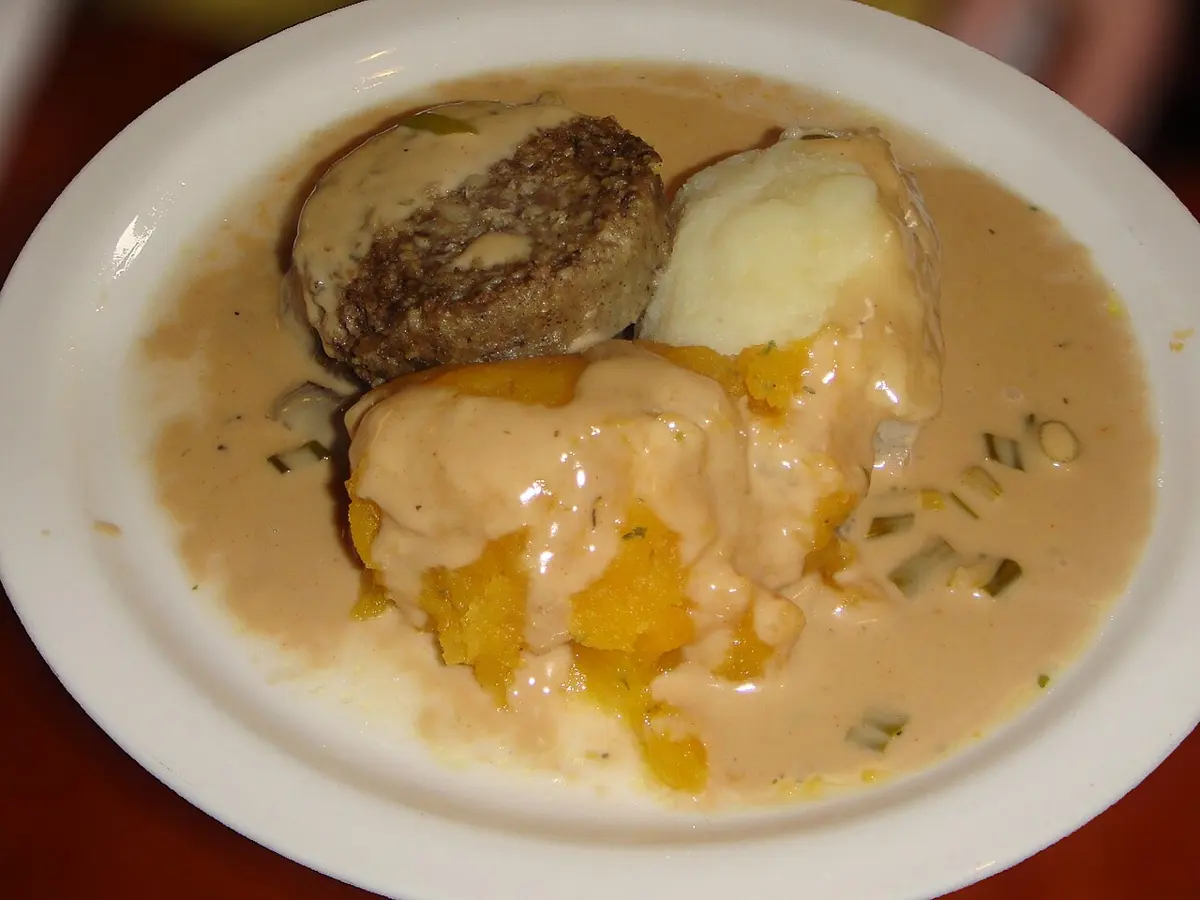
3. Shiokara, Japan
Most Japanese food, he says, is simple: it sounds delicious and it is. Shiokara is the exception: raw squid mixed with the squid’s own salty, fermented guts. It has a strong smell and a sticky texture, and is eaten a little at a time, with rice or as a snack. The writer used to hate it, but he is “slowly coming around” (beginning to like it): once you are used to it, and eat it with good company and conversation, it takes on “a whole new beauty”.
4. Jellyfish, China
Jellyfish sounds frightening to people who think only of the ones that sting, and its rubbery texture puts some people off. But the Chinese know what to do with it: they mix it into salads, pair it with chicken, stir it through sesame oil, and it is all tasty and low-fat. (The jellyfish is dried and salted first, then soaked and cut into thin strips that are crunchy rather than slimy.)
5. Green ants, Australia
Bush food is food from the wild Australian countryside, the food of Australia’s Aboriginal peoples for tens of thousands of years. The best-known is the witchetty grub, a fat white larva dug from the roots of a bush; the writer doesn’t like it (“too soft, too many guts”). His choice is green ants: small insects pulled from the trees, lightly crushed between the hands and eaten. They taste lemony and peppery. Local producers now even put them on goat’s cheese, with lemon myrtle, an Australian tree whose leaves smell of lemon.
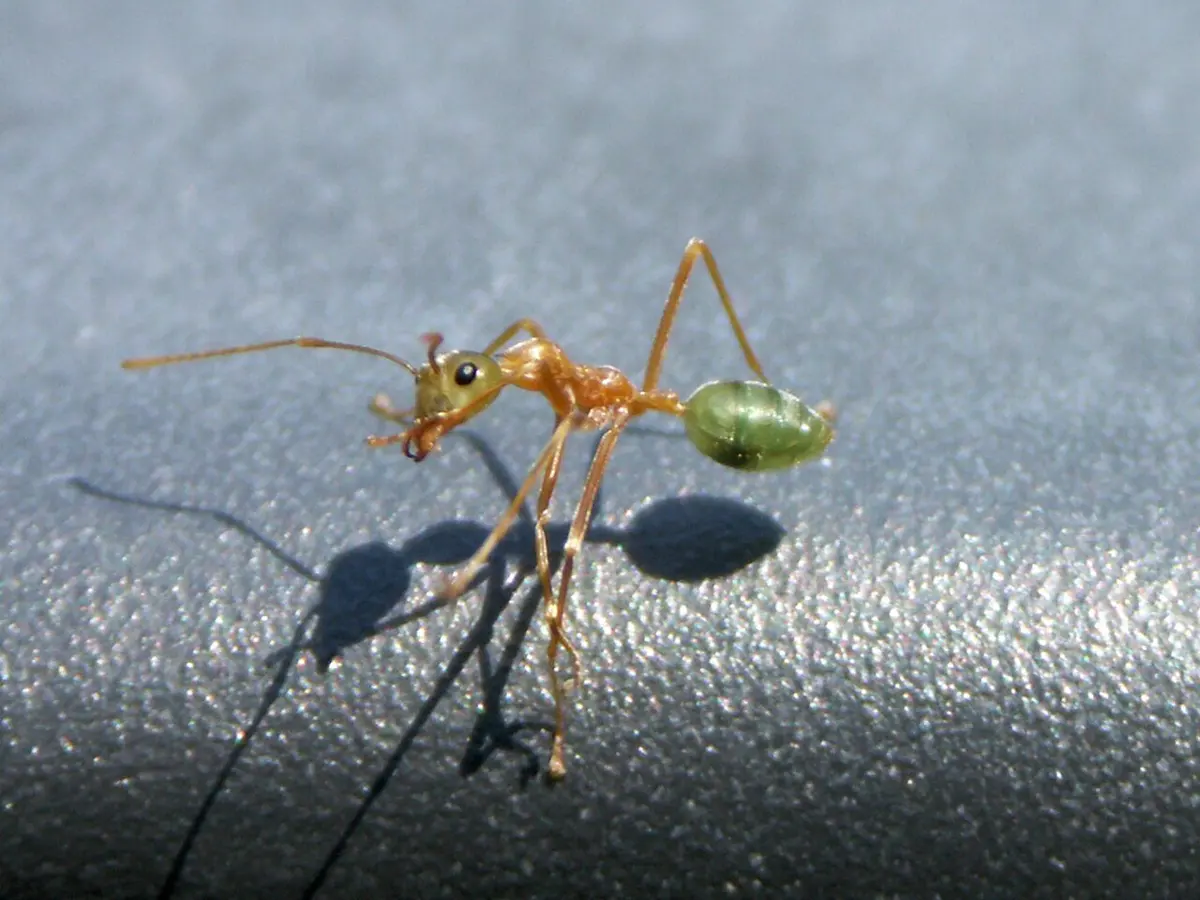
6. Crickets, Thailand
People say that insects are the protein of the future, and the writer is happy with that. In northern Thailand, deep-fried crickets are an everyday food: nutty and crunchy, perfect with salt. But he draws a line at the bigger insects: anything that needs more than one bite is “a bridge too far”, a step too far, for him.
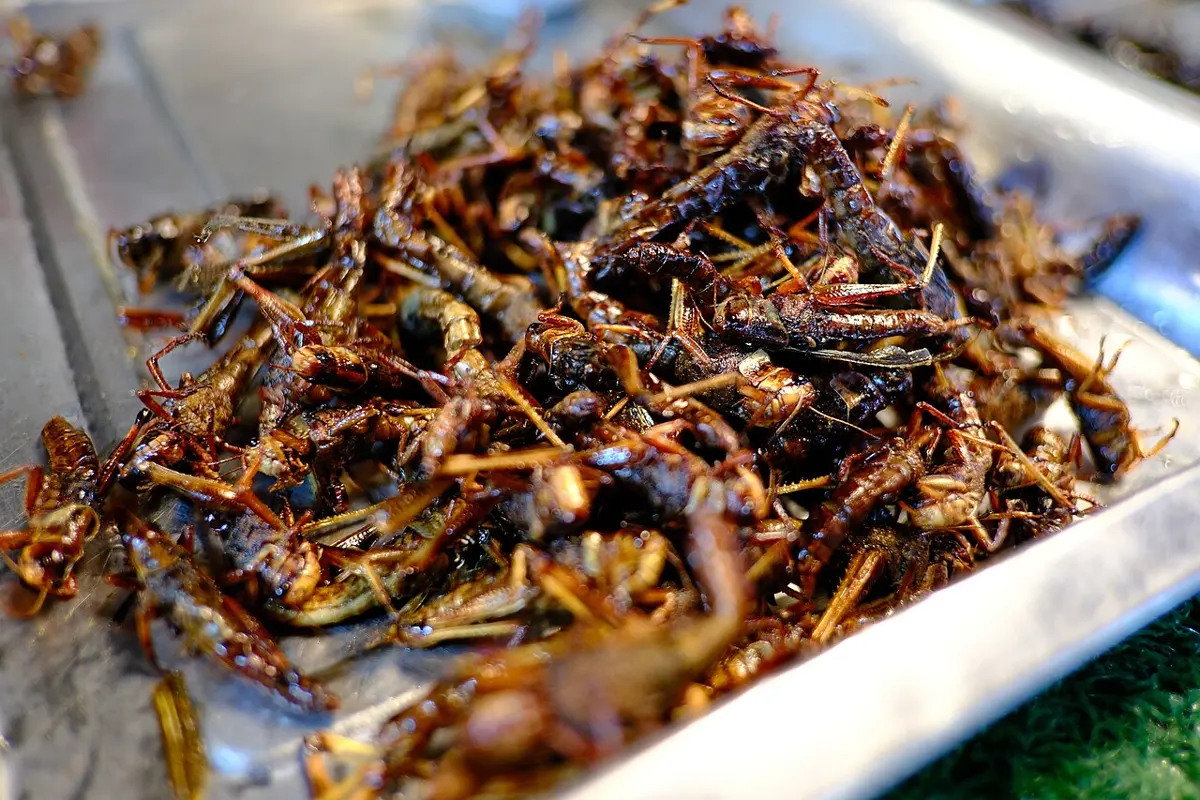
7. Snails, France
Snails aren’t really unusual: they are on the menu of most French restaurants (as escargots), even in Australia. Yet some people are still nervous of eating garden snails, though they needn’t be: fried with plenty of garlic and butter, they are delicious. They are eaten in many countries, above all Vietnam, where fried snails are an everyday dish. (In Nepal’s Terai, too, many Tharu families cook freshwater snails, ghonghi, in a spicy curry.)
8. Bun rieu, Vietnam
Bun rieu is a traditional Vietnamese crab soup with noodles, topped with roasted tomatoes, crab meat, stewed pork, lime juice, chili, fresh herbs, banana flower and bean sprouts. Everything about it sounds good, almost: then a large piece of congealed pig’s blood (blood that has set solid) is dropped in. That, he admits, is a real challenge for a diner who isn’t expecting it. His advice: try it; you won’t regret it.
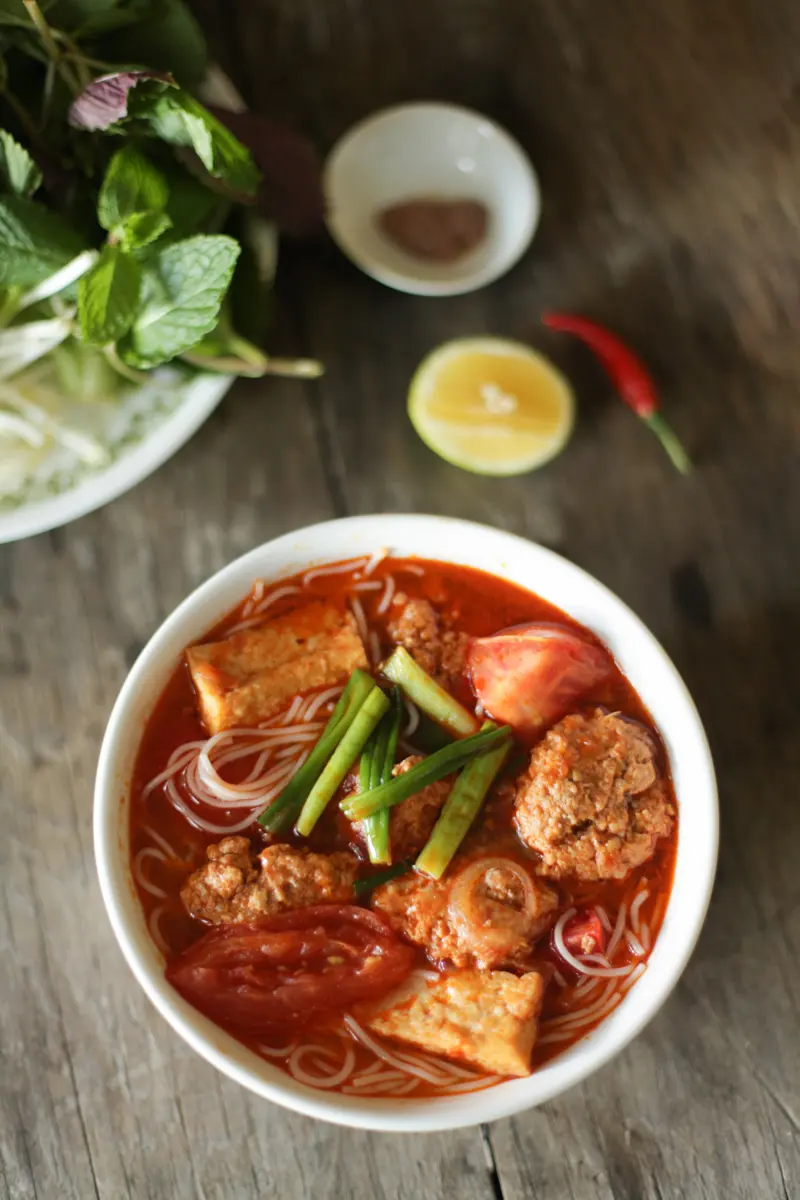
Why does the writer mention fermented horse milk from Mongolia?
Pick an answer to see why.
Which pattern do most sections of the article follow?
Pick an answer to see why.
Words from the article
Words linked here open in English Vocabulary, where you can see an example and practice them in the word game. The meanings below are the ones the words have in this article.
| Word | Meaning here |
|---|---|
| ferment | to go through a slow chemical change caused by tiny living things (yeast, bacteria), as milk does when it becomes curd |
| squid | a sea creature with a long soft body, eight arms and two longer tentacles |
| witchetty (grub) | a large whitish larva of a moth, which eats wood and roots; eaten in Australia |
| myrtle | a bush with shiny leaves, pink or white flowers and blue-black berries; lemon myrtle is an Australian tree with lemon-scented leaves |
| congeal | to change from a liquid into a thick or solid state, as blood or fat does when it cools |
| nutty | tasting like nuts |
| oddly enough | surprisingly |
| grind | to crush into tiny pieces or powder |
| staple | a food eaten regularly, as a main part of what people eat |
| texture | how something feels when you touch or bite it: soft, rubbery, crunchy |
| bush food | food from wild plants and animals of the Australian countryside |
| come around | to change your mind, slowly, and start to like or accept something |
| protein | the part of food the body uses to build and repair itself; meat, eggs, beans and insects have a lot |
| unsuspecting | not expecting anything bad or strange |
A. Match the words with their meanings
Match the words with their meanings.
- a.ferment b. squid c. witchetty d. myrtle e. congeal f. nutty
- i.a large whitish wood-eating larva of a beetle or moth
- ii.to go through a chemical change
- iii.a sea creature that has a long soft body, eight arms and two tentacles around its mouth
- iv.to change from a fluid to a solid state
- v.having a flavor like that of nuts
- vi.a bush with shiny leaves, pink or white flowers and blue-black berries
Answer
B. Idioms
An idiom is a group of words whose meaning is not the meaning of its separate words. A crispy cricket is not a bridge, but “a bridge too far” means something that goes too far, a step more than you can manage.
| Idiom | Meaning | Example |
|---|---|---|
| get out of hand | to become difficult to control | The party got out of hand when a hundred guests came instead of twenty. |
| miss the boat | to be too late to get what you want | The scholarship forms closed yesterday; I’ve missed the boat. |
| break the ice | to say or do something to make people feel comfortable with each other | Our teacher broke the ice on the first day with a funny story about her own school. |
| cry over spilt milk | to worry about something that has happened and can’t be changed | The exam is over. There’s no use crying over spilt milk: start on the next one. |
| look before you leap | to think about what could go wrong before you act | Look before you leap: read the contract before you sign it. |
Match the idioms with their meanings.
- a.get out of hand b. miss the boat c. break the ice d. cry over spilt milk e. look before you leap
- i.to say or do something to make people feel comfortable
- ii.to think about the possible bad results of an action before doing it
- iii.to worry over past events which cannot be changed
- iv.to become difficult to control
- v.to be too late to get what you want
Answer
Two new students sit silently at lunch. Sunita offers them her pickle and asks where they are from. She is …
Pick an answer to see why.
C. Complete the sentences
Complete the sentences with information from the text, in not more than four words.
- a.Sometimes even eating a food can give us the feeling of ……… when it is like taking a risk.
- b.When we travel, we have the chance to ……… which we wouldn’t even think of eating.
- c.The writer was disappointed when he had ………, which really was bad.
- d.The writer’s impression of most Japanese food is that it is ……… .
- e.Many people think of ……… as scary creatures, but the Chinese turn them into food.
- f.Snails become very tasty when they are fried with ……… .
Answer
D. Answer the questions
Why does food become a challenge for people when they travel?
Answer
How is haggis prepared?
Answer
When does the writer feel that he likes shiokara?
Answer
Where can people enjoy bush food?
Answer
Why does the writer find it difficult to eat larger insects?
Answer
Name the country where snails are served as an everyday dish.
Answer
What kind of food is bun rieu?
Answer
If you had to choose one of the foods in the article, which would you choose? Why?
A model answer
E. The strangest dish
Which of the dishes in the text did you find the strangest of all? Give reasons.
A model answer
Pronunciation: word stress
In every English word of two or more syllables, one syllable is said louder, longer and higher than the others: it is stressed. Dictionaries mark it with ˈ before the syllable. Stress the wrong syllable and a listener may not recognize the word at all, even if every sound is right.
All twelve words in the unit are stressed on the first syllable:
| Word | Stress | British | American |
|---|---|---|---|
| amateur | AM·a·teur | /ˈæmətə(r)/ | /ˈæmətər/ |
| badminton | BAD·min·ton | /ˈbædmɪntən/ | /ˈbædmɪntən/ |
| energy | EN·er·gy | /ˈenədʒi/ | /ˈenərdʒi/ |
| gardener | GAR·den·er | /ˈɡɑːdnə(r)/ | /ˈɡɑːrdnər/ |
| industry | IN·dus·try | /ˈɪndəstri/ | /ˈɪndəstri/ |
| library | LI·bra·ry | /ˈlaɪbrəri/ | /ˈlaɪbreri/ |
| mystery | MYS·ter·y | /ˈmɪstri/ | /ˈmɪstəri/ |
| perfectly | PER·fect·ly | /ˈpɜːfɪktli/ | /ˈpɜːrfɪktli/ |
| government | GOV·ern·ment | /ˈɡʌvənmənt/ | /ˈɡʌvərnmənt/ |
| quietly | QUI·et·ly | /ˈkwaɪətli/ | /ˈkwaɪətli/ |
| character | CHAR·ac·ter | /ˈkærəktə(r)/ | /ˈkærəktər/ |
| terrible | TER·ri·ble | /ˈterəbl/ | /ˈterəbl/ |
In which word is the stress NOT on the first syllable?
Pick an answer to see why.
Speaking: asking for and giving reasons
A. Two conversations
In the first, a teacher asks a student why she is late, and she answers with because: she missed the bus. The teacher accepts it, and adds a purpose: come on time from tomorrow so that you won’t miss the class. In the second, Pramila asks Kiran why he wants to go to Kathmandu after the SEE. He gives a reason, “the reason is that I want to study there”. When Pramila says Nepalgunj has good schools too, he gives the real reason with “the point is”: his mother has been moved to Kathmandu for work.
| To ask for a reason | To give a reason |
|---|---|
| Why are you…? | Because… |
| What’s the reason for…? | The reason is that… |
| How come you…? (informal) | That’s because… |
| What makes you think so? | The point is (that)… |
| Why on earth…? (surprised) | It’s due to… / It’s because of… (+ noun) |
| I did it so that… / in order to… (a purpose) |
B. Ask and answer
Make short conversations for these situations: one person asks for the reason, the other answers.
a. Your friend is sobbing. b. Suman has sold his bike. c. Sunita has bought a lot of chocolates. d. A woman is planting some trees. e. One of your friends wants to join the army. f. The people were running hurriedly. g. Sanskriti was taken to the office. h. Pema went home early from school.
Model conversations
C. Your own reasons
Answer each question with a reason, as in: I want to be a doctor because a doctor can serve people when they need it most.
a. Which subject do you like the most? b. Where do you go shopping? c. How much water do you drink a day? d. When do you like to go on a holiday? e. What will you do after your SEE? f. Who is your favorite actor?
Model answers
Grammar I: Connectives of reason and purpose
You met because, since, as and because of in earlier grades. This section puts them beside the connectives of purpose, because the two are easy to mix up.
A reason answers Why did it happen? (what caused it). A purpose answers What for? (what someone wants to achieve).
I bought a raincoat because the monsoon started. (reason: what caused it)
I bought a raincoat so that I wouldn’t get wet. (purpose: what I wanted)
Connectives of reason
| Connective | What follows | Example |
|---|---|---|
| because | a clause (subject + verb) | The match was stopped because it was raining. |
| since, as | a clause; often at the start, for a reason the listener already knows | Since you are here, you can help me. As it was late, we took a taxi. |
| because of, due to, owing to | a noun or noun phrase | The match was stopped because of the rain. |
Connectives of purpose
| Connective | What follows | Example |
|---|---|---|
| to | the base form of a verb | She went to the market to buy vegetables. |
| in order to, so as to | the base form (more formal) | The city planted trees in order to reduce noise. |
| in order not to, so as not to | a negative purpose | We left early so as not to miss the bus. |
| so that | a clause, usually with can, could, will, would | We left early so that we wouldn’t miss the bus. |
The construction company has hired more workers ……… finish the bridge before the monsoon.
Pick an answer to see why.
We had to cancel the picnic ……… the heavy rain.
Pick an answer to see why.
Sita is saving money ……… she can buy a bicycle.
Pick an answer to see why.
A. Match the halves
Match the sentence halves in I and II.
I: a. I bought a raincoat and an umbrella b. I won’t be able to get to school on time c. The Nepali cricket team is likely to perform well in this tournament d. The construction company has deployed more workers at the site e. We’ve decided not to go on holiday this year f. The metropolitan city has planted trees at the side of the road g. The flight had been delayed h. We’ve put a table and chair in the spare bedroom i. Nisha went to visit her sister j. We had to queue for two hours
II: i. … in order to use the time for planting paddy. ii. … since she didn’t have to go to her office yesterday. iii. … as the monsoon started. iv. … so that they can complete the construction in time. v. … since the movie was a hit. vi. … because they have got the best coach ever. vii. … because of the bad weather. viii. … to reduce traffic noise. ix. … as I’m stuck in traffic. x. … so that Samip can study in private.
Answer
B. The night watchmen at the funfair
Choose the correct connective from the brackets.
The people at the fair were leaving (because/but) the lights were going out. The last two people in the dodgem cars also left (as/so) it was getting dark. The big wheel stopped (as/and) the merry-go-round had already stopped. The stalls closed down and the stall-owners went home. At 2 a.m. four night watchmen walked round the funfair (to/so) see if there was anyone about. “I’m fed up walking around,” one of them said. “What can we do, (as/so that) there is nothing to do?” “We can sit and talk.” They were bored (so/because) there was nothing to do on that quiet, warm night. “We can have a ride on the merry-go-round!” one of them cried. “That’ll be fun!” Three of them jumped on the merry-go-round horses. (So/Since) the fourth started the motor. Then he jumped on too, and round they went. They were having the time of their lives. Suddenly they realized there was no one to stop the machine (because/so) all of them were on it. They weren’t rescued till morning, (so/as) they felt very sick indeed!
Answer
Writing I: A recipe
A. Gajar haluwa
Gajar haluwa (carrot pudding) is made from grated carrot slowly cooked in milk and ghee with sugar and cardamom.
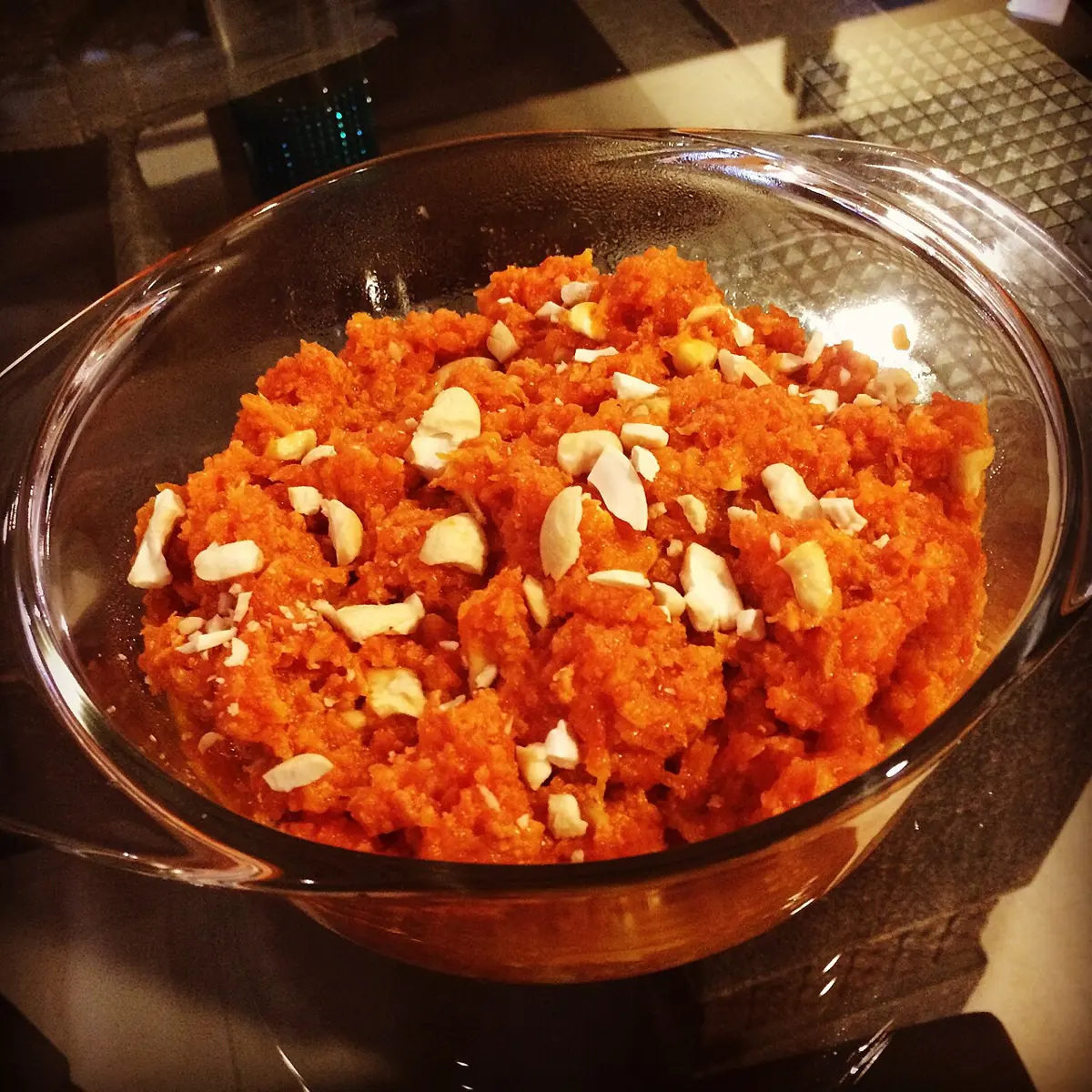
The steps for cooking carrot pudding with milk, carrot, sugar, cardamom powder and ghee are jumbled. Put them in the correct order.
- When the carrot turns slightly golden brown, add milk.
- Switch on the stove and melt ghee in a pan.
- Add grated carrots and fry for about seven minutes.
- Cook for four more minutes.
- Cook this mixture till all the milk dries up.
- Turn off the stove; gajar haluwa is ready to serve.
- Add sugar and cardamom powder after the milk dries up.
Hint
Answer
How to write a recipe
A recipe is a set of instructions, so it is written in the imperative: each step begins with a verb (Heat, Add, Stir, Fry). Its layout:
- Title: the name of the dish, and perhaps one line about it.
- Serves and time: how many people, how long.
- Ingredients: a list, each with its amount (2 cups, 1 teaspoon, 4 medium potatoes), in the order they are used.
- Method: numbered steps, one action a step, with times, heat (low, medium, high) and how to tell when it’s done (until golden brown, till the milk dries up).
- Serving and tips: how to serve it, and what to be careful of.
Sequence words help when the steps aren’t numbered: first, next, then, after that, when…, finally.
B. Your favorite food
What is your favorite food? Write a recipe for it, with the ingredients and the method.
A model recipe
Reading II: You Inspire Others by Learning, not by Teaching
Before you read
The photo beside the title shows a smiling man in a white chef’s jacket.

What kind of text it is
The text is an interview, adapted from the Nepali Times, which met Santosh Shah in London while he was in the semi-finals of MasterChef: The Professionals 2020 on BBC One. An interview is written as questions (in bold, the interviewer) and answers (the person interviewed, in his own words, so in the first person: I, my). A short introduction at the top says who the person is and why he is being interviewed.
The interview, part by part
1. From Siraha to Cinnamon Kitchen
The first question calls his life “quite a journey”: from Siraha, a district in Nepal’s eastern Terai, to Cinnamon Kitchen, a well-known Indian restaurant in London where he was the head chef. He answers that he comes from a humble (poor, simple) background. His father died when he was five, and at nine or ten he was already working, in petty trade (selling small things for a little money). After he failed the SLC (the old school-leaving exam, now the SEE), he did what others in his village did: he went to India for work.
In a hotel there, his job was to wash the skewers (long metal rods for roasting meat) of a chef in the tandoor section, where food is cooked in a deep clay oven. He told that chef he wanted to be a chef too, and the chef advised him to ask the Executive Chef, the head of the whole kitchen. One day, while serving tea to the Executive Chef, Santosh asked him for a chance, “a shot”, and got it: he started as a helper to the tandoor chef who had recommended him. He moved to another hotel, studied hotel management, and learned English and computers on the side. In seven years of hard work he became an executive chef himself.
2. Being on MasterChef
How does it feel? In many ways, he says, the same: he is still the person who experiments with recipes and enjoys his job. What is new is the platform: the chance to show Nepali food to the world. Even if he doesn’t win, he is glad to have put the spotlight on Nepali cuisine (cooking).
3. What is “Nepali” food?
Nepali food is hard to define, because it is so diverse. Along the borders it has been shaped by Tibetan and Indian cooking, but that isn’t the entirety (the whole) of it. Dishes like yomari, choila, kachila, tama and gundruk exist nowhere else. Our food differs by community and by region, with different methods and ingredients.
4. Old tastes, new ways
He takes sukuti (dried meat) as an example. To Nepalis it is a nostalgic food, one that brings back happy memories, and he loves it. But to outsiders not used to it, its hardness may not be palatable (pleasant to eat). So he experiments: he dehydrates (dries) it for different lengths of time to make it softer, while keeping its original taste. He adds that food trends are dynamic (they keep changing): Indian food has long been popular in Britain, and lately Sri Lankan food. Trends come in waves, and he wants a wave for Nepali food, beyond just momo and dal bhat.
5. Octopus, the Nepali way
In one show he cooked an octopus dish in Nepali style. It was a global competition for a global audience, he explains. He had already cooked octopus with Indian flavors a few hundred times in an Indian kitchen, so he had the urge and the confidence to try it with Nepali ingredients, and it worked. A judge called it “the most beautiful plate of food I have ever been served in MasterChef”.
6. Advice to young Nepalis abroad
Never stop learning: you are never too old to learn new things and improve your craft (your skill). Keep asking what is next, and be a positive force for others. Then comes the line that gives the interview its title: you inspire others by learning, not by teaching.
7. What next?
He was about to open a high-end, fine-dining Nepali restaurant in London, its tentative (not yet final) name Ayla, to give Nepali cuisine an identity of its own. His final goal: a Michelin star for it, which for chefs is like an Oscar, and which would elevate (raise) the standing of Nepali food around the world.
What does Santosh Shah mean by “You inspire others by learning, not by teaching”?
Pick an answer to see why.
Why did he try dehydrating sukuti for different lengths of time?
Pick an answer to see why.
Words from the interview
| Word | Meaning here |
|---|---|
| humble | poor and simple (of a background or home) |
| petty trade | buying and selling small things for little money |
| skewer | a long, thin metal or wooden pin for holding meat while it is roasted |
| tandoor | a deep, round clay oven, very hot, for bread and meat |
| executive (chef) | the person in charge; the executive chef runs the whole kitchen |
| give someone a shot | to give someone a chance to try |
| cuisine | a style of cooking, of a country or region |
| diverse | of many different kinds |
| entirety | the whole of something |
| nostalgic | bringing back happy memories of the past, with a little sadness |
| palatable | pleasant to taste or eat |
| dehydrate | to remove the water from something, often food, to preserve it |
| dynamic | always changing |
| craft | a skill, or work done with skill |
| tentative | not yet final; may change |
| elevate | to raise to a higher or more important level |
A. Crossword
The crossword’s answers, if you are working on paper.
Across: 3. a cylindrical clay oven for cooking meat or other food, or the method of cooking in it (7 letters) 7. a person having administrative or supervisory power in an organization (9)
Down: 1. a long pin for holding meat or other food while it is being roasted (6) 2. the whole of something (8) 4. a feeling of pleasure, and sometimes slight sadness, as you think about things in the past (9) 5. raise to a more important or impressive level (7) 6. remove water from food in order to preserve and store it (9)
Answer
B. True, False or Not Given
The interview was taken in Nepal.
Pick an answer to see why.
The judges were quite impressed by Santosh Shah’s performance in the quarter-finals.
Pick an answer to see why.
Santosh Shah was from a well-to-do family.
Pick an answer to see why.
With the support of the chef in the tandoor section, Santosh started helping the Executive Chef.
Pick an answer to see why.
The journey of Santosh to MasterChef was full of struggles.
Pick an answer to see why.
Santosh is hopeful about the Nepali food market because food trends are dynamic.
Pick an answer to see why.
Santosh experiments with food because people’s tastes differ from region to region.
Pick an answer to see why.
Santosh feels sorry for serving octopus in Nepali style.
Pick an answer to see why.
C. Answer the questions
What do you think is the reason that heightened the popularity of Chef Shah?
Answer
Did Shah have a normal childhood? Why?
Answer
How does Shah feel about being on MasterChef?
Answer
What does Shah want to show the world about Nepali food?
Answer
Write two things that Chef Shah was careful about while experimenting with sukuti.
Answer
According to Shah, what two things make a person successful?
Answer
Why does Shah want a Michelin star for Ayla?
Answer
What have you learned from the life story of Santosh Shah?
A model answer
D. If you were a judge
Chef Shah cooked many dishes in the competition. If you were one of the judges, which food would you ask him to cook? Why?
A model answer
Listening: food science
The textbook’s listening task is a short talk about food science, the science of everything that happens to food before it reaches your mouth. CDC’s own recording is below: read the questions in B and C first, then listen, as many times as you need. The answers are hidden under the questions; after that, practice with a talk of our own that your browser reads aloud.
A. Before you listen
The picture shows a simple chart called PROCESSING: raw product → process → processed product, with vegetables at the bottom.
B, C and D. The textbook’s audio: answers
Fill in the missing activities that food science is involved in.
a. grow the food b. ……… c. ……… transport food d. ……… e. take food to a factory f. process food g. ……… h. turn raw material into food products i. ……… j. supply to the grocery store shelves
Answer
Write True or False.
- a.The speaker takes about 5 minutes to talk about food science.
- b.Food science is tied up with other sciences.
- c.Food science exists around us every day.
- d.Food scientists help to make the food supply sustainable.
- e.The first priority of food scientists is growing food.
Answer
Recall and make a list of the sciences mentioned in the audio.
Answer
Practice listening alone
Grammar II: The present continuous
The present continuous is am / is / are + the -ing form of a verb: I am cooking, she is reading, they are not playing, Are you coming? You have used it since the early grades for things happening now. It has three uses, and the time words around it tell you which.
| Use | What it means | Example | Time words |
|---|---|---|---|
| Now | happening at this moment | The boys are playing cricket now. | now, right now, at the moment, Look!, Listen! |
| Around now | going on for a while, around this time, but not forever, perhaps not at this very moment | I**’m reading** a novel about Everest this week. | currently, these days, this week, this month, this term, still |
| Future | a plan already arranged (with a time, a place, people) | We**’re meeting** Nabina tomorrow at five. | tonight, tomorrow, this afternoon, on Friday, next week, later today, soon |
“We are organizing a program on Wednesday.” Which use is this?
Pick an answer to see why.
Which sentence is correct?
Pick an answer to see why.
A. Choose the time expressions
Choose the correct time expression.
- a.The boys are playing cricket (already/now).
- b.The doctors are preparing a report for their most important patient (last/this) week.
- c.The students are preparing for a test (at the moment/usually).
- d.(Currently/Sometimes) the economists are working on the country’s financial crisis.
- e.Susan is playing tennis with Tim (now/then).
- f.What are you doing (this/next) afternoon?
- g.My teacher is helping us with math problems (that/this) morning.
- h.The guard is ringing the bell (now/soon). It’s time to go!
- i.She is (still/yet) mowing the lawn.
Answer
B. Now, around now or future?
Write NOW if the action is happening at the moment, AROUND if it is going on around the present time, or FUTURE if it is arranged for the future.
- a.The local governments are announcing their policies this month.
- b.I think Mr. Rai is taking a class at the moment.
- c.We’re meeting with Nabina later today.
- d.I’m looking for a new job currently.
- e.We’re organizing a program on Wednesday.
- f.They are coming home right now.
- g.Mom is making dinner for us tonight.
- h.I’m sorry I don’t have time. I’m attending a meeting.
- i.She’s looking for a new home as she’s sold the old one.
Answer
C. Why is Neelam smiling?
Rewrite the text using the correct forms of the verbs in brackets.
Why is Neelam smiling? It sounds like an easy question: she (have) a good time with friends and she (feel) good after a good shot. But psychologists often (argue) about this question. Some believe that smiling is an individual act: we smile because we feel happy, unless we (try) to hide our emotions. Others claim that we smile to build social relationships. Some animals use a grin to show that they (not/will) fight, for example. Perhaps our smile serves the same function. So, who’s right? In one study, researchers filmed people bowling. If you watch people doing a very social activity like this, it looks as if they always (smile). They stop smiling only when they (concentrate) on their next shot. But when do they start smiling again? After each good shot, the researchers took photographs to find when the smile starts: while the player (look/still) down the alley, or a few seconds later, when they turn round to share their happiness with the group.
Answer
Writing II: Fast food or Nepali food?
Nowadays, many Nepalis prefer fast food like instant noodles, pizza and burgers to typical Nepali food. This has bad effects on their health. To what extent do you agree or disagree with this claim? Write a couple of paragraphs giving reasons to support your view.
Hint
A model answer
How to write paragraphs that argue a view
- Answer the question in your first sentence. “To what extent” asks how far: I completely agree, I largely agree, I partly agree, I disagree.
- One reason a paragraph, each opening with a topic sentence that states it, then explained with an example or a fact.
- Admit the other side (It is true that… However…): it makes your view look fair, and stronger.
- Link your ideas with connectives of reason (because, since, as a result), contrast (however, on the other hand, although) and addition (moreover, also, in addition).
- End with a sentence that sums up your view, without new reasons.
Project work
Commonly misspelled words
These words are spelled wrongly so often that the wrong spelling can start to look right. Learn the trick for each group.
| Correct | Common mistake | Correct | Common mistake |
|---|---|---|---|
| absence | absense | leisure | liesure |
| argument | arguement | license | lisense |
| beginning | begining | maintenance | maintainance |
| height | hight | modern | morden |
| believe | beleive | noticeable | noticable |
| calendar | calender | occasion | occassion |
| changeable | changable | pastime | pasttime |
| colleague | collegue | playwright | playwrite |
| deceive | decieve | receive | recieve |
| existence | existance | separate | seperate |
| experience | experiance | sincerely | sinserely |
| grateful | greatful, gratefull | truly | truely |
Which sentence is spelled correctly?
Pick an answer to see why.
Which word is spelled correctly?
Pick an answer to see why.
Exercise
SEE-style practice on this unit. Try each one as in the exam, then open the answer.
Read the text and answer the questions.
Kinema is a food of eastern Nepal, made mostly by the Limbu and Rai communities. Soybeans are boiled, wrapped in banana or fern leaves and kept in a warm place for two or three days. Bacteria ferment them until they smell strong and stick together in long threads. Kinema is then fried with onion, chili and tomato and eaten with rice. Visitors often find its smell too strong at first, but many come to love its nutty taste. Like many fermented foods, it is easier to digest than plain soybeans.
- a.Who mostly make kinema?
- b.What are the soybeans wrapped in?
- c.What makes the beans smell strong and stick together?
- d.How do visitors usually feel about kinema at first?
- e.Find a word in the text that means changed chemically by bacteria.
Answer
Choose the correct answer for each numbered blank.
Santosh left his village (a) ……… (because, because of, so that, in order) there was no work. He washed skewers in a hotel (b) ……… (because, to, so, for) earn money. He learned English and computers (c) ……… (so that, because of, since, to) he could become a chef. He came late to class one day (d) ……… (so that, in order to, because of, so as to) the traffic. Today he cooks Nepali food (e) ……… (so, to, because, so that) people around the world can taste it. He is (f) ……… (open, opens, opening, to open) a new restaurant next month.
Answer
Put the verbs in brackets in the right form.
- a.Listen! Someone (knock) at the door.
- b.My sister (study) for her SEE these days, so she rarely comes out.
- c.We (fly) to Pokhara on Friday morning; the tickets are booked.
- d.I (not like) bitter gourd at all.
- e.Look! The milk (boil) over.
- f.……… you (come) to the party tonight?
Answer
Join each pair using the word in brackets.
- a.She switched on the fan. She wanted to cool the room. (to)
- b.The flight was delayed. There was fog. (because of)
- c.We left early. We didn’t want to miss the bus. (so that)
- d.The shop was closed. It was a public holiday. (since)
- e.He saved money. He wanted to buy a bicycle. (in order to)
Answer
Your school is holding a food festival. Write a recipe of about 150 words for a dish from your community that you will cook there.
Hint
A plan: chiura with curd
Practice every question in the book, and keep track of the ones you miss →
A companion to your textbook, not a replacement for it: study from the book your school uses, and where the two differ, follow your teacher. Found a mistake? Please tell us.