
A thirteen-year-old girl tells her father she is going to meet a friend she has chatted with online, a girl of twelve. He insists on coming too, and waits beside the road, watching a car with dark windows. Neither of them knows that someone in that car is watching him, just as suspiciously.
This unit reads that story, and a set of plain tips for staying safe online. Along the way you will learn to give advice and talk about duty with should, ought to and must, to criticize what someone did with should have and shouldn’t have, to choose between a, an, the and no article at all, to hear how the voice rises and falls, and to write a reply email and a newspaper article.
Getting started
The unit opens with four pictures about the dark side of the internet.
| Picture | What it shows |
|---|---|
| Masked figures in black carrying off money, a credit card and a phone that says “Enter your password”, beside a computer with a warning sign | hacking and online theft: criminals stealing passwords, bank details and money |
| A computer screen with a big padlock, joined by lines to icons of a phone, Wi-Fi, a globe and warning signs | cyber security: protecting every device and connection from attack |
| A girl hiding her face, with fingers pointing at her out of a laptop and bubbles saying “LOSER”, “UGLY”, “STUPID” and “HATE” | cyberbullying: being insulted, mocked or threatened online |
| A pair of handcuffs | cybercrime is crime: people who hack, cheat or bully online can be arrested and punished |
Reading I: Parents
Before you read
What kind of text it is
“Parents” is a short story by Vishnu Singh Rai, a Nepali writer who writes stories in English, from his collection Martyr and Other Stories. It is told in the first person by a father (“I”), almost all in dialogue, and it ends with a twist: a surprise in the last lines that makes you see everything before it differently. Watch for irony: what the characters expect turns out to be the opposite of what is true.
The story, part by part
1. “I’m coming with you”
The story opens in the middle of an argument. Anuja tells her father she is going to meet her Facebook friend, now. He says he is coming with her; she wants to go alone and tells him he is obsessed: nothing is going to happen to her.
2. A worried father
Now the father explains. Anuja is only 13. She spends most of her time chatting online and has many “e-friends”. A few days ago she told him about a new one, a girl of 12, whom she likes very much. He has warned her that some bad people pretend to be teenagers online, chat with girls like her, and wait for a chance to take advantage of them. But she doesn’t listen: to her he is an old man who is overprotective, one who “sees ghosts in every dark corner”, imagining danger everywhere.
3. A deal, and a joke
He offers her a deal. He won’t get out of the car first. If he sees a girl of 12 waiting, he will go off window shopping and leave them alone; if there is no girl, they will wait ten minutes and come back. Anuja stamps her feet: “This is ridiculous.” He tries a joke: is she ashamed of going out with him because he is sixty, because of his big belly, or because he has no hair? (Remember these three details: they matter at the end.) “Oh Dad, you’re impossible.”
4. The confession
On the way, he remarks that she looks like a boy in her new outfit. Then Anuja admits something, struggling for the words: she isn’t a girl, as far as her friend knows. She has been chatting with the girl as a boy. Her shocked father stares at her, and the car swerves.
5. Ten minutes
At the meeting place there is no girl in sight. About a hundred meters away, on the other side of the road, a car with dark windows is parked. Boys are playing cricket on a playground nearby, and cows are munching hay. He looks at his watch, paces up and down the road, looks at the car, walks again. The car starts and speeds away. Ten minutes pass with no sign of any girl, and he gets back into the car, sure he was right: the girl she chatted with “must have been fake”.
6. The twist
The next day, at lunch, he tells the whole story to his colleague Dhurva, who smiles and then laughs. Dhurva explains why the girl never appeared: her mother had brought her in that car, before they arrived, to check whether there really was a boy of 13. All she saw was an old man with a big stomach and a bald head, lurking around the meeting place. So she never let her daughter out of the car, and drove her home. The father stammers: she saw him? Yes, laughs Dhurva, and she described him as a lecherous old man with an evil leer on his face.
Why didn’t the other girl get out of the car?
Pick an answer to see why.
What makes the ending a twist?
Pick an answer to see why.
Words from the story
Words linked here open in English Vocabulary, where you can see an example and practice them in the word game.
| Word | Meaning here |
|---|---|
| obsessed | thinking about one thing all the time, too much |
| overprotective | trying too hard to keep someone safe, not letting them do things alone |
| see ghosts in every dark corner | to imagine danger everywhere |
| window shopping | looking at things in shop windows without meaning to buy |
| ridiculous | silly, deserving to be laughed at |
| stamp (your feet) | to bring your foot down hard on the ground, in anger |
| outfit | a set of clothes worn together |
| swerve | to turn aside suddenly from a straight line |
| digest (information) | to take in and understand news, slowly |
| pace up and down | to walk back and forth, often because you are worried or waiting |
| consult (a watch) | to look at it for information |
| munch | to eat something hard, steadily and noisily |
| colleague | someone you work with |
| lurk | to wait somewhere, half hidden, as if to do something bad |
| stammer | to speak with difficulty, repeating sounds and stopping |
| lecherous | looking at women or girls in a bad, sexual way |
| leer | an unpleasant look, which shows bad intentions |
A. Words and definitions
Choose words from the box and write them against the correct definitions: munching, ridiculous, window shopping, stammer, obsessed, lurking, outfit, leer, swerve, stamp.
- a.remaining hidden so as to wait for somebody secretly
- b.thinking about something all the time, to a troubling extent
- c.the act of looking at goods in shop windows without intending to buy them
- d.bringing one’s foot down heavily on the ground
- e.deserving to be laughed at; absurd
- f.a set of clothes worn for a particular occasion or activity
- g.to turn aside suddenly from a straight line or course
- h.eating something hard, steadily and noisily
- i.to look or gaze in an unpleasant and offensive way
- j.speaking with difficulty, repeating sounds or words and often stopping
Answer
B. Put the events in order
Rewrite the sentences in the order in which the events happened.
- a.Her father accompanied her to meet the friend.
- b.They saw a car on the other side of the road.
- c.Anuja told her father that she wanted to meet her new friend.
- d.She told her father about her secret online identity.
- e.She told her father about her new e-friend.
- f.Anuja’s father told his colleague about the incident.
- g.He remarked that Anuja looked like a boy in her new dress.
- h.They waited for Anuja’s friend for ten minutes.
Hint
Answer
C. Answer the questions
Why do you think Anuja was unwilling to take her father with her to meet her new friend?
Answer
How does she criticize her father?
Answer
Describe Anuja’s e-friend.
Answer
What did Anuja’s father propose in order to go with her?
Answer
What was the shocking news for her father?
Answer
Why did they return without meeting Anuja’s friend?
Answer
Why do you think Dhurva laughed at the story of Anuja’s father?
Answer
How did the girl’s mother see Anuja’s father? Why didn’t they talk to each other?
Answer
D. Faking and bullying
What can be the consequences of faking your identity and bullying other people on social media and the internet?
A model answer
Pronunciation: intonation
Intonation is the way your voice rises and falls as you speak: it tells the listener whether you are stating, asking, listing or unsure. The Extra bit at the end of the unit explains the patterns; here you try them on sentences from the story. ↘ marks a fall, ↗ a rise.
Read these sentences aloud and mark their intonation.
- a.I’m going to meet my Facebook friend.
- b.Why? Is it because I’m 60 years old?
- c.God! I tried to digest this new information.
- d.Is it because I’m 60 years old? Or is it because I’ve got a big belly?
- e.She knows me as a boy, doesn’t she?
- f.Do you know what she said about you?
- g.They got out of the car, waited for the girl and finally returned home.
- h.You are obsessed, Dad.
Answer
Speaking: criticizing, with should have
To criticize something a person did in the past, or to regret something you did, use should have / shouldn’t have + past participle:
You should have reached the station on time. (You didn’t, and that was wrong.)
You shouldn’t have spoken to her harshly. (You did, and that was wrong.)
For advice about now or the future, use should + base verb: You should do your work on time and go to bed early.
A. What should they have done?
Anuja and her father were both embarrassed after Dhurva told them that the girl’s mother had seen them. Say what the father and the daughter should and shouldn’t have done. Example: Anuja shouldn’t have introduced herself as a boy to her e-friend.
Model sentences
B. Three conversations
In the first, a daughter says she finished her project at night and is exhausted; her mother gives advice for the future: You should do your work on time and go to bed early. In the second, a teacher criticizes Sambriddhi for being late again: You should have reached the station on time. In the third, Sajan tells Gagan, whose friend is angry with him, what was wrong: You shouldn’t have spoken to her harshly. Notice I think in front of it: it makes the criticism softer and more polite.
C. Criticize your partner
Criticize your partner in these situations.
a. Your partner has lost his or her money. b. S/he got low grades in English. c. S/he has forgotten to do the homework. d. Somebody has hacked his/her email. e. S/he got lost while visiting the market. f. S/he is feeling drowsy in class. g. S/he can’t remember the password of the computer.
Model answers
Grammar I: should, ought to and must
Should, ought to and must all say that something is right or necessary, but with different strength. You met them in earlier grades; here they are side by side.
| Modal | Strength | Used for | Example |
|---|---|---|---|
| should | mild | advice, a recommendation, the right thing to do | You look ill. You should see a doctor. |
| ought to | a little stronger, often about what is fair or right | moral obligation, duty | You ought to be fair in your judgment. |
| must | strong | compulsion: a rule, a law, or something the speaker insists on | You must obey the traffic rules. |
All three are followed by the base form of a verb, and never take -s: She should go, ✗ She shoulds go, ✗ She must to go. Only ought has to.
| Negative | Meaning | Example |
|---|---|---|
| shouldn’t | it’s not a good idea | You shouldn’t eat so much junk food. |
| ought not to | it’s not right | We ought not to waste food. |
| mustn’t | it is forbidden | You mustn’t share your password with anyone. |
| don’t have to | it is not necessary (you may if you like) | You don’t have to bring lunch; it’s provided. |
A sign at the bank says: “Customers ……… show their ID card to open an account.” Which fits a rule?
Pick an answer to see why.
“You don’t have to switch off the computer; I’ll do it.” This means:
Pick an answer to see why.
Bina forgot her umbrella and got soaked. Which sentence criticizes what she did?
Pick an answer to see why.
A. Advice, moral obligation or compulsion?
Say whether the words in bold express advice, moral obligation or compulsion.
- a.You should raise your voice against discrimination.
- b.You must abide by the traffic rules while driving.
- c.You ought to be fair in your judgment.
Answer
B. should, ought to or must
Complete the sentences with should, ought to or must. Use the negative where necessary.
- a.Every child ……… take good care of their aging parents.
- b.If you want to lose weight, you ……… exercise regularly.
- c.A: Someone picked my pocket. B: You ……… inform the police about it.
- d.A: How was the movie? B: It was great. You ……… go and see it.
- e.We ……… disrespect our nation at any cost.
- f.You look ill. You ……… see a doctor.
- g.In order to keep healthy habits, we ……… go to bed early and get up early in the morning.
- h.You ……… offend people with your harsh words.
- i.We ……… learn to apologize to people to build trust and cooperation.
- j.If you find someone’s goods, you ……… try to return them to the owner.
Answer
Writing I: Replying to an invitation
A. Sambridhi’s invitation
The invitation is an email from Sambridhi to Niti, with the subject “Invitation to the wedding of our brother”. Sambridhi’s family has organized a small reception party for close friends, relatives and family to celebrate her elder brother Naman’s wedding, and she invites Niti and her parents. The party is at ABC Party Venue, Dumre, Tanahun, on 21 March at 5 p.m.; a location map is attached. She hopes they will come to share happy memories, and asks Niti to let her know whether she can. She signs off “With best regards”.
B. Niti’s reply
Imagine that you are Niti and that you cannot attend the function. Write a reply email to Sambridhi, apologizing that you can’t come to her brother’s wedding because of urgent family business.
Hint
A model email
How to write a reply email
- Subject: keep the original with Re: in front, so the reader knows what you are answering.
- Greeting: Dear Sambridhi, (for a friend, Hi Sambridhi, is fine too).
- Thank for the invitation, and react to the news (congratulations, good wishes).
- Apologize clearly (I am very sorry, but I won’t be able to…) and give the reason briefly. You don’t need every detail.
- End warmly: good wishes for the event, a plan to meet or a request for photos.
- Closing and your name: With best wishes, Best regards, Love (for family and close friends).
Reading II: Cyber Security: Basic Internet Safety Tips
Before you read
What kind of text it is
The text is an informational article, a guide of practical tips. It opens with a comparison and the reason the tips matter, then gives eight tips in eight short paragraphs, A to H, and closes with one sentence. Most sentences are imperatives (Use…, Don’t share…, Enable…), as advice usually is.
The article, part by part
The introduction
To protect your home you lock the door; to protect your bike you use a bike lock; to protect valuables you use a safe. But what protects your identity online? Modern life is intertwined with the internet: nearly every daily task can be done online, and most people own several devices, laptops, phones, tablets, smartwatches, smart TVs. The more accounts and devices you have, the more chances criminals have to reach your personal information. Online safety matters at every age, but especially for vulnerable (easily harmed) groups: children, teenagers and senior citizens. So the article starts with the basics.
A. Strong passwords
Use a strong password, and a different one for each account, combining letters, numbers and special characters, hard to guess and kept private. Don’t share it. Store passwords safely, for example in an encrypted file (scrambled so that only someone with the key can read it), rather than written down, and switch off “auto-login”, “Keep me signed in” and “Remember my password”.
B. Your information offline
Personal information can be stolen offline too, and once stolen it can be proliferated (spread) online. So shield the PIN pad with your hand when you pay, and learn to spot a card skimmer, a hidden device that criminals fit to a card machine (at petrol pumps or ATMs) to copy cards. A chip card is safer than an old card with only a magnetic strip. Read the terms and conditions when you sign up for something online, and never enter your bank or card details on a website that is not secure.
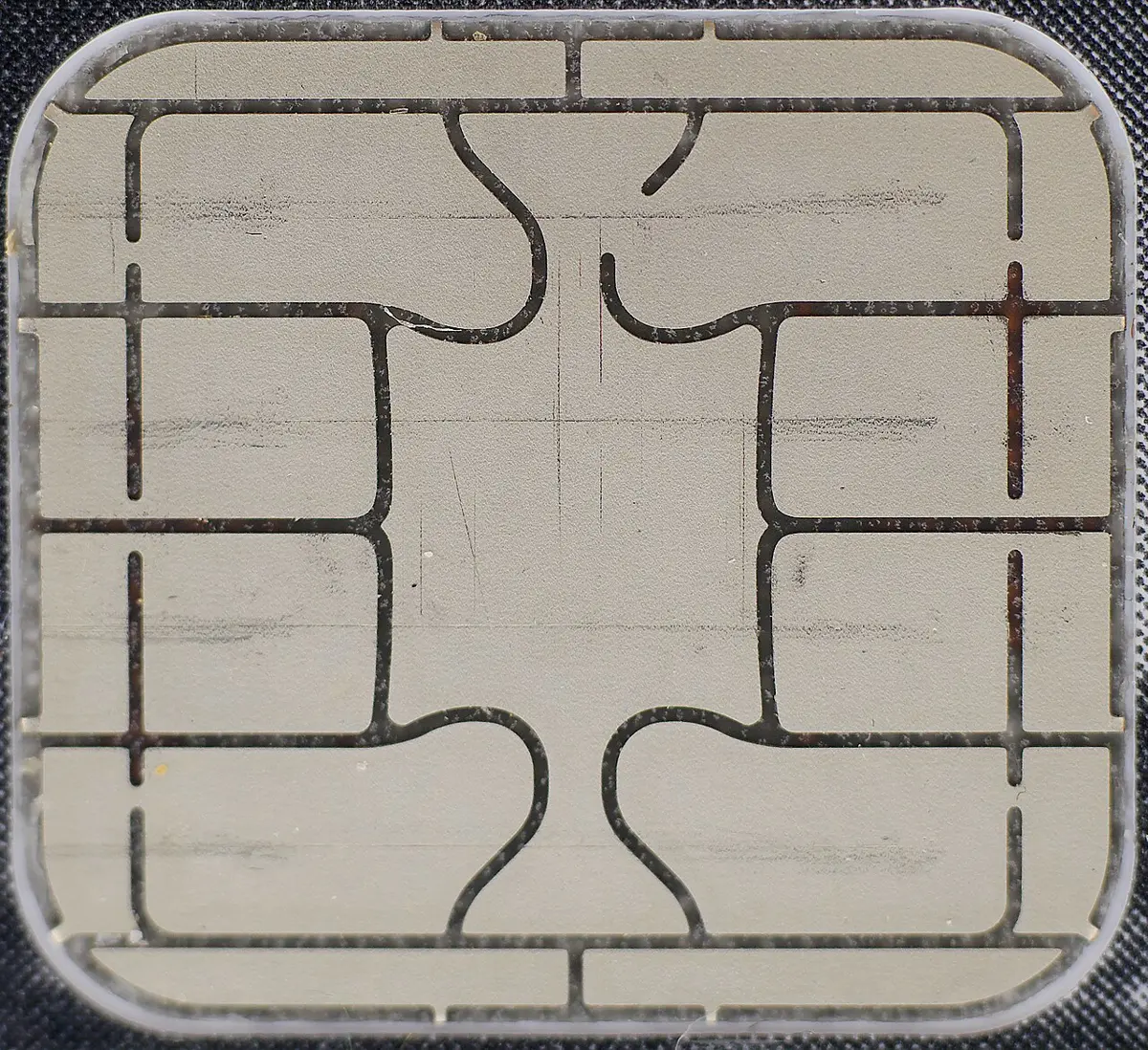
C. Lock every device
Use passwords, screen locks, fingerprint readers and face scanning on every device: computers, phones, tablets, smartwatches and smart TVs. One report found that about three in ten smartphone users had no lock of any kind.
D. Updates
Install software updates promptly, especially security updates, and turn on automatic updates so that you never miss one. An update often closes a hole that criminals have already found.
E. Wi-Fi
Don’t trust public Wi-Fi (in cafés, hotels, bus parks): avoid unsecured networks, use only secure websites, and log out as soon as you finish a transaction. Read the privacy policy before you pay, and check your account statement to make sure only the payments you made have gone through. Protect your own Wi-Fi with a strong password, and change it now and then.
F. Two-factor authentication
Turn on two-factor authentication (two-step login): after your password, the website asks for a second proof, such as a code sent to your phone. Then even someone who knows your password can’t get in without your phone too.
G. What you share
Don’t reveal details about your accounts. Be careful with people you have only just met online, and accept friend requests only from people you know in person. Delete inappropriate messages, don’t post information about your friends (it puts them at risk), and remember that what you post online is not private: anyone may see it.
H. Backups
Back up important personal information on an external hard drive, and make new backups regularly, so that a lost phone, a broken laptop or an attack doesn’t take everything with it.
The conclusion
By learning about cyber security, you put yourself one step ahead of the criminals.
Your friend’s password was stolen, but the thief still couldn’t get into her email. Which tip most likely saved her?
Pick an answer to see why.
Which of these does a padlock beside a website’s address prove?
Pick an answer to see why.
Words from the article
| Word | Meaning here |
|---|---|
| possession | something that you own |
| intertwined | closely joined, twisted together |
| integration | combining two or more things into one |
| vulnerable | easily hurt or harmed |
| encrypted | turned into a secret code that only someone with the key can read |
| avoid | to keep away from; to stop something bad from happening |
| sensitive (information) | private, and harmful if others get it |
| proliferate | to increase or spread quickly |
| shield | to protect something from being seen or harmed |
| skimmer | a hidden device that copies bank cards |
| promptly | without delay |
| authentication | proving that someone is who they say they are |
| transaction | an act of buying, selling or paying |
A. Match the words with their meanings
Match the words with their meanings.
- a.possession b. intertwined c. integration d. avoid e. sensitive f. proliferated g. shielding h. promptly i. authentication j. transaction
- i.to prevent something bad from happening ii. quick to detect or respond to slight changes or signals iii. an act of buying or selling; a deal iv. protecting something from danger or harm v. something that you own or have with you vi. the act of proving that something is real or true vii. the act of combining two or more things together viii. closely connected with somebody or something ix. increased rapidly in number or amount x. without any delay
Answer
B. True or False
It is a good idea to use the same password for different accounts, for safety.
Pick an answer to see why.
Teenagers are more vulnerable than any other age group when it comes to internet safety.
Pick an answer to see why.
It is not safe to let the computer remember our passwords.
Pick an answer to see why.
A cheap debit card is safer than an expensive one.
Pick an answer to see why.
It is not safe to turn on automatic updates on our devices.
Pick an answer to see why.
We should never enter our financial details on websites.
Pick an answer to see why.
C. Headings for the paragraphs
Write the correct paragraph (A–H) against each heading.
a. Keep your Personal Data Safe b. Keep Personal Information Private c. Set up Two-factor Authentication d. Make Sure your Devices are Secure e. Be Careful about Wi-Fi f. Pay Attention to Software Updates g. Back up your Personal Data h. Protect your Personal Information with Strong Passwords
Answer
D. Answer the questions
How do we try to protect our physical property?
Answer
What should we do to keep our passwords secret?
Answer
Mention any two safety measures for shopping with debit cards.
Answer
How can we secure our accounts even when someone finds our password?
Answer
Why do you think we should make online friends only with people we know?
Answer
What can we do to keep our online data safe?
Answer
E. Your experience
Have you ever lost personal data or information while using the internet? Share your experience.
A model answer
Listening: internet safety for children
The textbook’s listening task is a talk with tips for children on using the internet safely, at home and in a cyber café. CDC’s own recording is below: read the questions in B and C first, then listen, as many times as you need. The answers are hidden under the questions; after that, practice with a talk of our own that your browser reads aloud.
A. Before you listen
B and C. The textbook’s audio: answers
Tick (✓) the internet safety measures mentioned in the audio, and cross (✗) those that are not.
- a.Make sure your internet connection is secure.
- b.Make sure that the computer has a firewall and antivirus working.
- c.Always use a strong email password.
- d.Do not share your password with anyone, except your parents.
- e.Do not save your password on any device.
- f.Close unused internet accounts.
- g.Be careful about where you click while using the internet.
- h.Be careful about what you post from cyber cafés.
- i.Tell your parents if you find violent content on a webpage.
Answer
Answer in not more than four words.
- a.What does the internet allow us to do?
- b.What protects a computer from virus attacks?
- c.What should you do after using email?
- d.Why should we not click on ads or links?
- e.Whom should we ask for help with any internet problem in a cyber café?
Answer
Share a problem you have faced while using the internet. How did you solve it?
A model answer
Practice listening alone
Grammar II: Articles
English has two articles: a / an (the indefinite article) and the (the definite article). Many nouns take no article at all. Here are the rules that decide.
a or an: it’s the sound that counts
Use an before a word that begins with a vowel sound, and a before a consonant sound, whatever the first letter is.
| an (vowel sound) | a (consonant sound) |
|---|---|
| an apple, an actor, an early bus | a banana, a lovely garden |
| an hour, an honest man, an heir (the h is silent) | a house, a hospital (the h is said) |
| an MP, an SEE result (em, es: said with a vowel) | a university, a European, a ewe (said you-) |
| an umbrella (/ʌ/) | a one-day match, a one-dimensional view (said wun-) |
a/an or the?
| Use a / an | Use the |
|---|---|
| one of many, any one: Can I borrow a pen? | the one we both know about: Pass me the pen on your desk. |
| mentioned for the first time: I saw a red panda. | mentioned before: The red panda was asleep. |
| a job or what someone is: She is a nurse; he is a man of action. | the only one: the Sun, the sky, the president (of a country) |
| with what in exclamations: What a lovely garden! | superlatives and order: the biggest, the first |
| a quantity: half an hour, twice a week | musical instruments: play the flute |
| a group described by an adjective: the blind, the poor |
No article
| No article with… | Examples |
|---|---|
| most names of people, countries, cities, single mountains, lakes, streets | Nepal, Kathmandu, Mt. Everest, Phewa Lake, New Road |
| meals, games and sports, languages, school subjects | have breakfast, play badminton, speak Nepali, study science |
| school, college, hospital, prison, church, temple when we go there for their purpose | go to school (as a student), be in hospital (as a patient) |
| home, work, bed after go, come, get, be at | get home, go to bed, at work |
| plural and uncountable nouns used in general | Dogs are loyal. Water boils at 100 °C at sea level. |
But the with names that are plural or contain of, Republic, Kingdom, States, with rivers, seas, oceans and mountain ranges: the Netherlands, the United States, the Republic of Korea, the Nile, the Koshi, the Pacific, the Himalayas, the Alps.
Mr. Napit has bought ……… ewe for his farm.
Pick an answer to see why.
……… Koshi is the biggest river in Nepal.
Pick an answer to see why.
After the match, we went ……… and had ……… dinner.
Pick an answer to see why.
A. a or an
Complete the sentences with a or an.
- a.Doctor: What is your problem? Patient: I have ……… fever and I feel dizzy.
- b.Would you like to be ……… actor in the future?
- c.What ……… lovely garden you have!
- d.We spent half ……… hour in complete silence.
- e.Please keep ……… eye on our house while we are away.
- f.Mr. Napit has brought ……… ewe to his farm.
- g.Ms. Sharma’s opinion was criticized for having ……… one-dimensional perspective.
- h.We had to catch ……… early bus to be here on time.
Answer
B. a, an or the
Fill in the gaps with a, an or the.
- a.Could you open ……… window, please?
- b.Did you read ……… book I gave you last week?
- c.All the desks were full, so we had to sit on ……… floor.
- d.Can you play ……… flute well?
- e.You have ……… lovely house. I am particularly impressed by ……… living room.
- f.……… president is elected every five years in Nepal.
- g.Do you think the tourist is from Japan? No, she looks like ……… European.
- h.This is ……… biggest fish I have ever caught in my life.
- i.Bhartmani is known to be ……… man of action.
Answer
C. Article or no article
Fill in the blanks with the correct article. If no article is needed, put a cross (✗).
- a.Mrs. Paudel went to ……… school to meet her son’s teacher.
- b.What time did you get ……… home yesterday?
- c.……… Netherlands consists of twelve provinces.
- d.……… Mt. Everest is the pride of our country.
- e.……… Nile is the longest river in Africa.
- f.……… New Road is a busy commercial area in Kathmandu.
- g.……… Aarohan Theatre was founded in 1982.
- h.What did you have for ……… breakfast this morning?
- i.Braille was developed to help ……… blind read and write.
- j.Do you always play ……… badminton at school?
Answer
Writing II: A newspaper article
Write a newspaper article on “Internet and Cyber Security”, using these guidelines: an introduction to the internet and technology; the use of the internet in our daily lives; the abuses of the internet; the need for data privacy and ways to protect it; a conclusion.
Hint
A model article
You learned the layout of a newspaper article in Unit 1: a headline, a byline, the place, an opening paragraph, one main point a paragraph, and a conclusion.
Project work
Patterns of intonation
Intonation is about how we say things rather than what we say: the way the voice rises and falls. The same words can be a statement or a question, sure or doubtful, finished or not, depending on the tune. The pattern is carried mostly by the last stressed word of a phrase.
| Pattern | The voice | Used for | Examples |
|---|---|---|---|
| Falling ↘ | falls at the end | statements, commands, wh-questions, question tags when you are sure, exclamations | I’ll be back in a ↘minute. Write your name ↘here. Where do you come ↘from? He thinks he’s so clever, ↘doesn’t he? How nice of ↘you! |
| Rising ↗ | rises at the end | yes/no questions, question tags that really ask | Do you like your new ↗teacher? We’ve met already, ↗haven’t we? |
| Rise-fall ↗↘ | rises, then falls | choices (or questions), lists, unfinished thoughts, if-sentences | Are you having ↗soup or ↘salad? We’ve got ↗apples, ↗pears, ↗bananas and ↘oranges. Well, the ↗leather is ↘nice… If he ↗calls, ask him to leave a ↘message. |
| Fall-rise ↘↗ | falls and rises, often within one word | doubt, hesitation, politeness, not wanting to say no | Well… I ↘sup↗pose so… I don’t quite ↘re↗member… Perhaps we could ↘vis↗it the place? |
Which intonation does a list of items usually have?
Pick an answer to see why.
“Perhaps we could ↘vis↗it the place?” The fall-rise shows that the speaker is …
Pick an answer to see why.
Exercise
SEE-style practice on this unit. Try each one as in the exam, then open the answer.
Read the text and answer the questions.
Last month, Prakash, a Grade 10 student in Butwal, got a Messenger message from a friend’s account: “I’m stuck in the hospital and need Rs. 5,000 urgently. Please send it to this number. Don’t tell anyone!” Prakash almost paid, but the message was in English, and his friend always wrote in Nepali. He phoned his friend, who was at home and knew nothing about it. Her account had been hacked. She changed her password at once, turned on two-step login and warned everyone on her friend list.
- a.Where does Prakash study?
- b.What did the message ask for?
- c.What made Prakash doubtful?
- d.What had happened to his friend’s account?
- e.Write two things his friend did afterwards.
Answer
Fill in the gaps with a, an, the or ✗ (no article).
Yesterday I went to (a) ……… cyber café near (b) ……… Bhaktapur Durbar Square. (c) ……… owner, (d) ……… old man with (e) ……… kind smile, said that (f) ……… internet was slow because of (g) ……… rain. I waited half (h) ……… hour, and then went (i) ……… home to have (j) ……… lunch.
Answer
Complete with should, shouldn’t, ought to, must, mustn’t or should have.
- a.You ……… share your OTP with anyone; it is against every bank’s rules.
- b.You look tired. You ……… go to bed early tonight.
- c.Passengers ……… wear seat belts; it’s the law.
- d.We ……… respect our elders.
- e.He lost all his photos. He ……… backed them up.
Answer
Rewrite as criticism of the past, using should have or shouldn’t have.
- a.Rita didn’t lock her phone, and someone read her messages.
- b.Hari clicked a prize link, and his account was hacked.
- c.They didn’t check the website’s address before paying.
- d.I told a stranger my school’s name.
Answer
Your cousin’s Facebook account was hacked last week. Write an email of about 150 words to him, giving advice on how to keep his accounts safe in future.
Hint
A plan
Practice every question in the book, and keep track of the ones you miss →
A companion to your textbook, not a replacement for it: study from the book your school uses, and where the two differ, follow your teacher. Found a mistake? Please tell us.