
If you stand in the garden at Lumbini, in the Tarai of Rupandehi, you see a white temple and, beside it, a plain stone pillar with a few lines of old letters near its foot. The letters are the words of the emperor Ashoka, cut more than 2,200 years ago, and they say that he came to this spot himself because the Buddha was born here. Nepal’s History tells how the pillar was dug out of the jungle in 1896 and what its lines say, in Kapilavastu and Lumbini.
Under the temple floor lies something older than the pillar. In work published in 2013, a team led by Robin Coningham of Durham University, working with Nepal’s archaeologists, dug beneath the brick shrines that Ashoka and later kings had built. At the bottom they found a row of holes where wooden posts had once stood, arranged around an open space in the middle. The soil in that middle space was full of the channels left by roots. Samples from the post holes were dated by radiocarbon to between about 800 and 550 BCE. The team suggested it had been a railing around a sacred tree, built by people who already honored this place long before any emperor came.
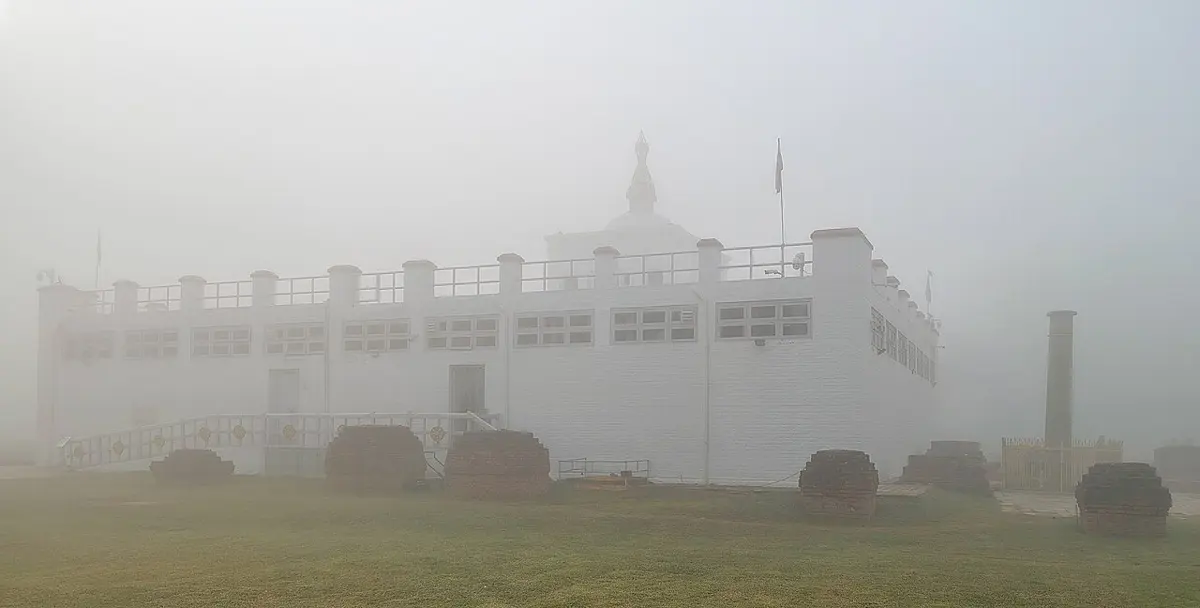
Another archaeologist, Julia Shaw, called that reading convincing but speculative. People in ancient India worshipped trees for many reasons, and a railing around a tree could have been for a tree spirit, not for a birth. Nobody can yet say whether this was the first shrine to the Buddha. What the post holes do show is that this patch of the Tarai was a holy place very early, and the man it is remembered for was one of the great askers of questions in human history.
He was not the only one. Here is the whole story in a few lines. Between about 800 and 200 BCE, in several parts of the world that hardly knew of one another, teachers began asking questions that the old rituals did not answer. What is a good life? What happens to us after death? Is there a self that lasts? What do we owe to strangers? On the Ganges plain the Buddha and Mahavira asked them, and so did the thinkers of the Upanishads. In China, Confucius asked how a person and a state should be set in order. In the small kingdoms of Israel and Judah, prophets told kings and priests that God wanted justice more than sacrifices. In Iran, Zarathustra had taught that every person chooses between good and evil, and in the Greek cities, men asked what the world is made of and how anyone can know anything. Their answers grew into Buddhism, Jainism, Hindu philosophy, Confucian and Daoist thought, Judaism and Greek philosophy, all still alive today, and many of them traveled far from home. Why they could is part of this story.
A plain full of teachers
By about 500 BCE the Ganges plain was a land of rice fields, kingdoms and new towns, where the Vedic priests and their sacrifices stood at the center of things. It was also a land full of people arguing.
The oldest Buddhist books, the Pali canon kept by the Buddhists of Sri Lanka and Southeast Asia, give a good picture of it. (Nepal’s Newar Buddhists and the Mahayana traditions keep their own books, in Sanskrit, with many of the same stories; in this chapter “the Buddhist books” means the Pali ones.) They tell of a small town called Kesamutta, of a people called the Kalamas, where wandering teachers came through one after another. The Kalamas complained to the Buddha that each teacher praised his own doctrine and attacked everyone else’s, so that they no longer knew whom to believe. His answer, as the books give it, was not “believe me”. He told them not to accept a teaching just because it was handed down, or in a scripture, or came from a line of teachers, or sounded logical, or because the teacher was respected. When they knew for themselves that something led to harm and suffering, they should give it up, and when they knew that it led to well-being, they should take it up.
Many of these teachers were श्रमण (śramaṇa), “strivers”, people who had left home and family to wander, beg for their food and search for freedom from suffering. The Buddhist books name six famous teachers of the Buddha’s day, with their followers, and one of them is a Jain ascetic, the man Jains call Mahavira.
The questioners were inside the Vedic tradition too. The बृहदारण्यक उपनिषद् (Bṛhadāraṇyaka Upaniṣad), one of the oldest of the Upanishads, has the sage याज्ञवल्क्य (Yājñavalkya) answering one challenger after another at the court of King Janaka of Mithila, among them a woman, गार्गी (Gārgī), who kept asking what lies beneath each answer; Nepal’s History tells the scene in Mithila. When another man asks याज्ञवल्क्य what becomes of a person after death, the sage leads him away from the crowd, saying this is not a question for the public. Alone, the Upanishad says, they talked about karma: that a person becomes good by good actions and bad by bad ones. Later the idea is said aloud. “According as he acts and according as he behaves, so will he be.”
That idea, karma, and with it rebirth, the belief that we are born again and again according to what we have done, was the ground on which all the teachers of the plain stood. They disagreed about almost everything built on it: whether there is a lasting soul, how a person gets free of the round of births, and what part the Vedic rituals had to play.
The man from Lumbini
The man born at Lumbini was Siddhartha Gautama, of the शाक्य (Śākya) people, whose town was Kapilavastu. When he lived is not known to within a century. The dates once given in most books are 563 to 483 BCE. Scholars who work it out from the Buddhist chronicles disagree, because the chronicles disagree, and many now put his death nearer 400 BCE. The books say he lived for eighty years, and most scholars place his life somewhere between the sixth and fourth centuries BCE.
What we know of his life comes from the Buddhist books, which were passed on by memory for several centuries before they were written down. In them he tells the story himself. He went forth while he was still young, with black hair, he says, though his mother and father wept and wished otherwise. Another book gives his age as twenty-nine. He studied with two teachers of meditation and left each of them, because what they taught did not lead where he wanted to go. Then he sat down to meditate at a place the books call Uruvela, where the town of Bodh Gaya in Bihar now stands. There, the books say, he understood what he had been looking for, and became the Buddha, “the one who woke up”.
His first teaching, given to five former companions in a deer park near Varanasi, at what is now Sarnath, is short enough to put in a paragraph. He said there are two dead ends: a life of pleasure, and a life of tormenting yourself. Between them lies a middle way. Then he named four truths. Life as we live it is full of suffering, from illness, old age and death, from losing what we love and being stuck with what we don’t. That suffering has a cause, which is craving, the thirst for pleasure and for going on. It can end, when the craving ends. And there is a path to that ending, with eight parts: right view, right purpose, right speech, right action, right livelihood, right effort, right mindfulness and right concentration.
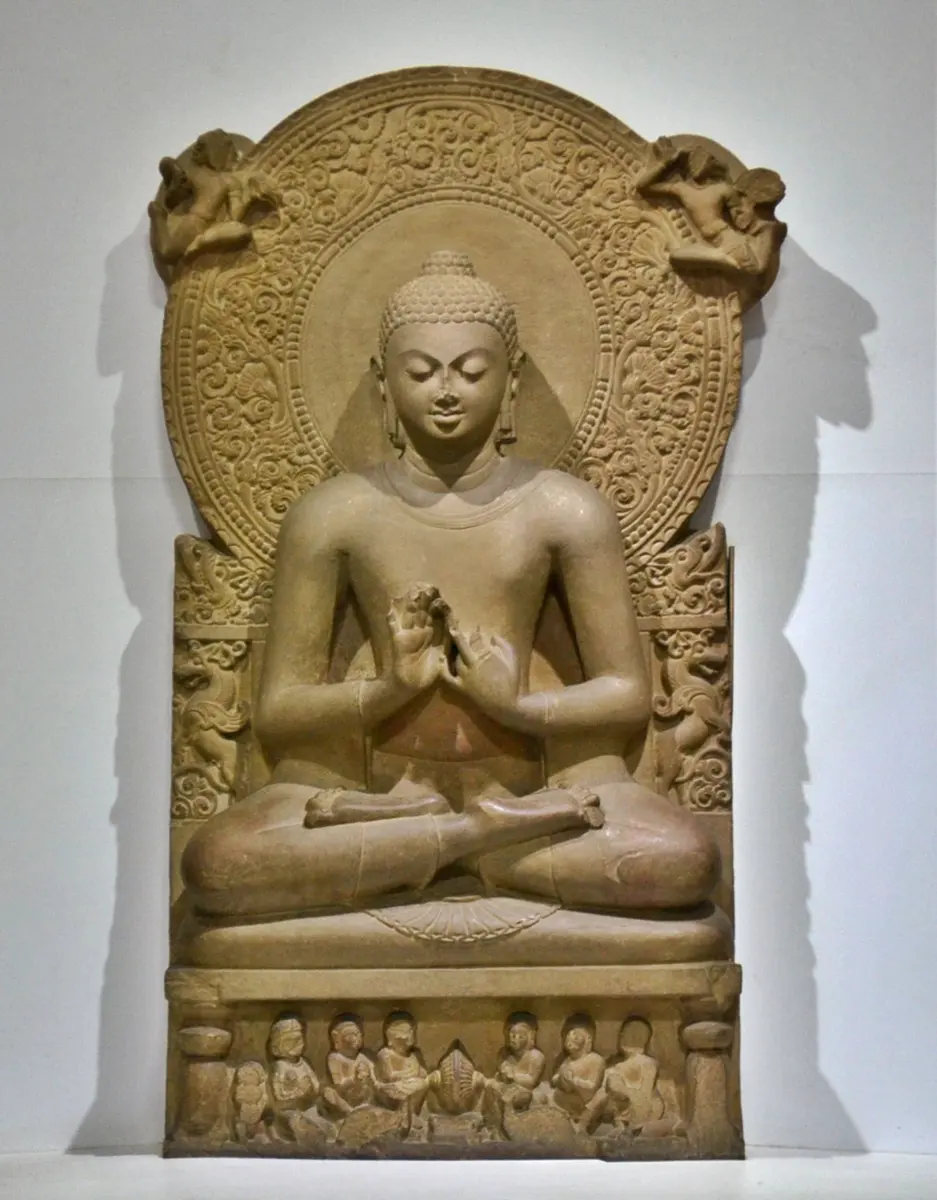
The Upanishads looked for a lasting self behind everything. The Buddha taught the same five listeners, the books say, that nothing in a person is permanent: body, feelings, perceptions, choices and consciousness all change, and of none of them can you say “this is my self”. Seeing that clearly, a person lets go and is freed. He also said that what counts in karma is the intention behind an act: “It is intention that I call deeds,” as another book gives it.
He did not stay in one place to teach. The books have him send his first followers out on the roads: “Wander forth … for the welfare and happiness of the people,” he tells them, and then, “Let not two go by one road.” His followers formed the सङ्घ (saṅgha), a community of monks who owned almost nothing, begged for their food and moved from place to place. Women joined too, though not at first. The books tell that his aunt, Mahapajapati Gotami, who had raised him after his mother died, asked three times to leave home and was refused. She shaved her head, put on the ochre robe and walked with other Shakya women to Vaishali, arriving with swollen feet, and the Buddha’s companion Ananda pleaded for her. The Buddha agreed, on condition that the nuns accept eight rules that put them under the monks: the first says that a nun of a hundred years must bow to a monk ordained that day.
He died at about eighty, at Kushinagar, in today’s Uttar Pradesh in India. His last words, as the books give them, were short. “Conditions fall apart. Persist with diligence.”
The great hero
Jains tell a different story of where their teaching began. For them, Mahavira was not a founder. He was the twenty-fourth and last तीर्थङ्कर (tīrthaṅkara), a “ford-maker” who crosses the river of rebirth and shows others the way over, in a line of teachers stretching far back in time. Scholars agree that he reformed a tradition that already existed: he is said to have added a fifth vow to the four taught by Parshva, the ford-maker before him.
He was born वर्धमान (Vardhamāna), the son of a Kshatriya family in the country around Vaishali, and was a contemporary of the Buddha. Mahavira, “great hero”, is a title. Jains place his life somewhat earlier than many scholars do, and the two main Jain traditions, दिगम्बर (Digambara) and श्वेताम्बर (Śvetāmbara), tell parts of it differently. The Kalpa Sutra, a श्वेताम्बर book, gives its outline: thirty years at home, more than twelve years as a wandering ascetic before he reached perfect knowledge, and about thirty more years of teaching, dying at seventy-two at Pava, in today’s Bihar.
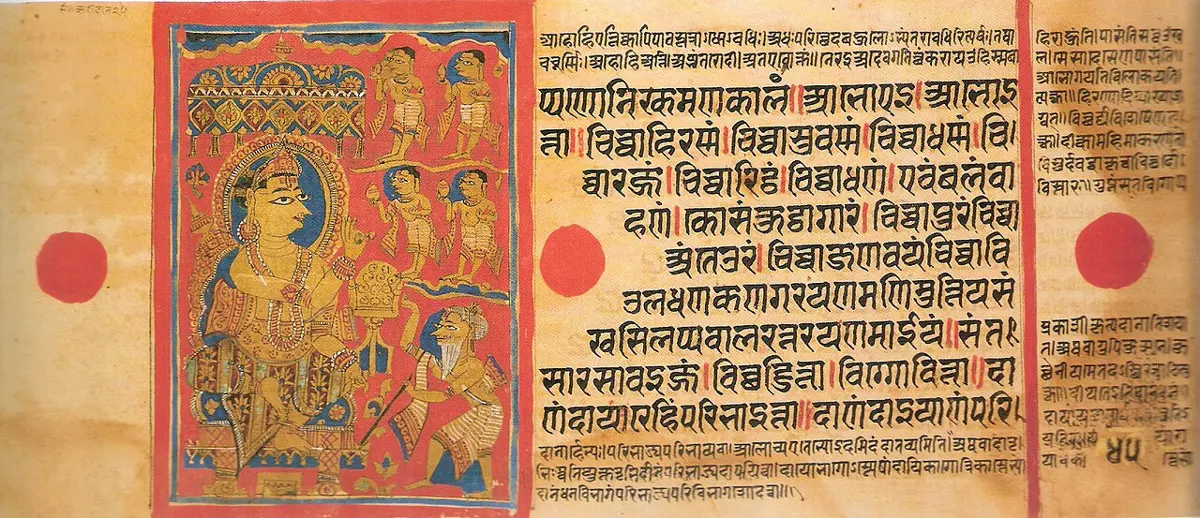
His wandering years were hard. The आचाराङ्ग (Ācārāṅga), another old श्वेताम्बर book, says that after a year and a month he gave up even his robe and went naked, and that in one rough country, लाढ (Lāḍha), the people set their dogs on him. Other monks there, it adds, carried sticks to keep the dogs off and were bitten anyway: “It is difficult to travel in Lāḍha.”
At the heart of what he taught are five vows: not to harm any living being, अहिंसा (ahiṃsā); to tell the truth; not to steal; to be chaste; and not to cling to possessions. Monks and nuns keep the vows completely, and lay Jains keep them as far as a working life allows.
The Buddhist books name Mahavira among the rival teachers of the day. The two shared the same land, the same idea of rebirth and the same hope of getting free of it, and a good deal of the same way of life.
Far to the east and west
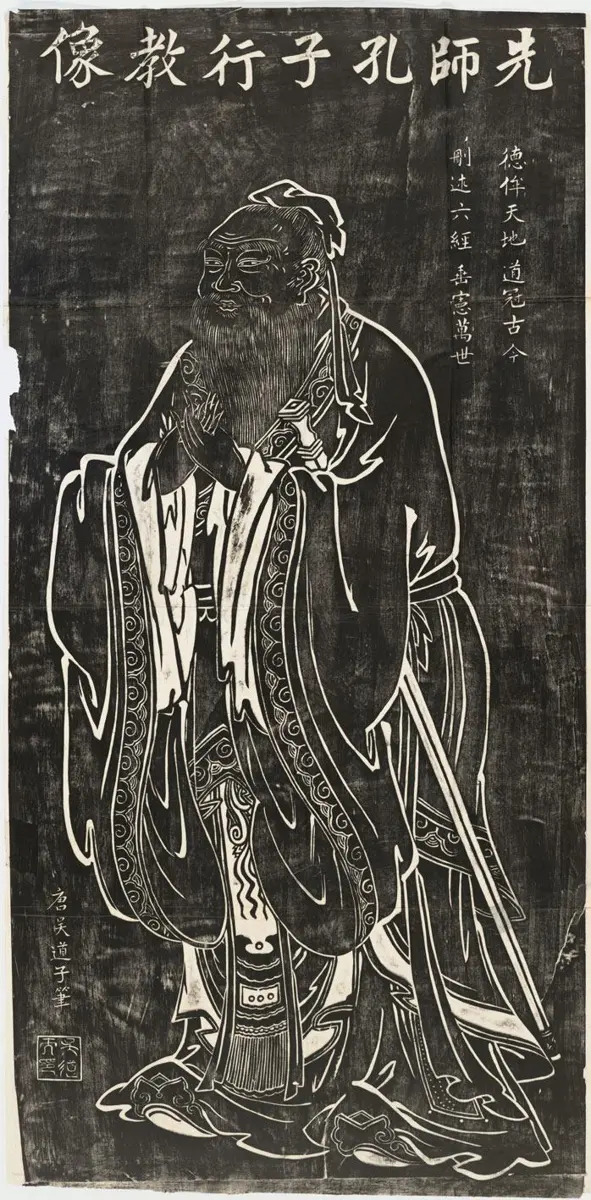
About the same time, more than three thousand kilometers to the east, a man the Chinese call Kongzi, Master Kong, and English calls Confucius was born in a small state in what is now Shandong. The date tradition gives is 551 BCE. He lived in a China split among quarreling states, long after the Zhou kings had lost real power. He worked for a while as a minor official, keeping accounts at a granary and records of grazing animals, by one early book’s account, traveled from state to state looking for a ruler who would take his advice, and in the end taught.
His sayings were gathered by his students and their students into a book called the Analects. He claimed nothing new for himself. “A transmitter and not a maker,” he called himself, a lover of the old ways. Yet he turned the old rules of ritual and good manners into a whole way of life, in which a person becomes good by practice, starting with respect for parents and family, and a ruler governs by example rather than by fear. Asked whether one word could guide a whole life, he answered: “What you do not want done to yourself, do not do to others.” And he was careful about the edges of what he knew. When a student asked him about serving the spirits of the dead, he said, “While you are not able to serve men, how can you serve their spirits?” And about death: “While you do not know life, how can you know about death?”
China’s other great tradition of the time, Daoism, looks back to a book called the Daodejing and to its supposed author, Laozi, the “Old Master”. Chinese tradition makes him an older contemporary of Confucius. Some modern scholars think he is a figure of legend.
Westward, beyond Persia, two small kingdoms stood on the eastern shore of the Mediterranean: Israel in the north and Judah in the south, with Jerusalem as its capital. There, men and women the Hebrew Bible calls prophets spoke in the name of their God. One of them was Amos, who spoke in the eighth century BCE, a herdsman, by his own account, from a village in Judah, who went north to speak at a royal shrine. His message was that the rich were selling the poor for a pair of sandals, and that God hated their feasts and offerings and would not listen to their songs. What God wanted, Amos said, was for justice to roll down like water and goodness like a stream that never dries. The priest of the shrine reported him to the king and told him to go home.
In 587 BCE the Babylonians destroyed Jerusalem and its temple and carried many of the people of Judah off to Babylonia. A letter among the words of the prophet Jeremiah tells the exiles to settle down there: to build houses, plant gardens, marry, and work for the good of the city they had been taken to. About a hundred clay tablets from a village in Babylonia called Al-Yahudu, “Judah town”, show them doing just that. They are ordinary business records from 572 to 477 BCE, contracts, rents, taxes, a marriage and a will, kept by families from Judah who farmed, paid their taxes and, in some cases, rose in the Babylonian service. Many of their names still carry the name of their God. Far from their temple, they kept their God and their sacred writings.
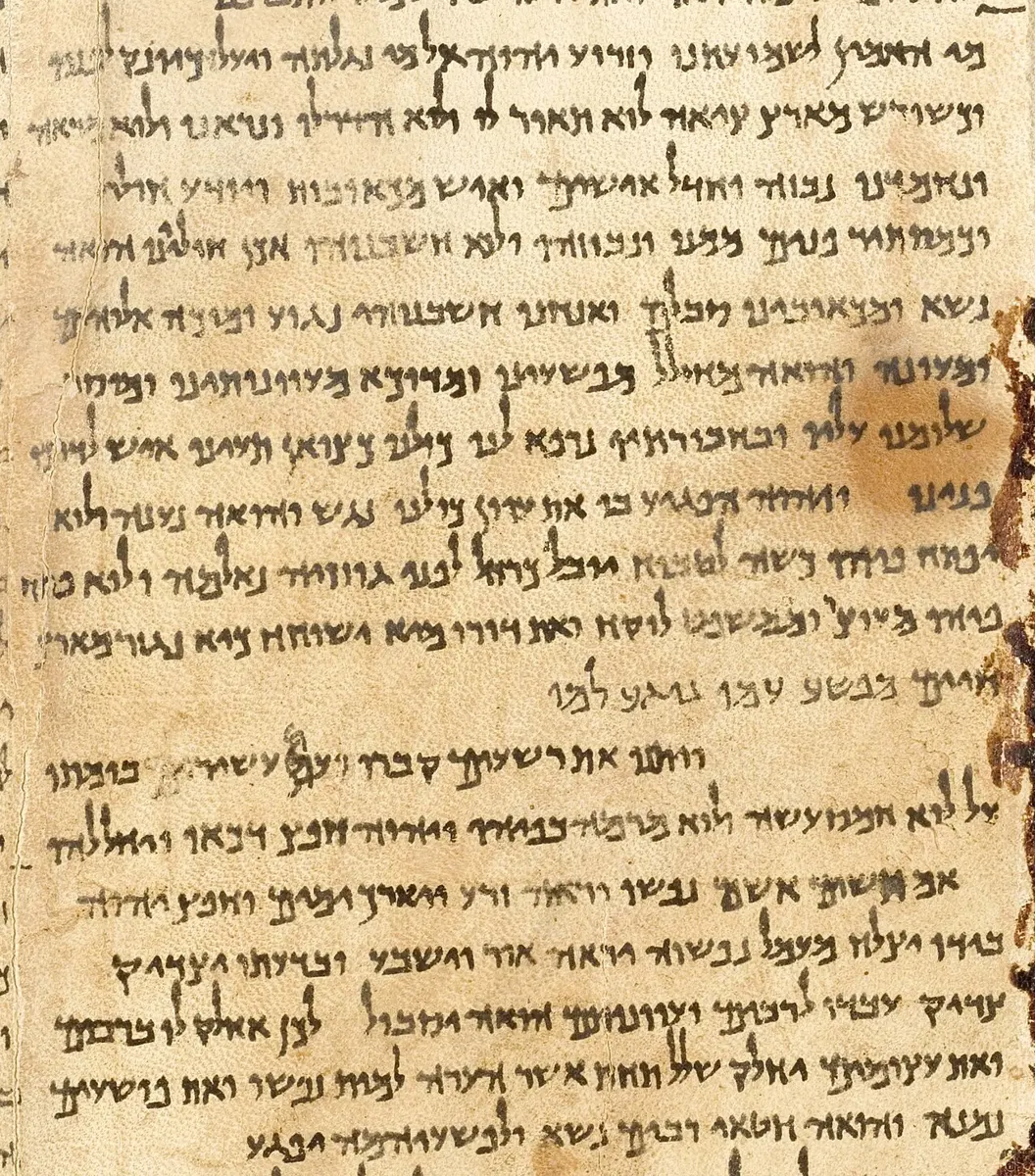
In Iran, the prophet Zarathustra, whom the Greeks called Zoroaster, had taught in hymns that still survive that the world is a struggle between good and evil and that each person must choose a side. When he lived is one of the most argued dates in the history of religion: scholars’ guesses run across a thousand years, from well before 1000 BCE to the sixth century BCE.
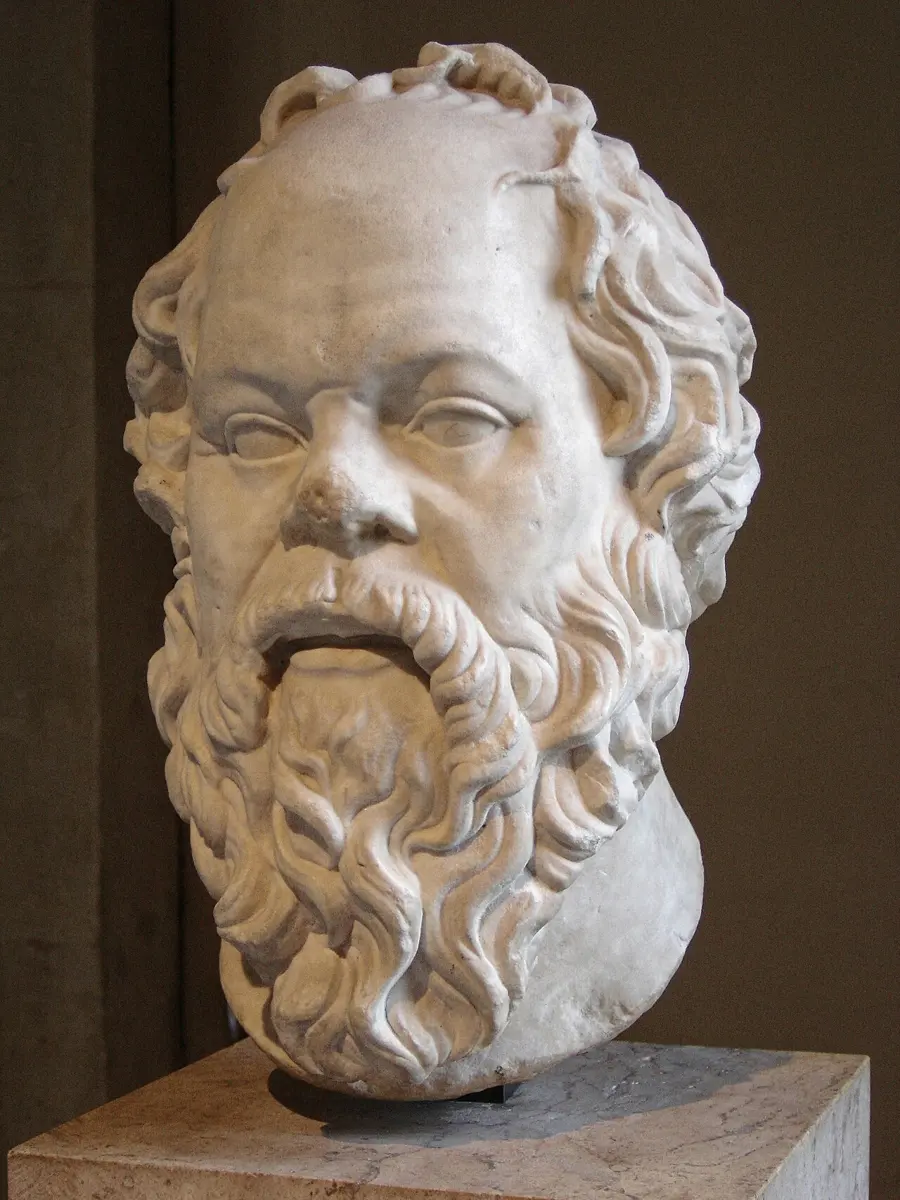
And in the Greek cities, around the Aegean Sea, the questions turned toward nature. Thales of Miletus, in the early 500s BCE, said that everything comes from water, which was wrong, but he looked for the answer in nature rather than in the gods, and that was new. A century and a half later, in Athens, Socrates asked his questions in the street. A friend had asked the oracle at Delphi whether anyone was wiser than Socrates, and the answer came back that no one was. Socrates, sure he knew nothing, set out to find someone wiser, and found that the people who thought they knew a great deal could not explain what they knew. He decided that he was wiser in one small way: he did not think he knew what he didn’t. In 399 BCE Athens tried him for corrupting the young and for not believing in the city’s gods, and put him to death with a cup of poison. At his trial, as his student Plato tells it, he said that “the unexamined life is not worth living”. He wrote nothing himself. The next chapter tells the story of Greece.
Was there an Axial Age?
In 1949 the German philosopher Karl Jaspers put all these teachers side by side. Confucius and Laozi in China, the Upanishads and the Buddha in India, Zarathustra in Iran, the prophets in Israel and Judah, and the philosophers of Greece, all in the six centuries between 800 and 200 BCE, and, as he thought, without any of these places knowing of the others. In that time, he wrote, people everywhere began to ask radical questions about themselves and the world. He called it the Achsenzeit, the Axial Age, the axis on which human history turned. He was not the first to notice the pattern, and writers in the 1700s and 1800s had pointed it out, but his name for it stuck.
The idea is still argued. A team of historians and social scientists tested it in 2018 against a large database of societies across Asia, Africa and Europe and found that the things Jaspers’s age was supposed to have brought, such as moral rules for rulers and religions that care how people behave, turned up in other places hundreds and sometimes thousands of years earlier: Egypt’s ideal of a just and orderly life is far older than 800 BCE. The places were not cut off from one another either. Their answer is that such ideas appear whenever societies grow large and complicated enough, at different times in different places. Whether the teachers in this chapter add up to one age is still argued.
What is easier to see is why some of these teachings traveled so far. A belief tied to one temple, one city or one people mostly stays where it began. The teachings in this chapter could be carried. Some were addressed to anyone, not only to one family or caste or city: the four truths speak of suffering, which everyone has. They were carried in words that could be learned by heart and later written, so they did not need a temple. The Buddha, the books say, refused two brahmin brothers who wanted to put his words into verse, and told his monks to learn them “using its own expressions”, though whether that meant the monks’ own ways of speaking or the Buddha’s own is still argued. They were carried by people whose way of life was to move, like the monks the Buddha sent out, each on a road of his own. And they could survive the loss of their home, as the families at Al-Yahudu showed. Confucius’s sayings traveled another way: a few centuries after his death, China’s Han emperors gave government posts to experts in the old classics that his followers taught. The kings who took up a teaching mattered too, and Chapter 11 follows one of them, Ashoka. His own words claim that his teaching had won people over as far as the Greek kingdoms, and in his reign, the Buddhists’ chronicle says, monks carried the Buddha’s teaching far beyond the Ganges plain.
So the questioners left the world something that outlasted every empire of their time: ways of asking how to live, what the self is, what we owe to others and how we can know anything, which millions still follow. Whether they add up to one Axial Age is argued. What is clearer is that the teachings that spread furthest were the ones a person could carry: spoken to anyone, kept in words, taken along the roads, and able to live far from home.
Meanwhile, in Nepal: the Shakyas’ own country, their town of Kapilavastu, argued over on both sides of today’s border, and the pillar at Lumbini are in Kapilavastu and Lumbini, in Nepal’s History, for the Curious.
Found a mistake? Please tell us.