
On 15 December 1960, Nepal’s first elected prime minister was at a meeting of young people in Kathmandu. B. P. Koirala and several of his ministers had come to a convention of a youth group of his party, the Nepali Congress. There the army arrested them. They were driven not to the palace but to the government offices at Singha Durbar, and there they were held. That same day King Mahendra announced over the radio that he had dismissed the government and dissolved parliament, and that he would now rule the country himself.
Accounts of that day differ in their details, such as which youth group was meeting and what vehicle the leaders were driven off in. On the main point they all agree. In a single day the parliament Nepalis had voted for in 1959 was gone, and its leaders were prisoners. B. P. Koirala was to spend the next eight years in jail.
Historians usually call what the king did a royal coup, a seizure of power by the king himself; this chapter calls it simply the takeover. The king spoke of it as a step he had taken, and in Nepali it is still often called the शाही कदम (shāhī kadam), the royal step.
What came next lasted thirty years. The king abolished political parties and put in their place a system of councils, called panchayats, rising from the villages up to a national assembly, with the king above them all. This chapter is about how that happened, why the king said he did it, who served the new system and who went to prison for opposing it, and what it built and what it forbade, up to King Mahendra’s death in 1972. How it ended belongs to a later chapter.
What the king did, and why he said he did it
The constitution the king had given in 1959 let him, under its Article 55, take over all of parliament’s powers if he judged that a grave emergency existed. Only he could judge it. On 15 December he used that article. His critics say he used it at will, for a crisis he had helped to make; his supporters, that the crisis was real.
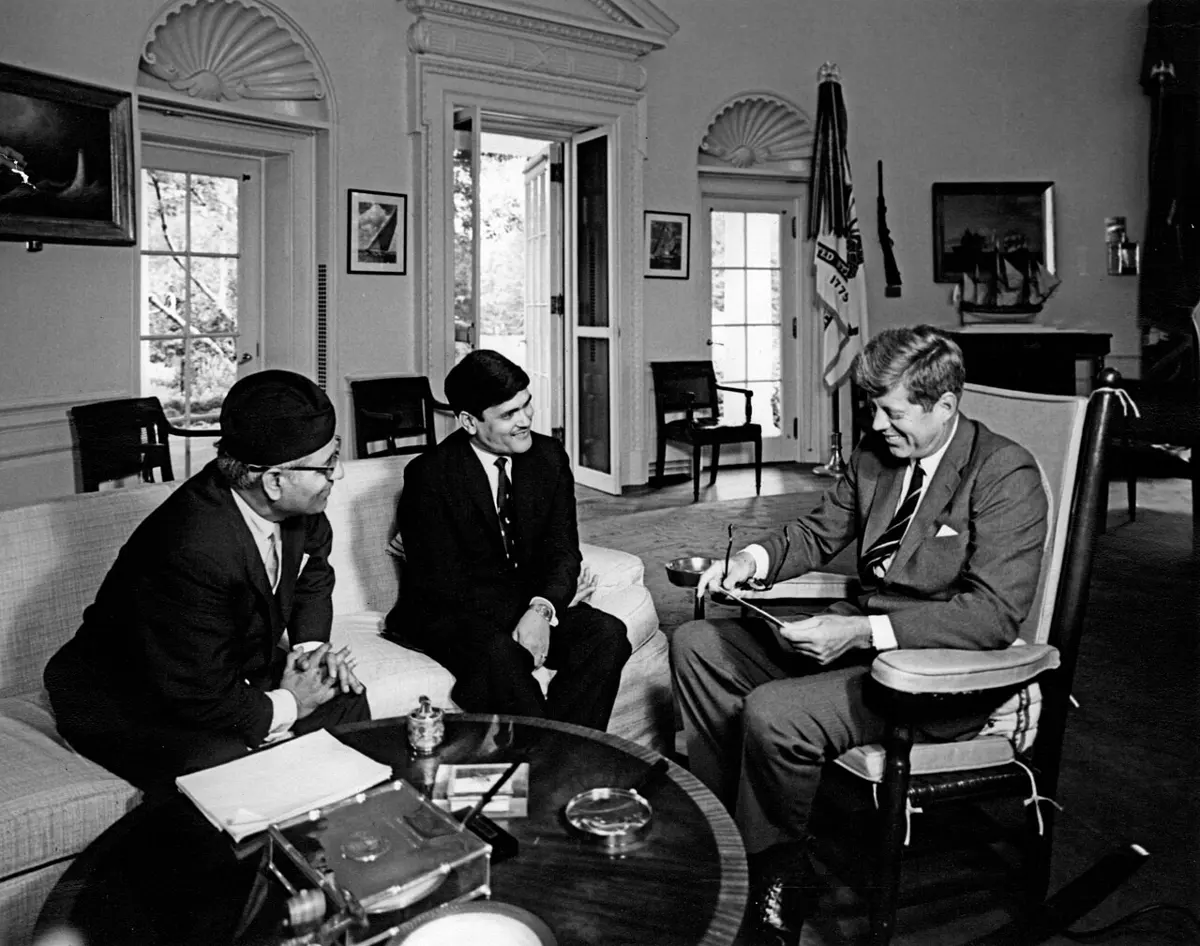
His reasons were in the royal proclamation issued that day. The government, it said, had used its power to serve its own party instead of the country. It had wrecked the working of the administration while claiming to make it faster. It had been unable to keep law and order, and had encouraged “anti-national elements” until the country’s unity was in danger. And it had pushed economic measures based not on study of the facts, in the proclamation’s words, but “on purely theoretical principles”. Five days later the king told the American ambassador, in a private meeting, that he had acted entirely on his own, that he had planned it for some time, that the ministers had been corrupt and had helped the communists, and that he still believed in democracy, which he himself had brought to Nepal.
The Congress and its supporters saw it very differently. B. P.’s government had a two-thirds majority, its land and tax laws were hurting the old landed families, and the trouble in Gorkha that autumn was, in their eyes, stirred up by the government’s enemies so the king would have an excuse. The parties came to call 15 December a black day. Others, who had wanted the Congress gone, lit lamps in the king’s support. The American ambassador, writing to Washington, thought the king had acted less over corruption or communism than from fear for his own position. Which of these comes nearest the truth is still argued, and nobody but the king could say for certain what he intended.
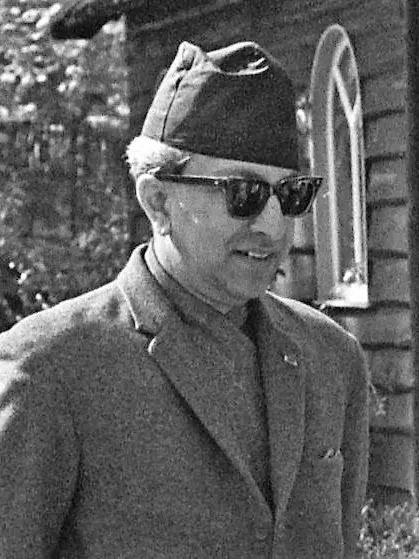
The next steps came in order. On 26 December the king named a council of ministers, with himself as its chairman. Its two leading members were Tulsi Giri and Bishwabandhu Thapa, until that month two of B. P.’s closest colleagues. On 5 January 1961 the parties were banned, “for now”, the king said, and he announced the new system: democracy imposed from the top down had failed, so it would now be built “from the bottom up”. That April, in his new year’s message, he said the political system would change for the better in five to seven years, once democracy had taken root. On 16 December 1962 he gave Nepal a new constitution to set the panchayats in law.
How the Panchayat worked
The plan was a ladder of councils. In each village or group of villages, a village assembly chose a village panchayat; the towns had town panchayats. These sent members to a district panchayat in each of 75 districts, the districts to assemblies in 14 zones, and the zones to the National Panchayat in Kathmandu, Nepal’s parliament from now on. Beside the ladder stood the class organizations, the government’s own associations for peasants, workers, women, young people, elders and former soldiers, which also sent members up. University graduates elected four members of their own, and the king named about one in eight himself. Of its 125 or so members, about 90 came up the ladder.
At the top stood the king. The constitution called Nepal “an independent, indivisible and sovereign monarchical Hindu State”, said that its sovereignty was “vested in His Majesty”, and that all powers, “executive, legislative and judicial”, came from him. He commanded the army, chose the judges of the Supreme Court and could change the constitution. Nepali in the Devanagari script was its national language. Its stated aim was a society “democratic, just, dynamic and free from exploitation”, with the interests of the different classes brought into harmony.
The Panchayat’s defenders made a real argument for it, and they believed it. Party politics, they said, had been brought in from abroad and served only the parties’ own interests; Nepal had panchayats, councils of its own, older than any party, and should build on them. A system that began in the village, where most Nepalis lived, would let more people take part than any parliament in Kathmandu. One of its defenders called it “a positive answer to Nepal’s long quest for a suitable form of self-expression”: a democracy with its roots in Nepal’s own soil.
Its critics answered that the ladder looked democratic and wasn’t. A seat in the National Panchayat could be won with the votes of a small group of people in the tiers below. The assembly couldn’t criticize the king’s government, debate the principles of the partyless system, or bring in a budget or pass a law the king didn’t approve, and the real decisions came from the palace. The first elections to the National Panchayat were held in 1963. The parties refused to take part, yet about a third of the members chosen had links to the Nepali Congress, which is a sign of how many people the old parties still counted. In 1967 the constitution was changed to call the system “partyless democratic”, and to say plainly that no political party could be formed. That same year the king launched the Back to the Village National Campaign, गाउँ फर्क (gāũ pharka, “go back to the village”): the Panchayat’s workers were to leave the towns and go and serve in the villages. Its supporters saw it as the Panchayat’s idea in action; one Nepali political scientist has written that it was meant to pull the Panchayat’s workers away from towns full of party politics. By most accounts it achieved little.
Prison, a bomb and a war
Some Congress leaders escaped arrest. One of them, Subarna Shumsher, led an armed campaign against the new government from across the Indian border. In February 1962 they took Bharatpur, in Chitwan, and held it for less than two days. The army came from Kathmandu and took it back, and their commander, Jagat Prakash Jung Shah, was captured, taken to Kathmandu, sent back and shot. Many rebels, and people thought to have helped them, were killed, a lot of them after they had been caught. Nobody has a firm count: the tallies run from about twenty to around fifty.
In January 1962, at Janakpur, a young man of nineteen named Durgananda Jha threw a grenade at the king’s car as it left the Janaki temple. The king was unhurt; one account says it missed him by a few inches. Durgananda was caught, and the legal code was amended so that he could be put to death, early in 1964. Two others in the plot were sentenced to life in prison. Many Nepalis remember him as a martyr, and in 2016, more than fifty years after his death, the government officially declared him one.
Then, in October 1962, China and India went to war over their Himalayan border, and the Chinese army won quickly. India suddenly needed a friendly king in Kathmandu more than it needed rebels on his border. It stopped helping the Congress fighters, and Subarna, with his followers drifting away and the Indian prime minister Nehru asking him to stop, called off the armed campaign. The king had held. The Cold War was all around Nepal by then, and the takeover had been watched closely in Washington, Moscow, Beijing and Delhi.
B. P. Koirala spent his eight years in a jail at Sundarijal, at the edge of the Valley. Two months after his arrest he began a prison diary, written with his wife, Sushila, in mind, about the purpose of the revolution, the country’s problems, and language, religion, nature and books. He wrote stories there too, among them one about a young man who throws a bomb and is hanged, written in the days after he heard of Durgananda’s death. When he came out he carried his manuscripts with him.
Not everyone opposed the king, and the people who served the Panchayat had their own reasons. Tulsi Giri and Bishwabandhu Thapa, the Congress men who joined the king in December 1960, said later that it was they who urged him to ban all the parties, not only the Congress. Thapa remembered telling the king that if he was to lead, there should be no other leader in the country, and that without the king the system would be lifeless. For the rest of his long life Giri stayed a firm supporter of a king who ruled. Some of the communists, the group led by Keshar Jang Rayamajhi, were ready to accept the king’s rule too, while others went underground. And with about 4,000 village panchayats of nine members each, tens of thousands of ordinary Nepalis served the system in their own villages.
The king could be hard on those who served him as well. Giri left the government in 1965, and in 1968 he spent three months in prison. In October that year B. P. Koirala was set free. He went to India, and the Congress split in three: B. P.’s wing called for a revolution against the Panchayat, Subarna’s wanted to work with the king, and a third hoped to change the system from inside.
One king, one dress, one language
The Panchayat had an idea of who a Nepali was, and it taught it. Its slogan, in Nepali, was एक भाषा, एक भेष, एक देश (ek bhāṣā, ek bheṣ, ek deś), “one language, one dress, one country”, or in another version “one king, one dress, one language”; the words varied from one telling to the next. It is traced to a line the poet Balkrishna Sama had written earlier, “Our king, our country; our language, our dress.” The king was Hindu and the head of a Hindu kingdom. The language was Nepali. The dress was the दौरा सुरुवाल (daurā suruwāl), the long-skirted shirt and tight trousers of the hill men, worn now as the national dress. Its Nepali textbooks, called Mahendra Mala, were full of stories of brave Nepalis, and the nation they taught was built round the monarchy.
For many Nepalis, this was a pride worth having: a small country between two giants needed something to hold it together. For many others it left them out. Nepal’s peoples speak well over a hundred languages, and the Panchayat’s Nepal had room for one. In 1965 Radio Nepal stopped its news in Newar and in Hindi. Children who spoke Maithili, Tamang or Limbu at home were taught in Nepali, as the commission of 1956 had decided, and found little of their own people in the books.
Some of the Panchayat’s laws went the other way. In 1963 a new legal code, the Muluki Ain, replaced the code of 1854, which had sorted every Nepali into a caste and punished the same crime differently for each. Under the new code, punishment depended on the crime, not on the caste of the person who committed it, and Nepalis were equal before the law. But the code didn’t forbid caste discrimination in daily life; untouchability isn’t mentioned in it. That same year the palace said plainly that “the caste system itself has not been abolished”. The new code also forbade anyone to convert a person from one religion to another.
बिकास: roads, plans and land
The word the Panchayat used most was बिकास (bikās), development. Here the king and his ministers had a real case. Under the Panchayat, Nepal ran three more development plans, built roads and factories, and opened schools and hospitals.
The roads tell the story of the Cold War too. In 1961, on the king’s visit to Beijing, Nepal agreed with China to build a road from Kathmandu to Kodari, on the Tibetan border. India and the Western powers were alarmed: a road to China, they feared, would bring communism down it. The king answered that he was only turning an old trading trail into a modern road, and, in a line remembered ever since, that communism wouldn’t come to Nepal in a taxi. Chinese workers built the road, about 114 kilometers, starting in 1963. Then came the great road along the foot of the hills, the East-West Highway, later named after Mahendra: India built most of it, the Soviet Union one section, and China, which had agreed to build another, gave way and built the road from Kathmandu to Pokhara instead. One of the king’s officials later said Mahendra set the communist and the free-market countries competing to help Nepal on purpose.
The new road and the end of malaria in the Tarai opened the plains to settlers from the hills, a change so large it has a chapter of its own, the next one.
The land reform was the hardest test. The laws B. P.’s government had passed against बिर्ता (birta), the tax-free land of favored families, and against the old hill rajas’ rule were carried out after the takeover, and the large Rana estates were taken. Then, in 1964, came the Land Reform Act. It put a ceiling on how much land one family could own, about 17 hectares in the Tarai, 4 in the hills and less than 3 in the Kathmandu Valley; land above the ceiling was to go to the people who farmed it. Tenants who had farmed a field for a season gained the right to keep farming it, and rents were limited to half the main crop.
Then it ran into the landowners. Wolf Ladejinsky, a Ford Foundation adviser who had urged the king to act, wrote to him in 1963 that the draft was being watered down: the tenant’s agreed share, two-thirds of the crop, was about to become half. Between the first talk of reform and the law, many families quietly divided their land among relatives, so that little was left above the ceiling. By one count, only about one and a half percent of the land that could have been taken was taken. Most accounts call the reform a failure. One recent study of Dhanusha argues that it did more than that: it showed the landlords that the government in Kathmandu could reach them, and over the years many large owners sold land, mostly to middle farmers.
So there are two honest pictures of these years, and both are true. In one, a country with almost no roads, schools or hospitals in 1951 got many of them, and Nepal was steered between India, China and the Cold War powers without being swallowed by any of them. In the other, parties were banned, elected leaders and many others went to prison, a young man was put to death, and one idea of a Nepali, Hindu, Nepali-speaking and loyal to the king, was taught as the only one. People who lived through the Panchayat still weigh the two differently, often by which picture their own family was in.
King Mahendra died on 31 January 1972. His son, Birendra, became king, and the Panchayat went on. The five to seven years the king had spoken of in 1961 had come and gone.
The plain lesson of these years is that the Panchayat didn’t simply happen to Nepal. A king used a power his own constitution gave him, and many Nepalis helped him build what followed, some because they believed in it and some for what it offered them. It built a good deal and forbade a good deal, and most of its arguments, about one nation or many peoples, about development or freedom first, are still argued today.
Meanwhile, in the world: the Cold War divided Asia. War came to Korea in 1950, China and India fought over their border in 1962, and by the late 1960s the war in Vietnam was at its height. The United States, the Soviet Union, China and India all gave Nepal aid, each hoping to keep it from leaning towards the others.
Found a mistake? Please tell us.