
Eight years after he was crowned, the king who ruled the Ganga plain sent his army south-east, into the country of the Kalingas, on the coast of what is now Odisha in India. We know what happened there because the king himself said so, and had it cut into rock. A hundred and fifty thousand people were carried off, he says. A hundred thousand were killed, and many times that number died. Then the stone says something you would not expect from a conqueror’s own pen. He is sorry.
This, the inscription goes on, is the regret of the Beloved of the Gods for conquering Kalinga. Killing, death and carrying people away are painful to him. What weighs on him even more is who suffered: priests and wandering ascetics and ordinary householders, people who obeyed their mothers and fathers, respected their elders and treated their friends, relatives, slaves and servants decently. They were hurt or killed, or lost the people they loved. Even a hundredth or a thousandth part of that suffering, the king says, would now seem terrible to him. From now on the only conquest worth making is a conquest by धम्म (dhamma), the right way to live.
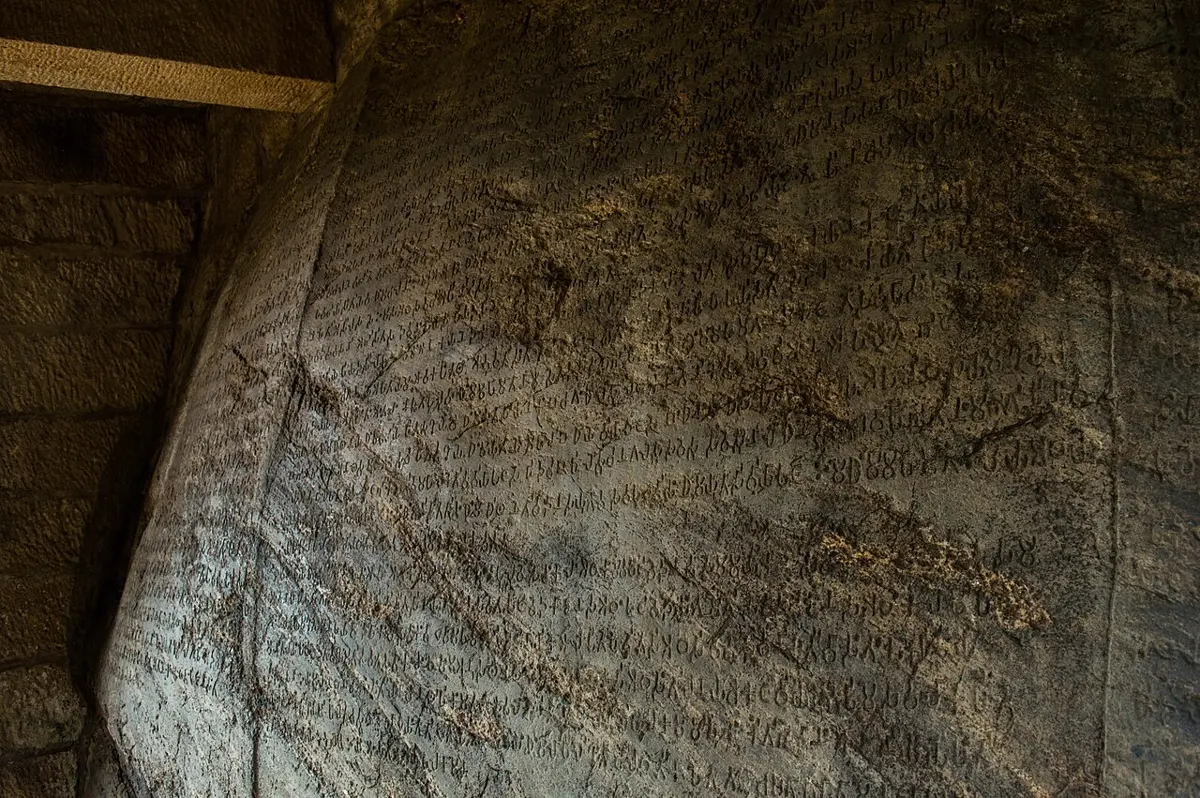
The king was Ashoka. Here is his whole story in a few lines. He was the third ruler of the Maurya family, whose empire, ruled from Pataliputra, today’s Patna, reached from Afghanistan to the south of India and lasted about 140 years. His grandfather Chandragupta had founded it, a few years after Alexander’s army turned back in the Punjab. Ashoka reigned for more than thirty-five years, and the war in Kalinga came around 260 BCE. In the years around it he became a Buddhist lay follower, and for the rest of his reign he sent messages to his people, cut into rocks and into tall, polished stone pillars from Afghanistan to the south of India, telling them how to live: be kind to animals, obey your parents, respect every sect, give generously. Two of his pillars with his words on them stand in Nepal’s Tarai. After him the empire broke apart and his script was forgotten, until nobody alive could read a word he had written. Nearly two centuries ago a scholar in Calcutta worked out the letters, and the emperor spoke again. Ever since, people have argued over what sort of man was speaking: a ruler with a troubled conscience, a ruler who knew how to tell his own story, or both.
A grandfather’s empire
Ashoka inherited a very large state, and the people who described it best were outsiders. Chandragupta had fought Seleucus, the Greek general who held Alexander’s lands in the east, and then made peace with him, giving him five hundred war elephants. Seleucus sent an envoy to Chandragupta’s court at Pataliputra, a Greek named Megasthenes, who wrote a book about India. The book itself is lost. What survives are passages that later Greek and Roman writers copied into their own works, so Megasthenes reaches us in pieces, chosen by other people.
The pieces are vivid all the same. Pataliputra, he wrote, stood where another great river, the Erannoboas, joins the Ganga, and stretched about eighty Greek stades along the river and fifteen across. A ditch ran all round it, and its wall had 570 towers and 64 gates. He divided the people of India into seven classes: philosophers, farmers, herdsmen and hunters, craftsmen and traders, soldiers, inspectors who watched everything and reported to the king, and the king’s councillors. Farmers, he said, were so respected that an army fighting nearby would leave a man plowing his field alone. He also said that no Indian was a slave. That one is plainly wrong, or describes something we can no longer make out, since Ashoka’s own words about Kalinga, a generation later, list slaves and servants among its people.
There is also a famous Indian handbook of government, the अर्थशास्त्र (Arthaśāstra), the “science of wealth and power”. It tells a king how to collect taxes, run a treasury, fight wars and keep spies, some of them disguised as wandering monks and ascetics, to test the loyalty of his own officials. It is said to be the work of कौटिल्य (Kauṭilya), whom tradition makes the same man as चाणक्य (Cāṇakya), the clever minister who helped Chandragupta to the throne. The book was lost for centuries and printed again only about a century ago, and when it was written is now one of the big arguments about early India. Many have taken it as a picture of the Maurya state itself. Patrick Olivelle, who translated it into English, dates its first version instead to some four hundred years after Chandragupta, reworked by later hands for a long while after, and finds that nothing earlier than a play written centuries later makes कौटिल्य and चाणक्य one man. Others still hold to the old view. So the Arthashastra shows how some Indians thought a kingdom should be run, but nobody can say for sure that it shows Ashoka’s.
Of Ashoka’s own early life we know almost nothing true. The Buddhist chronicle of Sri Lanka says that Ashoka killed ninety-nine of his brothers to take the throne, and that he was later called धम्मासोक (Dhammāsoka), Ashoka of the Dhamma, for his goodness. These are stories written down centuries later, by monks. Oddly, they never mention Kalinga, the one war Ashoka himself talks about. His own stones, for their part, never mention a single murdered brother.
A king who wrote to his people
Ashoka almost never uses his name. He calls himself देवानंपिय (devānaṃpiya), “Beloved of the Gods”, and Piyadasi, “the one who looks kindly”. His messages were cut on big rocks near roads and towns, in a set of fourteen that he says he had written “short, medium or at full length”, because not every message suited every place, and on pillars, single shafts of polished sandstone, the tallest more than twelve meters, some topped with a carved animal. The set of fourteen is found from Girnar in Gujarat to Kalsi in the hills near Dehradun and Dhauli in Odisha. In the north-west they were written in another script, Kharosthi, and near Kandahar, in today’s Afghanistan, in Greek and Aramaic, the languages people there read. Most are in Prakrit, the everyday speech of the time, which varied from place to place, so that in the east a king, राजा, came out as लाजा. They were meant to be heard as well as seen: officials were told to read some of them aloud to gatherings on set days.
What did he tell people? A good deal of it is about animals. Once, the first rock edict says, many hundreds of thousands of animals were killed every day in the king’s kitchen for curry. Now only three were: two peacocks and a deer, and the deer not always. Soon even those three would be spared. A pillar edict of his twenty-sixth year lists the creatures nobody may kill: parrots, mynas, wild geese, bats, queen ants, tortoises, porcupines, the rhinoceros, and every four-legged animal that is neither useful nor eaten. Nobody was to burn a forest for no reason, or to kill the creatures in it. Another edict says he set up medical care for people and for cattle, had healing plants brought and planted where they did not grow, and had wells dug and trees planted along the roads for the use of animals and people.
A good deal is about how people should treat each other: obedience to parents and elders, kindness to slaves and servants, generosity to priests and ascetics, telling the truth. He appointed a new kind of officer, the धम्म महामात्र (dhamma mahāmātra), to travel about and see that it was done. One edict is about religion, and it reads as fresh today as it did then. The king honors all sects, it says, ascetics and householders alike, but what he values most is that the heart of every sect should grow. The root of that is restraint in speech: not praising your own sect and running down others for no reason. Whoever praises his own sect and blames the rest, out of devotion to his own, only harms it. So people of different beliefs should listen to each other’s teachings.
He was, all the same, a Buddhist, and said so. In one message he tells the community of monks of his faith in the Buddha and names seven passages of the teaching he wants monks, nuns and lay people to study. In his tenth year he went to the place where the Buddha had woken to the truth, today’s Bodh Gaya. On pillars at Sarnath, Sanchi and Kaushambi he ordered that monks and nuns who split the community be thrown out of it. Yet when the Greek version at Kandahar puts धम्म into Greek, it chooses a word that means piety or reverence, and says nothing about the Buddha’s teaching at all.
He also wanted his dhamma to travel. The edict on Kalinga claims that the “conquest by dhamma” had already been won among his neighbors and far beyond: among the Cholas and Pandyas in the far south, as far as Tamraparni, which may be Sri Lanka, and among five Greek kings, whom it names. Antiochus ruled Syria, Ptolemy Egypt, Antigonus Macedonia, Magas Cyrene in North Africa, and an Alexander one of the Greek kingdoms. It speaks of his envoys, and says that even people his envoys never reached heard of his dhamma and followed it. It doesn’t say what the envoys carried, or what the Greek kings made of them.
Buddhists remember a different kind of sending. The Sri Lankan chronicle says that in Ashoka’s reign, after a great council of monks at Pataliputra, the elder who led it, Moggaliputta Tissa, sent monks out to nine lands: to Kashmir and Gandhara, to the west and the south, to Suvarnabhumi, “the land of gold”, somewhere to the east, to Sri Lanka, led by Mahinda, whom the chronicle calls Ashoka’s son, and to the “Himalaya country”, led by a monk named Majjhima. Ashoka’s own stones never mention Mahinda or the council. But in one of the stupas at Sanchi, archaeologists found an urn of ashes whose two lids name the relics inside as those of “the good man Majjhima” and of Kassapagotta, “the teacher of the Himalaya”, whom another chronicle makes Majjhima’s companion. Which part of the mountains they taught in, nobody knows.
Two pillars in the Tarai
Ashoka came to what is now Nepal himself. At Lumbini, in Rupandehi, his pillar says that twenty years after he was crowned he came and worshipped there because the Buddha was born there, set up the pillar, and cut the village’s tax. It is one of his shortest messages, and the easiest place to see his script up close.
Each Brahmi sign is a whole syllable, a consonant with its vowel or a vowel on its own, much as in Devanagari, which grew out of Brahmi over more than a thousand years, its letters changing shape little by little. Nepal’s History tells that pillar’s story, from its digging-out to the words that are still argued over.
About twenty kilometers to the north-west, in Kapilvastu district, beside an old tank called Nigali Sagar near the village of Niglihawa, lie the two broken halves of another of his pillars. The local name for it was the smoking pipe of Bhimsen, the strong man of the Mahabharata. The lower half carries four lines of Ashoka’s Brahmi. The first two are clear. Fourteen years after he was crowned, they say, he enlarged the stupa of the Buddha कोनाकमन (Konākamana) to twice its size. The beginnings of the last two lines are broken away, and what is missing has been filled in by scholars from the Lumbini pillar. With those words restored, they say that twenty years after his crowning he came himself and worshipped, and set up a stone pillar.
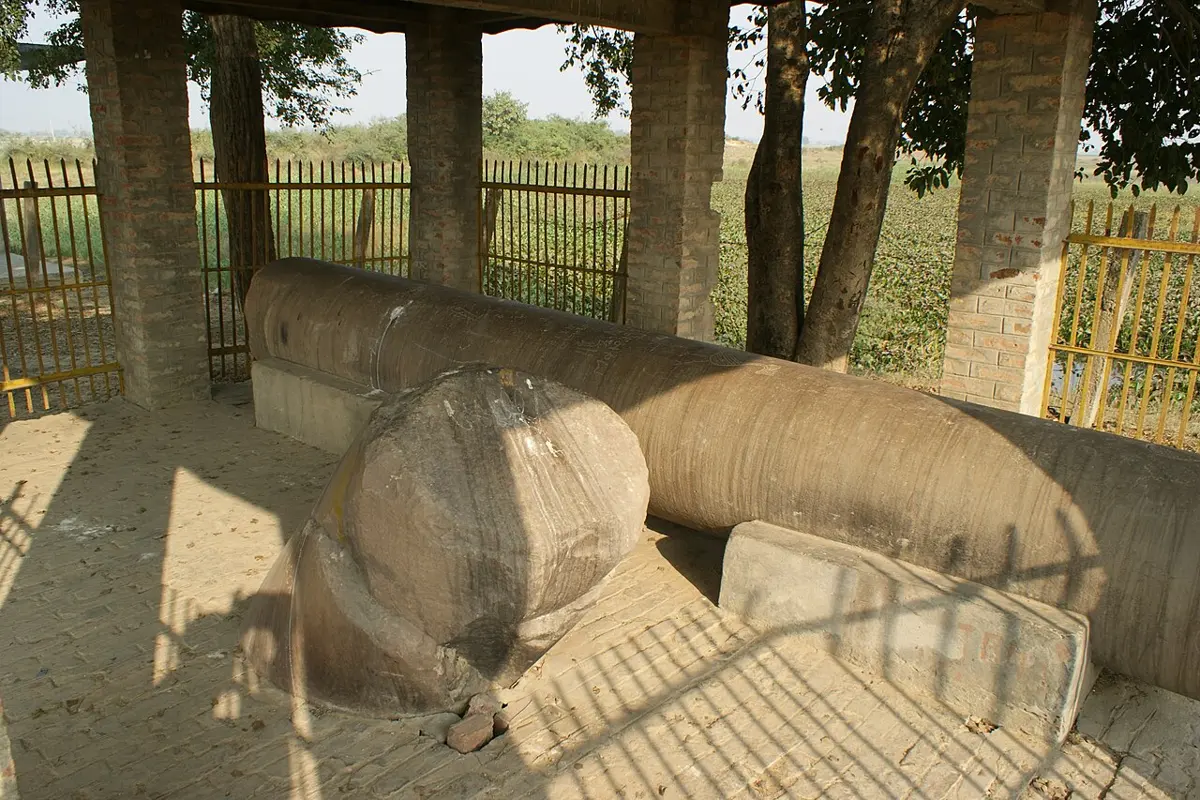
कोनाकमन was not Gautama. In Buddhist tradition he was one of the Buddhas of earlier ages, long before Siddhartha. So the pillar shows that, by Ashoka’s time, Buddhists already honored Buddhas of the past, and had a stupa for one of them in the Tarai big enough for an emperor to double. The Chinese pilgrim Xuanzang, who came this way more than eight hundred years later, saw the pillar standing with a lion on top, in front of a stupa holding the relics of कोनाकमन. That stupa has never been found. The pillar collected other visitors’ words too. One line, cut about seven hundred years ago, wishes long victory to Ripu Malla, a king of the Khas kingdom of Sinja, in western Nepal.
Ashoka’s own words put him in the Tarai and nowhere else in Nepal. The later chronicles of the Kathmandu Valley say much more: that he came to the Valley with his daughter Charumati, who married there and built the monastery at Chabahil. That story, and why it is only a story so far, is in Nepal’s History, in Gopal, Mahishpal and the Kirat Kings.
Conscience or good publicity?
The regret over Kalinga is the most famous thing Ashoka ever said, and the most argued over. Where it was cut raises a puzzle. The full set of rock messages, regret and all, was put up at Girnar, Kalsi and in the north-west. But at Dhauli and Jaugada, the two sites inside Kalinga itself, the edict about the war is missing. In its place are two messages found nowhere else, addressed to the officials who ran the conquered land. “All men are my children,” the first begins, and the king wants for them every happiness in this world and the next, as he wants for his own children. He scolds the judges: one man is let out of prison by chance while many others go on suffering. They must be fair, and avoid envy, anger, cruelty, haste, laziness and tiredness. The second message turns to the peoples beyond his borders, who might wonder what he wants of them. They should not be afraid of him, he says, but trust him, and he will forgive what can be forgiven.
So the people of Kalinga were not shown the king’s regret for what was done to them. They were shown promises of fair treatment. And the edict of regret itself, where it does appear, has a hard edge. In the same breath it tells the forest peoples inside his empire that, sorry as he is, he still has the power to punish them, so that they may be ashamed and not be killed. He never gave Kalinga back. He kept the death penalty too, though a pillar edict gives prisoners condemned to death three days before execution, for their relatives to plead for them, or for them to prepare for the next world.
Historians read all this in different ways. Romila Thapar, whose first book, on Ashoka, put the modern study of him on firm ground, argued that his dhamma was not simply Buddhism but a general ethic, offered to every sect in a huge and mixed empire, and that his turn to Buddhism was gradual, not a sudden change after one battle. Olivelle, the Arthashastra’s translator, who has written a portrait of Ashoka from his inscriptions, thinks the crisis of conscience was real, and that without it there would probably have been no inscriptions at all. But he calls Ashoka “a penitent but not a pacifist”: he regrets the slaughter, not the conquest. Nayanjot Lahiri, in her life of Ashoka, thinks Kalinga really did haunt him, and reads the silence at Dhauli as tact: among a people so recently beaten, a king might do better to promise good government than to talk about the war. Others read the inscriptions above all as the words of a government putting its rule in the best possible light. Nobody can see inside Ashoka. The stones support more than one of these readings, and historians still weigh them differently.
Forgotten, and found
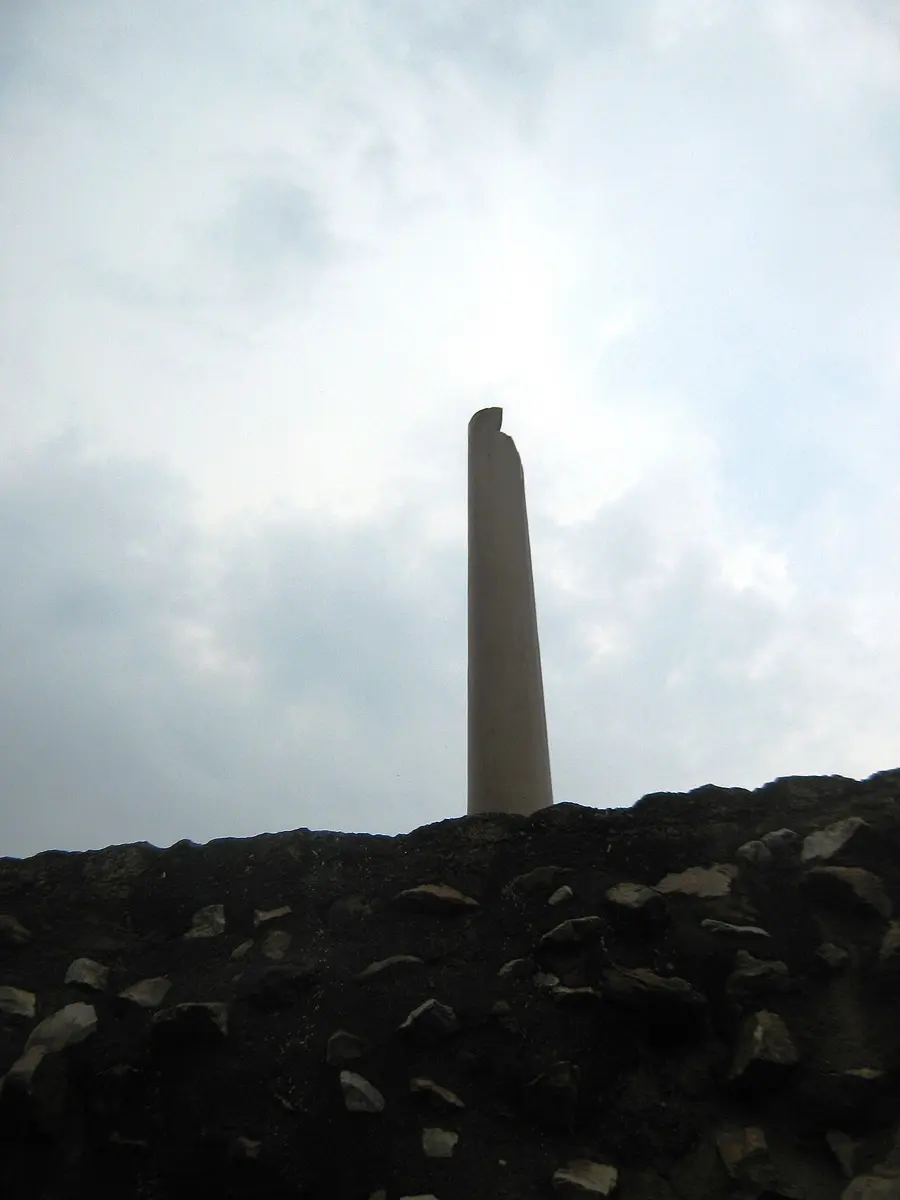
The Maurya empire ended about fifty years after Ashoka. Scripts kept changing, Brahmi’s letters slowly grew into new shapes, and his messages stood unread for well over a thousand years. More than six hundred years ago the Sultan of Delhi, Firoz Shah, took a fancy to one of his pillars at Topra, north of Delhi, and had it moved to his new palace on a cart with forty-two wheels, then floated down the Yamuna on boats, and set up on the palace roof. It still stands there.
Copies of its letters lay in the papers of the Asiatic Society in Calcutta for fifty years, and nobody could read them. Then James Prinsep, a British scholar there who had been working on the letters for three years, was sorting copies of many short inscriptions from the railings of the stupa at Sanchi. He noticed that nearly all of them ended with the same two letters. Short, separate and many, they were surely the names of people who had given something, and he guessed the last word meant “gift”, दानं (dānaṃ). The letter before the name’s ending, he had just learned from old coins, marked “of”. “Of so-and-so, the gift.” With those letters, he wrote, he worked out most of the rest in a few minutes, and turned to the pillar in Delhi.
Reading the words was one thing, knowing whose they were another. Prinsep first thought “Piyadasi, Beloved of the Gods” was a king of Sri Lanka. Then a scholar there found Piyadasi used as another name for Ashoka in the island’s own chronicle, and Prinsep found the names of Antiochus, Ptolemy and Magas on the rocks, kings whose dates the Greek histories gave, which put the inscriptions in Ashoka’s century. The last doubt went some eighty years later, when a gold-mining engineer found a rock at Maski, in today’s Karnataka, on which the king calls himself “Beloved of the Gods, Ashoka”.
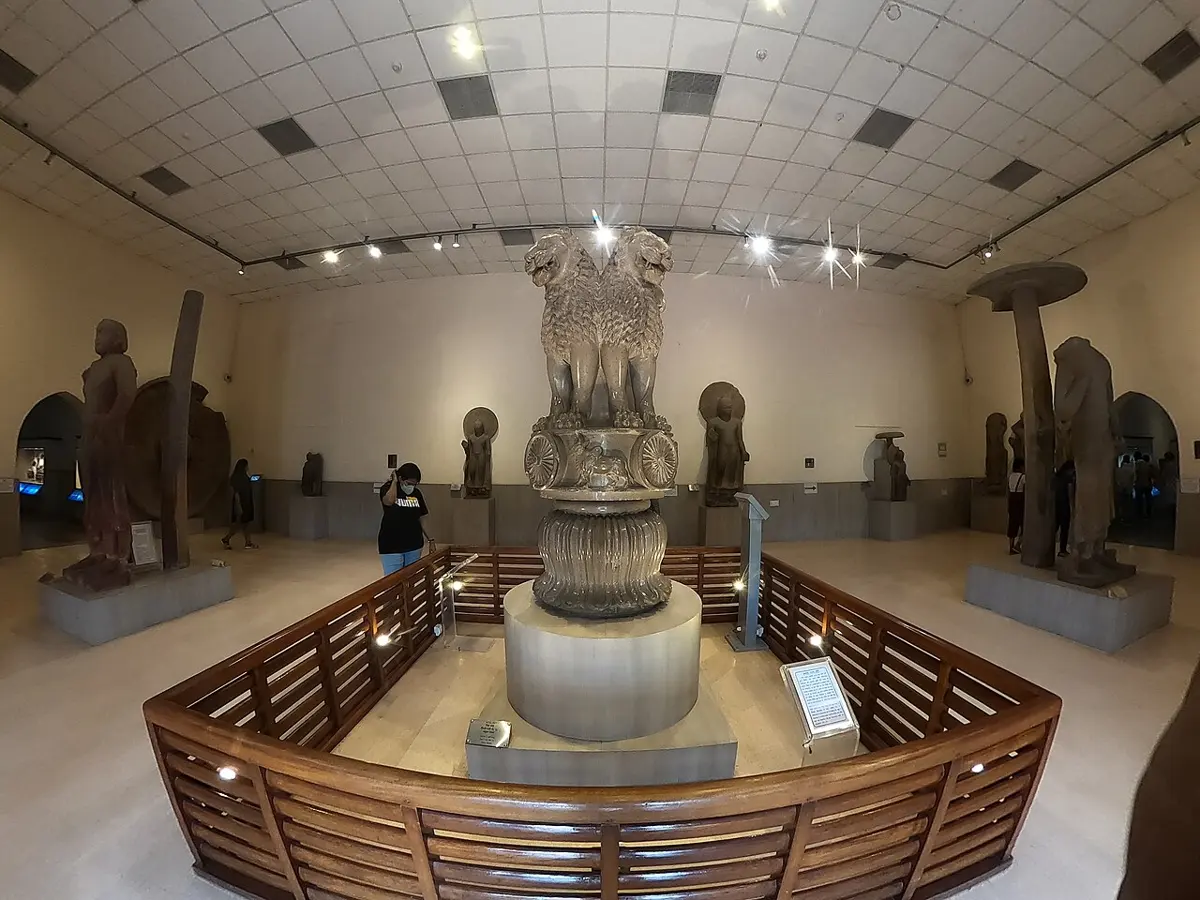
So the emperor who had been only a figure in Buddhist legends became a man who could be read in his own words. Today the four lions of his Sarnath pillar are India’s state emblem, and a wheel from the same pillar is at the center of India’s flag.
Ashoka ruled one of the largest states of the ancient world, and he made his name by talking about something rulers rarely talk about: the suffering his own war had caused. He wrote to his subjects across the empire, in their own languages and scripts, about kindness to animals, fairness, and respect between religions, and he honored the Buddha at Lumbini and an earlier Buddha at Nigali Sagar, in today’s Nepal. He also kept his conquest, his army and his executioners, and he chose carefully what each place would read. Whether his messages came more from conscience or from good government is still argued. What is certain is that, without them, we would know him only from legends.
Meanwhile, in Nepal: how the Lumbini pillar was found again, and the words on it that scholars still argue over, are in Kapilavastu and Lumbini, in Nepal’s History, for the Curious.
Found a mistake? Please tell us.