
In the old fort at Prayagraj, long called Allahabad, in northern India, stands a tall polished stone pillar. More than 2,200 years ago, the emperor Ashoka had his own words cut into it. Some six hundred years later, another emperor had more words carved on the same stone, to sing his own praises. He was Samudragupta, of the Gupta dynasty, and his poet listed everyone he had beaten or frightened. Near the end comes a list of kings on the edges of his empire who paid him taxes, did what they were told and came to bow before him: the kings of Samatata, Davaka, Kamarupa, Nepala, Kartripura.
That is the oldest use of the word “Nepal” that anyone can date with confidence. It was carved in the 300s CE, about 1,650 years ago, and the word comes to us in an outsider’s boast.
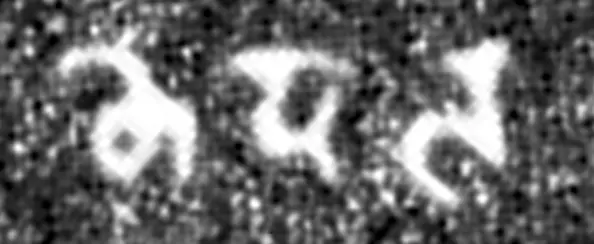
So where does the name come from? Here is the plain answer: nobody knows for sure. Many explanations have been offered, some as stories, some by scholars, and none can be proved. The one many of the leading scholars have come round to is that “Nepal” and “Newar” are the same old word in two forms, so that the country was named after a people. And for most of its history, “Nepal” didn’t mean the country on today’s map at all. It meant the Kathmandu Valley.
The oldest traces
Besides the pillar, the word turns up in a scatter of places. A Sanskrit book on running a kingdom, the Arthashastra, lists two kinds of black blanket, sewn from eight pieces and good against rain, as “products of Nepal”. The same word appears in a Sanskrit book on drama, in one version of the Mahabharata and in a Buddhist book of rules for monks. These are all useful, but none of them can be dated firmly. They grew over centuries, copied and added to by many hands, so a line in them may be much younger than the book’s fame.
The people of the Valley used the word too. The Licchavi kings, who ruled there from about 1,600 years ago, left about two hundred stone inscriptions. Only three of them open with a greeting to “the Nepalas”, as if the king were speaking to a people, and all three stand at Tistung, a small valley on an old road up into the Valley. None of the others greets them that way.
A Chinese monk, Xuanzang, who traveled through India in the 600s, wrote down what he heard of a kingdom called Ni-po-lo. It lay among the snowy mountains, he wrote, with its own copper coins and its yaks, and a king of the Licchavi family. He didn’t go there himself, and his unkind words about its people were hearsay. But he names a real ruler of the Valley, अंशुवर्मा (Aṃśuvarmā), a learned king, he says, whose own inscriptions survive.
The Grade 9 इतिहास book gives two of these books much earlier dates: an appendix to the Atharvaveda it puts in the 500s BCE, and the Arthashastra in the time of the first Maurya emperor, about 2,300 years ago. Most historians now think both were put together later, in the form we have them, and nobody can say when a line about Nepal went in. That is why the pillar, carved on a known emperor’s orders, is the trace they trust.
Stories about the name
When a word is old enough, people tell stories about where it came from. Nepal has several, and they make a good first exercise in weighing evidence. The question to ask of each is a simple one: how old is its earliest telling?
The oldest of Nepal’s chronicles, the palm-leaf गोपालराजवंशावली (Gopālarājavaṃśāvalī) of the 1380s (Chapter 1), tells of a cowherd called Nepa whose cow led him to the place where Pashupati was found. A court poet of the same years names Nepa as the founder of the Valley’s line of cowherds. The chronicle never says the country was named after him. But Nepa and Nepal are close, and the story is the oldest anywhere near the name.
The sage comes later. In the story most students know, a holy man called Ne, ने मुनि (Ne Muni), cared for the land, and it was named Nepal, “cared for by Ne”, from पाल (pāla), “protector”. That story appears first, as far as anyone has found, in the preface of a Sanskrit play written in the Valley in the late 1400s, a hundred years after the palm-leaf chronicle: “the country protected in the past by Ne Muni is called Nepal”. Nothing older has him. The Valley’s great sacred books, the स्वयम्भू पुराण (Svayambhū Purāṇa) and the books in praise of Pashupati and of Nepal’s holy places, were put together in those centuries too, and the chronicles of the 1800s tell the stories at length. In one Buddhist telling, Ne is the self-existent Buddha, and the Valley is named for his care of it. The later the telling, the more there is to tell.
That pattern is a clue. A story that explains everything neatly, and that grows as it is copied, was most likely made to explain the name, not handed down from the time it was given. A Scottish doctor who stayed in the Valley in 1802, whom we’ll meet again below, already thought the sage was “probably some modern conceit”. The cowherd is older, and closer to the kings the chronicles call Gopal (Chapter 4). But a cowherd named Nepa could as easily have been named after his country as the other way round.
Then come the scholars’ explanations, which usually split the word in two and find a meaning for each part. In Sanskrit, one says, नीप (nīpa) is the foot of a mountain and आलय (ālaya) a home: a home at the foot of the mountains. But the Valley isn’t at the foot of the mountains, it is in them, and the sounds don’t fit Sanskrit’s rules. In Tibetan, says another, ne is a home or a holy place and pal wool: the home of wool. But Tibetans don’t call Nepal anything like that. To them it is Bal-yul, and its people Bal-po. The Newar language, नेपाल भाषा (Nepāl Bhāṣā), gives ne and pa, middle and country. The Grade 8 सामाजिक book gathers these and more, with meanings from Limbu, Lepcha and Kirat languages, in its lesson on the name Nepal. Each sounds convincing on its own. Put side by side, they show the trouble: almost any short word can be split into pieces that mean something in some language. A meaning found that way proves little, unless the pieces really were joined that way, at the right time, by people who spoke that language.
Nepal and Newar
That idea starts from a different place. Look at how old places got their names in this part of the world. Over and over, a land was named after its people: Magadha after the Magadhas, Panchala after the Panchalas, Anga, Vanga, Kalinga. The drama book that mentions Nepal lists the people of Nepal among exactly such peoples. And at Tistung the Licchavi king greets the Nepalas as a people.
Then look at how words change in the mouth. Linguists trace a path from one to the other, Nepal, Nebal, Neval, Newar, each step a small change of the kind speech makes all the time: in the spoken languages of old India, for one, a p between two vowels softened into a v. The middle of that path isn’t a guess. The Buddhist book of rules for monks, in a copy found at Gilgit in the far north-west of the subcontinent, spells the name naivala, in its everyday spoken form. On this reading, Nepal is the careful, learned form of the word, the way it was written in Sanskrit, and Newar is the everyday form it took in speech. The country and the people share one name.
Some of the greatest scholars of these languages came round to this, from France, Britain, India and Nepal, among them Baburam Acharya, Nepal’s best-known historian of the last century. It still doesn’t say what the word first meant. One Nepali linguist has guessed that it was built from a Tibeto-Burman ne, cattle, and pa, a man or keeper: a cattle-keeper, turned into Sanskrit on the model of गोपाल (gopāla), cowherd. That would tie the cowherd of the oldest chronicle to the name after all. But it is a guess, and he offered it as one.
So the honest answer has three parts. The word is at least 1,650 years old. It was probably the name of a people before it was the name of a place. And what it meant to the people who first said it is lost.
A valley called Nepal
Whatever its origin, the word had a clear meaning for a very long time: the Kathmandu Valley. When the Licchavi and Malla kings said Nepal, they meant the Valley and the lands its kings held around it. It was a small country, and a rich one.
Visitors from outside wrote it down that way. An Italian priest, Father Giuseppe, who lived in the Valley in the 1760s, explained that the kingdom of Nepal lay north-east of Patna, and that the road to it ran through another kingdom first, Makwanpur. In 1793, a British officer, William Kirkpatrick, led a small British mission to the Valley. By then the kings of Gorkha had held it for over twenty years and ruled a long stretch of the hills besides, and still Kirkpatrick took care to say that Nepal, “properly so called”, meant “no more than the valley”, while the whole realm was the territory of the Gorkhalis. The Scottish doctor, Francis Buchanan Hamilton, who came with the next British visitors in 1802, wrote of “Nepal Proper”. He counted the temple of Bhimsen at Dolakha, a few days’ walk east of the Valley, as its eastern edge. On his way up from the plains, already deep in Gorkha’s lands, he still wrote of advancing “towards Nepal”.
So how did the name of one valley become the name of the whole country? Slowly, and mostly because Kathmandu became its capital. When Prithvi Narayan Shah took the Valley (Chapter 17), his kingdom kept the name of his home: it was Gorkha, its army and people Gorkhali, and its language, which we now call Nepali, went by several names, Khas, Parbatiya (the hill speech) and Gorkhali among them. Outsiders, meanwhile, named the kingdom after its capital, as they often do. Kirkpatrick and Hamilton, careful as they were inside their books about what Nepal properly meant, both called their books an account of the Kingdom of Nepal, or as Kirkpatrick spelled it, Nepaul.
Inside the country the two names lived side by side for a long time. The government’s newspaper, still printed today, is the गोरखापत्र (Gorkhāpatra). The committee set up to publish books in the language was the Gorkha Bhasha Prakashini Samiti before it was renamed the Nepali Bhasha Prakashini Samiti. By the 1930s, it seems, Nepal had become the state’s own name for itself and Nepali the language’s. And the old royal anthem, which praised the king as श्रीमान् गम्भीर नेपाली (shrīmān gambhīr nepālī), the illustrious, dignified Nepali, had called him Gorkhali when it was first written. The word was changed in 1951, one account says. The word that once meant the Valley had come to mean the whole country.
The land the word grew over
It helps to see the land the word spread across. Nepal lies in three long belts, running from west to east. Along the south is the तराई (Tarāī), a strip of flat land about 15 to 50 km wide at the edge of the great plains of India. The word means low, marshy ground. Today it grows most of the country’s food, and just over half of Nepal’s people live there. North of it rise the hills, the पहाड (pahāḍ): first the low Chure, then the higher Mahabharat range, then a broad country of ridges and valleys where most Nepalis lived for most of history. Along the north are the high mountains, the हिमाल (himāl), and beyond them the high plateau of Tibet.
Three great river systems cut across the belts from north to south: the Karnali in the west, the Gandaki in the middle and the Kosi in the east. Their valleys don’t make easy roads, but they make roads of a kind. Through the mountains, a few passes are low enough to cross. Two of them, at Kerung and at Kuti, lead almost straight north from the Kathmandu Valley into Tibet, and for centuries traders and their loads came over them to the Valley, which sat halfway between India and Tibet. That trade is one reason the Valley was rich, and one reason an Indian emperor and a Chinese monk had heard of it.
The Valley itself was once a lake. The old story, in which मञ्जुश्री (Mañjuśrī) cuts the hill at Chobhar with his sword and lets the water out, and the geologists’ account, in which the lake fills over millions of years and drains flood by flood, are told side by side in Geography, for the Curious. What the lake left behind was a flat floor of rich soil, at a height where winters are mild, in a country made mostly of slopes. Few places in the hills could feed so many people so close together.
The last part of the land’s story is a fever. The forests at the foot of the hills, on both sides of the Chure, held the country’s deadliest malaria. Father Giuseppe described the belt the road crossed as unwholesome from the middle of March to the middle of November, with a disease the people called aul, “of which the generality of people who are attacked with it die in a few days”. Hamilton heard that many thought the poison in the air came from the breath of great serpents. It was malaria, carried by mosquitoes that breed in the forest streams and couldn’t live well higher up. The Tharu, who have lived in the Tarai for a very long time, caught it far less often than their neighbors: a study published in 1988 found only about a seventh as much malaria among Tharu villagers as among the people who had moved in beside them, a protection that seems to come partly from a blood trait they inherit. For everyone else the forest was a wall.
That wall shaped the whole history in this book. Armies from the plains found it hard to march through, and their soldiers fell sick. The hills, cool and free of the fever, filled with farms and villages, and the Valley, high above the danger, grew into a city. Only in the 1950s and 1960s, when the forest belt was sprayed against the mosquitoes, did malaria fall away, and people from the hills moved down in great numbers to farm the Tarai. The map of where Nepalis live changed within a lifetime.
So the word Nepal carries a whole history in it. It began, most likely, as the name of a people, the ancestors of the Newars, which outsiders heard and wrote down in Sanskrit. For more than a thousand years it meant the rich valley those people farmed, high above the fever of the plains and on the road between India and Tibet. When a hill king from Gorkha made that valley the heart of his kingdom, its name went with it, slowly, until it covered everything from the Mahakali to the Mechi. Where the word first came from is a question without an answer. What it has meant, and how that changed, can be traced.
Found a mistake? Please tell us.