
A man who left school early became the person Nepal’s scientists asked about birds. A teacher ate a student’s homework, licked his fingers, and gave the student a pass. And somewhere in this unit is the reason a person can say I enjoy dancing but never I enjoy to dance.
This unit is about likes, dislikes and preferences: what we love, what we can’t stand, and what we would choose. You will read about Hari Sharan Nepali, whom everyone called Kazi Dai, and a funny poem by Kenn Nesbitt. You will learn the three sounds of ch, the ways to say how much you like something, which verbs take -ing and which take to, and how to make questions, including the kind with no do in it. You will write an essay on your hobbies, and find out what a dendrologist and a hippologist study.
Getting started: what do they like?
The unit opens with four pictures: a man with glasses singing with his eyes shut, holding a microphone on a stand with both hands; a young runner in a vest with the number 5, on a running track; a smiling nurse in blue with a stethoscope around her neck, holding a folder to her chest; and a man in a daura suruwal, a waistcoat and a topi, dancing with one arm in the air.
Look at the pictures. What do you think these people like, dislike or prefer? Talk to your friends.
Model answers
These answers are guesses, and that’s fine: nobody can see what a person likes. What matters is the language. Look at loves, enjoys, likes, is crazy about, prefers … to, doesn’t mind. By the end of this unit you will be able to use all of them, and to choose the form of the verb that comes after each one.
Reading I: Nepal’s Bird Man
Before you read
The picture beside the text shows a man in a red shirt, out among green trees, looking up through a camera with a very long lens.
What do you think the man’s hobby is?
A model answer
Do you have a similar hobby? What is it?
A model answer
What kind of text it is
This text is a memoir: a person’s own memories of a time and of someone he knew. The writer, Rajendra N. Suwal, wrote it for the Nepali Times to remember his friend and teacher. So it says I and we, and it goes through the years in order. It is also a small biography, because it tells us about one man’s life and work. Watch for the dates: they are what hold it together.
The text, part by part
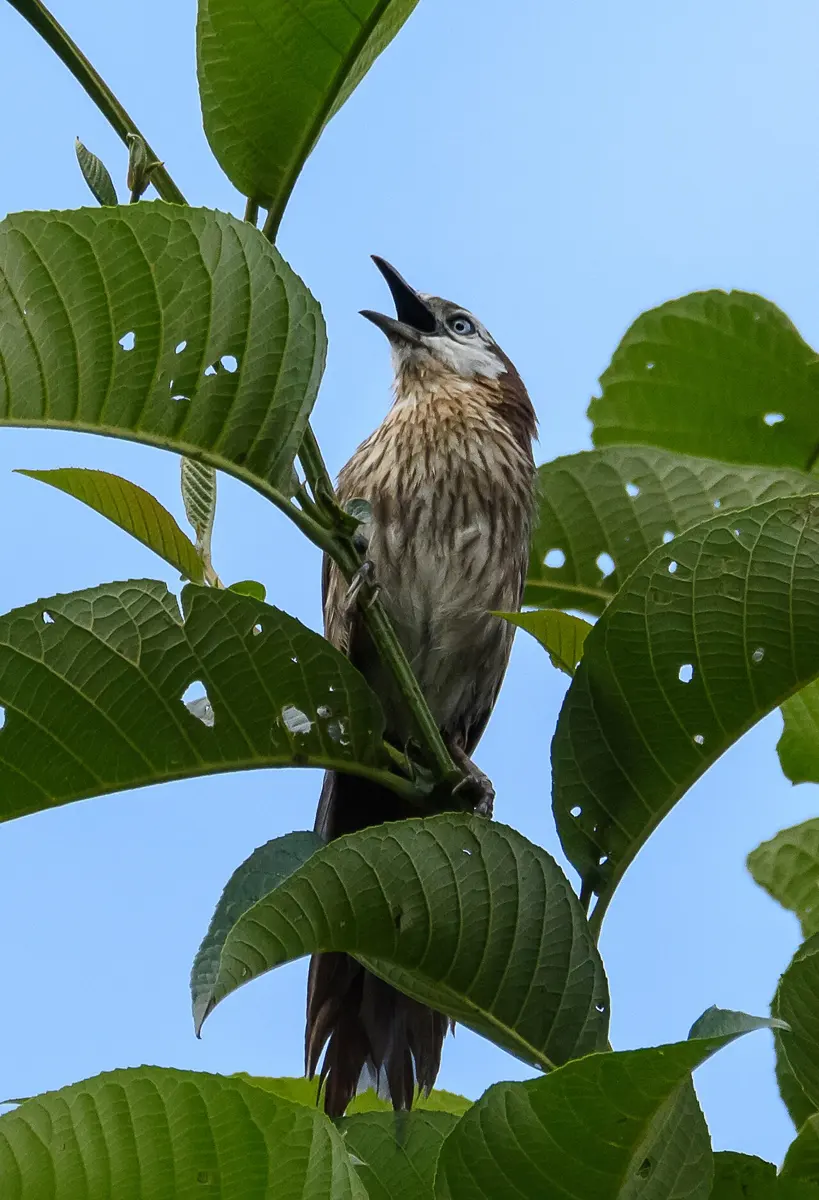
Who he was. Hari Sharan Nepali’s friends called him Kazi, because he dressed smartly and had genteel manners (polite and gentle, like a person of good family). Dai is what you call an older brother, or any older man you respect. He was a famous birder (a person who watches birds, usually as a hobby) and ornithologist (a scientist of birds), and birders in Nepal and abroad knew him.
How the writer knew him. It wasn’t chance: Kazi Dai was a friend of the writer’s father, Parasar Narayan Suwal. The father had a Ph.D., and Kazi Dai had left school early, but both loved the wild, and they often explored the jungles of the Terai together.
The trip of 1972. The writer went with his father and his father’s students from Ananda Kuti Science College on a week of camping in Pokhara. Kazi Dai came as a visiting teacher, to share what he knew about ecology (how living things and their surroundings depend on each other), how to name birds in the field, and taxidermy (preparing a dead animal’s skin so that it looks alive).
A storm, a flood and three birds. Walking from Bagar to Hyangja, they were caught in a heavy hailstorm. The next day, at Suinkhet, the river was full of debris and boulders from the landslides and floods of the night. Even there, Kazi Dai was naming birds: a Lesser Racquet-tailed Drongo, a Green Magpie and an Egyptian Vulture.
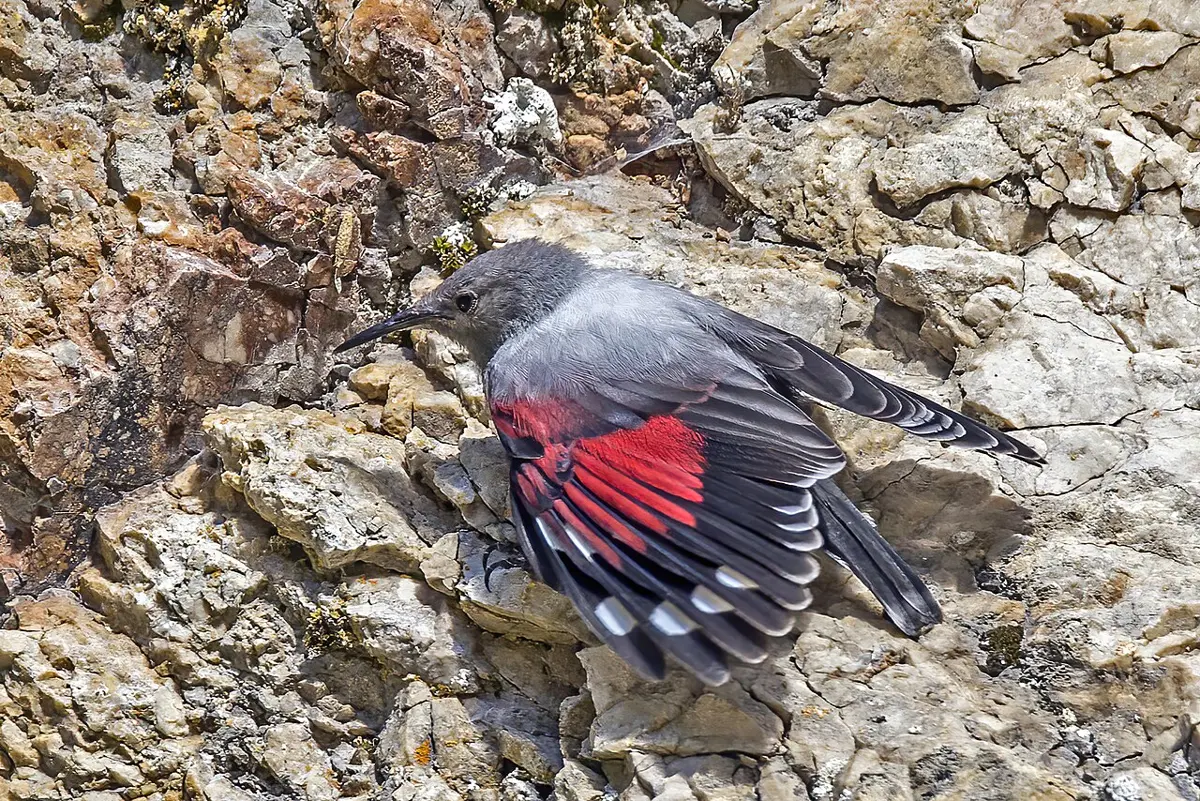
The turning point. On the way back to Kathmandu he pointed out a Wall Creeper on a freshly dug slope, fluttering its wings with their dark red patches. The writer says Kazi Dai’s mentoring (guiding a younger person) on this trip was the turning point that shaped his love of birds.
A club that grew. In the late 1970s the writer joined field trips led by Kazi Dai and Karna Shakya, who was then with the education commission of the IUCN, the International Union for Conservation of Nature. Those two founded the Nepal Bird Watching Club, which later became Bird Conservation Nepal (BCN).
BCN today. It is now a professional organization, nurturing (helping to grow) the love of hundreds of young Nepalis for recording, photographing, studying and protecting birds. The science has gone a long way past naming birds and keeping specimens: scientists now follow birds’ migration by satellite, and there is a digital record of all of Nepal’s species, which the writer puts at more than 880.
Work together. Kazi Dai was cooperative (ready to help) and always shared what he knew. In 1995 the writer and he put his knowledge on record in the Biodiversity Profiles Project, under the Department of National Parks and Wildlife Conservation. Both also sat on the Environment Protection Council, whose chair was the Prime Minister.
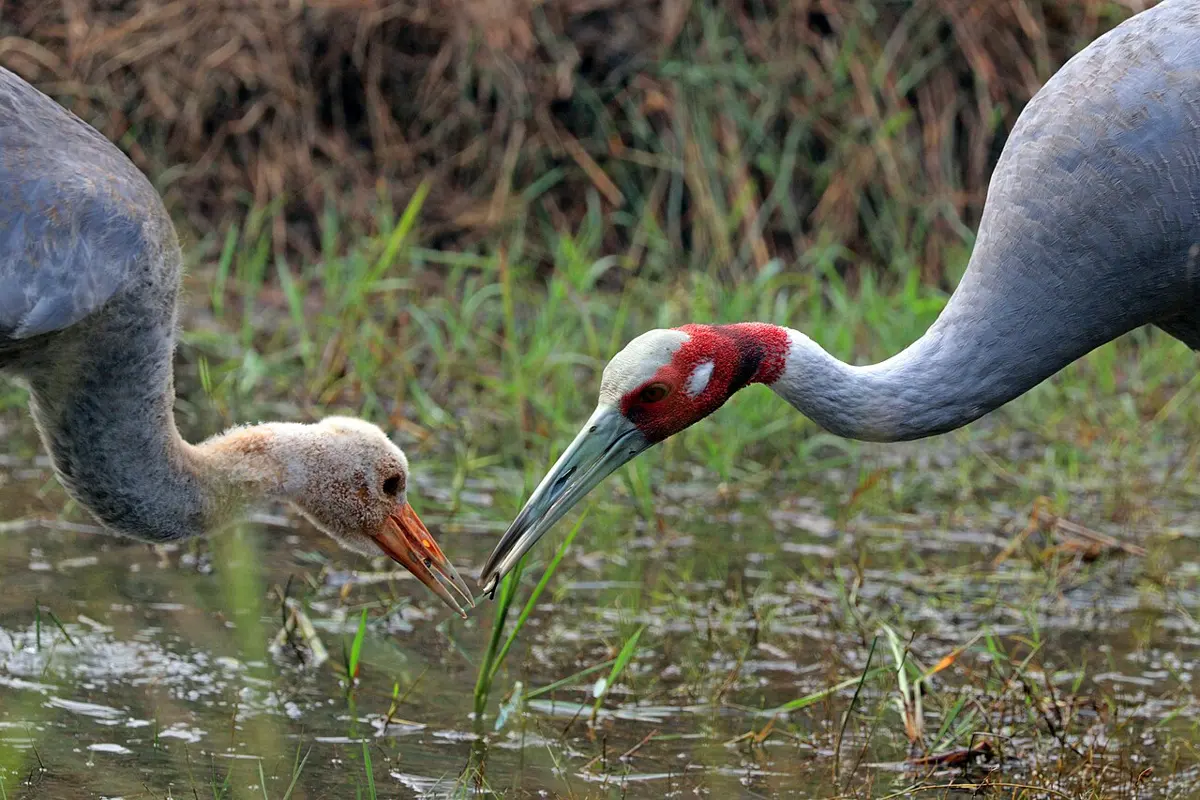
High points. The writer remembers watching birds with Jimmy Carter, who had been President of the United States. The two men also set up the Lumbini Crane Sanctuary. Its enhanced (improved) wetland is now a favorite nesting place of Sarus cranes, and it has the support of WWF Nepal, the International Crane Foundation and the Lumbini Development Trust.
His science. He led the Ornithological Survey of Nepal, to study the country’s great diversity (variety) of birds. Tribhuvan University’s Natural History Museum grew out of his passion. And he identified thirteen more species, on top of those described in 1976 by Robert Fleming Sr., Robert Fleming Jr. and Lain Singh Bangdel.
The end. Kazi Dai died on 19 May 2021. The last line says his love of birds lives on in the young naturalists he trained.
Here is his life by its dates, the way an exam might ask for it:
| When | What happened |
|---|---|
| 1972 | The Pokhara camping trip, with Kazi Dai as visiting teacher |
| 1976 | The Flemings and Bangdel describe Nepal’s birds |
| Late 1970s | Field trips with Karna Shakya; the Nepal Bird Watching Club comes after them |
| 1995 | The Biodiversity Profiles Project records what he knows |
| 19 May 2021 | Kazi Dai dies |
Why did the two men in the text become friends?
Pick an answer to see why.
What is an ornithologist?
Pick an answer to see why.
Words from the text
Words linked here open in English Vocabulary, where you can see an example and practice them in the word game. The meanings below are the ones the words have in this text.
| Word | Meaning here |
|---|---|
| genteel | polite and gentle in manners |
| birder | a person who watches birds, usually as a hobby |
| ornithologist | a scientist who studies birds |
| coincidence | two things happening together by chance |
| wilderness | wild land where few people live |
| ecology | the study of how living things and their surroundings depend on each other |
| taxidermy | preparing the skins of dead animals so that they look alive |
| debris | broken pieces left after something is destroyed |
| boulders | very large rocks |
| fluttered | moved quickly and lightly up and down |
| mentoring | guiding and advising a younger person |
| nurturing | helping something to grow and develop |
| cooperative | helpful; ready to work with others |
| enhanced | made better |
| diversity | a wide variety |
| naturalists | people who study plants and animals |
A. Complete the sentences
Learn these words and complete the sentences with them.
mentoring, diversity, nurturing, enhanced, genteel
- a.Nepal is known for her ……… of people, still there is harmony in them.
- b.Despite being successful, Krishna is an example of ……… lifestyle.
- c.The food was tasty! They ……… the flavor of food items by adding natural herbs.
- d.She encouraged women to start formal ……… programs in their companies.
- e.All the family members helped her in ……… her newborn baby.
Answer
B. Choose the correct alternatives
Choose the correct alternatives to fill in the gaps.
a. Kazi Dai was a famous ………
Pick an answer to see why.
b. ……… has earned his Ph.D.
Pick an answer to see why.
c. The writer became interested in becoming a birder
Pick an answer to see why.
d. Which of the following is a false statement?
Pick an answer to see why.
e. Which of the following organizations did Kazi Dai not work for?
Pick an answer to see why.
C. Answer the questions
What made Kazi Dai a friend of Parasar Narayan Suwal?
Answer
Was the journey to Pokhara a memorable one for the writer? How can you say so?
Answer
Name the personality with whom the writer worked except Kazi Dai.
Answer
Mention the areas BCN is working in at present.
Answer
Who is the donor of the Lumbini Crane Sanctuary?
Answer
Do you like Kazi Dai? Why?
A model answer
D. Birdwatching as a hobby
Can birdwatching be a good hobby for a Nepali student like you? Discuss with your friends.
A model answer
Pronunciation: the three sounds of ch
Two letters, three sounds. The spelling ch usually sounds like the start of cheese, but not always.
| The sound | Say it like | Words |
|---|---|---|
| /tʃ/ | the ch of cheese | chair, chaired, chimp, chalk, chore, child |
| /ʃ/ | the sh of shoe | charade, chiffon |
| /k/ | the k of key | chemist, choir |
Here they are with the way to say them:
| Word | Say it | Dictionary |
|---|---|---|
| chaired | chaird | /tʃeəd/ |
| charade | shuh-RAHD | /ʃəˈrɑːd/ |
| chemist | KEM-ist | /ˈkemɪst/ |
| chiffon | SHIF-on | /ˈʃɪfɒn/ |
| chair | chair | /tʃeə(r)/ |
| chimp | chimp | /tʃɪmp/ |
| chalk | chawk | /tʃɔːk/ |
| choir | KWY-er | /ˈkwaɪə(r)/ |
| chore | chor | /tʃɔː(r)/ |
| child | chyld | /tʃaɪld/ |
The sound usually depends on where the word came from. Words that have been in English for a very long time usually have /tʃ/. Words from modern French often have /ʃ/. And words that keep a Greek spelling, which science is full of, often have /k/. So a word that looks scientific is a good place to expect a /k/: chemistry, chlorine, chlorophyll.
Which word has the sound /k/?
Pick an answer to see why.
Which pair has the same ch sound?
Pick an answer to see why.
Speaking: saying what you like
How strong is your feeling?
English has many ways to say how you feel about something, and they aren’t all equally strong.
Crazy about and keen on are followed by a noun or an -ing word: I’m crazy about football. She’s keen on drawing. Use crazy about with friends, and I’m very fond of or I really enjoy in a letter to a teacher.
A. Like or dislike?
Read the expressions given below. Do they express likes or dislikes? Write “Like” or “Dislike” at the end and practice saying them.
- a.She loves playing football.
- b.I don’t like rain.
- c.I’m crazy about cricket.
- d.She doesn’t like going out at night.
- e.My brother hates eating chocolates.
- f.My father is keen on gardening.
- g.I love reading books very much.
Answer
Saying what you prefer
To prefer something is to like it more than something else. There are two things to compare, and the small word between them is to, not than.
| Pattern | Example |
|---|---|
| prefer + noun + to + noun | Rakshya prefers rice to roti. |
| prefer + -ing + to + -ing | Chiring prefers walking to taking the bus. |
| would rather + verb + than + verb | I’d rather stay here than go out. |
“Radhika prefers cycling ……… running.” Which fits?
Pick an answer to see why.
B. Complete the dialogue
Work in pairs. Complete the dialogue with the suitable form of the verbs given in the brackets and act it out.
Pasang: Hi, you two! What are you doing?
John: We’re playing basketball. Do you want to play?
Pasang: No, thanks. I ……… (not like/play) basketball.
Sara: Wow! I ……… (love/play) basketball. It’s great!
John: What ……… you ……… (like) to do, Pasang?
Pasang: Well, I ……… (enjoy/ride) a bicycle.
Sara: Yeah! That’s really fun.
Pasang: And I ……… (like) to dance.
John: Dancing! I can’t stand dancing.
Sara: But I prefer ……… (sing) to dancing.
Answer
C. Ask each other
Good questions to begin with are Do you like…? Do you enjoy…? How do you feel about…? What about…? Then don’t stop at Yes: give a reason.
Work in pairs. Ask and answer the questions about each other’s likes and dislikes. Use the given clues.
- a.listening to music
- b.drawing
- c.watching television
- d.working in the kitchen
- e.doing mathematics
Model conversations
Grammar I: -ing or to?
When one verb comes straight after another, the second has to take a special form. In Nepali you would simply say मलाई नाच्न मन पर्छ. English has two forms, and the first verb decides which:
- the -ing form: dancing, reading, playing. Used like this, as the name of an action, it is called a gerund.
- the to-infinitive: to dance, to read, to play.
A. Study the sentences
Look at what comes after the first verb in each of these eight sentences.
| Sentence | The feeling | What follows |
|---|---|---|
| I hate arguing about politics. | dislike | -ing |
| I hate to argue with you. | dislike | to |
| They like skiing. | like | -ing |
| They like to ski. | like | to |
| Children love playing with their friends. | like | -ing |
| Children love to play. | like | to |
| I will wait to hear from you. | neither | to |
| She wants to tell you something. | neither | to |
So hate, like and love can take either form. Wait and want can only take to.
The three groups
| Takes only -ing | Takes only to | Takes either |
|---|---|---|
| enjoy, mind, avoid, finish, dislike, keep (on), admit | want, would like, agree, learn, decide, wait, hope | like, love, hate, prefer |
| Anup enjoys climbing trees. | Anup wants to climb Phulchoki. | Anup likes climbing. Anup likes to climb. |
A rough guide helps. To often looks forward, to something that hasn’t happened yet: you want, hope, agree or decide to do it. -ing often looks at an action that is going on or already real: you enjoy it, or finish it, or admit it. It is only a guide, so learn each verb with its form.
With like, love and hate, the two forms mean almost the same. There is a small difference: -ing is more usual for a thing in general, and to for one action or a habit you have chosen. I hate shouting (in general). I hate to shout at you (this time).
Three more rules
1. After a preposition, always -ing. On, about, in, at, of, for, without and others take -ing, and that is why we say keen on gardening and crazy about dancing. Thank you for helping me.
2. Go + -ing, for sports and outdoor things. We go cycling, go skating, go shopping. There is no to before the -ing word.
3. Help can take the plain verb. Chandra helped me lift the sack. (Helped me to lift is also correct.)
“Would you mind ……… the door?” Which fits?
Pick an answer to see why.
“The two villages decided ……… a bridge together.” Which fits?
Pick an answer to see why.
Which sentence is wrong?
Pick an answer to see why.
B. Choose the correct answers
Choose and copy the correct answers.
- a.I don’t like ……… (going/go) out at night.
- b.She learned ……… (to tell/telling) stories.
- c.I would like ……… (coming/to come) to the party.
- d.My grandfather enjoys people ……… (asking/ask) what he wants.
- e.She kept on ……… (talking/to talk) during the film.
- f.I am learning ……… (speaking/to speak) English nowadays.
- g.Do you mind ……… (giving/to give) me a hand?
- h.Munal helped me ……… (carry/carrying) this load.
- i.I dislike ……… (waiting/to wait) for people.
- j.They’ve finished ……… (preparing/to prepare) food. Come and eat!
Hint
Answer
C. Fill in the gaps
Fill in the gaps with the correct forms of the verbs given in the brackets.
- a.Joan loves ……… (listen) to music.
- b.Tina usually goes ……… (fish) at the weekends.
- c.We usually go ……… (swim) on Saturdays.
- d.He hates ……… (write) emails.
- e.Would you like ……… (talk) to the manager?
- f.Excuse me, I’d like ……… (pay) the bill.
- g.I like ……… (call) her in the evening.
- h.She avoided ……… (talk) to her neighbor.
- i.Mr. Thakuri agreed ……… (pay) the debt on time.
- j.He admitted ……… (steal) the money.
Answer
Writing: an essay on my hobbies
An essay gives your own thoughts on one topic, in paragraphs. This task hands you five questions, and those five questions are your plan. Give each of them a paragraph, or join two of them, and you have an essay.
| Paragraph | The question | What to write |
|---|---|---|
| Opening | What are your hobbies and interests? | Name one or two. Don’t list ten. |
| Why | Why have you chosen them? | How you began, and what you enjoy. Give one real moment. |
| How | How are you going to achieve them? | How you will get better: practice, a club, a teacher. |
| Support | What support do you need to pursue them? Are there any barriers? | Who or what can help, and what stands in the way. |
| Changes | What changes might they bring to your life? | What you might become, or learn, or feel. End here. |
A hobby is something you do in your free time for pleasure. An interest is something you like to know about. To pursue a hobby is to keep doing it and go further with it.
Use what you have just learned, because this is where it counts: I enjoy drawing, I hope to join a class, I prefer pencils to paint, I’m keen on birds.
Write an essay on My Hobbies and Interests. Include the answers to these questions.
- a.What are your hobbies and interests?
- b.Why have you chosen them?
- c.How are you going to achieve them?
- d.What support do you need to pursue them? (Are there any barriers stopping you?)
- e.What changes might they bring to your life?
Hint
A model essay
Listening: a woman’s likes and dislikes
A woman tells us what she likes and what she doesn’t. Read the questions in B first, then listen, as many times as you need. The recording is CDC’s, and it lasts about a minute and a half; the answers are hidden under the questions.
Words to know: explore (to go around a new place to find out about it), ways of life (how people live), talk someone into something (to persuade someone), rude (not polite), strangers (people you don’t know), patient (able to wait calmly).
A. Before you listen
Look at the picture and answer these questions. (The picture shows a young woman in pink with headphones on, her eyes shut and her head tilted back, holding something in one hand.)
- a.What do you think the lady is doing?
- b.What do you think she is talking about?
Model answers
B. Tick the correct answers
Listen to the audio and tick the correct answers.
a. What type of exercise does the speaker like?
Pick an answer to see why.
b. What does the speaker say she will do in her new house?
Pick an answer to see why.
c. Why does she like dancing to American music?
Pick an answer to see why.
d. Which of the following does the speaker dislike?
Pick an answer to see why.
e. Why does the speaker dislike waiting?
Pick an answer to see why.
f. What is the talk about?
Pick an answer to see why.
Listen once more and count how she says it: I really enjoy, I like, I love, I don’t really like. She uses several of the patterns in this unit.
C. Your preferences
What are your preferences? Make a list or a mind map and talk to your friends about why you like them.
A model
Reading II: My Teacher Ate my Homework
Before you read
The picture shows a smiling man in a blue apron with his arms folded, and six children in white chef’s hats behind a table with bowls, a pan, a grater and vegetables.
Look at the picture and guess the answers to these questions.
- a.Who do you think these people are?
- b.What are they doing?
- c.Do you like cooking classes? Why?
Model answers
What kind of text it is
This is a poem, and a joke, too. Like every good joke it holds back the most important thing until the very end. The title is the setup: a teacher can’t really eat a student’s homework, so what is going on? You don’t find out until the last line.
The poem, part by part
The strange beginning. The speaker tells us straight away that the teacher ate his homework, and calls that rather odd, which is a very calm thing to say. Before eating it, the teacher sniffs at it (smells it with short breaths), smiles, and gives an approving nod (a small movement of the head, down and up, to show he likes it).
Slowly at first. He starts with a nibble (a very small bite). The speaker stops to tell us that it’s unusual, but true, as if we might not believe him. Then comes a bigger bite, and a thoughtful chew: he chews like someone thinking hard about what he tastes.
Then fast. The speaker thinks the teacher must have liked it, because he went to town. That’s an idiom, and it has nothing to do with a town: to go to town on something means to do it with great energy. He gobbled it with gusto (great enjoyment) and wolfed it all down.
The surprise. He licks all his fingers, gives a burp (a noise of air coming up from the stomach) and says the student has passed. Only the last two lines explain the whole poem: this is a cooking class. The homework was food, so of course the teacher ate it. That is how a cooking teacher gives a mark.
How the poem works
It rhymes in every second line. Read the end words of each group of four lines: the second and fourth rhyme, and the first and third don’t. Odd goes with nod, true with chew, town with down, and pass with class. You can see that true and chew share no letters at the end. Rhyme is about sound, not spelling.
It speeds up. It begins with slow words (sniffed, nibble, thoughtful) and moves to fast ones (gobbled, wolfed). The poem goes at the speed of the eating.
It keeps its secret. Everything in the poem is true of the homework, and nothing tells you it’s food until the end. Then you want to read it again.
What does “he really went to town” mean in the poem?
Pick an answer to see why.
Why did the teacher eat the homework?
Pick an answer to see why.
Words from the poem
| Word | Meaning here |
|---|---|
| odd | strange |
| sniffed | smelled with short breaths |
| approving | showing that you think something is good |
| nod | a small movement of the head, down and up, to say yes |
| unusual | not common; strange |
| nibble | a very small bite |
| thoughtful | thinking carefully |
| went to town | did something with great energy |
| gobbled | ate very fast, in big mouthfuls |
| gusto | great enjoyment |
| wolfed | ate all of it very fast |
| burp | a noise of air coming up from the stomach |
A. Rhyming words
Write the rhyming words for these words from the poem. Add one of your own words to each of them.
odd: ……… , ………
true: ……… , ………
town: ……… , ………
pass: ……… , ………
Answer
B. Words for eating
Here are the words from the poem related to eating. Find their meanings and use them in your own sentences.
nibble, bite, chew, gobble, wolfed, lick
Model answers
C. Complete the text
Complete the following text with the suitable words/phrases given below.
his fingers, cooking class, approval, tasted, strange
The speaker found it ……… when he saw his teacher eating the homework. First, he sniffed and then smiled to show the ……… of what the speaker had done. Then, he ……… the homework bit by bit. The speaker guessed that the teacher had liked his task. The teacher even licked ……… and finally said that the speaker had passed. This made the speaker guess the way the teachers grade the ……… .
Answer
D. A poem of your own
To write a short poem, choose your subject, write down what you see and do in that class, and try the poem’s own rhyme: lines two and four rhyme, and lines one and three can do as they like. If you want a surprise at the end, like Kenn Nesbitt’s, decide the last line first.
Write a short poem about your favorite subject and recite it in the class.
A model poem
Grammar II: making questions
You already know how to make most questions. This section puts them together, and adds one new kind.
1. Yes/no questions. Move the helping verb in front of the subject. If there is no helping verb, bring in do, does or did.
| Statement | Question |
|---|---|
| Santosh can swim. | Can Santosh swim? |
| The twins are sleeping. | Are the twins sleeping? |
| Radhika plays the sarangi. | Does Radhika play the sarangi? |
| They walked home. | Did they walk home? |
2. Wh-questions. Put the question word first. After it comes the same order as a yes/no question.
| Question word | Helping verb | Subject | Main verb and the rest |
|---|---|---|---|
| What | is | Sudip | cooking? |
| Where | do | your cousins | live? |
| When | will | the bus | leave? |
| Why | did | the shop | close? |
3. Questions about the subject: the new kind. Sometimes you don’t know who did it, so the question word stands in for the subject. Then you just put who or what in the subject’s place, and nothing else moves. There is no do.
| Statement | Question about the subject | Question about the object |
|---|---|---|
| Pooja broke the window. | Who broke the window? | What did Pooja break? |
| The wind shook the tree. | What shook the tree? | What did the wind shake? |
| Suraj doesn’t want the job. | Who doesn’t want the job? | What doesn’t Suraj want? |
“Ishwori sang at the program.” You want to find out who sang. Which question is right?
Pick an answer to see why.
“Prabin went to Dharan.” You want to find out where. Which question is right?
Pick an answer to see why.
A. Match
Match the statements with their questions.
| Statements | Questions |
|---|---|
| a.My father is washing the car. | i.Do they have a hotel in India? |
| b.Ali doesn’t want to help you. | ii.Did you have your computer repaired? |
| c.Yes, she sings English songs. | iii.When will Madan buy a computer? |
| d.Yes, they have a hotel in India. | iv.What is your father doing? |
| e.Madan will buy a computer next year. | v.Who doesn’t want to help you? |
| f.We can go to the cinema tomorrow. | vi.Does she sing English songs? |
| g.Yes, I had my computer repaired. | vii.When can we go to the cinema? |
Answer
B. Make questions
Change the given statements into questions. Use the words in brackets to start the questions.
- a.Pravu is in class eight. (Who)
- b.The dog is chasing a cat. (What)
- c.They were practicing English yesterday. (Were)
- d.He went to the market to buy some vegetables. (Why)
- e.I came to see you yesterday. (When)
- f.Anuska bought a new computer. (Did)
- g.William saw a snake under the tree. (Where)
- h.They will have to do the work. (Will)
- i.We paid in cash. (How)
- j.She has a beautiful painting. (Does)
Hint
Answer
Project work
Extra bit: words with -ology
Kazi Dai’s science was ornithology, from ornis, the Greek word for bird. Many sciences have names ending in -ology, because the ending comes from a Greek word meaning an account or explanation. Take off the ending and you can often see what is being studied.
| Word | It is the study of | Word | It is the study of |
|---|---|---|---|
| ornithology | birds | pomology | fruits |
| anthropology | humans | sitiology | food, diet and nutrition |
| biology | life | virology | viruses and the diseases they cause |
| dendrology | trees | seismology | earthquakes |
| felinology | cats | pathology | illness |
| hematology | blood | hippology | horses |
| oology | birds’ eggs |
A person who works in one of these is usually an -ologist: an ornithologist, a biologist, a seismologist. In all of these words the stress falls on the -ol-: or-ni-THOL-uh-jee, syz-MOL-uh-jee.
A scientist measures the shaking of the ground after an earthquake in Gorkha. What is her science?
Pick an answer to see why.
Siddhanta has an orange orchard in Dhankuta and wants to know why his trees give less fruit. Whose work would help him most?
Pick an answer to see why.
Exercise
Practice on this unit in the style of the final exam. Try each one as in the exam, then open the answer.
Read “Nepal’s Bird Man” again and write whether the following statements are True or False.
- a.Kazi Dai and the writer’s father both had a Ph.D.
- b.The writer went to Pokhara with Kazi Dai in 1972.
- c.The Nepal Bird Watching Club later became BCN.
- d.Sarus cranes nest in the wetland at Lumbini.
- e.Kazi Dai died in 1995.
Answer
Read “My Teacher Ate my Homework” again and put these events in the order they happen in the poem.
- a.The teacher gobbled the homework.
- b.The teacher sniffed the homework.
- c.The teacher said the student had passed.
- d.The teacher took a very small bite.
- e.The teacher chewed thoughtfully.
Answer
Read this page from a diary and answer the questions.
Saturday, 14 Poush. I got up at five this morning and walked with Miss Thapa to the lake at Jagdishpur. It was so cold that my pen wouldn’t write at first. Hundreds of ducks were resting on the water. Miss Thapa says they fly here from far in the north, over the Himalaya, to spend the winter. She let me look through her binoculars, and suddenly the gray shapes had colors! I counted forty-two birds of one kind before my fingers gave up. I never thought I would enjoy getting up early. Tomorrow I am going to ask my father for a notebook of my own.
- a.Where did the writer go?
- b.Who went with the writer?
- c.Why do the ducks come to the lake?
- d.What made the gray shapes look colorful?
- e.Find two words in the text that mean “stopped trying”.
- f.What shows that the writer has found a new hobby?
Answer
Rewrite the sentences as indicated in the brackets.
- a.Samjhana teaches English at the school. (Change into a question beginning with Who.)
- b.The farmers planted rice last week. (Change into a question beginning with What.)
- c.Aadarsh can ride a horse. (Change into a yes/no question.)
- d.The bus left at noon. (Change into a question beginning with When.)
- e.She has seen a red panda. (Change into a yes/no question.)
Answer
Choose and copy the best answer for the numbered blanks.
My sister Archana has always loved (a) ……… (draw, drawing, drew). This year she decided (b) ……… (join, joining, to join) the art club. She enjoys (c) ……… (to paint, painting, paint) birds, and she would like (d) ……… (to show, showing, shown) her work at the school’s annual day. She doesn’t mind (e) ……… (stay, to stay, staying) late after class.
Answer
Identify ten errors in the given paragraph. Rewrite the paragraph by correcting the errors.
Have you heard of kazi dai he taught students in pokhara he loved birds didnt he
Answer
Write a paragraph of about 100 words about a person you know who has an unusual hobby. Use the clues: who the person is; the hobby; how it began; what he or she enjoys about it.
A plan
Write a short essay on a hobby you would like to take up, and say why.
Hint
A plan
Printable PDFs
- Study notes 2 pages
- Harder practice questions 3 pages Answer key
Practice every question in the book, and keep track of the ones you miss →
A companion to your textbook, not a replacement for it: study from the book your school uses, and where the two differ, follow your teacher. Found a mistake? Please tell us.