
Count the materials you used before school today. Toothpaste, soap and water. Salt, oil and spices in the dal. Sugar in your tea. A steel plate, an aluminium pot, a copper gagri, plastic slippers and a rubber band. Each one was chosen for a reason: salt for its taste, soap for washing, copper for carrying heat and electricity, rubber for not carrying them.
In this unit you will meet some useful chemicals in the kitchen and in the bathroom, and learn to tell metals from non-metals by simple tests anyone can do. You will also see what happens when these materials are thrown away carelessly.
Materials around us
We use many materials every day. Our kitchens and bathrooms are full of pots, pans, plates and buckets. We cook with salt, oil, spices, sugar, rice and pulses. We wash with soap and detergent. People build houses with iron and aluminium, and decorate them with marble and tiles. We wear jewelry of gold and silver.
All of these things take up space and have mass, so they are all matter. In this unit we look at what some of them are made of, what they are used for, and how to use them safely.
10.1 Some useful chemicals
Many kinds of chemicals are used in daily life. A chemical is simply a substance: a particular kind of matter. Some chemicals come from nature, and some are made by people.
- Chuk is made by boiling down the juice of sour fruits, such as lemons, from plants.
- Baking soda is made from minerals.
- Ghee comes from the milk of cows and buffaloes.
Toothpaste, soap and the fertilizer spread in fields are all chemical substances too. Here we study two groups: chemicals used in food, and chemicals used for cleaning.
A. Chemicals used as food materials
Some cooks add a little baking soda to rice flour batter to make sel roti puff up. Baking soda is a chemical substance. So is salt. The sour taste of lemon, orange and amala comes from chemicals called acids in them. The sugar in tea is a chemical with a sweet taste.
Baking soda
Bread is soft and spongy. It is full of holes made by bubbles of gas. In cakes, biscuits and some breads, the gas comes from baking soda, which makes food light and helps it rise. (In most loaves of bread, it comes from yeast.)
The chemical name of baking soda is sodium bicarbonate (also called sodium hydrogen carbonate). It is made from minerals.
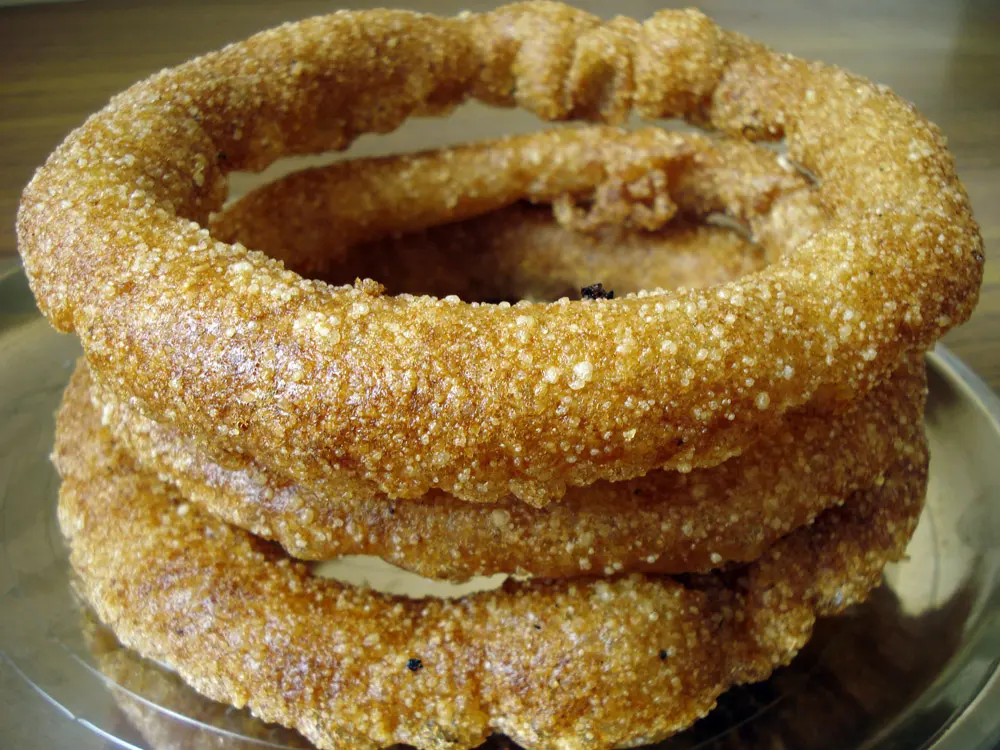
Uses of baking soda:
- to make bread, cakes, biscuits and sel roti soft and spongy
- in some fizzy drinks and fizzy powders
- as a medicine: it cancels out extra acid in the stomach (acidity)
Baking soda must be used in small amounts. Too much of it can cause bloating, vomiting and diarrhea.
Common salt
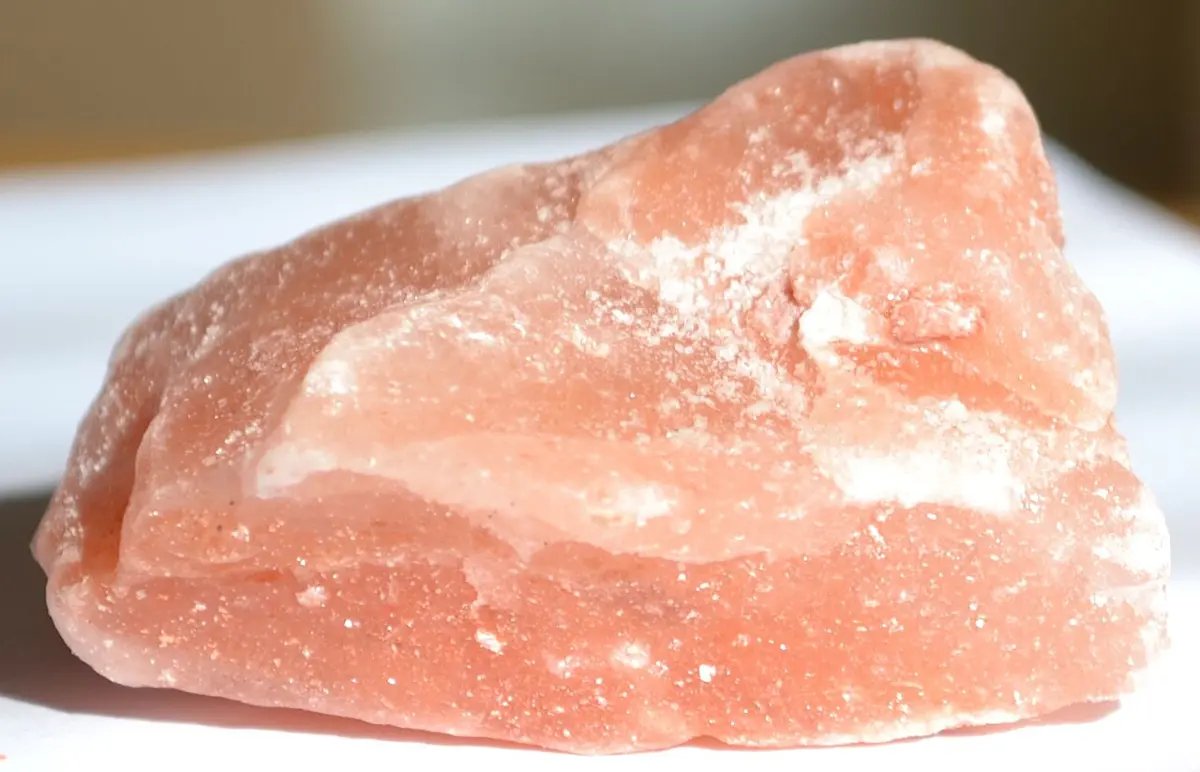
Edible salt (common salt) is a mineral. It comes from sea water, which is dried in the sun, and from rock salt dug out of the ground. Its chemical name is sodium chloride. It dissolves in water. Salt is one of our main sources of sodium, which our body needs.
Uses of salt:
- to give food its salty taste
- to keep fish, meat and pickles from going bad (to preserve them)
- in factories, to make soap, paper, rubber, glass and many other things
- for cleaning, and in medicines (such as the salt in oral rehydration solution)
Our body needs sodium chloride, but too much of it is harmful. Eating too much salt over many years can lead to high blood pressure, which can cause serious diseases of the heart and kidneys. Doctors advise adults to eat less than one teaspoon (5 g) of salt a day, and children less.
Sugar
Sugar tastes sweet. Its chemical name is sucrose. Most sugar is made from the juice of sugarcane, which grows in the Terai. Fruits such as bananas, mangoes, grapes and pineapples contain some sugar too.
Uses of sugar:
- to make food and drinks sweet
- to keep packed foods such as jam from going bad
- to make many drinks, because it dissolves easily in water
Ghee and oil
Ghee is a kind of fat made from the milk of cows and buffaloes. It is solid or liquid depending on how warm it is: solid in winter, and liquid in summer. Ghee is used to make sweets and tasty food. It is also rubbed on skin to keep it from drying.
Oil is a liquid fat, usually pressed out of the seeds of plants. The main oils used in Nepal are mustard oil, soybean oil, sunflower oil, flax seed (alas) oil, chiuri (butter tree) oil and olive (jaitun) oil.
Ghee and oil give us energy and keep our body warm.
Which of these is the chemical name of common salt?
Pick an answer to see why.
Why does bread made with baking soda become soft and spongy?
Pick an answer to see why.
B. Chemicals used as cleansers
Soap, shampoo and sanitizer are used at home for washing clothes, bathing and cleaning wounds. Today many kinds of cleaners are sold. Soap, detergent, phenol and stain remover are used to clean dirty dishes, windows, car glass and toilets.
Phenol
Phenol is a useful chemical. It is used as a disinfectant: a chemical that kills germs on floors, toilets and other things. It is used to clean houses, because it removes bad smells and keeps flies away. It dissolves easily in water.
Phenol is very poisonous. It burns the skin and can harm the eyes. Wear gloves when you use it, and keep it away from your eyes.
Antiseptic
An antiseptic is a chemical that kills germs, or stops them growing, on living skin. Antiseptics are used in surgery (operations), and to clean cuts and wounds. They dissolve in water. An antiseptic makes the skin free of germs.
Soap
Soap is a chemical used for cleaning. Most bars of soap are solid, and there are liquid soaps too. Different soaps are made for bathing and for washing clothes. When soap is rubbed in water it makes lather (foam).
Soap is made by boiling fats or oils with a strong chemical (lye). How does it clean? Water alone can’t wash away grease, because oil and water don’t mix. A soap particle is long, and its two ends are different: one end mixes with water, and the long tail mixes with oil and grease. The tails grab the grease, the other ends stay in the water, and when you rub, the grease is lifted off in tiny drops that the water rinses away (Figure 10.4).
Detergent
A detergent is a cleaning chemical in the form of a powder or a liquid, made mainly for washing clothes. It dissolves in water more easily than soap. It also works well in hard water, the water from some wells and taps in which soap makes a gray scum instead of lather. So clothes washed with detergent often come out cleaner than clothes washed with soap.
Stain remover
A stain remover is a chemical used to remove stains. Sometimes clothes, bed sheets, carpets and other things get stains that ordinary washing can’t remove, such as ink, paint, grease or nail polish. A stain remover dissolves the stain so that it can be washed away. Stain removers are sold as powders and as liquids.
Your friend’s school shirt has a ballpoint ink stain that soap can’t remove. What should she use?
Pick an answer to see why.
Which of these is used on living skin to kill germs?
Pick an answer to see why.
Exercise (useful chemicals)
1. Fill in the blanks with suitable words from the box
sodium · sodium chloride · sugarcane · baking soda · sugar
The chemical name of edible salt is __________.
Answer
sodium chloride
__________ is used to make food rise and puff up.
Answer
Baking soda
Sugar is usually made from the juice of __________.
Answer
sugarcane
Most soaps and detergents contain the metal __________.
Answer
sodium
(sugar is the word left over.)
2. Choose the correct answer
a. What is the chemical name of baking soda?
Pick an answer to see why.
b. Which substance is known chemically as sucrose?
Pick an answer to see why.
c. Which chemical is best for removing stains from clothes?
Pick an answer to see why.
d. Why is baking soda used in bread, cakes and biscuits?
Pick an answer to see why.
e. Which group of chemicals belongs together?
Pick an answer to see why.
3. Differentiate between
Baking soda and common salt
Answer
| Baking soda | Common salt |
|---|---|
| Its chemical name is sodium bicarbonate. | Its chemical name is sodium chloride. |
| It is made from minerals in factories. | It is found in nature, in sea water and as rock salt. |
| It gives off carbon dioxide gas when heated or mixed with something sour. | It doesn’t give off a gas when heated. |
| It is used to make bread, cakes and biscuits rise, and as a medicine for acidity. | It is used to give food a salty taste and to preserve fish, meat and pickles. |
Soap and detergent
Answer
| Soap | Detergent |
|---|---|
| It is usually a solid bar. | It is usually a powder or a liquid. |
| It dissolves less easily in water. | It dissolves more easily in water. |
| It makes little lather in hard water, and forms a gray scum. | It lathers and cleans well even in hard water. |
| It breaks down quickly in soil and water. | Many detergents break down slowly in soil and water. |
| It is used mainly for bathing and washing hands. | It is used mainly for washing clothes. |
4. Answer the following questions
Name any four chemicals used as food, and write two uses of each.
Answer
| Chemical | Two uses |
|---|---|
| common salt | gives food a salty taste; preserves fish, meat and pickles |
| sugar | makes food and drinks sweet; preserves jam and packed foods |
| baking soda | makes bread, cakes and sel roti soft and spongy; a medicine for acidity |
| ghee or oil | used to cook and fry food; gives us energy and warmth |
What kinds of chemicals are used for cleaning? Name any four, with their uses.
Answer
Chemicals used for cleaning are called cleansers. They remove dirt, grease and stains, and some kill germs.
| Chemical | Use |
|---|---|
| soap | bathing, washing hands and clothes |
| detergent | washing clothes, even in hard water |
| phenol | disinfecting floors and toilets; removes bad smells and keeps flies away |
| stain remover | removing stubborn stains such as ink, paint and grease |
Why is baking soda used to make bread, cookies and sel roti?
Answer
When it is heated, or mixed with something sour, baking soda gives off carbon dioxide gas. Bubbles of the gas are trapped in the dough, so it rises and becomes soft and spongy.
Write the names and uses of any two chemicals used in your kitchen.
Answer
- Common salt: gives food a salty taste and preserves pickles.
- Sugar: sweetens tea and food, and preserves jam.
(Baking soda, oil, ghee or vinegar, with their uses, are also right.)
Doctors advise washing hands with soap and water from time to time, and using hand sanitizer, to avoid the coronavirus and other viruses. Why?
Answer
Viruses stick to our hands when we touch things, and enter our body when we touch our eyes, nose or mouth. Soap breaks open the outer fatty layer of many viruses, such as the coronavirus, and lifts them off the skin so that water washes them away. A sanitizer (with alcohol) kills germs on hands when soap and water aren’t at hand. So washing and sanitizing hands stops the viruses before they get into our body.
Your school toilet has many stains and smells bad. How would you advise the cleaner to clean it?
Answer
- Wear rubber gloves and boots, and open the window or door for fresh air.
- Scrub the stains with a brush and a toilet cleaner or detergent.
- Wash the floor and pan with phenol (phenyl) mixed with water, to kill germs, remove the smell and keep flies away.
- Rinse well with plenty of water.
- Never mix two cleaners together, since some mixtures give off poisonous gas.
- Clean the toilet every day, and keep a bucket of water there for flushing.
Ballpoint ink has stained your friend’s clothes. Her mother has washed them with soap and water many times, but the stain won’t go. What can be done? Give your friend a suggestion.
Answer
Soap and water can’t dissolve this ink. Use a stain remover: put a little on the stain, rub gently, leave it for a few minutes, then wash the cloth with detergent and rinse it. (A little rubbing alcohol, such as hand sanitizer, also loosens ballpoint ink.) Treat the stain soon, before it dries in.
Answer these questions based on the picture (Figure 10.5).
- a.What are these chemicals used for?
- b.What effect does using too much of them have on our health?
Answer
- a.Sugar sweetens food and drinks and preserves jam. Baking soda makes bread and cakes rise, and is a medicine for acidity. Salt gives food a salty taste and preserves pickles, fish and meat.
- b.Too much sugar causes tooth decay and too much weight (obesity), and can lead to diabetes. Too much baking soda causes bloating, vomiting and diarrhea. Too much salt raises blood pressure, which can lead to heart and kidney diseases.
10.2 Metals and non-metals
Hold a stick that is burning at one end, and the other end stays cool. But hold the end of a pair of iron tongs (chimta) whose other end is in the fire, and it burns your hand.
Electric wires are made of copper or aluminium. Most cooking pots are made of iron, copper, aluminium or steel, but shoes and slippers are made of rubber or plastic. Silver, copper, iron, aluminium and steel are hard, while rubber, plastic and wood are softer.
We sort the materials we use every day into metals and non-metals by their properties: Is it hard or soft? Does it let heat through? Does it let electricity through? Does it ring when it is struck?
A. Metals
We use both metals and non-metals every day. Metals are substances that are usually hard and shiny, can be beaten into sheets and drawn into wires, let heat and electricity pass through easily, and make a ringing sound when struck. Iron, copper, gold, silver and aluminium are common metals.
Physical properties of metals
The physical properties of a material are the things you can find out about it by looking, touching, hitting, heating or testing it, without changing it into a new substance.
1. Metals have luster
Metals reflect light, so they look bright and shiny. This shine on the surface of a metal is called metallic luster. Gold never loses its shine, and silver keeps it if it is cleaned now and then. That is why people make jewelry from them.
Many metals lose their shine in air, as a dull layer forms on them: iron rusts, and copper turns dark. Scratch or rub them, and the luster shows again underneath.
2. Metals are usually hard and solid
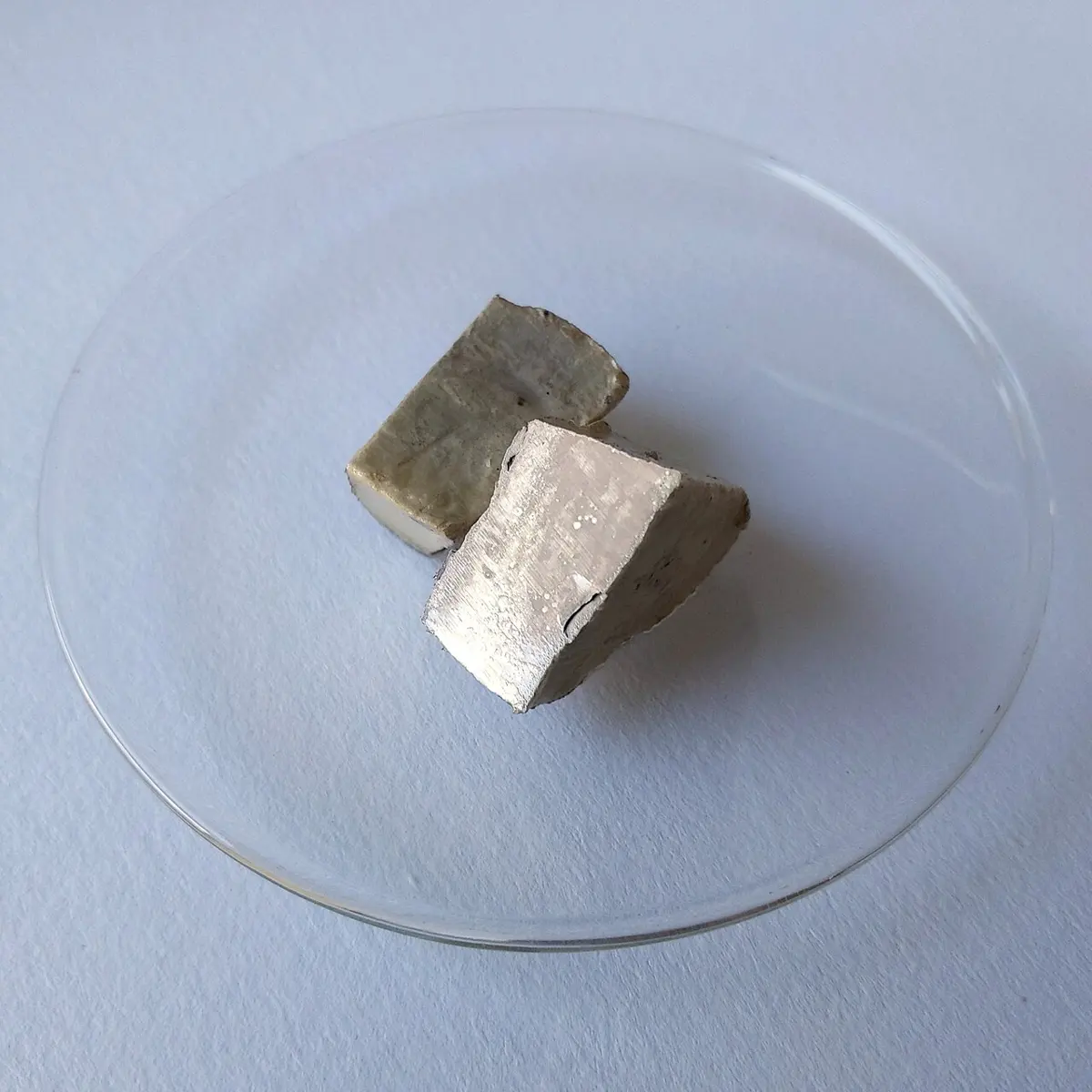
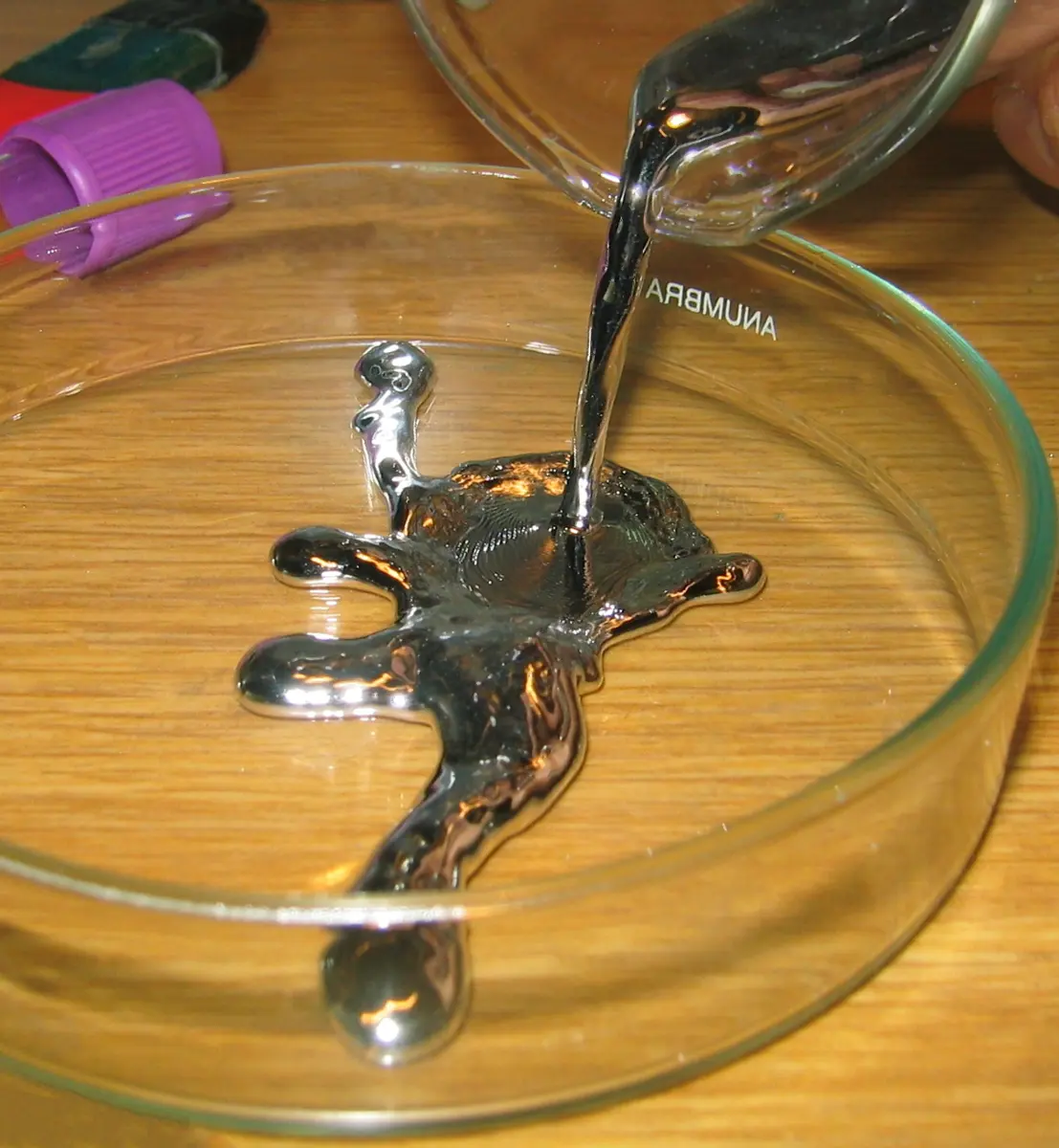
Iron and copper are hard metals. Not all metals are equally hard. Lithium, sodium and potassium are so soft that they can be cut with a knife, while hard metals can’t be cut easily.
At ordinary temperatures, almost all metals are solid. Mercury is the exception: it is a liquid metal.
3. Metals are sonorous
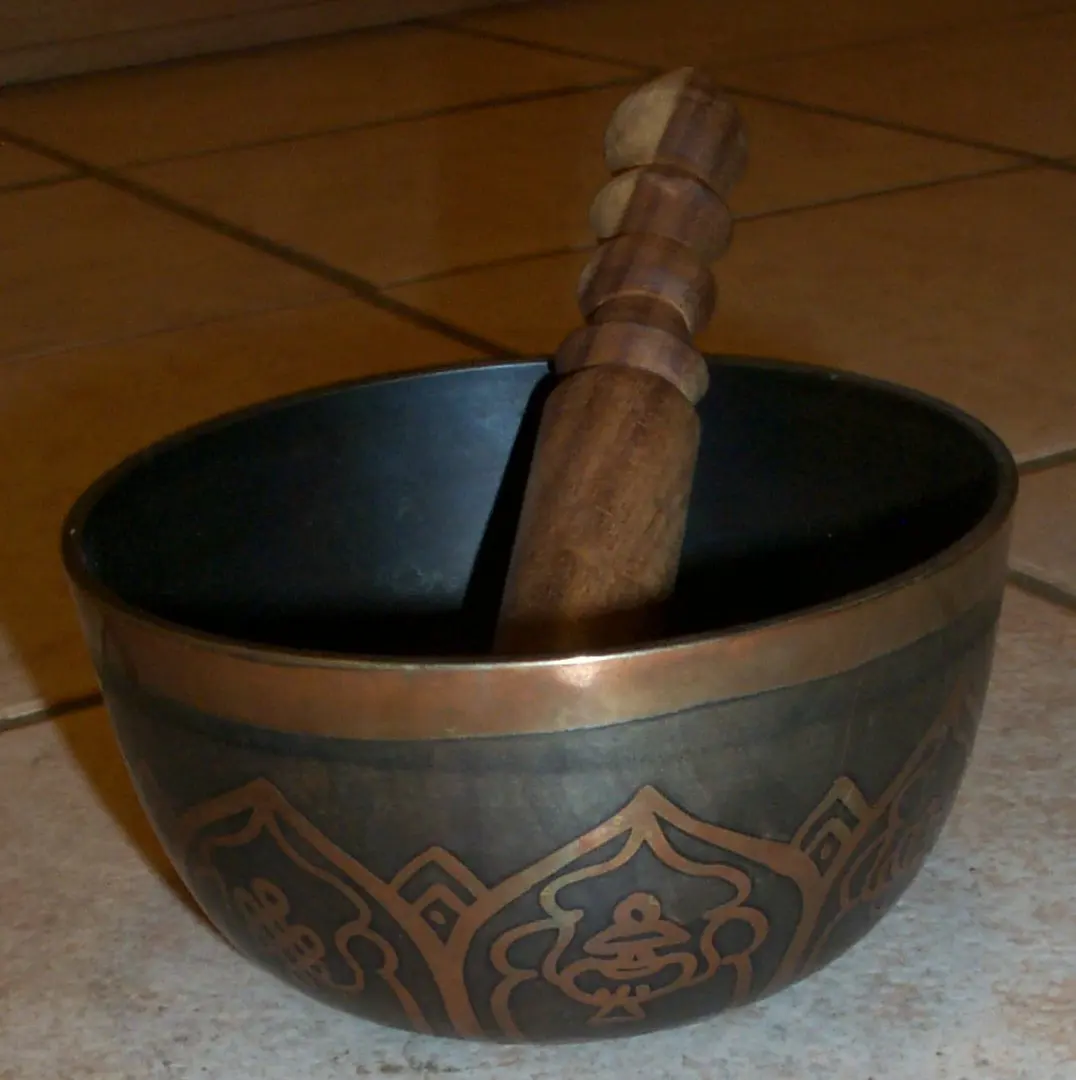
When a hard metal is struck, or two metals hit each other, the metal vibrates and makes a special ringing sound: “ting”. This property is called sonority, and metals are sonorous. That is why temple bells, school bells and singing bowls are made of metal.
4. Metals are malleable
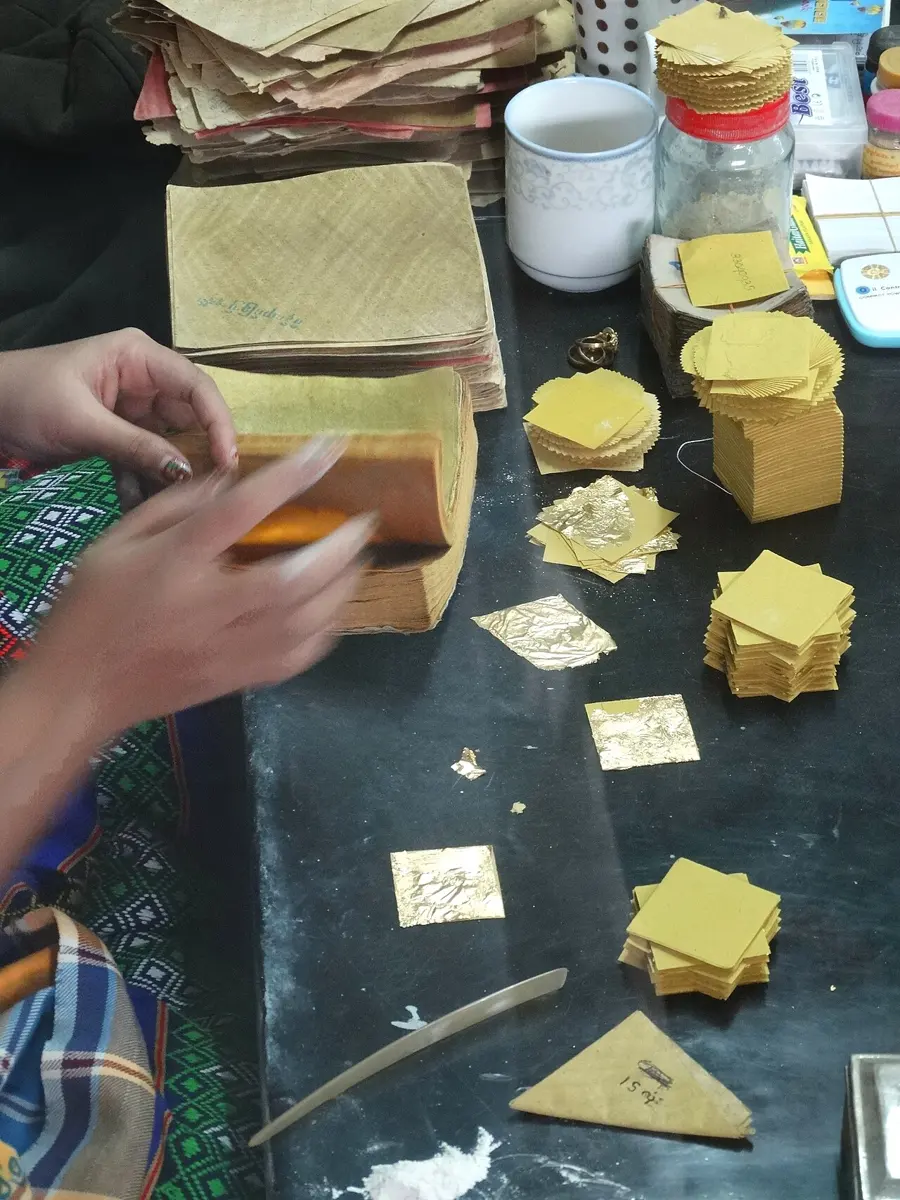
Most metals can be hammered into thin sheets without breaking. This property is called malleability, and such metals are malleable. Because of it, metals are made into sheets of different shapes and sizes, for roofing sheets, pots and pans. Some metals are heated first to make them easier to shape, but gold, silver, copper and aluminium can be beaten into thin sheets even when cold.
5. Metals are ductile
Gold, silver, copper, iron and aluminium can be pulled (drawn) into long, thin wires. The property of being drawn into wires is called ductility, and such metals are ductile. Because of it, metals can be made into rods and wires of many sizes, such as the copper wires that carry electricity in our houses and the iron rods in buildings.
6. Metals are good conductors of heat
Heat passes easily through metals, so they are good conductors of heat. That is why cooking pots are made of metal, and why the hot handle of an iron pan burns you. Metals are also used in electric appliances for heating, such as electric kettles, irons and heaters.
7. Metals are good conductors of electricity
Electricity flows through metals such as zinc sheet, copper sheet, coins and iron nails. So metals are good conductors of electricity. Because electricity flows easily through metal, copper wire is used for the electric circuits in our houses. Many electric devices are made with copper and aluminium wires.
A mixture of a metal with other metals, or with carbon, is called an alloy. Alloys are often stronger or more useful than the pure metal. Steel is iron mixed with a little carbon, brass is copper and zinc, and bronze is copper and tin.
Which property of metals lets them be drawn into wires?
Pick an answer to see why.
Which metal is a liquid at room temperature?
Pick an answer to see why.
B. Non-metals
Many substances around us don’t have the properties of metals. These substances are called non-metals. Hydrogen, oxygen, nitrogen, sulphur and carbon are non-metals. Charcoal, coal and graphite are all forms of carbon, so they are non-metals too.
Non-metals don’t let heat and electricity pass easily (they are bad conductors). They are usually soft and dull, and they don’t ring when they are struck.
Physical properties of non-metals
- Non-metals are found as solids (sulphur, carbon), as a liquid (bromine) and as gases (oxygen, nitrogen, hydrogen).
- Non-metals are usually softer than metals. Diamond, a form of carbon, is the exception: it is the hardest natural substance.
- Non-metals don’t make a ringing sound when struck.
- Non-metals don’t have metallic luster. (Iodine and graphite are exceptions with some shine.)
- Non-metals are not malleable: solid non-metals break or crumble when hammered. They are brittle.
- Non-metals are not ductile: they can’t be drawn into wires.
- Non-metals are bad conductors of heat and electricity. Graphite, another form of carbon, is the exception: it conducts electricity. (Graphite and diamond also carry heat well. Diamond carries it even better than copper, but it doesn’t conduct electricity.)
Differences between metals and non-metals
| Metals | Non-metals |
|---|---|
| Metals have metallic luster. | Non-metals have no luster (except iodine and graphite). |
| Metals are usually hard. Some, such as sodium, are soft. | Non-metals are usually softer than metals (except diamond). |
| Metals make a ringing sound when struck. | Non-metals don’t make a ringing sound. |
| Metals are malleable. | Non-metals are not malleable; solid ones are brittle. |
| Metals are ductile. | Non-metals are not ductile. |
| Metals are good conductors of heat and electricity. | Non-metals are bad conductors of heat and electricity (except graphite). |
| Almost all metals are solids (mercury is a liquid). | Non-metals are solids, a liquid or gases. |
Which of these is a non-metal?
Pick an answer to see why.
Environmental impacts of chemical substances
A. Cleaning chemicals
The chemicals used for cleaning, such as soap, shampoo, detergent and phenol, are made by people in factories. It is important to study how they affect our health and the environment before we use them, because some of them can be harmful. Using too much of them can pollute soil, water and air, and harm people, animals and plants.
For example, soap breaks down quickly in soil and water: tiny living things (bacteria) feed on it, until it is gone. It is biodegradable. Many detergents break down much more slowly, and some stay in the soil for a long time and spoil it. Detergent water poured on plants harms their growth. In streams and ponds, detergent harms fish and other water animals, and the phosphates in some washing powders feed water weeds and green scum (algae), which use up the oxygen that fish need.
B. Metals
Many things we need are made of metal. Walking along a road, we sometimes find thrown-away blades, nails and tin cans. Metal things don’t rot away in soil. Thrown away carelessly, they pollute the environment, and rusty blades and nails cut people and animals. To stop this, metal waste should be collected and reused or recycled.
Some metals are poisonous (toxic). Lead and mercury harm the brain, the kidneys and the nerves, most of all in children. Cobalt is needed by the body in tiny amounts, but larger amounts are harmful. When such metals get into water, they harm fish and other water animals, and they can reach us through the fish we eat. Such metals must be handled and thrown away with care: old batteries, broken thermometers and tube lights should never go into a river or a fire.
C. Minerals and fuels
Burning fossil fuels is a major cause of air pollution. Coal, diesel and petrol are widely used as fuels today. When they burn, they put smoke and carbon dioxide into the air. Using other sources of energy, such as electricity from rivers (hydropower) and the Sun, instead of such fuels helps to control air pollution.
Mining and processing minerals also harm the environment: they pollute water, air and soil. For example, cement is made by heating limestone in huge kilns. A cement factory pollutes the air around it with dust, and the limestone itself gives off carbon dioxide when it is heated.
Why should old batteries and broken thermometers never be thrown into a river?
Pick an answer to see why.
Exercise
1. Fill in the blanks with suitable words from the box
mineral · transfer · metal · iron
Metals __________ heat and electricity easily.
Answer
transfer (pass on, or conduct)
Iron, copper and gold are examples of __________.
Answer
metal (metals)
__________ is mixed with carbon to make the alloy steel.
Answer
Iron
(mineral is the word left over.)
2. Choose the correct answer
a. Which of these is a property of non-metals?
Pick an answer to see why.
b. Which of these is a non-metal?
Pick an answer to see why.
c. Which of these is a use of iron?
Pick an answer to see why.
d. Which is a group of metals only?
Pick an answer to see why.
e. Which statement is wrong?
Pick an answer to see why.
3. Differentiate between
Metals and non-metals
Answer
| Metals | Non-metals |
|---|---|
| They have metallic luster. | They have no luster (except iodine and graphite). |
| They are usually hard. | They are usually soft (except diamond). |
| They ring when struck. | They don’t ring when struck. |
| They are malleable and ductile. | They are neither malleable nor ductile. |
| They are good conductors of heat and electricity. | They are bad conductors of heat and electricity (except graphite). |
| Examples: iron, copper, gold. | Examples: oxygen, sulphur, carbon. |
Malleability and ductility
Answer
| Malleability | Ductility |
|---|---|
| It is the property of being beaten into thin sheets. | It is the property of being drawn into thin wires. |
| The metal is hammered or pressed. | The metal is pulled (stretched). |
| Because of it, we get sheets, foil and pots. | Because of it, we get wires and rods. |
| Example: aluminium foil, jasta pata. | Example: copper wire. |
4. Answer the following questions
What is a metal? Write any three properties of metals.
Answer
A metal is a substance that is usually hard and shiny, can be beaten into sheets and drawn into wires, conducts heat and electricity, and rings when struck. Examples: iron, copper, gold.
Three properties:
- Metals have luster (they shine).
- Metals are malleable: they can be beaten into sheets.
- Metals are good conductors of heat and electricity.
How can you find out that an object is a non-metal? Write two tests.
Answer
- Hammer it on a hard stone. A solid non-metal breaks or crumbles into pieces; a metal flattens.
- Put it across the gap in a circuit with a cell and a bulb. With a non-metal, the bulb stays dark; with a metal, it lights.
(Other tests: a non-metal makes a dull sound when tapped, and has no shine.)
Which two properties of metals make them suitable for cooking pots?
Answer
- Metals are good conductors of heat, so the heat of the fire passes quickly to the food.
- Metals are malleable, so they can be beaten and pressed into the shape of pots and pans. (They are also strong, and have high melting points, so they don’t melt in the fire.)
What are non-metals? Give two examples.
Answer
Non-metals are substances that don’t have the properties of metals: they are usually soft and dull, don’t ring when struck, are neither malleable nor ductile, and are bad conductors of heat and electricity. Examples: oxygen and sulphur (also carbon, nitrogen and hydrogen).
Write any two properties and two uses of metals and of non-metals.
Answer
| Metals | Non-metals | |
|---|---|---|
| Properties | 1.They shine. 2. They conduct heat and electricity. | 1.They are dull. 2. They don’t conduct heat and electricity. |
| Uses | 1.Copper for electric wires. 2. Iron for rods, tools and pots. | 1.Oxygen for breathing. 2. Carbon (coal, charcoal) as fuel. |
Write two uses each of iron, copper and gold.
Answer
- Iron: rods for buildings; nails, tools and pots. (Also: steel, sheets and wires.)
- Copper: electric wires; gagri and other utensils. (Also: coins, idols, brass.)
- Gold: jewelry; coins and medals. (Also: tooth crowns, parts of phones.)
Explain briefly how careless use and disposal of everyday materials harm the environment.
Answer
- Too much soap, detergent and phenol pollutes soil and water. Detergents break down slowly, spoil the soil, harm plants and kill fish.
- Metal waste such as blades, nails and cans doesn’t rot; it litters the land and can injure people and animals.
- Poisonous metals such as lead and mercury, from batteries and thermometers, harm water animals and people.
- Burning coal, diesel and petrol and making cement fill the air with smoke and carbon dioxide.
What kinds of rubbish are found around your school? Write suggestions to the school administration for reducing it.
Answer
Rubbish often found: wrappers of noodles, biscuits and sweets; plastic bottles and bags; juice boxes; paper; leftover food; pen refills.
Suggestions:
- Keep separate bins for paper, plastic, metal and food waste, and label them.
- Ask students to bring tiffin in boxes and water in reusable bottles, not plastic wrappers.
- Stop selling packed junk food in the canteen.
- Make compost from food waste and leaves for the school garden.
- Sell paper, bottles and metal to a kawadi for recycling.
- Run a cleaning campaign each week, with a class in charge.
We sometimes hear in the news that lead has been mixed into petrol, and that environmentalists have objected strongly. Why do they object?
Answer
Lead is a poisonous metal. When petrol with lead is burnt in engines, the lead comes out with the smoke as tiny particles. People breathe them in, and they settle on soil, water and crops. Lead harms the brain and nerves, most of all in children (it slows their learning and growth), and it damages the kidneys and blood. So environmentalists object. For this reason, leaded petrol was banned for cars all over the world; the last country stopped selling it in 2021.
Write an essay on “Our village is a beautiful place”, including the cleanliness around you, the causes of rubbish, its effects and the solutions.
Hint
Plan four paragraphs: 1. Your village and what makes it beautiful. 2. Where rubbish comes from (packets, plastic, waste from shops and houses, careless dumping). 3. Its harm (bad smell, flies and mosquitoes, disease, blocked drains, dirty streams, harm to animals). 4. Solutions (sorting waste, compost, recycling, less plastic, cleaning campaigns, rules about dumping) and what you will do.
Answer
Our village is a beautiful place
Our village lies on a green hillside, with terraced fields, a stream and tall trees. In the morning the birds sing, and on a clear day we can see the white mountains. People here help each other, and we are proud of our village.
But our village is not as clean as it should be. Plastic bags, noodle wrappers and bottles lie beside the road and in the stream. Shops throw their waste behind their buildings, and some people dump rubbish on the riverbank. Plastic doesn’t rot, so it piles up year after year.
This rubbish causes many problems. It smells bad and attracts flies, rats and mosquitoes, which spread diseases such as diarrhea and dengue. Plastic blocks the drains, so water floods the road in the monsoon. Cattle that eat plastic bags fall ill, and the stream that once had fish is now dirty.
We can solve these problems together. Every house can sort its waste: food and leaves into a compost pit, and paper, bottles and metal for the kawadi. We can carry cloth bags to the shop and refuse plastic ones. The ward office can place bins and fine those who dump rubbish. Our school can hold a cleaning day each month. If each of us does a little, our village will be not only beautiful, but clean and healthy too.
Practice every question in the book, and keep track of the ones you miss →