
Your friend has lost her book and is afraid to tell the teacher. What do you say? You should tell her. Why don’t you ask your friends? If I were you, I would… Three ways to give the same advice, and each one sounds a little different.
This unit is about making suggestions: giving advice, kindly. You will read a funny folk tale about monkeys who try to fast, and the story of how computers went from the size of a room to the size of your pocket. You will learn to imagine with if: If I were a bird, I would fly over the mountains.
Getting started
A. What would you do?
Picture four people, each a chance for you to do something.
- A dog barks at a man walking past.
- A poor old woman sits by the road, holding out a bowl.
- An old man with a stick stands at a zebra crossing.
- A smiling girl in school uniform holds up a trophy she has won.
Look at the pictures and say what you would do to these people.
Model answers
Notice how each answer starts: I would… We use would when we imagine what we would do in a situation that isn’t happening to us right now.
B. Listen and sing
The song is a list of wishes. Each verse imagines being something else, and what the singer would do then:
- with the time and wings to fly, the singer would fly high and see the whole world from the sky;
- as a dolphin, the singer would dive deep into the sea;
- as a hungry little crocodile, the singer would travel miles for food;
- as a monkey, the singer would roam free in the jungle.
The last lines say what the singer really wants from all of these: to stay happy, active and free.
Every pair of lines has the same pattern: If I had…, I would… and If I were…, I would… You will learn this pattern in the Grammar section.
C. If you were a bird
How would you live your life if you were a bird? Tell your friends.
A model answer
Reading I: The Monkeys Go Fasting
Before you read
The picture shows a group of monkeys sitting together under a tree, with an old monkey in the middle.
What do you think the monkeys are doing in the picture?
A model answer
Do you have a meeting in your family? Why?
A model answer
The story, part by part
This is an Indian folk tale: a story people told each other for hundreds of years before anyone wrote it down. It is funny, and it has a lesson hidden in it.
- The plan. A group of monkeys decides to fast: to eat nothing for a day. The old chief worries that they will be starving by evening if no food is ready. So he suggests that the young monkeys collect food first, to eat as soon as the fast is over. Everyone nods in agreement, and the young monkeys come back with big bunches of delicious-looking bananas.
- The first step. The chief’s wife looks at the bananas and gives some advice: why not give each monkey its share now? After the fast, they will be too hungry to wait while the bananas are shared out. Everyone likes the idea.
- The second step. A young monkey suggests peeling one banana each, so it is ready to eat. A fat monkey agrees loudly: just looking at the bananas is making him hungry. The chief agrees, but warns them not to eat until the fast is over.
- The third step. A little monkey asks his father if he can keep the banana in his mouth. He promises not to eat it until evening. His father likes the idea so much that he suggests they all do it. They can chew the moment the fast ends, he says, and holding a banana isn’t eating it.
- The end. The monkeys sit with bananas in their mouths, looking at each other uncomfortably. In no time at all, every banana slides down every throat, and that is the end of the fast!
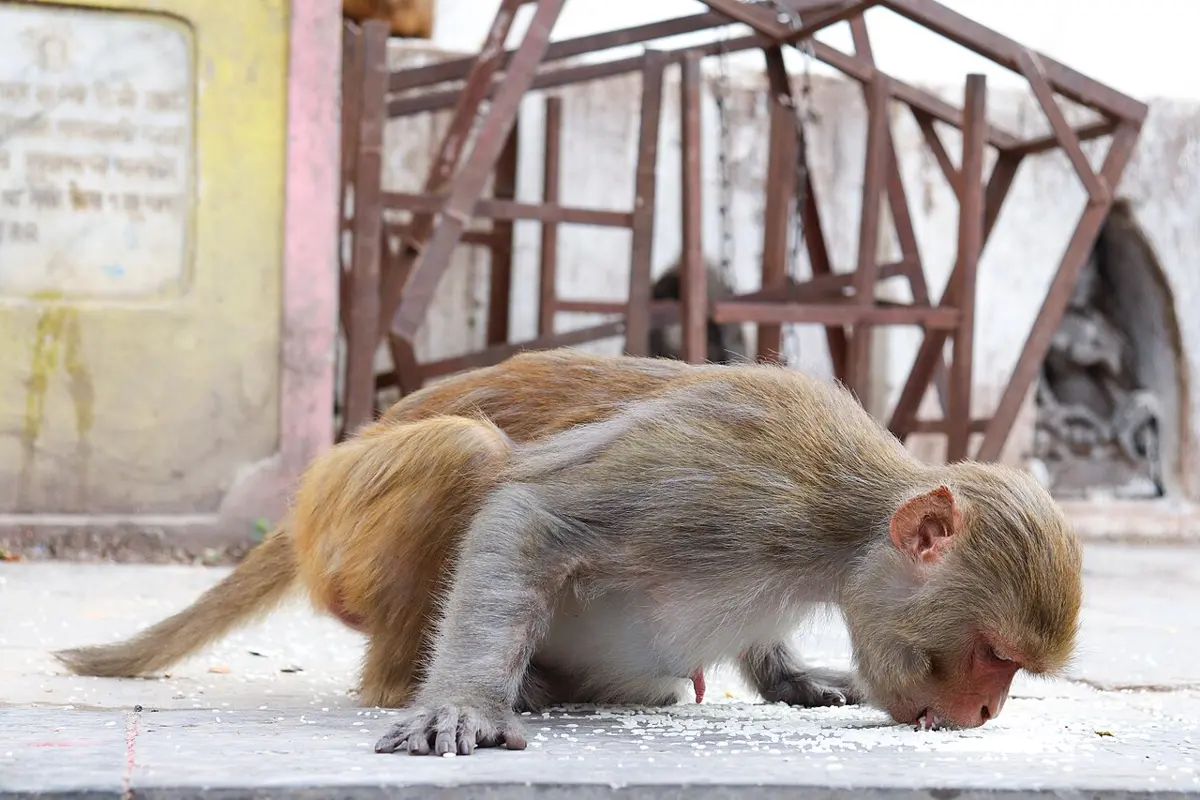
Why did the chief’s wife want the bananas shared out before the fast?
Pick an answer to see why.
Words from the story
| Word | Meaning |
|---|---|
| fast | to eat nothing (or very little) for a time, often for religious reasons |
| starve | to suffer or die because there is not enough food |
| chief | the leader of a group |
| nod | to move your head down and up to say yes |
| delicious | very tasty |
| counsel | to give advice |
| share | the part of something that is given to one person |
| peel | to take the skin off a fruit |
| promise | to say that you will certainly do something |
| chew | to break food with your teeth |
| gullet | the tube that takes food from the mouth to the stomach |
A. Match the words
Match the words with their meanings.
| Words | Meanings |
|---|---|
| a.fasting | i.showed agreement by lowering the head |
| b.nodded | ii.staying without food for a long time |
| c.delicious | iii.having a strong desire to eat food |
| d.hungry | iv.make a commitment to do something |
| e.promise | v.very tasty |
Answer
B. Put the events in order
Rearrange the following sentences in the correct order.
- a.Young monkeys brought delicious-looking bananas.
- b.All the monkeys ate the bananas and their fasting was over.
- c.The monkeys peeled bananas and put them in their mouths.
- d.The monkeys decided to go on a fast.
- e.The monkeys felt very hungry after they saw the bananas.
Answer
C. Short answers
What did the monkeys agree on?
Answer
Why did the old monkey suggest that the young monkeys collect food?
Answer
What made the fat monkey hungry?
Answer
Why did the monkeys divide the bananas?
Answer
Why did they decide to put the peeled bananas in their mouths?
Answer
D. Talk about fasting
Do you fast? Why do you do it? Is it good or bad for health? Discuss with your friends.
A model answer
Speaking: making suggestions
A. Act out the conversation
Deepak sees that Ansila looks sad. At first she wants to be left alone, but he asks again, and she tells him: she has lost her English book. He suggests telling the teacher: Why don’t you tell your teacher? She is afraid to. So he says it again, more strongly: If I were you, I would tell him for sure. He promises the teacher will understand. Ansila decides to say sorry to the teacher first, and Deepak adds one more suggestion: You should buy a new one if it isn’t found.
Three ways to make a suggestion
| Suggestion | How it sounds |
|---|---|
| You should tell your teacher. | clear advice; should means “it is the right thing to do” |
| Why don’t you tell your teacher? | friendly, like an idea for the other person to think about |
| If I were you, I would tell your teacher. | “imagine I had your problem”: gentle, but strong |
| Let’s tell the teacher together. | a suggestion for both of us |
After should, why don’t you and would, use the plain verb: should tell, why don’t you tell, I would tell.
To answer a suggestion: That’s a good idea. You’re right. I will. or Thanks, but… with a reason.
Your friend says, “I can’t sleep before exams.” Which suggestion is correct?
Pick an answer to see why.
B. Make sentences from the table
Make as many sentences as possible from the table: You should… / Why don’t you…? / If I were you, I would… with tell it to your class teacher · speak politely · inform your parents · go and meet her · follow the teacher’s advice · search myself.
Model sentences
C. Give suggestions
Work in pairs. Take turns to give suggestions in these situations, using You should…, Why don’t you…? or If I were you, I would…. (Example: A: I have lost my pencil. B: You should tell it to your class teacher.)
- a.You have lost your notebook.
- b.You are feeling thirsty.
- c.You are having a stomach ache.
- d.You are not so good at English.
- e.You have made some mistakes in the story.
Model answers
Listening
A. Before you listen
The picture shows a boy looking sad while his friend talks to him.
Look at the picture and guess the answers.
- a.What do you see in the picture?
- b.Do you remember the last time you were sad?
Model answers
Now listen. Read the sentences in B and C first.
B. Fill in the blanks
Listen to the recording and fill in the blanks.
- a.Ivan has lost his ……… .
- b.First, Suvam advised Ivan to tell his ……… about it.
- c.Ivan told the teacher, but it was not ……… .
- d.Ivan finally said that telling all his friends was a good ……… .
Answer
C. Choose the best answer
a. Ivan and Suvam are ___ .
Pick an answer to see why.
b. Ivan was ___ of telling it to his other friends.
Pick an answer to see why.
c. Suvam advised Ivan to go in front of the class and say it ___ .
Pick an answer to see why.
D. What did Suvam suggest?
What did Suvam suggest to Ivan? Try to remember his sentences and write them down.
Answer
Grammar: if I were you
A. Complete the sentences
Complete the sentences with the endings from the box: I would go to meet him · you could win the race · I would tell her the answer · I would fly in the sky · we could secure good marks. Then underline the verb forms.
- a.If I were a bird, …
- b.If you ran fast, …
- c.If he called me, …
- d.If we studied carefully, …
- e.If she asked me, …
Answer
B. What these sentences mean
These sentences are about the present or the future, even though they use past verbs. The past form shows that the situation is imagined: not true now, or not likely.
| Sentence | What it really means |
|---|---|
| If the weather improved, we could go for a walk. | The weather probably won’t improve. |
| If people complained, things would change. | People don’t complain now. |
| If there were more buses, we would leave the car at home. | There probably won’t be more buses. |
| I would buy a house if I had enough money. | I probably won’t have the money. |
The pattern:
| The if part | The other part |
|---|---|
| If + past (had, lived, ran, were) | would / could + plain verb |
| If I had wings, | I would fly. |
| If it were sunny, | we could go out. |
You can put either part first. When the if part comes first, put a comma after it: If I had wings, I would fly. I would fly if I had wings.
“If I ___ the principal, I would give everyone a holiday on Friday.”
Pick an answer to see why.
“If we had a garden, we ___ grow our own vegetables.”
Pick an answer to see why.
C. Choose the five words
Choose the five words which complete each sentence.
- a.How would we keep in touch ……… ? (to, didn’t, we, have, if, did, computers)
- b.If she ………, ……… going out with her. (he, beautiful, wouldn’t, isn’t, wasn’t, being, be)
- c.If people ………, ……… be fewer wars. (more, would, there, wouldn’t, were, are)
- d.If you ………, ……… be able to communicate. (speak, spoke, speaking, couldn’t, wouldn’t, we, English)
Answer
D. Rewrite the suggestions
Rewrite the suggestions using the given beginnings.
- a.If I were you, I would go to a dentist. → You should…
- b.You should report it to the police. → Why don’t you…?
- c.You should take hot water. → If I were you, …
- d.Why don’t you ask your sister for help? → You should…
Answer
Writing
A. Imagine the opposite
Rewrite the sentences as in the example. (I don’t live with my parents, so I don’t see them every day. → If I lived with my parents, I would see them every day.)
- a.They don’t live far from work, so they don’t use public transport.
- b.It isn’t sunny outside, so the children will not go for a walk.
- c.My mother doesn’t have time, so she will not cook dinner.
- d.I don’t have a toothache, so I will not go to the dentist.
- e.He doesn’t have free time, so he will not visit me.
- f.I don’t have special skills for this job, so I will not get it.
Answer
B. A story from an outline
The outline is a famous fable, Belling the Cat. It is often counted among Aesop’s fables from ancient Greece, but it was first written down in Europe about 800 years ago, in the Middle Ages. Here is how the outline goes:
- the mice are very unhappy, because the cat has killed many of them;
- they hold a meeting to discuss how to get rid of the cat;
- many suggestions are made, but none will work;
- a young mouse suggests tying a bell round the cat’s neck;
- all the mice welcome the idea with joy;
- an old mouse stands up and asks who is going to tie the bell.
Write a short story on the basis of the outline.
Hint
A model story
Reading II: History of Computers
Before you read
Can you name all the objects in the pictures?
A model answer
Would life be difficult if there were no mobile phones? How?
A model answer
The text, part by part
- Room-sized machines. The first computers were enormous: one filled a whole room, so nobody had one at home. Each could only do arithmetic, like a big calculator.
- The 1930s. Alan Turing, an English mathematician, had the idea of a computer that could be programmed to do many different jobs, not just one.
- 1958. Jack Kilby, an American engineer, made the first microchip: a tiny piece that holds many electronic parts. Chips let computers become small.
- The 1970s and 1980s. Computers became small and cheap enough for homes. In the 1980s, computer games were so popular that many people bought a computer just to play them.
- 1989. Tim Berners-Lee invented the World Wide Web, a way to organize information on the internet as pages joined by links. Now people everywhere look up and share information on websites.
- Today. A smartphone plays games, sends email and goes on the internet. Something that once filled a room now fits in your pocket.
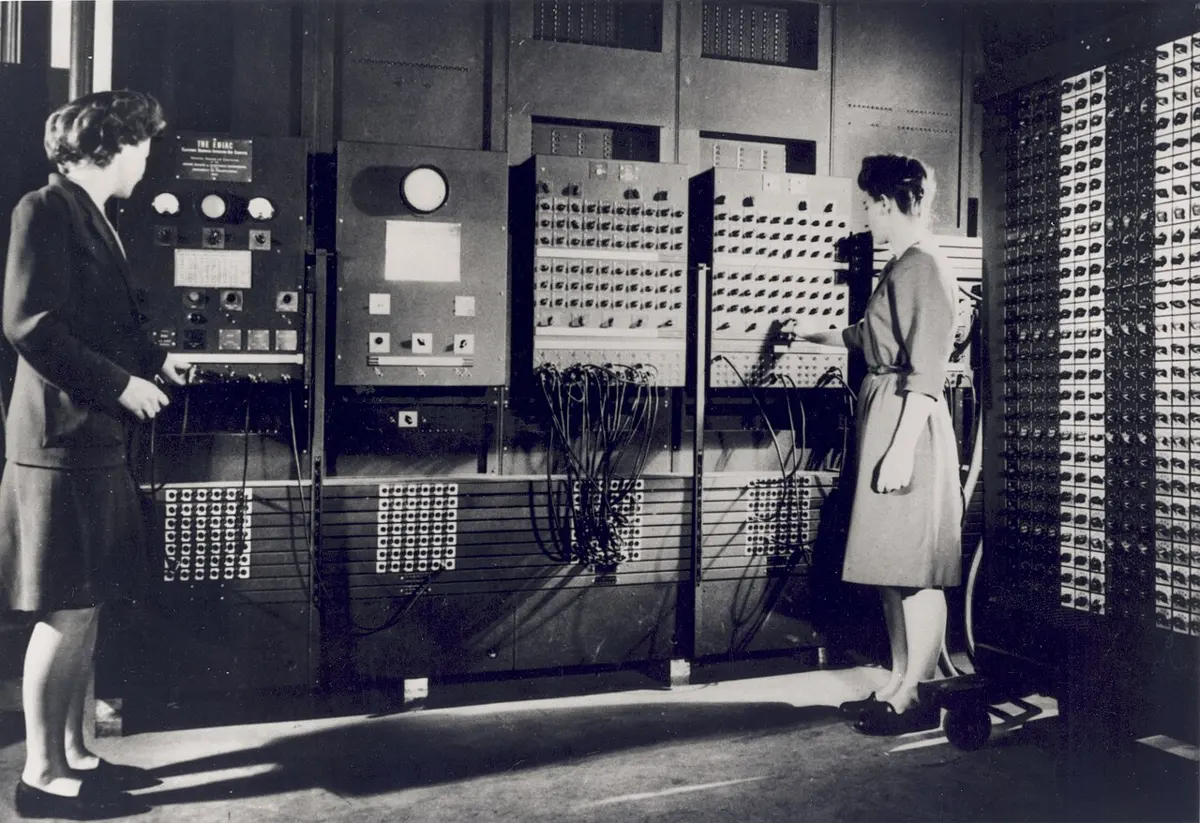
The text then turns to a question: what would happen if there were no mobile phones? It says that many people report that smartphones have made their lives better, and that nearly half of smartphone users say they can hardly imagine life without one. We depend on them to wake us up, to find our way, to answer emails and much more. The writer expects our lives to keep getting easier as we use more apps.
Words from the text
| Word | Meaning |
|---|---|
| calculator | a small machine for doing arithmetic |
| program | to give a computer a set of instructions to follow |
| microchip | a very small piece of material with many tiny electronic parts on it |
| invent | to make or think of something that has never existed before |
| internet | the network that joins computers all over the world |
| website | a set of pages on the internet about one subject or business |
| smartphone | a mobile phone that works like a small computer |
| imagine | to make a picture of something in your mind |
| report | to tell or write about something that has happened |
| dependent (on) | needing someone or something to live or work |
A. Complete the sentences
Complete the sentences with words from the box: calculator, invented, microchips, internet, smartphones, reported, imagine, dependent.
- a.Can you ……… your life without a computer?
- b.If you have access to the ………, you can google it.
- c.……… can store lots of information in them.
- d.He has been using an old ……… to do calculations.
- e.Do you know who ……… the computer?
- f.The theft was ……… in all the newspapers.
- g.She has three ……… children. She has to take care of them all.
- h.……… can also be used as small computers.
Answer
B. Complete the table
Read the text again and complete the table. (1958: Jack Kilby invented the microchip.)
1970s · 1980s · 1989
Answer
C. Answer the questions
Did people have the first computers at home? Why or why not?
Answer
What is strange about microchips?
Answer
What did people use computers for in the 1980s?
Answer
Where do people share information nowadays?
Answer
How has the use of smartphones affected human life?
Answer
D. Talk about it
Have you got a computer or smartphone? What do you use it for? How often do you use it? Is it helpful? Talk to your friends.
A model answer
Project work
Extra bit: irregular past forms
Most verbs make their past by adding -ed: peel → peeled, agree → agreed. These are regular. But many common verbs don’t follow that rule. They are irregular, and each one must be learned. A verb has three forms:
- the base (plain) form: I eat rice.
- the simple past: Yesterday I ate rice.
- the past participle, used after has, have and had: I have eaten already.
| Base | Simple past | Past participle |
|---|---|---|
| be | was / were | been |
| beat | beat | beaten |
| begin | began | begun |
| break | broke | broken |
| blow | blew | blown |
| bring | brought | brought |
| build | built | built |
| buy | bought | bought |
| choose | chose | chosen |
| draw | drew | drawn |
| drink | drank | drunk |
| drive | drove | driven |
| fall | fell | fallen |
| feel | felt | felt |
| fight | fought | fought |
| find | found | found |
| fly | flew | flown |
| forget | forgot | forgotten |
| get | got | got / gotten |
| give | gave | given |
| grow | grew | grown |
Notice the groups. Some have one form for both (bring, brought, brought; build, built, built). Some have three different forms (begin, began, begun; drink, drank, drunk). Many past participles end in -n or -en (broken, chosen, given, grown).
“I have ___ my homework at home!”
Pick an answer to see why.
Exercise
Practice the whole unit. Try each one, then open the answer.
Give a suggestion in three ways for this problem: “My little brother cries when I study.”
Answer
Complete with the right form of the verb in brackets.
- a.If I (have) ……… a camera, I would photograph the birds.
- b.If she (be) ……… here, she (help) ……… us.
- c.We (go) ……… to the zoo if it (be) ……… open today.
Answer
Write the simple past and past participle of: drive, choose, fly, bring.
Answer
What is the lesson of The Monkeys Go Fasting? Answer in one sentence.
Answer
Put these in time order: the World Wide Web · the microchip · Turing’s idea of a programmable computer · home computers.
Answer
Printable PDFs
- Study notes 2 pages
- Harder practice questions 2 pages Answer key
Practice every question in the book, and keep track of the ones you miss →
A companion to your textbook, not a replacement for it: study from the book your school uses, and where the two differ, follow your teacher. Found a mistake? Please tell us.