
Nepal has a festival almost every month, and every one has its own greeting: Happy Dashain!, Eid Mubarak!, Happy Lhosar!, Merry Christmas! How many can you say, and do you know what each festival is for?
This unit is about expressing good wishes: saying kind words to people on a happy day, before a hard task, or at a festival. You will read about five festivals of Nepal, listen to a description of Gaura, and learn imperatives, the short sentences we use for rules, instructions and invitations: Open the door, please. Don’t forget your lunch.
Getting started
A. Which festivals?
The unit opens with four pictures of people celebrating.
- A family sits on a mat while an elder puts tika on a child’s forehead. Nearby, children play on a tall bamboo swing (a ping).
- Men and women in bright traditional clothes stand in a big circle, holding hands.
- People dance in a circle around a leafy tree, with a man beating a big drum.
- Men in white beat drums in front of a crowd of dancers.
Look at the pictures and say what festivals these people are celebrating. Talk to your friends what people do during these festivals.
Model answers
B. Listen and sing
The song has two short verses. The first is a birthday wish: the singer wishes the friend smiles and laughter, joy, a good life and an end to worries. The second is a good-luck wish for exams: the singer says the friend has worked hard day and night, and that even if the exam is tough, they will surely do well.
C. Make a wish
Now, make a wish in each of the following situations.
- a.Your friend has a birthday today. Wish him or her.
- b.A festival is coming. Wish your teacher.
Model answers
Here are the wishes you will use most.
| When | What to say | What the other person says |
|---|---|---|
| a birthday | Happy birthday! Many happy returns of the day! | Thank you! |
| a festival | Happy Dashain! Happy Tihar! Happy Lhosar! Merry Christmas! Eid Mubarak! | Thank you. Happy Dashain to you too! |
| an exam, a match, a race | Good luck! All the best! | Thank you. |
| a journey | Have a safe journey! | Thanks. |
| someone who is ill | Get well soon! | Thank you. |
| a blessing from an elder | May you live long! May you be successful! | (touch their feet, or say) Thank you. |
Reading: Festivals of Nepal
Before you read
What are the people doing in the pictures?
A model answer
What festivals do you celebrate?
A model answer
What festival do you like most? Why?
A model answer
The text, festival by festival
The text describes five festivals of different communities. For each one, look for four things: what it is, who celebrates it, when, and what people do.
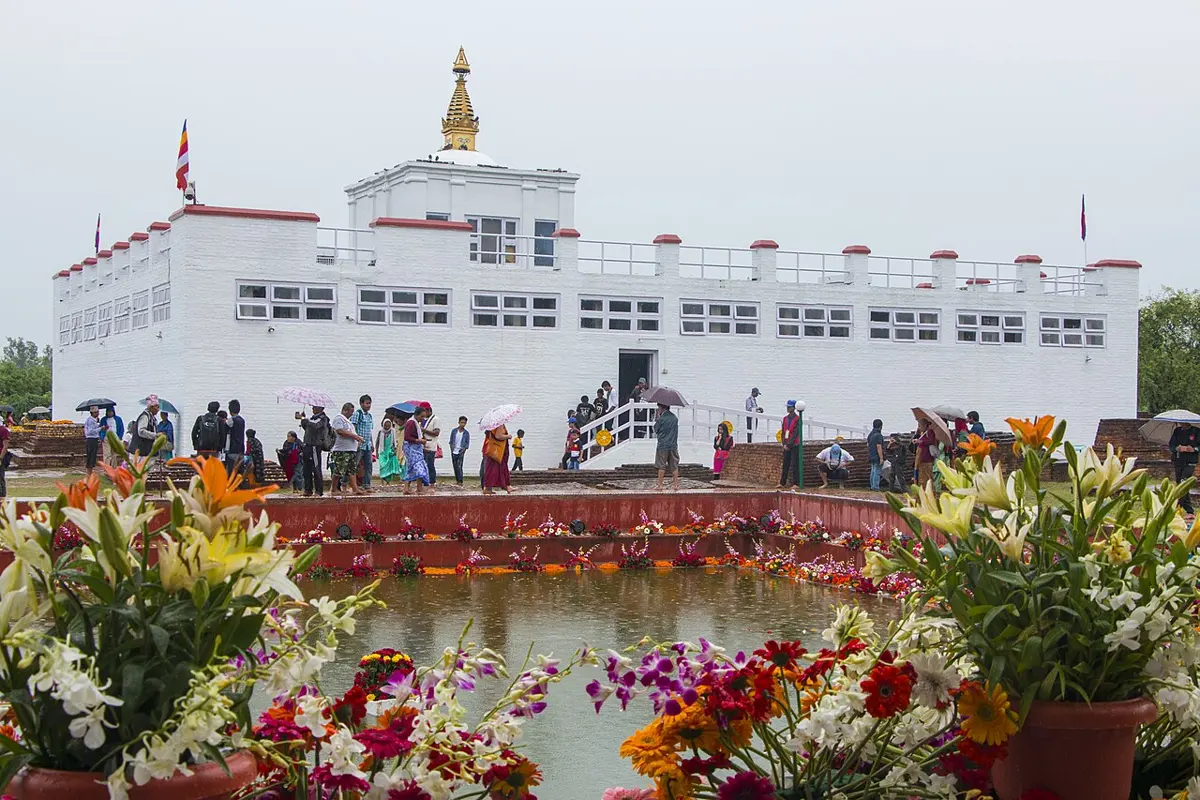
1. Buddha Jayanti. This is the day of the full moon of Baishakh (Baishakh Purnima), so it is also called Buddha Purnima. Buddhists believe that on this one day Siddhartha Gautam was born, became enlightened (understood the truth about life), and died. He was born in Lumbini; Nepal’s traditional year is 623 BC. People go to monasteries and stupas to pray for peace and prosperity (success and plenty). They chant prayers (say them aloud from memory in a steady rhythm), sit quietly to meditate, and decorate the monuments with flowers. Many go to Lumbini, Swayambhu and Boudha.
2. Eid. This is the biggest festival of the Muslim community. It comes at the end of Ramadan, the month in which Muslims fast from sunrise to sunset. People go to the mosque, say their prayers (namaj), and pray to Allah for the unity and prosperity of everyone. They exchange greetings, embrace (hug) each other and say Eid Mubarak!, which means Blessed Eid!, a good wish for the day.
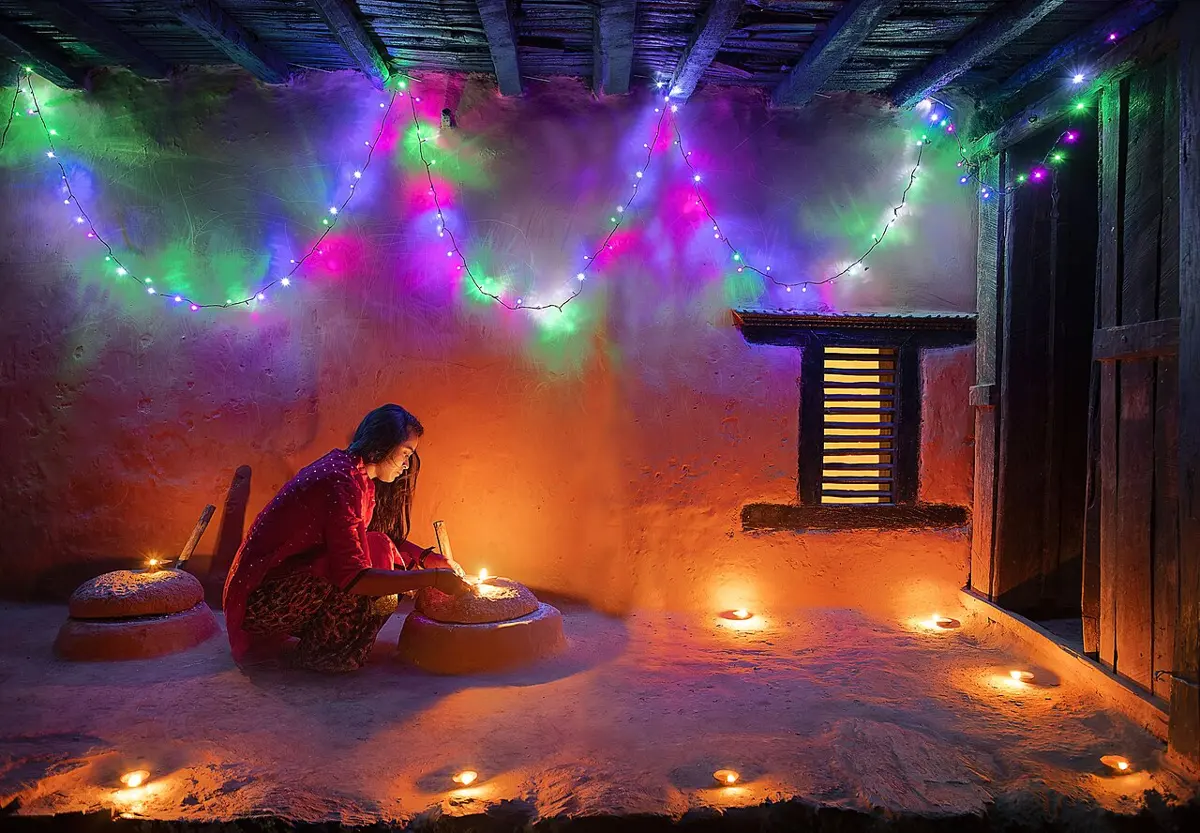
3. Tihar. Also called Dipawali, this is one of the biggest festivals of Nepal. It comes in Kartik and lasts five days, known as Yama Panchak:
- Day 1, Kag Tihar: crows are fed.
- Day 2, Kukur Tihar: dogs are given garlands and tika.
- Day 3, Laxmi Puja: the cow is worshipped in the morning, and in the evening people light lamps and worship Laxmi, the goddess of wealth.
- Day 4, Goru Tihar: oxen are worshipped. (Many Newar families do Mha Puja, the worship of one’s own body, this day.)
- Day 5, Bhai Tika: sisters put tika on their brothers and wish them a long life (longevity) and success.
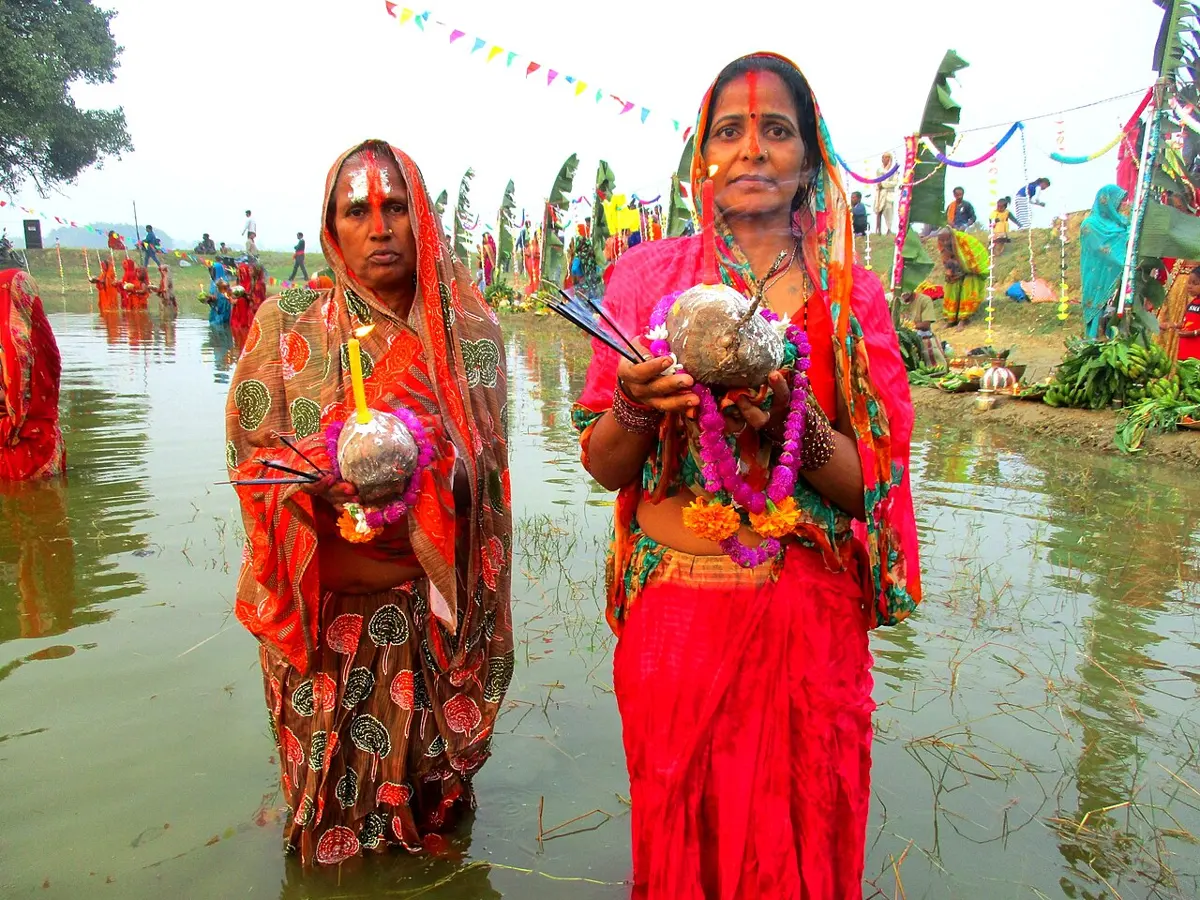
4. Chhath. Chhath comes on Kartik Shukla Shashthi, six days after Laxmi Puja. People worship the goddess Chhathi Maiya and the sun, both the setting sun and the rising sun. They stand in a river, pond or lake and offer fruit and prasad. The festival began in the Terai (in Mithila and the Bhojpur area), but now people celebrate it in many parts of Nepal, including Kathmandu.
5. Christmas. Christians celebrate Christmas on 25 December, the day they remember the birth of Jesus Christ. In Nepal too, they go to church to pray and exchange greetings: Merry Christmas! They decorate their homes and markets with Christmas trees and lights, give each other gifts, and share good food.
Which festival is celebrated on a full moon day?
Pick an answer to see why.
Words from the text
| Word | Meaning |
|---|---|
| Purnima | full moon day |
| enlightened | having understood the truth about life |
| commemorate | to remember an important person or event with a special day or ceremony |
| monastery | a place where monks live, study and pray |
| monument | a building or statue put up to remember a person or event |
| chant | to say a prayer again and again, in a steady rhythm, from memory |
| meditate | to sit quietly and keep the mind calm and still |
| prosperity | success and having plenty of money and good things |
| embrace | to put your arms around someone; to hug |
| longevity | a long life |
| devotee | a person who worships a god with deep love |
| celebrate | to do something enjoyable on a special day |
A. Complete the table
Complete the following table: Festival · Who is it celebrated by? · When is it celebrated? · What do people do?
Answer
B. Find the words
Find the words from the text for the following meanings.
- a.full moon day
- b.a structure put up to remember a person or event
- c.repeat aloud from memory
- d.name of the goddess prayed to during Chhath
- e.marked by some ceremony or observance
Answer
C. A festival near you
Talk about a local festival celebrated in your community. Try talking about what it is, when it is celebrated and what people do.
A model answer
Speaking: wishing people well
A. Act out the conversations
There are two short conversations to act out.
- Sonali greets Gazi with As-Salaam Alaikum!, which means Peace be upon you. Gazi gives the usual answer, Wa-Alaikum-Salaam, And upon you peace, and wishes her Eid Mubarak! She thanks him and wishes him the same.
- Manish greets Menuka with Phyaphulla!, a greeting in Tamang. She answers with the same word and wishes him Happy Lhosar! He thanks her and says Happy Lhosar to you too.
Both conversations follow the same three steps: greet, wish, thank and wish back.
B. Wish your friends
Work in pairs. Talk to your friends and express good wishes on the occasion of these festivals: a. Dashain · b. Udhauli · c. Chhath · d. Holi · e. Eid · f. Teej · g. Buddha Jayanti · h. Maaghi · i. Christmas
Model wishes
Listening: Gaura
A. Before you listen
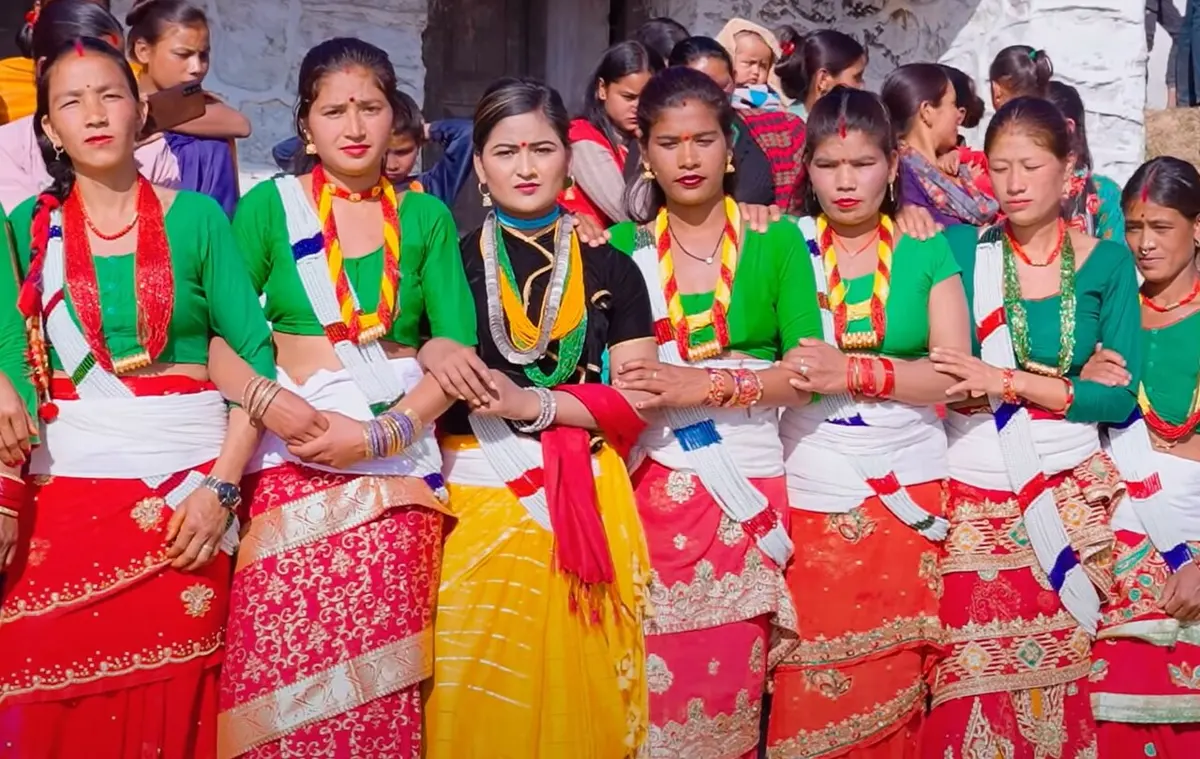
The picture shows women in bright traditional dress and jewelry standing in a long line, holding each other’s arms.
Look at the picture and guess the answers.
- a.What do you think these people are doing?
- b.Have you ever taken part in such an activity?
- c.Can you tell the names of any three cultural performances of your locality?
Model answers
Now listen. Read the questions in B and C first.
B. Circle the correct word
Listen to the recording and circle the correct word.
- a.Gaura is a very popular festival in Eastern / Western Nepal.
- b.It falls in the month of Bhadau / Asoj.
- c.Women worship Gauri / Shiva at the festival.
Answer
C. Yes or no?
a. Men fast at Gaura festival.
Pick an answer to see why.
b. Deuda is performed on the occasion of Gaura.
Pick an answer to see why.
c. Deuda is played with traditional music.
Pick an answer to see why.
D. Talk about Gaura
Talk to your partner. Ask and answer about the Gaura festival.
A model conversation
Grammar: imperatives
A. Class rules
Read the class rules on the whiteboard. Tick the rules you have in your class.
- a.Try your hardest in class.
- b.Enjoy your work.
- c.Close the window if you’re cold.
- d.Put your hand up to ask a question.
- e.Don’t shout out!
- f.Don’t hit other children.
- g.Don’t chew gum.
A model answer
What an imperative is
Every rule on the board is an imperative: a sentence that tells someone to do (or not to do) something. We use imperatives for rules, orders, instructions, directions, advice, invitations and good wishes.
| Kind | Example |
|---|---|
| a rule | Put your hand up to ask a question. |
| an instruction | Mix the flour with water. |
| a direction | Turn left at the temple. |
| advice | Drink plenty of water. |
| an invitation | Come to my house for Tihar! |
| a wish | Have a safe journey! Enjoy the festival! |
How to make one:
- Start with the plain verb. Open the door. Wait for me. There is no you in front: the person you are speaking to is the one who will do it.
- For “don’t do it”, start with Don’t. Don’t shout. Don’t forget your lunch.
- With be: Be quiet. Be careful. Don’t be late.
- Add please to be polite. Put it at the start (Please open the door.) or at the end after a comma (Open the door, please.).
Which sentence is an imperative?
Pick an answer to see why.
“___ late for the bus!”
Pick an answer to see why.
B. Put the words in order
Put the words in the correct order to make sentences. (Example: salt · Pass · me · please · the → Pass me the salt, please.)
- a.door · please · Open · the
- b.lunch · Don’t · your · forget
- c.English · Speak · please · in
- d.Wait · please · for · me
Answer
Writing
A. Correct the paragraph
The book’s paragraph about Mahashivaratri has mistakes in capitals and punctuation. Find them all.
Rewrite the paragraph about Mahashivaratri with the necessary corrections.
Hint
Answer
B. A paragraph about your favorite festival
What do you do in the festival you like most? Write a short paragraph about it, answering these questions:
- a.Who is it celebrated by?
- b.When is it celebrated?
- c.What do people do at the festival?
- d.Why do you like the festival?
Hint
A model answer
Project work
Extra bit: the question mark and the comma
The question mark (?)
Use a question mark:
- at the end of a sentence that asks: Where is the bathroom? Are you at home?
- after a question tag, the short question at the end of a sentence: You speak English, don’t you? Lisa isn’t here, is she?
- after a question that needs no answer, said to make a point: Who cares? Are you kidding me?
Don’t use one after a sentence that only tells: I asked where the bathroom was. (Nothing is being asked here, so: a full stop.)
The comma (,)
Use a comma:
| To… | Example |
|---|---|
| separate three or more things in a list | The colors in my bedroom are blue, green and yellow. |
| write a date with the year | He was born on March 17, 1981. (No comma without the year: School will begin on August 25.) |
| separate a place from the bigger place it is in | She was born in Dhading, Bagmati. |
| separate a degree or title after a name | Ramila Karki, M.D. · Karima Begam, Ph.D. |
| after an opening word like yes, no, well, now, finally | Yes, I would love to go to the park today. Now, it’s time to start the movie. |
Exercise
Practice the whole unit. Try each one, then open the answer.
What do you say?
- a.It is your cousin’s birthday.
- b.Your friend has a football match tomorrow.
- c.Your neighbor is celebrating Eid.
- d.Your grandfather is ill in bed.
Answer
Make these into imperatives.
- a.You must close the gate. (polite)
- b.You must not run in the corridor.
- c.You must be quiet in the library.
Answer
Write three rules for your school garden, one with please and two with Don’t.
Model answers
Put in the missing question marks and commas.
- a.Have you ever seen Chhath
- b.We bought apples bananas and oranges for the puja
- c.Well that was a great Holi wasn’t it
Answer
Match each festival with the month it falls in.
a. Buddha Jayanti · b. Tihar · c. Christmas · d. Maghi
Answer
Printable PDFs
- Study notes 2 pages
- Harder practice questions 2 pages Answer key
Practice every question in the book, and keep track of the ones you miss →
A companion to your textbook, not a replacement for it: study from the book your school uses, and where the two differ, follow your teacher. Found a mistake? Please tell us.