
Your aunt gives you a boring job: painting a long fence on a Saturday. Your friends are going to the river. Could you make them want to do the job for you, and even pay you for the chance? One clever boy in an old American story did exactly that.
This unit is about intentions (what you want or plan to do) and reasons (why you do it). You will read a short play about that clever boy, Tom Sawyer, and a passage about volleyball, Nepal’s national game. You will listen to how an earthquake happens, learn when to say because and when to say because of, and meet words like a flock of birds and a team of players.
Getting started
A. Why are they doing it?
The unit opens with four pictures.
- Two boys in school uniform hit a volleyball to each other.
- An old man with a walking stick crosses a road at a zebra crossing.
- A girl in a school uniform holds up a shining cup, a trophy.
- A girl holds out green leaves to a goat.
Look at the pictures and discuss why they are doing these activities.
Model answers
Two words will help you all through this unit.
- An intention is something you want or plan to do. I want to be a doctor. I’m going to visit my grandmother.
- A reason says why. I want to be a doctor because I like helping sick people.
B. Listen and sing
The poem is by the American poet Robert Frost. It is called A Passing Glimpse, and it first came out in 1928. A glimpse is a very quick look, too short to see clearly.
The poet is traveling by train. Out of the window he sees flowers beside the railway track, but the train rushes on and they are gone before he can tell what kind they are. He wishes he could get off and walk back to look. In the second verse he wonders: was that flash of color something he will never find again? He ends with a thought: the most beautiful sights are sometimes given to people who can’t stop and look too closely.
The poem has a gentle, rocking beat, like a train on its rails. Each pair of lines ends in a rhyme: car and are, back and track, mind and find, those and close.
Sing the poem. Which line tells you the poet is on a train?
Answer
C. A week off
If you have a week-long vacation, what do you like to do and why? Tell your friends.
A model answer
Reading I: Tom Paints the Fence
Before you read
The first picture shows a boy pointing at something, and a woman in a long dress and an apron beside him, on the steps of a house. The second shows a boy in a big hat sitting on a box and eating an apple, while two other boys pull at one brush in front of a wooden fence.
Who do you think these people are?
A model answer
What are the boys doing in the second picture?
A model answer
The play, scene by scene
This reading is a play: a story told by the characters’ own words, written to be acted. The name of the speaker comes first, then what they say. Words in brackets, in italics, are stage directions: they tell the actors what to do, not what to say.
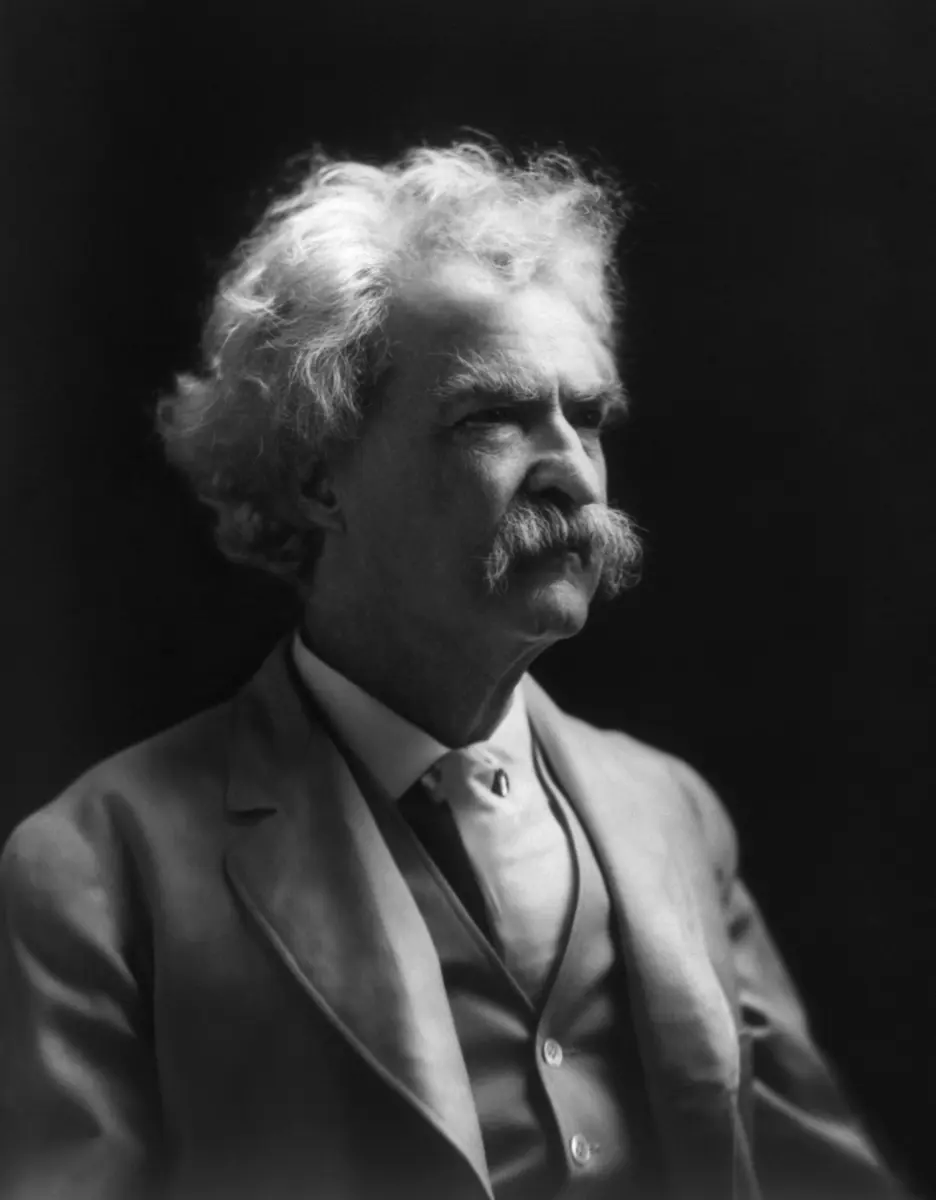
The play is made from a famous book, The Adventures of Tom Sawyer, by the American writer Mark Twain. Tom lives with his Aunt Polly in a small town beside the Mississippi River in America, almost two hundred years ago. There are four characters: Tom, Aunt Polly, and two boys from the town, Ben and Billy.
Scene I: the jam.
- Aunt Polly calls Tom again and again. He doesn’t answer. When he finally appears, she guesses at once that he has been in the closet, a small cupboard room where food is kept.
- Tom says he was doing nothing. But his hands are sticky and his mouth is red. Aunt Polly knows what that means: he has been eating the jam.
- She points to a switch, a thin stick for beating naughty children, and tells him to hand it to her.
- Tom has a trick ready. He cries out to her to look behind her. She turns round, and Tom runs away. For a moment she just stands there, surprised. Then she bursts out laughing, because she has been fooled by the oldest trick there is.
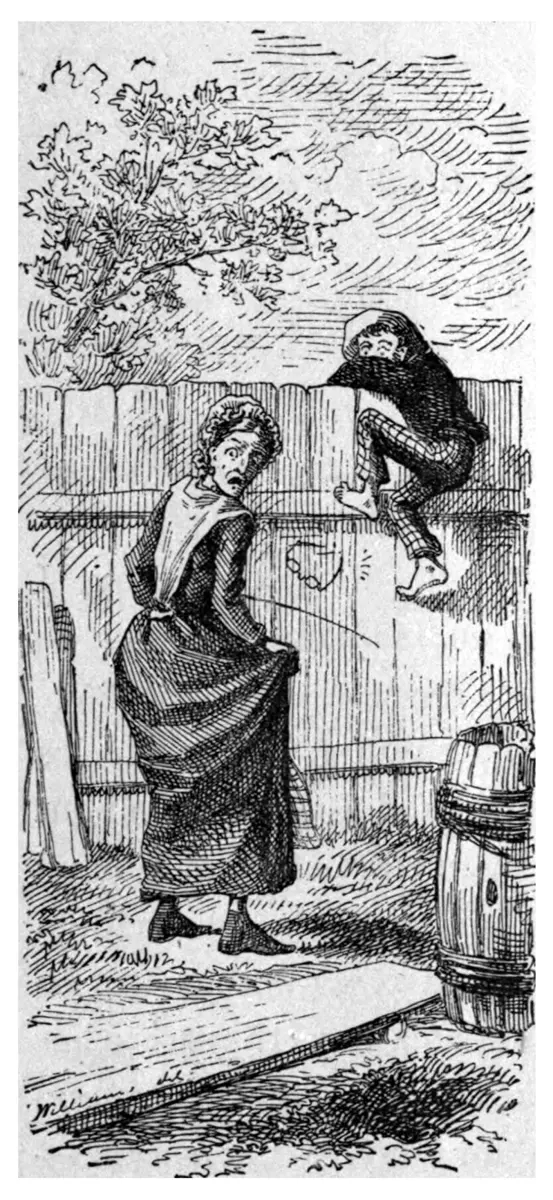
Scene II: the fence.
- Aunt Polly gives Tom a job: to whitewash the fence, that is, to paint it white. Tom begs to do it tomorrow. She doesn’t listen, gives the order again and goes away.
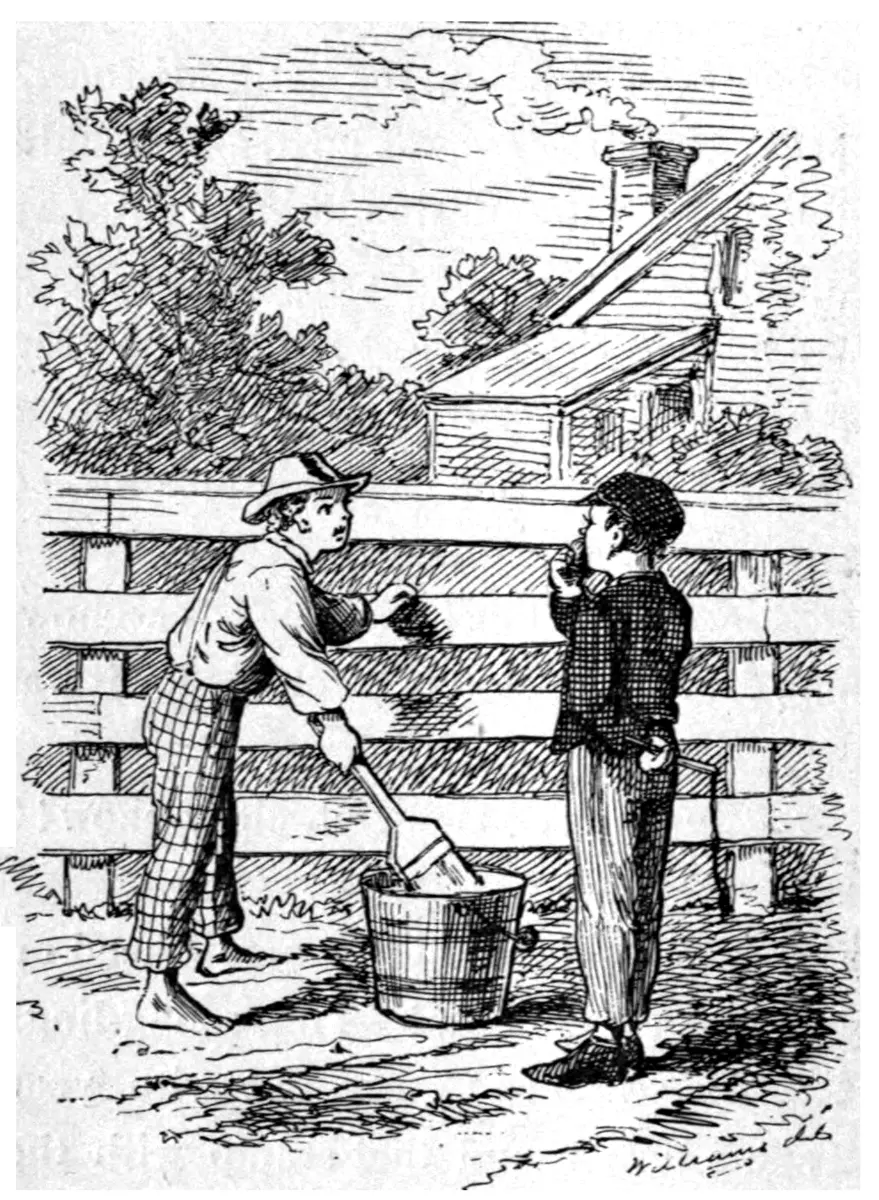
- Tom starts painting. Ben comes along, eating an apple. He asks what Tom is doing, and wants to know if Tom really likes such work.
- Here is Tom’s trick. He says of course he likes it: how often does a boy get the chance to whitewash a fence? He keeps on painting carefully and doesn’t even look at Ben, as if it were the most interesting job in the world.
- Now Ben wants a turn. Tom says no: another boy, Jim, wanted to do it too, and Aunt Polly didn’t allow him. The harder it is to get, the more Ben wants it. At last Ben offers his apple, and Tom agrees.
- Tom sits down and eats the apple while Ben paints. Then Billy arrives. Ben, too, now tells him the job is fun, and won’t let him have a turn. The two boys start fighting over the brush.
- Tom, the boss now, stops the fight and gives them turns, first Billy, then Ben.
- Aunt Polly comes back and finds the whole fence finished. She thinks Tom did it all. She praises him (he can work well when he wants to) and lets him go and play. Tom shouts with joy, and all the boys run off to the river together.
Why did Ben want to whitewash the fence?
Pick an answer to see why.
Words from the play
| Word | Meaning |
|---|---|
| closet | a small room or big cupboard for keeping things, such as food or clothes |
| jam | a sweet, thick food made by boiling fruit with sugar |
| switch | a thin stick that bends easily |
| whitewash | a white liquid of lime and water for painting walls and fences; to paint something with it |
| fence | a wall of wood or wire round a garden or field |
| surprised | feeling something you didn’t expect has happened |
| interesting | holding your attention; enjoyable to do or to find out about |
| persuade | to make someone agree to do something by giving them reasons |
A. The crossword
Here is the crossword, with the first letter of each word filled in. Solve it here: tap a square and type, or tap a clue.
Complete the crossword puzzle with the words from the play.
Across: 3. It stands round a garden like a wall, keeping things in or out. · 4. amazed · 6. to paint white
Down: 1. full of fun; making you want to know more · 2. Tom was in the …… (where the jam was kept) · 5. a sweet food made of boiled fruit
Answer
B. Choose the best answer
Read the play once again. Aunt Polly told ______ to whitewash.
Pick an answer to see why.
When Tom started whitewashing, ______ came first.
Pick an answer to see why.
______ started fighting.
Pick an answer to see why.
C. Answer the questions
Where was Tom hiding?
A model answer
Why did Aunt Polly laugh?
A model answer
What did Aunt Polly tell Tom to do?
A model answer
How many boys were there altogether while whitewashing?
A model answer
Why did the boys get to play at last?
A model answer
How did Ben persuade Tom to let him whitewash?
A model answer
Speaking: wants and reasons
A. Alisha and Aman
In the conversation, two friends talk about the games they like. Alisha wants to play table tennis, and Aman wants to play football. Each of them asks the other why, and each answers with a reason: Alisha thinks table tennis is easier to play, and Aman likes football because it is exciting and played in a team.
Here are the words they use, the ones to learn.
| To say what you want | To ask why | To give the reason |
|---|---|---|
| I want to play cricket. | Why do you want to play cricket? | …because it is fun to play with friends. |
| I like to swim. | Why do you like to swim? | …because it keeps me cool in summer. |
| I’m going to study science. | Why are you going to study science? | …because I want to be a doctor. |
| I won’t come to school tomorrow. | Why won’t you come to school tomorrow? | …because I have to go to the hospital. |
Act out the conversation in pairs. Then make one like it about two games you and your partner like.
A model conversation
Practice the pattern in five short talks. Each line has a mistake hidden in its wrong choices.
B. Ask and answer
The example:
A: Why won’t you come to school tomorrow?
B: I won’t come to school tomorrow because I have to go to the hospital.
Work in pairs. Take turns to ask and answer as in the example. Use these prompts.
- a.not going to watch a movie / prepare for the exam
- b.going to Kathmandu / see my brother
- c.go to dance class / want to be a dancer
- d.study science / want to be a doctor
- e.go to a dentist / have my tooth taken out
Model answers
A: Why are you going to the library?
B: ______
Pick an answer to see why.
Listening: how an earthquake happens
A. Before you listen
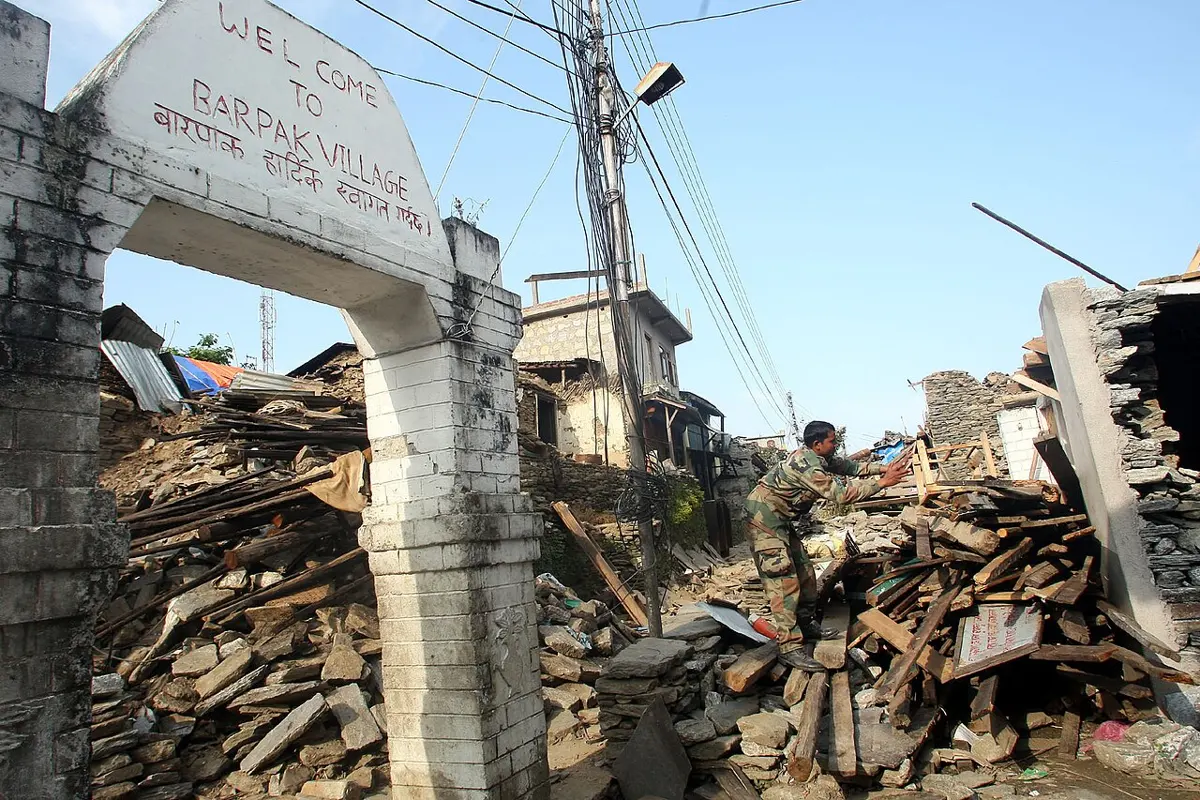
The picture shows two small houses with cracked walls. Part of one has fallen down, and a long crack runs across the ground in front of them.
- a.What do you see in the picture?
- b.Do you know anything about the Gorkha Earthquake?
- c.How does an earthquake occur?
Model answers
The recording
Listen once for the main idea, and a second time for the missing words.
The recording says that rocks deep underground press against each other and catch, so they don’t slide smoothly. The push keeps building. Then, suddenly, the rock breaks, and a lot of energy comes out at once. That energy travels as seismic waves (seismic means to do with earthquakes), and they make the ground shake. The rocks keep moving until they catch again.
B. Complete the sentences
Listen to the recording and complete the sentences.
- a.Earthquakes are caused by the breaking of underground ………
- b.The seismic ……… make the ground shake.
- c.The rocks break due to the built-up ………
- d.The rocks continuously ……… until they get stuck again.
- e.The underground point where the rock breaks is called the ……… of the earthquake.
- f.The epicenter of the earthquake is right above the focus on the ………
Answer
Where does the shaking of an earthquake start?
Pick an answer to see why.
C. Talk about earthquakes
Work in pairs. Talk to your partner about earthquakes.
A model conversation
Grammar: because and because of
A. Study the examples
These examples show how two short sentences become one when the second gives the reason for the first.
| Two sentences | One sentence |
|---|---|
| Kriti is learning to swim. She wants to join the swimming team. | Kriti is learning to swim because she wants to join the swimming team. |
| The match was stopped. It was raining. | The match was stopped because of the rain. |
| The baby is crying. She is hungry. | The baby is crying because she is hungry. |
Both because and because of give a reason. The difference is what comes after them.
- because + a whole sentence (a person or thing and a verb): because it rained, because she was sick.
- because of + a noun, or a few words built round a noun, with no verb: because of the rain, because of her sickness.
Which sentence is correct?
Pick an answer to see why.
Try joining some sentences here. Pick the right word, and see the two sentences become one.
B. Complete the sentences
Complete the following sentences with because or because of.
- a.They are happy now ……… they have won the match.
- b.I could not come to school ……… I was sick.
- c.She is not happy ……… her sickness.
- d.They are tired ……… the heavy work.
- e.I am upset ……… you did not help me.
- f.Sunil is successful ……… his hard work.
Answer
C. Join the sentences
When you join with because of, you have to turn the second sentence into a noun. He is intelligent becomes his intelligence. The road is muddy becomes the muddy road.
Join the pairs of sentences with because or because of.
- a.I went to the bank. I had to cash a check. (because)
- b.She is happy. She has got the prize. (because of)
- c.I am thin. I don’t eat much. (because)
- d.She has got good marks. She works hard. (because)
- e.I do not eat meat. I am a vegetarian. (because of)
- f.I don’t like to walk. The road is muddy. (because of)
- g.The teacher likes Lakpa. He is intelligent. (because of)
Answer
Reading II: Volleyball, our national game
Before you read
The picture shows two teams of six boys, one in yellow shirts and one in white, on a grass court. A net stands across the middle, and one boy jumps to hit the ball over it.
What are the boys playing?
A model answer
What is interesting about this game?
A model answer
The text, part by part
- Why everyone plays it. Volleyball is Nepal’s national game, the game chosen to stand for the whole country. It is played in the mountains, the hills and the Tarai alike. One reason is that its court, the place where it is played, doesn’t need much space. Another is that its rules are simple.
- Two teams and a net. Two teams of six players each play on the two sides of a net. The top of the net is 2.43 meters high for men and 2.24 meters high for women, since men are taller on average.
- The rally. Each rally (one turn of play, from the serve until the ball is dead) starts with a serve: one player hits the ball over the net to the other team. Whoever wins the rally scores a point.
- The rules of a rally. Each team tries to make the ball land on the opponent’s court, the other team’s side. A team may touch the ball at most three times before sending it back over the net, and one player can’t touch it twice in a row.
- Winning. Today the score is kept by rally scoring: every rally gives a point to someone, whichever team served. A set (one part of a match) is won by the first team to reach 25 points, but it must be at least two points ahead. If the score is 24–24, play goes on, to 26–24, 27–25 or more, until one team leads by two.
Team A has 25 points and Team B has 24. Has Team A won the set?
Pick an answer to see why.
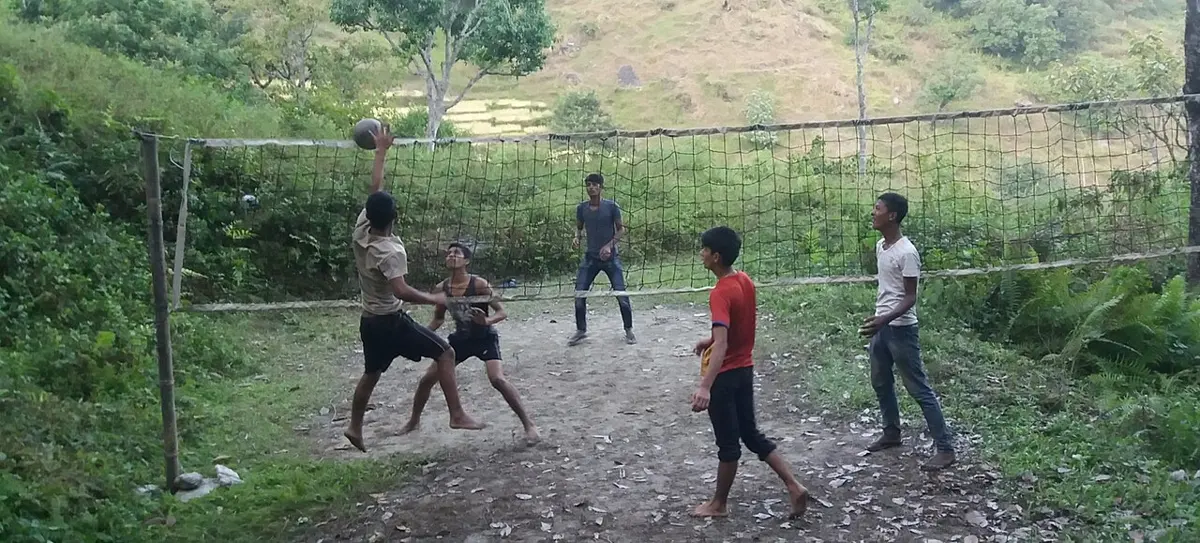
Words from the text
| Word | Meaning |
|---|---|
| national | belonging to or standing for a whole country |
| court | a marked area where a game such as volleyball or tennis is played |
| rally | in volleyball, one turn of play, from the serve until a point is won |
| serve | to hit the ball to start the play |
| opponent | the person or team you are playing against |
| smash | a hard, fast hit downwards over the net |
A. Choose the correct words
Choose the correct words from the brackets to complete the sentences.
- a.Volleyball is played even in the hills ……… it does not need a big space to play. (so / because / but)
- b.……… of the height difference, the height of the net in the men’s and women’s categories is different. (Therefore / In order to / Because)
- c.Each team tries to score more points ……… win the match. (in spite of / in order to / so that)
- d.The major target of the teams is ……… try to get the highest points. (because / so / to)
Answer
B. Answer the questions
Why is volleyball widely played in Nepal?
A model answer
How many players are there in a volleyball match?
A model answer
How is a point scored in the match?
A model answer
What does a team try to do on the opponent’s court?
A model answer
What should be done to win the match?
A model answer
C. Draw a court
Draw a neat diagram of a volleyball court on an A4-size paper and show it to the class.
Hint
Writing
A. Rules of volleyball
How do you play volleyball? Make a list of rules you should follow while playing it.
A model answer
B. My favorite game
A good paragraph about a game says what the game is, how it is played, and why you like it. Use because at least twice.
What game do you like most? Why do you like that game? Write about it in a paragraph.
A model answer
Project work
Extra bit: collective nouns
A collective noun is one word for a group of people, animals or things. You say a flock of birds, not a group of birds, and a herd of deer, not a lot of deer.
Here are some of the most useful ones. Many more are in your English book.
| For people | For animals | For things |
|---|---|---|
| a team of players | a herd of cows, deer or elephants | a range of mountains |
| a crowd of people | a flock of birds, or of sheep | a bunch of bananas, keys or flowers |
| a class of students | a school of fish | a fleet of ships, buses or taxis |
| a choir of singers | a swarm of bees or locusts | a pair of shoes |
| a troupe of dancers | a pack of wolves or dogs | a pack of cards |
| a gang of thieves | a pride of lions | a galaxy of stars |
| a panel of experts | a litter of puppies or kittens | a bouquet of flowers |
Some of these are easy to guess: a team plays together, and a crowd is many people crowded together. Others are old and strange, such as a pride of lions and a murder of crows (yes, a group of crows!). Many of these names come from The Book of Saint Albans, a book about hunting printed in England in 1486. And a school of fish has nothing to do with lessons!
Choose the right word for each group.
In the Chitwan National Park, Dawa saw a ______ of deer near the river.
Pick an answer to see why.
Exercise
Practice the whole unit. Try each one, then open the answer.
Complete with because or because of.
- a.Our bus was late ……… the landslide.
- b.Isha didn’t go out ……… it was very cold.
- c.The trees fell ……… the strong wind.
- d.Rehan is happy ……… his team won the match.
Answer
Answer each question with a full sentence and a reason.
- a.Why do you come to school?
- b.Why do people use umbrellas?
- c.Why are you going to bed early tonight?
Model answers
Write the collective nouns.
- a.a ……… of bees
- b.a ……… of mountains
- c.a ……… of singers
- d.a ……… of lions
- e.a ……… of ships
Answer
Put these words about an earthquake in order, from deep down to the ground above: epicenter · rocks break · focus · seismic waves spread out.
Answer
Why did Ben and Billy want to whitewash the fence? Write two or three sentences.
A model answer
Write three sentences about your plans for this year, each with a reason.
Model answers
Printable PDFs
- Study notes 2 pages
- Harder practice questions 2 pages Answer key
Practice every question in the book, and keep track of the ones you miss →
A companion to your textbook, not a replacement for it: study from the book your school uses, and where the two differ, follow your teacher. Found a mistake? Please tell us.