
It is evening, and the power has gone off. Your mother lights a candle. Now you can see your plate again. Outside, a dog barks. You can’t see the dog, but you can hear it. Then the lights come back on with a click. The rice cooker starts to hum.
Light, sound and electricity are three kinds of energy. Energy is what makes things happen. People, plants and animals need different kinds of energy to live.
- Light helps us see the things around us. It also helps green plants make their food.
- Sound lets us talk, sing, and hear a warning.
- Electricity runs our lights, fans, phones and rice cookers.
In this unit you will find out how we see things, and why a rainbow has colors. You will see how a madal makes its sound, and how a torch lights up. And you will learn to use electricity safely.
7.1 Light
Your eyes help you see. But are eyes enough? Go into a dark room at night. Your eyes are open, but you see nothing! So we need something more. We need light.
We see a thing when light from it reaches our eyes. The Sun, a lamp and a candle flame give out their own light. A flower or a tree gives out no light. Light falls on it and bounces off. Some of that light travels into our eyes, and we see the flower.
The energy that helps us see things is called light energy.
Why can’t we see anything in a dark room?
Pick an answer to see why.
Sources of light
In the daytime, sunlight lets us see. At night, or in a dark room, there is no light. Then we use an electric bulb, a torch, a candle, a kerosene lamp (tuki) or a burning splint.
A thing that gives out light is called a source of light. There are two kinds.
- Natural sources are made by nature: the Sun and the stars.
- Man-made sources are made by people: electric bulbs, torches, candles and kerosene lamps.
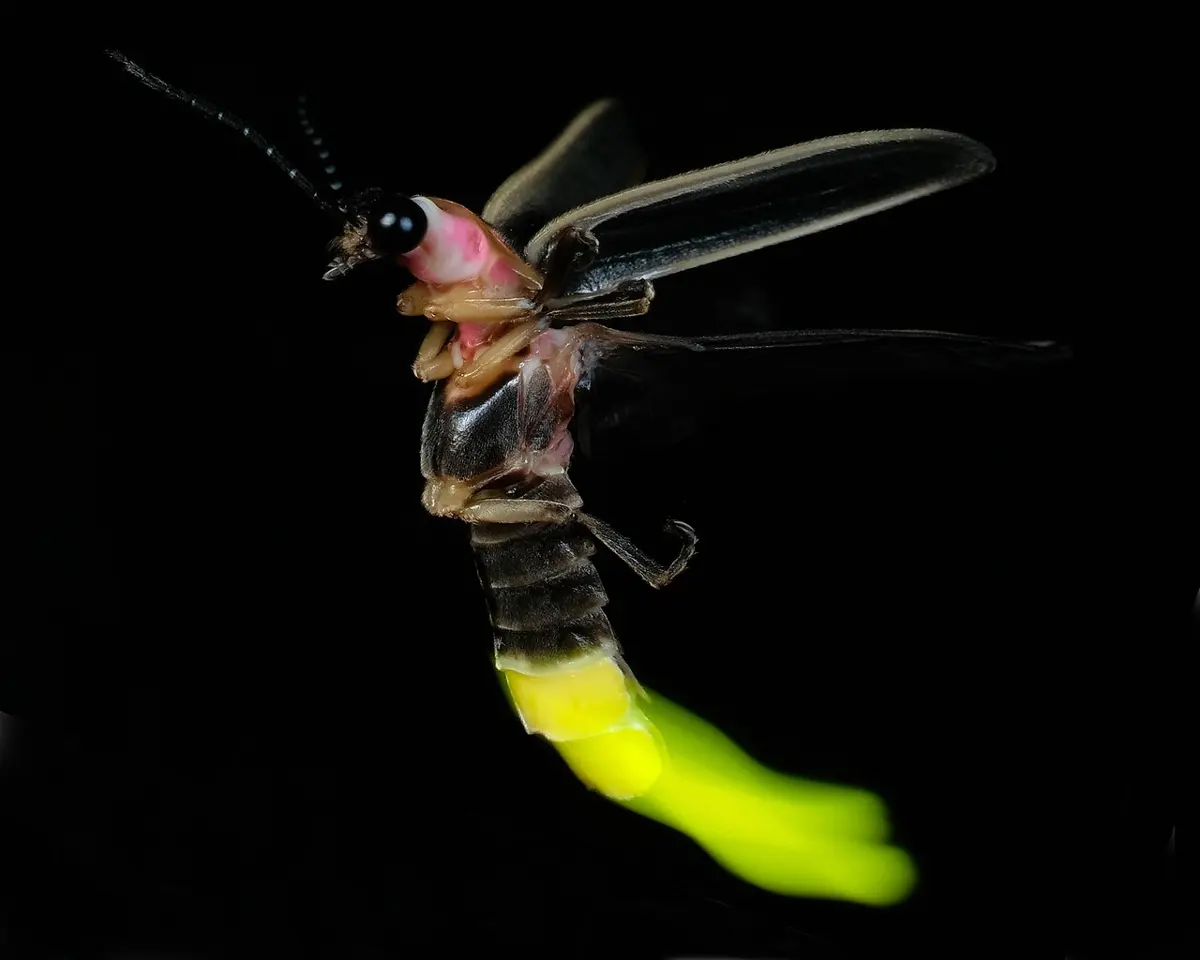
Which of these is a natural source of light?
Pick an answer to see why.
Luminous and non-luminous objects
A thing that gives out its own light is called a luminous object. The Sun, the stars, a candle flame and a lit bulb are luminous.
A thing that has no light of its own is called a non-luminous object. A stick, a glass, a book, a stone and you are non-luminous. We see them only when light falls on them.
Which of these is a luminous object?
Pick an answer to see why.
Transparent, translucent and opaque objects
Can you see through a window? Can you see through a wall? Some things let light pass through them. Others don’t. Try it.
Here is what you found.
- A transparent object lets light pass through it easily. You can see clearly through it. Glass, clean water and air are transparent. They make almost no shadow.
- A translucent (or semi-transparent) object lets only a little light pass through. You see only a blur through it. Oiled paper, white plastic and thin white cloth are translucent. They make a faint, soft shadow.
- An opaque object lets no light pass through. You can’t see through it at all. Stone, clay, wood and thick black cloth are opaque. They make a dark shadow.
Which of these is opaque?
Pick an answer to see why.
Which kind of object makes the darkest shadow?
Pick an answer to see why.
Color of light
Read this poem about a rainbow. Then talk about it.
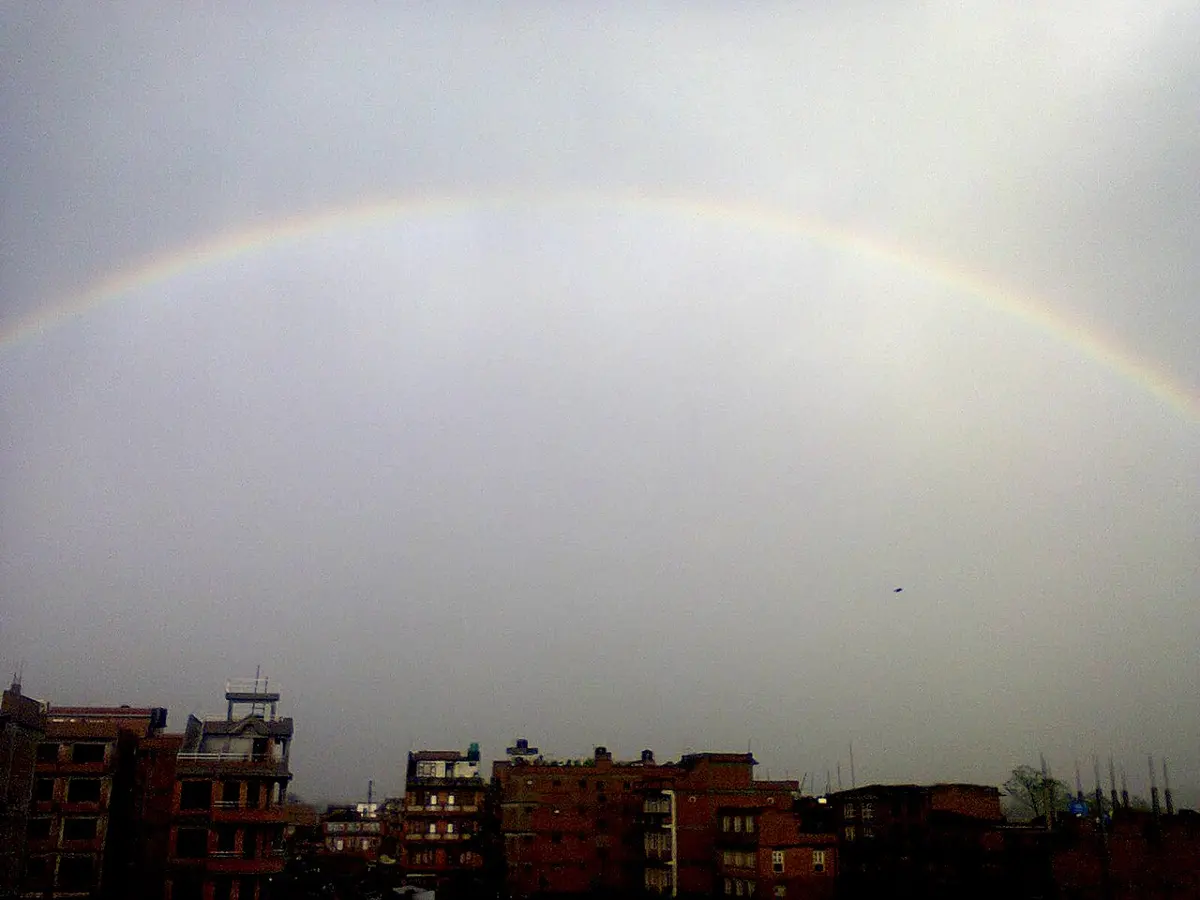
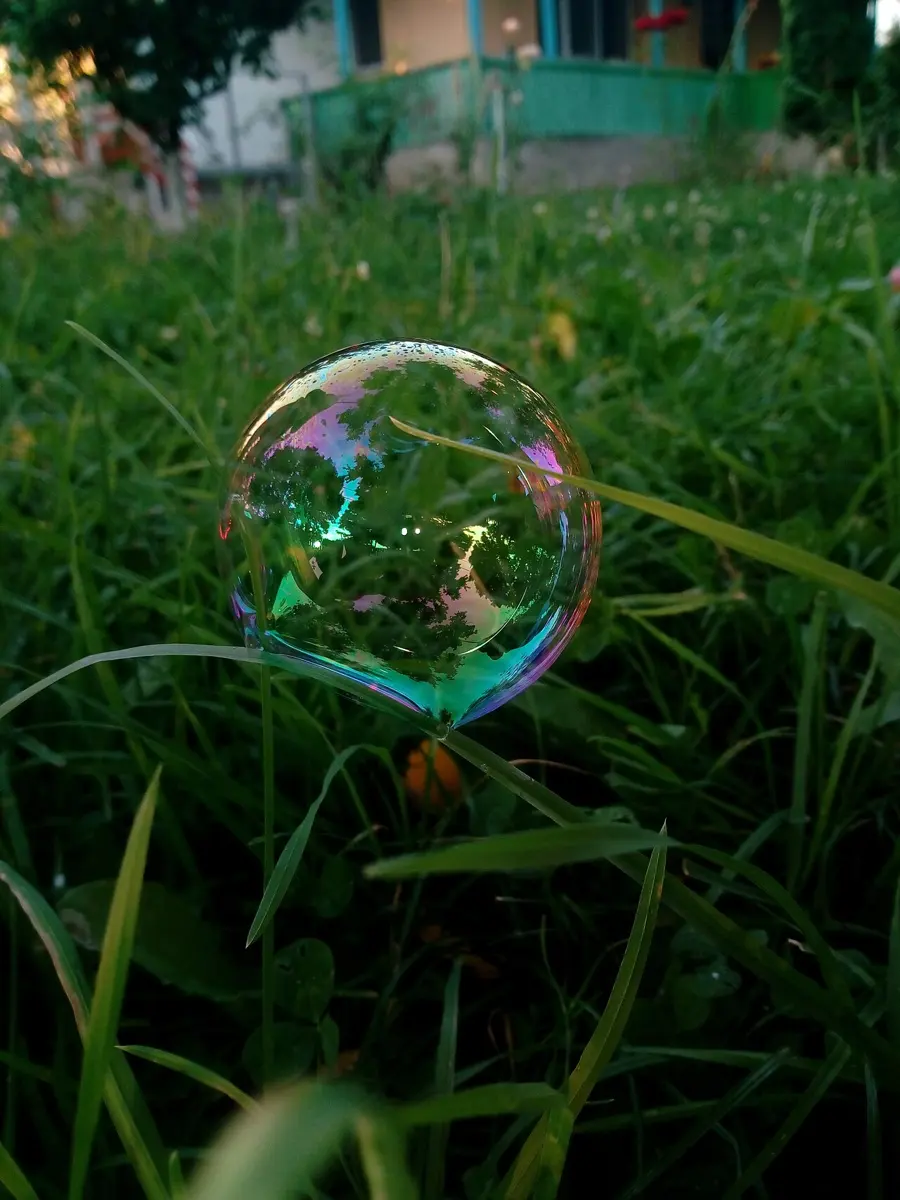
Sunlight looks white. But white light is really a mix of seven colors: red, orange, yellow, green, blue, indigo and violet. To remember them in order, say VIBGYOR backwards: ROYGBIV.
When sunlight goes into a raindrop or a glass prism at a slant, it bends. Each color bends a different amount. Violet bends the most, red the least. So the colors fan out into a band. This splitting of white light into its seven colors is called the dispersion of light.
How many colors are there in white sunlight?
Pick an answer to see why.
What is the splitting of white light into its colors called?
Pick an answer to see why.
Exercise (7.1 Light)
1. Is it correct (✓) or wrong (✗)?
a. Things can be seen because of light.
Pick an answer to see why.
b. The flame of a fire is a non-luminous object.
Pick an answer to see why.
c. Air is an opaque substance.
Pick an answer to see why.
d. Light can pass easily through a stone.
Pick an answer to see why.
e. A rainbow can be seen when the Sun shines after the rain.
Pick an answer to see why.
2. Fill in the blanks
non-luminous, man-made, seven, natural, transparent, five
The Sun is a ______ source of light.
Answer
The Sun is a natural source of light.
Wood is a ______ object.
Answer
Wood is a non-luminous object. (It is also opaque, but that word is not in the box.)
An object that lets light pass through it easily is called a ______ object.
Answer
An object that lets light pass through it easily is called a transparent object.
A rainbow has ______ colors.
Answer
A rainbow has seven colors.
A torch is a ______ source of light.
Answer
A torch is a man-made source of light. (“Five” is not needed.)
3. Choose the correct answer
a. Which of these is luminous?
Pick an answer to see why.
b. How many colors are there in a rainbow?
Pick an answer to see why.
c. You want to grow a plant that needs a lot of sunlight in your room. Which window would be best?
Pick an answer to see why.
d. Your mother rides her scooter to the office. The Sun shines straight into her eyes, and the glare hurts them. What would you tell her to wear?
Pick an answer to see why.
e. On a cloudy day, we can’t see the Sun, but it is still light. Why?
Pick an answer to see why.
4. Answer these questions
What is a luminous object? Give two examples.
Answer
A luminous object is a thing that gives out its own light. Examples: the Sun and a burning candle. (A star, a torch that is on, or a fire are also right.)
How are transparent and opaque objects different?
Answer
- A transparent object lets light pass through it easily. We can see clearly through it. Example: glass.
- An opaque object lets no light pass through. We can’t see through it at all. It makes a dark shadow. Example: wood.
Write two ways to make a clear glass window translucent.
Answer
Any two:
- Stick tracing paper, butter paper or oiled paper on it.
- Stick a frosted plastic sheet on it.
- Paint it with a thin coat of white paint.
- Rub a thin layer of soap on it.
Why does a rainbow appear only after rain?
Answer
A rainbow needs drops of water in the air and sunlight at the same time. After rain, many drops still float in the air. When the Sun comes out, its light goes into the drops and splits into seven colors. So a rainbow appears. With no drops in the air, sunlight can’t split, and there is no rainbow.
Why is it hard to drive on a road in thick fog?
Answer
Fog is made of tiny drops of water floating in the air. It is translucent. It lets only a little light through, and scatters it about. So the driver can’t see the road, other cars or people clearly. That makes accidents more likely. Drivers go slowly and switch on fog lights.
Your little sister wants to see a rainbow on a day with no rain. What would you do?
Answer
Any one of these:
- On a sunny morning or evening, stand with the Sun behind you. Spray a fine mist of water from a hose or a spray bottle in front of you. A rainbow appears in the spray.
- Do Activity 7.4: shine sunlight on a mirror under water in a dish, and catch the colors on white paper.
- Hold a glass prism, or a glass of water, in a sunbeam, and look at the light it throws on the floor.
7.2 Sound
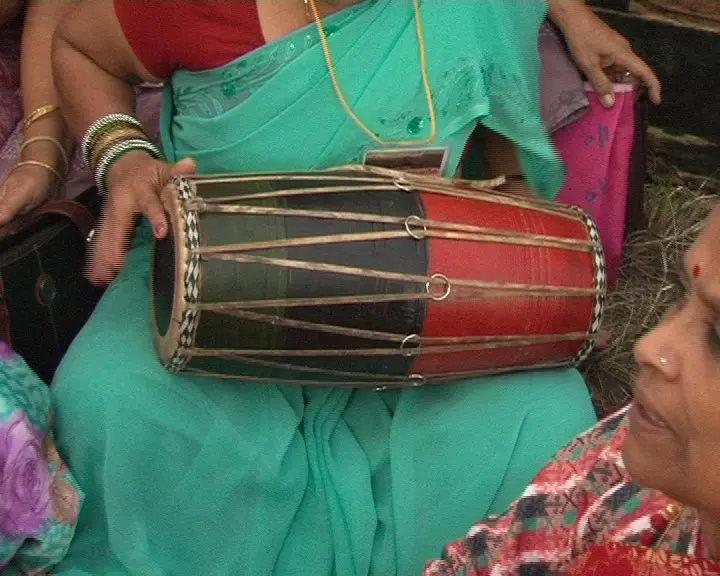
Strike a madal with your hand. Its skin vibrates: it shakes quickly back and forth. That vibration makes the sound. In the same way, the air inside a flute vibrates when you blow it. A guitar string vibrates when you pluck it.
Sound is a kind of energy made by a vibrating thing. Nothing makes a sound all by itself. First we must give it energy: we hit it, beat it, blow into it, pluck it or shake it. Then it vibrates, and we hear a sound.
What happens to an object when it makes a sound?
Pick an answer to see why.
Sources of sound
A thing that makes a sound is called a source of sound. People, birds, animals, televisions, radios, musical instruments, bells and alarm clocks are all sources of sound.
Propagation of sound
A dog barks behind a wall. You can’t see it, but you hear it. How did the sound get to your ears? The barking dog makes the air next to it vibrate. That air makes the air next to it vibrate, and so on, all the way to your ears. Sound travels like this. We say it propagates: it is passed on, or transmitted, from one bit of air to the next.
Sound needs something to travel through. That something is called a medium. Sound can travel through:
- a gas, like air (your friend’s voice across the room);
- a liquid, like water (the spoons in the bucket);
- a solid, like a thread or a wall (the string telephone).
The sound makes the bits of the medium vibrate, one after another. That is how it travels.
Where there is nothing at all, not even air, there is a vacuum. A vacuum has nothing to vibrate. So sound can’t travel through a vacuum. That is why people can’t talk to each other in a vacuum just by speaking.
Through which of these can sound not travel?
Pick an answer to see why.
Loud, soft, shrill and deep sounds
Sounds can be loud or soft. They can be shrill (high, like a whistle or a bird’s chirp) or deep (low, like a big drum or thunder). What decides this?
- Loud or soft depends on how much force makes the sound. Hit a madal hard, and its skin makes big vibrations: a loud sound. Tap it gently, and the vibrations are small: a soft sound. When you whisper, the sound is soft. When you shout, it is loud.
- Shrill or deep depends on what the thing is like and how fast it vibrates. Metal things, and thin, short, tight strings, vibrate very fast and give a shrill sound. Wood, plastic, and thick, long, slack strings vibrate more slowly and give a deep sound.
Rina hits a madal hard. What happens to the sound?
Pick an answer to see why.
Noise
A loud, unpleasant sound is called noise. When there is a loud noise, we often cover our ears. Noise is harmful in many ways.
- It distracts us. In a noisy class, it is hard to understand what is taught.
- It is hard to talk to each other in a noisy place.
- Staying in a noisy place for a long time weakens our hearing.
- Loud noise can cause headaches, anger and worry, and other mental problems. It can also harm the flow of blood in our body.
Read this poem about noise. Then talk about it.
Too much noise is bad for our health. So we should follow good sound etiquette (good manners with sound):
- a.Play radios, televisions and musical instruments at a low volume.
- b.Build factories and loud machines far from where people live.
- c.Make cinema halls and dance halls soundproof, so their sound doesn’t get out.
- d.Don’t blow horns near schools and hospitals.
- e.Don’t blow horns for nothing, and follow the traffic signs.
Which of these is good sound etiquette?
Pick an answer to see why.
Exercise (7.2 Sound)
1. Is it correct (✓) or wrong (✗)?
a. Sound is a form of energy.
Pick an answer to see why.
b. A source of sound makes sound all by itself, without being given any energy.
Pick an answer to see why.
c. Sound needs a medium to travel.
Pick an answer to see why.
d. The thin strings of a guitar make a shrill sound.
Pick an answer to see why.
e. Noisy factories should be built away from where people live.
Pick an answer to see why.
2. Fill in the blanks
sharper, good etiquette, vibrate, mental illness, sound, hoarse
A radio is a source of ______.
Answer
A radio is a source of sound.
To make a sound, an object must ______.
Answer
To make a sound, an object must vibrate.
______ about sound must be followed even inside the classroom.
Answer
Good etiquette about sound must be followed even inside the classroom.
Beating a metal object makes a ______ sound than beating a wooden one.
Answer
Beating a metal object makes a sharper sound than beating a wooden one.
Staying in a noisy place for a long time may cause ______.
Answer
Staying in a noisy place for a long time may cause mental illness. (“Hoarse” is not needed.)
3. Choose the correct answer
a. Which of these is a source of sound?
Pick an answer to see why.
b. Through which of these can sound not travel?
Pick an answer to see why.
c. Which of these makes an object vibrate?
Pick an answer to see why.
d. Which kind of sound is harmful to health?
Pick an answer to see why.
e. The teacher is out of the classroom. Some students are drumming on their desks and singing. Others are shouting. The students who want to read can’t. What is the best way to solve this?
Pick an answer to see why.
4. Answer these questions
What is sound?
Answer
Sound is a form of energy made when an object vibrates. We hear it when the vibration travels to our ears.
How does a source of sound make sound?
Answer
We give it energy by hitting, beating, blowing, plucking or shaking it. This makes it vibrate: shake quickly back and forth. The vibration makes the air around it vibrate, and that travels to our ears as sound.
Why does a drum make a soft sound when struck gently, and a loud sound when struck hard?
Answer
A gentle hit makes the drum’s skin vibrate only a little: a soft sound. A hard hit makes the skin vibrate much more: a loud sound. The more force we use, the bigger the vibration and the louder the sound.
What makes noise around your house? Make a list.
Answer
For example: vehicles and their horns, loudspeakers, TVs and radios played loudly, a pressure cooker’s whistle, barking dogs, a mill or a factory nearby, building work, people shouting, wedding bands.
There has been a traffic jam on the road outside a hospital for a long time. Everyone is in a hurry, so everyone is honking loudly. How can this problem be solved?
Answer
- Drivers should stop honking: a horn doesn’t clear a jam, and the patients need quiet.
- Put up “No horn” signs near the hospital, and fine drivers who honk.
- Traffic police should guide the traffic and clear the jam.
- Make a separate lane for ambulances.
- Plant trees and build a wall between the road and the hospital, to block some noise.
7.3 Electricity
Electric circuit
Read this poem about a torch. Then talk about the questions.
You switch on a lamp at home, and it lights at once. A fan, a TV or a rice cooker starts at once too. Every electrical device needs electricity to work.
Electricity flows through conducting wires. A switch lets it flow, or stops it, as we need.
The device that uses electricity, the source of electricity, the conducting wires and the switch together make a path. This path is called an electric circuit.
- When the switch is on, the path is complete. Electricity flows round it, and the bulb lights. This is a closed circuit.
- When the switch is off, there is a gap in the path. Electricity can’t flow, and the bulb stays dark. This is an open circuit.
The flow of electricity round a circuit is called an electric current.
A bulb in a circuit doesn’t light. The switch is off. Why doesn’t it light?
Pick an answer to see why.
Safety measures to be followed while using electricity
Electricity is very useful in our daily life. But if it is not used carefully, it can cause terrible accidents. It can give a dangerous electric shock, and it can start fires.
So, while using electricity, follow these safety measures:
- a.Never put your fingers, or anything else, into plugs and sockets.
- b.Cover a bare wire with insulating tape. Insulating tape is made of an insulator: a material that doesn’t let electricity through.
- c.Wear rubber gloves for electrical work. Rubber is an insulator.
- d.If anything electrical breaks down, call a trained electrician to repair it.
- e.Don’t use electrical things without the permission of an older person, or without one watching.
- f.During a power cut, a lightning storm or a fire, turn off the main switch.
A bare wire is sticking out of a cable. What should it be covered with?
Pick an answer to see why.
There is a fire in the house. Which of these should you do?
Pick an answer to see why.
Exercise (7.3 Electricity)
1. Is it correct (✓) or wrong (✗)?
a. Nothing happens if you touch electrical things with wet hands.
Pick an answer to see why.
b. A conducting wire is a source of electricity.
Pick an answer to see why.
c. The job of a switch is to turn the light on and off.
Pick an answer to see why.
d. Electricity flows in an open circuit.
Pick an answer to see why.
e. We should not put our fingers into an electric socket.
Pick an answer to see why.
2. Fill in the blanks
insulator, electrical equipment, electric circuit, on, electricity, off
A dry cell is a source of ______.
Answer
A dry cell is a source of electricity.
A path made of a source of electricity, conductors, a switch and electrical equipment is called an ______.
Answer
A path made of a source of electricity, conductors, a switch and electrical equipment is called an electric circuit.
If you see a bare wire, it should be covered with an ______.
Answer
If you see a bare wire, it should be covered with an insulator (insulating tape).
The switch is ______ in a closed circuit.
Answer
The switch is on in a closed circuit.
Small children should not play with ______.
Answer
Small children should not play with electrical equipment. (“Electricity” is also right. “Off” is not needed.)
3. Choose the correct answer
a. A bulb in an electric circuit doesn’t light. What could be the reason?
Pick an answer to see why.
b. What is the job of a conducting wire in an electric circuit?
Pick an answer to see why.
c. An electric bulb doesn’t light. What should you do?
Pick an answer to see why.
d. Without which of these is an electric circuit incomplete?
Pick an answer to see why.
e. Which of these would you stop if you saw it happening?
Pick an answer to see why.
f. In which circuit of Figure 7.14 does the bulb light?
Pick an answer to see why.
4. Answer these questions
What is an electric circuit?
Answer
An electric circuit is the complete path through which electricity flows. It is made of a source of electricity (a cell), conducting wires, a switch, and a device that uses electricity (like a bulb).
Write two differences between a closed circuit and an open circuit.
Answer
- In a closed circuit, the switch is on. In an open circuit, the switch is off (or a wire is loose).
- In a closed circuit, electricity flows and the bulb lights. In an open circuit, electricity doesn’t flow and the bulb stays dark.
Write two safety measures to follow while using electricity.
Answer
Any two:
- Never put your fingers into a plug or socket.
- Never touch electrical things with wet hands.
- Cover bare wires with insulating tape.
- Call an electrician to repair anything electrical.
- Turn off the main switch in a fire, a storm or a power cut.
A bulb is in a circuit whose switch is off. Why doesn’t it light?
Answer
When the switch is off, there is a gap in the circuit. It is an open circuit. Electricity can’t flow across the gap, so none reaches the bulb.
What is needed to make a complete electric circuit?
Answer
- a source of electricity, like a cell or battery;
- conducting wires to make a path;
- a device that uses electricity, like a bulb;
- usually a switch, to turn it on and off (when there is a switch, it must be on).
All of them joined in one complete path, with no gap.
What must be done to light the bulb in Figure 7.15? Copy the circuit and complete it.
Answer
Two things are missing:
- There is no cell. Put a dry cell in the gap in the bottom wire.
- The switch is open. Close it.
Then the path is complete, and the bulb lights.
Practice every question in the book, and keep track of the ones you miss →