
Your friend lends you a pencil. Your cousin passes her exam. Your team wins a match. Each time, a few kind words make the moment better. Which words, and when?
This unit is about thanking and congratulating people. You will read short messages and thank-you notes, and write your own. You will learn words like quickly and carefully, which tell us how something is done. And you will learn three marks that end a sentence: . ? !
Getting started
A. What might they say?
The unit opens with four pictures. In each one, somebody helps somebody else.
- A boy holds out a ruler to his friend.
- A woman is lifting a heavy basket of leaves (a doko) onto her back. A man helps her lift it.
- A man with a hurt leg leans on one crutch. A boy brings him the other one. Crutches are sticks that help a person walk.
- A girl walks beside a blind man with a white stick. She helps him cross the road at a zebra crossing.
Look at the pictures. Guess what they might say in these situations.
Model answers
Two words will help you all through this unit.
- To thank someone is to tell them you are happy about something they did or gave. Thank you! Thanks a lot!
- To congratulate someone is to tell them you are happy about something good that happened to them. Congratulations! Well done!
So we thank people for what they do for us. We congratulate people for good things that happen to them.
Your friend Kushal has won a drawing competition. What do you say?
Pick an answer to see why.
B. Listen and sing
The song is short and easy to sing. Every line starts the same way: Thank you, God. Then each line names one thing to be thankful for: the sweet world, the food we eat, the birds that sing, and, in the last line, everything. The whole verse is sung twice.
Notice the end words: sweet and eat rhyme, and sing and everything rhyme. That makes the song easy to remember.
Why do you need to be thankful to God? Tell your friends.
A model answer
Reading I: Messages of Congratulations
Before you read
What do you say in your mother tongue to congratulate people?
A model answer
When do you congratulate people?
A model answer
The five messages
The reading has five short messages. They are labeled A to E. Each one congratulates somebody for a different reason.
- Message A is to a student who did well in an exam. It says well done, and wishes the student good luck with future studies.
- Message B is also about an exam. It praises a hardworking student who did well in the exams.
- Message C is to someone who got a new job. It was the job of their dreams, and they waited a long time for it.
- Message D is to someone who won an award, a prize. The writers say they are proud of the winner.
- Message E is to Nepal’s football team. The team won the gold medal, the prize for first place.
Look at how most of the messages are built. They say Well done! or Congratulations!, and they say what for: on your success, for getting the award, for winning the gold medal.
Which message is to a person who got a new job?
Pick an answer to see why.
Words from the messages
| Word | Meaning |
|---|---|
| success | doing well; getting what you worked for |
| successfully | in a way that works well |
| perform | to do a task, a test or a show |
| glad | happy, pleased |
| finally | at last, after a long time |
| proud of | very pleased with someone because they did well |
| award | a prize given to someone for doing something well |
| gold medal | the medal given for first place in a race or game |
A. Complete the sentences
Learn these words and complete the sentences with them: success, finally, successfully, award, gold medal.
- a.Niru has won an ……… of Rs. 20,000 in the essay writing competition.
- b.You always win the race. What’s the secret of your ……… ?
- c.Karnali team won the football match and they received the ……… .
- d.Pasang Sherpa ……… reached the top of the mountain.
- e.We waited for the program to start for a long time. ……… , it started at 3 p.m.
Answer
B. Why were they written?
Why were the messages in Reading I written? Write A–E to complete the table. One has been done for you.
| Reason | Message |
|---|---|
| success in an exam | A |
| getting a new job | ……… |
| winning the award | ……… |
| winning the gold medal | ……… |
| performing successfully in the exam | ……… |
Answer
C. Congratulate a friend
How do you congratulate others? Practice in pairs.
Model conversations
Pronunciation
Say success slowly. You can hear two beats: suc·cess. Each beat is a syllable. A syllable is a part of a word with one vowel sound in it.
Here is an easy way to count them. Put your hand under your chin and say the word. Your chin drops once for each syllable.
Say how many syllables each word has: well, your, success, like, always, finally, congratulations, dream, perform, medal.
Answer
How many syllables does successfully have?
Pick an answer to see why.
Grammar I: words that tell how
A. What kind of words?
Every word in a sentence has a job. Here are four kinds of words:
- A noun names a person, place or thing: team, medal, Pokhara.
- A verb is an action or a state: run, win, is.
- An adjective tells us about a noun: a happy girl, a gold medal.
- An adverb tells us about a verb. It often answers how? She ran quickly.
The following words are from Reading I. Are they nouns, verbs, adjectives or adverbs? well, successfully, finally
Answer
B. How did they do it?
An adverb of manner tells us how something is done. Many of them end in -ly: quickly, softly, loudly.
Answer the questions given at the end of each statement. Say only one word.
- a.He ran quickly. How did he run?
- b.She spoke softly. How did she speak?
- c.James coughed loudly to attract her attention. How did James cough?
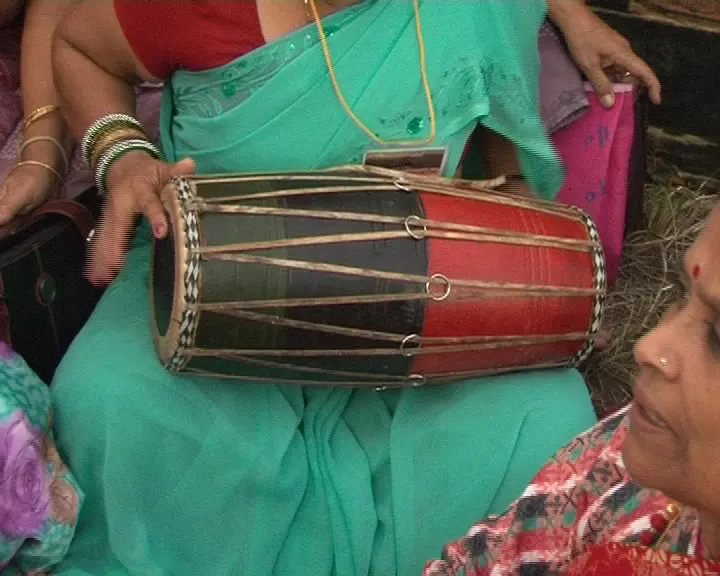
- d.He plays the madal beautifully. How does he play the madal?
- e.He ate the chocolate cake greedily. How did he eat the chocolate cake?
Answer
Which word tells how Tashi sang?
Tashi sang sweetly at the school concert.
Pick an answer to see why.
C. Choose the right adverb
To choose an adverb, read the whole sentence. The other sentence gives you a clue.
Complete the following sentences choosing the correct adverb from the brackets.
- a.You should drive ……… . Otherwise you may get into an accident. (fast/slow)
- b.Dress up ……… . You are getting late for school. (quickly/quietly)
- c.The man hasn’t eaten anything for eight hours. Now, he is eating ……… . (carefully/hungrily)
- d.The road is slippery. Walk ……… . (softly/carefully)
- e.The thief entered the house ……… . Nobody knew it. (quietly/noisily)
Hint
Answer
Writing I: a message of congratulations
A message of congratulations is short and happy. It has five parts:
- Greeting: Dear Prapti,
- Congratulate, and say what for: Well done! Congratulations on …
- One kind sentence: I am proud of you.
- A good wish: Good luck for …
- Closing and your name: Yours, and your name.
Imagine one of your friends has got a good grade in the first terminal examination. Complete the message of congratulations using the words below: examination, Congratulations, done, Good luck, Nita, Congratulations.
Dear ……… ,
Well ………! ……… on getting a good grade in the first terminal ……… . I am proud of you. ……… for more progress in the future. ……… once again.
Yours,
……… (your name)
Answer
Reading II: Two thank-you notes
Before you read
How do you say “thank you” in your mother tongue?
A model answer
When do you thank people?
A model answer
Why do you write a thank-you note?
A model answer
The notes, one by one
A thank-you note is a short letter that says thank you. Each note in the reading has a date, a greeting (Dear …), the thanks, a closing word and the writer’s name.
- Jenisha’s note is to her aunt, written in November 2022. Her aunt gave her a dress for her birthday. Jenisha thanks her for it. She says what she likes about it: the color and the design. Red is her favorite color. Then she thanks her aunt for coming to her birthday party, and hopes she enjoyed it. She ends with Love, because her aunt is family.
- Rohan’s note is to his English teacher, Mr. Karki, written in January 2022. Rohan thanks him for the way he teaches English: his lessons made the class excited, eager to learn. Rohan also likes how Mr. Karki said hello to him each time they passed in the school hallways. He ends with Sincerely, a polite closing for a teacher.
Notice that each note says exactly what the writer is thankful for. Thank you for the lovely dress is warmer than just Thank you.
Who taught Rohan English?
Pick an answer to see why.
Words from the notes
| Word | Meaning |
|---|---|
| lovely | beautiful, attractive |
| design | the way something is made, its pattern and shape |
| excited | feeling very happy and eager |
| appreciate | to see that something is good, and be thankful for it |
| hallway | a passage in a building with rooms on both sides |
A. Match the words
Match the words on the left with their meanings on the right.
| Word | Meaning |
|---|---|
| a.lovely | i.feeling or showing happiness |
| b.design | ii.a passage in a building with rooms on either side |
| c.excited | iii.beautiful; attractive |
| d.appreciate | iv.the way something is made |
| e.hallway | v.to recognize the good quality of somebody |
Answer
B. Complete the sentences
Complete the following sentences with the words from Task A.
- a.She is very ……… that she will get to meet her best friend.
- b.Thank you very much! I really ……… your help.
- c.I met the teacher along the ……… and thanked her.
- d.Do you like the ……… of this shirt?
- e.Look at the flower. It’s very ……… .
Answer
C. Answer the questions
When did Jenisha write the note?
Answer
What did Jenisha’s aunt give her?
Answer
Why did Jenisha like the gift?
Answer
Why did Rohan thank Mr. Karki?
Answer
Is Rohan happy with the teacher’s method of teaching English? How do you know?
Answer
Does Rohan like the way the teacher greets him? How do you know?
Answer
D. Ways to say thank you
What do you say to thank others? Say two or three phrases from the reading text.
Answer
Grammar II: adjective or adverb?
A. Which is it?
Study these sentences. Are the words in bold adjectives or adverbs?
- a.It is a beautiful dress.
- b.There is a nice building over there.
Answer
Remember the difference:
| An adjective | An adverb | |
|---|---|---|
| It tells about | a noun (a person or thing) | a verb (an action) |
| It answers | What kind? | How? |
| Example | a quick runner | She runs quickly. |
B. From adjective to adverb
Many adverbs are made by adding -ly to an adjective: quick → quickly. Watch the spelling:
| The adjective ends in | Do this | Examples |
|---|---|---|
| most letters | add -ly | slow → slowly, sudden → suddenly, careful → carefully |
| consonant + y | change y to i, add -ly | easy → easily, happy → happily, hungry → hungrily |
| consonant + le | change le to ly | gentle → gently, simple → simply |
Many adverbs end in -ly. Change the following adjectives into adverbs: sudden, quiet, slow, careful, easy, hungry, thoughtful, confident, beautiful, nice.
Answer
In which sentence is the word in bold an adverb?
Pick an answer to see why.
C. Find the odd one
Say which word in each group is the odd one. Give your reasons.
- a.nice, beautiful, pretty, happily
- b.little, slowly, happy, lonely
- c.careful, confidently, slow, loud
- d.quickly, sudden, hungry, tall
- e.hungrily, dress, shoes, computer
Answer
Listening
A. Before you listen
Who do you ask about homework when you miss a school day?
A model answer
What do you say when a friend explains to you about your missed homework?
A model answer
Now listen. It is a phone call between two classmates. Read the questions in B first.
B. Answer the questions
Is Kate still sick?
Answer
When is Kate going to school?
Answer
What’s the homework for English class?
Answer
Why does Kate thank Paul?
Answer
C. Write a conversation
Write a conversation between you and your teacher in six exchanges, asking what she thinks about you handing in your homework late.
Hint
A model conversation
Speaking
A. Thanking and congratulating
| Thanking | Congratulating |
|---|---|
| Thank you. | Congratulations! |
| Thank you very much. | Well done! |
| Thanks. | Great! |
| Thank you for your help. | Congratulations on your success! |
| Many thanks. | Congrats! |
| Cheers. |
Thanks, Cheers and Congrats are short and friendly. Use them with friends. With a teacher or an older person, say Thank you very much or Congratulations.
When someone thanks you, answer: You’re welcome. or No problem. When someone congratulates you, say Thank you!
Your friend says, “Thank you for the pen!” What do you answer?
Pick an answer to see why.
B. What do you say?
What do you say in the following situations? Use suitable expressions from the table above.
- a.One of your friends has passed an examination.
- b.Your friend has given you a pencil.
- c.Your friend has lifted your bag for you.
- d.Your sister is getting married.
- e.Your teacher just gave you a gift on your birthday.
- f.Someone has returned your lost book.
- g.Someone helped you to carry your books.
- h.You received your change from the shopkeeper.
Answer
C. Complete the dialogues
Act out the following dialogues in pairs, supplying the missing expressions.
- a.A: Happy birthday! Please take this gift. B: ………
- b.A: Let me know when you need help again. B: ………
- c.A: Let me carry your bag. B: ………
- d.A: Hurray! I’ve won the match. B: ………
- e.A: I’ve got a B in an English test. B: ………
- f.A: Did you know? My father bought me a new mobile phone. B: ………
Answer
Writing II: end marks and a postcard
Three marks that end a sentence
Every sentence ends with one of three marks.
| Mark | Name | It ends | Example |
|---|---|---|---|
| . | full stop | a statement or an order | I like mangoes. Close the door. |
| ? | question mark | a question | Where are you going? |
| ! | exclamation mark | a strong feeling: joy, surprise, pain, anger | Wow! Ouch! We won! |
Short words for feelings, like Oh! Wow! Ouch! Hurray!, usually take an exclamation mark. They are called interjections.
Use a full stop (.), a question mark (?) or an exclamation mark (!) in the following sentences.
- a.Will you help me, please
- b.Shut up
- c.Oh When are you going
- d.Ouch That hurts
- e.Go away I hate you
- f.Wow
Answer
Which mark ends this sentence? What time does the bus leave
Pick an answer to see why.
A thank-you postcard
A postcard is a card you can post without an envelope. The front has a picture. The back has two halves:
- On the left: your message, with the date, a greeting, the message, a closing and your name.
- On the right: a stamp at the top corner, and the address of the person it goes to.
Suppose your teacher gave you a set of colored pencils on your birthday. Make a postcard to thank her or him.
A model postcard
Do it yourself
Exercise
Practice the whole unit. Try each one, then open the answer.
Thank or congratulate? Write what you would say.
- a.Your neighbor has a new baby.
- b.A stranger shows you the way to the bus park.
- c.Your brother has won a quiz.
Answer
Change the adjectives into adverbs.
- a.angry
- b.gentle
- c.soft
- d.busy
- e.good
Answer
Choose the right word.
- a.Sneha sings ……… . (beautiful / beautifully)
- b.It was a ……… day. (lovely / lovelily)
- c.The baby is sleeping. Please talk ……… . (quiet / quietly)
Answer
Put in the end marks.
- a.Hurray We won
- b.Did you see my bag
- c.I live in Dhangadhi
Answer
How many syllables? award, successfully, gold, celebrate
Answer
Printable PDFs
- Study notes 2 pages
- Harder practice questions 2 pages Answer key
Practice every question in the book, and keep track of the ones you miss →
A companion to your textbook, not a replacement for it: study from the book your school uses, and where the two differ, follow your teacher. Found a mistake? Please tell us.