
In Bhaktapur, a few streets from Science Playground, families have made juju dhau, “the king of curds”, for generations: thick, creamy, sweet curd set in wide clay bowls called kataro. The milk is boiled down with sugar, cooled until it is just warm to the finger, and stirred with a spoonful of yesterday’s curd; the bowls are covered and kept warm overnight. By morning the milk has set. The cooks never saw what did the work: billions of lactic acid bacteria, carried over in that spoonful, that turned the milk’s sugar into acid and the acid set the milk. (The unglazed clay is often said to help too, by drawing a little water out of the curd as it sets.)
The last unit was about the microbes that harm us. This one is about the many more that work for us: in dairies and breweries, in the treatment of sewage and drinking water, and on farms, where they kill pests and feed crops.
Applications of microbiology
Applied microbiology, a part of biotechnology, is the use of microorganisms in industry and daily life for the benefit of humankind. People used microbes for thousands of years without knowing they existed, to make bread, curd, cheese, beer and vinegar; only in the 1850s and 1860s did Louis Pasteur show that each of these changes, which he called fermentation, is the work of living microbes, and that the wrong microbe spoils it. This unit looks at four uses: in the dairy and beverage industries, in finding microbes in water, in treating sewage and drinking water, and as biocontrol agents and biofertilizers.
1. Microorganisms in the dairy and beverage industries
Since ancient times microorganisms have been used in food and drink, to make them keep longer, taste better and be easier to digest. In fermented foods the microbes break down sugars, and sometimes proteins and fats, into acids, alcohol, gases and flavors.
I. Microorganisms in the dairy industry
Dairy means milk and the foods made from it. People have been making dairy foods for at least 7,000 years; they are rich in protein, calcium and vitamins. Most dairy products are made by fermentation, and the microbes used are mostly lactic acid bacteria (LAB): bacteria that turn the milk’s sugar, lactose, into lactic acid. The acid does three jobs: it makes the milk sour, it stops most harmful bacteria from growing, and it coagulates the milk, making its protein, casein, clump together into a gel.
Industrial dairy products start the same way: the milk’s fat and solids are adjusted (standardized), it is pasteurized (heated, for example to 72 °C for 15 seconds, or longer at a lower temperature, to kill harmful bacteria), often homogenized (forced through tiny holes so the fat stays spread instead of rising as cream), and cooled. Then a starter culture, a measured mix of chosen microbes, is added.
i. Curd (dahi)
Curd (दही, dahi) is milk set by lactic acid bacteria. The adjusted milk is pasteurized, homogenized, cooled to about 30–40 °C, and inoculated with a starter culture, or at home with some curd from the last batch. The starter contains lactic acid bacteria such as Lactococcus lactis subsp. lactis and subsp. cremoris, often with Lactobacillus acidophilus. They convert lactose into lactic acid; as the milk becomes more acid, the casein coagulates, and the milk sets into curd. The milk is held warm until it sets, usually in 6 to 12 hours, and then cooled to stop the bacteria.
ii. Yogurt
Yogurt (also spelled yoghurt) is made the same way, but with a particular pair of bacteria that like it hot: Streptococcus thermophilus and Lactobacillus delbrueckii subsp. bulgaricus. The milk is adjusted, pasteurized, homogenized and cooled to about 42–45 °C; the two bacteria are added, and they help each other: S. thermophilus grows first and makes acid and formic acid, which the Lactobacillus needs, and the Lactobacillus breaks down milk proteins into small pieces that S. thermophilus uses. Together they set the milk in 4 to 6 hours, much faster than either alone, and the Lactobacillus makes acetaldehyde, which gives yogurt its sharp taste. Flavors, fruit or sugar may be added, and it is cooled.
iii. Butter
Butter (नौनी, nauni) is the fat of milk, made from cream. In a dairy the milk is standardized, pasteurized, cooled and passed through a cream separator, a spinning machine that throws the heavier skimmed milk outwards and leaves the light cream in the middle. The skimmed milk is packed to drink. For cultured (ripened) butter, the cream is pasteurized and a culture of Lactococcus lactis is added; some strains (L. lactis subsp. lactis biovar diacetylactis) make diacetyl, the substance that gives butter its buttery smell. The cream is ripened, cooled and aged so its fat crystallizes, then churned: shaken until the fat droplets stick together as butter granules. The liquid left, buttermilk (मही, mohi), is drained and packed to drink; the granules are washed, salted if wanted, worked into a smooth mass, packed and stored cold.
iv. Cheese
Cheese is the solid part of milk, pressed and usually ripened. The milk is standardized, pasteurized and cooled, and a starter culture of Lactococcus lactis is added, together with the non-starter bacteria already in the milk, to ripen it (make it slightly acid). Then rennet is added: an enzyme, chymosin, that cuts the casein so that it clots into a firm curd within about half an hour. The curd is cut into cubes and heated, which squeezes out the liquid, the whey, which is drained from the vat. The curd knits into a mat. For cheddar, the mats are cut into blocks, piled on top of each other and turned again and again, so their weight presses out more whey: this step is called cheddaring. The curd is salted (dry salt, or soaked in brine), pressed into molds and aged, for weeks to years; during aging, bacteria and the enzymes they leave break down proteins and fats into the flavors of each cheese, and in some cheeses molds or bacteria are added for this (blue cheese, Swiss cheese’s holes, made by bubbles of carbon dioxide from Propionibacterium).
v. Paneer
Paneer is a fresh cheese made without microbes and without ripening. Milk is heated nearly to boiling and acidified with lemon juice, vinegar or citric acid (or sour whey from an earlier batch): the hot acid makes the casein and fat clump at once into soft curds. The curds are separated from the whey, put into a hoop or cloth (hooping), pressed into a block, and dipped in chilled water to firm up. (The same curds, not pressed, are chhena, used for rasbari and other sweets.)
Which dairy product is set by a pair of bacteria working together at about 42–45 °C?
Pick an answer to see why.
What makes milk set into curd?
Pick an answer to see why.
II. Microorganisms in the beverage industry
A beverage is any drink other than plain water. People have made alcoholic drinks by fermentation for at least 9,000 years (traces have been found in pottery jars in China from about 7000 BCE). In all of them a yeast, a single-celled fungus, does the main work: it breaks down sugar to ethanol (alcohol) and carbon dioxide when it has no oxygen (anaerobic respiration):
Fermentation alone can’t make a drink stronger than about 15% alcohol, because the alcohol then kills the yeast. Stronger drinks, spirits, are made by distilling: heating the fermented liquid, so the alcohol, which boils at 78 °C, evaporates first, and condensing its vapor.
i. Soy sauce
Soy sauce is a salty, dark sauce from East Asia, now used everywhere. It is made from soybeans, wheat, salt and two stages of microbes. Soybeans (often as defatted soy meal) are soaked in water and steamed; wheat is roasted and ground; they are mixed (about 6 parts soybean to 4 of wheat) and the mold Aspergillus oryzae or A. sojae is added. For about 2–3 days the mold grows over the mixture, the koji, and makes enzymes that break the starch into sugars and the proteins into amino acids. Then the koji is mixed with brine to make a mash, the moromi, in which, over months, salt-loving lactic acid bacteria (Tetragenococcus halophilus) and yeasts (Zygosaccharomyces rouxii) ferment it, adding acid, a little alcohol and flavor. The moromi is pressed, and the liquid, soy sauce, is heated (to about 80 °C, which stops the enzymes and deepens the color), clarified, a preservative such as benzoic acid may be added, and bottled.
ii. Vinegar
Vinegar is a sour liquid of about 4–8% acetic acid, made by two fermentations: first yeast turns sugar into alcohol, then acetic acid bacteria turn the alcohol into acetic acid, using oxygen:
It is used to flavor and preserve foods (pickles, achar), in salad dressings and marinades, and for cleaning. Fruit vinegar is made like this: fruit and its peelings (grape, apple…) are cut, soaked in hot water to dissolve the sugar, and pressed; the waste is thrown away. A little sulfite (about 50 parts per million) is added to the juice to stop wild microbes, and it may be concentrated by heating to a set sugar content (measured in degrees Brix, grams of sugar per 100 g of juice). Then yeast (Saccharomyces cerevisiae) ferments it to a weak wine, and acetic acid bacteria, Acetobacter aceti, A. pasteurianus, A. pomorum, Gluconacetobacter europaeus or Komagataeibacter hansenii, turn the wine into vinegar. These bacteria need air, so the wine is spread thin or air is bubbled through it; they grow as a slimy film on top, the mother of vinegar.
iii. Beer
Beer is one of the oldest and most widely drunk alcoholic drinks, the third most popular drink in the world after water and tea. It is made from cereal grains, mostly barley, whose starch must first be turned into sugar, since yeast can’t use starch. Barley is screened for good grains, then:
- Malting, in three steps: steeping (soaking in water for about two days), germination (the wet grain spread on a floor for about five days, so it sprouts and makes amylase, an enzyme that breaks starch into sugar), and kilning (drying in a hot kiln, which stops the sprouting and browns the grain). The dried grain is now malt.
- Milling: the malt is crushed.
- Mashing: the crushed malt is mixed with hot water, sometimes with other grains such as maize, sorghum, rye, wheat or rice; the malt’s amylase turns the starch into sugar.
- Lautering: the sweet liquid, the wort, is separated from the spent grain.
- Boiling: the wort is boiled with hops, the cone-shaped flowers of a climbing plant, which make it bitter, add aroma and help keep it.
- Fermenting: the cooled wort is fermented by yeast: Saccharomyces cerevisiae, which works at the top at 15–24 °C (ale), or S. pastorianus (once called S. carlsbergensis), which works at the bottom at 7–13 °C (lager). The young beer is clarified, and may be fined with isinglass (a gelatin from fish) to make it clear.
- Conditioning: the beer is matured for some weeks, then filtered to make it clear and packaged.
iv. Wine
Wine is made from fermented grapes (or other fruit). Yeast turns the grapes’ sugar into ethanol and carbon dioxide, releasing heat. The steps: harvesting the ripe grapes; crushing and pressing them to get the juice, the must (for red wine, the skins are left in for the color); fermentation by yeasts, Saccharomyces cerevisiae, S. bayanus and wild yeasts from the grape skins such as Pichia and Cyberlindnera; often a second, malolactic fermentation by lactic acid bacteria, mainly Oenococcus oeni (and some Lactobacillus and Leuconostoc), which turns sharp malic acid into milder lactic acid; clarification, to settle and filter out the dead yeast and solids; then aging (in tanks or oak barrels) and bottling.
v. Cider
Cider is an alcoholic drink made from fermented apple juice. Apples are crushed and pressed, and the juice is fermented by yeast (Saccharomyces and wild yeasts); lactic acid bacteria (Lactobacillus collinoides, Oenococcus) may then soften its acid, as in wine. Cider is then matured and packed. In Nepal, the apples of Marpha in Mustang, grown there since a government horticulture farm opened in 1966, are made into cider and apple brandy.
vi. Rum
Rum is a spirit made by fermenting sugarcane molasses (or juice) and then distilling it. Molasses is diluted with water and fermented by yeast (Saccharomyces cerevisiae) for about 1–2 days; the wash is distilled; the clear spirit is aged in oak barrels, which give it color and flavor, blended and bottled.
vii. Brandy
Brandy is a spirit made by distilling wine. It contains about 35–60% alcohol by volume (70–120 US “proof”, where proof is twice the percentage), and is often aged in oak.
viii. Gin
Gin is a spirit flavored mainly with juniper berries: a neutral spirit (made by fermenting grain and distilling it) is distilled again with juniper and other plant flavorings, or, in cheaper “compound” gin, the flavorings are simply added to the spirit. It contains about 35–50% alcohol.
ix. Vodka
Vodka is a clear spirit, mostly water and ethanol with very little flavor, made by distilling a fermented grain (or potato) mash, often many times, and filtering it, for example through charcoal.
x. Whisky
Whisky (whiskey) is a spirit distilled from a fermented grain mash, of barley, maize, rye or wheat, and aged in oak casks, which give it its color and much of its flavor.
Which drink is made by distilling wine?
Pick an answer to see why.
Why must barley be malted before brewing?
Pick an answer to see why.
2. Microbial contamination of water
I. Introduction
Contamination of water is the unwanted mixing into water of anything physical (dust, silt, sand, plastic), chemical (ammonia, nitrates, arsenic, pesticides, copper sulfate) or biological (plants, animals and microbes) that makes it unfit for its use. When the unwanted things are microorganisms, above all pathogens, it is microbial contamination (or microbial pollution) of water.
Microbial contamination matters most in water used for drinking, for bathing and swimming, and for growing fish and other food. It is the cause of most water-borne diseases: diarrhea and gastroenteritis, cholera, typhoid, dysentery, hepatitis A and E. Diarrhea from unsafe water, poor sanitation and poor hygiene kills about 1,000 children under five a day in the world (WHO), and in Nepal its cases rise every monsoon. Simple tests of water often start with turbidity (cloudiness): cloudy water is not always unsafe, but microbes hide on its particles and they protect them from disinfectants, so clear water is easier to make safe.
II. Sources of contamination
Water is contaminated from point sources, single places that discharge it: the outflows of sewage and treatment plants, hospitals, slaughterhouses and factories, and leaking septic tanks and pit latrines near wells. Germs also gather in the sediments at the bottom of rivers and ponds and on water plants growing under the surface, from which they can be stirred up again.
III. Causes of contamination
Much contamination comes from diffuse sources, spread over a wide area, washed into water by rain: feces of people (open defecation, overflowing pits) and animals, slurry and manure from farms, and sludge from treatment plants spread on fields. Floods and the first heavy monsoon rains wash most in, and broken pipes beside sewers let it into drinking water.
IV. Microorganisms that contaminate water
- Viruses: rotavirus, norovirus, hepatitis A and E viruses, poliovirus.
- Bacteria: Escherichia coli (most strains harmless, a few, such as O157:H7, dangerous), other fecal coliforms, Shigella (dysentery), Vibrio cholerae, Salmonella (typhoid), Campylobacter.
- Fungi: yeasts and molds, mostly a problem of taste and spoilage.
- Protozoa: Entamoeba histolytica (amoebic dysentery), Giardia, Cryptosporidium, whose tough cysts resist chlorine.
- Also toxins, such as those of cyanobacteria in still, warm water.
V. Effects of contamination
- Human health: diarrheal and other water-borne diseases, as above; children and the elderly are hit hardest.
- Animal health: sick livestock, and diseases passed between animals and people.
- Safety and processing: food and drink factories, dairies and hospitals need clean water; contaminated water spoils their products and costs money to treat.
VI. Detection of contamination
There are far too many kinds of pathogen to test water for each. So water is tested for indicator organisms, bacteria that live in the gut and are passed in huge numbers in feces: total coliforms, fecal (thermotolerant) coliforms and above all E. coli. If E. coli is found, the water has been contaminated with feces, and pathogens may be there too. The WHO’s guideline for drinking water is no E. coli in any 100 mL sample. Nepal’s National Drinking Water Quality Standards say the same.
- Membrane filtration: 100 mL of water is passed through a filter with pores too fine for bacteria; the filter is put on a growth medium and incubated, and each bacterium grows into a colony that can be counted.
- Most probable number (MPN) tests: water is added to tubes of broth; from how many tubes turn cloudy or produce gas, the number of coliforms is estimated.
- H₂S strip tests: a bottle with a paper strip that turns black in 1–2 days if bacteria that make hydrogen sulfide (which come with fecal contamination) are present: cheap and simple enough for a village or a school.
- Molecular methods, used more and more: PCR (polymerase chain reaction), which copies a pathogen’s DNA so it can be detected in hours; gene probes (hybridization), RFLP analysis and DNA sequencing, which identify which microbes are there.
VII. Prevention of contamination
The best way to keep water safe is to keep feces out of it:
- Toilets for every household, and no open defecation (Nepal declared itself free of open defecation in 2019); pit latrines and septic tanks at least 10–15 meters from wells and downhill from them.
- Sewage treatment before it reaches rivers (next section), and safe disposal of hospital and factory waste.
- Protecting sources: covered wells and spring boxes, fences to keep animals away, and repair of leaking pipes.
- Hygiene: hand washing with soap, and clean containers for storing water.
- Treating drinking water before drinking it.
- Monitoring: regular physical, chemical and biological tests of water, to find contamination early so it can be stopped.
Why is drinking water tested for E. coli rather than for every pathogen?
Pick an answer to see why.
3. Sewage and drinking water treatment
All life depends on water. To keep rivers and lakes healthy, and to get potable water (water fit to drink and cook with), both the water we throw away and the water we take in must be treated.
I. Sewage treatment
Sewage is the wastewater of a town: from toilets, kitchens and bathrooms (household waste), from industries, and, where drains are shared, rain running off streets (surface runoff). Sewage treatment, now usually called wastewater treatment, removes its contaminants so that the water leaving the plant, the effluent, can be let into a river, or reused, without harming people or the river. Sewage is collected by pipes and channels (sewers) to a wastewater treatment plant (WWTP); it is part of sanitation.
Untreated sewage is mostly water (more than 99.9%) with organic matter, which bacteria in a river break down using the river’s dissolved oxygen. The amount of oxygen they would use is the water’s biochemical oxygen demand (BOD). Raw sewage with a high BOD takes so much oxygen that fish suffocate and the river turns black and smelly, as the Bagmati does in Kathmandu in the dry season.
i. Kinds of treatment
- A. Low-tech (extensive, nature-based) processes use large areas of land and little or no energy: stabilization ponds (lagoons), where sewage is held for weeks while sunlight, algae and bacteria clean it; constructed wetlands (reed beds); and soak pits. They are cheap to build and run but need much land, and treat smaller flows.
- B. High-tech (intensive, mechanized) processes treat a whole town’s sewage in a small space with pumps, blowers and tanks: treatment plants. They cost more to build and run and need electricity.
ii. Disposal and land treatment
Treated water and sludge (the solids removed) can be put on land as a final disposal or treatment: sludge spread as fertilizer, water used for irrigation, soak pits and leach fields that let it sink into the soil, fish ponds and floating plant ponds (duckweed or water hyacinth, which take up nutrients).
iii. The steps of treatment
After preliminary treatment, sewage passes through three main steps: primary, secondary and tertiary treatment, followed by disinfection, and the sludge removed at each step is treated too.
iv. Preliminary treatment (pre-treatment) removes coarse material that would damage pumps or block pipes:
- A. Screening: sewage flows through bar screens, rows of metal bars, which catch large objects: cans, rags, sticks, plastic.
- B. Grit removal: in a grit chamber, the flow is slowed so sand, gravel and stones settle out.
- C. Flow equalization: a tank holds sewage when the flow is high (mornings, rain) and lets it out evenly, so the plant gets a steady flow.
- D. Fat and grease removal: oil and grease, which float, are skimmed off the surface.
v. The three main steps
- A. Primary treatment: the sewage stands for a few hours in large settling tanks (primary clarifiers): heavy solids settle as primary sludge, and floating scum is skimmed. This removes 50–70% of the suspended solids and 25–40% of the BOD. It is physical: no microbes are used.
- B. Secondary treatment: biological treatment, in which microbes, mostly aerobic bacteria, with protozoa that eat them, break down the dissolved and fine organic matter to carbon dioxide, water and more microbes. In the activated sludge process (suspended growth), air is blown through the sewage in an aeration tank; the microbes grow in clumps, flocs, which then settle in a secondary clarifier; some of this activated sludge is returned to the aeration tank to keep the process going. In a trickling filter (biofilm process), sewage is sprinkled over a bed of stones or plastic covered by a slimy film of microbes, which clean it as it trickles down. Secondary treatment removes about 85–95% of the BOD and suspended solids.
- C. Tertiary (advanced) treatment: a final polishing to remove what is left: sand filtration, membranes, or wetlands.
vi. Disinfection and nutrient removal
- A. Disinfection kills the pathogens left in the treated water: by chlorine, ultraviolet light or ozone.
- B. Biological nutrient removal removes nitrogen (ammonia and nitrate) and phosphorus, which would otherwise feed algae in rivers and lakes (eutrophication). Nitrogen is removed by bacteria: some turn ammonia into nitrate with oxygen (nitrification), and others, without oxygen, turn nitrate into nitrogen gas, which escapes to the air (denitrification). Phosphorus is taken up by special bacteria, which are removed with the sludge, or settled out with chemicals.
vii. Sludge treatment and reuse. The sludge from the tanks is thickened and digested: in closed tanks without oxygen, anaerobic bacteria break it down, making biogas (mostly methane), which can run the plant’s engines. The digested sludge is dried and can be used as fertilizer, and the treated water is let into rivers or reused for irrigation and farming.
Which step of sewage treatment depends mainly on microbes?
Pick an answer to see why.
II. Drinking water treatment
Drinking water, or potable water, is water safe to drink and to use in preparing food. Drinking water treatment is any process that improves water so that it is fit for its use: drinking, industry, irrigation.
Drinking water should come from a hygienic source and stay safe on its way to the tap. But most sources can be contaminated, with water-borne microbes such as E. coli, Giardia intestinalis, Cryptosporidium and hepatitis A virus, so public water systems treat water before supplying it. The commonest steps:
i. Coagulation and flocculation. The first step. The tiny particles of clay, dirt and microbes in raw water carry negative charges, so they repel each other and stay floating. A coagulant with positive charges, usually alum (aluminium sulfate) or ferric chloride, is added and mixed in fast; its charges cancel the particles’ charges (coagulation). Then the water is stirred slowly, and the particles stick together into larger, fluffy clumps, the floc (flocculation).
ii. Sedimentation. The water flows slowly through a large tank, where the heavy floc settles to the bottom by its own weight, taking many of the microbes with it.
iii. Filtration. The clear water from the top passes through filters of sand, gravel and sometimes charcoal (activated carbon), with pores of different sizes. They remove the floc that did not settle, fine dust, parasites such as Giardia and Cryptosporidium, and most bacteria; charcoal also removes some chemicals that cause bad taste and smell. In a slow sand filter, a living film of microbes on the sand’s surface also eats bacteria.
iv. Disinfection. Last, a disinfectant, usually chlorine or chloramine (or ultraviolet light or ozone), is added to kill any viruses, bacteria and parasites left. Some chlorine is left in the water (residual chlorine) to keep killing germs that get in on the way through the pipes to the taps.
Why is alum added to muddy water at a treatment plant?
Pick an answer to see why.
4. Biocontrol agents and biofertilizers
I. Biocontrol agents
Biological control (biocontrol) is controlling pests (insects, ticks, mites), weeds (narrow-leaved and broad-leaved) and plant diseases in a sustainable, environment-friendly way, by using other living things: predators, parasitoids, pathogens, competitors and certain plants. Each is a biological control agent (BCA).
A BCA is an efficient natural strain of a microorganism, or an animal or plant (sometimes a modified one), that reduces how often a pest or disease occurs, or how severe it is. Biocontrol relies on predation, parasitism, herbivory and other natural interactions, usually with people managing them, and it is a key part of integrated pest management (IPM): controlling pests by combining several methods (resistant varieties, crop rotation, traps, natural enemies) and using chemical pesticides only as a last resort.
Biocontrol follows three basic strategies:
- i. Importation (classical biological control): bringing in a natural enemy of a pest from the pest’s home region, where it is kept in check, to settle permanently in the new region.
- ii. Augmentation: adding more of a natural enemy that is already there or can be bred. In inundative release, large numbers are released for quick control, like a living pesticide (Trichogramma cards, Bt sprays); in inoculative release, a few are released early in the season to multiply and control the pest later.
- iii. Conservation: protecting and encouraging the natural enemies already present, by spraying less, and growing flowering plants and hedges that give them food and shelter.
The biological control agents are of four kinds:
i. Predators are free-living animals that kill and eat many prey in their lifetime. Ladybird beetles (lady beetles) and their larvae eat aphids, mites, scale insects and small caterpillars; lacewing larvae, spiders and predatory mites are others.
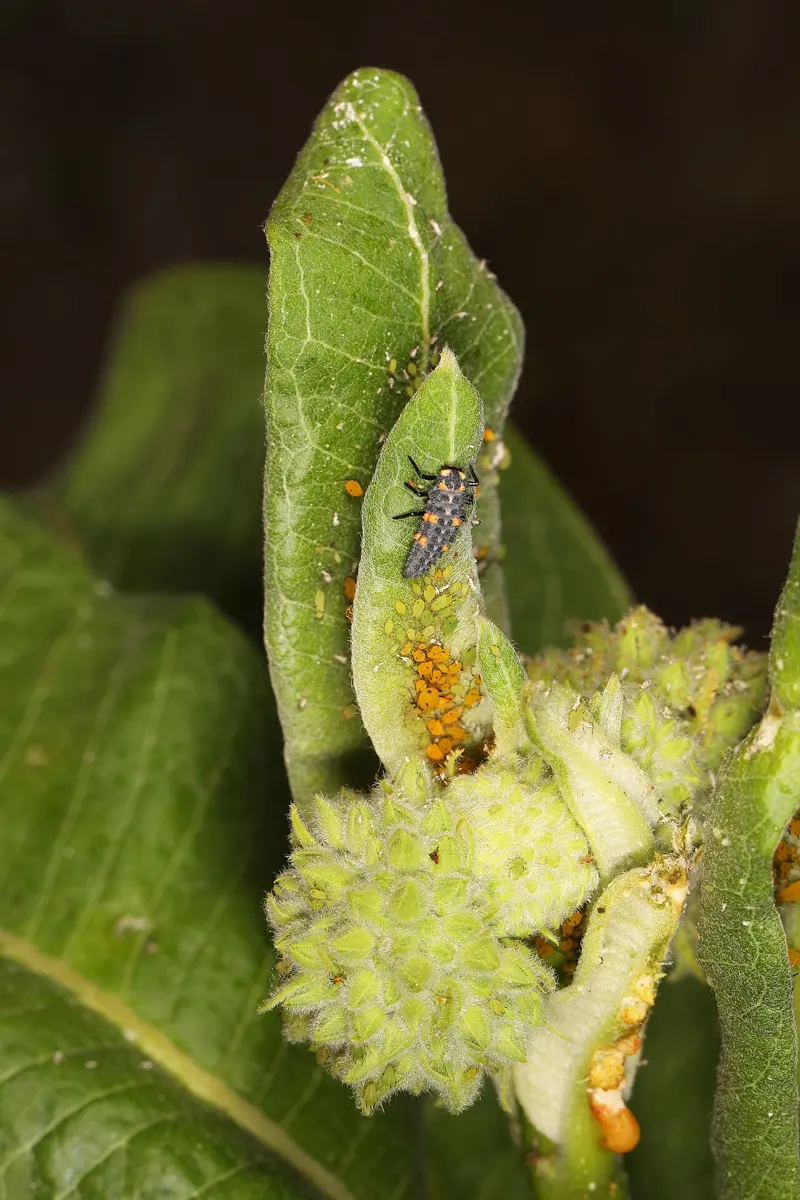
ii. Parasitoids are insects, mostly tiny wasps and flies, that lay their eggs in or on another insect; their larvae feed inside it and kill it. For example, the tiny wasps Trichogramma lay their eggs inside the eggs of moths whose caterpillars are crop pests (the sugarcane borer, the rice stem borer, the tomato fruit borer): a wasp grows inside each moth egg instead of a caterpillar.
iii. Pathogens: viruses, bacteria and fungi that cause disease in pests, used as biopesticides:
- The bacterium Bacillus thuringiensis (Bt) makes a protein crystal that is poisonous only to the caterpillars (or beetle or mosquito larvae) that eat it, harmless to people and most other animals; it is sprayed on crops and its gene is in Bt cotton and Bt maize.
- Nuclear polyhedrosis viruses (NPV), each specific to one kind of caterpillar.
- Fungi such as Beauveria and Metarhizium, which grow through an insect’s skin; and Trichoderma, a fungus that attacks the fungi that cause root rot and wilt, mixed into soil or coated on seeds, and made in Nepal too.
iv. Plants that make substances which kill or repel pests are used as biopesticides: neem (Azadirachta indica), whose azadirachtin stops insects feeding and growing; tobacco (Nicotiana tabacum), whose nicotine is a poison to insects (and people); lemon (Citrus limon) extract, used against some fungi; and in Nepal, the titepati (mugwort) and bakaino (Persian lilac) traditionally used by farmers.
A farmer pins Trichogramma cards in his tomato field. What kind of biocontrol agent is he using?
Pick an answer to see why.
II. Biofertilizers
A biofertilizer is a substance containing living microorganisms which, when applied to seeds, plant surfaces or soil, live in the rhizosphere (the soil around the roots) or inside the plant, and promote its growth by increasing the supply or availability of nutrients. They add nutrients in three ways: fixing nitrogen from the air, making phosphorus soluble (dissolving it from rock and soil so roots can take it up), and stimulating growth by making growth-promoting substances (hormones). The main groups are bacteria, cyanobacteria and fungi; green manure is used alongside them.
i. Bacteria
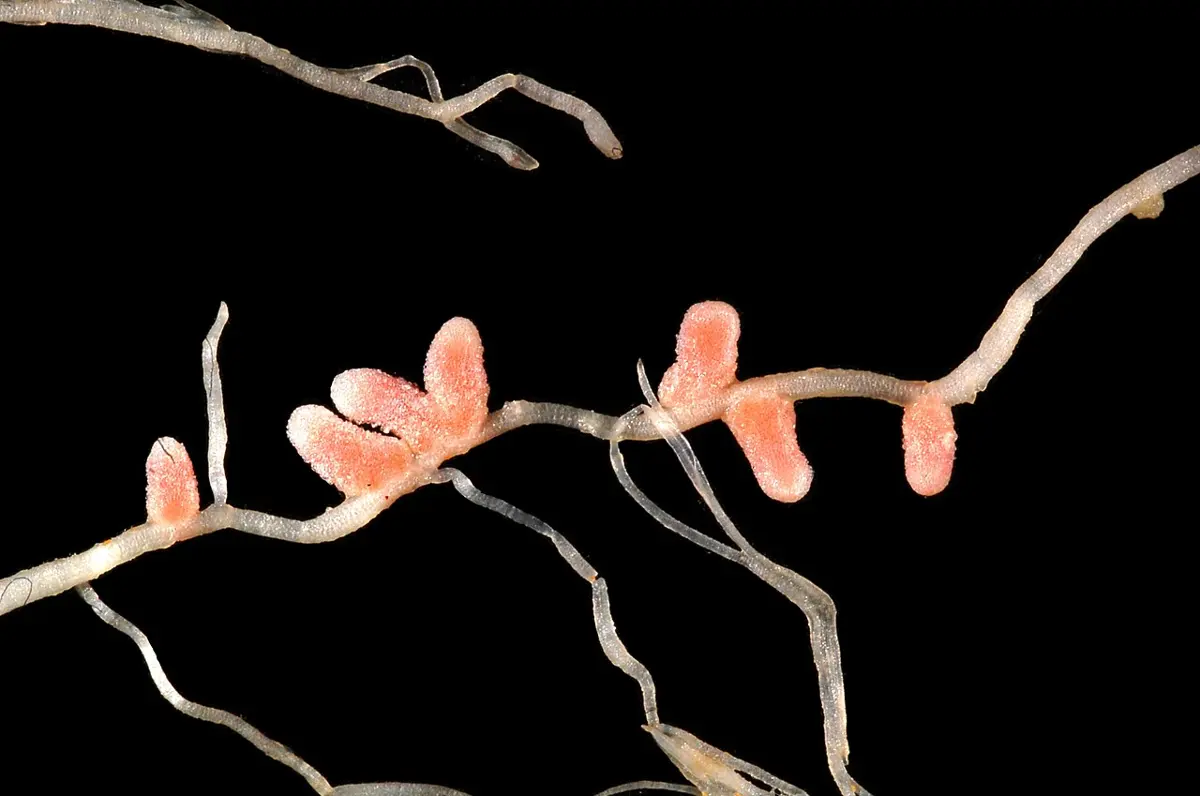
- A. Rhizobium lives in the root nodules of legumes (peas, beans, lentils, soybeans, clover), where it fixes nitrogen from the air into ammonia for the plant, in return for sugar: a mutualism. Legume seeds coated with Rhizobium (inoculation) grow well in poor soil, and the roots left after harvest enrich the soil for the next crop. Dhaincha (Sesbania), a fast-growing legume used as green manure in rice fields, has root nodules, and one species, Sesbania rostrata, has nodules on its stems too; these are made by a close relative of Rhizobium, Azorhizobium caulinodans, which fixes nitrogen even when the field is flooded.
- B. Azotobacter fixes nitrogen while living free in the soil near roots, not in nodules; it also makes growth hormones. It is sold as a biofertilizer for cereals and vegetables.
- C. Streptomyces is a soil bacterium that forms threads like a fungus’s and gives soil its earthy smell. It does not fix nitrogen, but many kinds make antibiotics (S. griseus makes streptomycin; S. griseoflavus makes bicozamycin), which help protect roots from disease, and some help plants grow; they are used as biocontrol agents and growth promoters.
ii. Cyanobacteria
Cyanobacteria, once called blue-green algae (BGA), are photosynthetic bacteria. Many, such as Anabaena and Nostoc, fix nitrogen in special thick-walled cells, heterocysts, which keep out the oxygen that would spoil the nitrogen-fixing enzyme. In rice paddies they grow on the flooded soil and add nitrogen to it.
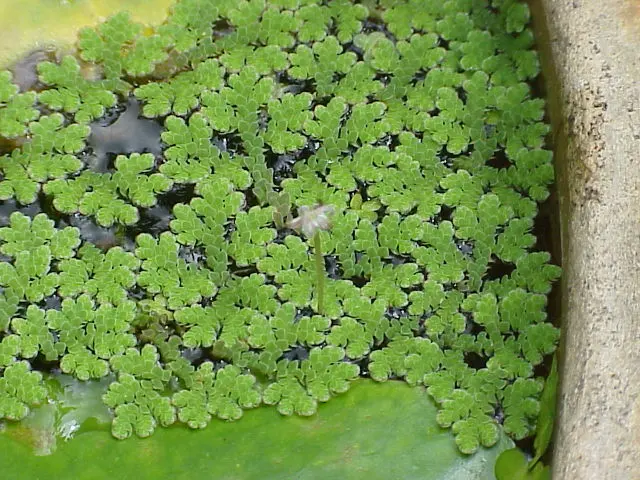
- A. Azolla–Anabaena mutualism. Azolla is a tiny floating fern (a eukaryote) whose leaves have small cavities, each holding filaments of the cyanobacterium Anabaena azollae (now often called Trichormus azollae), a prokaryote. The Anabaena fixes nitrogen for the fern; the fern gives it shelter and food: a mutualism, a kind of positive symbiosis in which both benefit. For centuries farmers in southern China and northern Vietnam have grown Azolla on their rice paddies as a green fertilizer instead of chemicals: it doubles in a few days, and when it dies or is plowed in, its nitrogen feeds the rice.
- B. Nostoc forms chains of cells (filaments) in jelly-like colonies, in water and on damp soil and rocks. It also lives in mutualism with liverworts and hornworts, in the roots of cycads, in the flowering plant Gunnera, and with fungi as lichens (the partner in Azolla’s leaves is sometimes counted as a Nostoc too).
- C. Spirulina (Arthrospira), a spiral cyanobacterium of warm, salty lakes, is grown and sold as a food supplement, as powder, capsules or tablets, because it is rich in protein. It can’t fix nitrogen (it has no heterocysts), so it is not a nitrogen biofertilizer, though its leftovers can be used as an organic fertilizer.
Nostoc: L. H. Pammel, A Manual of Poisonous Plants (1910), public domain
iii. Fungi: mycorrhiza
A mycorrhiza (“fungus root”) is a mutualism between a fungus and the roots of a plant. The fungus’s threads, hyphae, spread far into the soil, much farther and finer than root hairs, and bring the plant water and phosphorus and other minerals; the plant gives the fungus sugar. Most land plants have mycorrhizae, and they help plants grow on poor, barren soil. There are two main kinds:
- A. Ectomycorrhiza: the fungus forms a thick sheath outside the root tip and grows between the cells of its outer layer, but doesn’t enter them. It is found mainly in trees: pine, oak, sal, birch, eucalyptus. The fungi are mostly mushroom-forming ones, such as Pisolithus (used to help pine seedlings grow in poor soil), and the edible mushrooms collected in Nepal’s forests.
- B. Endomycorrhiza: the fungus grows inside the cells of the root’s cortex. The commonest kind is arbuscular mycorrhiza (AM), made by fungi of the group Glomeromycota, which form tiny branched “trees”, arbuscules, inside the cells, where nutrients are exchanged. AM fungi live with most crops, rice, wheat, maize, legumes, vegetables, and fruit trees such as peach and apple. Orchids have their own kind, orchid mycorrhiza: their dust-like seeds can’t even germinate without a fungus to feed them.
iv. Green manure
Green manure is a crop grown to be plowed into the soil while still green, to enrich it: legumes (dhaincha, cowpea, peas and beans, clover, sunn hemp), grasses (berseem, para, napier) and even cereals (oats, millet). The whole crop, or what is left after harvest, is plowed in and left to decay for a while before the next crop is sown. As it decays it adds organic matter and nutrients, and legumes add the nitrogen their Rhizobium fixed. In Nepal, dhaincha is sown before rice and plowed in after four to six weeks, as the field is prepared for planting.
v. Commercial biofertilizers. Many biofertilizers are now sold, as a powder in a carrier such as peat or as a liquid: Rhizobium for legumes, Azotobacter, Azospirillum, phosphate-solubilizing bacteria, AM fungi and blends of several. One that textbooks name is Uni-Grow, a commercial product with microbes in it, said to be made from a by-product of the palm.
In the Azolla–Anabaena partnership, what does each give the other?
Pick an answer to see why.
Why do mycorrhizae help a pine seedling grow in poor soil?
Pick an answer to see why.
Exercise
These are the questions on the uses of microbes, from the exercise shared with Unit 28, keeping their numbers.
A. Tick the correct alternative
- Which one of the following is made with Lactobacillus bulgaricus?
Pick an answer to see why.
- Soy sauce is made with:
Pick an answer to see why.
- Which alcoholic drink is made by distilling wine?
Pick an answer to see why.
- Microbial contamination of water is due to:
Pick an answer to see why.
- Which is the final step in drinking water treatment?
Pick an answer to see why.
- Which biological control agent is used on Trichogramma cards (tricho-cards) to kill insect pests in integrated pest management (IPM)?
Pick an answer to see why.
- In biofertilizer use, the Azolla–Anabaena association is:
Pick an answer to see why.
- Which of the following is the most recent kind of biofertilizer?
Pick an answer to see why.
- Which of the following is a green manure?
Pick an answer to see why.
B. Short answer questions
Are microorganisms used in the dairy and beverage industries? Describe the industrial production of yogurt and cheese.
Answer
What are alcoholic beverages? Discuss the industrial production of beer.
Answer
What is microbial contamination of water? What are the sources, causes, effects, detection and prevention of contamination of water?
Answer
What is sewage? Describe briefly the treatment of sewage.
Answer
What is drinking water? Discuss briefly the steps of drinking water treatment.
Answer
Write a short note on biological control agents (BCAs).
Answer
Even in a country like Nepal, chemical fertilizers such as urea, DAP and TSP are slowly being replaced by organic compost or manure, which is further supplemented by biofertilizers. List the biofertilizers used in Nepal, and explain them.
Answer
Write a short note on the Azolla–Anabaena mutualism.
Answer
Printable PDFs
- Study notes 4 pages
- Worksheet 4 pages Answer key
Quiz yourself: Classification of Living Beings, Grades 5–12 →
Practice every question in the book, and keep track of the ones you miss →
A companion to your textbook, not a replacement for it: study from the book your school uses, and where the two differ, follow your teacher. Found a mistake? Please tell us.