
Climb from the Tarai’s sal forests to the snows and, in less than 200 km, you pass from tropical forest to alpine meadow: as many belts of plant life as on a journey from India to the Arctic. Nepal covers about a thousandth of the world’s land, yet it holds about one in every thirty of the world’s known kinds of plants. Who counted them, and how does anyone keep track of so many living things?
This unit opens the part of the book on floral diversity, the variety of plants and plant-like organisms. Before meeting the fungi, lichens, algae, mosses, ferns and seed plants one by one, you need the tools biologists use to sort and name every living thing: the three domains, the two-word scientific name, and the five kingdoms. The unit ends with how rich Nepal’s flora is, measured against the world’s.
2.1.1 Introduction
The living species of today are the products of evolution over millions of years: many species appeared, and many disappeared for ever. We know only the few that live in or visit our surroundings, yet even these show at once how varied life is. A rose looks nothing like a lotus; a dog is clearly different from a cat. That is just a glimpse of the variety in the whole living world.
The variety of living things on the Earth is called biodiversity (biological diversity). It includes all the plants, animals, microorganisms and fungi, and it is looked at on three levels:
| Level | What varies | Example from Nepal |
|---|---|---|
| Genetic diversity | the genes within one species | the hundreds of local rice varieties, such as Jumli Marshi, the cold-tolerant red rice grown at about 3,000 m in Jumla |
| Species diversity | the number and kinds of species | the many species of rhododendron on one hillside |
| Ecosystem diversity | the kinds of habitats and communities | sal forest, grassland, alpine meadow, wetland |
The study of the variety of plants is called floral diversity (flora means the plants of a place). It covers the number of plant species present, the variation within and between species at the genetic level, and the role each plays in its ecosystem.
A farmer in Jumla grows three local varieties of rice in neighboring fields. Which level of biodiversity do the three varieties show?
Pick an answer to see why.
2.1.2 Three domains of life
The domain is the highest rank in classification: it sorts all life in the most general way, above the kingdoms. The three-domain system was proposed by the American microbiologist Carl Woese and his colleagues in 1990. It divides all living things into three domains by the differences in their ribosomal RNA (rRNA), the RNA found in every cell’s ribosomes:
- Bacteria, the true bacteria;
- Archaea, prokaryotes that look like bacteria but are chemically very different;
- Eukarya, every organism whose cells have a nucleus.
Why rRNA? Every living cell makes proteins on ribosomes, so every cell has rRNA, and its sequence changes very slowly over millions of years. Two organisms whose rRNA sequences are almost the same split from each other recently; very different sequences mean a very old split. Comparing the sequences works like comparing the family trees of every living thing at once.

The family tree that the rRNA gives is drawn in Figure 4.2. All three domains go back to one ancestor, LUCA, the last universal common ancestor. The Bacteria split off first. Archaea and Eukarya share a later ancestor, so the Archaea are more closely related to us than to the bacteria they look like.
How the three domains differ
| Feature | Archaea | Bacteria | Eukarya |
|---|---|---|---|
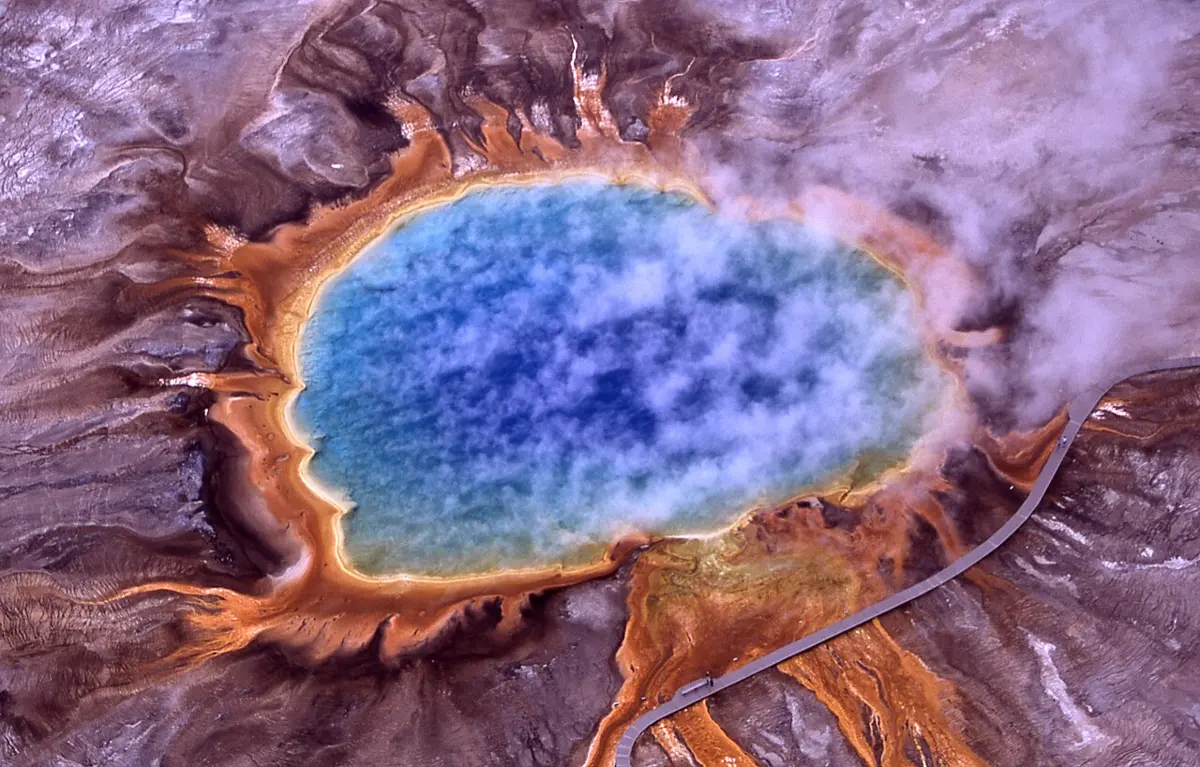
| Kind of cell | prokaryotic; many live in extreme places (hot springs, salt lakes, places with no oxygen), others in ordinary soil and the sea | typical prokaryotes | eukaryotic (cells with a nucleus) |
| Cell wall | no peptidoglycan: pseudopeptidoglycan, protein or polysaccharide | peptidoglycan (murein) | cellulose in plants and many algae, chitin in fungi, none in animals |
| Membrane lipids | hydrocarbon chains joined to glycerol by ether bonds | ester bonds | ester bonds |
| Includes | the archaebacteria: methanogens, halophiles, thermophiles | the eubacteria, including cyanobacteria | Protista, Fungi, Plantae, Animalia |
| Body | unicellular | unicellular, a few in chains or filaments | unicellular or multicellular |
| Common antibiotics (streptomycin, chloramphenicol, penicillin) | not affected | sensitive | not affected |
The last row comes from the ribosomes and the wall. Streptomycin and chloramphenicol block bacterial ribosomes, and penicillin stops the making of peptidoglycan. Archaea and eukaryotes have neither the bacterial kind of ribosome nor that wall, so these drugs pass them by. That is why antibiotics can kill the bacteria in your body without killing you.
A newly found microbe has no nucleus, has a wall with no peptidoglycan, and its membrane lipids have ether bonds. To which domain does it belong?
Pick an answer to see why.
Why can a doctor use streptomycin against a bacterial infection without harming the patient’s own cells?
Pick an answer to see why.
2.1.3 Binomial nomenclature
Every place gives its plants and animals its own names. The plant called kaphal in Nepali is called box myrtle in English and has other names in other languages, and one word can mean different plants in different villages. With millions of species, this causes real confusion: when two scientists write about a plant, each must know the other means exactly the same one. So a single, standard way of naming organisms is needed.
The Swedish naturalist Carolus Linnaeus (1707–1778) made it a habit, in his book Species Plantarum (1753), to call every species by two words. The system is called binomial nomenclature (bi, two; nomen, name). The first word is the genus (the generic name); the second is the specific epithet, which together with the genus names the species. Rice, for example, is Oryza sativa: Oryza is its genus, and sativa (“cultivated”) marks out the particular species. Each binomial name is used for one organism only, anywhere in the world.
| Common name (Nepali) | English name | Scientific name |
|---|---|---|
| धान (dhan) | rice | Oryza sativa |
| लालीगुराँस (laligurans) | tree rhododendron | Rhododendron arboreum |
| काफल (kaphal) | box myrtle | Myrica esculenta |
| आँप (aanp) | mango | Mangifera indica |
| बाघ (bagh) | tiger | Panthera tigris |
| गैंडा (gaida) | one-horned rhinoceros | Rhinoceros unicornis |
The rules for scientific names are set by international codes, each looked after by its own international body of scientists:
- the ICN, the International Code of Nomenclature for algae, fungi and plants (called the ICBN, International Code of Botanical Nomenclature, until 2011);
- the ICZN, the International Code of Zoological Nomenclature, for animals;
- the ICNP, the International Code of Nomenclature of Prokaryotes (formerly the Bacteriological Code, ICNB), for bacteria and archaea;
- the ICVCN, the International Code of Virus Classification and Nomenclature, for viruses.
Rules of binomial nomenclature
- A scientific name is in Latin or Greek, or is Latinized (given a Latin form): Rhododendron is Greek for “rose tree”; Mangifera indica means “the mango-bearing one of India”.
- It has two words: the first is the generic name, the second the specific epithet.
- The generic name begins with a capital letter; the specific epithet begins with a small letter, even when it comes from a place or person: Mangifera indica.
- The name is printed in italics; when handwritten, each word is underlined separately: Oryza sativa.
- The generic name is always a single word, and may be shortened to its first letter and a full stop once it has been written in full: Escherichia coli, then E. coli. The specific epithet may be one word or a hyphenated compound (Hibiscus rosa-sinensis, the China rose), but it is never abbreviated.
- The name of the author who first described the species may be written after it, in full or shortened, in ordinary (not italic) type: Mangifera indica L., where L. stands for Linnaeus.
Which is the correct way to write the scientific name of the tree rhododendron in print?
Pick an answer to see why.
2.1.4 Five kingdom classification system
For two thousand years living things were sorted into two kingdoms, plants and animals. Microscopes broke that system: bacteria, Euglena and the fungi fit neither well. In 1969 R. H. Whittaker proposed five kingdoms: Monera, Protista, Fungi (Mycota), Plantae and Animalia. He used five criteria:
- Complexity of the cell: prokaryotic (no nucleus) or eukaryotic (with a nucleus).
- Complexity of the body, the level of organization: unicellular or multicellular.
- Mode of nutrition: autotrophic (makes its own food) or heterotrophic; among heterotrophs, absorbing food (fungi) or taking it in (animals).
- Ecological role: producer, consumer or decomposer.
- Phylogenetic relationship: the evolutionary history of the organism, which groups share a common ancestor.
| Character | Monera | Protista | Fungi | Plantae | Animalia |
|---|---|---|---|---|---|
| Cell | prokaryotic | eukaryotic | eukaryotic | eukaryotic | eukaryotic |
| Body | unicellular, or simple chains and colonies | unicellular | unicellular (yeast) or multicellular | multicellular | multicellular |
| Nutrition | autotrophic or heterotrophic | autotrophic or heterotrophic | heterotrophic (absorptive) | autotrophic | heterotrophic (ingestive) |
| Ecological role | producer or decomposer | producer or consumer | decomposer | producer | consumer |
| Examples | bacteria, cyanobacteria | Amoeba, Euglena, Paramecium | mushroom, yeast, Mucor | Spirogyra, Pinus, mustard | tiger, starfish, snail |
Notice Spirogyra under Plantae: Whittaker placed the many-celled algae with the plants and only the one-celled ones in Protista. The idea of the system is easy to apply once you ask the questions in order: nucleus? one cell or many? how does it feed?
An organism has eukaryotic cells, has no photosynthetic pigment, and takes in food as a consumer in its ecosystem. In which of Whittaker’s kingdoms does it belong?
Pick an answer to see why.
2.1.5 Status of flora of Nepal and world representation
Nepal occupies about 0.1% of the world’s land, but harbors about 3.2% of the world’s known flora and 1.1% of its known fauna. The reason is its shape. Within about 200 km from south to north the land climbs from under 100 m in the Tarai to 8,849 m on Everest, so a short walk crosses climates that elsewhere lie thousands of kilometers apart: tropical forest, subtropical, temperate, subalpine and alpine, then the cold desert of the trans-Himalaya. Rain varies just as much, from the wet east and the southern slopes to the dry rain shadow behind the mountains. Every belt has its own plants.
| S.N. | Group | Number of known species in Nepal | % of the world’s known species |
|---|---|---|---|
| 1 | Algae | 1,001 | 2.5 |
| 2 | Fungi | 1,822 | 2.6 |
| 3 | Lichens | 465 | 2.3 |
| 4 | Bryophytes | 1,150 | 8.2 |
| 5 | Pteridophytes | 534 | 5.1 |
| 6 | Gymnosperms | 26 | 5.1 |
| 7 | Angiosperms | 6,973 | 3.2 |
| Total | 11,971 | 3.2 |
Source: Government of Nepal, Ministry of Forests and Soil Conservation, National Biodiversity Strategy and Action Plan 2014–2020, Table 5.
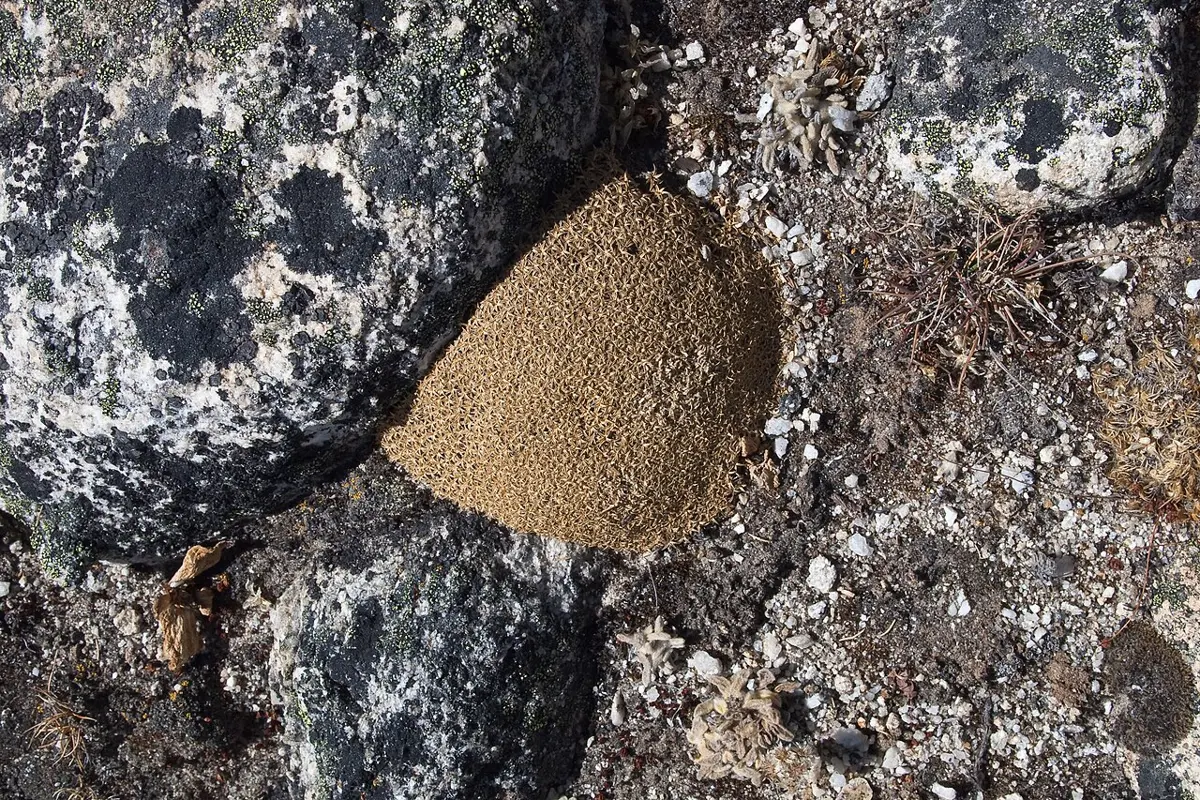
These counts keep rising as botanists explore Nepal’s forests and mountains, so other sources give larger numbers for some groups (more than 2,000 fungi and more than 700 lichens in some later lists). Whatever the source, two groups stand out: Nepal has about 8% of the world’s bryophytes (mosses and liverworts) and about 5% of its ferns and gymnosperms, far more than its 0.1% share of the land would suggest. Mosses and ferns love the cool, wet, misty slopes of the middle hills.
Nepal holds about 8% of the world’s known bryophytes but only 0.1% of the world’s land. What explains this best?
Pick an answer to see why.
Exercise
A. Choose the correct option
- Which domain is made up of ancient prokaryotes, many of which can live in extreme environments?
Pick an answer to see why.
- Who introduced the five kingdom classification system?
Pick an answer to see why.
- Using the rules of binomial nomenclature, which is the correct way to print the scientific name of the lion?
Pick an answer to see why.
- An organism has eukaryotic cells, lacks photosynthetic pigment, and is a consumer in its ecosystem. To which kingdom does it belong in Whittaker’s classification?
Pick an answer to see why.
B. Answer the following questions
What are the three domains of life? Explain.
Answer
Bacteria and Archaea were kept together in one kingdom in older classification systems, but now they are placed in two different domains. Why did it become necessary to separate them?
Answer
Differentiate between common name and scientific name.
Answer
What is the binomial system of nomenclature? Mention its rules.
Answer
Describe the criteria for the development of the five kingdom system of classification.
Answer
The common name of cauliflower is simpler than its scientific name, Brassica oleracea. Why, then, is the simpler common name not used in biology instead of the scientific name?
Answer
Which organism is the most complex among a bacterium, a mushroom and an apple tree? Give reasons.
Answer
Explain the status of flora in Nepal and its world representation.
Answer
Printable PDFs
- Study notes 2 pages
- Worksheet 5 pages Answer key
Quiz yourself: Classification of Living Beings, Grades 5–12 →
Practice every question in the book, and keep track of the ones you miss →
A companion to your textbook, not a replacement for it: study from the book your school uses, and where the two differ, follow your teacher. Found a mistake? Please tell us.