
Every second breath you take, roughly, you owe to the sea. Somewhere around half of all the photosynthesis on Earth happens in the oceans, in drifting cells too small to see, and on land the green slime of a pond, the slippery coat on monsoon steps and the seaweed in a bowl of Japanese soup are made by relatives of theirs. They are the algae: simple, plant-like organisms without roots, stems or leaves, which feed most of the life in water and gave rise, long ago, to the land plants themselves.
2.4.1 General introduction
The word algae (singular alga) is Latin for seaweeds. It is used broadly for simple, mostly aquatic, photosynthetic organisms. The algae are an enormous and varied group of great biological importance, and among the simplest and oldest plant-like organisms.
They are autotrophic, unicellular or multicellular, non-flowering and non-vascular (they have no xylem or phloem). As the main primary producers in water, they make the energy-rich compounds that feed the rest of the life in ponds, rivers and seas.
The study of algae is phycology (Greek phykos, seaweed) or algology, and an expert in algae is a phycologist. The British botanist F. E. Fritsch (1879–1954), whose two-volume The Structure and Reproduction of the Algae (1935, 1945) was the standard work for decades, is often called the father of phycology.
2.4.2 Characteristic features of algae
- Algae are aquatic, in both the sea and fresh water. They also grow on and within damp soil, on moist stones and wood, and in association with fungi (in lichens, Unit 5) and certain animals (inside corals and some sponges).
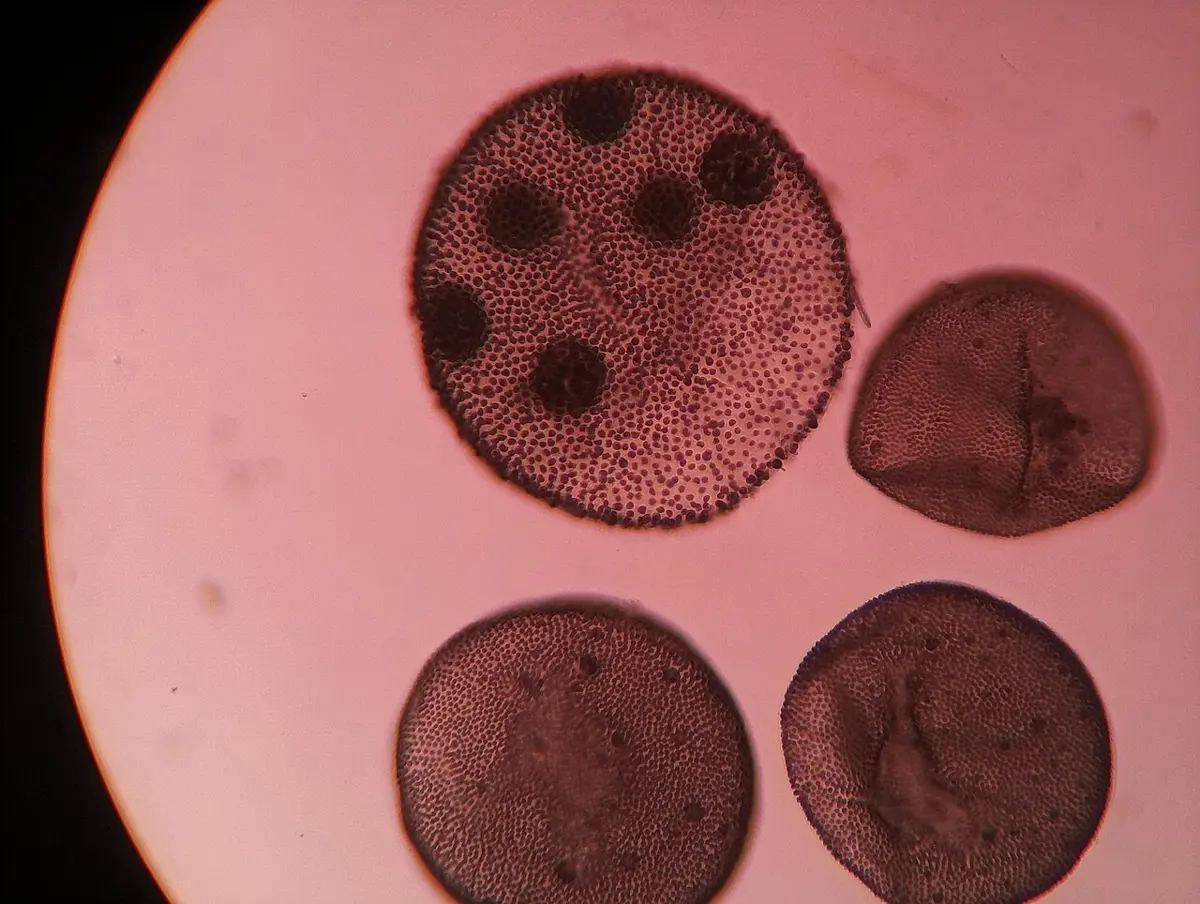
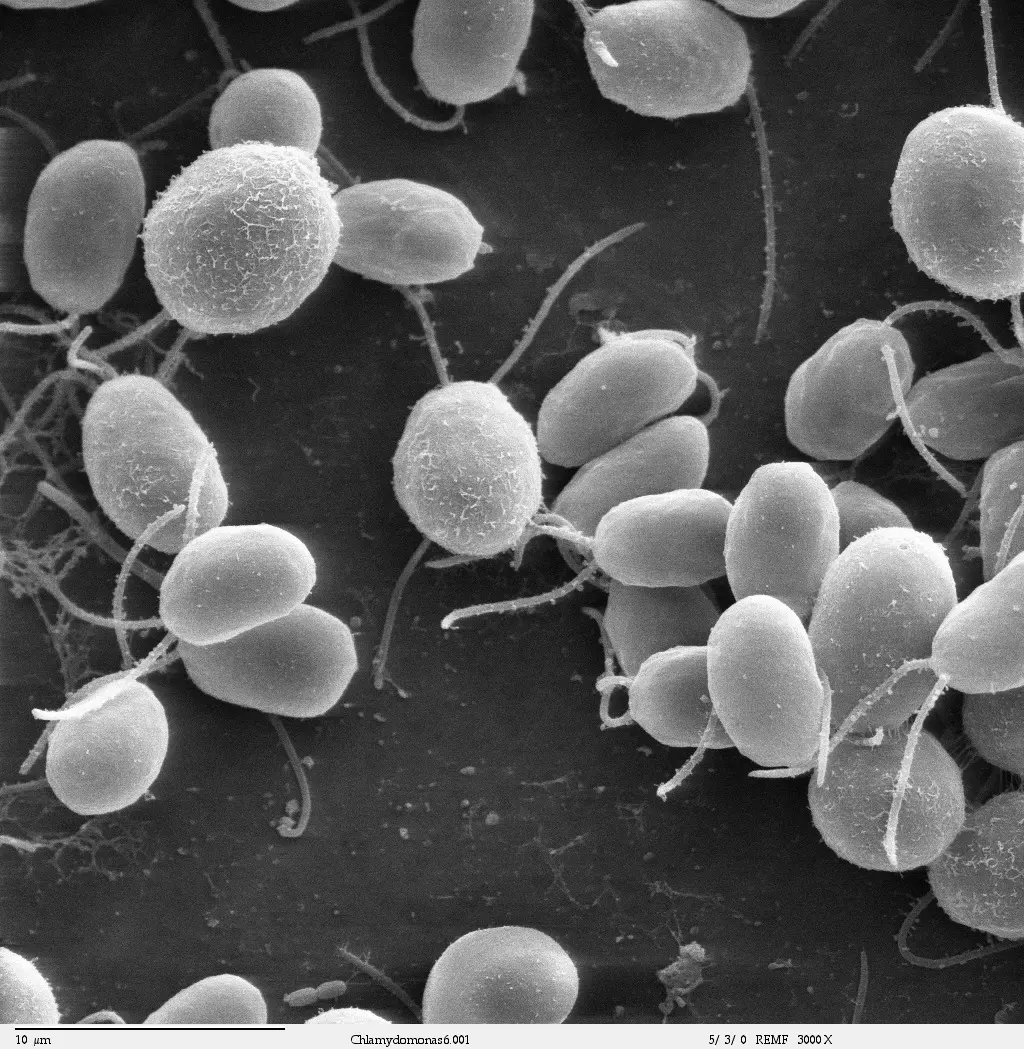
- The body is not differentiated into roots, stems or leaves, so it is called a thallus, even when the alga is a single cell (Chlamydomonas). In multicellular algae the thallus ranges from a simple floating colony of cells (Volvox) to a filament (Spirogyra) or a flat sheet of cells (Ulva).
- The body is usually covered with mucilage, which makes it slimy.
- The cell wall is made mainly of cellulose.
- The photosynthetic pigments are chlorophyll and carotenoids (with other pigments in some classes).
- The common reserve food is starch (but other foods in the red and brown algae, below).
- Reproduction is vegetative, asexual and sexual.
- Vegetative reproduction is the commonest, by fragmentation, budding, etc.
- Asexual reproduction is by spores, which are motile (zoospores, with flagella) or non-motile (aplanospores, akinetes).
- Sexual reproduction is by the fusion of gametes, which may be isogamous (gametes alike), anisogamous (alike in form but different in size) or oogamous (a large, non-motile egg and a small, motile male gamete).
- There is no embryo stage in the life cycle: the zygote grows straight into a new plant, unprotected by a parent. (In all land plants, from mosses up, the young plant grows as an embryo inside the parent’s tissue.)
Why is the body of an alga called a thallus?
Pick an answer to see why.
2.4.3 Classification
Algae are classified into classes by their photosynthetic pigments, their stored food, the structure of the thallus and their way of reproduction. The red and brown algae evolved separately, along lines of their own; the green algae are the ones whose ancestors gave rise to the land plants. Three classes are described here.
1. Chlorophyceae (green algae)
The green algae, Chlorophyta (Greek chloros, green; phyton, plant), are found all over the world in many kinds of habitat. They resemble land plants in their photosynthetic pigments and their reserve food.
- a.Most live in fresh water; some grow on moist soil, walls, rocks and tree bark.
- b.The body is unicellular or multicellular.
- c.The cell wall is made of cellulose and pectin.
- d.The photosynthetic pigments are chlorophyll a, chlorophyll b, carotenes and xanthophylls, the same as in land plants.
- e.The reserve food is starch, as in land plants.
- f.Reproduction is vegetative, asexual and sexual.
Examples: Spirogyra, Ulothrix, Chara, Chlamydomonas, Volvox.
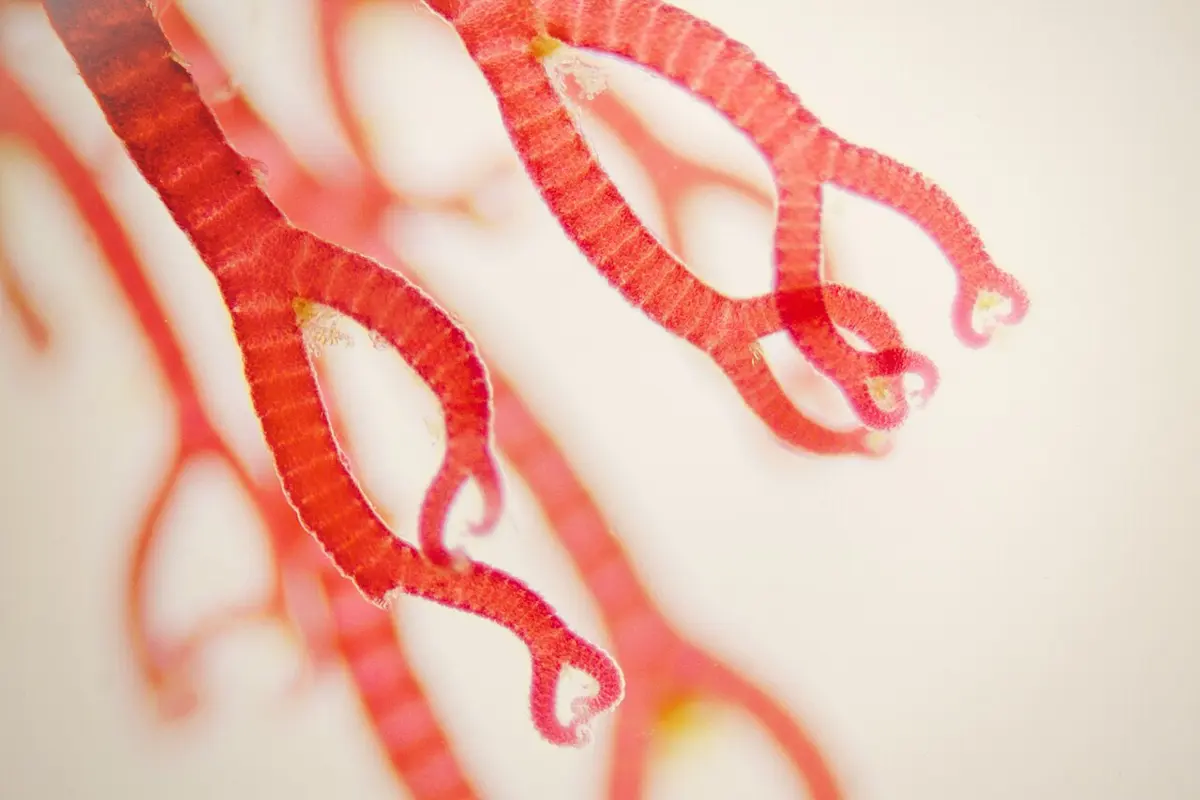
2. Rhodophyceae (red algae)
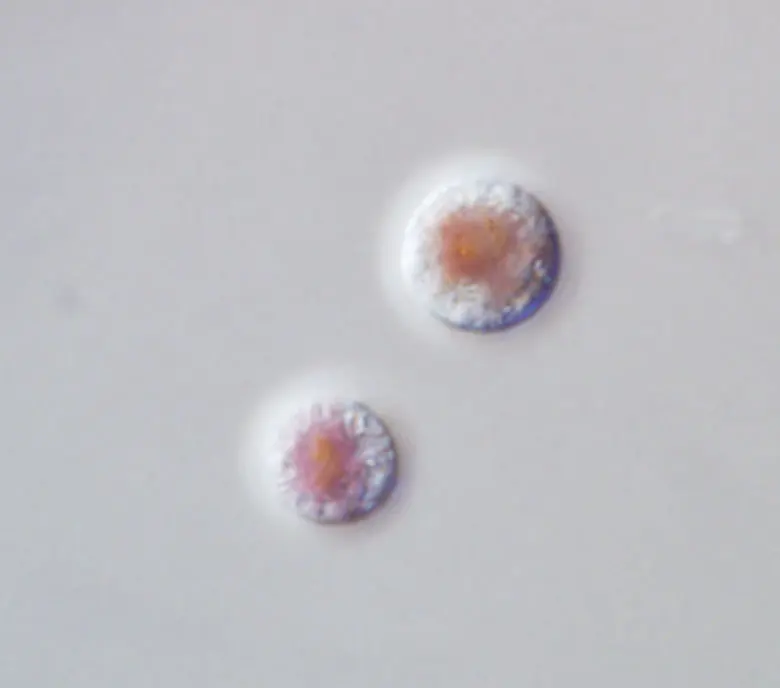
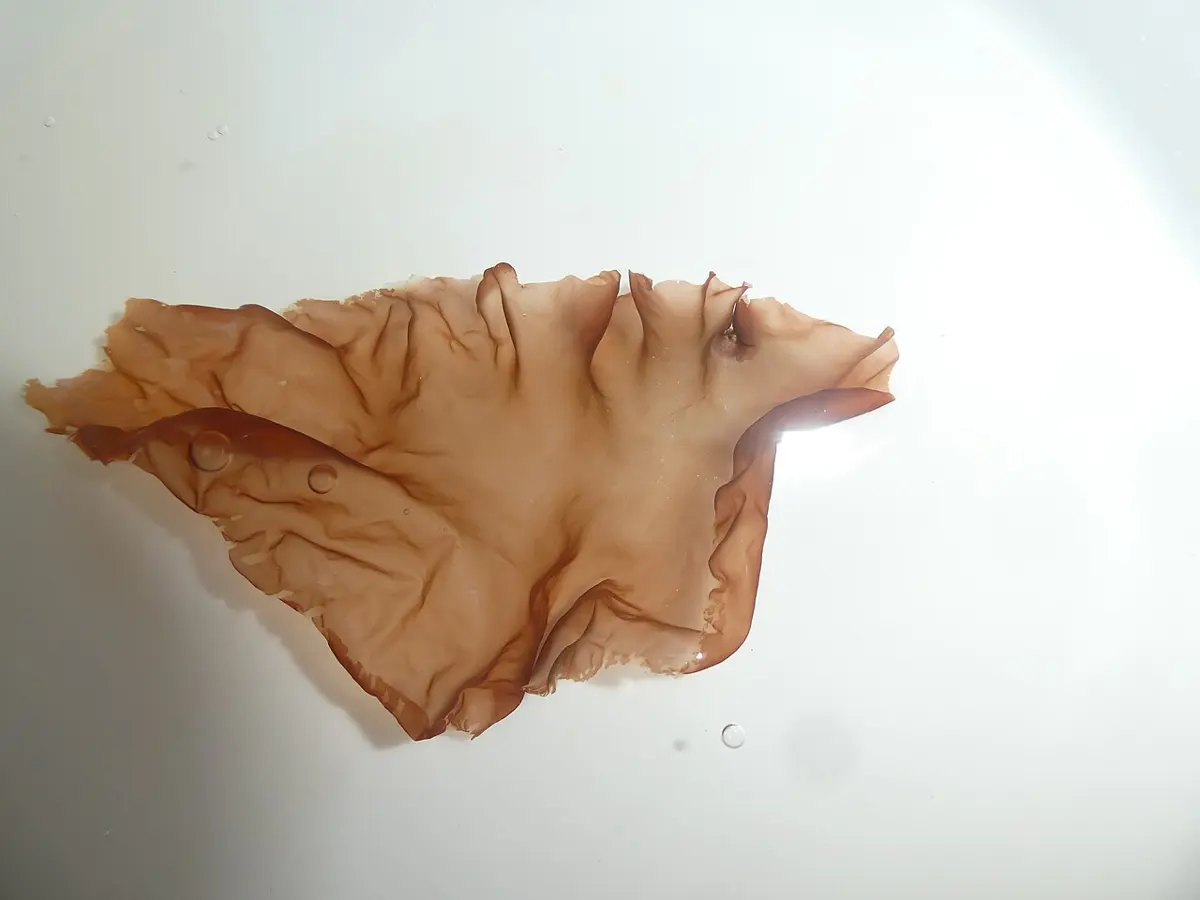
The red algae, Rhodophyta (Greek rhodon, rose; phyton, plant), are one of the oldest groups of eukaryotic algae: fossils of red algae about a billion years old have been found. They are commonly found in the sea. Their red color is due to the red pigment phycoerythrin, which masks their chlorophyll.
- a.Most are marine; a few live in fresh water.
- b.The body is unicellular, filamentous, parenchymatous (a solid tissue of cells) or ribbon-like.
- c.The cell wall is made of cellulose and pectin, with agar or carrageenan.
- d.The photosynthetic pigments are chlorophyll a, carotenoids, and the phycobilins, red phycoerythrin and blue phycocyanin.
- e.The reserve food is floridean starch, a starch whose branching resembles glycogen.
- f.Reproduction is vegetative, asexual and sexual. They have no motile cells at any stage: no flagellum anywhere in the life cycle.
Examples: Porphyridium, Porphyra, Ceramium, Gelidium.
3. Phaeophyceae (brown algae)
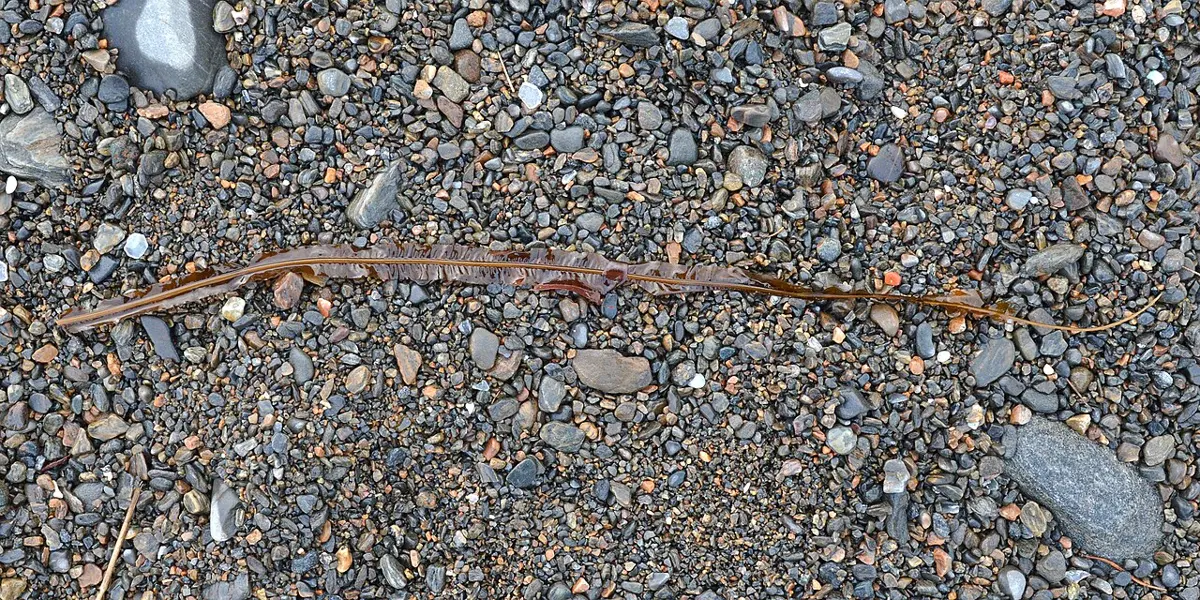
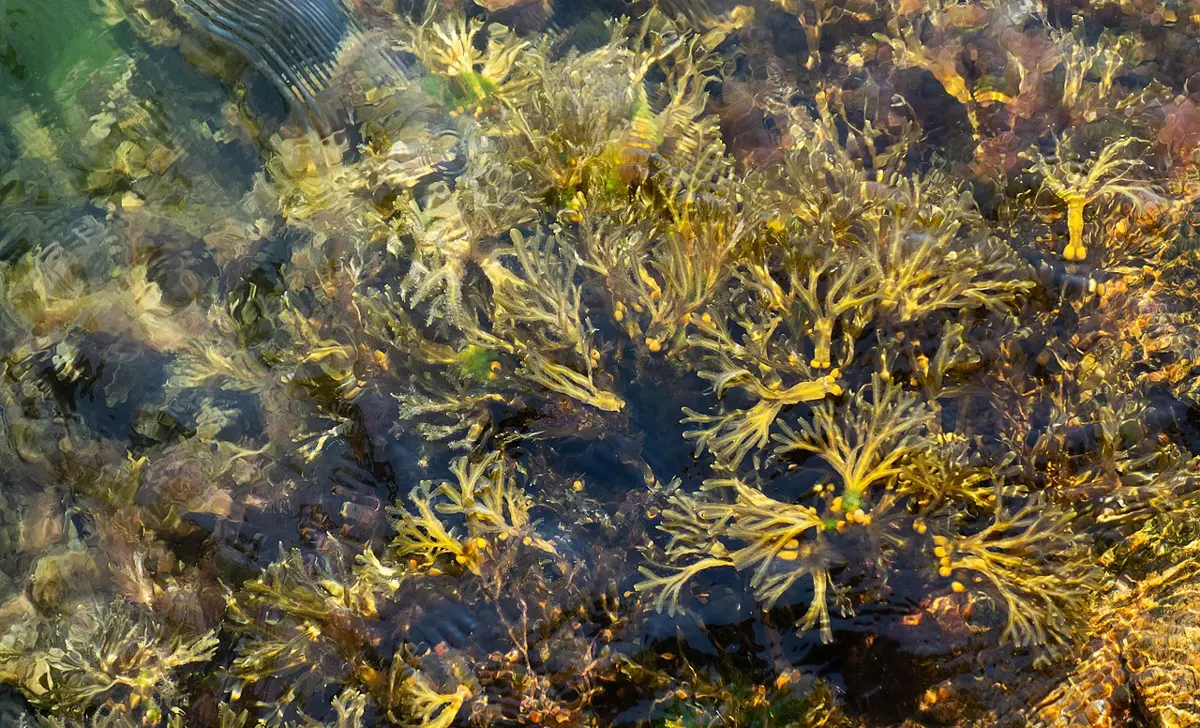
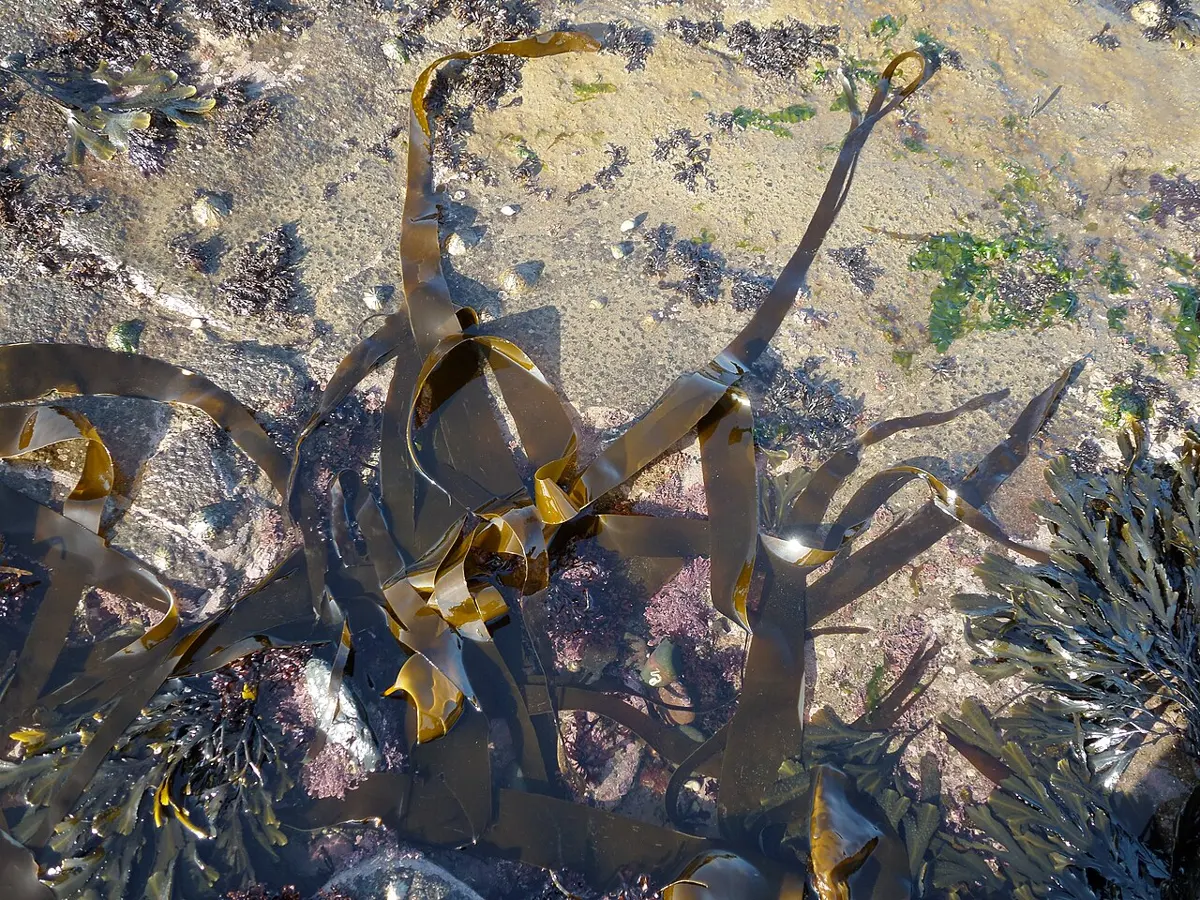
The brown algae, Phaeophyta (Greek phaios, dusky or brown; phyton, plant), are named for their color, which varies from brown to olive green. It comes from a large amount of the golden-brown pigment fucoxanthin.
- a.They are almost all marine, mostly in cold seas.
- b.The body is branched and filamentous in the simpler forms and parenchymatous in the larger ones. The largest, the kelps, are the biggest of all algae, up to 45 m long, with a root-like holdfast, a stem-like stipe and leaf-like blades, often buoyed up by gas-filled bladders.
- c.The cell wall is made of cellulose, with alginic acid (alginates).
- d.The photosynthetic pigments are chlorophyll a, chlorophyll c, carotenoids and fucoxanthin.
- e.The reserve food is laminarin (a soluble chain of glucose, but not a starch) and mannitol (a sugar alcohol).
- f.Reproduction is vegetative, asexual and sexual. Their spores and gametes swim with two flagella of unequal length.
Examples: Alaria, Fucus, Laminaria.
| Green algae | Red algae | Brown algae | |
|---|---|---|---|
| Class | Chlorophyceae | Rhodophyceae | Phaeophyceae |
| Where | mostly fresh water | mostly sea | almost all sea |
| Chlorophylls | a and b | a | a and c |
| Other pigments | carotenes, xanthophylls | phycoerythrin, phycocyanin | fucoxanthin |
| Reserve food | starch | floridean starch | laminarin and mannitol |
| Wall | cellulose, pectin | cellulose, agar, carrageenan | cellulose, alginates |
| Motile cells | flagella, mostly two equal | none | two unequal flagella |
| Examples | Spirogyra, Chlamydomonas, Volvox | Porphyra, Gelidium, Ceramium | Fucus, Laminaria, Alaria |
A seaweed stores laminarin and mannitol, and its brown color comes from fucoxanthin. To which class does it belong?
Pick an answer to see why.
Which pigments do green algae share with the land plants?
Pick an answer to see why.
2.4.4 Spirogyra
Systematic position
| Rank | Name |
|---|---|
| Kingdom | Plantae |
| Division | Algae (Chlorophyta) |
| Class | Chlorophyceae |
| Order | Conjugales (Zygnematales) |
| Family | Zygnemataceae |
| Genus | Spirogyra |
Occurrence
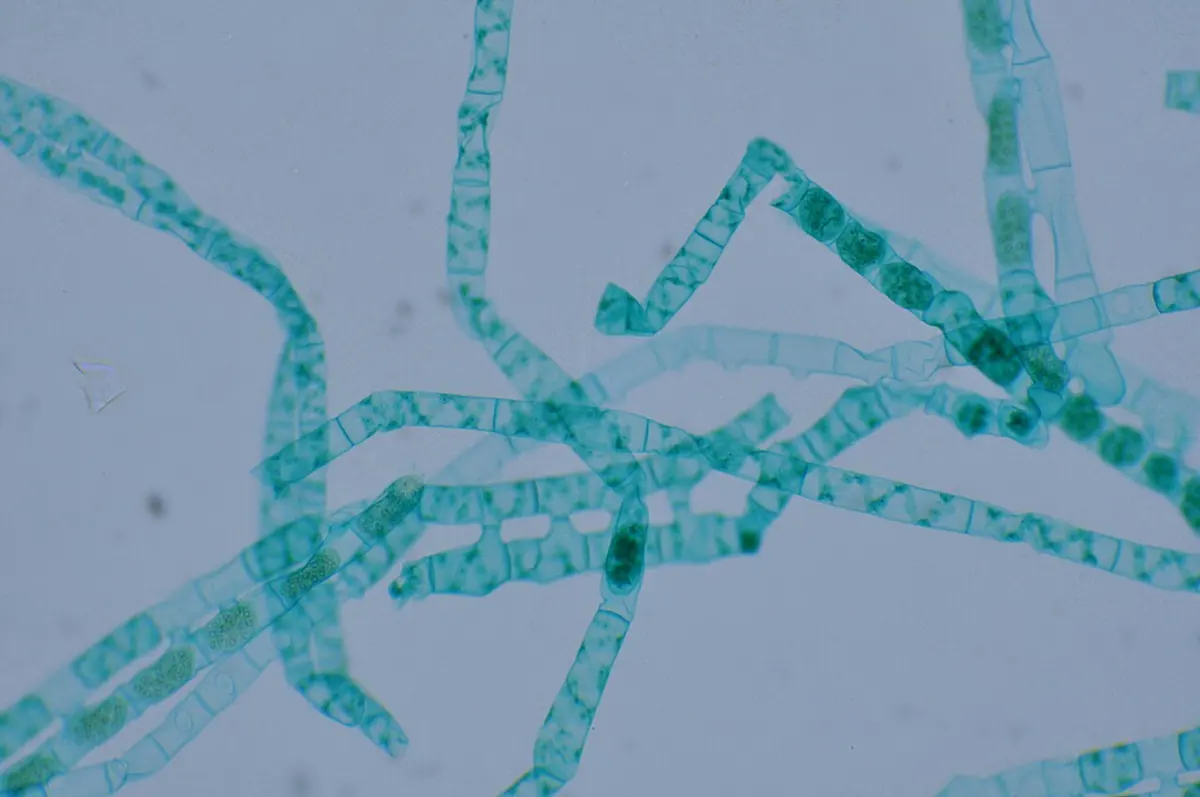
Spirogyra is one of the commonest green algae. It floats as bright green, slimy masses in still water: reservoirs, tanks, pools, lakes, ditches, rice fields, and slow streams and rivers. Its long, silky, slippery filaments give it the names pond scum and water silk (pond silk).
Plant body
The plant body is a green, cylindrical thallus: a long, thread-like, unbranched filament. The filament is slimy because of its mucilage sheath. Each filament is made of hundreds of similar cells placed end to end in a single row. Young filaments are attached to something underwater; adult ones float free.
Cell structure
The cells of the filament are cylindrical and have two parts, the cell wall and the protoplast (Figure 6.10).
The cell wall surrounds the protoplast and protects it. It has two layers: the inner layer, of cellulose, forms a complete envelope round the protoplast; the outer layer, of pectin, dissolves in water as the mucilage sheath.
The protoplast is made of the plasma membrane, cytoplasm, a nucleus, one or more chloroplasts and a large central vacuole.
- The plasma membrane surrounds the cytoplasm.
- The cytoplasm is a thin granular layer lining the wall (it is peripheral), pushed outward by the large central vacuole.
- The single large nucleus hangs in the middle of the vacuole, held by fine strands of cytoplasm that run out to the cytoplasm at the edge.
- The chloroplasts are ribbon-shaped and wound spirally, just inside the wall, with wavy, toothed edges. Their number varies from one to sixteen in different species; the spiral ribbons give Spirogyra its name (Greek speira, coil; gyros, round).
- Along each chloroplast lie small protein bodies, the pyrenoids. Each is a store of the enzyme that fixes carbon dioxide in photosynthesis, and is surrounded by a coat of starch made from the sugar.
Where are the pyrenoids of a Spirogyra cell?
Pick an answer to see why.
Reproduction
Spirogyra reproduces by vegetative, asexual and sexual methods.
1. Vegetative reproduction
By fragmentation, in favorable conditions; it is the commonest way. A filament breaks into pieces by mechanical injury (the water moving, an animal feeding) or when some cells in its length die. Each fragment, even a few cells, grows by cell division into a long new filament.
2. Asexual reproduction
Asexual reproduction is less common in Spirogyra. It is by akinetes, aplanospores and azygospores (Figure 6.11).
- Akinetes: in unfavorable conditions, a whole vegetative cell thickens its wall with extra layers and fills up with food. When favorable conditions return, each akinete germinates into a new filament.
- Aplanospores: in unfavorable conditions, the protoplast of a vegetative cell shrinks and forms a new wall around itself, inside the old cell wall. When the old wall decays, each aplanospore germinates into a new filament.
- Azygospores (parthenospores): in some species, gametes sometimes fail to fuse. Each such gamete rounds off and secretes a thick wall: an azygospore, or parthenospore (Greek parthenos, virgin: made without fusion). In favorable conditions it germinates into a new filament.
3. Sexual reproduction
Spirogyra reproduces sexually by conjugation, the fusion of the entire contents of two vegetative cells that look alike, the gametangia. Since the gametes are alike in form, conjugation is isogamous. It happens towards the end of the growing season. There are two kinds: scalariform and lateral.
a. Scalariform conjugation (ladder-like). This is the commonest kind. It happens between two different filaments, of different strains (in heterothallic species).
- Two filaments of opposite strains come close and lie side by side, and a common sheath of mucilage surrounds them.
- Facing cells of the two filaments put out small outgrowths towards each other, the papillae (or protuberances).
- The papillae grow longer and touch. Where they touch, the walls between their tips are dissolved by an enzyme (cytase), forming a hollow tube, the conjugation tube. The two filaments joined by many tubes look like a ladder, so this conjugation is called scalariform (Latin scala, ladder; forma, shape).
- The cell in one filament acts as the male gametangium, and the cell facing it as the female gametangium. The protoplast of each shrinks and rounds off as a gamete.
- The male gamete creeps through the conjugation tube into the female gametangium (it is called male only because it moves) and fuses with the female gamete, forming a diploid zygote.
- The zygote secretes a thick wall round itself: the zygospore. All the cells of the “male” filament are left empty, and the zygospores lie in the “female” filament.
In many species the filaments are reported to pair and form their tubes at night.
b. Lateral conjugation. This kind is rarer. It happens between two adjacent cells of the same filament, in homothallic (monoecious) species. It is of two types.
i. Indirect lateral conjugation. This is the commoner type of lateral conjugation. Two adjacent cells of a filament act as the male and female gametangia. Each grows a papilla at its side, next to the septum between them; the papillae grow and touch, the wall between them is dissolved by an enzyme, and a curved passage, the lateral tube, forms round the septum. The contents of the male gametangium, as the male gamete, move through the lateral tube into the female gametangium and fuse with the female gamete, forming a diploid zygospore. Along the filament, every second cell is left empty, and the others hold zygospores.
ii. Direct lateral conjugation. This is a simple, primitive type, found in a few species (Figure 6.12). Of two adjacent cells, the lower one swells into a barrel shape and its protoplast becomes the female gamete; the upper one’s becomes the male gamete. The male gamete grows a pointed beak, which makes a pore in the middle of the septum between them, mechanically or by enzymes. The male gamete passes through the pore and fuses with the female gamete, forming a zygospore in the lower cell.
Germination of the zygospore
The zygospore is the thick-walled, diploid, resting spore of Spirogyra. Its wall has three layers, and it can survive drought, cold and the winter at the bottom of a pond. It is set free when the female filament around it decays.
When conditions become suitable again (Figure 6.13):
- The diploid nucleus divides by meiosis, forming four haploid nuclei.
- Three of the four degenerate; only one stays functional.
- The outer layers of the wall absorb water, swell and burst; the inner layer grows out as a cylindrical germ tube.
- The germ tube divides across into two cells. The lower cell becomes a colorless rhizoidal cell (holdfast) attached to the substratum; the upper cell divides again and again to form a new filament.
- The new filament later breaks free of the substratum and floats as a free Spirogyra.
So in Spirogyra, the zygospore is the only diploid cell; all the rest of the life cycle is haploid.
In scalariform conjugation, why are all the cells of one filament left empty?
Pick an answer to see why.
In the life cycle of Spirogyra, which is the only diploid stage?
Pick an answer to see why.
2.4.5 Economic importance of algae
Algae have both useful and harmful effects.
Useful effects
1. Food. Algae are becoming a popular food because they are nutritious and give a much higher yield per unit area than conventional crops. Algae commonly eaten include Chlorella, Porphyra (nori), Codium, Rhodymenia (dulse) and Laminaria (kombu); and the cyanobacterium Spirulina, sold as a protein supplement. In Japan, Korea and China, seaweeds are part of everyday meals.
2. Fodder. Seaweeds are fed to cattle, sheep and poultry in coastal countries for their vitamins and minerals as well as their carbohydrate and protein. Algae used as fodder include Fucus, Laminaria, Alaria and Ascophyllum. On North Ronaldsay, an island off Scotland, a breed of sheep lives almost entirely on seaweed from the shore.
3. Fish farming (pisciculture). Floating and attached algae are the primary food of fish and other water animals. Green algae, diatoms and some cyanobacteria are eaten most widely by fish, so fish ponds are fertilized to make the algae grow.
4. Industry. Algae give many products for industry and medicine:
- agar (agar-agar), from red algae such as Gelidium and Gracilaria: a jelly used in jams, jellies, processed cheese and sweets, and in laboratories as the solid culture medium for bacteria and for plant tissue culture;
- carrageenan, from red algae such as Chondrus crispus (Irish moss) and Mastocarpus stellatus (once Gigartina stellata): a thickener in ice cream, chocolate milk, toothpastes and cosmetics;
- alginates, from brown algae: thickeners in food and paints, and in wound dressings;
- iodine: brown seaweeds concentrate iodine from seawater: iodine was discovered in seaweed ash in 1811, and burnt kelp was the main source of it for much of the 1800s;
- diatomite: the glassy shells of fossil diatoms, mined for filters, polishes and insulation;
- chlorellin, an antibiotic substance found in Chlorella in the 1940s.
5. Sewage treatment. In sewage ponds, algae make oxygen by photosynthesis, and the oxygen lets bacteria break the sewage down quickly.
6. Oxygen and space. Tiny drifting algae and cyanobacteria, the phytoplankton, carry out roughly half of all the photosynthesis on Earth, and make a matching share of the oxygen. Chlorella vulgaris, which grows fast and turns carbon dioxide into oxygen and protein, has been studied as a way of feeding astronauts and freshening their air in space.
Harmful effects
1. Poisons and parasites. Some algae make poisons. Karlodinium veneficum (once Gymnodinium veneficum), Prymnesium parvum (golden alga) and others can kill fish, and the poisons of some cyanobacteria kill cattle, dogs and other animals that drink water where they bloom. The green alga Cephaleuros is a parasite of the leaves of tea and other plants, causing red rust of tea, which seriously lowers the yield.
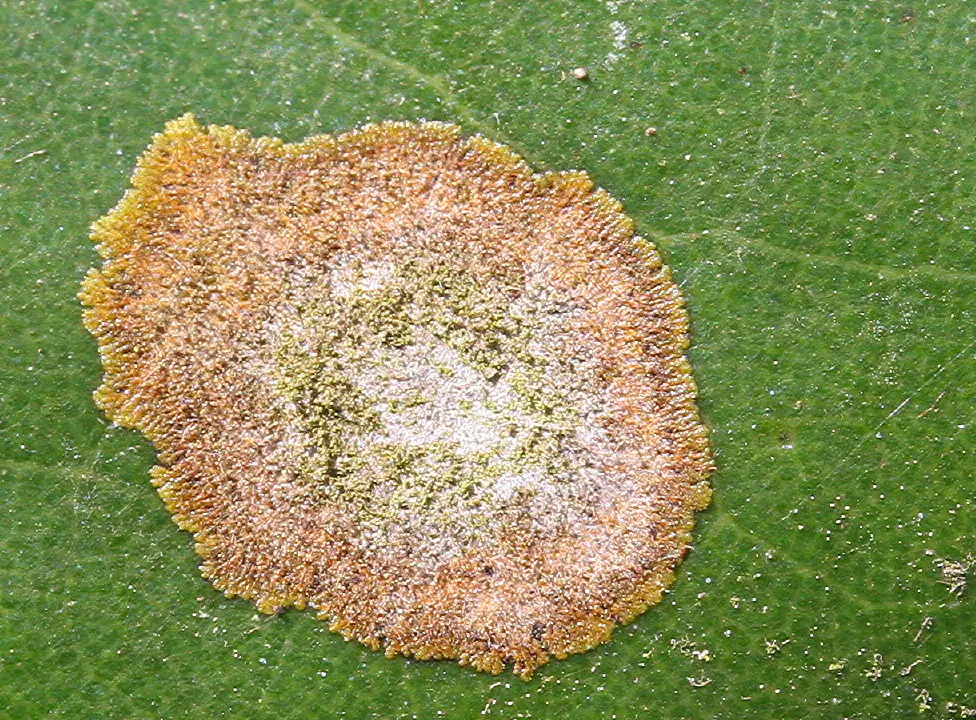
2. Fouling of ships. Algae such as Ulva and Enteromorpha attach themselves to the hulls of ships. This fouling slows the ship down and wastes fuel.
3. Spoiling water supplies. Algae growing in reservoirs make the water smell and taste bad and block filters, making it unfit to drink.
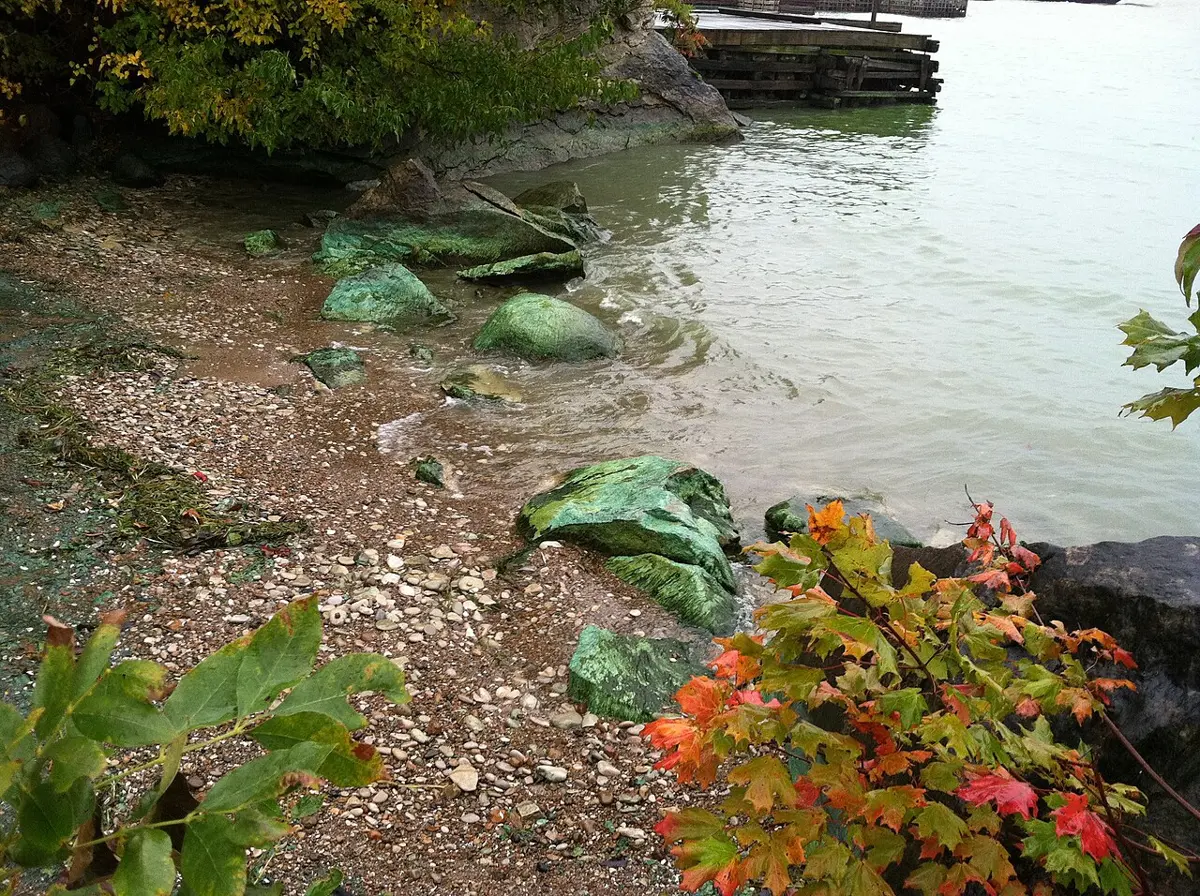
4. Algal blooms. When water is enriched with nutrients, algae or cyanobacteria can multiply into a dense bloom that colors the water. As the bloom dies, bacteria decaying it use up the oxygen in the water, and fish suffocate; some blooms also make poisons.
Exercise
A. Choose the correct option
- Which pigment is mainly responsible for the red color of red algae?
Pick an answer to see why.
- Which of the following is a characteristic feature of algae?
Pick an answer to see why.
- In the rainy season the ground becomes slippery because of the dense growth of which organisms?
Pick an answer to see why.
- Which statement best explains the ladder-like structure seen in Spirogyra?
Pick an answer to see why.
- Which of the following organisms has ribbon-shaped chloroplasts?
Pick an answer to see why.
- Pyrenoids are special structures in the cells of Spirogyra. Where are they, and what do they do?
Pick an answer to see why.
- What is the main role of algae in aquatic ecosystems?
Pick an answer to see why.
- Which process is mainly involved in the sexual reproduction of Spirogyra?
Pick an answer to see why.
B. Answer the following questions
Differentiate between algae and fungi.
Answer
How does the role of green algae as producers contribute to the flow of energy in an ecosystem?
Answer
Mention the characteristic features of brown algae.
Answer
Describe the vegetative structure of Spirogyra with a suitable diagram.
Answer
Describe the economic importance of algae.
Answer
Study the diagram in Figure 6.16 and answer the following questions.
- a.Identify the process shown in the diagram.
- b.Label A, B, C and D.
- c.What is the role of B and C?
- d.Explain how new filaments are formed from D.
Answer
Compare and contrast scalariform and lateral conjugation in Spirogyra.
Answer
Explain the phenomenon of algal blooms and their ecological impact on aquatic ecosystems. Give examples of factors that contribute to algal blooms, and discuss their consequences for biodiversity and water quality.
Answer
Printable PDFs
- Study notes 3 pages
- Worksheet 5 pages Answer key
Quiz yourself: Classification of Living Beings, Grades 5–12 →
Practice every question in the book, and keep track of the ones you miss →
A companion to your textbook, not a replacement for it: study from the book your school uses, and where the two differ, follow your teacher. Found a mistake? Please tell us.