
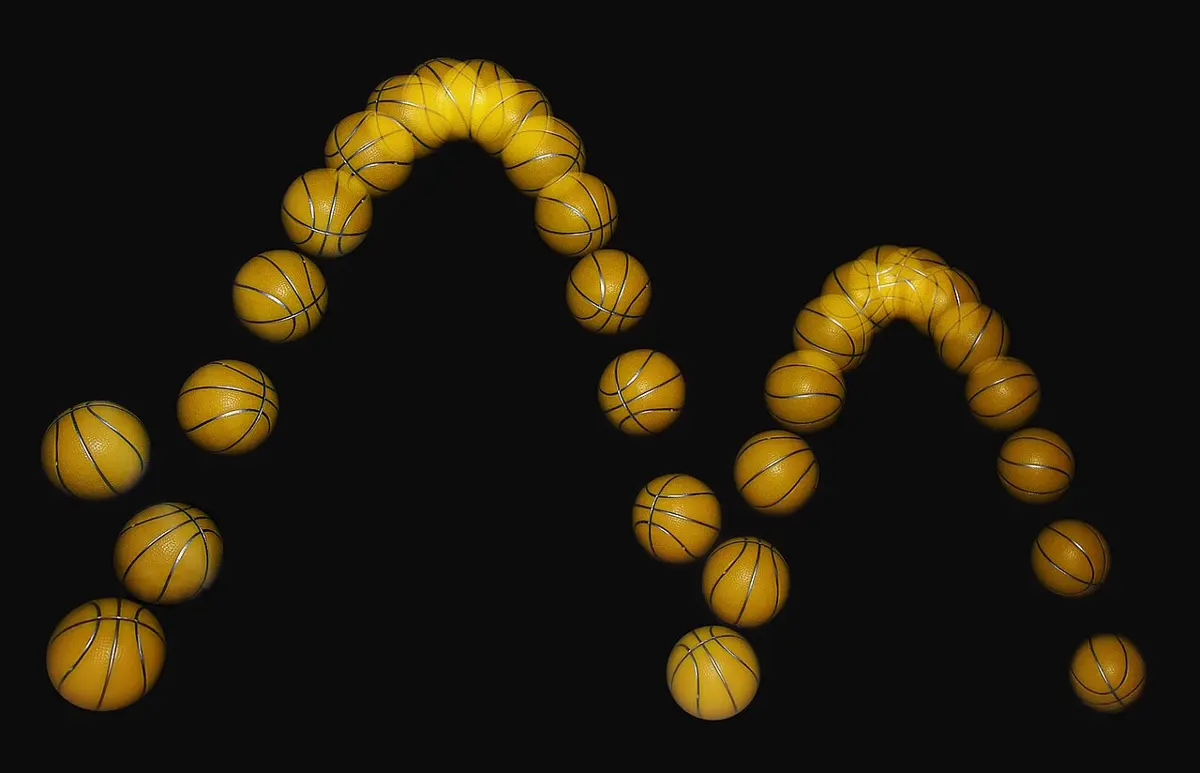
Throw a ball straight up at 20 m/s (a strong throw). How high does it go? When does it come back down? And when is it exactly 15 m above your hand? Its height after t seconds is close to meters, and the graph of that formula is a curve called a parabola, drawn below.
The highest point of the curve answers the first question, the place where it comes back to 0 the second, and where the line h = 15 cuts it the third. This unit shows how to rewrite such a formula so its highest or lowest point can be read straight off, how to sketch its graph, and how to solve an equation by reading a graph. The ball is answered at the end of 4.6.
4.1 Introduction
An equation in which the highest power of the variable is 2 is a quadratic equation (from the Latin quadratus, “square”: the variable is squared). The general quadratic equation in one variable is
where a, b and c are real numbers. If a were 0, there would be no term, and the equation would be linear. So , and are quadratic equations, but and 4x − 1 = 0 are not.
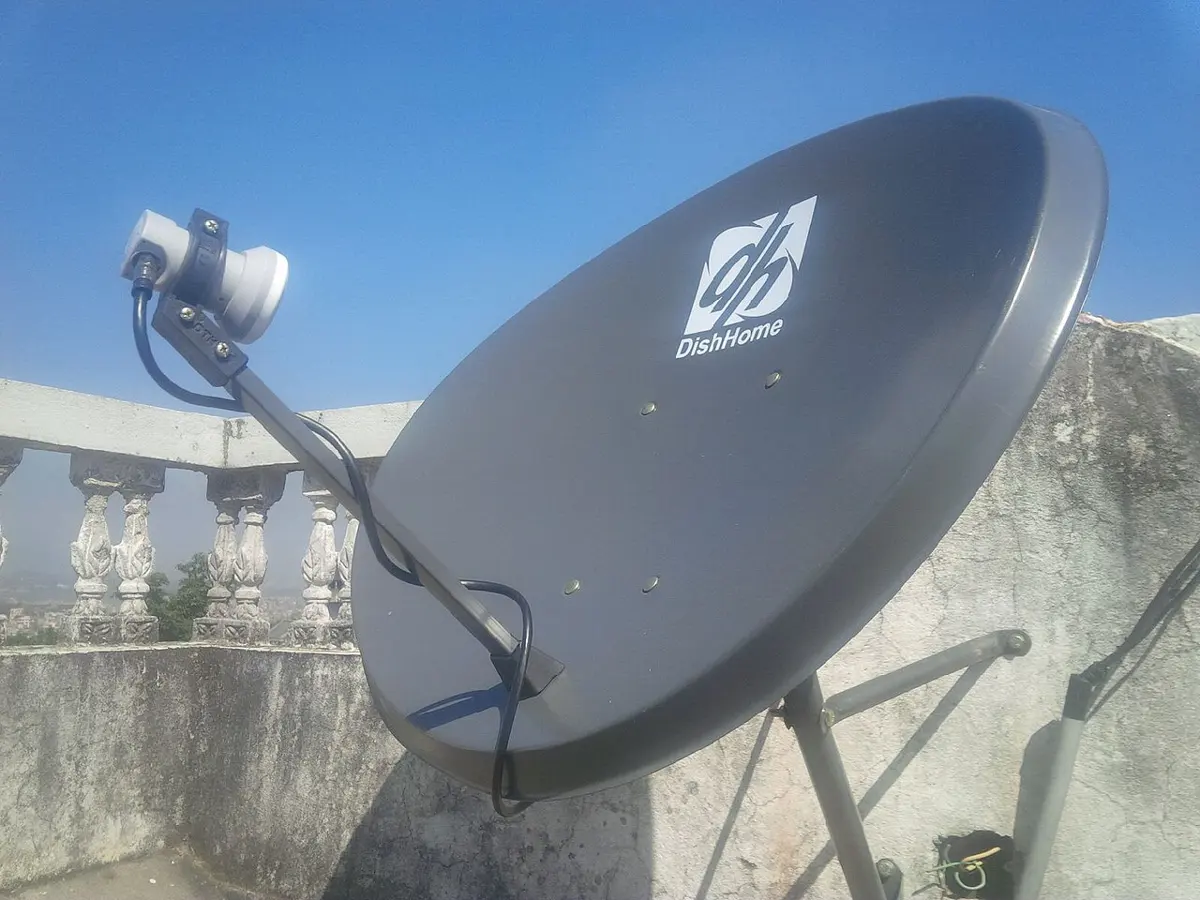
The same expression made into a rule, , is a quadratic function: each x gives one y. Its graph is a curve shaped like ∪ or ∩, called a parabola. Where it is placed, and how wide it is, depend on the numbers a, b and c. The point where a parabola stops going down and starts going up (or the other way round) is its turning point, also called its vertex.
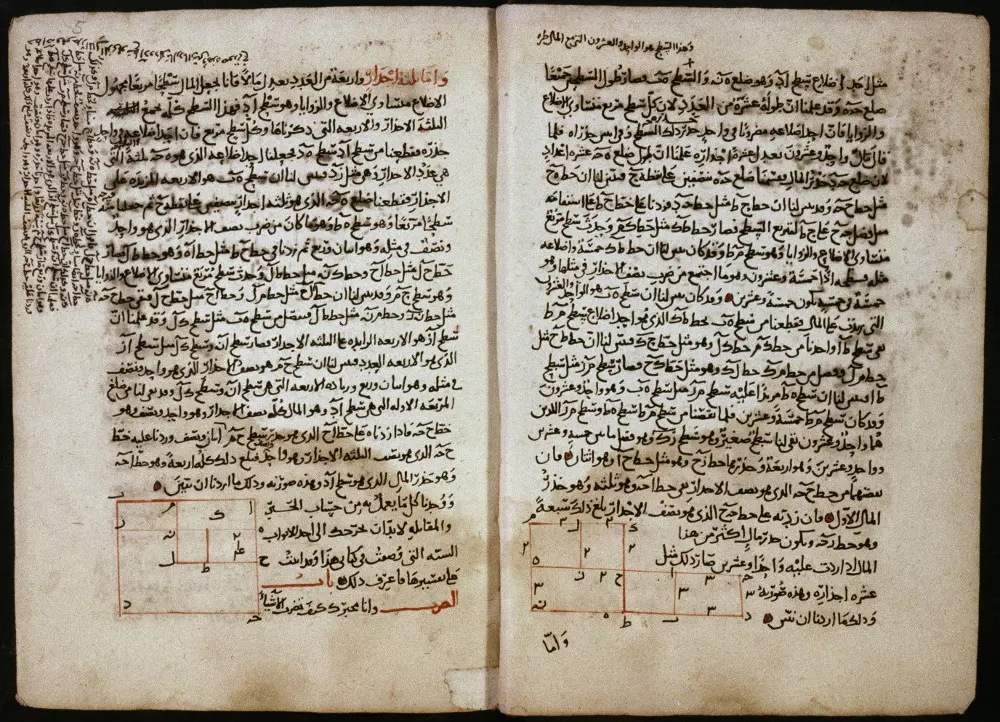
Quadratic equations are much older than algebra’s name: clay tablets from Babylon, written around 1800 BC, already solve problems about areas by a method that is, in effect, completing the square.
Which of these is a quadratic equation?
Pick an answer to see why.
In , why must a not be 0?
Pick an answer to see why.
4.2 Conversion of quadratic equation y = ax² + bx + c into y = a(x − h)² + k
The form hides the vertex. The form , called the vertex form, shows it at once. Take . A square is never negative, so is 0 or more, and it is 0 only when x = 2. So y is never less than −1, and it is exactly −1 at x = 2: the lowest point, the vertex, is (2, −1).
To turn into vertex form we complete the square: we make the and x terms into the start of a perfect square. Since
the expression is a perfect square with 9 missing. And 9 is the square of half of 6. So
Rule: add the square of half the coefficient of x, and take it away again. Adding and taking away the same number changes nothing, but it lets the first three terms close up into a square.
The name comes from a picture, as al-Khwarizmi drew it. Draw as a square of side x, and split 6x into two strips, each x long and 3 wide, along two sides of it. The L-shape is almost a square of side x + 3: only a corner of 3 by 3 is missing. Filling that corner, adding 9, completes the square.
When the coefficient of is not 1, take it out as a factor first:
The general case
The same steps work for any . Take a out, then complete the square with half of b/a, which is b/(2a):
The first three terms are the square of x + b/(2a):
So
Comparing (i) with the vertex form … (ii):
The vertex of the parabola is
and its axis of symmetry is the line x = −b/(2a). In practice, k is usually quicker found by putting x = h into the function.
What is the vertex of ?
Pick an answer to see why.
4.3 Sketch the graph of quadratic function y = a(x − h)² + k
A sketch is a graph drawn from its important points, not from dozens of plotted ones. For a parabola , four properties give those points.
Shape. If a > 0, the parabola opens upward (∪): the vertex is its lowest point (minimum), and it has no highest point, since it goes on rising for ever. If a < 0, it opens downward (∩): the vertex is its highest point (maximum), and it has no lowest point. The larger a is (ignoring its sign), the narrower the parabola.
Vertex. The vertex is (h, k).
Intercepts.
- a.The y-intercept: put x = 0. For it is simply c; in vertex form it is , the same number.
- b.The x-intercepts: put y = 0 and solve . If its roots are x₁ and x₂, the parabola cuts the X-axis at (x₁, 0) and (x₂, 0). A parabola may cut the X-axis twice, touch it once, or miss it.
- Axis. The axis of symmetry is the upright line x = h through the vertex. The parabola is its own mirror image in this line, so every point on one side has a partner at the same height on the other. That gives one extra point for free: the y-intercept’s partner.
Steps for sketching y = ax² + bx + c
- Write it in vertex form; read the vertex and the axis.
- Say which way it opens, from the sign of a.
- Find the y-intercept, and its mirror point across the axis.
- Find the x-intercepts, if any (factorize, or take square roots of the vertex form).
- Plot these points and draw a smooth curve through them, round at the vertex (never a point like a V).
Worked examples
A parabola has its vertex at (3, −2) and opens downward. How many times does it cut the X-axis?
Pick an answer to see why.
4.4 Transformation of quadratic function y = x²
Every parabola is the parabola slid to a new place. Sliding every point of a shape the same distance in the same direction is a translation, as in 9.2 Translation. A parabola can be translated horizontally (left or right), vertically (up or down), or both, a combined translation. Its size and shape don’t change.
1. Horizontal translation
Why does a minus 2 move the graph to the right? Because does everything does, 2 units later. reaches the height 4 at x = 2; reaches it only when x − 2 = 2, at x = 4. Every height comes 2 further along: the whole curve has moved right.
When is translated h units to the right, it becomes ; translated h units to the left, it becomes . The parabola keeps its size and shape.
2. Vertical translation
In the same way, moved 2 units down is . The vertex moves from (0, 0) to (0, 2) or (0, −2).
When is translated k units up, it becomes ; translated k units down, it becomes . Its size and shape stay the same. Here the sign does what you would expect: adding k to every height lifts the curve.
3. Combined translation
When is translated h units to the right and then k units up, it becomes , with its vertex at (h, k) and its axis x = h. This is why is called the vertex form of a parabola. (A negative h means left, a negative k down.)
The number a in does one more thing before the slide: it stretches upward (a > 1: narrower), squashes it (0 < a < 1: wider), and, when negative, turns it upside down. Try every case:
Here is every case in one table:
| No. | Equation of the parabola | Vertex | Opens |
|---|---|---|---|
| 1 | (0, 0) | upward | |
| 2 | (0, 0) | downward | |
| 3 | , a > 0 | (0, 0) | upward |
| 4 | , a > 0 | (0, 0) | downward |
| 5 | (0, k) | upward | |
| 6 | (0, k) | downward | |
| 7 | (−k, 0) | upward | |
| 8 | (k, 0) | upward | |
| 9 | (h, k) | upward if a > 0, downward if a < 0 |
is translated 4 units to the left and 1 unit down. Which is the new function?
Pick an answer to see why.
How is obtained from ?
Pick an answer to see why.
Exercise 4.1
Question 1
A. What are the coordinates of the turning point of the graph of ?
Pick an answer to see why.
B. What is the shape of the graph of , where a > 0?
Pick an answer to see why.
C. Which line is the axis of symmetry of the parabola ?
Pick an answer to see why.
D. What are the coordinates of the vertex of ?
Pick an answer to see why.
E. What are the coordinates of the vertex of the parabola ?
Pick an answer to see why.
Question 2
Convert each quadratic function into the vertex form and sketch its graph.
Answer
Answer
Answer
Answer
Answer
Answer
Answer
Answer
Answer
Hint
Answer
Answer
Answer
Question 3
For each quadratic equation: i. write it in vertex form; ii. find the vertex of its parabola; iii. find the equation of the axis of symmetry; iv. show its graph as a translation of .
Answer
Answer
Answer
Answer
Answer
4.5 Solution of quadratic equation using graphs
The general quadratic equation is , with a, b, c real numbers and a ≠ 0. It can be solved by factorizing, by the formula, by completing the square, and also by drawing a graph. The graph shows what the solutions are.
Two ways of reading an equation as a graph:
- One curve and the X-axis. The solutions of are the values of x where is 0, so they are the x-coordinates of the points where the parabola cuts the X-axis: its x-intercepts.
- A parabola and a line. Rearrange the equation as (something linear), dividing by a first if a ≠ 1. The solutions are where and that straight line meet: there, both sides of the equation are equal. Only one parabola, , is ever needed, and the line is quick to draw.
Either way, two meeting points give two solutions, a line or axis that only touches the curve gives one (a repeated root), and none gives no real solution.
Worked examples
The graph of has its vertex at (−2, 1). What does that tell you about ?
Pick an answer to see why.
4.6 Solution of quadratic equation and linear equation using graphs
A quadratic function and a linear equation such as y = mx + d together are a pair of equations. A solution of the pair is a point (x, y) that fits both: a point on the parabola that is also on the line. So, to solve them by graph, plot both on the same axes and read the points where the parabola and the line intersect. Here the answer is a point, both coordinates.
Worked examples
To find a parabola’s equation from its graph, go backwards: put the coordinates of points read off the graph into , and solve for a, b and c. Three points give three equations; a point on the Y-axis gives c at once.
Back to the ball
Exercise 4.2
Question 1
Solve each equation by the graphical method.
Answer
Answer
Answer
Answer
Answer
Question 2
Solve each pair of equations by the graphical method.
and y = x + 2
Answer
and x − y = 0
Answer
and y = 4x − 3
Answer
and y = x + 4
Answer
Question 3
Find the equation of each parabola.
Answer
Answer
Hint
Answer
Answer
Practice every question in the book, and keep track of the ones you miss →
How the SEE asks it
In the SEE’s Optional Mathematics paper (75 marks, 3 hours), Quadratic Equation is one of the units of Algebra (Units 1 to 6 of this book). CDC’s specification grid gives Algebra 17 marks, in three kinds of question:
| Group | Kind of question | Algebra’s marks | Levels |
|---|---|---|---|
| A | multiple choice, 1 mark each | 2 | knowledge 1, application 1 |
| B | within the content area: questions on Algebra alone, each of 2 to 4 parts | 10 | knowledge 2, understanding 2, application 4, higher ability 2 |
| C | across content areas: one question joining Algebra with another area | 5 | understanding 2, application 2, higher ability 1 |
In CDC’s model paper this unit has a 1-mark multiple-choice question in group A, at the knowledge level: what the real roots of are on its graph. And a group B question starting from a composite function (Unit 1) goes on to quadratics: convert a quadratic function into the vertex form (1 mark, understanding), then describe the combined translation that takes to it (2 marks, higher ability: one mark for each move with its direction and size).
What each kind asks, and where its marks are:
- Vertex form: completing the square, the vertex and the axis read off.
- Describing the translation: h units right or left, then k units up or down, each with its direction.
- Sketching: the shape, vertex, intercepts and axis, then a smooth curve.
- Solving by graph: a table of values, the curve (and line) drawn, and the solutions read off the meeting points.
- The equation from a graph: points into , the three equations solved.
Here is a question of the longer kind, written for this book, with how it is marked.
Where these facts come from
- Al-Khwarizmi (about 780 to about 850), his Hisab al-jabr w’al-muqabala and the word algebra, the Latin Algoritmi de numero Indorum and the word algorithm, his six kinds of equation written in words, and the example solved by completing the square (4.1, 4.2): MacTutor, “Abu Ja’far Muhammad ibn Musa Al-Khwarizmi”, read October 2026.
- The Babylonians’ quadratic problems, about 1800 BC, by what is in effect completing the square (4.1): MacTutor, “Quadratic, cubic and quartic equations”, read October 2026.
- Galileo’s Two New Sciences (1638) and the parabolic path of a projectile (4.1): Wikipedia, “Two New Sciences”, read October 2026.
- Parabolic reflectors: rays parallel to the axis reflected to the focus; satellite dishes, radio telescopes, headlights, solar cookers (4.1): Wikipedia, “Parabolic reflector”, read October 2026.
- A projectile’s height , its parabolic path, and that the formulas ignore air resistance (the opening, 4.6): Wikipedia, “Projectile motion”, read October 2026.
- The manuscript of al-Khwarizmi’s Algebra (Bodleian Library, MS. Huntington 214, copied in 1342), the bouncing ball photographed at 25 images a second, and the satellite dish in Kathmandu: their Wikimedia Commons file pages.
- CDC’s specification grid and model paper for Optional Mathematics, 2082 (How the SEE asks it): the textbook folder,
Specification Grids/grid-Opt. Math-G10.
A companion to your textbook, not a replacement for it: study from the book your school uses, and where the two differ, follow your teacher. Found a mistake? Please tell us.