
In September 1944 a Soviet war reporter named Vasily Grossman walked into a clearing in the pine woods of eastern Poland, beside a railway halt called Treblinka. There was little to see. A year before, the Germans had pulled down the buildings, sown the ground with lupines and settled a farmer there in a new house. Grossman wrote down what he found. The lupine pods, he wrote, “burst open at the slightest touch”, and under the flowers “the earth ejects crushed bones, teeth, bits of paper and clothing; it refuses to keep its awful secret.”
Grossman had come a long way to that field. Two years earlier he had been at Stalingrad, on the river Volga, reporting for the Red Army’s newspaper, Red Star. He was Jewish, born in the Ukrainian town of Berdychiv, and in September 1941 the Germans had shot the Jews still left there; his mother was among them. At Treblinka he wrote that “the road from the Volga to the Vistula proved short”, the Vistula being Poland’s great river. The two ends of his road are the two halves of this chapter: the war the armies fought across Europe, and the murder of Europe’s Jews that went on behind it.
The shape of the war fits in a paragraph. From 1939 to 1941 Germany’s armies conquered most of Europe in quick, hard blows. In June 1941 Adolf Hitler turned on the Soviet Union, his partner of two years, and his armies reached the edge of Moscow before they were stopped. At Stalingrad, in the winter of 1942–43, a whole German army was surrounded and destroyed, and from then on the Soviet Red Army pushed west, while Britain and the United States fought in North Africa, in Italy and in the air, and from June 1944 in France. In May 1945, with Soviet soldiers in Berlin, Germany surrendered. Behind the fighting, Germany and its allies and helpers murdered six million Jews.
Lightning war
Poland lasted a few weeks. German tanks and dive-bombers broke its armies, and then the Soviet army marched in from the east, as the secret pact between Hitler and Stalin had arranged. The two dictators split the country between them, and each set about destroying the Poles who might lead it. In the spring of 1940 Stalin’s secret police shot nearly 22,000 Polish officers, policemen and educated men, many of them in the forest of Katyn; for nearly fifty years the Soviet Union said the Germans had done it. Under German rule about 1.8 million Polish civilians who were not Jews would die before the war was over.
In May 1940 Germany struck in the west, into the Netherlands, Belgium, Luxembourg and France. Its tanks came through the hilly forests of the Ardennes and raced for the sea, cutting the British and French armies in two. From the beaches of Dunkirk more than 338,000 Allied soldiers were carried across to England, in warships and in hundreds of small boats. In June Italy, ruled by Benito Mussolini, joined the war on Germany’s side, German troops entered Paris, and France signed an armistice: Germany took the north and the Atlantic coast, and a French government at the spa town of Vichy ran the south. The world called this new kind of war Blitzkrieg, German for “lightning war”: tanks and aircraft punching through at one point and racing on before the enemy could gather.
Britain fought on, with its empire behind it. Hitler wanted to invade, but first he needed control of the sky, and from July to October 1940 Germany’s air force fought Britain’s over southern England and failed to win it. The invasion was put off and never came. The Germans turned to bombing cities, mostly by night. London was bombed on 56 of 57 days and nights. One night in November 1940 German bombers burned the center of Coventry, its old cathedral with it, and killed about 568 people. By May 1941, when the raids eased, between 40,000 and 43,000 British civilians had been killed.
The war in the east
On 22 June 1941 more than 3.8 million German soldiers and their allies invaded the Soviet Union along a front 2,900 kilometers long. This was the war Hitler had always wanted, for land in the east, and it was fought as no war in western Europe was. Before it began, German orders had cleared the way for Communist officials and the educated to be killed outright. The Germans took about 5.7 million Soviet soldiers prisoner during the war, and about 3.3 million of them died, shot or starved to death.
The Germans reached the edge of Moscow and the outskirts of Leningrad, the old capital in the north. They didn’t try to storm Leningrad. They surrounded it and waited for it to starve. The siege lasted 872 days, from September 1941 to January 1944, and in its first winter a person’s ration was 125 grams of bread a day, more than half of it sawdust and other things nobody could digest. Somewhere between 640,000 and more than a million of its people died, most of them of hunger. At Moscow, by early December 1941, the Germans had come as far as they would ever come. The Red Army struck back, and the Germans were driven back from the city. That same week Japan attacked the United States at Pearl Harbor, in the war that is the subject of Chapter 32, and Germany declared war on the United States too.
In the summer of 1942 the Germans attacked again in the south, and in August they reached Stalingrad, a long industrial city strung along the Volga. Their bombers reduced much of it to rubble in a day. The fight that followed went on street by street, house by house, in factories and cellars, with the Soviet soldiers holding a strip of ruins along the riverbank. Most reporters stayed on the far bank. Grossman crossed to the ruins several times; in a letter he wrote that he would not “have the moral right to write about the defenders of Stalingrad” unless he was among those “fighting in the ruins and on the bank of the river”.
In November the Red Army struck from both sides at the Romanian armies guarding the Germans’ flanks, broke through, and closed a ring around the German Sixth Army inside the city. Hitler forbade it to break out. Starving and frozen, it surrendered in February 1943, the first German army in the war to give up. About 91,000 prisoners marched out, and only 5,000 or 6,000 of them ever got home, the last in 1955. On the Soviet side more than a million soldiers were killed, wounded or fell sick in the battle. In July 1943 the Germans made one last great attack in the east, at Kursk, with thousands of tanks, and it failed. From then on they were going backward.
It is worth being plain about where the war in Europe was won. Of about 5.3 million German soldiers who died, about 2.7 million died in the east by the end of 1944, against about 340,000 in the west; counting the last battles of 1945, about four million in all died fighting the Soviet Union. Between 8.7 and 11.4 million Soviet soldiers died, and the Soviet Union lost between 26 and 27 million people altogether, soldiers and civilians, by the count of Russian demographers that historians still accept. In Russia it is called the Great Patriotic War. The Soviet Union didn’t win it alone either. The United States sent it weapons, fuel, more than 400,000 trucks, and four and a half million tons of food; Stalin himself, by one of his men’s later account, said bluntly that without that help the Soviet Union would not have won.
North Africa, Italy, and the cities
Britain and its empire had been fighting Italy and Germany in North Africa since 1940, back and forth along the desert coast of Libya and Egypt. In October and November 1942, at El Alamein in Egypt, an army of British, Indian, Australian, New Zealand, South African and other soldiers beat the German and Italian army there. That November American and British troops landed in Morocco and Algeria, and in May 1943, in Tunisia, more than 260,000 German and Italian soldiers surrendered. That July the Allies landed in Sicily. The Italians removed Mussolini and, in September, made peace, but the Germans took over most of Italy, and the Allies fought their way north up its mountains, river by river, until the war’s end.
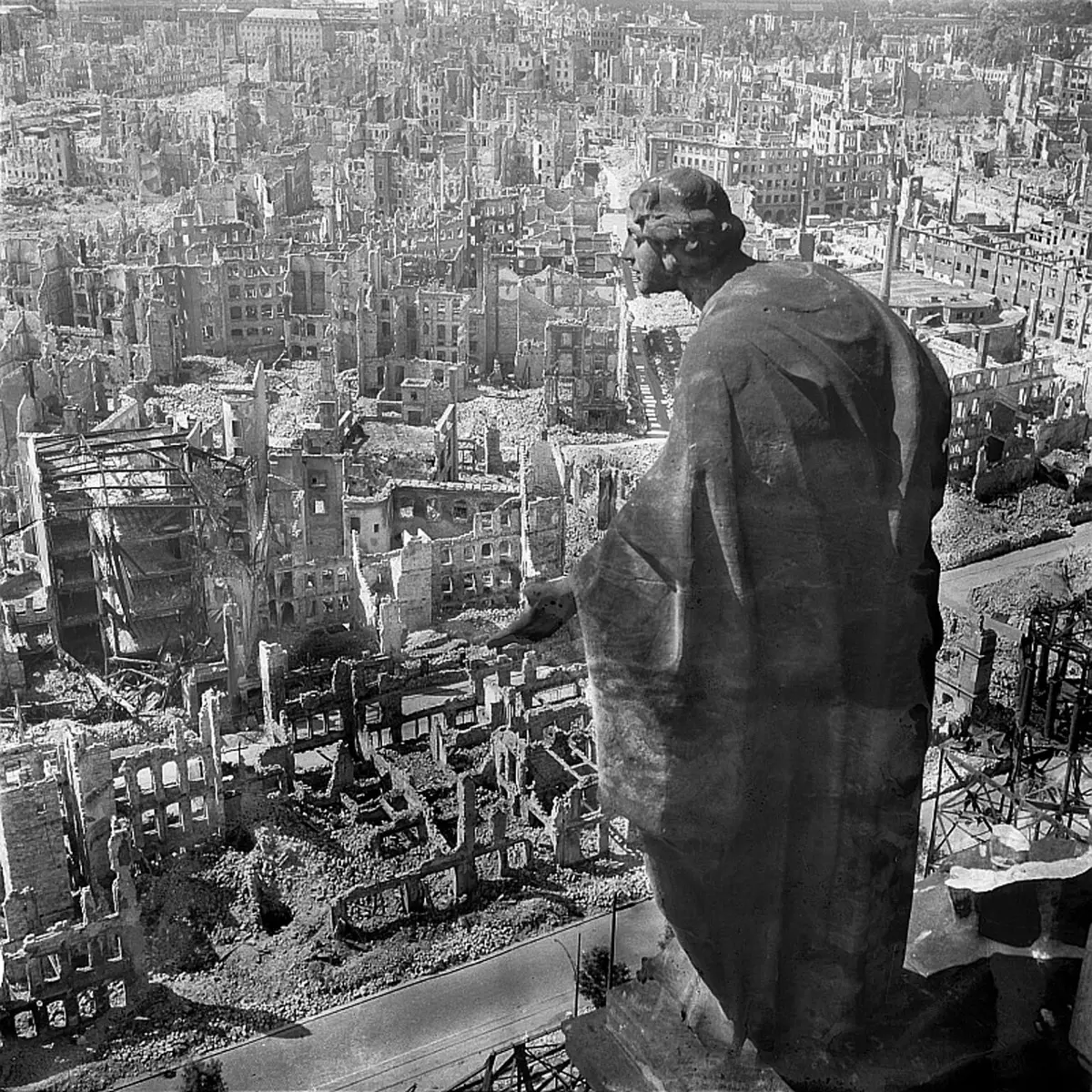
From the air, Britain and the United States bombed Germany’s cities, the British mostly by night, the Americans by day. In late July 1943 a week of raids on Hamburg started a firestorm, a fire so big it made its own wind; about 37,000 people died. In February 1945 British and American bombers destroyed the center of Dresden, and between 22,700 and 25,000 people died; the Nazi government put out a false figure of 200,000, which people who deny the Holocaust repeated for decades. Between 353,000 and 410,000 German civilians died under the bombs in all. Whether bombing cities like this was right, or even worth what it gained, was argued after the war and still is: the Allies saw Dresden as a target that helped the armies, and critics answer that it was a city of art with little military value, and the deaths out of all proportion.
The murder of Europe’s Jews
The Holocaust was, in the words of the United States Holocaust Memorial Museum, “the systematic, state-sponsored persecution and murder of six million European Jews” by Nazi Germany and its allies and collaborators. In 1933 about nine million Jews lived in Europe. By 1945 nearly two out of every three of them had been killed. It was not a side effect of the war. It was something Hitler’s state set out to do, and the war gave it the chance.
It came in steps. After Poland was conquered, its Jews were forced into ghettos, sealed-off quarters of the cities, where hunger and disease killed them by the thousand. The first gas chambers, though, were built for Germans: from 1940, at six killing centers in Germany and Austria, the Nazi state gassed disabled adults. Historians count about 250,000 disabled people murdered in all. The men who ran those killings later ran the death camps.
With the invasion of the Soviet Union came the shootings. Squads of German police and SS men, helped by local police, followed the army east, rounded up the Jews of each town and shot them beside pits and ravines. At Babi Yar, a ravine outside Kyiv, they shot 33,771 Jews in two days in September 1941. About two million Jews were murdered this way, Grossman’s mother among them. In January 1942 senior officials met at a villa at Wannsee, outside Berlin, not to decide on the murder, which was already under way, but to plan how to carry it out across Europe; their list counted about eleven million Jews across Europe.
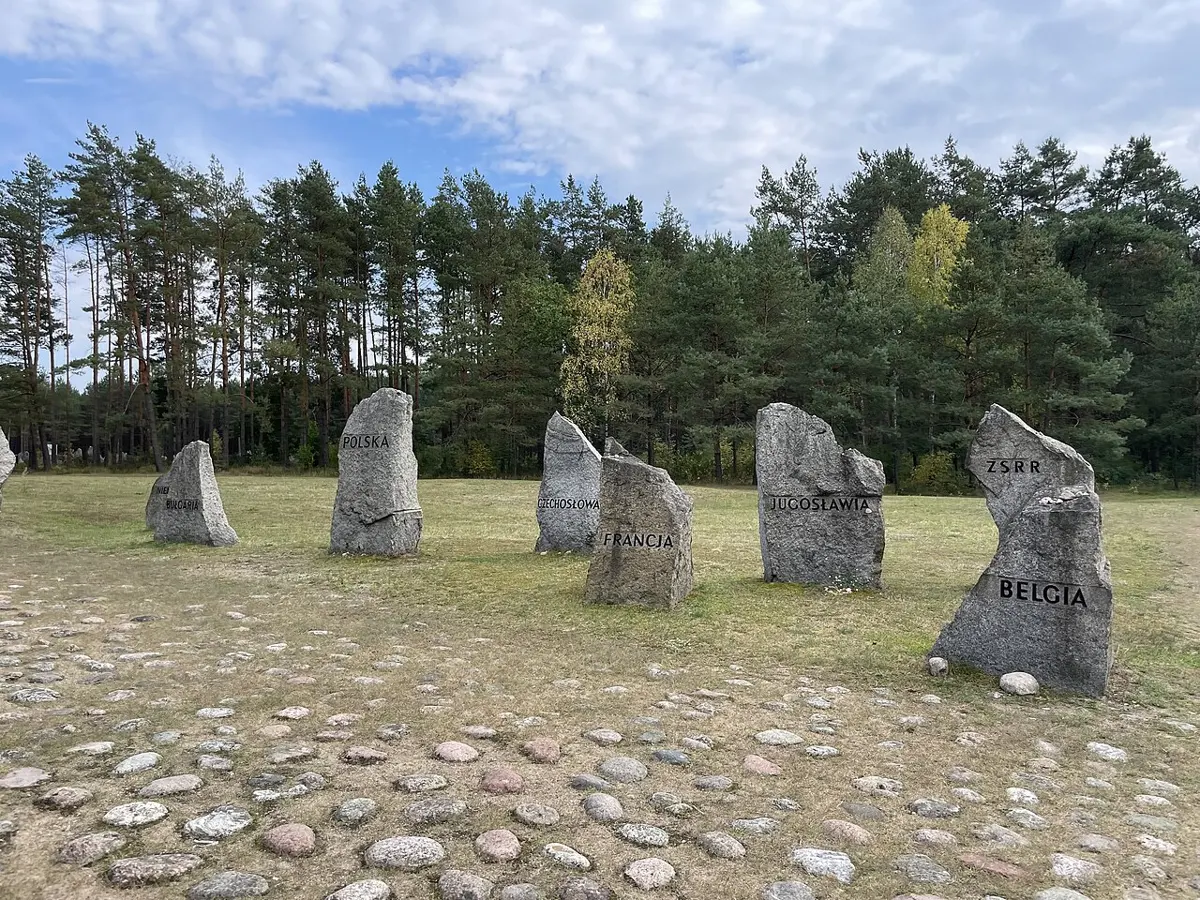
The plan’s machinery was a handful of killing centers in German-occupied Poland, near the railways: Chełmno, Bełżec, Sobibór, Treblinka and Auschwitz-Birkenau. Trains brought Jews from all over Europe, from France and the Netherlands to Greece and Hungary, and most were killed within hours of arriving. Treblinka killed about 925,000 Jews, among them about 265,000 deported from the Warsaw ghetto in the summer of 1942 alone. At Auschwitz about 1.1 million were murdered, about a million of them Jews, with Poles, Soviet prisoners and about 21,000 Roma. The Roma, the people Europe called “Gypsies”, were hunted across Europe as the Jews were, and somewhere between 250,000 and 500,000 of them were killed.
Some fought back, knowing they would almost certainly die. In April 1943 about 700 young Jews in the Warsaw ghetto rose against the Germans who had come to empty it, and held out for nearly a month. At Treblinka, in August 1943, the prisoners set the camp on fire; more than 300 escaped, though most were hunted down. It was the few who lived who told Grossman what had happened there.
Those who survived the camps often owed it to one another. Bart Stern was a Jewish boy from Hungary, sent to Auschwitz in 1944 at seventeen and put to work in a coal mine. He remembered a much older man in his work gang who said he would end his life after his bread ration was stolen. Stern and his two friends each gave up part of their own ration of bread, which had sawdust in it. “We gave a third of that,” he said, “a third of our life for, to this man so he should not give up.” He believed the man survived. Primo Levi, a young Italian Jew deported to Auschwitz the same year, began the book he wrote about it with a poem to his readers: “You who live safe / In your warm houses”, consider what was done there.
As the Red Army came close, the SS marched tens of thousands of prisoners west through the snow, and those who couldn’t keep up were shot or left behind. In late January 1945 Soviet soldiers reached Auschwitz and found about 7,000 prisoners still alive; Bart Stern was one of them. For many, freedom brought the worst news. Blanka Rothschild, freed in Germany that spring, made her way home to Łódź, in Poland, to see who had come back. None of her family had survived, her mother among them. At her family’s old building, she said, the caretaker “reacted with tremendous surprise—not elation, but surprise that I survived and came back”; strangers lived in the flat, and they wouldn’t let her in.
To Berlin
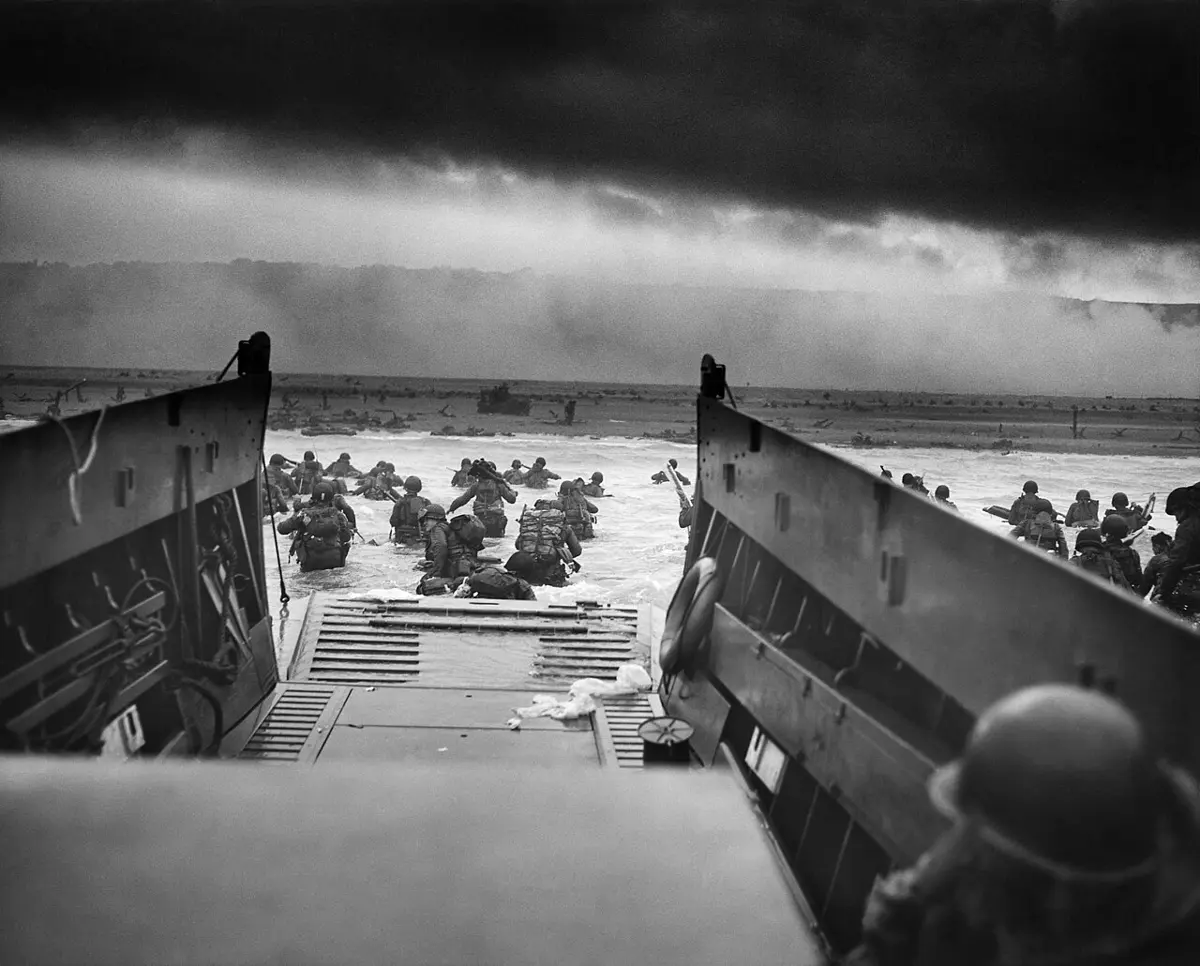
On 6 June 1944, D-Day, American, British and Canadian armies landed on five beaches in Normandy, in northern France: about 156,000 soldiers on the first day, with at least 10,000 Allied casualties and 4,414 confirmed dead. A little over two weeks later the Red Army attacked in Belarus and destroyed 28 German divisions in a few weeks. For the first time Germany was fighting great armies on both sides at once.
In Warsaw, as the Red Army drew near that August, the Polish underground army rose to free the city before it arrived. For 63 days they fought the Germans; the Red Army stopped on the far side of the river and didn’t help. Why is argued, but most Polish and Western historians believe Stalin held back on purpose, to let the Germans destroy the Poles who wanted a free Poland. Between 150,000 and 200,000 Polish civilians were killed, most of them executed, and the Germans then destroyed most of what was left of the city.
The end came in Berlin. In April 1945 about two and a half million Soviet soldiers fought their way into the city, and about 125,000 of its civilians died. Hitler killed himself in his bunker, and two days later the city’s garrison surrendered. As the Red Army crossed Germany, its soldiers raped very many women. Nobody counted them. Berlin’s two main hospitals estimated 95,000 to 130,000 in that city alone, and the historian Antony Beevor, who read the Soviet army’s own reports, puts the number across Germany at two million or more. It was not only Germans. Grossman, who came to Berlin with the army, wrote in his notebook: “Liberated Soviet girls quite often complain that our soldiers rape them.” Russia’s ambassador in London called Beevor’s book lies and slander against the people who saved the world from Nazism.
Germany surrendered in two signings, at Reims in France on 7 May and in Berlin on 8 May, and the guns stopped late that night. In Moscow it was already 9 May, which is why Russians keep Victory Day a day later than western Europe.
About 26 or 27 million Soviet people had died. Poland lost about six million people, Jews and non-Jews, more than a sixth of everyone who lived there. About 5.3 million German soldiers had died, and hundreds of thousands of German civilians. Britain lost about 450,000 people, and the United States about 250,000 soldiers in the war against Germany. The war in Asia went on for three more months.
Grossman’s essay on Treblinka was one of the first long accounts of a death camp published anywhere, and it was used as evidence at the trial of the Nazi leaders at Nuremberg. He kept a child’s wooden building block from the ruins of Treblinka on his desk until he died.
So the war in Europe was won mostly in the east, at a cost no other country came near, with Britain holding out in 1940, American factories supplying everyone, and the landings of 1944 closing the trap from the west. Germany’s fast wins of 1939 and 1940 hid how badly it could last a long war against the Soviet Union, Britain and the United States together. Every side bombed cities, and the Red Army that freed the camps also brought rape, and Soviet rule to eastern Europe. But the Holocaust was something else: a state deciding to kill a whole people, Jews, and with them the Roma and the disabled, and organizing ordinary officials, railways and police across a continent to do it.
Meanwhile, in Nepal: about 120,000 Gurkhas served in this war, in North Africa, in Italy and in the Far East, and more than 9,000 of them died. Their part, and what Nepal’s rulers gained from it, are in Lahures and the First World War, in Nepal’s History, for the Curious.
Found a mistake? Please tell us.