
पाखनबेत: the plant called stone-breaker
पाखनबेत · Bergenia ciliata · A rock-loving herb with big round leaves, saxifrage family
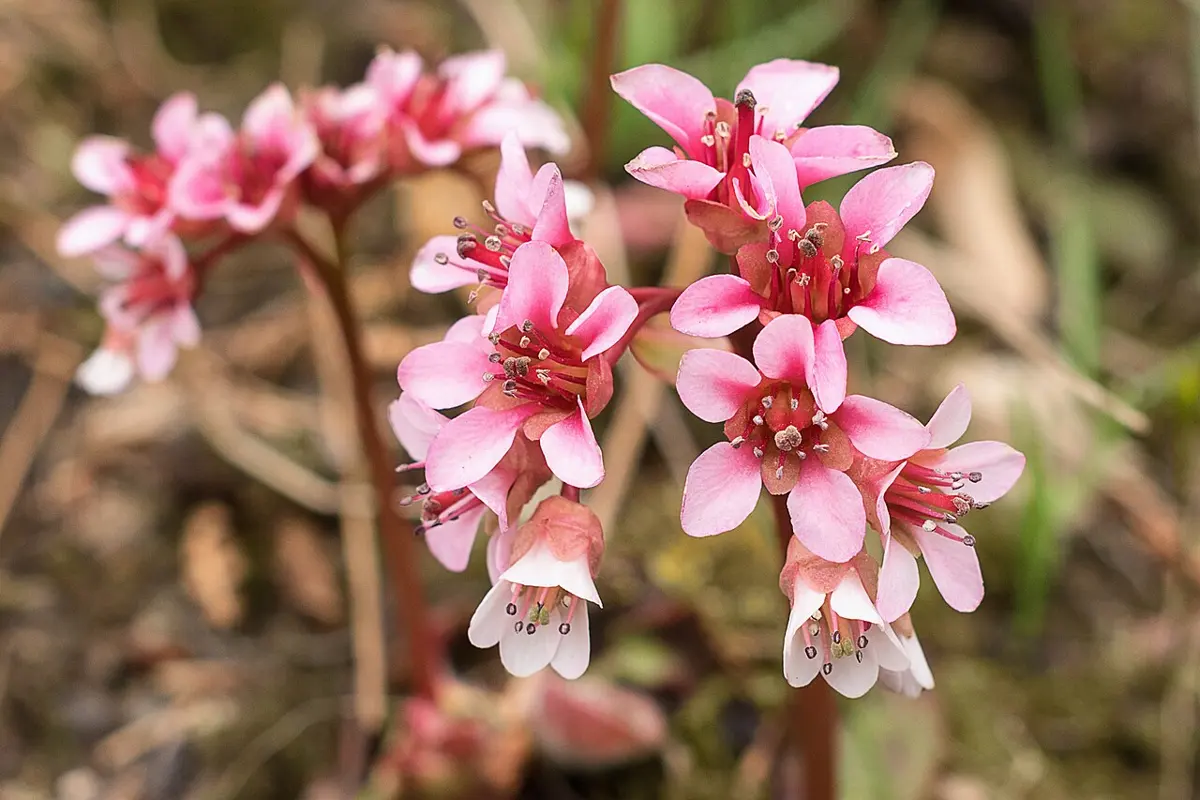
Walk along an old stone wall or a rocky path in the hills in early spring, and you may see something that looks impossible: a bunch of pink flowers and a few big, round leaves coming straight out of a crack in solid rock, with a thick brown stem hanging in the air. That plant is पाखनबेत (pakhanbet).
Its old Sanskrit name is पाषाणभेद (pashanbhed): पाषाण is stone and भेद means to break or pierce. So its name means “stone-breaker”. People have taken that name two ways, and both of them lead to a question for science.
How to know it
पाखनबेत is a low perennial herb, about 5 to 25 cm tall, that grows from a thick, creeping underground stem (a rhizome) and forms large clumps. Look for:
- the leaves: all at the base, round to broadly oval, 4 to 15 cm long (sometimes up to 30 cm), with a rounded tip;
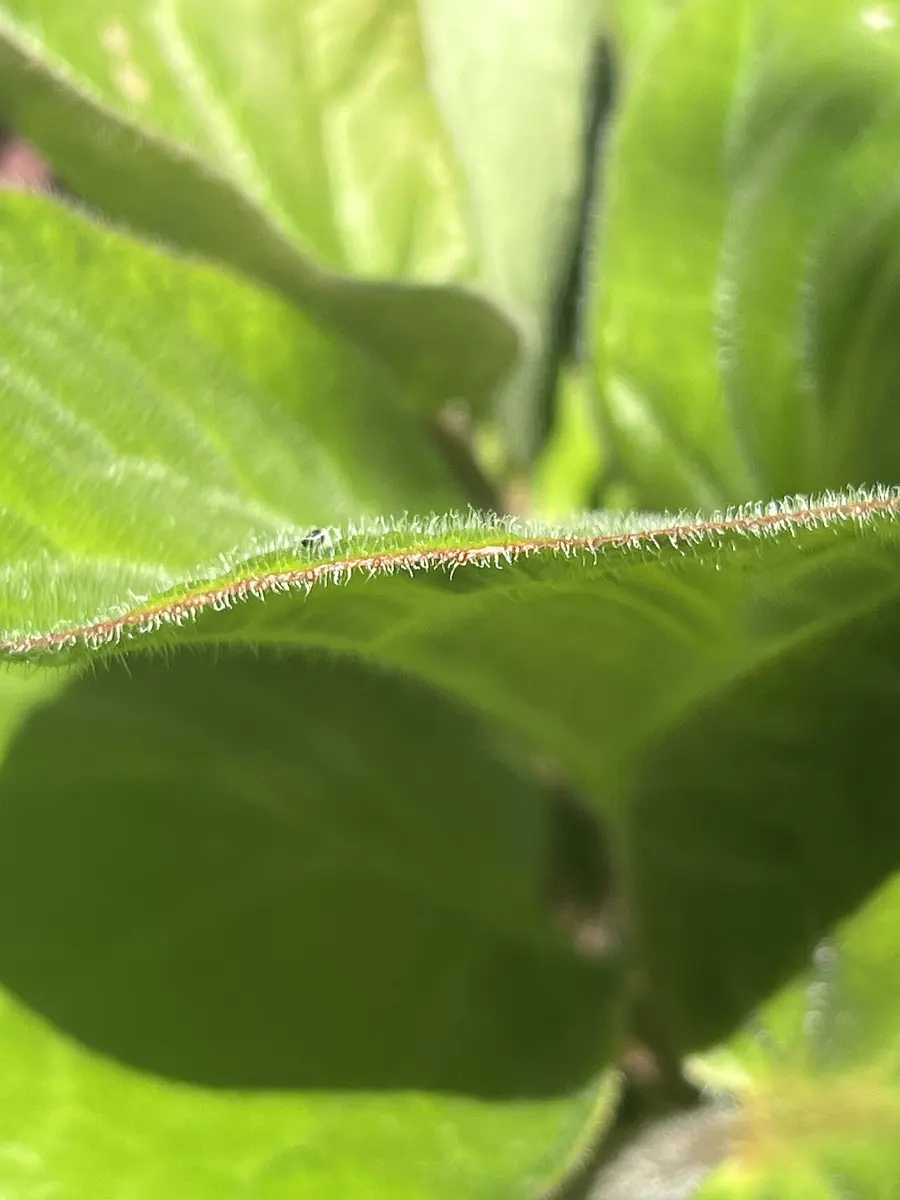
- the leaf edges: finely toothed and fringed with tiny hairs, which is what its scientific name ciliata means;
- the flowers: in a small bunch on a thick, green to reddish stalk, each with five petals, pink or white tinged with pink, from March to May;
- the fruit: a small, dry capsule with two halves and many tiny seeds.
It belongs to the saxifrage family (Saxifragaceae).
Where it grows
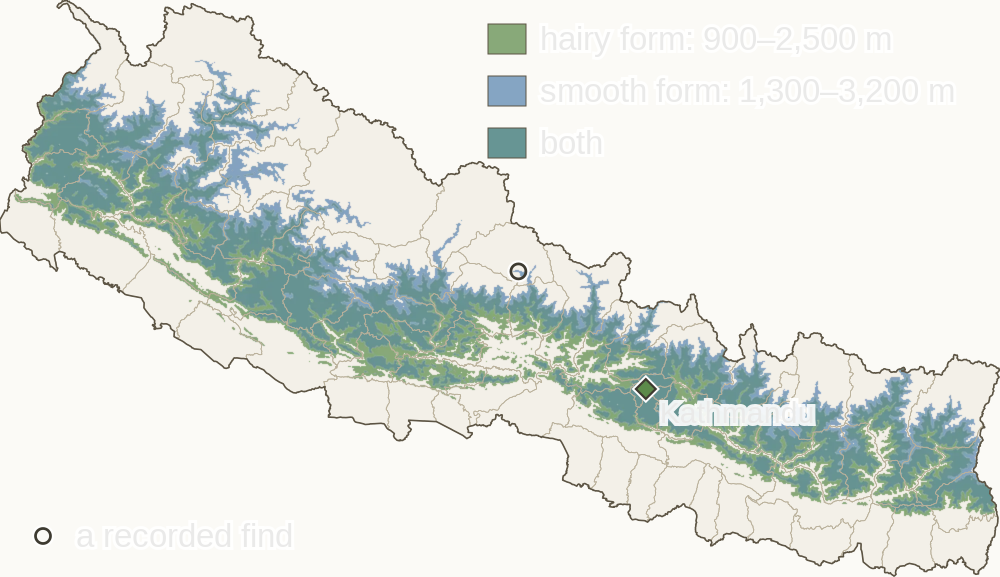
पाखनबेत grows from southwest Asia along the Himalaya to Assam and Burma, and on the Tibetan Plateau. The Flora of Nepal gives its range in Nepal as:
- the hairy-leaved form, about 900 to 2,500 meters, in oak forest;
- the smooth-leaved form, about 1,300 to 3,200 meters, in oak and pine forest.
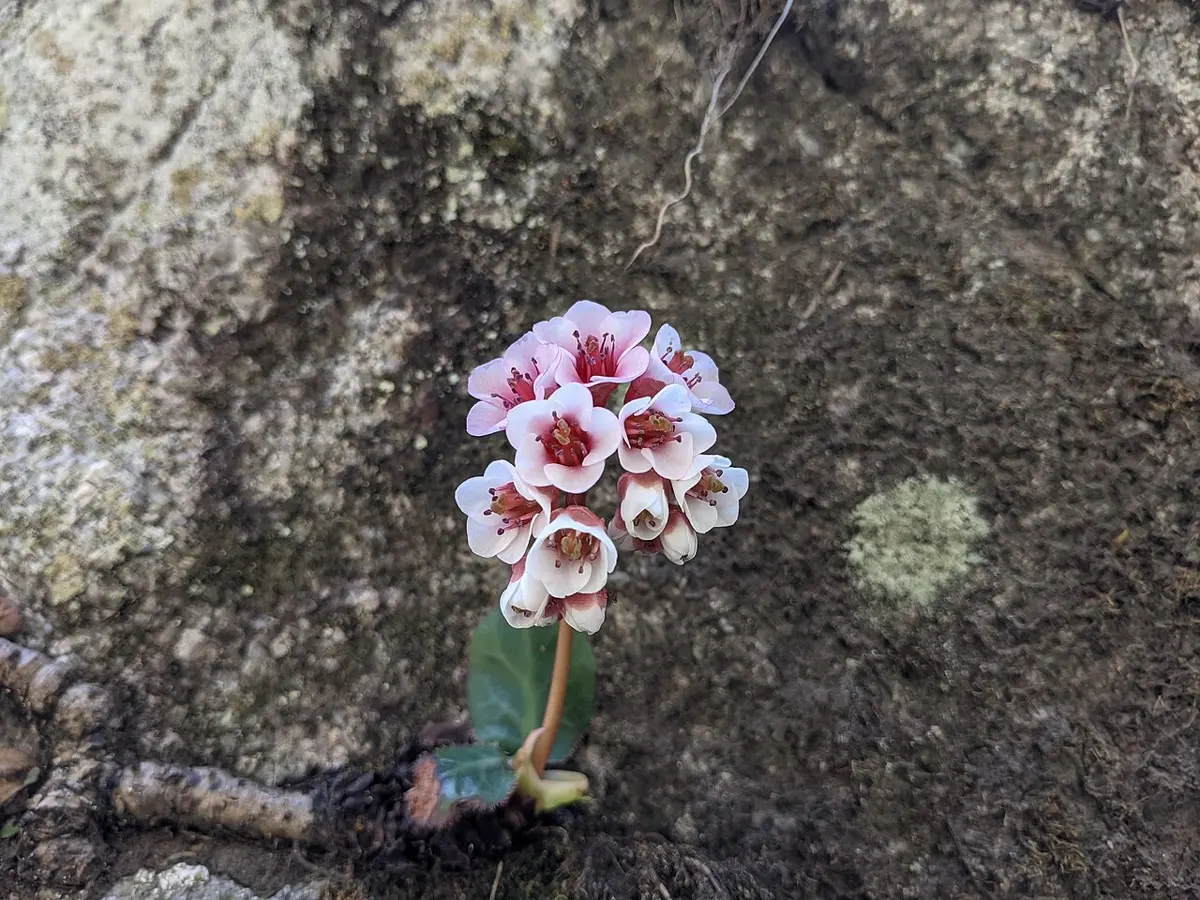
Its favorite places are rocky slopes, walls and cracks in rock, where its rhizome pushes out of the crevice and hangs in the air.
The stone-breaker: rock, or kidney stones?
People have read the name पाषाणभेद in two ways.
The plant that pierces rock. One reading is about where it grows: a plant that seems to split solid rock, growing out of its cracks.
The medicine that breaks stones. The other reading is about what it was used for. In Ayurveda, the rhizome of Bergenia has been used for centuries to dissolve stones in the kidney and bladder, and the medicine is called पाषाणभेद.
What are kidney stones? They are hard lumps that form in the kidneys from chemicals that build up in the urine. Small stones can pass out in the urine without being noticed; bigger ones can take weeks to pass, and can be very painful.
So, does पाखनबेत break kidney stones? Here is what scientists have tested:
- In the laboratory, chemists have found more than 150 compounds in Bergenia plants. Among the most important are bergenin, arbutin, catechin and gallic acid.
- In rats, extracts of the rhizome of the smooth-leaved form were tested twice: one, at a small dose, made the rats pass more urine and is reported to have dissolved stones already formed; another stopped crystals of calcium oxalate from clumping together in their kidneys.
- In people: reviews of all this research call for clinical trials in people. We found no trial showing that पाखनबेत dissolves kidney stones in people.
- How strong the evidence is: only in the laboratory and in animals. Not tested in people.
Traditional uses
पाखनबेत is one of the best known herbs of Nepal’s hills. Studies of the herbs people use record it, in tradition:
- for stones (calculi) and gallstones, in Baitadi, Dadeldhura and Darchula in the far west, where it is also traded;
- juice of the whole plant for indigestion, fever, diarrhea and dysentery, in Rasuwa;
- rhizome juice for stomach trouble, and the dried rhizome chewed like a sweet through the day for fever, in Kavrepalanchok, where the Tamang name is bra mindhu;
- juice or powder of the plant for urinary problems, and the rhizome for piles, asthma and worms, as the Flora of Nepal records;
- a teaspoon of dried rhizome juice and honey, mixed half and half, given to mothers after childbirth as a tonic and for digestion.
A review of 185 studies of Bergenia ciliata across its range counted 104 different illnesses it is used for in tradition, most of all stomach troubles, but it is best known for kidney stones.
Trade and protection
The rhizome is collected from the wild and sold. In March 2026, ANSAB, a Nepali organization that tracks herb prices, listed dried पाखनबेत (as pakhanbed) at Rs 80 a kilogram in Kathmandu and Rs 65 in Nepalgunj.
Is it in danger?
- the IUCN Red List rates Bergenia ciliata Least Concern worldwide;
- in Nepal, the Department of Plant Resources lists it among the country’s threatened medicinal plants, and among the medicinal plants the government has chosen for research and development.
See it at the Science Playground
Our exhibit Medicinal and Culinary Herbs of Nepal shows dried herbs and plant products used in Nepal’s kitchens and traditional remedies. Next time you pass an old stone wall in spring, look for big round leaves and pink flowers in its cracks. More plants in Herbs of Nepal.
Where these facts come from
- Akiyama S. et al., Saxifragaceae, Flora of Nepal, web edition 1, Royal Botanic Garden Edinburgh, 2012.
- Frilly bergenia (Bergenia ciliata), ICIMOD database of plants of the Himalaya, checked November 2026.
- Koul B. et al., Bergenia genus: traditional uses, phytochemistry and pharmacology, Molecules, 2020.
- Ahmad M. et al., Bergenia ciliata: a comprehensive review of its traditional uses, phytochemistry, pharmacology and safety (abstract), Biomedicine and Pharmacotherapy, 2018.
- NHS, Kidney stones, reviewed September 2026.
- Royal Botanic Garden Edinburgh, Bergenia ciliata: a valuable medicinal plant that thrives in the UK, 2017.
- Kunwar R.M. et al., Medicinal plants, traditional medicine, markets and management in far-west Nepal, Journal of Ethnobiology and Ethnomedicine, 2013.
- Uprety Y. et al., Indigenous use and bio-efficacy of medicinal plants in the Rasuwa District, Central Nepal, Journal of Ethnobiology and Ethnomedicine, 2010.
- Ambu G. et al., Traditional uses of medicinal plants by ethnic people in the Kavrepalanchok District, Central Nepal, Plants, 2020.
- ANSAB, NTFPs price list, March 2026.
- Department of Plant Resources, Plants of Nepal: fact sheet, Ministry of Forests and Soil Conservation, 2012 (archived copy).
- Bergenia ciliata: IUCN Red List category, GBIF (from the IUCN Red List), checked November 2026.
- पाखनबेत in the Nepali Brihat Shabdakosh (Nepal Academy).