
असुरो: the bush behind a cough medicine
असुरो · Justicia adhatoda · An evergreen shrub of the acanthus family
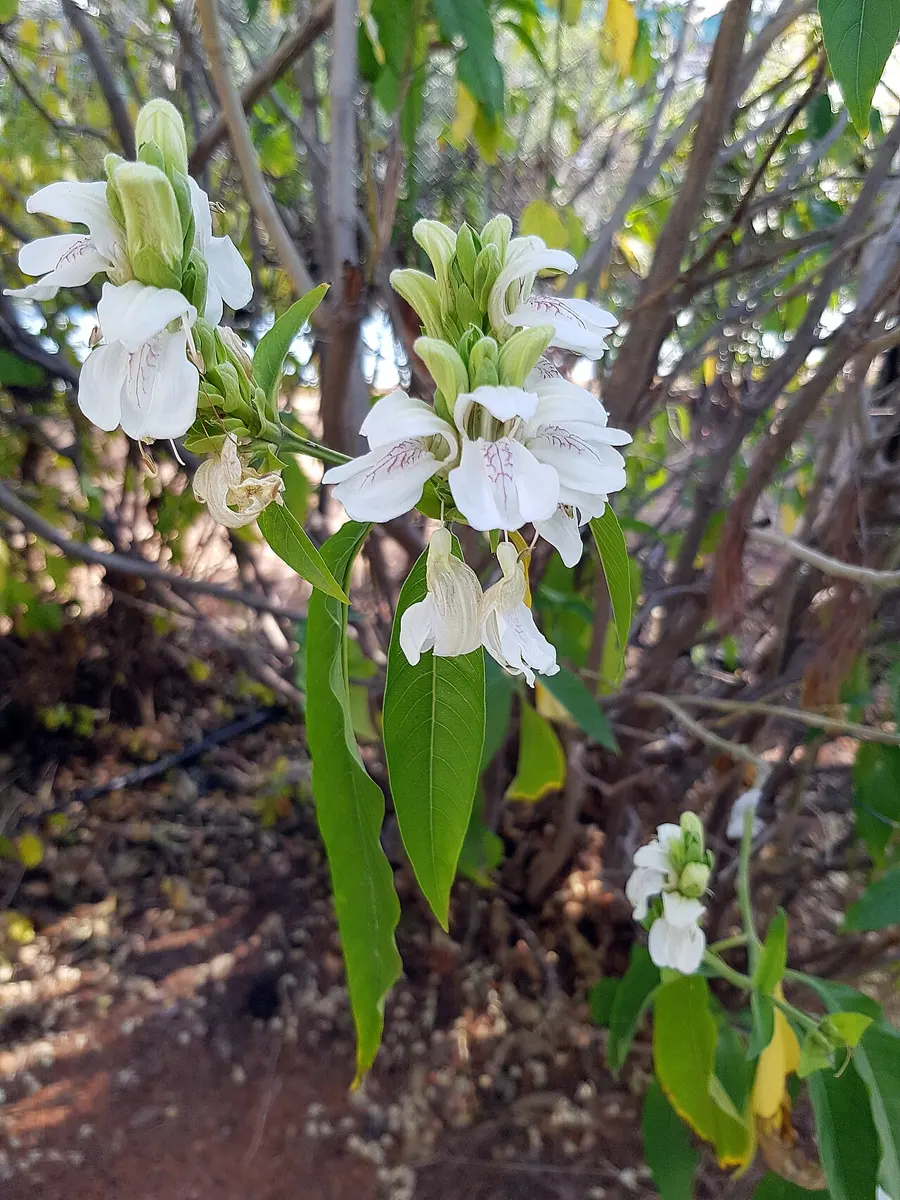
The last time you had a bad cough, someone may have brought home a bottle of syrup from the medical shop. Turn the bottle round and read the small print. If it says bromhexine or ambroxol, you are holding a medicine whose story begins with a bush you may well have walked past: the असुरो (asuro) growing by the road or at the edge of a field.
This page is about that bush: how to know it, where it grows, how its chemistry turned into a medicine sold in other countries, what tradition uses it for, and what has really been tested.
How to know it
असुरो is an evergreen shrub, usually about 1 to 2.5 meters tall, sometimes a small tree up to about 8 meters. The big Nepali dictionary describes it as a bush with green leaves and white flowers shaped like a tiger’s mouth (बाघको मुखजस्तो, bagh ko mukh jasto). Look for:
- the stems: woody, with grayish-brown bark; young branches are four-angled, older ones round;
- the leaves: simple, in opposite pairs, lance-shaped to oval, 5 to 15 cm long, glossy green above and paler below with clear veins, their edges smooth, not toothed;
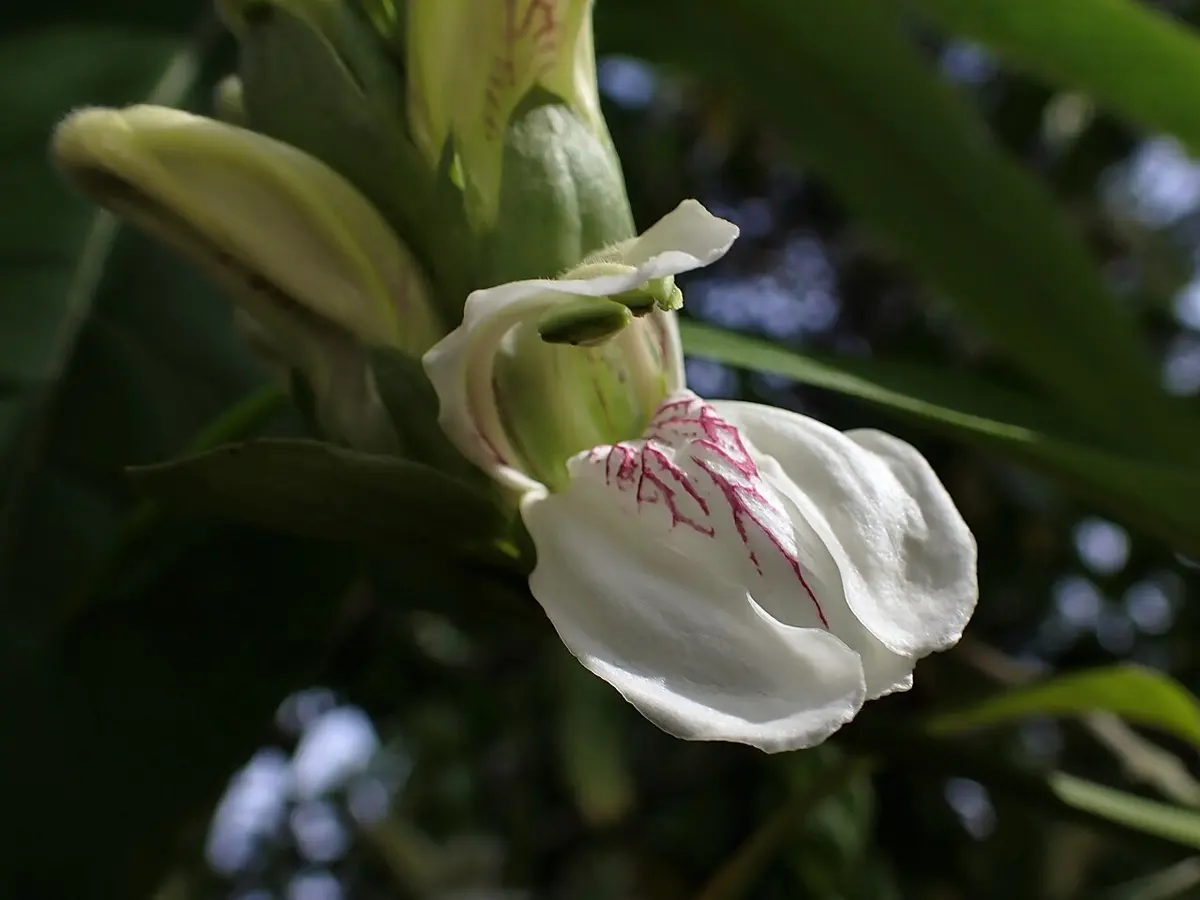
- the flowers: white, tube-shaped, 2 to 3 cm long, in short spikes at the ends of the branches, each with an upper and a lower lip and a purple or violet patch on the lower lip;
- the fruits: small capsules, 1 to 2 cm long, green and then brown, which split open to drop a few small black seeds.
It can flower at almost any time of year, most of all in spring (around March) and in the monsoon. The plant has an unpleasant smell, and its leaves are so bitter that grazing animals leave them alone: in Malayalam, a language of south India, one of its names means “untouched by goats”.
Its names
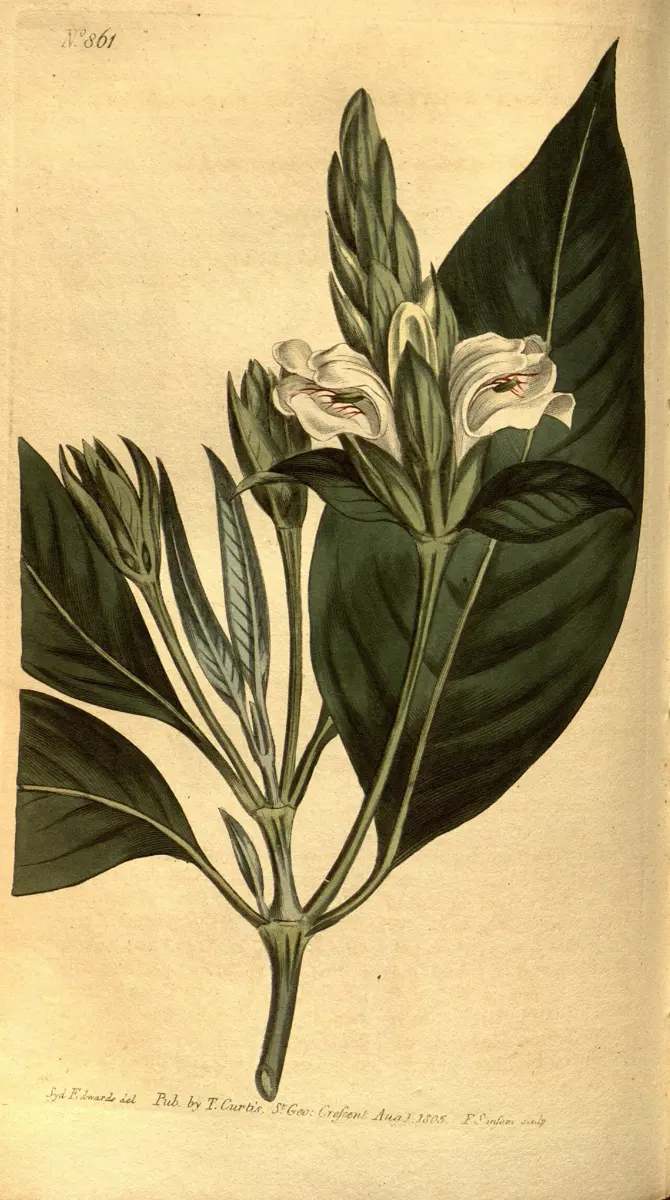
The plant is Justicia adhatoda, of the acanthus family (Acanthaceae). Older books and many medical papers call it Adhatoda vasica: the same plant under an older name. In English it is the Malabar nut. Its Sanskrit name in Ayurveda is वासा or वासक (vasa, vasaka); the Nepali dictionary traces असुरो to another Sanskrit name, अटरुष (atarusha). Studies in Nepal record it as basak in Tamang, in Kavrepalanchok, and ross in Tharu, in Rupandehi.
The word असुरो has a second meaning in the dictionary: dried, fermented radish, another word for सिन्की (sinki). Context tells you which one someone means.
Where it grows
असुरो is native from Afghanistan and Pakistan through India, Nepal and Bhutan to Bangladesh and Myanmar. It grows in open forests, scrubland, waste ground and along roadsides, and it copes with a wide range of heights. In the Kangchenjunga Landscape, eastern Nepal and its neighbors, it is recorded from 500 to 1,600 meters; in India, two reviews say it grows up to about 1,300 meters.
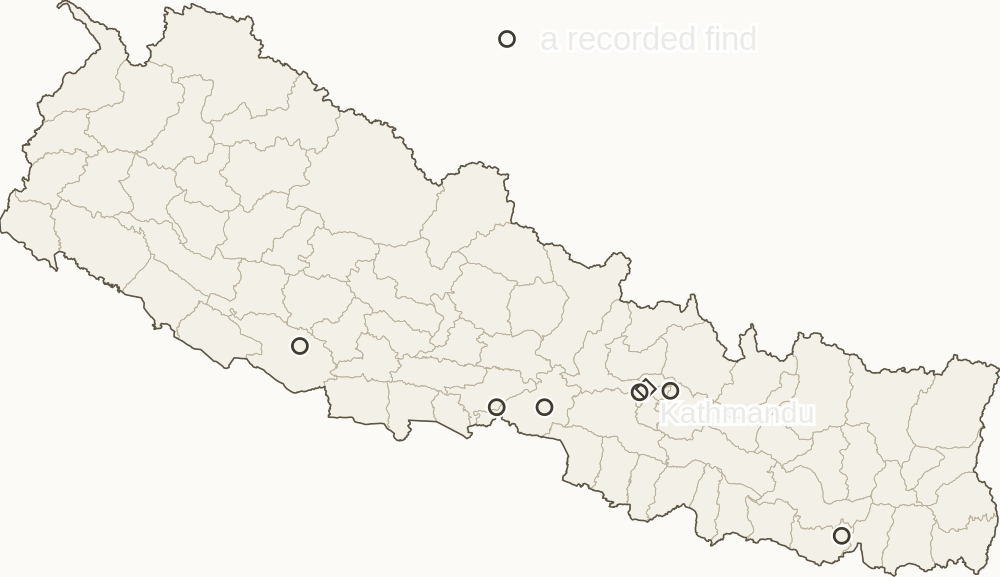
Collectors have pressed it for herbaria all over Nepal: in Khotang, around Pokhara and Kusma, near Tulsipur in Dang, and in the Terai at Kanchanrup in Madhesh Province; people have photographed it in Lamjung and Gorkha too.
From a bitter leaf to a cough medicine
Chemists who took asuro’s leaves apart found a group of alkaloids, nitrogen-containing chemicals that many plants make. The main ones are vasicine and vasicinone.
In 1959, two chemists, A. H. Amin and D. R. Mehta, reported in the journal Nature that they had isolated pure vasicinone from the leaves, and that it widened the airways (it is a bronchodilator). Chemists also made new molecules from the plant’s alkaloids. One of them was bromhexine, which reached the market in Europe in 1963 and is still sold, without a prescription, in some countries. A second medicine, ambroxol, is also counted among the plant’s chemical descendants.
This is one way a plant can lead to a medicine: a plant used in tradition leads chemists to a molecule, and the molecule is then changed in the laboratory into a medicine with a known, measured dose. Nobody needs to chew the leaves for bromhexine: it is made in factories.
Traditional uses
In Ayurveda and in Unani medicine, asuro is highly valued: its uses include coughs, colds, asthma, bronchitis and phlegm, along with fever and other problems. In Nepal, studies of the herbs people use record it in many places:
- in Rupandehi, in the Terai, a warm decoction of the leaves for asthma, fresh leaf juice with honey to bring up phlegm, and a powder of the dried plant for bronchitis and cough;
- in Kavrepalanchok, the dried leaves smoked for a cough, and the plant used for breathing problems and fever;
- in Jhapa and Panchthar, the tender shoots for asthma; in Jhapa, also a leaf extract for wheezing children, and a decoction of the leaves for bronchitis and colds.
It also has uses that are not medicine at all. In Kavrepalanchok, the leaves are used as a fertilizer for garden crops; and in Sikkim, next door, the roots, bark and leaves are used as an insecticide.
These are the uses of a living tradition, passed down in families and by healers. Whether a use works in the body is a separate question, which only careful tests in people can answer.
What science has tested
- Bromhexine, the medicine: tested in people since the 1960s. A review of the research found that most of those early studies were done before today’s strict methods existed. The same review reports that a Cochrane review of cough medicines sold without prescription found the evidence for them conflicting. The European Medicines Agency’s safety committee looked again at all bromhexine and ambroxol medicines and concluded that their benefits still outweigh their risks.
- The plant itself: many studies of extracts and of vasicine in the laboratory and in animals, for coughs, airways, germs and more. A 2024 review of this research called for in-depth clinical trials, in people, of its effects on asthma and the airways.
- One trial in people: 177 adults with a common cold took either a syrup made from three plants (asuro leaf with two others, Echinacea and Eleutherococcus), bromhexine, or a dummy syrup, for five days. Both the plant syrup and bromhexine eased the cough more than the dummy. Because the syrup had three plants in it, the trial cannot say how much came from asuro.
- How strong the evidence is: some evidence, from one trial of a mixture. Asuro on its own, as a leaf, juice or decoction, has not been properly tested in people.
Is it in danger?
No. The IUCN Red List rates Justicia adhatoda Least Concern, and it grows on waste ground and roadsides. In Nepal it is a plant of everyday surroundings, not a rare herb of the high mountains.
See it at the Science Playground
Our exhibit Medicinal and Culinary Herbs of Nepal shows dried herbs and spices used in Nepal. Asuro grows wild in the Kathmandu valley, so look out for it by roads and on waste ground: a big leafy bush with white, two-lipped flowers. More plants in Herbs of Nepal.
Where these facts come from
- Asuro (Justicia adhatoda), The Living Mountain Lab, ICIMOD, checked November 2026.
- Gantait S. and Panigrahi J., In vitro biotechnological advancements in Malabar nut (Adhatoda vasica Nees): achievements, status and prospects, Journal of Genetic Engineering and Biotechnology, 2018.
- Khandelwal P. et al., Exploring the pharmacological and chemical aspects of pyrrolo-quinazoline derivatives in Adhatoda vasica, Heliyon, 2024.
- Zanasi A., Mazzolini M. and Kantar A., A reappraisal of the mucoactive activity and clinical efficacy of bromhexine, Multidisciplinary Respiratory Medicine, 2017.
- Barth A. et al., Antitussive effect of a fixed combination of Justicia adhatoda, Echinacea purpurea and Eleutherococcus senticosus extracts in patients with acute upper respiratory tract infection, Phytomedicine, 2015 (the abstract; the full text could not be reached).
- Uprety Y. et al., Traditional use and management of NTFPs in Kangchenjunga Landscape: implications for conservation and livelihoods, Journal of Ethnobiology and Ethnomedicine, 2016.
- Singh A.G., Kumar A. and Tewari D.D., An ethnobotanical survey of medicinal plants used in Terai forest of western Nepal, Journal of Ethnobiology and Ethnomedicine, 2012.
- Ambu G. et al., Traditional uses of medicinal plants by ethnic people in the Kavrepalanchok District, Central Nepal, Plants, 2020.
- Justicia adhatoda: records from Nepal, GBIF (herbarium specimens and observations), checked November 2026.
- Justicia adhatoda: IUCN Red List category, GBIF (from the IUCN Red List), checked November 2026.
- NHS, Cough, checked November 2026.
- असुरो, वासा and सिन्की in the Nepali Brihat Shabdakosh (Nepal Academy).