
In 1849 the botanist Joseph Hooker stood on the Tunkra pass, on the border of Sikkim and Tibet, and wanted to know how high he was. He carried a barometer: a glass tube of mercury nearly three feet long, cased in metal, heavy and easy to break. He also carried something far simpler, a thermometer and a little water to boil. He boiled the water, read the thermometer, and worked out the height: 16,137 feet. The barometer said 16,083 feet. A pot of boiling water had measured a mountain pass to within 54 feet, about 16 m.
How can boiling water tell you how high you are? And why could Hooker trust it? The answer is a function, a rule that gives exactly one output for each input, and a function that can be read backwards. This unit builds that idea from pairs of numbers, then uses it for polynomials, inequalities, surds and matrices. In Back to the boiling pot you will answer Hooker’s question.
1.1 Relation and function
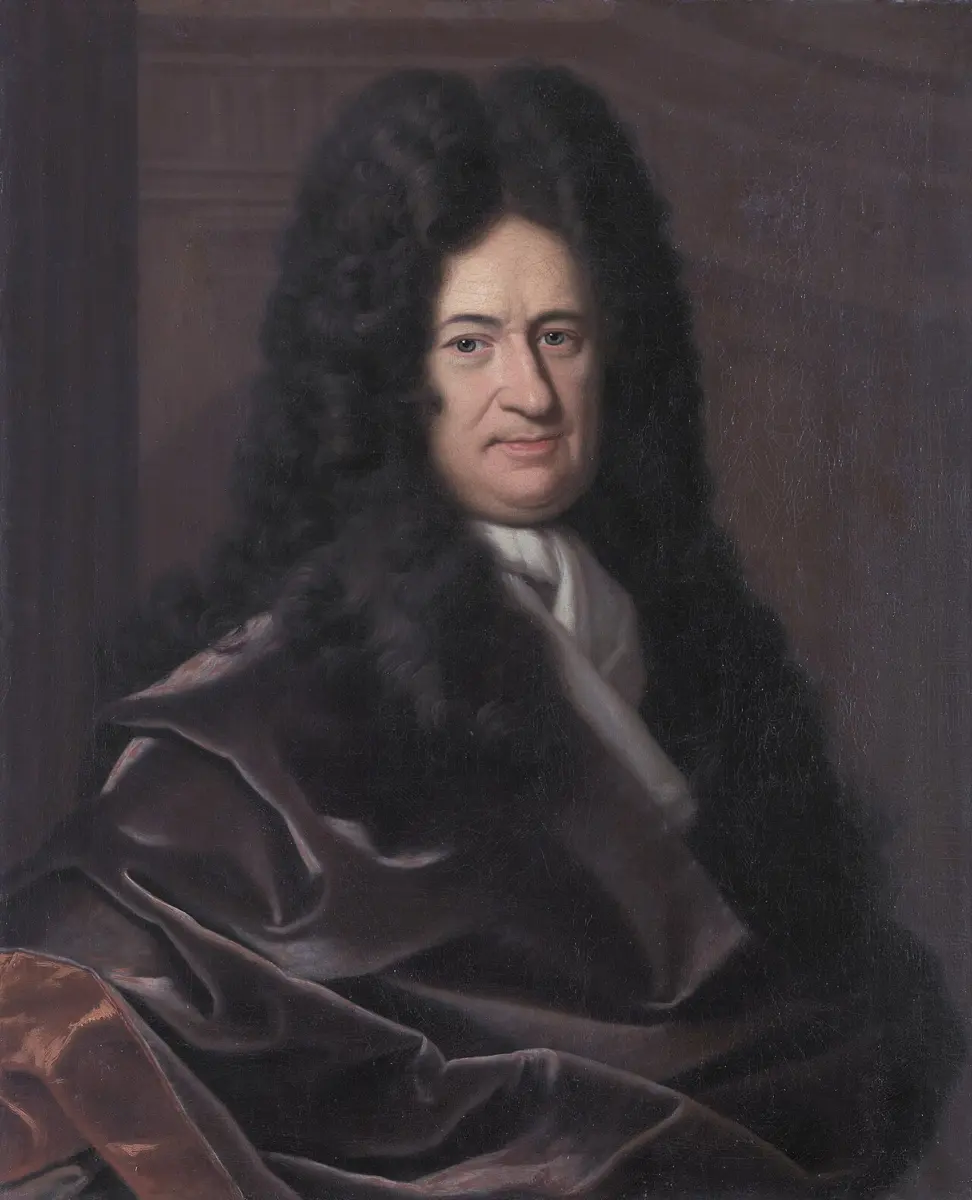
The word function was first used in 1673 by the German mathematician Gottfried Wilhelm Leibniz, for a quantity that depends on another. In 1734 Leonhard Euler began writing f(x) for “a function of x”, the way we still do.
Functions are everywhere once you look. The interest on a fixed sum at a fixed rate depends on the time it is invested. The distance a bus covers at a steady speed depends on the time it has been driving. The fare of a taxi depends on the distance, the price of rice on how many kilograms you buy. In each case one quantity decides another, and a function is the mathematician’s name for that. Functions are used in science, computer science, economics, engineering and medicine; every formula you meet in Science is one.
To get there we need three things first: pairs of numbers in a fixed order, all the pairs two sets can make, and the pairs picked out by a rule.
1.1.1 Ordered pair
A pair whose meaning changes when you swap its elements is an ordered pair. The first element is called the antecedent and the second the consequent: in (x, y), x comes first and y second.
Ordered pair: two elements written in a fixed order, inside round brackets and separated by a comma, such as (x, y). The order is part of its meaning.
You already use ordered pairs every time you plot a point. The point (4, 5) is 4 across and 5 up; the point (5, 4) is 5 across and 4 up. They are different points.
Equal ordered pairs. Two ordered pairs are equal only when their first elements are equal and their second elements are equal:
For example, , because and . And (a, b) = (b, a) can only happen when a = b.
Which ordered pair is equal to (3, −2)?
Pick an answer to see why.
Worked examples
Exercise 1.1 (A)
Question 1
Define an ordered pair, with an example.
Answer
When are two ordered pairs equal? Give an example.
Answer
If (a, b) = (m, n), how are a and m related?
Answer
Question 2
Find x and y.
(x, 4) = (5, y)
Answer
(x − 1, y + 2) = (6, 7)
Answer
(x − 3, y + 7) = (2, −5)
Answer
(2x − 5, 4) = (9, y + 4)
Answer
Answer
(2x + y, 4) = (6, 3x − y)
Answer
Question 3
For what values of p and q are the ordered pairs (2p + 4, p − q) and (8, q) equal?
Answer
For what values of m and n are (3m − 5, 2n + m) and (7, m + 2) equal?
Answer
Question 4
The ordered pairs satisfy y = 2x + 4. Find the missing elements.
(1, …)
Answer
(3, …)
Answer
(…, 0)
Answer
(…, −2)
Answer
Question 5
The ordered pairs (3, p) and (q, 4) satisfy 4x + 3y = 24. Find the ordered pair (p, q).
Answer
The ordered pairs (3, m) and (n, 7) satisfy 7x − 3y = 21. Find m and n.
Answer
1.1.2 Cartesian product
Cartesian product: for two non-empty sets A and B, the set of every ordered pair whose first element is from A and second element from B:
It is read “A cross B”, and named after René Descartes, who joined algebra to geometry with exactly these pairs as points on a grid. Since each of the n(A) first elements pairs with each of the n(B) second ones,
That is why it is called a product.
Ways of showing a Cartesian product
Take A = {1, 2} and B = {3, 4, 5}. Then A × B = {(1, 3), (1, 4), (1, 5), (2, 3), (2, 4), (2, 5)}, and n(A × B) = 2 × 3 = 6. The same six pairs can be shown in five ways.
1. As a set of ordered pairs, as just written.
2. In a table: A down the side, B along the top, a pair in every cell.
| × | 3 | 4 | 5 |
|---|---|---|---|
| 1 | (1, 3) | (1, 4) | (1, 5) |
| 2 | (2, 3) | (2, 4) | (2, 5) |
3. In a mapping (arrow) diagram: an arrow from each element of A to each element of B.
4. In a tree diagram: each element of A branches to each element of B.
| A | B | A × B |
|---|---|---|
| 1 → | 3, 4, 5 | (1, 3), (1, 4), (1, 5) |
| 2 → | 3, 4, 5 | (2, 3), (2, 4), (2, 5) |
5. On a graph: each pair is a point.
Worked examples
n(A) = 4 and n(B) = 3. How many ordered pairs are in B × A?
Pick an answer to see why.
Exercise 1.1 (B)
Question 1
What is a Cartesian product? Give an example.
Answer
The cardinal numbers of sets A and B are 3 and 2. What is the cardinal number of A × B?
Answer
If n(A × B) = x, n(A) = y and n(B) = z, how are x, y and z related?
Answer
Question 2
If A = {2, 3} and B = {7}, find A × B and show it on a graph and in a mapping diagram.
Answer
If A = {2, 3} and B = {4, 5, 6}, find B × A and show it in a table and a mapping diagram.
Answer
Question 3
If A × B = {(a, 1), (a, 5), (a, 2), (b, 2), (b, 1), (b, 5)}, find A, B, n(A), n(B), B × A and n(B × A).
Answer
If A × B = {(1, 4), (1, 5), (1, 6), (2, 4), (2, 5), (2, 6), (3, 4), (3, 5), (3, 6)}, find A, B, n(A), n(B), B × A and n(B × A).
Answer
Question 4
If A = {x:x < 4, x ∈ N} and , find A × B and B × A, and show them in a table, a mapping diagram and a tree diagram.
Answer
If M = {x:x ≤ 3, x ∈ N} and N = {y:y = x − 1, x ∈ M}, find M × N and show it on a graph.
Answer
1.1.3 Relation
A × B is every pair you could make. A rule, “is the daughter of”, “is less than”, “is double of”, “is the square of”, keeps only the pairs it is true for.
Relation: a subset of the Cartesian product of two sets. A relation R from A to B has R ⊆ A × B. If (x, y) ∈ R, y is called the image of x under R.
Ways of showing a relation
Take A = {1, 2, 3}, B = {2, 7}, and the relation “an element of A is less than an element of B”. From all the pairs
the relation keeps those whose first element is smaller:
(2, 2) is out because 2 is not less than 2, and (3, 2) because 3 is more than 2.
As a set of ordered pairs: R = {(1, 2), (1, 7), (2, 7), (3, 7)}.
In set-builder form: R = {(x, y):x < y}.
In a table:
| x | 1 | 1 | 2 | 3 |
|---|---|---|---|---|
| y | 2 | 7 | 7 | 7 |
In a mapping diagram, and on a graph:
Worked examples
A = {1, 2, 3} and B = {1, 4, 9}. Which is the relation “y is the square of x” from A to B?
Pick an answer to see why.
Types of relation
When both elements of every pair come from the same set A, R ⊆ A × A, and R is called a relation in A (or on A). For example, in A = {1, 2, 3},
and the relation “” in A is R = {(1, 1)}: and are not in A.
A relation in a set can have three properties, and each has a name.
A. Reflexive. Every element is related to itself.
- “Is parallel to” among lines: every line l is parallel to itself (we count a line as parallel to itself).
- “Is congruent to” among figures: ; the same for angles, line segments and polygons.
- “Is equal to” among numbers: a = a for every number a.
Reflexive relation: R in A is reflexive if (x, x) ∈ R for every x ∈ A.
B. Symmetric. If x is related to y, then y is related to x.
- “Is equal to”: if x = y, then y = x.
- “Is parallel to”: if , then .
- “Is congruent to”: if , then .
“Is less than” is not symmetric: 2 < 5 but . Nor is “is the daughter of”.
Symmetric relation: R in A is symmetric if, whenever (x, y) ∈ R, also (y, x) ∈ R. (We write xRy for (x, y) ∈ R: if xRy then yRx.)
C. Transitive. If x is related to y and y to z, then x is related to z.
- “Is equal to”: if x = y and y = z, then x = z.
- “Is parallel to”: if and , then .
- “Is congruent to”: if and , then . So is “is similar to” among triangles.
- “Is taller than”: if Dolma is taller than Kiran and Kiran than Nabin, Dolma is taller than Nabin.
“Is the daughter of” is not transitive: a daughter’s father’s father is her grandfather, not her father.
Transitive relation: R in A is transitive if, whenever (x, y) ∈ R and (y, z) ∈ R, also (x, z) ∈ R.
Equivalence relation: a relation that is reflexive, symmetric and transitive. Equality, parallelism and congruence are all equivalence relations. An equivalence relation sorts a set into groups of things that count as “the same”: all lines with the same direction, all fractions equal to .
In the set of all the students of your school, which relation is not symmetric?
Pick an answer to see why.
Exercise 1.1 (C)
Question 1
Define a relation, with an example.
Answer
What are the ways of showing a relation?
Answer
Define, with examples: i. a symmetric relation, ii. a reflexive relation, iii. a transitive relation, iv. an equivalence relation.
Answer
In the set {a, b}, R = {(a, a), (b, b)}. What type of relation is R?
Answer
If R = {(a, b)}, write a symmetric relation that contains R.
Answer
Question 2
A × B = {(1, 4), (1, 5), (1, 6), (2, 4), (2, 5), (2, 6), (3, 4), (3, 5), (3, 6)}. Find these relations and show them in arrow diagrams.
R₁ = {(x, y):x + y = 6}
Answer
R₂ = {(x, y):x < y}
Answer
Answer
Question 3
A = {1, 2, 3} and B = {2, 3, 4}. Find A × B, and the relation from A to B given by each rule (“x is greater than y” and so on).
is greater than
Answer
is equal to
Answer
is double of
Answer
is half of
Answer
is the square of
Answer
Question 4
A = {6, 7, 8, 10} and B = {2, 4, 6}. Show each relation from A to B as:
- a.a set of ordered pairs
- b.a mapping diagram
- c.a graph
- d.a table
R₁ = {(x, y):x + y < 12, x ∈ A, y ∈ B}
Answer
R₂ = {(x, y):2x + y > 10, x ∈ A, y ∈ B}
Answer
Question 5
R = {(1, 1), (2, 2), (3, 3), (1, 2), (2, 3)} is a relation in A = {1, 2, 3}. Is it an equivalence relation?
Answer
Question 6
If A = {4, 5, 6}, find a. A × A, b. a reflexive relation R₁ in A, c. a symmetric relation R₂ in A, d. a transitive relation R₃ in A.
Answer
1.1.4 Domain, range and co-domain of a relation
Let R be a relation from A to B.
- The domain of R is the set of first elements of its pairs: {x ∈ A:(x, y) ∈ R}.
- The range of R is the set of second elements of its pairs: {y ∈ B:(x, y) ∈ R}.
- The co-domain of R is the whole set B, the set the images are allowed to come from. The range is always a subset of the co-domain.
For example, from A = {1, 2, 3} to B = {2, 3, 4}, the relation y = 2x is R = {(1, 2), (2, 4)}. Its domain is {1, 2} (3 is left out: 2 × 3 = 6 isn’t in B), its range is {2, 4}, and its co-domain is B = {2, 3, 4}.
Think of a bus route. The co-domain is every stop the bus could stop at; the range is the stops where somebody actually got off.
Worked examples
For R = {(2, 5), (3, 5), (4, 7)} from A = {2, 3, 4} to B = {5, 6, 7}, what is the range?
Pick an answer to see why.
Exercise 1.1 (D)
Question 1
Define the domain and the range of a relation, with examples.
Answer
The relation R is given in a table. Write its domain and range.
| x | 1 | 3 | 5 |
|---|---|---|---|
| y | 5 | 7 | 9 |
Answer
If R = {(a, b), (c, d)}, find its domain and range.
Answer
Question 2
Find the domain and range of each relation.
R = {(1, 3), (1, 5), (2, 3), (2, 5), (3, 3), (3, 5)}
Answer
R = {(2, 4), (2, 6), (3, 6), (3, 9), (4, 8), (4, 12)}
Answer
R = {(3, −1), (4, −2), (5, −3), (6, −4)}
Answer
R = {(4, −2), (4, 2), (1, −1), (1, 1)}
Answer
R = {(5, 8), (6, 9), (7, 10), (8, 11)}
Answer
Question 3
Write the range of each relation.
y = 2x, x ∈ {0, 1, 5}
Answer
y = 2x + 3, x ∈ {−1, 1, 2}
Answer
, −2 < x ≤ 3, x ∈ W
Answer
Question 4
The figure shows a relation R from A to B.
a. Write R as a set of ordered pairs. b. Write its domain and range.
Answer
Question 5
Find the domain and range of each relation, and show it as a set of ordered pairs and in a mapping diagram.
R = {(x, y):y = 2x + 1, 0 ≤ x ≤ 3, x ∈ W}
Answer
Answer
Answer
Answer
1.1.5 Inverse relation
Inverse relation: the relation made by swapping the first and second elements of every ordered pair of R. It is written (“R inverse”):
The domain of is the range of R, and the range of is the domain of R. If R goes from A to B, goes from B back to A.
The −1 is not a power here; it only means “backwards”. A relation and its inverse say the same thing from opposite ends: “Shila is the daughter of Resham” and “Resham is the father of Shila”.
Worked examples
R = {(2, 7), (3, 9), (4, 11)}. What is the domain of ?
Pick an answer to see why.
Exercise 1.1 (E)
Question 1
What is an inverse relation? Give an example.
Answer
If R = {(a, b), (c, d)}, write .
Answer
Question 2
Write the inverse of each relation.
R = {(1, 3), (1, 5), (2, 3), (2, 5), (3, 3), (3, 5)}
Answer
R = {(1, 3), (1, 6), (2, 3), (2, 6), (3, 3), (3, 6)}
Answer
R = {(3, −1), (4, −2), (5, −3), (6, −4)}
Answer
R = {(8, 6), (7, 5), (6, 4), (5, 3), (4, 2), (3, 1)}
Answer
Question 3
Write each relation as ordered pairs, and find its inverse.
R = {(x, y):y = 3x, x ∈ {1, 2, 3}}
Answer
R = {(x, y):y = 2x + 3, x ∈ {1, 2, 3}}
Answer
R = {(x, y):y = x − 2, x ∈ {6, 7, 8}}
Answer
Answer
Question 4
The figure shows the relation from B to A.
- a.Write as ordered pairs, with its domain and range.
- b.Write the domain and range of R.
- c.Write and R in set-builder form.
Answer
Question 5
In the set A = {2, 3, 4, 5, 6, 7, 8, 9}, R = {(x, y):y is a multiple of x}. Write R as ordered pairs, and find a. its domain and range, b. , c. the domain and range of .
Answer
Question 6
In A = {2, 3, 4, 5}, R = {(x, y):x is a factor of y}. Write R as ordered pairs and find a. its domain, b. its range, c. , shown in a mapping diagram.
Answer
Question 7
Find the inverse of each relation with its domain and range, and draw its mapping diagram.
{(x, y):y = x − 1, 4 ≤ x ≤ 7, x ∈ N}
Answer
Answer
Answer
1.1.6 Function
A function works like a machine. You feed in an input x; the machine follows its rule f; out comes exactly one output y. Feed in the same input again and you get the same output again. A vending machine that sometimes gave tea and sometimes coffee for the same button would be broken, and a rule that gave two outputs for one input would not be a function.
Function: a relation from a non-empty set A to a non-empty set B in which every element of A has exactly one image in B. It is written f:A → B, and y = f(x), read “y is a function of x”, where x ∈ A and y ∈ B.
So a function has two rules, and a relation can fail either one:
- No element of A is left out: each has an image.
- No element of A has two images.
Worked examples
Ways of showing a function
Take A = {1, 2, 3}, B = {3, 4, 5}, and f(1) = 3, f(2) = 4, f(3) = 5. The same function can be shown in four ways.
a. Visually, in an arrow (mapping) diagram, or as points on a graph:
b. With numbers, as a set of ordered pairs, f = {(1, 3), (2, 4), (3, 5)}, or in a table:
| x | 1 | 2 | 3 |
|---|---|---|---|
| y = f(x) | 3 | 4 | 5 |
c. In words: for every x, f(x) is 2 more than x.
d. Algebraically, by a formula: f(x) = x + 2. This is the most useful way, because it works for numbers not in the table too: f(100) = 102.
The vertical line test
On a graph, the first element of a pair is its x, how far across. A function gives each x only one y, so a function’s graph can never have two points straight above one another. That gives a test you can do with a ruler:
Vertical line test: imagine vertical lines (parallel to the Y-axis) drawn all across the graph.
- If every vertical line meets the graph at most once, the graph is the graph of a function.
- If any vertical line meets it twice or more, it is not.
(Here, and in the graphs below, x can be any real number in an interval, not just whole numbers. Intervals come in 1.4.2.)
A relation has the pairs (1, 5), (2, 5) and (3, 7). Is it a function?
Pick an answer to see why.
Exercise 1.1 (F)
Question 1
Define a function, with an example from daily life.
Answer
Question 2
What does y = f(t) mean?
Answer
D is the depth below the surface of water and P the pressure there. What does P = f(D) mean?
Answer
What does y = f(x) mean?
Answer
Question 3
Write the perimeter P of a square as a function of its area A.
Answer
Write the area A of a circle as a function of its circumference C.
Answer
Write the volume V of a cube as a function of its surface area A.
Answer
Question 4
Which of these relations are functions? Give reasons.
Answer
Answer
Answer
Answer
Answer
Answer
R₇ = {(2, 4), (3, 6), (4, 8)}
Answer
R₈ = {(3, 6), (2, 4), (3, 9), (4, 16)}
Answer
R₉:
| x | 3 | 4 | 5 |
|---|---|---|---|
| y | 2 | 3 | 4 |
Answer
:
| x | 2 | 1 | 2 |
|---|---|---|---|
| y | 7 | 6 | 3 |
Answer
Question 5
Write each function of Question 4 as a formula.
Answer
Question 6
Which of these graphs are graphs of functions? Give reasons.
Answer
Question 7
Show each function in a table, as a formula and on a graph.
f₁ = {(1, 1), (2, 4), (3, 9)}
Answer
f₂ = {(1, 5), (2, 7), (3, 9)}
Answer
f₃ = {(3, 1), (5, 3), (7, 5)}
Answer
f₄ = {(0, 3), (1, 4), (2, 5)}
Answer
1.1.7 Domain, co-domain, range, image and pre-image of a function
For a function f:A → B:
- A is the domain: everything that goes in.
- B is the co-domain: everything allowed to come out.
- The range is the set of outputs that actually come out; it is always a subset of the co-domain.
- If f(x) = y, then y is the image of x, and x is a pre-image of y.
For example, with A = {1, 2, 3}, B = {2, 3, 4, 5} and f = {(1, 2), (2, 3), (3, 4)}: the domain is {1, 2, 3}, the co-domain {2, 3, 4, 5}, and the range {2, 3, 4}. The image of 1 is 2, written f(1) = 2, and the pre-image of 2 is 1; likewise f(2) = 3 and f(3) = 4. 5 is in the co-domain but has no pre-image.
Worked examples
f:{1, 2, 3} → {1, 2, 3, 4, 5, 6} is f(x) = 2x. What is its range?
Pick an answer to see why.
Exercise 1.1 (G)
Question 1
Explain the domain, co-domain and range of a function, with an example.
Answer
Explain image and pre-image, with an example.
Answer
Question 2
The table shows a function f.
| x | 1 | 2 | 3 | 4 |
|---|---|---|---|---|
| y | 1 | 4 | 9 | 16 |
a. Write f as a set of ordered pairs. b. Write its domain and range. c. What is the pre-image of 9? d. Write f as a formula.
Answer
Question 3
Answer from the mapping diagram.
a. Is g a function? Why? b. What is the pre-image of 8? c. Write the domain, co-domain and range of g. d. Find g(5) + g(7). e. Write g as a formula.
Answer
Question 4
Find the range of each function.
f = {(2, 4), (3, 6), (4, 8)}
Answer
g = {(x, y):y = x − 3, 2 < x < 5, x ∈ N}
Answer
, domain = {0, 1, 2}
Answer
Question 5
Find the domain (the set of pre-images) of each function.
f(x) = 3x + 5, range = {2, 8}
Answer
g(x) = 4x − 5, range = {−1, 7}
Answer
, range = {9, 16}
Answer
The images of g(x) = 2x + 5 are {7, 11, 15}. Find the set of pre-images.
Answer
The images of f(x) = 4x − 3 are {1, 5, 9}. Find the set of pre-images.
Answer
Question 6
For which element of the domain of is the image 7?
Answer
For which element of the domain of f(x) = 3x + 5 is the image 8?
Answer
Which element of the domain has the image under ?
Answer
Which element of the domain has the image 9 under f(x) = 2x − 5?
Answer
Question 7
A function f:A → Z, where A = {x:0 ≤ x ≤ 4, x ∈ W}, is f(x) = 2x − 3.
- a.Write the domain.
- b.Find the range.
- c.Draw its arrow diagram and say what type of function it is.
The textbook gives the co-domain as W, the whole numbers, but f(0) = −3 and f(1) = −1 are not whole numbers, so f would not be a function into W. So the book’s numbers don’t work; here the co-domain is Z, the integers.
Answer
Types of function
Functions are sorted by two questions about the co-domain. Is every element of the co-domain reached? And is any element reached twice?
Onto function: every element of the co-domain has a pre-image, so the range equals the co-domain.
Into function: some element of the co-domain has no pre-image, so the range is a proper subset of the co-domain.
One-to-one function: different elements of the domain have different images; every element of the range has exactly one pre-image. On a graph, no horizontal line meets a one-to-one function more than once (the horizontal line test).
Many-to-one function: at least two elements of the domain share an image.
The two questions are independent, so a function has one answer to each: one-to-one onto, one-to-one into, many-to-one onto, or many-to-one into. A one-to-one onto function pairs the two sets off perfectly, each element with exactly one partner, like dancers in a line dance.
Some special functions
Constant function: every element of the domain has the same image. Its form is f(x) = c, where c is a constant; its graph is a horizontal line y = c.
Identity function: a function from a set to itself in which every element is its own image: f(x) = x. Its graph is the line y = x through the origin.
Linear function: f(x) = mx + c. Its graph is always a straight line: m is its slope (how steeply it climbs) and c its y-intercept (where it crosses the Y-axis). With c = 0: m = 1 gives y = x, going up; m = −1 gives y = −x, going down; m = 0 gives the flat line y = 0, a constant function.
f:{1, 2, 3} → {4, 5} is f = {(1, 4), (2, 5), (3, 5)}. What type is it?
Pick an answer to see why.
Exercise 1.1 (H): types of function
Question 1
Define, with examples: a. an onto function, b. an into function, c. a linear function, d. a constant function.
Answer
Question 2
State the type of each function, with reasons.
Answer
Answer
Answer
Answer
Answer
Answer
Question 3
State the type of function each graph shows.
Answer
Question 4
A = {1, 3} and B = {4, 6, 8}. Make functions from A to B that are a. one-to-one, b. one-to-one into, c. many-to-one into.
Answer
Question 5
P = {3, 4, 5} and Q = {4, 5, 6}. Make these functions:
- a.a one-to-one onto function from P to Q
- b.a constant function from P to Q
- c.a many-to-one into function from P to Q
- d.the identity function on P
The textbook gives d. as the identity function from P to Q, but the identity function sends each element to itself, and 3 is not in Q. So the book’s numbers don’t work; here it is the identity function on P.
Answer
Question 6
Draw each function’s mapping diagram and state its type.
f = {(1, 2), (2, 4), (3, 6)}
Answer
g = {(1, 1), (−1, 1), (2, 4), (3, 9)}
Answer
h = {(1, 0), (2, 0), (3, 0)}
Answer
1.1.8 Problems on functions
If f(x) is a function, the output y for a given x is the functional value of f at x. To find it, put the number in place of x everywhere in the formula. For f(x) = x + 5 and x = 2: f(2) = 2 + 5 = 7. Here f(2) = 7 is the image of 2, and 2 is the pre-image of 7.
Brackets matter: f(−2) for is , not . Put the number in with its brackets.
Worked examples
If , what is f(−2)?
Pick an answer to see why.
Exercise 1.1 (H): functional values
Question 1
If f(x) = 4x + 5, find f(2), f(3), f(5).
Answer
If , find f(−1), f(0), f(2).
Answer
If , find h(0), h(2), h(4).
Answer
If , find g(1), g(−1), g(2), g(−2).
Answer
If , x ≠ 2, find f(4) − f(1) + f(0).
Answer
Question 2
If f(2x + 3) = 2x − 1, find f(x) and f(−2).
Answer
If f(3x − 4) = 6x − 5, find f(x) and f(2).
Answer
If f(3x − 5) = 6x − 13, find f(5x) and f(−3).
Answer
If f(3x + 2) = 12x − 5, find f(x) and f(6).
Answer
Question 3
If , prove that f(a − b) = f(a) ÷ f(b).
Answer
If , prove that f(a + b) = f(a) × f(b).
Answer
If , prove that .
Answer
Question 4
f:R → R satisfies f(5x) = f(5) + f(x). Find f(1), f(5) and f(25).
Answer
If f(x + 3) = f(3) + f(x), prove that f(0) = 0 and f(−3) = −f(3).
Answer
If f(x + 7) = f(10) + f(x), prove that f(3) = 0 and f(−4) = −f(10).
Answer
If f(x + a) = f(x) + f(a) for a ∈ R, prove that f(0) = 0 and f(−a) = −f(a).
Answer
Question 5
For which values of x are and g(x) = 1 − 3x equal?
Answer
and . Find the values of x for which f(x) = g(x).
Answer
and . If h(t) = g(t), find t.
Answer
Question 6
f(x) = ax + b, with f(2) = 2 and f(−3) = −13. i. Find a and b. ii. Write f(x). iii. Find .
Answer
f(x) = mx + c, with f(3) = 9 and f(5) = 13. Find m and c.
Answer
1.1.9 Relation and function: the difference
| Relation | Function |
|---|---|
| Any subset of the Cartesian product of two sets. | A special relation in which every element of the domain has exactly one image in the co-domain. |
| Written R:A → B; its domain may be only part of A. | Written f:A → B; its domain is the whole of A. |
| Example: R = {(1, 1), (1, −1), (4, 2), (4, −2)} (1 and 4 have two images each). | Example: f = {(1, 1), (2, 4), (3, 9)}. |
Which picture shows how relations and functions fit together?
Pick an answer to see why.
1.1.10 The graphs of y = x, y = x² and y = x³
The graph of a function y = f(x) is the set of all the points (x, f(x)). It shows the whole function at once: where it rises and falls, where it crosses the axes, how fast it grows. Here x can be any real number, so the points join into a smooth line or curve.
All three pass the vertical line test. Only y = x and pass the horizontal line test too: gives 4 for both 2 and −2, so it is many-to-one.
Exercise 1.1 (I)
Question 1
Which relations are functions? Give reasons.
R = {(1, 2), (3, 5), (5, 7), (7, 9)}
Answer
R = {(1, 2), (2, 3), (3, 5), (3, 6)}
Answer
R = {(1, 3), (1, 5), (4, 3)}
Answer
Question 2
Which relations are functions? Give reasons.
Answer
Answer
Answer
| x | 1 | 2 | 3 |
|---|---|---|---|
| y | 1 | 4 | 9 |
Answer
| x | 1 | 1 | 2 |
|---|---|---|---|
| y | 1 | −1 | 4 |
Answer
Answer
Question 3
Draw the graphs of a. f(x) = x, b. , c. .
Answer
Question 4
From the graphs, find the missing values.
| x | 3 | −1 |
|---|---|---|
| y | … | … |
Answer
| x | … | … |
|---|---|---|
| y | 4 | 1 |
Answer
Question 5
The graph of a function f(x) is given. Find f(0), f(−1), f(2).
Answer
Back to the boiling pot
Water boils when its vapor can push back as hard as the air pressing down on it. At sea level that happens at 100 °C. Higher up there is less air above you, the pressure is lower, and water boils at a lower temperature. So the boiling point is a function of height: at each height there is exactly one boiling point.
| Place | Height | Water boils at |
|---|---|---|
| Sea level | 0 m | 100.0 °C |
| Kathmandu | 1,400 m | 95.4 °C |
| Tunkra pass | 4,902 m (16,083 ft) | 83.7 °C |
| Top of Everest | 8,849 m | 70.3 °C |
Hooker needed the function the other way round: he knew the boiling point and wanted the height. Reading a function backwards is its inverse relation, and the inverse is only useful if it is a function too, with one height for each boiling point. That is true here because the boiling-point function is one-to-one: as you climb, the boiling point always falls, so no two heights share a boiling point. Draw any horizontal line across the graph and it meets the curve once.
Compare a rule that is many-to-one, like . Its inverse is not a function: told that y = 4, you can’t say whether x was 2 or −2. If the boiling point first fell and then rose again as you climbed, a boiling point couldn’t tell you your height either.
In his book Hooker wrote that the boiling-point thermometer was “much underrated” for measuring heights, that he always had three of them in use and for months five, and that it beat the barometer for practical use, because carrying “a glass tube full of mercury, nearly three feet long” over the mountains was “a great drawback”. Below about 4,000 feet he found it not to be depended on, and his heights by boiling water were off by about 100 feet on average. Instruments that measure height this way are called hypsometers, from the Greek for “height measure”. The same function works in your kitchen: in Kathmandu, water boils at about 95 °C, which is why rice and lentils take longer to cook there than in the Tarai, and why a pressure cooker, which raises the pressure and so the boiling point, saves so much time on the hills.
Why could Hooker work out his height from the temperature of boiling water?
Pick an answer to see why.
1.2 Polynomials
The Greek mathematician Diophantus of Alexandria, probably in the 3rd century, was the first to study equations systematically and to use symbols for an unknown. Around 820 CE, in Baghdad, al-Khwarizmi wrote the book whose title gave us the word algebra (al-jabr, “restoring”), with methods for quadratic equations such as completing the square. Our word algorithm comes from his name.

Polynomials are the simplest functions there are: only adding, subtracting and multiplying by x. Yet they describe a surprising amount. A car’s stopping distance is a polynomial in its speed: the distance covered while the driver reacts grows in step with the speed u, and the braking distance grows with . With a reaction time of 1 s and brakes that slow the car by 5 m/s every second, the stopping distance in meters is
for a speed of u m/s. At 10 m/s (36 km/h) that is 10 + 10 = 20 m; at 20 m/s (72 km/h) it is 20 + 40 = 60 m. Twice the speed, three times the distance. The term is why speed limits near schools are so low.
1.2.1 Polynomials and their roots
An expression built from terms of the form , where c is a constant and the power n is a whole number (0, 1, 2, …), is a polynomial in x. Polynomials are named p(x), q(x), r(x), …
For example, and q(x) = 3x − 2 are polynomials. But is not (the power −3 isn’t a whole number), nor is , since . A coefficient can be anything, or ; only the powers must be whole numbers.
Standard form. A polynomial is in standard form when its terms are in order of their powers, usually from the highest down: . Missing powers can be shown with zero coefficients: . (Synthetic division, below, needs them.)
Degree and leading coefficient. The degree is the highest power of x; the coefficient of that term is the leading coefficient.
Which of these is not a polynomial?
Pick an answer to see why.
Exercise 1.2 (A)
Question 1
Define a polynomial, with an example.
Answer
Question 2
Write the coefficients of and in .
Answer
Question 3
How many terms has ? What is its degree?
Answer
Question 4
Which are polynomials? Give reasons.
Answer
Answer
Answer
Answer
Answer
Answer
Answer
Question 5
Write the degree of each polynomial.
Answer
Answer
Answer
Answer
Question 6
Write each polynomial in standard form.
Answer
Answer
Answer
Answer
Roots of a polynomial
Root of a polynomial: a value a of the variable for which the polynomial is zero, p(a) = 0. The roots of are 3 and 4.
What a root means on a graph: at a root, y = p(x) = 0, so the graph meets the X-axis there. The roots are where the graph crosses (or touches) the X-axis.
The graph of a polynomial crosses the X-axis at (−2, 0) and (5, 0). What are its roots?
Pick an answer to see why.
Exercise 1.2 (B)
Question 1
What is a root of a polynomial? Explain with an example, and give its meaning on a graph.
Answer
Question 2
One root of p(x) is 2. Where does its graph meet the X-axis?
Answer
One root of p(x) is −1. Where does its graph meet the X-axis?
Answer
The roots of p(x) are 3 and −1. Where does its graph meet the X-axis?
Answer
Question 3
Find the roots.
p(x) = x + 3
Answer
Answer
Answer
Answer
Answer
Question 4
One root of p(x) = kx + 3 is 3. Find k.
Answer
One root of is 3. Find k.
Answer
One root of is 5. Find k.
Answer
Question 5
Find the roots of p(x) from each graph.
Answer
Answer
Answer
1.2.2 Division of polynomials
Dividing by x − 2 the long way works just like long division of numbers: divide the leading terms, multiply back, subtract, bring down, repeat.
The quotient is and the remainder 31. Look at what actually happens to the numbers: the x’s just keep the columns in line. Synthetic division keeps only the numbers.
Synthetic division by x − a:
- Write the polynomial in standard form, with a 0 for every missing power, and list its coefficients.
- Write a at the left (for x − 2, a = 2; for x + 3, a = −3).
- Bring the first coefficient straight down.
- Multiply it by a, write the result under the next coefficient, and add. Repeat to the end.
- The last number is the remainder; the others are the quotient’s coefficients, one degree lower than the dividend.
For : bring down 4; 4 × 2 = 8, −3 + 8 = 5; 5 × 2 = 10, 1 + 10 = 11; 11 × 2 = 22, 9 + 22 = 31.
Quotient , remainder 31: the same as the long way, in three lines. The method is also called Horner’s method, after William Horner, who published it in 1819; Chinese mathematicians such as Qin Jiushao used the same steps over 500 years earlier. Computers still use it to work out a polynomial’s value, because no general method needs fewer multiplications.
Worked examples
In the synthetic division of by x + 1, what goes in the top row and at the left?
Pick an answer to see why.
Exercise 1.2 (C)
Question 1
What is the degree of the divisor in synthetic division?
Answer
Question 2
- In synthetic division, what is the difference between the degrees of the dividend and the quotient?
Pick an answer to see why.
Question 3
Find the quotient and remainder by synthetic division.
Answer
Answer
Answer
Answer
Answer
Answer
Question 4
Find the quotient and remainder by synthetic division.
Answer
Answer
Answer
Answer
Answer
Question 5
If , find Q(x) and R.
Answer
If , find Q(x) and R.
Answer
If , find Q(x) and R.
Answer
1.3 Equation and inequality
Much of daily life is not “exactly” but “at most” or “at least”. The bus takes at most two hours. The bargain is at least fifty rupees off. “I can pay at most a thousand.” To vote in Nepal you must be at least 18 years old. These are inequalities.
For example: Mohan earns at most Rs 90 an hour, and Sarina earns at least Rs 80 an hour. If Mohan’s hourly earning is x and Sarina’s is y, then
Inequality: a statement that uses <, >, ≤ or ≥. One whose expressions are of the first degree is a linear inequality: x ≤ 4, y > 10, x + 2y ≥ 5.
| Sign | Read | Includes the number itself? |
|---|---|---|
| < | is less than | no |
| > | is greater than | no |
| ≤ | is at most (less than or equal to) | yes |
| ≥ | is at least (greater than or equal to) | yes |
1.3.1 Linear inequality in one variable
| Statement | Inequality |
|---|---|
| x is less than a | x < a, or a > x |
| x is greater than a | x > a, or a < x |
| x is at least a (a or more) | x ≥ a, or a ≤ x |
| x is at most a (a or less) | x ≤ a, or a ≥ x |
Rules for solving an inequality. They are the rules for equations, with one exception:
- Adding or subtracting the same number on both sides keeps the sign.
- Multiplying or dividing both sides by the same positive number keeps the sign.
- Multiplying or dividing both sides by the same negative number turns the sign round: < becomes >, ≤ becomes ≥.
Why the exception? 2 < 5 is true. Multiply both by −1: −2 and −5. But −2 > −5: on the number line, multiplying by −1 flips everything to the other side of 0, so the order flips too.
Inequalities on a number line and a graph
When you draw an inequality’s solution:
- with ≤ or ≥, the boundary belongs to the solution: a filled dot, a solid line;
- with < or >, it does not: an open dot, a dashed line.
Solve 4 − 2x > 10.
Pick an answer to see why.
Exercise 1.3 (A)
Question 1
What is a linear inequality? Give an example.
Answer
Question 2
Show each inequality on a graph and shade its solution set.
- a.x ≥ 0 b. x ≤ 0 c. x ≥ 3 d. x > 1 e. x ≥ −2 f. x > −3 g. x < 2
- h.y ≥ 0 i. y ≤ 0 j. y ≥ 1 k. y > 3 l. y ≥ −4 m. y > −5 n. y < 2
Answer
Question 3
Solve, and show the solution set on a number line.
2x + 5 ≤ 15
Answer
2x + 5 ≥ 15
Answer
x + 3 > 7
Answer
5x ≤ 20
Answer
Answer
Answer
Answer
Answer
Answer
Answer
Answer
Question 4
Write each as an inequality and solve it.
Three times a number, added to 4, is less than 13.
Answer
If 3 is subtracted from twice a number, the result is greater than or equal to 5.
Answer
A motorcycle covers 120 km at a speed of at least 40 km/h and at most 60 km/h. Between what times does the journey take?
Answer
Sahabuddin scored 72, 85 and 75 in his first three Optional Mathematics exams. He wants an average of at least 80 over four exams. What must he score in the fourth?
Answer
Lakpa has Rs 500. He buys half a dozen pens at Rs 20 each, and then pens of another kind at Rs 40 each. At most how many of the second kind can he buy, and how much money is left?
Answer
Sanam has Rs 2,000 for prize packets. One kind costs Rs 300 a packet and the other Rs 500. She needs 3 packets of the first kind. At most how many of the second kind can she buy, and how much is left?
Answer
A triangle’s base is 5 cm, and its area is between 20 cm² and 30 cm². Between what values is its height?
Answer
A square’s perimeter is between 40 cm and 200 cm. What can the length of its side be?
Answer
A batter scored 30 and 85 runs in the first two matches of a T20 series. At least how many must she score in the third match for an average of at least 50?
Answer
Question 5
Write the inequality each graph shows.
Answer
Answer
Answer
1.3.2 Linear inequality in two variables
An inequality with two variables, such as 5x + 10y ≤ 30, is a linear inequality in two variables. Its solutions are not a stretch of a line but a whole region of the plane, on one side of the boundary line.
To graph it:
- Draw the boundary line (the inequality with “=”), from two points on it: solid for ≤, ≥, dashed for <, >.
- Test a point not on the line, usually (0, 0). If it satisfies the inequality, shade its side; if not, shade the other side. (If the line passes through the origin, test another point, such as (1, 0).)
Why does one test point decide a whole side? Moving across the line is the only way to change 5x + 10y from below 30 to above it. So every point on one side gives the same answer.
Which point is in the solution region of 3x + 2y > 12?
Pick an answer to see why.
Exercise 1.3 (B)
Question 1
What is a linear inequality in two variables? Give an example.
Answer
Question 2
Show each inequality on a graph, shading its solution region.
y ≤ x + 5
Answer
y ≥ 3x + 2
Answer
y ≤ 2x − 3
Answer
2y ≥ x − 4
Answer
3x + 2y ≥ 6
Answer
2x − y ≤ 10
Answer
3x − 5y + 15 ≥ 0
Answer
3x + 4y ≤ 24
Answer
Question 3
Write each as an inequality.
Raman has Rs 5,000 for pants at Rs 1,000 each and T-shirts at Rs 500 each. Write the possible numbers he can buy as an inequality.
Answer
Shristi has Rs 1,000 for two kinds of exercise books, at Rs 50 and Rs 80 each. Write the possible numbers she can buy as an inequality.
Answer
3 kg of apples and 2 kg of pomegranates together cost less than Rs 1,200. Write the cost as an inequality.
Answer
1.4 Number system
1.4.1 Surds and their operations
Some roots come out exactly: , , , . Others don’t: , and have no exact value as a fraction or a terminating decimal. Each is the root of a rational number that can’t itself be written as a rational number. Such a number is a surd.
Surd: a root of a positive rational number a that is not itself rational. The natural number n is its order: is a surd of order 3 (a cube root, or third-order surd). A square root has order 2; the 2 is not written.
Every surd is irrational, but not every irrational number is a surd. and Euler’s number e = 2.71828… are irrational but are not roots of any rational number.
Changing the order. , and multiplying the power’s top and bottom by the same number doesn’t change it: . So a surd of order 2 can be rewritten with order 4, 6, 12, …, by raising the number inside to the matching power.
Operations on surds
1. Adding and subtracting. Only like surds (the same order and the same number inside) can be added or subtracted, by adding or subtracting their coefficients, just as 2x + 5x = 7x:
can’t be made into one surd. (It is not : 1.414 + 1.732 = 3.146, but .)
2. Multiplying and dividing surds of the same order. Multiply (or divide) the coefficients together and the numbers inside together:
3. Surds of different orders must first be given the same order. For , the orders are 3 and 2, with L.C.M. 6:
Laws of radicals. For positive a, b and natural numbers m, n:
| Law | Example | |
|---|---|---|
| 1. | ||
| 2. | ||
| 3. | ||
| 4. |
All four are the laws of indices in disguise, since a root is a fractional power.
Rationalizing
Before calculators, dividing by by hand was miserable, but multiplying by it was easy. So mathematicians learned to move surds out of the denominator. Making the denominator rational is called rationalizing it.
A number that multiplies a surd to give a rational number is its rationalizing factor. For it is itself, since . For it is , because
In general, and are rationalizing factors of each other (they are called conjugates), by .
What is the rationalizing factor of ?
Pick an answer to see why.
Exercise 1.4 (A)
Question 1
Define a surd, with an example.
Answer
Question 2
Write the order of each surd.
Answer
Answer
Answer
Answer
Question 3
For what value of m are and equal?
Answer
If and are equal, find x.
Answer
Question 4
Simplify.
Answer
Answer
Answer
Answer
Answer
Answer
Question 5
Simplify.
Answer
Answer
Answer
Answer
Answer
Answer
Answer
Answer
Answer
Answer
Question 6
Simplify.
Answer
Answer
Answer
Answer
Answer
Answer
Answer
Answer
Answer
Answer
Answer
Answer
Answer
Answer
Question 7
Rationalize the denominators and simplify.
Answer
Answer
Answer
Answer
Answer
Answer
Answer
Answer
Answer
Answer
1.4.2 Real numbers
Real numbers: the union of the rational and the irrational numbers. Every real number is a point on the number line, and every point on the number line is a real number. Some real numbers on the line:
Intervals
Interval: the set of all real numbers between two real numbers a and b (with a < b), its endpoints, without any gap. An interval holds infinitely many numbers. Its endpoints may or may not be included, so there are four kinds.
| Interval | Name | Means | Endpoints |
|---|---|---|---|
| [a, b] | closed | {x:a ≤ x ≤ b, x ∈ R} | both in |
| (a, b) | open | {x:a < x < b, x ∈ R} | both out |
| [a, b) | left-closed, right-open | {x:a ≤ x < b, x ∈ R} | a in, b out |
| (a, b] | left-open, right-closed | {x:a < x ≤ b, x ∈ R} | a out, b in |
A square bracket hugs its endpoint: it is in. A round bracket leaves it out. On a number line, “in” is a filled dot and “out” an open dot. Half-open intervals are everywhere in real rules: “for ages 13 to under 18” is [13, 18).
Nepal’s Citizenship Act lets a person apply for a citizenship certificate at 16. Which interval is “at least 16 but under 18 years old”?
Pick an answer to see why.
Exercise 1.4 (B)
Question 1
What is a closed interval? Give an example.
Answer
Question 2
What is an open interval? Give an example.
Answer
Question 3
- Which interval is left-closed and right-open?
Pick an answer to see why.
Question 4
Show each interval on a number line, with its meaning.
[1, 3]
Answer
(−2, 4)
Answer
(−3, 0)
Answer
(0, 5)
Answer
Question 5
Write the interval each number line shows.
Answer
Answer
Answer
Answer
1.5 Matrix
A photo on your phone is a grid of numbers. A black-and-white photo 4,000 dots wide and 3,000 high is 3,000 rows of 4,000 numbers, each saying how bright one dot is, from 0 (black) to 255 (white); a color photo keeps three such grids, for red, green and blue. When an app brightens a photo, it adds the same number to every entry; when it blends two photos, it adds the grids entry by entry. That is matrix arithmetic, the subject of this section.
A rectangle of numbers in rows and columns is a matrix (plural matrices). The name was given in 1850 by the English mathematician James Joseph Sylvester, from the Latin word for a womb, because he saw such an array as the place from which determinants (numbers worked out from its square parts) are “born”. In 1858 his friend Arthur Cayley wrote the first paper on matrices as things in their own right, with rules for adding them, multiplying them and multiplying them by a number.
1.5.1 Introduction to matrix
The prices (Rs per kg) of three kinds of rice in three shops:
| Shop | Basmati | Jira masino | Sona mansuli |
|---|---|---|---|
| A | 2200 | 2000 | 2450 |
| B | 2210 | 2050 | 2500 |
| C | 2190 | 2010 | 2480 |
Keep only the numbers, in their places, and put them in brackets:
Each row is a shop, each column a kind of rice. Reading across row B tells you everything shop B charges; reading down the second column compares the price of Jira masino in all three shops.
Matrix: an arrangement of numbers in rows and columns inside square (or round) brackets. The numbers are its elements (or entries). A matrix is named by a capital letter, A, B, P, and its elements by small letters.
A matrix is a way of keeping numbers in order; it has no single numerical value of its own, just as a table in a newspaper has no single value. (Grade 10 meets the determinant, a number worked out from a square matrix; that is something else.)
Order of a matrix
X has 3 rows and 2 columns. We say its order is 3 × 2, read “3 by 2”, and write . It has 3 × 2 = 6 elements.
Order of a matrix: (number of rows) × (number of columns), rows always first. A matrix with m rows and n columns is of order m × n and has mn elements.
Rows go across and columns go down, like the rows of seats in a hall and the columns that hold up its roof.
Where an element sits
Every element has an address: its row and its column. In a matrix A, the element in row i and column j is called (read “a, i, j”), row first again.
So a 2 × 3 matrix written in general is
and a matrix of order m × n is written in short as .
A matrix M has order 4 × 2. Which is true?
Pick an answer to see why.
Exercise 1.5 (A)
Question 1
What is a matrix? Give an example, and say how a matrix is named.
Answer
What is meant by the order of a matrix? Explain with an example.
Answer
c. In the matrix , what is ?
Pick an answer to see why.
d. In a matrix P, where is the element ?
Pick an answer to see why.
e. How many elements does a matrix of order 3 × 2 have?
Pick an answer to see why.
Question 2
Write the order of each matrix.
Answer
Answer
Answer
Question 3
Find .
Answer
Find .
Answer
Find .
Answer
Question 4
Construct each matrix from its rule.
, where .
Answer
, where .
Answer
, where .
Answer
, where .
Answer
, where .
Answer
Types of matrix
Matrices are named by their shape and by where their zeros are.
Row matrix: a matrix with only one row, of order 1 × n. Example: .
Column matrix: a matrix with only one column, of order m × 1. Example: .
Rectangular matrix: a matrix whose number of rows and number of columns are different (m ≠ n). Example: , of order 3 × 2.
Square matrix: a matrix with as many rows as columns (m = n). Example: , of order 3 × 3, or just “of order 3”.
The elements of a square matrix, from top left to bottom right, make its main diagonal (or leading diagonal). In D they are 1, 1 and 2.
Zero (null) matrix: every element is 0. It is written O: , or . A zero matrix can be of any order.
Diagonal matrix: a square matrix whose elements off the main diagonal are all 0. Examples: , .
Scalar matrix: a diagonal matrix whose diagonal elements are all equal. Examples: , .
Identity (unit) matrix: a scalar matrix whose diagonal elements are all 1. It is written I (I₂, I₃ for its order): , . It does for matrices what 1 does for numbers, as Grade 10 shows.
Triangular matrix: a square matrix with only zeros on one side of the main diagonal.
- Upper triangular: every element below the diagonal is 0, so the numbers sit in the upper triangle. ,
- Lower triangular: every element above the diagonal is 0. ,
Symmetric matrix: a square matrix that is its own mirror image in the main diagonal: for every i and j. Example: : , , .
Equal matrices
and have the same order and the same element in every place: they are equal, A = C. So are and . But and are not equal: the same numbers in other places say something different, just as (2, 3) ≠ (3, 2).
Equal matrices: two matrices are equal when they are of the same order and their corresponding elements (the elements in the same place) are equal.
So an equation between matrices is many equations at once, one for each place. If , then z = 2, x = 3, b = 5 and a = 1.
Exercise 1.5 (B)
Question 1
a. If , when is A a square matrix?
Pick an answer to see why.
Define each type of matrix with an example: (i) square matrix, (ii) diagonal matrix, (iii) scalar matrix, (iv) symmetric matrix.
Answer
Compare an identity matrix and a scalar matrix.
Answer
Question 2
Name the type of each matrix.
Answer
Answer
Answer
Answer
Answer
Answer
Question 3
Find the values of x, y and z.
and are equal matrices.
Answer
is an identity matrix.
Answer
Answer
is a scalar matrix with 7 on its main diagonal.
Answer
is a symmetric matrix.
Answer
Answer
Answer
, where
Answer
Question 4
If , find the possible values of a and b.
Answer
Question 5
Matrix A is of order (2x − 3) × (y + 5) and matrix B of order (x + 2) × (3y − 1). If A and B are equal, find the order of A.
Answer
1.5.2 Operations on matrices
Addition of matrices
Adding matrices is adding tables that have the same layout: each place is added to the same place.
Addition and subtraction of matrices: only matrices of the same order can be added or subtracted. Add (or subtract) the corresponding elements, the elements in the same place; the result has the same order.
A 2 × 3 matrix and a 3 × 2 matrix can’t be added: some places in one have no partner in the other. It is like adding a two-day sales table to a three-day one; the answer would mean nothing.
1.5.3 Properties of matrix addition
Adding matrices is adding numbers place by place, so the laws of adding numbers carry over.
a. Closure property. If and , then : again a 2 × 2 matrix. The sum of two matrices of the same order is a matrix of the same order.
b. Commutative property. Take and .
For any matrices A and B of the same order, A + B = B + A. Each place holds a sum of two numbers, and the order of adding numbers doesn’t matter.
c. Associative property. Take , , .
For any three matrices of the same order, (A + B) + C = A + (B + C): adding A and B first and then C gives the same as adding A to the sum of B and C.
d. Existence of additive identity. With and :
For any matrix A there is a zero matrix O of the same order with A + O = O + A = A. O is the additive identity: it does for matrix addition what 0 does for adding numbers.
e. Existence of additive inverse. Take . Is there a matrix that, added to A, gives the zero matrix? Yes: change the sign of every element, .
For any matrix A there is a matrix of the same order, written −A, with A + (−A) = (−A) + A = O. A and −A are additive inverses of each other; −A is A with every sign changed.
1.5.4 Scalar multiplication
If , what is 2A? It should be A + A:
Doubling the matrix doubled every element.
Scalar multiplication: to multiply a matrix A by a number k (a scalar), multiply every element of A by k: if , then .
A shop that raises every price by 10% multiplies its price matrix by the scalar 1.1. And −A, the additive inverse, is just (−1)A.
A and B are both of order 2 × 3. Which of these can’t be found?
Pick an answer to see why.
Exercise 1.5 (C)
Question 1
What are the conditions for adding and subtracting matrices?
Answer
Question 2
What are the properties of matrix addition? Write them.
Answer
b. If A and B are matrices of the same order, which property of matrix addition is A + B = B + A?
Pick an answer to see why.
Write the associative property of matrix addition.
Answer
Question 3
Which of these matrices can be added? Give a reason.
, , , ,
Answer
Question 4
If and , find:
X + Y
Answer
X − Y
Answer
2X + 3Y
Answer
Answer
Question 5
If and , verify the commutative property of matrix addition. Does it hold for subtraction too? Write and verify your conclusion.
Answer
If , and , verify the associative property of matrix addition.
Answer
If , prove: (i) M + H = H + M, (ii) (M + H) + N = M + (H + N), (iii) M + (−M) = O, where O is the zero matrix of the same order.
Answer
Question 6
Find x and y in each case.
Answer
, the identity matrix of the same order.
The textbook gives the second matrix as , but then the top left of the sum is 1 + 4 = 5, and an identity matrix has 1 there, whatever x and y are. So the book’s numbers don’t work; with 0 in that place they give the book’s answer.
Answer
The additive inverse of is .
The textbook gives the inverse as , but the additive inverse changes the sign of every element, so the 2 must become −2. So the book’s numbers don’t work; with −2 in that place they give the book’s answer.
Answer
The textbook gives the right side as , but the left side’s first column is 2 × 5 + 3 × 4 = 22 and 2 × 7 + 3 × (−2) = 8, not 5 and 4. So the book’s numbers don’t work; with 22 and 8 there they give the book’s answer.
Answer
is the zero matrix of the same order.
Answer
Question 7
If and , find the matrix X.
Answer
If and , find the matrix X such that 2P − 3X = 3R.
Answer
Question 8
If and , find P and Q.
Answer
Question 9
If , find the additive inverse of X.
Answer
Practice every question in the book, and keep track of the ones you miss →
How the exam asks it
Grade 9’s final exam follows CDC’s Specification Grid and Model Question for Optional Mathematics, Grade 9 (2082). There, Algebra is 17 marks:
| Where | Questions | Marks | Levels |
|---|---|---|---|
| Group A, multiple choice | 2 | 2 × 1 | knowledge, application |
| Algebra’s own questions | 3 (with parts) | 10 | knowledge 2, understanding 2, application 4, higher ability 2 |
| Questions joining areas | parts of 2 | 5 | understanding 2, application 2, higher ability 1 |
In the grid’s model paper the multiple-choice questions ask the radical form of and the remainder of divided by a + 1 (put a = −1: 1 − 6 − 7 = −12). Then come a function question (degree, a wrong ordered pair, the graph of an inequality), a matrix question (order, can two be added, a difference) and a polynomial and surd question (a root read from a graph, rationalizing a denominator). The joined question links a function to statistics, or an inequality to a straight line.
Here is a question in the shape of the model paper’s function question, with how it is marked.
Where these facts come from
- Hooker on the Tunkra pass, 1849, his barometer’s 16,083 ft and the boiling point’s 16,137 ft (the opening, Back to the boiling pot): Joseph Dalton Hooker, Himalayan Journals, vol. II, chapter XXII and Appendix J (Project Gutenberg #6477), read November 2026.
- Boiling points at each height (BoilingHeight): the International Standard Atmosphere’s pressure, Pa (Engineering ToolBox, “Air Pressure at Altitude”), and the Antoine equation for water, A = 8.07131, B = 1730.63, C = 233.426 (Wikipedia, “Antoine equation”), read November 2026.
- Leibniz’s “function” (1673) and Euler’s f(x) (1734): Wikipedia, “History of the function concept”, read November 2026.
- Diophantus and al-Khwarizmi (1.2): Wikipedia, “Diophantus” and “Muhammad ibn Musa al-Khwarizmi”, read November 2026.
- Horner’s method (1819) and Qin Jiushao (1.2.2): Wikipedia, “Horner’s method”, read November 2026.
- The word “surd” from al-Khwarizmi’s “deaf” numbers (1.4.1): Wikipedia, “Nth root”, Etymology, read November 2026.
- A4 paper’s sides in the ratio (1.4.1): Wikipedia, “ISO 216”, read November 2026.
- Citizenship at 16 (1.4.2): Nepal Citizenship Act, 2063 (2006) (Nepal Law Commission), read November 2026.
- Sylvester’s “matrix” (1850), Cayley’s memoir (1858) and The Nine Chapters on the Mathematical Art (1.5): MacTutor, “Matrices and determinants” and Wikipedia, “Matrix (mathematics)”, History, read November 2026.
- The exam’s Algebra questions (For the exam, How the exam asks it): CDC, Specification Grid and Model Question, Optional Mathematics, Grade 9 (2082), its table and model question paper.
A companion to your textbook, not a replacement for it: study from the book your school uses, and where the two differ, follow your teacher. Found a mistake? Please tell us.