
On 12 June 1942, a girl in Amsterdam turned thirteen and was given a diary. Eight days later she wrote in it that nobody, not even she, would ever care what a schoolgirl thought. Two weeks after that, her family went into hiding. Today her diary is read in more than seventy languages.
This unit is about people and their ways of life: a Jewish girl writing in her diary during the Second World War, the Rautes, Nepal’s last nomads, who move through the forests of the west, and Bhutan, the country that measures happiness. You will learn the present perfect and the present perfect continuous (I have lived here since 2019; she has been waiting for an hour), how to choose between since and for, twelve pairs of words that sound the same, how to keep a diary, and how to write an essay on junk food.
Getting started
The unit opens with two pairs of pictures, each showing the same activity in an older way and a newer way.
- The classroom. In the first picture, a drawing, a teacher stands at a blackboard reading from a book, and girls in uniform sit in rows with their books open. In the second, a photo, boys sit in rows with small green and white laptops open on their desks, and one of them raises his hand.
- The harvest. In the first, women and men in a golden rice field cut the crop by hand, bending low with sickles. In the second, a big green combine harvester drives through a huge field of wheat, cutting and threshing it as it goes.
Look at each pair of pictures and talk about the differences with your classmates.
Model answers
Notice the verbs in the answers: have changed, have started, have been learning. They join the past to now: something began or happened before, and we see its result today. That is the grammar of this whole unit.
Reading I: The Diary of a Young Girl
Before you read
The reading begins with a black-and-white photo of a girl with short dark hair, sitting at a desk with a pen in her hand, looking at the camera.
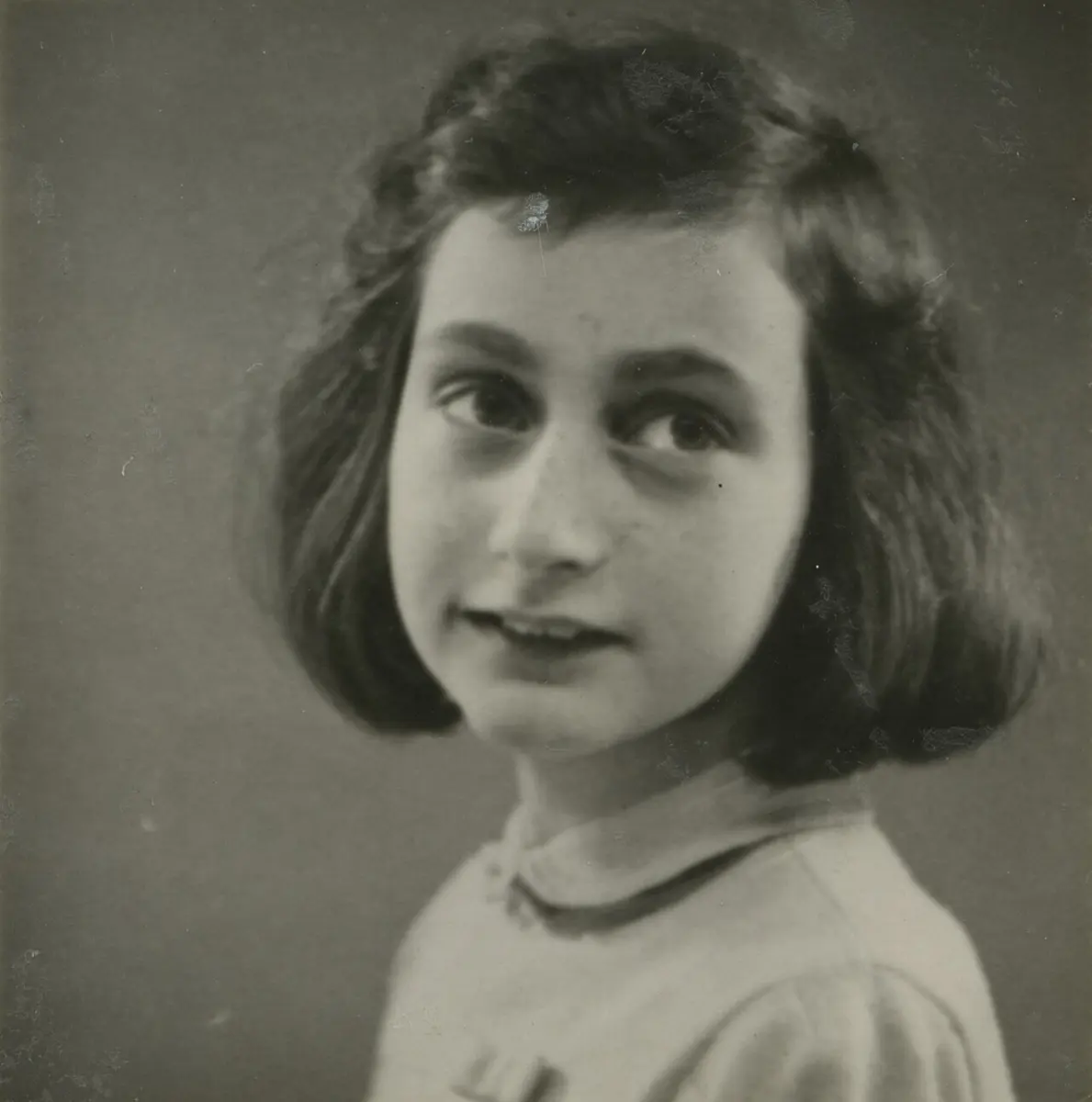
- a.What do you think the name of the girl is?
- b.What made her so popular?
Model answers
What kind of text it is
The text is a diary entry: what a person writes, for themselves, about their own day, life and feelings. It has the marks of every diary:
- a date at the top: Saturday, June 20, 1942;
- the first person all through: I, me, my;
- a personal, chatty voice, as if talking to a friend: Oh well, it doesn’t matter;
- feelings and opinions, not just facts.
This is one of Anne’s first entries, and a special one: in it she explains why she is keeping a diary and gives a short sketch of her life so far. The reading text is shortened (adapted) from the English translation of the diary, which Anne wrote in Dutch.
The text, part by part
Why write at all?
Writing a diary feels strange to Anne, for two reasons: she has never written anything before, and she is sure that nobody, not even she herself, will later want to read the musings (thoughts) of a thirteen-year-old schoolgirl. But it doesn’t matter: she feels like writing, and even more, she needs to get things off her chest (to say what has been troubling her).
Paper is patient
She remembers a saying, paper has more patience than people. She thought of it on a day when she was feeling low, sitting at home with her chin in her hands, bored and listless (with no energy or interest), unable to decide whether to go out, and in the end she stayed in, brooding (thinking unhappy thoughts). Paper is patient because it listens without interrupting, judging or getting tired. And since she doesn’t plan to show this stiff-backed (hard-covered) notebook, grandly called a “diary”, to anyone, unless she finds a real friend, it makes no difference what she writes.
The real reason: no true friend
Now she comes to the point, the reason she started the diary in the first place: she doesn’t have a friend. That sounds unbelievable, she admits. She has loving parents, a sixteen-year-old sister, about thirty people she could call friends, aunts, a good home, and a throng (crowd) of admiring boys who even resort to (use, as a last way) a broken pocket mirror to steal a look at her in class. On the surface she has everything, except one true friend. With her friends she only has fun and talks about ordinary things; they never get closer, never confide in each other (share secrets). Perhaps it is her own fault, she says, but things are not liable to (not likely to) change. That is why she has started the diary.
Kitty
She doesn’t want to jot down (write quickly) bare facts, as most people do in a diary. She wants the diary itself to be the friend she longs for, and she gives that friend a name: Kitty. So every later entry is written to Kitty, like a letter.
A short sketch of her life
Because Kitty wouldn’t understand her stories if she plunged right in (started without explaining), Anne gives a brief sketch of her life, though she dislikes doing it:
- Her father, “the most adorable father” she has ever seen, married her mother when he was 36 and she was 25. Her sister Margot was born in Frankfurt am Main, Germany, in 1926; Anne on 12 June 1929.
- Because the family is Jewish, her father moved to Holland (the Netherlands) in 1933, the year Hitler came to power, and became managing director of the Dutch Opekta company, which made a product used for setting jam. Her mother, Edith Hollander Frank, followed in September; the girls stayed with their grandmother in Aachen. Margot joined them in December, and Anne in February, plunked down (set down without ceremony) on the table as a birthday present for Margot.
- Anne went to a Montessori nursery school, then to primary school; in sixth grade her teacher was the head, Mrs. Kuperus, and they cried when they said goodbye. Then she went to the Jewish Lyceum, Margot’s school.
The shadow of the war
Life was not free of anxiety (worry). Their relatives in Germany suffered under Hitler’s anti-Jewish laws. After the pogroms of 1938 (violent attacks on Jews, their homes, shops and synagogues), Anne’s two uncles fled to North America, and her grandmother, then 73, came to live with them.
After May 1940, the good times were few. The war came to the Netherlands, then the capitulation (surrender) of the Dutch army, then the Germans, and the trouble began for the Jews. A long list of decrees (official orders) took away their freedom: they had to wear a yellow star, hand in their bicycles, shop only between 3 and 5 p.m., go only to Jewish barbers, stay off the streets from 8 p.m. to 6 a.m., and attend only Jewish schools; they could not use trams or cars (even their own), go to theaters or cinemas, swim, play sports in public, sit in a garden after 8 p.m., or visit Christian friends at home. You couldn’t do this and you couldn’t do that, but life went on. Her friend Jacque summed it up: she didn’t dare do anything any more, in case it was not allowed.
Birthdays and the present
Her birthday in 1940 passed quietly, because the fighting in Holland had just ended; in 1941 her grandmother was ill and had an operation. Grandma died in January 1942, and Anne still thinks of her and loves her. The birthday of 1942 was meant to make up for the others, and Grandma’s candle was lit with the rest. The entry ends in the present: the four of them are still well, and that brings her to June 20, 1942, and the solemn (serious, formal) dedication of her diary.
Why does Anne say that “paper has more patience than people”?
Pick an answer to see why.
Which of these was not one of the decrees Anne lists?
Pick an answer to see why.
Words from the text
Words linked here open in English Vocabulary, where you can see an example and practice them in the word game. The meanings below are the ones the words have in this text.
| Word | Meaning here |
|---|---|
| musings | long, quiet thoughts about something |
| stiff | hard and not easy to bend (stiff-backed: with a hard cover) |
| brood | to keep thinking about something that makes you unhappy, worried or angry |
| listless | with no energy or interest in anything |
| throng | a large crowd of people |
| resort | to use something, often something bad, because nothing else works (resort to) |
| confide | to tell someone your secrets and private feelings |
| liable | likely to do or to be something |
| jot | to write something quickly (jot down) |
| plunge | to start something suddenly, without preparing (plunge in) |
| plunk | to put something down heavily or carelessly |
| adoring | showing great love |
| adorable | very lovable, charming |
| decree | an official order from a ruler or government |
| anxiety | worry and fear about what may happen |
| capitulation | giving up, surrendering to an enemy |
| solemn | serious and formal |
A. Find the words
The meanings of some of the words/phrases from Anne Frank’s diary are given below. Find the words from the text and write them.
- a.m……… a period of reflection or thought
- b.s……… rigid, not soft or flexible
- c.b……… to think a lot about something that makes you annoyed, anxious or upset
- d.t……… a crowd of people
- e.r……… to make use of something, especially something bad
- f.c……… to tell somebody secrets and personal information
- g.l……… likely to do something
- h.p……… to get into something
- i.p……… to sit down heavily or carelessly
- j.j……… to write something quickly
Answer
B. Match the synonyms
Match the words in column A with their synonyms in column B.
a. listless b. adoring c. decree d. adorable e. anxiety f. capitulation g. solemn
i. announcement ii. serious iii. loving iv. attractive v. lethargic vi. worry vii. surrender
Answer
C. Answer the questions
Why is writing a diary a strange thing to the writer?
Answer
What is the first reason for her to keep the diary?
Answer
Why is the writer unhappy despite having a loving family?
Answer
Who is Kitty?
Answer
Why did Margot and her sister not go to Holland together?
Answer
Why didn’t the writer have a birthday celebration in 1940?
Answer
Why did the writer’s uncle escape from Germany?
Answer
D. True, False or Not Given
A Not Given statement is one the text neither supports nor contradicts: it says nothing about it. Don’t answer from what you know or guess; answer only from the text.
Write T if the information is true, F if it is false and NG if the information is not given.
- a.The writer is tired of staying in her house.
- b.The writer wants people to read her diary.
- c.Edith Hollander Frank was a teacher in Holland.
- d.The writer attended school in Germany until she was six.
- e.The family came to Germany because it was difficult to live in Holland.
- f.Jews were prohibited to be on top of their houses during day time.
- g.There were very strict laws in Germany for Jewish people.
Answer
E. A diary and a way of life
How does a diary entry help in understanding someone’s lifestyle? Explain.
A model answer
Pronunciation: homophones
Homophones (homo “same” + phone “sound”, from Greek) are words that sound the same but have different meanings, and usually different spellings. When you hear one, only the sentence tells you which word it is; when you write one, only the meaning tells you which spelling to use.
| Words | Said | Meanings |
|---|---|---|
| cell / sell | /sel/ | the smallest unit of a living thing, or a small room / to give something for money |
| knead / need | /niːd/ | to press and fold dough with your hands / to have to have something |
| coarse / course | /kɔːrs/ | rough, not fine or smooth / a set of lessons; a route or direction |
| their / there | /ðer/ | belonging to them / in that place |
| doe / dough | /doʊ/ | a female deer (or rabbit) / flour mixed with water, ready to bake |
| fare / fair | /fer/ | the price of a journey / just and equal; light in color; an outdoor show |
| heal / heel | /hiːl/ | to become well again / the back of the foot, or of a shoe |
| wait / weight | /weɪt/ | to stay until something happens / how heavy something is |
| deer / dear | /dɪr/ | a wild animal with antlers / loved; the start of a letter |
| site / sight | /saɪt/ | a place where something is or will be / the power of seeing; something seen |
| waist / waste | /weɪst/ | the middle of the body / to use badly or too much; rubbish |
| night / knight | /naɪt/ | the dark time / a noble soldier on horseback, long ago |
Many of these pairs have a silent letter: the k of knead and knight, the gh of dough, weight and knight. Say the word as if the silent letter were not there.
Speaking: how long?
A. Susan is retiring
In the conversation, Pemba tells Durgesh that a woman called Susan is retiring (stopping work for good, usually because of age) next month. Durgesh asks How long has she worked for the company?, and Pemba answers She has worked there for more than 25 years. Durgesh says she has contributed greatly to the company.
The question and answer are in the present perfect (has worked): her work began in the past and goes up to now. To say how long, use for with a length of time and since with a starting point:
| for + a length of time | since + a starting point |
|---|---|
| for twenty minutes | since 10 a.m. |
| for two days | since Monday |
| for nine months | since Baisakh |
| for 25 years | since 2001 |
| for a long time | since I left school |
Read and act out the conversation in pairs.
How to practice alone
B. Ask and answer
To ask how long, use How long have/has + subject + been + -ing (for an activity still going on) or the past participle (for a state, or with verbs like live and work). Answer with for or since.
Work in pairs. Ask questions with “how long …” and answer them with for or since.
- a.Sumit/do his homework (2 hours)
- b.Deepa/read a novel (last Monday)
- c.Dhanu/wait for a bus (hours)
- d.Siddhartha/watch movie (5 o’clock)
- e.Deepak/live in Japan (2010)
- f.It/rain (long time)
- g.Sonali/paint the house (this morning)
- h.She/not eat any junk food (several months)
- i.Raman/plough the field (10 o’clock)
- j.The telephone/ring (a few minutes)
Answer
Grammar I: present perfect and present perfect continuous
Both tenses join the past to now. They answer different questions.
The present perfect: what is done, and how many
Form: have/has + past participle (V3): I have cleaned, she has visited, they have known.
Use it for:
- a past action whose result we have now: I have lost my key. (I can’t open the door now.)
- how many times, or how much, up to now: Charles has visited New York three times.
- experience, with ever and never: Have you ever been to Lumbini?
- with just, already, yet: The bus has just left. Have you finished yet?
- states that began in the past and are still true, with for and since: I have known Gerry for six years.
The present perfect continuous: how long, still going on
Form: have/has + been + verb-ing: I have been cleaning, she has been waiting.
Use it for:
- an activity that began in the past and is still going on, with how long: The boys have been playing computer games for over an hour.
- an activity that has just stopped, whose effects we can see: The road is wet; it has been raining. Why are your clothes wet? I’ve been watering* the plants.*
| Present perfect: has done | Present perfect continuous: has been doing | |
|---|---|---|
| Looks at | the result: what is finished | the activity: what is still going on |
| Answers | how many? how much? | how long? |
| Example | I have cleaned two rooms. | I have been cleaning for two hours. |
| Example | She has written three letters. | She has been writing letters all morning. |
You look tired. What ……… ?
Pick an answer to see why.
Rojina ……… four chapters of the novel so far.
Pick an answer to see why.
How long ……… Bimala?
Pick an answer to see why.
A. Choose the verbs
Complete the sentences with the present perfect or present perfect continuous forms of these verbs: watch, rain, play, do, water, wait, clean.
- a.The boys ……… computer games for over an hour.
- b.You ……… TV all afternoon.
- c.The road is wet; it ……… just ……… heavily.
- d.“Why are your clothes wet?” “I ……… just ……… the plants.”
- e.I ……… the flat for two hours.
- f.You look tired. What ……… you ………?
- g.I’m sorry I’m late. ……… you ……… long?
Hint
Answer
B. Present perfect or continuous?
Complete the sentences using the words given in the brackets. Use either present perfect or the present perfect continuous.
- a.How long ……… (you/know) Gerry?
- b.You look dirty. What ……… (you/do) all day?
- c.How many times ……… (Charles/visit) New York till now?
- d.She ……… (learn) French words for hours, but she still doesn’t remember all of them.
- e.The children ……… (watch) videos for two hours.
- f.My father ……… (never/eat) chocolates.
- g.We ……… (not/see) Lisa recently.
- h.He ……… (write) his essay all day but he ……… (not/finish) yet.
Answer
Writing I: a diary for a week
A diary is a private record of your days, written for yourself. Unlike most writing, there is no wrong way to keep one, but a good entry has these parts:
- the date (and the day of the week);
- a greeting, if you like: Dear Diary, or a name, as Anne’s Kitty;
- what happened: the main events of the day, in the past simple (I went, we planted, she said);
- how you felt about them;
- what you think: your view of something that happened, which the task asks for each day;
- a look ahead, if you like: a plan or a hope for tomorrow;
- a short closing.
Write in the first person (I, we), in a natural, friendly voice. Use the present perfect for what is finished at the moment of writing (I have just finished my homework), and the present for how you feel now (I am tired).
Keep a diary for a week. Mention the activities you did during the day. Also express your views and attitudes about a particular incident on each day.
Hint
A model diary
Reading II: The Rautes
Before you read
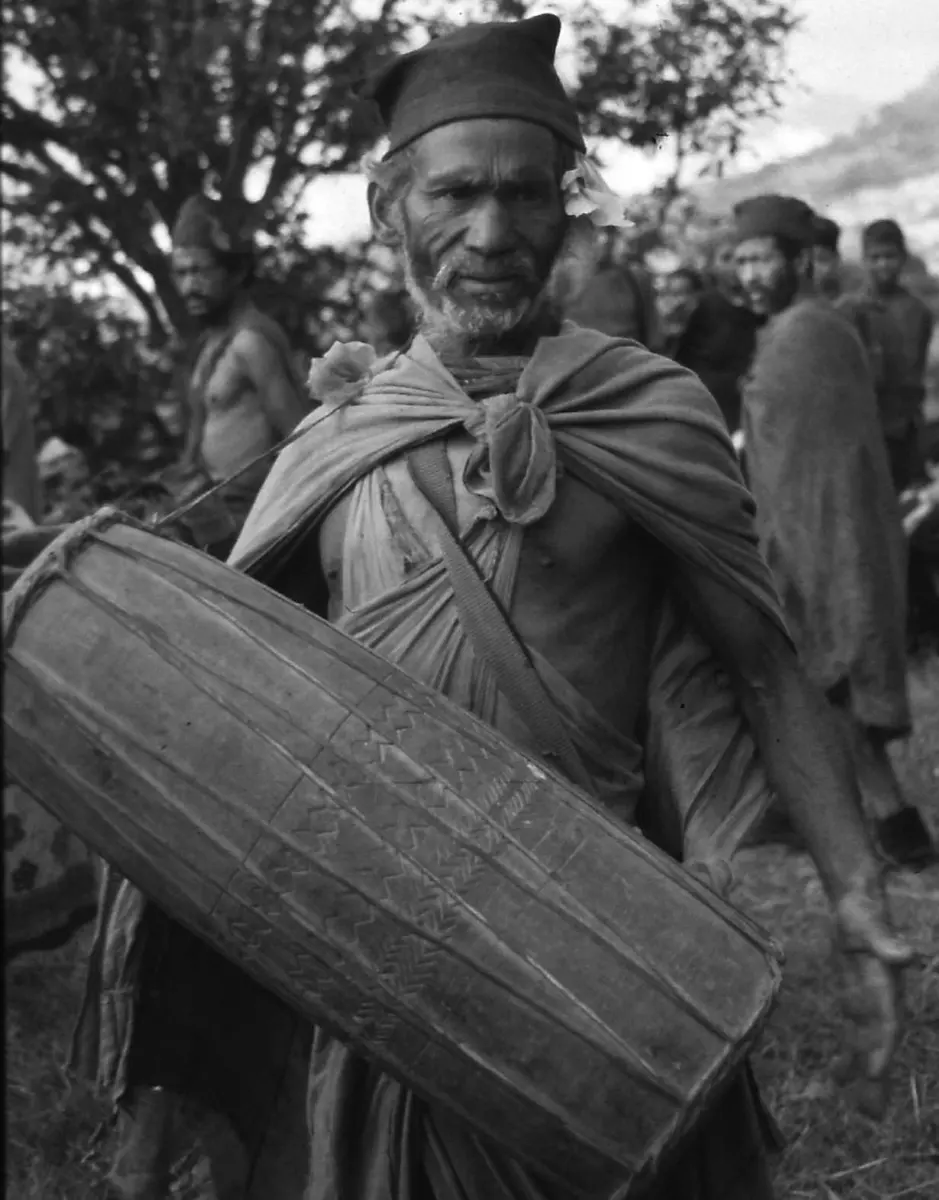
The photos in the text show the Rautes: a camp of low tents of black plastic sheets in a forest clearing on a hillside; men wrapped in pale shawls, with cloths tied round their heads; men sitting on the ground carving blocks of wood; and a family group sitting outside their camp with a large round drum.
- a.Who are these people?
- b.What do you know about these people?
Model answers
What kind of text it is
The Rautes is an informative article about an ethnic group: who they are, how many there are, their history, how they live, how men and women share the work, how they hunt and what festivals they keep. It mixes facts (about 180 people, roughly 52 families) with the writer’s opinions (truly remarkable, commendable, a precious part of the diverse people of Nepal). As you read, notice which sentences are which.
The text, part by part
Nepal’s last nomads
The Rautes are one of Nepal’s most distinctive indigenous groups (native to the land), who have kept their own culture for generations. They are the country’s only nomadic people: they never settle permanently. They refuse the idea of a permanent home, school or farming. That they have survived into this century as full-time nomads, at a time when the world’s cultural diversity is diminishing (getting less), is truly remarkable.
How many, and where
The text puts their number at about 180 people, roughly 52 families, and calls Karnali Province their only sanctuary (a place where they are safe).
A history nobody wrote down
There is no written history of the Rautes. People agree on one thing: long ago they fled from the state (the rulers of the time), never came back, and made a new life in the jungle. To eke out a living (to just manage to live, with little), they became expert woodworkers, learned to hunt monkeys, and adapted to the forest. Only the Mukhiya, their headman, speaks to outsiders about their way of life, on behalf of the whole group.
Clans and values
The Rautes hold traditional knowledge of living as a community. Their heredity (descent, the families they are born into) is in three clans: Kalyaal, Raskoti and Samaal. The writer says it is important to study their ethical norms and values, rituals and livelihood.
A lesson for the world
Acculturation (people taking on the culture of a bigger, more powerful group) has spread everywhere, and the world’s diversity is shrinking. Yet the Rautes have kept their traditions. Keeping a nomadic culture in a globalizing world is commendable (deserving praise), says the writer, and this global uniqueness makes them a precious part of Nepal’s diverse people.
Men’s work and women’s work
Like other groups that follow Hindu society, the Rautes are patriarchal: men are at the top of the social hierarchy (the order of who is above whom). But inside the camp, women have a more prominent role than men. The work is clearly divided:
| Men | Women |
|---|---|
| carve wooden bowls and boxes | do most of the household work |
| hunt monkeys | collect firewood, cook, raise the children |
| trade the woodwork in markets | search the jungle for medicinal herbs, firewood and vegetables |
| collect food grains | know where the springs are |
| socialize with outsiders, dance | help to move and build the camp |
Unmarried girls and widows also go to the villages to collect grain and take orders for the wooden goods. Women dominate almost every facet (part) of life except socializing, hunting, carpentry and dancing. Because searching the forest for herbs, firewood and vegetables is their job, they know the forest and its ecosystem very well.
Families and children
Husbands and wives respect and love each other. A married woman never travels outside the camp with anyone but her husband. Women don’t carve wood or hunt: these are men’s tasks. Children up to the age of about 10 to 14 have no real duties: they play with things they find in nature and roam around the camp, and only sometimes help to fetch water or carry small things when the camp moves.
Hunting with nets
Monkey hunting keeps the Rautes’ hunting way of life alive. Their method is rare: a group of 8 to 30 young and middle-aged men hunts together with nets, never with guns or bows and arrows.
Festivals
The Rautes celebrate Saune Sankranti, Dashain, Tihar, Chaite Dashain and Maghe Sankranti. They prepare food, homemade ale (a kind of beer) and meat in advance. During a festival, everyone takes part, they don’t meet strangers or travel outside their area, and they stop all carpentry and hunting. The festivals are kept with joy and fervor (deep feeling), with singing, dancing, feasting and their own rituals; rice, meat and drinks are at the heart of the feast.
How do the Rautes hunt monkeys?
Pick an answer to see why.
Which of these is the writer’s opinion, not a fact?
Pick an answer to see why.
Words from the text
| Word | Meaning here |
|---|---|
| indigenous | belonging to a place from the earliest times; native |
| nomadic | moving from place to place, with no permanent home |
| diminish | to become smaller or less |
| diversity | many different kinds together |
| sanctuary | a safe place |
| eke out | to manage to live on very little |
| heredity | passing from parents to children; descent |
| acculturation | taking on the culture of another, usually more powerful, group |
| widespread | existing over a large area, or among many people |
| remarkable | unusual or surprising, and worth noticing |
| commendable | deserving praise |
| patriarchal | ruled or controlled by men |
| hierarchy | an order of people from the highest rank to the lowest |
| prominent | important and easy to notice |
| counterpart | a person with the same position in another group |
| facet | one part or side of something |
| extensive | covering a lot; far-reaching |
| rear | to bring up children |
| roam | to walk or travel around with no fixed plan |
| permanence | lasting for a long time, or for ever |
| ale | a kind of beer |
| fervor | strong feeling, enthusiasm (spelled fervour in British English) |
A. Crossword
Find the words from the text and fill in the crossword puzzle.
Across: 2. moving often from place to place 3. existing over a large area 6. ruled by men 7. far-reaching 8. belonging to a particular place
Down: 1. deserving praise 4. unusual or surprising 5. noticeable
Answer
B. True or false
Identify whether the following statements are true or false.
- a.The Rautes move from one place to another for their settlements.
- b.Rautes live in the far-western part of Nepal.
- c.One of the means of their survival is woodcraft.
- d.The maintenance of the nomadic culture is highly regarded.
- e.The Raute community is female-dominated.
Answer
C. Answer the questions
What is the common belief about the history of the Rautes?
Answer
How do Rautes earn their living?
Answer
How do Raute children spend their days?
Answer
Why do the Rautes have good knowledge of the forest and its ecosystem?
Answer
Is the task division between male and female Rautes fair? Why?
A model answer
What is special about the hunting skills of the Rautes?
Answer
Name the festivals that the Rautes celebrate.
Answer
What should modern people learn from the Rautes?
A model answer
D. Culture and lifestyle
How do cultures and traditions affect people’s lifestyles? Discuss.
A model answer
Listening: happiness in Bhutan
A. Before you listen
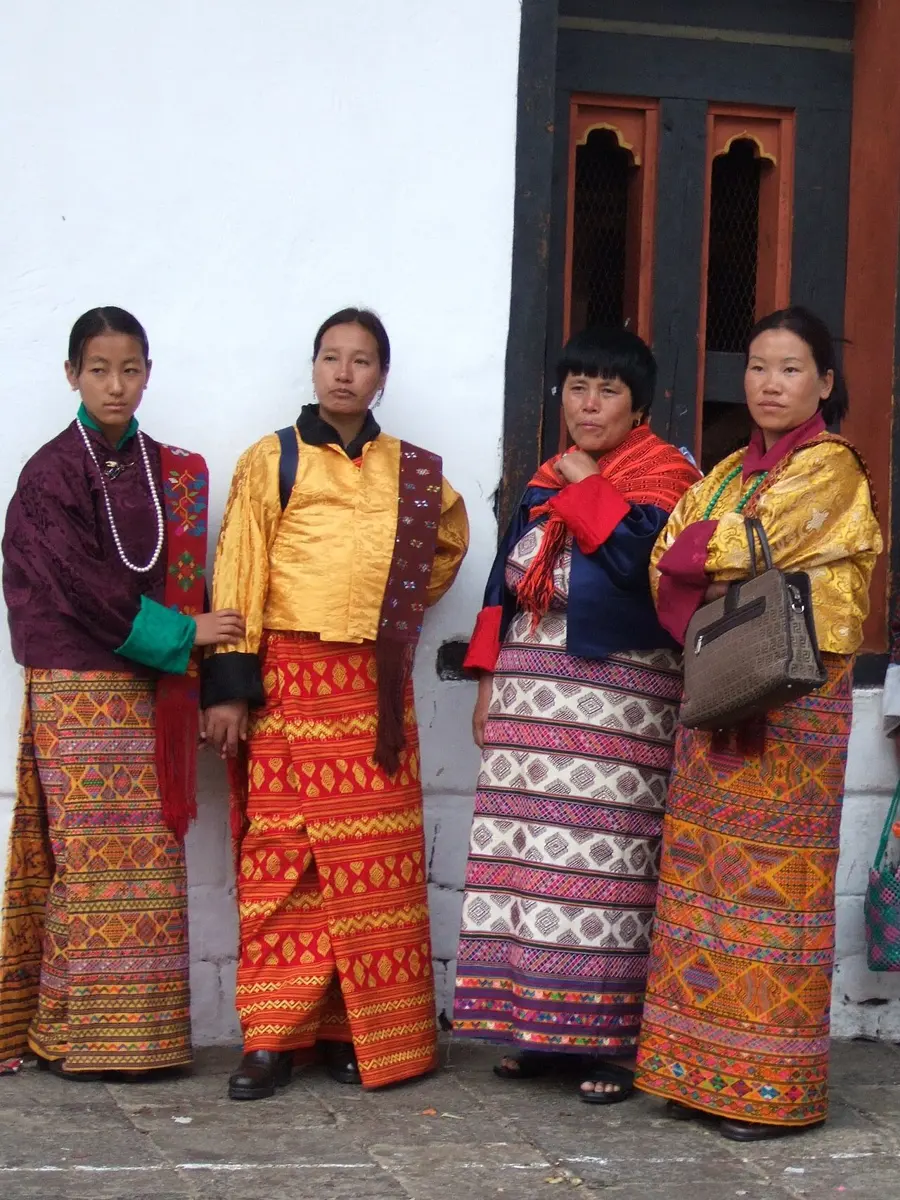
There are two pictures: a flag, divided diagonally into a yellow upper half and an orange lower half, with a white dragon across the middle; and a man and a woman in long, colorful traditional clothes.
Look at the pictures and guess the answers.
- a.What do these pictures represent?
- b.What is the name of this type of costume?
Model answers
The recording
A short talk about how Bhutan measures the happiness of its people: the Gross National Happiness Committee, a survey, and its results. Read the questions in B first, then listen, as many times as you need.
Words you will hear: inner peace (calm in your mind); GDP, Gross Domestic Product (the value of everything a country produces in a year); survey (asking many people the same questions); census (a count of everyone in a country); questionnaire (a list of questions); extensively (to a large degree).
B. Answer the questions
Listen to the audio and answer the following questions.
- a.When was the Gross National Happiness Committee established?
- b.What does GDP stand for?
- c.When was a survey on happiness held?
- d.What is the percentage of the population that are happy?
- e.How can quality of life be determined?
Answer
C. Nepal and the World Happiness Report
What is the rank of Nepal in the World Happiness Index this year? Have a discussion with a partner.
A model answer
Grammar II: present perfect with since and for
A. Have you ever been…?
In the conversation, Binita asks Samir about his travels. Notice the present perfect, for experience: what has happened at some time in your life up to now, without saying when.
- Have you travelled a lot? (American spelling: traveled) Yes, I’ve been* to lots of places.*
- Have you ever been to Sri Lanka? Yes, I’ve been to Sri Lanka once.
- What about China? No, I haven’t been to China.
Been to means “gone and come back”: She has been to Pokhara (she went and returned). She has gone to Pokhara means she is there now.
Study the conversation. Then ask a partner three questions with “Have you ever …?” and answer them.
Model questions and answers
B. Rewrite with since or for
To turn a present fact into how long, use the present perfect (for states: live, be, have, want, know) or the present perfect continuous (for activities still going on: study, work, wait, do), with since + the starting point or for + the length.
Rewrite the following sentences with since or for. Use the clues in the brackets.
Example: I know Samim. (I came to this school) → I have known Samim since I came to this school.
- a.Pawan lives in Tanahun. (he was born)
- b.Subin is unemployed. (last January)
- c.Subash has a fever. (the last few days)
- d.I want to go to Lumbini. (I was in grade five)
- e.My brother is studying engineering. (three years)
- f.I am working in Bhanu Municipality. (last year)
- g.My cousin is in the army. (he was eighteen)
- h.They are waiting for the bus. (half an hour)
- i.Krish is doing his homework. (two hours)
- j.Pramila is going to dance classes. (a month)
Answer
Which sentence is correct?
Pick an answer to see why.
Writing II: The Effects of Junk Food on Children
An essay gives your ideas on one topic in organized paragraphs: an introduction that says what the topic is and what you will argue; body paragraphs, one idea each, with examples; and a conclusion that sums up and ends with a thought or a call to act. The task gives the plan as clues: what junk food is; its causes (advertising, lack of awareness); its harm to health; its cost; its effects on social life and study; and a conclusion.
Write an essay on “The Effects of Junk Food on Children”. Use the clues given below.
Introduction to junk food; causes: advertising, lack of education, etc.; negative/harmful effects of junk food on health (headache, heart attacks, dental problems, high blood pressure, obesity, high cholesterol, etc.); effects on the economy (more expenditure/extra burden to family, etc.); effects on other factors like socialization, poor academic achievement, etc.; conclusion
Hint
A model essay
Project work: a community near you
Extra bit: phobia and mania
A phobia is a strong, unreasonable fear of something; a mania is a wild craze or longing for something. Both endings come from Greek: phobos means fear, mania madness. The first part of each word names the thing:
| Word | From | Meaning |
|---|---|---|
| agoraphobia | agora, a marketplace | abnormal fear of crowds, public places or open spaces |
| bibliophobia | biblion, a book | hatred, fear or mistrust of books |
| acrophobia | akron, the top or peak | abnormal fear of being in high places |
| bibliomania | biblion, a book | a craze for collecting books, especially rare ones |
| balletomania | ballet | great enthusiasm for the ballet |
| anglomania | Angl-, English | a craze for the English language and English customs |
| dipsomania | dipsa, thirst | an extreme, uncontrollable desire to drink alcohol |
Once you know the parts, you can work out new words: hydrophobia (hydro, water), claustrophobia (claustrum, a closed place, from Latin), pyromania (pyr, fire: an urge to set fires), kleptomania (kleptes, a thief: an urge to steal).
A person who is terrified of standing on a high bridge has…
Pick an answer to see why.
Exercise
Practice on this unit in the style of the final exam. Try each one as in the exam, then open the answer.
Read the text and answer the questions.
For thirty years, Phulmaya has been selling vegetables at the market in Birtamod. She gets up at four every morning, and she has never missed a market day, except when her son was born. Over the years, she has seen the market change: the old tin sheds have gone, and a new concrete building has been built. “I have made many friends here,” she says. “The vegetables have changed too: we never used to sell broccoli!” Now she has been teaching her granddaughter to do the accounts on a phone.
- a.How long has Phulmaya been selling vegetables?
- b.When did she miss a market day?
- c.What has changed in the market building?
- d.Find a word in the text that means “made of cement, sand, stones and water mixed together and left to harden”.
Answer
Complete the sentences with the present perfect or the present perfect continuous of the verbs in brackets.
- a.Mingma ……… (climb) Everest twice.
- b.It ……… (snow) since the morning, and the road to Jomsom is closed.
- c.How long ……… (you/know) Rabina?
- d.Look! Somebody ……… (break) the window.
- e.The students are tired: they ……… (practice) the dance all afternoon.
Answer
Rewrite the sentences with since or for.
- a.Nisha lives in Ilam. (2015)
- b.Bibek is waiting for his friend. (forty minutes)
- c.The children are playing in the yard. (lunch)
Answer
Choose the correct word in each pair.
- a.The bus (fare/fair) to Janakpur has gone up.
- b.Please (wait/weight) outside the office.
- c.Turn off the tap: don’t (waist/waste) water.
- d.The new school will be built on this (site/sight).
Answer
Write a diary entry for a day when something surprising happened at your school. (about 120 words)
A model diary entry
Practice every question in the book, and keep track of the ones you miss →
A companion to your textbook, not a replacement for it: study from the book your school uses, and where the two differ, follow your teacher. Found a mistake? Please tell us.