
You step on someone’s foot in a crowded bus. You say “Sorry!” without thinking. But what did you mean? That it was your fault? Or only that you are sad it happened? In English the same word can mean either, and in some countries people hear only one of them. A word this small has caused trouble between whole countries.
This unit is about ethics, norms and values: what is right, what people expect, and what we care about. You will read a study of how Americans and Japanese understand an apology, and a real letter in which an airline’s founder said sorry to thousands of passengers. You will learn to apologize and to answer an apology, to say short forms like I’m and they’ll naturally, and to describe two pie charts in words. The grammar is the present continuous (She is dancing), for what is happening now, around now, and what has been arranged; and, at the end, how sentences are built: simple, compound and complex.
Getting started: right and wrong at work
Three words name this unit, and they are easy to mix up:
| Word | What it means | An example from school |
|---|---|---|
| ethics | the principles of right and wrong that guide what people do; professional ethics are those of a job | A teacher marks every student’s paper fairly, whoever the student is. |
| norms | the usual, expected ways of behaving in a group or a society, often unwritten | Students stand up when a visitor enters the classroom. |
| values | the things a person or a group believes are important | honesty, respect, hard work, kindness |
The unit opens with four pictures of people at work and asks you to talk about their professional ethics, norms and values:
| Picture | What it shows | Ethics, norms and values of the job |
|---|---|---|
| a doctor in a white coat with a stethoscope, examining a child lying on a bed | a doctor | Put the patient’s health first; tell the truth about an illness; keep what patients say confidential (private); treat rich and poor alike; never ask for money before treating someone who is dying. |
| a woman singing into a studio microphone, with headphones on | a singer | Sing her own songs or give credit to the writer; never copy someone else’s work; arrive on time for recordings and shows; respect her audience. |
| a man in a white shirt and tie with stripes on his shoulders and a wings badge, wearing dark glasses | an airline pilot | Safety first, always; never fly after drinking alcohol or without enough rest; follow every checklist; tell passengers honestly about delays. |
| a woman teaching a class of students in blue uniforms | a teacher | Treat every student fairly; come prepared; never hit or humiliate a student; keep students’ results private; set a good example. |
“In our family, the youngest serves tea to guests first.” This is an example of…
Pick an answer to see why.
Reading I: Why “I’m Sorry” Doesn’t Always Translate
Before you read
The picture shows two hands holding up a red card with I’M SORRY written on it in white capital letters.
- a.What does it say?
- b.How do you apologize? Talk to your friends.
Model answers
What kind of text it is
The text is a short article by four researchers who study business and negotiation, William Maddux, Peter H. Kim, Tetsushi Okumura and Jeanne Brett. It appeared in the Harvard Business Review in 2012, and explains, for managers, what they found in their own studies of apologies in the United States and Japan, which they had published in full in 2011 in a journal called International Negotiation. They write as we (“Our own work found…”), and they give examples, numbers and reasons, like a short report.
The text, part by part
1. Two countries trip over one word
America and Japan have worked together in business and politics for decades, yet they still trip over (have trouble with) something that seems simple: the apology. Neither side fully understands what the other means by it. Two examples:
- Most Americans were unmoved (not touched) when Akio Toyoda, the head of Toyota, apologized effusively (with a lot of feeling) in 2010, after widespread reports of faults in Toyota cars.
- Japan bristled (became angry) in 2001 when a US submarine commander didn’t apologize at once after his submarine hit and sank a Japanese fishing boat near Hawaii.
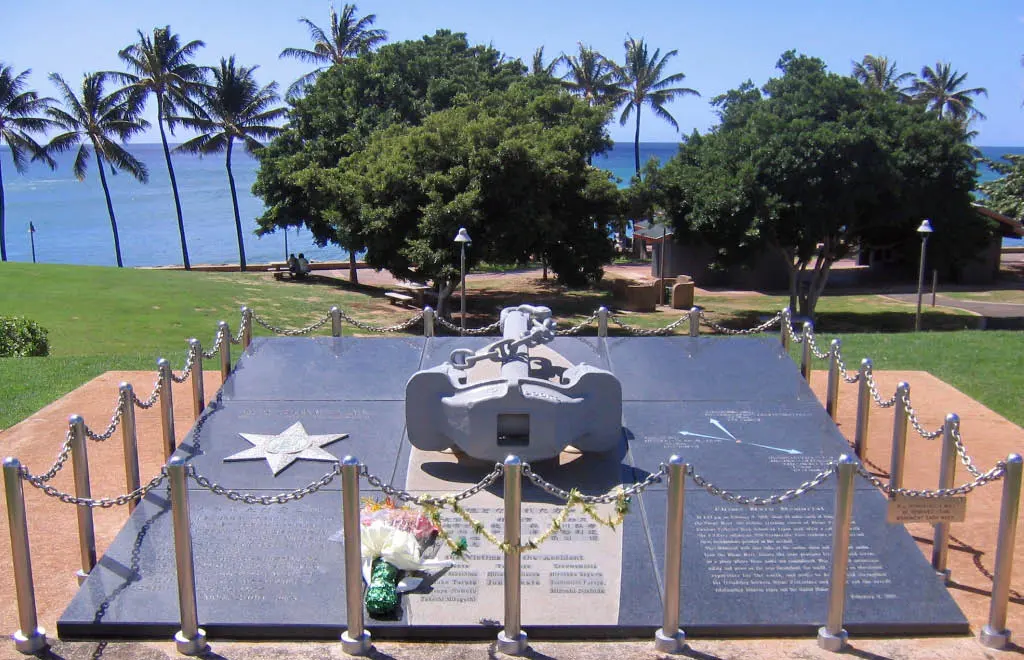
2. Every culture has its own rules
The trouble isn’t only between these two countries. Almost every culture has its own rules for when and how to say sorry. In India, other researchers have found, people apologize far less often than in Japan. In Hong Kong, apologies are so prevalent (common) and ritualized (done by habit, like a ceremony) that people are inured to them: they are so used to them that they hardly notice them any more.
3. The core issue: blame
The writers’ own studies found the core (central) difference: what an apology says about culpability, that is, who is to blame.
- Americans hear an apology as an admission of wrongdoing: “I did it, it’s my fault.”
- Japanese hear it as a wish to repair a damaged relationship, with no blame necessarily meant: “I’m sorry this happened between us.”
This difference changes how much traction an apology gains: how much effect it has on the listener.
4. The first study: who says sorry more?
The researchers asked university students in the US and Japan about apologies. The American students were more likely to say that an apology means you are guilty. The Japanese students were more willing to apologize even when they weren’t responsible for what happened, and perhaps for this reason they apologized much more often: asked to remember the week before, the Japanese students counted 11.05 apologies on average, the Americans only 4.51.
Notice what the numbers are: an average of what students remembered (recalled). Nobody followed them round counting. And the first study was small: in the full report, 40 Japanese and 38 American students, all young women, took part. A survey like this shows a difference worth studying; it can’t tell you how every Japanese or American person behaves.
5. The second study: can sorry repair trust?
Next they tested how useful (the text says the utility of) an apology is for repairing trust. Students from both countries imagined they were managers and watched a video: a woman applying for a job as an accountant apologized for having deliberately (on purpose) filed a wrong tax return for an earlier client. The Japanese students were more ready than their American counterparts (the students in the same position in the other country) to believe her assertion (firm statement) that she wouldn’t do it again, and to give her the job. The writers think this is because Americans have an inclination (tendency) to connect an apology with guilt: for them, she had just admitted she was dishonest.
6. Why the difference?
The writers link it to a wider habit of mind. People in the West tend to attribute events to individuals’ actions: when something goes wrong, they ask who did it? So in the US, I’m sorry means “I am the one who is responsible.” Japan, like many East Asian countries, has a more group-oriented culture, so there an apology is heard as “It is unfortunate that this happened.” Researchers who compared apologies in America and China found the same pattern: American apologies fix personal responsibility; Chinese ones look at the larger consequences of the transgression (the wrong that was done).
7. The lesson for business
Only managers who understand such differences can use an apology well: to help negotiations (talks to reach an agreement), to settle conflicts and to rebuild trust. And apologies are only one part of a wider semantic disconnect between East and West: the same words carry different meanings, and in the rush to globalization (the world’s countries doing business together) this is often ignored. Managers should listen for such small nuances (slight differences of meaning), which are easily lost in translation.
According to the writers, what does an apology mean to most Japanese?
Pick an answer to see why.
In the second study, why were the American students less willing to give the applicant the job?
Pick an answer to see why.
Words from the text
Words linked here open in English Vocabulary, where you can see an example and practice them in the word game. The meanings below are the ones the words have in this text.
| Word | Meaning here |
|---|---|
| trip over (something) | to have difficulty with something, as if stumbling over it |
| unmoved | not touched or affected by feelings |
| effusive | showing (too) much feeling, warmly or excitedly |
| widespread | found or reported in many places |
| bristle | to become suddenly annoyed or offended |
| prevalent | common; found everywhere |
| ritualized | done as a fixed habit, like a ceremony |
| inured (to) | so used to something (usually unpleasant) that it no longer affects you |
| core | central, most important |
| culpability | being to blame for something wrong |
| traction | here, the effect or influence something has |
| utility | usefulness |
| counterpart | a person in the same position somewhere else |
| assertion | a statement that you strongly believe is true |
| inclination | a natural tendency to think or act in a certain way |
| attribute (to) | to say or believe that something is caused by a particular thing |
| transgression | an act that breaks a rule or does wrong |
| semantic | connected with the meanings of words and sentences |
| nuance | a very slight difference in meaning, feeling or color |
A. Find the words
Find the words/phrases from the text for the following meanings. The first letter has been given.
- a.t……… to have difficulty saying something clearly or correctly
- b.e……… showing too much emotion
- c.b……… became annoyed or offended
- d.i……… accustomed to something
- e.c……… the fact of being responsible
- f.a……… a statement saying that you strongly believe something to be true
- g.a……… to say or believe that something is the result of a particular thing
- h.s……… connected with the meaning of words and sentences
- i.n……… a very slight difference in meaning
Answer
B. Match the halves
Match the first halves in column A with their endings in column B to make complete sentences.
- a.Americans didn’t show — i. less willing to trust the applicant in the second study.
- b.People are accustomed — ii. similar patterns in East Asian countries.
- c.Japanese use an apology — iii. to apologies in Hong Kong.
- d.American participants seemed — iv. sympathy to Akio Toyoda’s effusive apologies.
- e.Researchers found — v. to repair their damaged relationship.
Answer
C. Answer the questions
Why did Japan become annoyed with the US submarine commander?
Answer
How do Americans and Japanese perceive an apology?
Answer
What, according to the survey, was the average number of apologies made by the Japanese and the American students?
Answer
What was shown in the video?
Answer
Who were the respondents of the second study?
Answer
How can executives use an apology?
Answer
D. Your own apology
Have you ever apologized? Why and how?
A model answer
Pronunciation: contracted forms
A contraction (contracted form) joins two words into one, with an apostrophe (’) where letters are left out: I am → I’m. In speech, almost everyone uses them; in writing, they belong in friendly letters, emails and conversations, not in formal letters or reports.
| Contraction | Full form | Sounds like | IPA |
|---|---|---|---|
| I’m | I am | “ime” (rhymes with time) | /aɪm/ |
| you’re | you are | like your | /jɔː/ |
| he’s | he is, he has | “heez” | /hiːz/ |
| she’s | she is, she has | “sheez” | /ʃiːz/ |
| it’s | it is, it has | “its” | /ɪts/ |
| we’re | we are | “weer” (rhymes with here) | /wɪə/ |
| they’re | they are | like there and their | /ðeə/ |
| I’ve | I have | “ive” (rhymes with five) | /aɪv/ |
| I’d | I would, I had | “ide” (rhymes with ride) | /aɪd/ |
| they’ll | they will | “thale” (rhymes with mail) | /ðeɪl/ |
The contraction is one syllable: say I’m in one beat, not I-am quickly.
In I’d already eaten when they came, what does I’d stand for?
Pick an answer to see why.
Speaking: apologizing and responding
To apologize is to say you are sorry for something you did that hurt or troubled someone. A good apology does two or three things, in this order:
- Says sorry: I’m sorry…, I apologize for…
- Says what you did, and takes the blame: It’s my fault. I shouldn’t have…
- Puts it right, if it can: Let me clean it up. I’ll bring it tomorrow.
A short reason can come after the apology (I didn’t see you), but never instead of it.
A. Three conversations
The task’s three short conversations show three ways of apologizing, and three ways of answering:
- Conversation I: Mingma arrives late and says I hope you’ll forgive me for being late, with a reason: a flat tyre. Sujan forgives him kindly: That’s quite alright. It can happen to anyone.
- Conversation II: Nabina says I’m sorry to Binod for keeping his book so long, and adds I didn’t mean to. Binod answers No problem, because he won’t need the book until next semester.
- Conversation III: Kiran hits Kuber with his umbrella and says I apologize, with a reason. Kuber accepts it, but adds a gentle warning: Be careful when you’re passing people.
Expressions to use
| Apologizing | Responding to an apology | |
|---|---|---|
| small things, informal | Oops, sorry! Sorry about that. My bad. | That’s OK. No problem. It happens. Never mind. |
| everyday | I’m sorry that… I’m so sorry. It’s my fault. I should have… I didn’t mean to… | Don’t worry about it. That’s all right. No harm done. |
| serious or formal | I apologize for… Please forgive me. I hope you’ll forgive me for… Please accept my apologies. | I forgive you. Apology accepted. Thank you for saying so. |
Your friend says, “I’m so sorry I broke your pencil.” Which answer is kind and natural?
Pick an answer to see why.
B. Conversations from clues
Work in pairs. Make similar conversations for the given clues. Choose the structures from the box.
- a.took my bag / thought it was mine
- b.ate my biscuits / thought they were mine
- c.sat on my cat / thought it was a pillow
- d.took my newspaper / didn’t realize it was yours
- e.got off a bus and bumped into someone / I was in a hurry
- f.tapped the shoulder of someone who looked like your friend / thought it was my friend
Model conversations
C. Say sorry, and answer
Work in pairs. Take turns to say sorry and respond to your friend in the following situations.
- a.You have eaten your friend’s chocolates.
- b.You have just blown your nose in front of your friend.
- c.You didn’t follow someone’s instructions.
- d.You have spilled someone’s drink.
- e.You accidentally bumped into your friend.
- f.You kept someone waiting.
- g.You have arrived late at school.
- h.You forgot to bring your friend’s notebook.
- i.You stepped on your friend’s toe.
Model conversations
Grammar I: the present continuous
The present continuous (also called the present progressive) shows an action in progress: started, but not finished. It is made of am / is / are + the -ing form of the verb:
| Positive | Negative | Question | |
|---|---|---|---|
| I | I am (I’m) reading. | I**’m not reading**. | Am I reading? |
| he / she / it | She is (she’s) reading. | She isn’t (is not) reading. | Is she reading? |
| you / we / they | They are (they’re) reading. | They aren’t (are not) reading. | Are they reading? |
We use it for:
| Use | Example | Clue words |
|---|---|---|
| something happening right now, as we speak | Be quiet! The baby is sleeping. | now, at the moment, look!, listen!, be quiet! |
| something going on around now, for a while, even if not this second | This week I’m reading* a book about Everest.* | these days, this week, this month, today |
| a situation that is changing | More and more people are buying electric scooters. | more and more, getting, these days |
| a future arrangement already made | She’s traveling* to Dhangadhi next weekend.* | a future time: tonight, tomorrow, next week |
Compare the present simple (Unit 4), for habits, facts, long-lasting situations and timetables: I read every evening. Water boils at 100 °C. The bus leaves at six.
Spelling the -ing form
| Verb ends in | Rule | Examples |
|---|---|---|
| most verbs | add -ing | read → reading, play → playing |
| a silent -e | drop the e | make → making, write → writing |
| one vowel + one consonant, stressed | double the consonant | run → running, sit → sitting, begin → beginning |
| -ie | -ie → -ying | lie → lying, die → dying |
Travel becomes traveling in American spelling and travelling in British; both are correct.
Which sentence is correct?
Pick an answer to see why.
A. Bob’s Sunday afternoon
In the picture, Bob’s whole family is in the garden on a Sunday afternoon, each person with a name label, and Bob tells us what everyone is doing.
Read Bob’s description of the picture and underline the verb forms in the present continuous tense.
Answer
B. The correct form
Use the correct form of the verbs in brackets to complete the sentences.
- a.Be quiet! The baby ……… (sleep).
- b.It ……… (rain) cats and dogs here in the monsoon season.
- c.John is busy. He ……… (work) at the moment.
- d.Please keep quiet, I ……… (listen) to the radio. You know I ……… (listen) to the news in the mornings.
- e.What time ……… the first bus ……… (leave) for Kathmandu?
- f.I usually ……… (not wear) a scarf, but today I ……… (wear) one because it’s unusually cold.
- g.She ……… (travel) to Dhangadhi next weekend.
- h.Pasang is in the classroom at the moment. He ……… (study) History.
- i.These days most people ……… (write) emails instead of writing letters.
- j.What sort of clothes ……… teenagers ……… (wear) nowadays?
- k.What ……… you ……… (do) tonight? Would you like to come and watch the game?
- l.You look worried. What ……… you ……… (think) of?
- m.She usually drives a taxi. But today, she is ……… (drive) a lorry.
- n.These kids ……… (not do) what I’ve asked them to do.
Answer
Writing I: describing pie charts
A pie chart is a circle cut into slices, like a pie. The whole circle is 100%, and each slice shows one part’s share. Two pie charts side by side let you compare: two places, or two years. To describe them in a paragraph:
- Introduce the charts: what they show, where and when. The pie charts show… in Nepal in 2004 and 2011.
- Describe the main point of each: the biggest slice and the smallest.
- Compare them: what grew, what shrank, what stayed about the same, with the numbers.
- If you like, end with one sentence on what the comparison shows.
Useful language:
| To say | Use |
|---|---|
| a share | accounts for, makes up, takes up, represents 40% |
| about a fraction | more than one third (over 33.3%), nearly half (just under 50%), about a quarter (around 25%), the vast majority (over 90%) |
| a change | rose / increased / grew from 2.8% to 5.3%; fell / dropped / decreased from 28.7% to 22.2%; remained almost the same |
| how much | slightly (a little), sharply (a lot); almost doubled; six times as many |
| a contrast | whereas, while, on the other hand, in contrast, but |
A. The model: who owns their home?
The book’s two pie charts show households by ownership of their house in Nepal’s urban areas (towns and cities) and rural areas (villages). Tap a row to see each comparison:
The model interpretation has three paragraphs:
- Rural areas: 92% of families own their house, only 6% rent, and 2% neither own nor rent.
- Urban areas: 57% own, 40% rent (more than one third, since a third is about 33%), and 3% neither own nor rent.
- The comparison: fewer town families own their house; renting is more than six times as common in towns (40 ÷ 6 ≈ 6.7); and the families who neither own nor rent are a similar small share in both.
In towns, 40% of families rent. Which is the best description?
Pick an answer to see why.
B. Household spending, 2004 and 2011
| What households spent on | 2004 | 2011 |
|---|---|---|
| food | 59% | 61.5% |
| housing | 9.5% | 11% |
| education | 2.8% | 5.3% |
| other non-food | 28.7% | 22.2% |
The pie charts show household expenditure in Nepal in 2004 and 2011. Write an interpretation of the charts, making comparisons where necessary.
Hint
A model interpretation
In your final exam, a description of a chart, table or diagram is a Guided writing I task: about 100 words, 5 marks. Use the numbers, compare, and don’t give reasons the chart doesn’t show (or mark them as a guess: This may be because…).
Reading II: JetBlue’s Apology
Before you read
Do you agree with the following statements? Discuss.
- a.Apologizing doesn’t always mean you’re wrong and the other person is right.
- b.Great people apologize when they realize they have made a mistake.
Model answers
What kind of text it is
It is a real letter of apology from a company to its customers. JetBlue Airways is an American airline that began flying in February 2000. On 14 February 2007 an ice storm hit the northeast of the United States, around New York, where JetBlue had its main base. JetBlue tried to keep flying while other airlines cancelled early; its planes and crews got stuck, some passengers waited on planes at New York’s JFK airport for six hours or more, and over the next days it cancelled more than a thousand flights. A few days later its founder and chief executive (CEO), David Neeleman, wrote this letter to the airline’s customers, and JetBlue published a Customer Bill of Rights, a written promise of what passengers would get when flights were badly delayed or cancelled.

The letter, part by part
1. Sorry, three times
It opens with the apology itself, said in three ways: the company is sorry, embarrassed, and above all deeply sorry. No excuse comes first.
2. What happened
The past week was the worst in JetBlue’s seven-year history. After a severe winter ice storm in the Northeast, passengers suffered unacceptable delays, cancelled flights, lost baggage and other problems. The storm disrupted (broke up the normal working of) the movement of the planes, and worse, of the pilots and inflight crewmembers, who needed those planes to reach the airports where they were to work. It was also the busy Presidents’ Day holiday weekend, so there were few seats for rebooking, and customers phoning JetBlue waited a very long time, or couldn’t get through at all, which hindered (held back) the airline’s recovery.
3. How sorry, and why it hurts
Words, he writes, can’t express how sorry the company is for the anxiety, frustration and inconvenience customers felt. It is especially sad because JetBlue was founded on a promise to bring humanity back to air travel and make flying happier and easier. Last week it failed to keep that promise.
4. What JetBlue is doing about it
The company has started corrective steps (actions to put things right), part of a comprehensive (complete) plan: better and quicker information for customers, more tools and resources for its crew, and better ways of handling problems. He is confident JetBlue will emerge (come out of this) as a more reliable airline.
5. The Bill of Rights
Most importantly, JetBlue has published its Customer Bill of Rights: its official promise of how it will handle interruptions to flights from now on, with details of compensation (money or credit given to make up for a loss). He also has a video message about it.
6. Asking for another chance
Customers deserved better, much better. Nothing matters more than winning back their trust, and everyone at JetBlue hopes for the chance to welcome them on board again. He signs it with his name and his title: Founder and CEO.
The parts of a good letter of apology
The letter does what every good apology does, in order: it says sorry, says what went wrong, takes responsibility, says what will change, offers something to make up for the harm, and asks for trust. Try the same moves on a letter of our own:
Why does the letter mention the ice storm and the holiday weekend?
Pick an answer to see why.
Words from the letter
| Word | Meaning here |
|---|---|
| operational | connected with the way a business runs every day |
| subject (someone) to | to make someone go through something unpleasant |
| disrupt | to stop something from continuing in the normal way |
| crewmembers | the people who work on a ship or plane |
| scarce | hard to find; not enough |
| hinder | to make it difficult for someone to do something, or for something to happen |
| inconvenience | trouble or problems that affect what you need or want |
| corrective | meant to put something right |
| comprehensive | complete, including everything |
| emerge | to come out of a dark, closed or hidden place, or a difficult time |
| compensation | money or something else given to make up for a loss |
A. Match the words
Match the words in column A with their meanings in column B.
- a.disrupt — i. to come out of a dark, confined or hidden place
- b.crewmembers — ii. trouble or problem, especially concerning what you need or would like yourself
- c.hinder — iii. to make it difficult for something to continue in the normal way
- d.inconvenience — iv. to make it difficult for somebody to do something or for something to happen
- e.emerge — v. all the people working on a ship, plane, etc.
Answer
B. Answer the questions
Who has written the letter?
Answer
Who is it addressed to?
Answer
How long has JetBlue been serving its customers?
Answer
What was the main cause of inconvenience to the passengers?
Answer
What sort of service does this company promise?
Answer
What does the JetBlue Airways Customer Bill of Rights contain?
Answer
C. A journey that went wrong
Have you ever faced any problem when traveling on holidays or to another village or town? Share it with your friends.
A model answer
Listening: a forgotten name
In the listening, a young man meets a young woman he has met before, but he can’t remember her name, and he has to apologize. Read the questions in B first, then listen, as many times as you need. CDC hasn’t put this recording online (the video called Unit 5 on its YouTube channel is the funeral phone call of Unit 4), so listen to it in class, and practice with our own talk below.
A. Before you listen
The picture shows three young people, a young woman and two young men, sitting round a table, talking.
- a.What could the people in the picture be talking about?
- b.What do you think when a friend forgets your name?
Model answers
B. The textbook’s audio: answers
The man first met the woman at a ……… .
Pick an answer to see why.
The man apologizes for ……… .
Pick an answer to see why.
The woman’s name is ……… .
Pick an answer to see why.
The woman is majoring in ……… .
Pick an answer to see why.
What major subject does the man consider the best at this time?
Pick an answer to see why.
These answers follow CDC’s teachers’ guide, which gives the answers but not the words of the recording.
C. Forgetting a name
How do you apologize when you forget the name of a friend who is talking to you?
A model answer
Practice listening alone
Grammar II: the present continuous in a story; simple or continuous?
A story told as if it were happening now uses the present continuous for the scene going on, and the present simple for each new event and for states:
Sophiya is sitting in class. (the scene) Her teacher calls her name. (an event) She feels embarrassed. (a state)
This is how commentators describe a football match live, and how we describe a picture or a daydream.
A. Sophiya’s daydream
Use the correct form of the verbs given in the brackets to rewrite the text. (Sophiya sits in class while the teacher teaches, but she is daydreaming that she is dancing on a stage before hundreds of people, until the teacher calls her name.)
Answer
Future arrangements
The present continuous with a future time talks about a plan that is already arranged: tickets bought, a time agreed, people told.
- We’re going* to the cinema tonight.* (We have planned it.)
- Tomorrow I’m seeing* my doctor in the morning.* (I have an appointment.)
- Where are you going this year? (asking about someone’s plans)
Compare The film starts at 7 (a timetable, present simple) and I will probably go (a decision or guess, not yet arranged).
Which sentence talks about an arrangement already made?
Pick an answer to see why.
B. Complete with any verb
Complete the sentences with the correct form of any suitable verb.
- a.A: We ……… to the cinema tonight. ……… with us? B: I’d love to!
- b.A: I ……… on holiday two or three times a year. B: That’s great! And where ……… this year?
- c.I think it’s better to stay. It ……… and we ……… an umbrella.
- d.Who is that man? Why ……… at us? What ………?
- e.Tomorrow, I ……… my doctor in the morning.
- f.Where’s John? He ……… to a new song in his room.
- g.Rita worked hard all day yesterday, but she ……… not ……… today.
- h.Nitu ……… reading a story at the moment.
- i.The plane ……… the runway now. You are too late.
- j.I told you that I ……… with you anymore. You’re simply not a team player.
Answer
Writing II: a letter or email of apology
We all make mistakes in our lives. Remember a mistake you have made recently. Then write a letter or an email to the person concerned, apologizing for the mistake.
Hint
A model email
How to write a letter or email of apology
- To and Subject for an email (Subject: My apology), or your address and the date for a letter.
- Greeting: Dear Nisha, (a friend), Dear Sir/Madam, (formal).
- The apology, first: I am writing to apologize for… I am so sorry that…
- What happened, honestly, taking the blame: It was my fault. I should have…
- How they must have felt: I know it must have been…
- Putting it right: I would like to make it up to you… From now on, I will…
- A friendly close: I hope you can forgive me. Then Your friend, / Yours sincerely, (formal, Dear Mr. Rai) / Yours faithfully, (formal, Dear Sir), and your name.
In your final exam, a letter or email is a Free writing II task (about 200 words, 8 marks), marked on its content, organization, language and layout.
Project work
Simple, compound and complex sentences
A clause is a group of words with its own subject and verb. An independent clause makes sense on its own (the bus was late); a dependent clause has a subject and a verb but can’t stand alone, because it begins with a word like because or when (because the bus was late…). Sentences are named by the clauses they contain:
| Type | What it has | Example |
|---|---|---|
| simple | one independent clause | The baby cried for food. |
| compound | two (or more) independent clauses, joined by a coordinating conjunction: for, and, nor, but, or, yet, so (remember FANBOYS) | It was raining, so we stayed inside. |
| complex | one independent clause and one or more dependent clauses, which begin with a subordinator (because, when, after, although, since, as, if, while) or a relative pronoun (who, which, that) | Because the meat had gone cold, I heated it on the gas stove. |
In a compound sentence, a comma usually goes before the conjunction. In a complex sentence, a dependent clause that comes first is followed by a comma (When the bell rang, we left.); one that comes second usually needs none (We left when the bell rang.).
What type of sentence is The bus broke down near Mugling, but nobody was hurt.?
Pick an answer to see why.
What type of sentence is Dawa apologized because he had forgotten her name.?
Pick an answer to see why.
Name the type of each sentence, then join the pairs as told.
- a.After eating lunch at the Rose Garden, Tapas went to the gym to exercise.
- b.The shopkeeper gave me the wrong change. I went back to the shop. (Join with so.)
- c.Sophiya was dancing in her daydream. Her teacher called her name. (Join with while.)
- d.The airline said sorry. It promised to pay its passengers. (Join with and.)
Answer
Exercise
Practice on this unit in the style of the final exam (Grade 9’s exam follows the SEE’s kind of chart). Try each one as in the exam, then open the answer.
Write True or False after each statement about the two readings.
- a.According to the writers, Americans see an apology as an admission of guilt.
- b.In the first survey, the American students remembered more apologies than the Japanese students.
- c.In the second study, the Japanese students were more willing to give the applicant the job.
- d.JetBlue’s letter blames its passengers for the delays.
- e.The Customer Bill of Rights includes details of compensation.
Answer
Choose the correct answer for each numbered blank.
Today is Saturday, and our whole street (a) ……… (is cleaning / cleans / clean / are clean) the river bank. My father (b) ……… (carry / is carrying / carries / are carrying) bags of plastic to the truck, and my little brothers (c) ……… (picks / is picking / are picking / picked) bottles. My mother usually (d) ……… (works / is working / work / are working) on Saturdays, but today she is here with us. Look! The children from the next street (e) ……… (comes / come / is coming / are coming) to help.
Answer
Change these sentences as instructed in brackets.
- a.Pasang is studying History now. (Make it negative.)
- b.They are traveling to Ilam next week. (Make a yes/no question.)
- c.Sneha is reading a novel. (Ask a question with What.)
- d.I take the bus to school. (Rewrite with today and the present continuous: …, but today…)
- e.It was late. We took a taxi. (Join to make a compound sentence.)
- f.We stayed at home. It was raining. (Join with because to make a complex sentence.)
Answer
The table shows how the students of a school in Kavre came to school in 2015 and in 2025. Describe it in about 100 words, making comparisons.
| How they came | 2015 | 2025 |
|---|---|---|
| on foot | 70% | 45% |
| by school bus | 10% | 30% |
| by bicycle | 15% | 10% |
| by motorbike with a parent | 5% | 15% |
A model answer
You promised to return your cousin Rojan’s football before his match, but you lent it to a friend, who lost it. Write an email of about 200 words to Rojan, apologizing and saying how you will put it right.
A model answer
Practice every question in the book, and keep track of the ones you miss →
A companion to your textbook, not a replacement for it: study from the book your school uses, and where the two differ, follow your teacher. Found a mistake? Please tell us.