
Will it rain tomorrow? Maybe. Will the Himalayan glaciers be smaller in twenty years? Almost certainly. Will you have finished school by then? Yes, you will have finished it long before.
This unit is about probability: how sure we are about what is happening now and what will happen. You will read about climate change and what it is doing to the Himalayas, follow a weather forecast around a country, and read a poem of thanks for the eyes, ears, hands and heart. In grammar you will meet a new tense, the future perfect (will have done), and use may, might, could, should, must and can’t to say how sure you are.
Getting started
A. What may happen?
The four pictures show: a girl at the edge of a swimming pool, pointing at the water (swim); a white bull and a black bull in a grassy field (fight); a sky full of heavy gray clouds (rain); and a runner with the number 5 on his vest, racing on a track (win the race).
Look at the pictures. Give examples of may/might or must. (Example: The bulls may/might/must fight.)
Model answers
B. Listen and sing
The song is a child speaking up. The speaker admits to not being the tallest in the school, and to having perhaps the smallest voice in the world. But standing on tiptoe, the speaker can nearly reach the stars, and one day these small words might change the world, so everyone had better listen. The idea: being small now doesn’t mean being small forever.
Listen to how the song uses may and might: the speaker may not be the tallest (it’s possible), and words might change the world (it’s possible, in the future).
Is the speaker a student?
Answer
When can the speaker touch the stars?
Answer
What can change the world?
Answer
Reading I: Climate Change
Before you read
The picture shows a forest on fire, with thick smoke and flames among the trees.
What do you think is happening in the picture?
Answer
Do you think it is good or bad for the environment? Why?
A model answer
The text, part by part
The reading is a factual text, written for young readers in the style of NASA’s Climate Kids website.
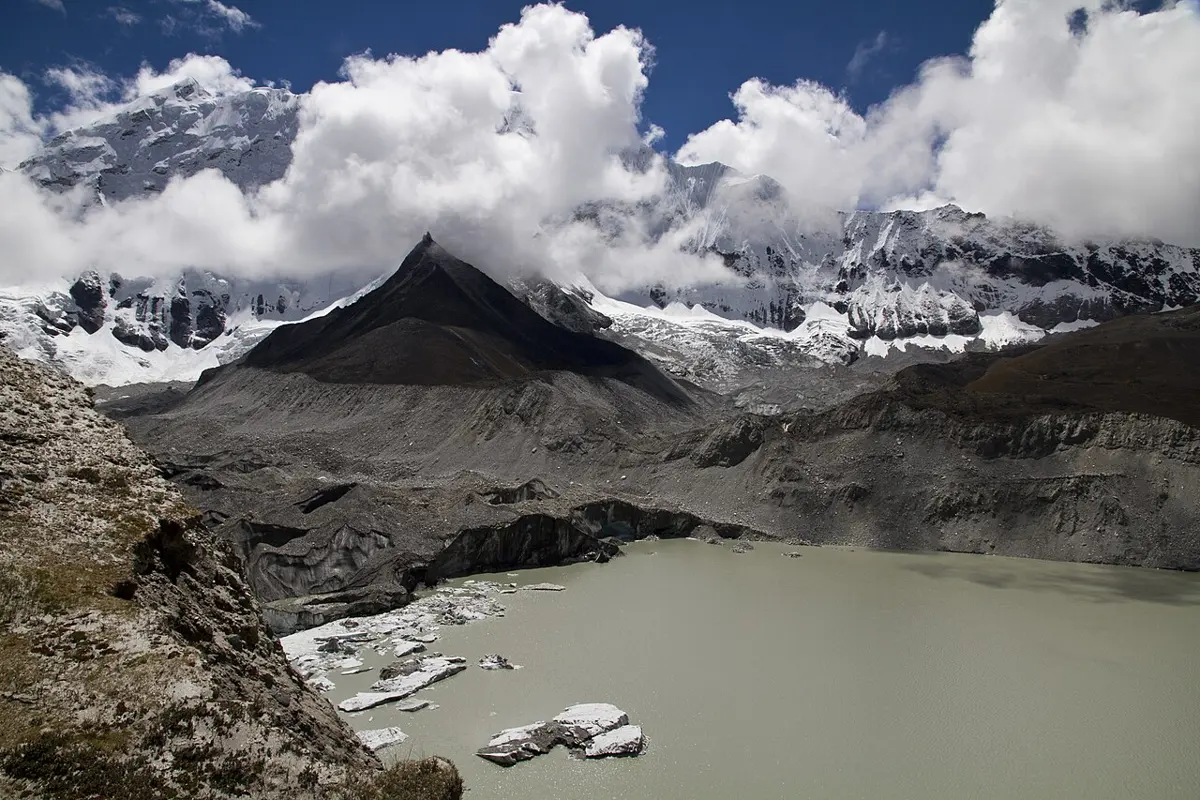
- What climate change is. Climate is the usual weather of a place over many years: its average temperature and rainfall. Climate change is a change in those averages over a long time. Nepal’s Himalayas once had many more glaciers; with a warmer climate there are fewer, and the ones left are in trouble.
- Global climate change. Across the whole earth, the long-term changes include warmer temperatures, changing rainfall, rising sea levels, shrinking glaciers, ice in the Himalayas melting faster than usual, and plants flowering at different times.
- Why scientists are worried. The earth’s climate has always changed, even before there were people. But in the last 150 years the earth has warmed far faster than scientists would expect. On average, the air near the ground is about 2 °F warmer than a hundred years ago, and recent years have been the warmest in centuries.
- What warming does. Storms such as hurricanes are expected to bring heavier rain; droughts (long periods without enough water) and heat waves are expected to get worse. Even one or two degrees can harm the health of plants and animals.
- The cause: the greenhouse effect. Many things affect the climate, but scientists agree that the warming of the last 50 to 100 years is caused by human activities. Some gases in the atmosphere (the air around the earth) stop heat from escaping, the way the glass of a greenhouse keeps plants warm. Burning fuel in factories, cars and buses adds more of these gases, so the air traps more heat.
- One connected system. Oceans, land, air, plants, animals and the sun’s energy all affect one another; together they make the earth’s climate, like one big system. NASA’s satellites watch the air, water and land from space, so scientists can see how a small change in one place can add to big changes everywhere.
Words from the text
| Word | Meaning |
|---|---|
| climate | the usual weather of a place over many years |
| glacier | a slow-moving mass or river of ice, formed from snow on mountains |
| continuously | all the time, without stopping |
| Fahrenheit | a scale for measuring temperature (water freezes at 32 °F and boils at 212 °F) |
| century | a hundred years (plural: centuries) |
| intensity | how strong something is |
| hurricane | a violent storm with very strong winds |
| heat wave | a period of unusually hot weather |
| atmosphere | the mixture of gases that surrounds the earth |
| greenhouse | a building of glass for growing plants, which stays warm inside |
| satellite | a machine sent into space to go round the earth and gather information |
| contribute | to help cause something |
A. Find the words
Find the words in the text above that give the answers to a to i. The first letter has been given.
- a.a slow-moving mass or river of ice, formed from snow on mountains (G)
- b.all the time; repeatedly (C)
- c.a scale of measuring temperature (F)
- d.a period of hundred years (C)
- e.the quality of being great; very strong (I)
- f.a violent storm with very strong winds (H)
- g.the mixture of gases that surrounds the earth (A)
- h.a structure made of glass which is used to grow plants (G)
- i.an electronic device sent into space to gather information (S)
Answer
B. True or false?
Glaciers are found high in the Himalayas.
Answer
Climate change is a global issue.
Answer
The effect of climate change is not seen in the seas.
Answer
Climate change affects human beings.
Answer
Human activities are likely to increase changes in the climate.
Answer
Production of carbon dioxide in the USA may cause the melting of snow in our Himalayas.
Answer
How do greenhouse gases warm the earth?
Pick an answer to see why.
C. Answer the questions
What is global climate change?
Answer
List the negative effects of global climate change.
Answer
When did climate change start?
Answer
What human activities are affecting Earth’s natural greenhouse?
Answer
What are the components of the global climate?
Answer
Which organization is conducting the research about climate change and its effects?
Answer
D. Nepal and climate change
Has Nepal been affected by the global climate change? How? Discuss in groups and draw a few pictures to demonstrate your points.
Points to discuss and draw
Pronunciation: words in phonemic letters
Dictionaries show how a word is said in phonemic letters between slashes, one letter for each sound. The mark ˈ comes before the stressed syllable, and (r) is an r said only in American English or before a vowel. A few to know: ə is the quick, weak sound in about; ɪ as in sit; æ as in cat; ʌ as in cup; əʊ as in go; ɪə as in near; tʃ as in chair.
Match the words with their pronunciation. Practice saying them with the help of your teacher.
intensity, global, glacier, temperature, atmosphere, hurricane
/ˈtemprətʃə(r)/, /ˈætməsfɪə(r)/, /ˈhʌrɪkən/, /ɪnˈtensəti/, /ˈɡləʊbl/, /ˈɡlæsiə(r)/
Answer
Grammar I: will and will have done
A. Two kinds of future
Look at the following set of sentences.
Prerana will come here tomorrow. / Prerana will have come here by 4 p.m. tomorrow.
We shall buy a house next year. / By next year, we will have moved to our new house.
Jonathan will complete his studies in 2027. / Jonathan will have got a job by 2028.
Fukipa will climb Mt. Everest next week. / By the end of next week, Fukipa will have climbed Mt. Everest.
Answer
| Form | Use | Example | |
|---|---|---|---|
| Future simple | will + plain verb | something that will happen | I will finish my homework soon. |
| Future perfect | will have + past participle | something that will be finished before a time in the future | I will have finished my homework by 8 p.m. |
Think of standing at 8 p.m. tonight and looking back: the homework is already done. The future perfect is the past perfect’s twin, looking back from a point in the future instead of the past.
- The negative: She won’t have finished by then.
- The question: Will you have finished by Friday?
- Shall sometimes takes the place of will after I and we (We shall buy a house); in everyday English, will is used for all.
B. Choose the form
Choose the correct alternatives from the brackets to complete the sentences.
- a.I think our team ……… the match this year. (will win/will have won)
- b.By 11 p.m. tonight, she ……… writing the report. (will have finished/will finish)
- c.If I finish this task early, I ……… TV. (will have watched/will watch)
- d.They say it ……… heavily tomorrow. (will rain/will have rained)
- e.……… fine tomorrow? (Will the weather have been/Will the weather be)
- f.They ……… here by 10 a.m. tomorrow. (will arrive/will have arrived)
- g.I ……… Paris by the end of July next year. (will have visited/will visit)
- h.I’m sorry. I ……… you this time. I’m busy. (will not have helped/won’t help)
Answer
Which sentence is right?
Pick an answer to see why.
C. Two sentences each
Make two sentences using the clues given below. (Example: complete home work → I will complete my homework soon. I will have completed my homework by 8 p.m.)
a. take bath · b. watch TV · c. go shopping · d. call my parents · e. wash clothes · f. prepare food · g. feed animals · h. take final exams
Model answers
D. Your life in twenty years
Imagine your life 20 years from now. Write some sentences about what changes you will have experienced by then. You can talk about your studies, visits, jobs, etc.
A model answer
Writing I: what may happen?
The four pictures show: an old car pouring out thick black smoke; two people throwing rubbish onto a beach while a truck tips waste into the sea; a row of factory chimneys sending dark smoke into the sky; and a hillside where most of the trees have been cut down, leaving stumps.
For each picture, make notes in three parts, then turn them into a paragraph: what the people are doing (present continuous), what may happen (may, might, will), and what the results might be.
Look at the pictures below. What are the people doing? What may happen in the future there? What might be the results? Make notes and write a paragraph for each.
Model paragraphs
Listening: a weather forecast
A. Weather words
The four pictures show a bright sun, a bench covered in snow, a dark cloud with rain pouring down, and a tree bending in a wind blown by a cloud.
Say the weather words that represent the weather pictures below.
Answer
You will hear a weather forecast for a country, part by part: the north, the east, the west and middle, and the south. CDC’s recording of it isn’t online yet, so here it is read aloud. Read the table in B first, then tap each part and listen; try not to read the words until you have heard them.
Then check what you heard on the map: each part of the country with its weather and its temperature.
B. Complete the table
Listen to the audio and complete the table below. (Direction: North, ……, West, …… · Temperatures: ……, around 13°, ……, 15°)
Answer
C. True or false?
It will rain for the whole day in the north.
Answer
There may be thunderstorms in the east.
Answer
The west will have quite windy weather.
Answer
The best weather will be found in the south.
Answer
D. Your weather
What is the weather like in your locality now? Talk to your partner about it.
A model answer
Reading II: Gratefulness
Before you read
The picture shows a girl and a boy with their eyes closed and their hands pressed together, as if praying.
What do you think these people are doing?
Answer
Are they happy?
Answer
Do you feel grateful because you are one of the best creations on the earth? Why?
A model answer
The poem, part by part
The poem is by Joseph T. Renaldi. It is a list of thanks: in each pair of rhyming lines the speaker is grateful (thankful) for a part of the body and says what it is for. The repeated start, “I am grateful for…”, makes it sound like a prayer.
- Eyes and ears. The speaker is thankful for eyes, which let her see all the things she can do, and for ears, which let her hear people who are crying and need her near.
- Lips and mind. Then for lips, to speak words of comfort and peace to anyone who asks, and for a mind, to know how to help those who need her.
- Hands and prayer. Then for hands, to do jobs for others, hard ones and easy ones, and for being able to pray, which gives her strength and guidance every day.
- The heart. Last, and above everything else, she is grateful for her heart, because it lets her love.
What it means. Every gift in the poem is used for other people: to hear those who are sad, comfort them, help them, work for them, love them. The speaker is thankful not for what the body gives her, but for what it lets her give.
Words from the poem
| Word | Meaning |
|---|---|
| grateful | thankful |
| sob | to cry noisily, with short breaths |
| comfort | kind words or acts that make a sad person feel better |
| seek | to look for, to ask for |
| aid | to help |
| arduous | very hard, needing a lot of effort |
| guidance | help and advice about what to do |
A. Match the parts of the body
Match the parts of the body with their functions as given in the poem.
- a.mind · b. eyes · c. ears · d. hands · e. lips
- i.do difficult and easy tasks · ii. help the needy ones · iii. perceive the activities done by the speaker · iv. help people establish peace/comfort · v. pay attention to the sorrows of the near and dear ones
Answer
B. True or false?
The speaker finds herself grateful.
Answer
She only performs difficult tasks.
Answer
The ability to pray rarely gives her strength and guidance.
Answer
Having a heart is the most important thing for the speaker.
Answer
Speaking: plans with will and will have
A. Act out the conversations
Act out the following pieces of conversation.
- a.A: I will call you tonight and inform you about the results. B: Okay. I’ll wait for your call.
- b.A: Will you come to school tomorrow? B: No, I won’t. Tomorrow is a holiday.
- c.A: We will have completed our exam by next month. What’s your plan after that? B: I don’t have any. Maybe I will go to Mamaghar for some time.
- d.A: Will the bus have arrived here by 5 p.m.? B: Of course. It will come here about half past four.
Answer
B. Ask and answer
Work in pairs. Take turns to ask and answer the questions as given in the example. (tomorrow morning → A: What will you do tomorrow morning? B: I will cook food. A: Will you have prepared food by 9 a.m.? B: Yes.)
a. tonight · b. on Saturday · c. after your exams are over · d. after your school today · e. during your winter vacation · f. during the Dashain vacation · g. next week
Model dialogues
C. Friends’ plans
Go round the class. Ask your friends to say at least two things about their future plans. Complete the given table. (Name of your friend · What they will do in future · What they will have done by a certain time in future.) Now, write about your friends as given in the example. (My friend Lakpa Tamang will ride a horse tomorrow. He will have learned Nepali by typing on a computer by next month.)
A model
Writing II: The Future of the Earth
A paragraph about the future uses will for what you are sure of, may and might for what is possible, and will have for what will be done by a time. Plan it: a topic sentence, one or two sentences on each issue, and a hopeful or warning end.
Work in pairs and discuss. What will the earth be like in 20 years time? Focus your attention to the issues below: rapid population growth; cutting down of trees/deforestation; increased pollution; reduction of fuel production. Now, based on the ideas you have collected, write a paragraph on ‘The Future of the Earth’.
A model paragraph
Grammar II: may, might and must
When we guess what is true now, or what will happen, we choose a word to show how sure we are:
| Word | How sure | Example |
|---|---|---|
| must | almost sure it is true, because of a clue | You haven’t eaten all day. You must be hungry. |
| may | possible (a little more likely) | Get up! You may be late for school. |
| might | possible (a little less likely) | We might meet one day. |
| can’t | almost sure it isn’t true, because of a clue | He has just eaten. He can’t be hungry. |
For the past, add have + past participle: You must have worked a lot (I see the many things you made).
A. What are they saying?
Review the pictures and read what each of these people are saying.
Answer
B. Make sentences
Make at least two sentences in the given situations. Use may/might or must. (Example: Romeo is at the riverside. → He must be going to swim. He might catch some fish.)
a. She speaks Japanese. · b. They have books in their hands. · c. She bought a new car. · d. It’s raining. · e. He works in a bank. · f. Bhagawati studies very hard.
Model answers
Project work: changes the elders have seen
Extra bit: how sure are you?
The words that guess can be put on a line from sure it isn’t to sure it is:
| Word | How sure | Example |
|---|---|---|
| can’t | almost sure it isn’t | He can’t be in the park. He doesn’t go there at this time. |
| might | possible | She might come soon. |
| could | possible | She could be lost. |
| may | possible | She may be in the wrong room. |
| should | expected, if all goes as normal | They should be there by now. It shouldn’t take long to drive here. |
| must | almost sure it is, from a clue | She must be in the office. It’s already 10 a.m. and she usually goes at 9. |
| will | sure | She**’ll** be at work now. |
Can has one more use: something that is sometimes true. Prices can be high in Kathmandu means prices are high there sometimes, not always.
Place each word on the line, then use the clue in each sentence to choose.
Exercise
Practice the whole unit. Try each one, then open the answer.
Complete with the future simple or the future perfect.
- a.By the time you wake up, I (leave) for the airport.
- b.Don’t worry, I (call) you when I reach Pokhara.
- c.By 2030, Nepal (build) many new roads.
Answer
Choose must, might or can’t.
- a.The lights are on. Someone ……… be at home.
- b.She is in Chitwan today. She ……… be in Kathmandu.
- c.Take your umbrella. It ……… rain later.
Answer
Give two ways that climate change affects Nepal.
Answer
What is the greenhouse effect?
Answer
Say temperature and atmosphere. Which letters are not said as you might expect?
Answer
Printable PDFs
- Study notes 2 pages
- Harder practice questions 2 pages Answer key
Practice every question in the book, and keep track of the ones you miss →
A companion to your textbook, not a replacement for it: study from the book your school uses, and where the two differ, follow your teacher. Found a mistake? Please tell us.