
You want to borrow your friend’s new pen, leave the class early, or take a photo of a stranger’s pet. You can’t just do it: first you ask. And the other person can say yes, or say no politely. How do you ask so that people are happy to say yes?
This unit is about asking for permission, giving it and refusing it. You will read a story about a greedy man and a magic bird, talk about library and classroom rules, and listen to a head teacher’s announcement. You will learn to turn a sentence into a yes/no question, write your class rules and a letter, read a poem about paper boats on a river, and use the full stop.
Getting started
A. Right or wrong?
The unit opens with four pictures.
- Three students sit at a table in a library, each quietly reading a book.
- In the same library, a group of students stand in a circle, talking and laughing, with books lying open on the table.
- Three children walk across a road beside a zebra crossing (the white stripes painted on the road), while a big red bus comes towards them.
- Students stand in straight lines in the school ground for the morning assembly, with a teacher in front.
Look at the pictures and say what is right and what is wrong.
Model answers
All four pictures are about rules: things we are allowed to do, and things we are not. To do something a rule doesn’t allow, we first have to ask for permission.
B. Listen and sing
The song is a short talk between two friends.
- In the first verse, one friend asks to borrow the other’s pen, to write a poem and recite it (say it aloud from memory). The friend agrees, but wants it done quickly: she is too restless (unable to keep still) to wait until noon.
- In the second verse, someone asks to take a photo together, and to take it now. This time the answer is no, given politely, with an apology.
So the song shows the three things this unit is about: asking, giving permission and refusing it politely, with a sorry.
C. When someone said no
Now talk about an incident in which you were refused to do something.
Hint
A model answer
Reading I: Three Simple Rules
Before you read
Where is the man?
Answer
What is he holding in his hand?
Answer
What is his name?
Answer
What kind of text is it?
The story is a fable: a short story, often with animals or birds that talk, that teaches a lesson (also called a moral). The note under it says it is adapted from the fables of Thailand.
The story, part by part
1. A rich man who wants more. Chulong is a rich man in a village, but he isn’t happy with his riches (a lot of money and things). He wants more.
2. The strange bird. Walking in his garden, he sees a strange bird in a bush: tiny, with beautiful colorful feathers and a sweet voice. He has never seen one like it. He creeps up unseen (without being seen) and catches it.
3. The bird’s warning. The bird asks why he has caught it. Chulong says he wants to sell it for a big amount of money and become richer and richer. The bird tells him not to dream of it: in imprisonment (being kept in a cage), it will lose its beauty and its voice, so no one will buy it. Then it slowly turns black, like a crow. Chulong’s hopes are shattered: broken into pieces, like glass.
4. A deal. Angry, Chulong says he will kill the bird and eat it. The bird answers that it is far too small to fill his stomach. Then it offers a deal: if he sets it free, it will teach him three simple but useful rules. Chulong is irritated (annoyed): he wants money, not rules. But when the bird says the rules can profit him (bring him gain), he gets interested. The bird promises to keep its word, so he takes the chance and releases it (lets it go).
5. The three rules. The bird flies up to a branch and becomes beautiful again. Then it gives the rules:
- Never believe everything others say.
- Never be sad about something you don’t have.
- Never throw away what you have in your hand.
Chulong is angry. He calls it a silly bird and says everyone knows these rules: he has been cheated.
6. The twist. The bird tells him to sit and think about his own day. He had the bird in his hands, and he let it go: he broke rule 3. He believed everything the bird said: he broke rule 1. And now he is sad about not having the bird: he is breaking rule 2. The rules are simple, but he followed none of them. Then the bird flies away and disappears.
Which rule did Chulong break when he let the bird go?
Pick an answer to see why.
Why did the bird turn black?
Pick an answer to see why.
Words from the story
Words linked here open in English Vocabulary, where you can practice them in a game.
| Word | Meaning |
|---|---|
| riches | a lot of money and valuable things |
| strange | unusual; not seen before |
| feather | one of the soft, light parts that cover a bird’s body |
| unseen | without being seen |
| amount | how much of something there is (a big amount of money) |
| dream | to hope for something, often something that won’t happen (also, the pictures in your sleep) |
| imprisonment | being kept in a prison or a cage |
| shattered | broken into many pieces (hopes or glass) |
| irritated | annoyed; a little angry |
| profit | to bring gain or money to someone |
| release | to set free; let go |
| silly | foolish; not sensible |
| disappear | to go out of sight |
| greedy | wanting more than you need, especially money or food |
A. Use the words
Notice the use of the following words in the story and make sensible sentences of your own: riches, feathers, amount, dream, believe, follow.
Hint
Model answers
B. True or false?
a. Chulong was satisfied with his riches.
Pick an answer to see why.
b. He bought a bird to keep at home.
Pick an answer to see why.
c. His greed set the bird free.
Pick an answer to see why.
d. The bird cheated Chulong.
Pick an answer to see why.
e. The bird changed its color twice.
Pick an answer to see why.
C. Answer the questions
What was the main aim of Chulong?
Answer
Why could Chulong not make money from the bird?
Answer
What were the three simple rules the bird told Chulong?
Answer
What type of person is Chulong?
Answer
What lesson did you learn from the story?
A model answer
D. If you were Chulong
Imagine that you were Chulong. What would you do when the colorful bird turned into a black crow? Write in a few lines.
A model answer
Speaking: asking for and giving permission
A. Library rules and classroom rules
Two posters show the rules. The library rules are written as an acrostic: the first letters of the lines spell L-I-B-R-A-R-Y.
| Library rule | What it means | |
|---|---|---|
| L | Listen to the librarian. | Do what the librarian says. |
| I | Inquire (ask) if you need help. | Inquire is a formal word for ask. |
| B | Be respectful of others. | Don’t disturb or be rude to other readers. |
| R | Read and talk quietly. | A library is a quiet place. |
| A | Always walk, never run. | Running is noisy and can hurt someone. |
| R | Return books to their proper places. | Put each book back where you found it. |
| Y | Your manners are appreciated. | People are thankful when you are polite. |
The classroom rules are on cards: listen when your teacher is talking; follow directions quickly; respect others, yourself and your school; raise your hand to speak to the class; and be safe, kind and honest. Three cards sum them up: be respectful, be responsible, be safe.
In the library, you want to talk to your friend about a book. What does the rule say?
Pick an answer to see why.
B. Asking, giving, refusing
When a rule says you can’t do something, or the thing belongs to someone else, you ask for permission. Here are the book’s expressions.
| To ask for permission | To give permission | To refuse permission |
|---|---|---|
| May I …? | Yes, you may. | I’m sorry, you can’t. |
| Can I …? | Of course. | I’m afraid you can’t. |
| Is it okay if I …? | Yes, you can. | I’m sorry. |
- After May I and Can I, use the plain verb: May I go out? Can I borrow your pen?
- After Is it okay if I, use the present simple: Is it okay if I open the window?
- May I is the most polite. Use it with teachers, the librarian, guests and older people. Can I is fine with friends and family. You will also hear Could I …?, which is polite too.
- When you refuse, say sorry and give a reason: I’m afraid you can’t. The library closes in five minutes. A plain No! sounds rude.
You want to leave the class to drink water. What do you say to your teacher?
Pick an answer to see why.
Your little brother asks, “Can I use your new crayons?” You don’t want him to, because they are for your art exam tomorrow. Which answer is polite?
Pick an answer to see why.
Work in pairs. Read the library rules and classroom rules and talk to each other. Try asking for permission and give or refuse permission. Use the given expressions.
Model answers
C. Your own library rules
What ideas did you get from the above rules? Discuss your ideas in pairs and write the rules that you must follow in your school library. You are free to set your own rules. Write them on a cardboard paper. Present it to the class.
Hint
A model poster
Listening
A. Before you listen
The picture shows a school assembly. Students stand in rows in the school ground. In front of them, with their backs to us, stand a woman in a sari and two men.
Look at the picture and answer the questions.
- a.Who do you think is the person speaking?
- b.Who is the person talking to?
- c.Have you ever heard any announcement in your school?
- d.What types of announcements are made in the assembly?
Model answers
An announcement is a short public message, read aloud or put up on a notice board, that tells many people something new at once.
Now listen. Read the questions in B and C first, so you know what to listen for.
B. Fill in the blanks
Listen to the recording and fill in the blanks.
- a.The name of school is ……… Secondary School.
- b.The school starts at ……… am.
- c.The students are not allowed to eat ……… at school.
- d.The students should wash their ……… frequently.
Answer
C. True or false?
a. The students are allowed to wear bangles.
Pick an answer to see why.
b. School uniform is compulsory only for students.
Pick an answer to see why.
c. Different types of dustbins must be used for different wastes.
Pick an answer to see why.
d. The students are allowed to visit the library in snacks time.
Pick an answer to see why.
D. Tell each other the rules
Work in pairs. Tell each other the school rules announced by the head teacher.
The rules, in short
Grammar: yes/no questions
A. Statements and questions
Here are three pairs to compare: She is an honest girl. → Is she an honest girl? They are playing now. → Are they playing now? She dances well. → Does she dance well?
A yes/no question is a question you can answer with yes or no: Is she an honest girl? — Yes, she is. There are two ways to make one.
1. The sentence has a helping verb (am, is, are, was, were, can, may, will, have, has…). Move it to the front, before the subject.
| Statement | Question |
|---|---|
| Ashmita is our captain. | Is Ashmita our captain? |
| They are playing now. | Are they playing now? |
| He can play the flute. | Can he play the flute? |
| They have finished. | Have they finished? |
2. The sentence has no helping verb, only a main verb (likes, eats, went). Then add do, does or did at the front, and the main verb goes back to its plain form.
| Statement | Question | Why |
|---|---|---|
| They like spicy food. | Do they like spicy food? | they: do |
| He walks to school. | Does he walk to school? | he, she, it: does, and walks loses its -s |
| She won the race. | Did she win the race? | past: did, and won goes back to win |
A short answer repeats the helping verb: Is she honest? — Yes, she is. / No, she isn’t. Does he like rice? — Yes, he does. / No, he doesn’t.
When you ask a yes/no question aloud, your voice goes up at the end: Is it all ↗right?
Which is the question for “Your cousin speaks Maithili”?
Pick an answer to see why.
Which question is correct?
Pick an answer to see why.
B. Match the statements and the questions
Match the statements in column A with their questions in column B.
| Column A | Column B |
|---|---|
| a.He loves this town. | i.Do they like soccer? |
| b.They like soccer. | ii.Can she drive a lorry? |
| c.She can drive a lorry. | iii.Does he love this town? |
| d.They are nice. | iv.Does she wake up early? |
| e.She wakes up early. | v.Are they nice? |
Answer
C. Change the statements
Now, change the following statements into Yes/No questions.
- a.Sarita is a helpful girl.
- b.You are coming to school.
- c.They are happy.
- d.The students are looking smart in their school uniforms.
- e.I may come inside.
- f.It is all right.
- g.He eats an apple every day.
- h.She gave me a book yesterday.
- i.They have a car.
Answer
Writing
A. Rules for your class
Good rules are short, clear and positive: they say what to do more often than what not to do.
| Less clear | Better |
|---|---|
| No running and shouting and pushing! | Walk calmly in the classroom. |
| Don’t be late. | Be in your seat when the bell rings. |
| Don’t make the room dirty. | Put litter in the dustbin. |
Begin each rule with a verb in the imperative, the form for orders and advice: Raise, Listen, Keep, Help.
Work in groups. Discuss and write your own set of rules for your class, and paste them on the classroom wall or bulletin board.
A model
B. A letter about your school rules
A letter to a friend has the same parts as the letter you learned in Grade 5: your address and the date, Dear …, an opening line, the body, a friendly closing line, and Yours or Your friend with your name. Put the parts of Bipana’s letter in place.
Write a letter to your friend telling about the rules that you have in your school.
A model answer
Reading II: Where Go the Boats
Before you read
Answer these questions.
- a.What do you see in the picture?
- b.Where is it?
- c.Have you ever traveled in a boat?
Model answers
The poem and its poet
The poem is by Robert Louis Stevenson (1850–1894), a Scottish writer best known for the adventure story Treasure Island. It comes from A Child’s Garden of Verses (1885), a book of poems about childhood. In it, a child stands by a river and floats little boats (probably paper or toy boats), wondering where they will end up.
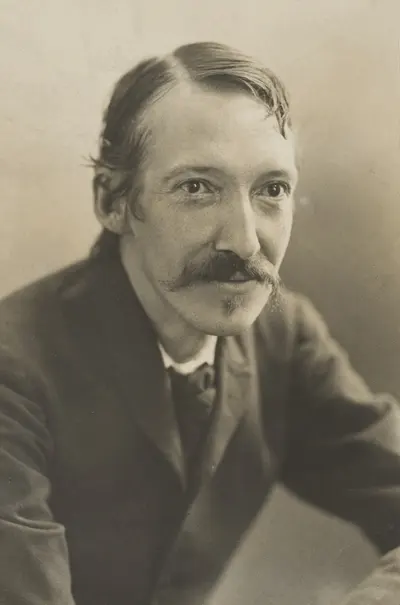
The poem has four short stanzas (groups of lines) of four lines each.
Stanza 1: the river. The child describes the river: its water is dark brown and its sand is golden. It flows on forever, with trees on both banks (on either hand means on both sides).
Stanza 2: the boats. Green leaves float on the water, and the foam (the white bubbles on moving water) piles up like little castles. Among them sail the child’s own boats. The child wonders: where will they all reach land?
Stanza 3: away they go. The river carries the boats on, past a mill (a building where grain is ground into flour, often by a water wheel), and away down the valley and down the hill.
Stanza 4: far away. A hundred miles or more down the river, the child imagines, other children, children they have never met, will find the boats and bring them ashore (onto the land).
So the poem is about imagination: a small boat on a river near home might travel to places the child will never see, and be found by children far away.
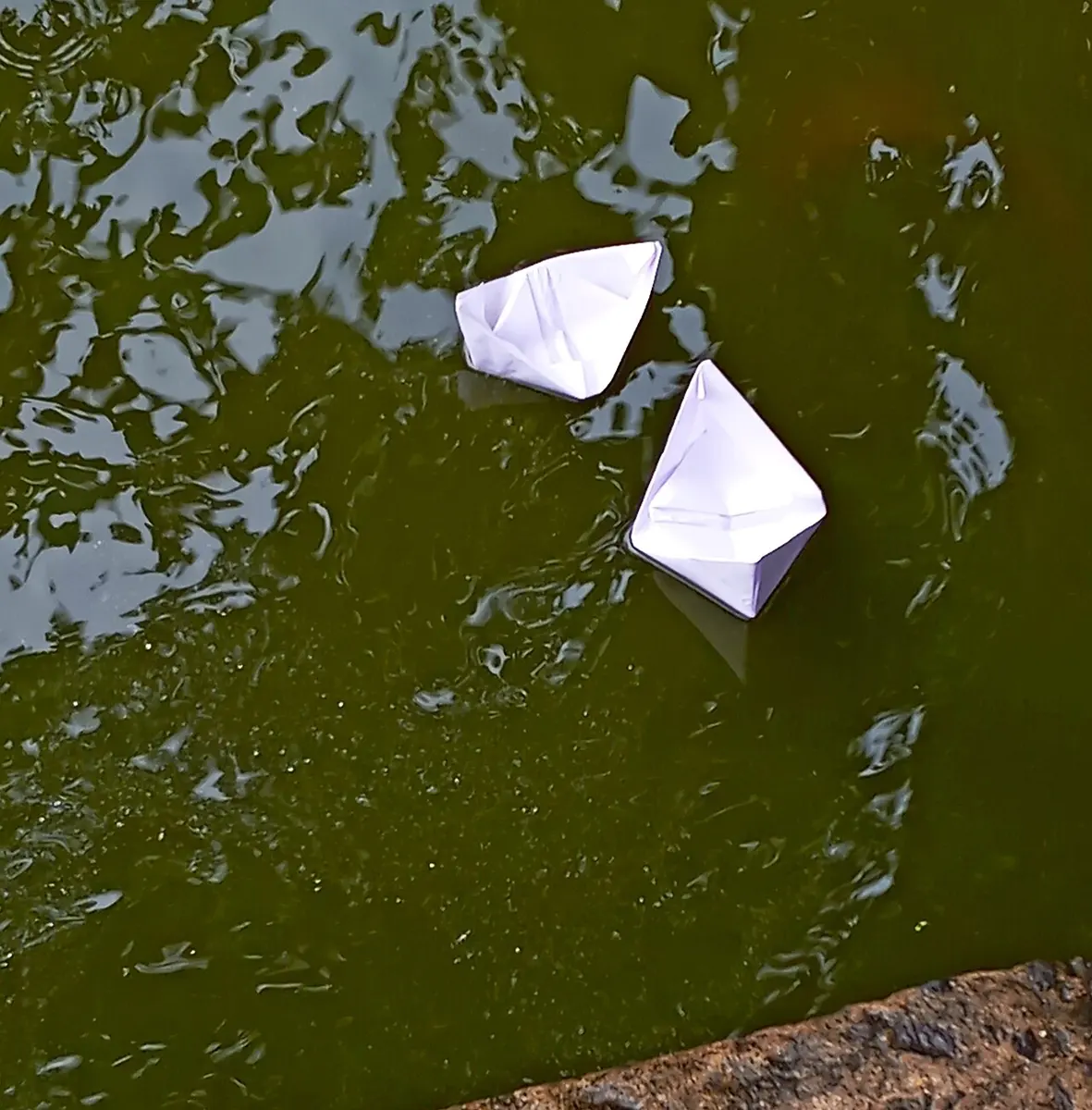
Words from the poem
| Word | Meaning |
|---|---|
| flow | to move along smoothly, like water |
| on either hand | on both sides |
| castle | a large, strong old building with thick walls, built to keep enemies out |
| foam | a mass of small white bubbles on moving water |
| mill | a building with a machine for grinding grain into flour |
| valley | low land between hills or mountains |
| ashore | onto the land from the water |
A. Rhyming words
Find the rhyming words from the poem for these words: band, drill, fever, dome, bore.
Answer
B. Find the words
Find the words from the poem which have the following meanings.
- a.a large old-fashioned building
- b.a lightweight form of rubber or plastic or wood used for traveling on water
- c.a low area of land between hills or mountains
Answer
C. Answer the questions
What is the color of the river and the sand?
Answer
Where are the trees?
Answer
Where is the boat floating?
Answer
Who shall bring the boat to shore?
Answer
Project work: Nelson Mandela
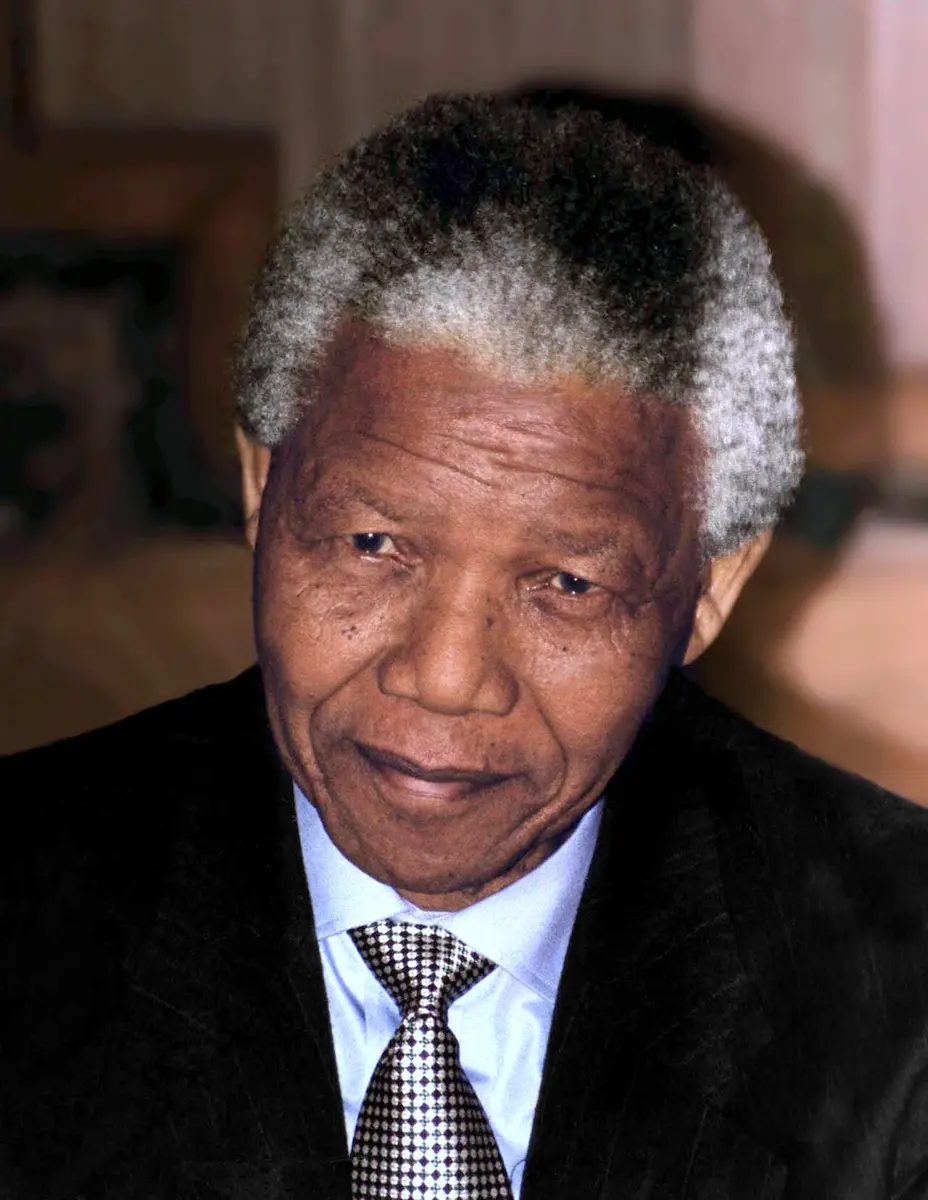
Notes for a biography are short: names, dates and places, not full sentences. Use the same headings you met in Unit 1’s notes on Bal Krishna Sama.
Extra bit: the full stop
The full stop (in American English, the period) is the simplest punctuation mark. It cuts your writing into sentences of the right length. Use it:
| Use a full stop | Examples |
|---|---|
| at the end of a statement | Rome is the capital of Italy. I was born in Sarlahi and now live in Kathmandu. |
| in some abbreviations (short forms) | between 6 a.m. and 7 a.m. · Dr. Karki is a physician. |
| between the whole number and the decimal | Rs. 10.50 (ten rupees and fifty paisa) · 14.17 (fourteen point one seven) |
| after one word that makes a sentence | Goodbye. Stop. Yes. |
A question ends with ?, and a strong feeling with !, not a full stop.
Which sentence uses full stops correctly?
Pick an answer to see why.
Exercise
Practice the whole unit. Try each one, then open the answer.
Ask for permission in each situation. Then write a polite answer that refuses, with a reason.
- a.You want to use your friend’s calculator.
- b.You want to go home early because you have a headache.
Answer
Change these statements into yes/no questions.
- a.Ujwal is good at chess.
- b.They can swim.
- c.Your sister works in a bank.
- d.The bus left at six.
Answer
Write short answers.
- a.Is Kathmandu the capital of Nepal? (yes)
- b.Do penguins live in Nepal? (no)
- c.Can a bird fly? (yes)
Answer
Put in the full stops.
Dr Shrestha opens her clinic at 8 am every day She sees about thirty patients a day
Answer
Write three rules for your school bus or the walk to school.
A model answer
Printable PDFs
- Study notes 2 pages
- Harder practice questions 2 pages Answer key
Practice every question in the book, and keep track of the ones you miss →
A companion to your textbook, not a replacement for it: study from the book your school uses, and where the two differ, follow your teacher. Found a mistake? Please tell us.