
Tear a page from a notebook and look closely at the torn edge, better still through a hand lens. You will see a fringe of tiny fibers sticking out, like the hairs on a frayed rope. That fringe is the whole secret of paper: it is a mat of plant fibers, laid down from water and dried, that hold on to each other. Paper was first made this way in China about two thousand years ago, from bark, hemp and rags, and Nepal has made it from the bark of the lokta bush for many centuries. Today a single paper machine can make a sheet ten meters wide at more than 100 kilometers an hour.
This unit is about how that happens: what fibers paper is made from and what else goes into it, how wood becomes pulp, how pulp becomes a sheet on a paper machine, and what makes one paper better than another.
20.1 Introduction
We use paper every day without thinking about it: the book we read, the notebook we write in, the box a parcel comes in. Paper is a thin, flexible sheet made by pressing together moist fibers, usually from wood or other plants, and drying them. At the heart of every sheet is pulp, the mass of separated plant fibers in water from which the sheet is formed.
Wood is the main raw material for pulp. Long fibers from softwood trees such as pine give paper its strength; short fibers from hardwood trees such as eucalyptus give it smoothness. To make paper-making more sustainable, non-wood fibers such as bamboo, cotton and straw, and recycled paper, are used too. Chemicals and additives are then mixed with the fibers to change the paper’s texture, toughness and brightness, making the many kinds of paper we use.
What a plant fiber is made of
A plant fiber is a single long, hollow cell, dead and empty, whose wall is built of three substances:
| Substance | Share of wood | What it is | In paper |
|---|---|---|---|
| Cellulose | 40–50% | long, straight chains of glucose units, packed side by side | the part we want: strong, white fibers |
| Hemicellulose | 20–30% | shorter, branched chains of several sugars | helps the fibers bond; some is kept |
| Lignin | 20–30% | a hard, brown, cross-linked network of aromatic rings | the glue that holds fibers together in wood; it yellows paper, so chemical pulping removes it |
The –OH groups are what make paper possible. When wet fibers are pressed together and dried, the –OH groups on one fiber form hydrogen bonds with those on its neighbors, billions of them, and the mat holds together without any glue. Wet a sheet again and water molecules push between the fibers and take over those hydrogen bonds: that is why wet paper tears so easily.
Why does dried paper hold together without glue?
Pick an answer to see why.
20.2 Raw materials and their sources
Pulp is the main raw material of paper: mostly cellulose fibers from wood, recycled paper or other plants. Besides pulp, a paper mill needs a great deal of water and many chemicals, which improve the paper and help the process. The raw materials are of two kinds:
- Fibrous raw materials give the fibers that form the sheet.
- Non-fibrous raw materials (fillers, sizing agents and other additives) improve its smoothness, brightness, strength and printability.
i. Fibrous raw materials
Pulp is obtained from the following.
- a.Softwood: conifers such as pine, spruce and fir. Their fibers are long (about 3–4 mm), so they give paper its strength.
- b.Hardwood: broad-leaved trees such as eucalyptus, poplar, birch and acacia. Their fibers are short (about 1 mm), so they give smoothness and printability: short fibers fill in the gaps and make an even surface.
- c.Bamboo: a fast-growing grass with long, strong fibers that give paper good strength.
- d.Bagasse: the crushed stalks left after the juice is pressed out of sugarcane, an agricultural waste that is a good source of fiber. The sugar mills of the Tarai burn most of theirs as fuel.
- e.Straw: farm residues of wheat, rice, barley and maize, with short cellulose fibers. Some grasses are also good sources of pulp: lemon grass, kush (कुश, Desmostachya bipinnata), babiyo (बाबियो, Eulaliopsis binata), reeds and siru (सिरु, Imperata cylindrica).
- f.Jute: long, strong, coarse fibers; less often used for paper.
- g.Cotton rags: long, strong and almost pure cellulose. They make high-quality and handmade paper. Sources: old clothes, factory offcuts, towels, bed linen, fabric scraps, blankets.
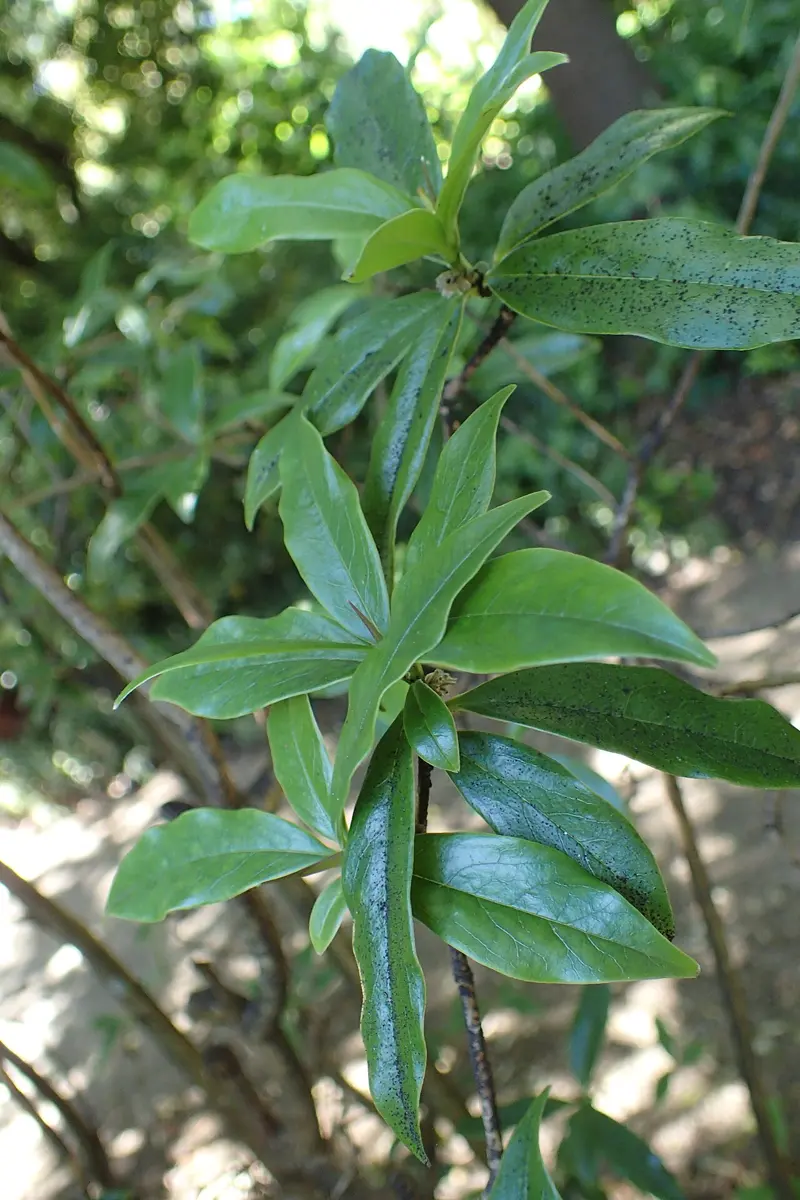
- h.Lokta: the strong, durable, flexible bast fibers (fibers from the inner bark) of the lokta bush, Daphne bholua and Daphne papyracea, which grows in the forests of Nepal’s hills. They make eco-friendly, strong and lasting handmade paper.
- i.Recycled paper: fibers already processed, recovered from used and waste paper. Each time paper is recycled its fibers get a little shorter, so they can be used only a few times (about five to seven) before they are too short to hold a sheet together; fresh fiber is mixed in.
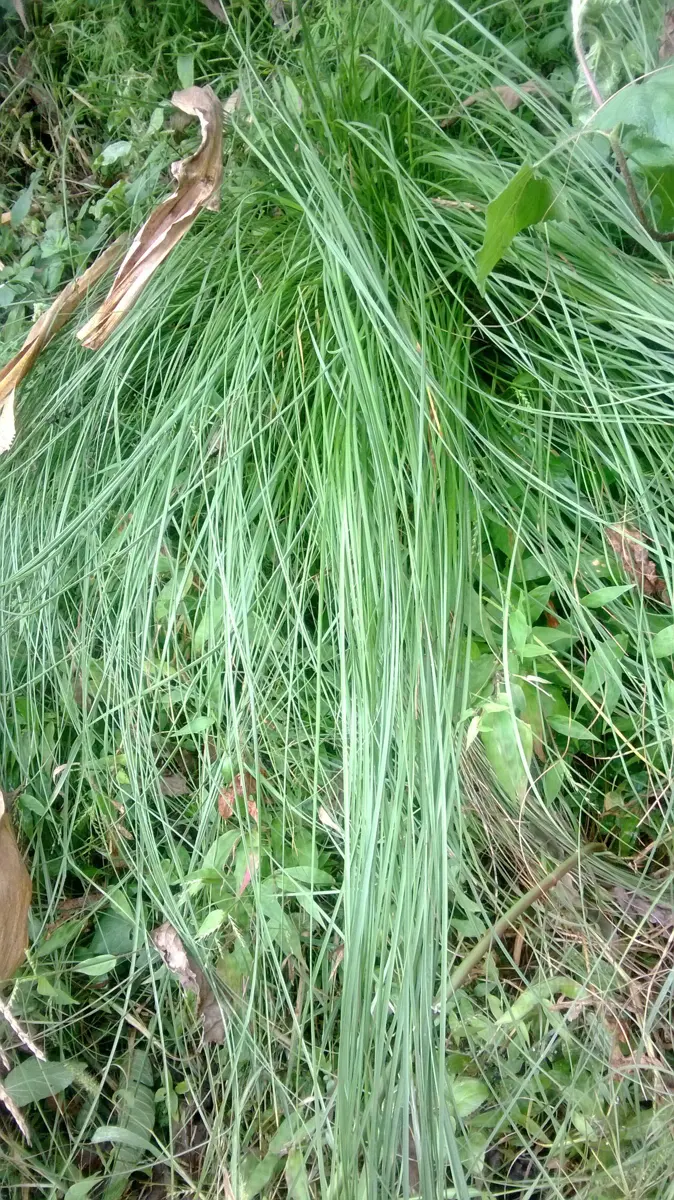
Most of these are cellulose fibers from different parts of a plant: the wood of a tree’s trunk (softwood, hardwood), the stem of a grass (bamboo, bagasse, straw, babiyo, kush), the inner bark (lokta, jute, hemp: bast fibers), the seed hairs (cotton), or the leaves (banana, sisal, abacá: leaf fibers). Banana stems and leaves are used for handmade paper too.
Which of these is a bast fiber?
Pick an answer to see why.
ii. Non-fibrous raw materials
These are mixed with the pulp during paper-making to give the paper the qualities it needs.
A. Inorganic raw materials
- a.Sodium hydroxide (NaOH): breaks down lignin and frees the cellulose fibers during pulping.
- b.Alum (aluminium sulphate, Al₂(SO₄)₃): used with rosin for sizing, and to control the pH.
- c.Kaolin (china clay): a filler that makes paper smoother and brighter.
- d.Calcium carbonate (CaCO₃, chalk): a filler that improves whiteness, opacity and brightness.
- e.Titanium dioxide (TiO₂): increases opacity and brightness in high-quality paper; very white, it scatters light strongly.
- f.Others: sodium sulphide (Na₂S), sodium carbonate (Na₂CO₃, soda ash), sodium sulphite (Na₂SO₃) and magnesium hydroxide (Mg(OH)₂) for pulping; hydrogen peroxide (H₂O₂), chlorine (Cl₂) and sodium hypochlorite (NaClO) for bleaching; talc as a filler.
B. Organic raw materials
- a.Starch: improves surface strength and printability.
- b.Rosin: a resin from pine trees; with alum it makes paper water-resistant, so ink doesn’t spread.
- c.Dyes and pigments: give color.
- d.Optical brightening agents (OBAs): make paper look whiter and brighter. They absorb invisible ultraviolet light and give it out as blue light, which hides the paper’s natural yellowish tint. Hold white office paper under a UV lamp and it glows blue.
- e.Synthetic binders: bond fibers and fillers together, for strength.
- f.Glycerol: a plasticizer that makes paper more flexible and soft and helps it hold moisture.
- g.Wax: makes paper water-resistant and gives a smooth, coated surface.
20.3 Stages in paper production
Making paper is a systematic process, from preparing the raw material to finishing the product. The stages are:
- Timber (raw material). Trees are felled and the logs carried to the paper mill.
- Debarking. Machines strip the outer bark from the logs, usually by tumbling them in a large rotating debarking drum, where they rub against each other. Bark has little fiber and contains dirt, sand and dark matter that would spoil the paper; it is burned as fuel in the mill’s boiler.
- Chipping and screening. A chipper (a heavy spinning disc with knives) cuts the debarked logs into chips of even size, about 2–3 cm. The chips are screened to remove pieces too big or too small to cook evenly.
- Pulping. The chips are turned into pulp, a soft, fibrous mass of separated fibers, by mechanical or chemical means (below).
- Bleaching, cleaning, additives and blending. The pulp is washed and cleaned of any remaining particles. It is bleached to make it whiter, and mixed with additives (fillers, dyes, sizing agents). Different pulps may be blended, long-fiber with short-fiber, to give paper the properties wanted.
- Forming, pressing and drying. The treated pulp is spread on a moving screen to form a thin, wet sheet. Water is removed by pressing, and the sheet is dried on steam-heated rollers.
- Final product (paper). The dried paper is pressed smooth, rolled, cut and packed, ready for writing, printing, packaging and much else.
Pulping: mechanical and chemical
There are two ways to free the fibers from wood.
Mechanical pulping grinds logs against a turning grindstone, or tears chips apart between ribbed metal discs, in plenty of water. Nothing is removed, the lignin included, so almost all the wood becomes pulp (a yield of about 90–95%). But the fibers are cut short and still coated with lignin, so the paper is weaker, and the lignin turns yellow in sunlight: an old newspaper left in the sun yellows within days. It is used where cheapness matters more than strength or long life: newsprint, cheap books, egg trays.
Chemical pulping cooks the chips in chemicals that dissolve the lignin and set the cellulose fibers free, whole and long. The most used is the kraft process (kraft is German for strength). The chips are cooked in a pressure vessel, the digester, at about 160–170 °C for a few hours in white liquor, a solution of sodium hydroxide and sodium sulphide:
The hydroxide and hydrogensulphide ions break the bonds that hold lignin together, and its broken pieces dissolve as sodium salts. Since about half the wood (the lignin and much of the hemicellulose) is dissolved, the yield is only about 45–50%, but the fibers are long, strong and easy to bleach. The dark solution left, black liquor, is not wasted: it is concentrated and burned in a recovery boiler. The dissolved lignin is the fuel, giving steam and electricity for the mill, and the sodium compounds collect as molten salts from which fresh white liquor is made. A modern kraft mill makes much of its own energy this way.
Bleaching. Even chemical pulp is light brown (unbleached kraft is the brown of paper bags and cardboard boxes) because of the lignin left in it. Bleaching removes or whitens it. Chlorine and sodium hypochlorite were long used, but they make harmful chlorinated compounds, including dioxins, in the mill’s waste water. Most mills now use chlorine dioxide (ClO₂, “elemental chlorine free”), oxygen, ozone or hydrogen peroxide (“totally chlorine free”). Mechanical pulp is brightened with hydrogen peroxide, which whitens the lignin without removing it.
A newspaper left in the sunlight turns yellow within days, but a good book doesn’t. Why?
Pick an answer to see why.
From pulp to paper: the paper machine
Before it reaches the machine, the pulp is beaten (refined) between ribbed discs. This frays the fibers’ surfaces into tiny fibrils, giving more surface to hydrogen-bond, so the paper is stronger. The fillers, sizing and dyes are mixed in, and the stock is diluted with water until it is about 99% water.
The machine that turns this into paper is the Fourdrinier machine, named after the London stationers who paid for its development in the early 1800s; the idea was the Frenchman Louis-Nicolas Robert’s, in 1799. A modern one is longer than a football field.
- The headbox sprays the stock as a thin, even jet onto the wire, a long, fine mesh belt moving at the same speed. Water drains through it, helped by suction boxes underneath, and the fibers settle on it as a wet mat, lying mostly along the direction of travel.
- The press section squeezes the sheet between rolls and felt blankets, which soak up more water.
- The dryer section passes the sheet over and under dozens of steam-heated iron cylinders, which evaporate most of the water left.
- The calender, a stack of polished rolls, presses the sheet smooth and even; it is then wound on the reel, to be cut into rolls and sheets.
Most of the water drains away on the wire, almost for free. The last kilogram or so for each kilogram of paper must be evaporated, and that takes most of the machine’s energy. This is why mills work so hard to press out every drop they can before the dryers.
20.4 Flow sheet diagram for paper production
The whole process, from tree to finished paper:
In a kraft mill, what happens to the black liquor?
Pick an answer to see why.
20.5 Quality of paper
Birth certificates and other official records in Nepal are often written on Nepali kagaj, handmade lokta paper. Why should a government office choose this paper over bright white office paper? Keep the question in mind as you read.
The quality of paper matters because it affects how readable, durable and attractive the printed material is. Good paper is needed for documents that must look professional: it prints clearly, lasts long and has a polished finish. Paper quality means the properties that decide how well a paper does its job: its finish, absorbency, strength, brightness, thickness and texture. High-quality paper suits important documents, publications, packaging and advertising because it gives clear printing, durability and a polished look.
The quality of paper depends on:
- The type of pulp: chemical pulp (long, clean fibers, little lignin) makes stronger, longer-lasting paper than mechanical pulp.
- Weight and thickness, measured as GSM, grams per square meter: newsprint is about 45 GSM, office and copier paper 70–80 GSM, a postcard or file cover 200–300 GSM.
- Surface finish: glossy, matte, coated or uncoated. A coated paper has a thin layer of clay or calcium carbonate with a binder on its surface, which gives the sharp, glossy pictures of a magazine.
- Brightness and whiteness: from bleaching, fillers and optical brighteners.
- Sizing: decides how much ink the paper soaks up and how strong its surface is. Unsized paper (blotting paper, tissue) soaks ink up and lets it spread.
From these properties, paper is sorted into grades:
- Premium (high-quality) paper: certificates, résumés, brochures, magazines.
- Standard-quality paper: office printing and everyday use: books, novels, workbooks, writing sheets.
- Low-quality paper: newspapers, short-lived printing, flyers.
- Specialty paper: made for hygiene, wrapping or decoration rather than printing, such as tissue paper and wrapping paper.
- Nepali paper (lokta paper): a durable handmade paper of Nepal, used by government offices and for journals, crafts, packaging and traditional documents.
Lokta paper
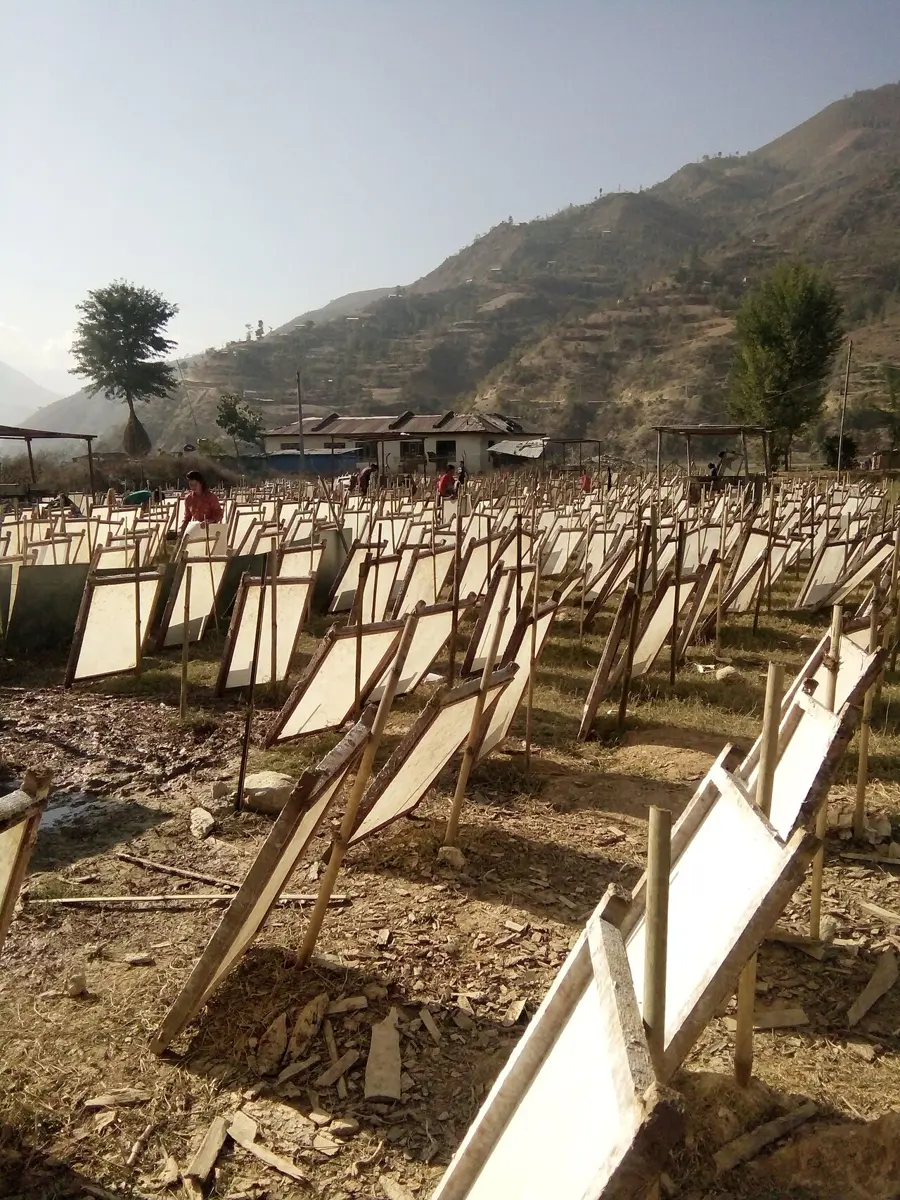
Lokta paper is made by hand, as it has been for centuries. Lokta bushes are cut near the ground and grow back from the root, so the same plants can be harvested again after a few years. The inner bark is stripped, soaked and boiled in an alkali, traditionally lye from wood ash and now often caustic soda or soda ash, which softens it and dissolves the lignin and other matter, just as the digester does with wood chips. The cooked bark is cleaned of dark specks by hand and beaten with wooden mallets for hours into a pulp. The pulp is stirred into water in a frame with a cloth bottom floating in a tank, spread evenly by hand, lifted out, and the frame is propped up in the sun until the sheet dries.
Why is lokta paper chosen for keeping official records?
Pick an answer to see why.
Exercise
A. Multiple choice questions
- Which of the following is the primary raw material for paper production?
Pick an answer to see why.
- What is the purpose of the pulping process in paper production?
Pick an answer to see why.
- Which type of paper is commonly used for writing and copying in schools and offices?
Pick an answer to see why.
- Which process is used to make paper brighter (whiter)?
Pick an answer to see why.
- What is the final step in paper production?
Pick an answer to see why.
- What type of paper is used for magazines and brochures?
Pick an answer to see why.
- Which of the following is not commonly used as a raw material for making paper?
Pick an answer to see why.
- Which part of a tree is mainly used for paper production?
Pick an answer to see why.
- Which of the following is a non-wood material used for paper production?
Pick an answer to see why.
- Which fiber is commonly used for making high-quality paper?
Pick an answer to see why.
B. Short answer questions
Give reasons:
- a.Softwood is preferred over hardwood in paper production.
- b.Lokta paper is preferred for keeping official records.
Answer
What are the raw materials of paper production?
Answer
Explain the qualities of paper.
Answer
What are the fibrous raw materials used for making paper?
Answer
Differentiate between:
- a.paper and pulp
- b.mechanical pulping and chemical pulping
Answer
What are the non-fibrous raw materials of paper and pulp?
Answer
What are the stages in the industrial production of paper?
Answer
Give a flow sheet diagram for paper production.
Answer
C. Long answer questions
Describe the stages in the manufacture of paper. Draw a flow sheet diagram showing the different stages of paper production.
Hint
Answer
Write a note on raw materials for pulp and the qualities of paper.
Answer
Printable PDFs
- Study notes 2 pages
- Worksheet 5 pages Answer key
Quiz yourself: Materials and Chemicals We Use, Grades 5–12 →
Practice every question in the book, and keep track of the ones you miss →
A companion to your textbook, not a replacement for it: study from the book your school uses, and where the two differ, follow your teacher. Found a mistake? Please tell us.