
A tea bush in Ilam would grow into a small tree several meters tall if it were left alone. The pickers keep it waist-high and bushy by taking “two leaves and a bud” from every shoot tip, again and again, and each time they do, the buds lower down wake up and branch. Nothing has touched those lower buds. They were being held back by a chemical message from the tip, and when the tip goes, the message stops.
Plants have no brain and no nerves, but their parts talk to each other all the time, with small amounts of chemicals made in one place and acting in another. These are the plant hormones. They decide when a seed sprouts, which way a shoot grows, when a fruit sets, ripens and falls, and when a leaf grows old. Farmers and gardeners use them, and their man-made copies, every day.
2.4.1 Introduction
Plant growth regulators, or phytohormones, are organic substances produced naturally in higher plants, which control growth or other physiological functions at a site away from where they are made, and are active in very small amounts. The word phytohormone (Greek phyton, plant) was proposed by Kenneth Thimann in 1948 for hormones made by plants. Plant growth regulators include auxins, gibberellins, cytokinins, ethylene, growth retardants (which slow stem growth, used to keep plants short) and growth inhibitors (such as abscisic acid). Auxins were the first plant hormones discovered; gibberellins and cytokinins followed.
Several words are used for these substances, and they mean slightly different things:
- A hormone is a compound made inside the organism (endogenous) at one site and carried to another, where it has a physiological effect at a very low concentration. Ethylene doesn’t fit this definition well: it is a gas, and it mostly acts at or near the place where it is made. It is still counted among the plant hormones.
- Plant growth regulators are organic compounds, other than nutrients, that change the physiological processes of growth and development when applied in low concentrations. The term covers natural and synthetic compounds, including those sprayed on a crop to change its life processes or its structure: to improve its quality, raise its yield or make it easier to harvest.
- A plant hormone, used strictly, means only the naturally occurring substances. The classic five classes are auxins, gibberellins, cytokinins, abscisic acid and ethylene. (Brassinosteroids, jasmonates, salicylic acid and strigolactones have been added since.) So every plant hormone is a plant growth regulator, but not every growth regulator (2,4-D, for example) is a hormone.
Why their action is hard to pin down
How plant hormones act at the molecular level is still being worked out, because:
- each hormone produces a great variety of responses;
- the responses to different hormones are often similar (both auxin and gibberellin make stems longer);
- the response varies with the variety of the plant;
- even one variety responds differently depending on its age, its surroundings, its state of development (especially its own hormone content) and its nutrition, so every general rule about a regulator has exceptions;
- for each class of hormone several modes of action have been proposed, with arguments for and against each.
(Since the 1990s the receptors for most plant hormones have been found: the receptor for auxin, TIR1, was identified in 2005, and for gibberellin, GID1, the same year. Most of them work by switching on genes, often by getting rid of a protein that was keeping those genes switched off.)
The hormone groups
| Group | What defines it | Main effect |
|---|---|---|
| Auxins | substances resembling indole-3-acetic acid (IAA), able to make coleoptiles grow longer | cell elongation in shoots |
| Gibberellins | diterpenoids (20-carbon), able to make the stems of seedlings grow long, especially dwarf and rosette kinds | stem elongation |
| Cytokinins | usually substituted adenines, resembling zeatin (the natural cytokinin of maize, Zea mays), able to make tobacco cells in culture divide (cytokinesis) | cell division |
| Ethylene | a gas, C₂H₄; in the shoots of dicot seedlings it makes them grow thicker (diametric growth) instead of longer | ripening, abscission |
| Abscisic acid | a 15-carbon terpenoid | dormancy, closing stomata |
Why is ethylene an awkward fit for the classical definition of a hormone?
Pick an answer to see why.
2.4.2 Auxins
Auxins (Greek auxein, to grow) are a group of hormones made mainly in the tips of shoots (the apical bud and young leaves), and also in root tips, which move from the tip to the zone of elongation and make the plant grow along its length. The name was introduced by Kögl and Haagen-Smit in 1931, when they extracted auxin from human urine.
Went’s Avena coleoptile curvature test
A grass seedling first pushes up a hollow, pointed sheath, the coleoptile, which protects the first leaf. Charles and Francis Darwin found in 1880 that a coleoptile lit from one side bends towards the light only if its tip is there; something made in the tip travels down. In 1926–1928, the Dutch botanist Frits Went collected that “something” from the coleoptiles of oat, Avena sativa:
- He cut off the tips of oat coleoptiles and stood them on a small block of agar (a jelly) for an hour or two. The substance diffused out of the tips into the agar.
- He cut the tip off another coleoptile and placed the agar block on one side of the cut stump, in the dark.
- The stump bent away from the side with the block: the cells under the block grew faster than those on the other side. A plain agar block, never touched by a tip, caused no bending.
- The angle of bending grew with the amount of the substance in the block, so the test could measure how much auxin a block held. This is the Avena curvature test, the first bioassay for a plant hormone.
Went concluded that a growth substance made in the tip moves down and makes the cells below it grow longer: “no growth without growth substance”.
Kinds of auxin
Auxins are found all through the plant, but are most plentiful in growing tips: the coleoptile tip, buds, root tips and young leaves. The main natural auxin, in every plant, is indole-3-acetic acid (IAA), made from the amino acid tryptophan. (A few others occur naturally in some plants, such as 4-chloro-IAA in peas, phenylacetic acid (PAA) and indole-3-butyric acid, but IAA is by far the most important; an exam that asks for “the natural auxin” means IAA.)
Chemists have made many synthetic auxins, which act like IAA but last longer in the plant, because its enzymes can’t break them down:
| Short name | Full name | Used for |
|---|---|---|
| IBA | indole-3-butyric acid | rooting cuttings |
| NAA | naphthalene acetic acid | rooting, preventing fruit drop |
| MENA | methyl ester of naphthalene acetic acid | stopping potatoes sprouting in store |
| MCPA | 2-methyl-4-chlorophenoxyacetic acid | weedkiller |
| 2,4-D | 2,4-dichlorophenoxyacetic acid | weedkiller |
| 2,4,5-T | 2,4,5-trichlorophenoxyacetic acid | weedkiller (now banned) |
TIBA (2,3,5-triiodobenzoic acid), often listed with them, works the other way: it blocks the movement of auxin, so it is an anti-auxin.
Natural auxins occur in two forms. Free auxins move or diffuse out of plant tissues readily. Bound auxins are attached to sugars or amino acids and are released only after hydrolysis, autolysis or enzyme action: a store the plant can draw on.
Auxin moves through the stem in one direction, from the shoot tip downwards towards the base (basipetal or polar transport), cell to cell, carried out of the lower end of each cell by special carrier proteins. That is why a stem cutting forms roots at its lower end, even if it is planted upside down.
In Went’s test, a decapitated coleoptile bends away from the side on which the agar block sits. Why?
Pick an answer to see why.
Physiological effects of auxin
1. Cell elongation and division. The main effect of auxin is to make the cells of shoots grow longer. It loosens the cell wall (by making the wall acid, so that wall-loosening proteins work), and the cell takes in water and stretches. Auxin also starts cell division in the cambium, so it is important in secondary growth of the stem and in the differentiation of xylem and phloem.
2. Apical dominance. In many plants, as long as the apical bud (terminal bud) is present and growing, the lateral buds just below it stay suppressed. Remove the apical bud and the lateral buds grow quickly into branches. This control of the lateral buds by the apical bud is apical dominance. Auxin flowing down from the apex keeps the lateral buds dormant; put auxin paste on the cut stump, and the lateral buds stay dormant even without the apex. Gardeners pinch out shoot tips to make plants bushy, and the hedges, tea bushes and potted chrysanthemums of Nepal are kept dense this way.
You may have tried this in Grade 9 Science, Activity 5.1: with its tip, a plant grows taller and its side buds stay small; with the tip pinched off, the buds below the cut grow into branches.
3. Root initiation. In stems, auxin promotes growth; in roots it works at much lower concentrations, and a higher concentration inhibits the elongation of the root. But auxin greatly increases the number of lateral roots and roots formed on stems. Put IAA in lanolin paste (a soft fat from sheep’s wool, a good solvent for auxin) on the cut end of a young stem, and it roots early and heavily. This is used to propagate plants by cuttings: rooting powders of IBA or NAA are sold to nurseries for roses, hibiscus, grapes and many others.
4. Prevention of abscission. Abscission is the shedding of leaves, flowers or fruits before or when they mature. Natural auxin made by a healthy leaf or fruit prevents the abscission layer from forming at the base of its stalk. When auxin falls (an old leaf, an unfertilized flower), the stalk drops. So spraying NAA or 2,4-D at low strength stops the premature drop of apples, oranges and mangoes before harvest.
5. Parthenocarpy. Auxin can make parthenocarpic fruits: fruits that form without pollination and fertilization, and so have no seeds. Normally, pollination and fertilization raise the auxin in the ovary (the developing seeds make it), and the ovary grows into a fruit. In plants that naturally set fruit without seeds, the ovary already holds a higher concentration of auxin. Spraying auxin on flowers of tomato, cucumber and brinjal gives seedless fruits.
6. Respiration. Auxin stimulates respiration, and the faster growth it causes goes with faster respiration. It may raise the rate indirectly: the expanding cells use ATP fast, which supplies more ADP, and more ADP speeds respiration up.
7. Callus formation. Besides elongation, auxin makes cells divide. In tissue culture, a lump of undifferentiated dividing cells, a callus, keeps growing only when auxin is added to the medium (with a cytokinin; see 2.4.4).
8. Killing weeds. At high concentrations, synthetic auxins such as 2,4-D and 2,4,5-T are weedkillers (herbicides). They make broad-leaved plants grow wildly and die, while cereals and grasses (monocots) are much less affected, so 2,4-D can clear the weeds from a field of wheat or rice.
9. Flowering and sex expression. Auxins generally inhibit flowering, but in pineapple they promote uniform flowering: growers spray NAA so that a whole field flowers, and fruits, at once. (Auxin works there by making the plant produce ethylene, and ethylene-releasing sprays are used for the same job today.) In cucurbits such as cucumber, auxin makes the plant form more female flowers.
A gardener removes the apical bud of a plant to make it bushier. Which hormone’s effect is she interrupting?
Pick an answer to see why.
2.4.3 Gibberellins
In Japanese rice fields, farmers had long known a disease they called bakanae, “foolish seedling”: infected seedlings grow very tall and thin, pale and weak, fall over and give no grain. In 1926 the Japanese scientist Eiichi Kurosawa showed that the disease is caused by a substance made by the fungus Gibberella fujikuroi: a filtrate of the fungus, with no fungus in it, made healthy seedlings grow the same way. In 1935 the Japanese chemist Teijiro Yabuta named the substance gibberellin, after the fungus, and in 1938 he and Yusuke Sumiki obtained it as crystals. After the Second World War, scientists found gibberellins in healthy plants too: the fungus had been making a plant hormone, and making too much of it.
More than 130 gibberellins are now known, named GA₁, GA₂, GA₃ and so on, in the order of discovery; only a few are active themselves. Gibberellic acid, GA₃, made by the fungus, is the one sold for farm use.
Biosynthesis of gibberellins in plants
Gibberellins are diterpenoids, built from 5-carbon units. The classic route starts from acetate:
The 5-carbon unit, isopentenyl pyrophosphate, is joined to more of itself: two make geranyl pyrophosphate, and four make geranylgeranyl pyrophosphate, which folds into rings (through ent-copalyl diphosphate) as ent-kaurene: these ring-closing steps, in the plastids, are the first that lead only to gibberellins. ent-Kaurene is then oxidized step by step into the gibberellins. (In green plants most of the isopentenyl pyrophosphate for gibberellins is now known to be made in the plastids by a second route, not from mevalonic acid; but the steps from it to gibberellin are the same.)
Distribution of gibberellins in plants
Gibberellins are found in all parts of higher plants: shoots, roots, leaves, flowers, petals, anthers and seeds. In general the reproductive parts hold far more of them than the vegetative parts, and immature seeds are especially rich, richer than any other part of the plant. In plants they occur in two forms: free gibberellins and bound gibberellins, usually as gibberellin glycosides (joined to a sugar).
Physiological effects of gibberellins
1. Seed germination. Some light-sensitive seeds, such as lettuce and tobacco, germinate poorly in the dark; they germinate well if exposed to light, or red light. Gibberellic acid given in the dark replaces that need for light, and they germinate.
2. Dormancy of buds. In temperate regions, buds formed in autumn stay dormant through the winter until spring. Gibberellin treatment can break this dormancy. Potato tubers, too, have a dormant period after harvest; gibberellin makes them sprout vigorously, which is used to grow two potato crops in a year.
3. Root growth. Gibberellins have little or no effect on root growth; at high concentrations they may slightly inhibit it. They markedly inhibit the formation of roots on cuttings.
4. Elongation of internodes. The most striking effect of gibberellins is that they make the internodes grow much longer. Genetic dwarfs of pea and maize, which are short because they can’t make enough gibberellin, grow to normal height when sprayed with it: gibberellin overcomes genetic dwarfism.
5. Bolting and flowering. Many herbaceous plants (cabbage, lettuce, radish, henbane) first grow as a rosette: a very short stem with leaves crowded round it at ground level. Under short days they stay rosettes; under long days (or after a cold winter) the stem shoots up rapidly into a tall flowering axis bearing flower primordia. This sudden elongation is bolting. Gibberellin applied to the rosette makes it bolt, and flower, even under short days that would not normally allow it. In henbane, Hyoscyamus niger, a long-day plant, gibberellin causes bolting and flowering under non-inductive short days. In long-day plants generally, gibberellin hastens flowering; in short-day plants its effect varies: none, a delay, or a hastening.
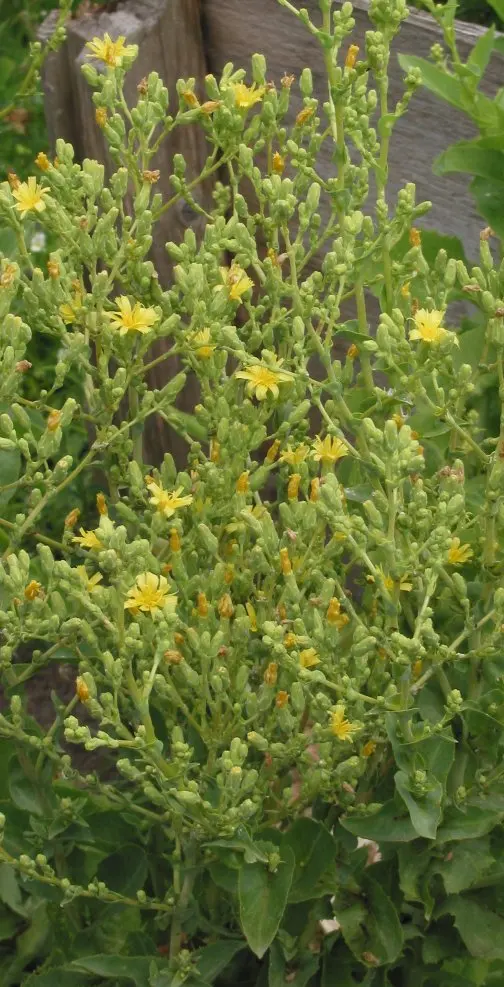
6. Parthenocarpy and fruit growth. Gibberellins stimulate the germination of pollen grains, the growth of fruits and the formation of parthenocarpic (seedless) fruits. In pome fruits (apple, pear) and stone fruits (peach, cherry), where auxins fail to give parthenocarpy, gibberellins succeed. Grape growers spray gibberellin to make the berries of seedless grapes larger and their bunches looser, and it is used to give seedless, fleshy tomatoes.
7. Synthesis of α-amylase. In a germinating cereal grain (barley, wheat, rice, maize), the embryo releases gibberellin, which diffuses to the aleurone layer, the protein-rich layer of cells just under the grain’s coat. The gibberellin switches on the genes for α-amylase (and other digestive enzymes) in the aleurone cells. The α-amylase pours into the endosperm and hydrolyzes its starch to sugars, which are carried to the growing embryo as its source of energy. Breweries use this: barley sprayed with gibberellin makes malt faster.
Maize grain: traced from Sarah Greenwood, CC BY-SA 4.0 (this drawing CC BY-SA 4.0 too)
A dwarf pea plant grows to normal height when sprayed with gibberellin. What does this tell you about why it was a dwarf?
Pick an answer to see why.
2.4.4 Cytokinins (kinetin)
In the 1950s Folke Skoog, Carlos Miller and their colleagues at the University of Wisconsin were trying to make pieces of tobacco pith grow in culture. The cells grew bigger but wouldn’t divide, until they added an old, heated sample of DNA from herring sperm. In 1955 they isolated the active substance from it and identified it as 6-furfurylaminopurine. Because it made cells undergo cytokinesis (cell division), they called it kinetin. Kinetin itself forms mainly when DNA breaks down (traces of it have been found in cells), and it is not one of the plant’s own main hormones, but plants make many substances that act like it, and the whole group was named cytokinins. They are purine derivatives: adenine with a side chain on its nitrogen atom at position 6.
Besides causing cell division, cytokinins regulate growth in many other ways, so they are natural plant growth hormones. The first natural one found was zeatin, isolated from immature grains of maize (Zea mays) by David Letham in 1963. The coconut milk factor, which made coconut water so good at feeding plant cells in culture, turned out to be mainly cytokinins. Cytokinins are also found as part of some tRNA molecules, next to the anticodon.
Naturally occurring cytokinins
Cytokinins can be extracted from many plant parts, especially where cells are dividing: coconut milk (the liquid endosperm of coconut), tomato juice, flowers and fruits of apple; fruits of pear, plum and tomato (Lycopersicon esculentum); the cambium of pine (Pinus radiata), Eucalyptus regnans and tobacco (Nicotiana tabacum); immature fruits of maize, walnut (Juglans) and banana (Musa); the female gametophytes of Ginkgo biloba; the fruitlets, embryos and endosperm of peach (Prunus persica); seedlings of pea (Pisum sativum); root exudates of sunflower (Helianthus annuus); and tobacco tumor tissue. By 1970 (Skoog and Armstrong) at least seven well-established natural cytokinins had been reported from plants; zeatin, its relatives and isopentenyladenine are the commonest.
Biosynthesis
Cytokinins are made from adenine nucleotides, joined to a 5-carbon (isopentenyl) side chain, by a pathway related to that of the purines of nucleic acids. The root tips are the main site, and developing seeds and the cambium make them too. From the roots they move up in the xylem sap to the shoot (Kende, 1965); they can also move downwards (basipetally) in leaf stalks and isolated stems. Auxin increases the movement of kinetin in bean stems (Seth and colleagues, 1966).
Physiological effects of cytokinins
1. Cell division. The most important effect of cytokinins is to make cells divide, especially in tissue cultures: tobacco pith callus, carrot root tissue, soybean cotyledons and pea callus. They do it together with auxin.
2. Cell enlargement. Like auxins and gibberellins, cytokinins can make cells enlarge: in the leaves of French bean (Phaseolus vulgaris), pumpkin cotyledons, tobacco pith cultures and the cortex of tobacco roots.
3. Counteracting apical dominance. Cytokinin applied to a lateral bud makes it grow, even while the apical bud is present. So cytokinin counteracts apical dominance: the balance between auxin from the tip and cytokinin from the roots decides whether a lateral bud grows.
4. Breaking seed dormancy. Like gibberellins, cytokinins (kinetin) can break the dormancy of light-sensitive seeds such as lettuce and tobacco.
5. Delaying senescence (the Richmond–Lang effect). As a leaf grows old (senescence), it loses its chlorophyll and breaks down its proteins, and it turns yellow. In 1957 Richmond and Lang found that kinetin put on detached leaves of cocklebur, Xanthium, kept them green for days longer than untreated leaves: it keeps up the making of RNA and proteins. Put kinetin on one spot of a detached leaf, and that spot stays green while the rest yellows, because nutrients are drawn towards it. This is the Richmond–Lang effect.
6. Flower induction. Cytokinins can make some short-day plants flower.
7. Morphogenesis. In tissue culture, the ratio of auxin to cytokinin decides what a callus becomes. High auxin and low cytokinin gives roots; high cytokinin and low auxin gives shoot buds; about equal amounts keep the callus growing as an undifferentiated mass. Skoog and Miller showed this with tobacco callus in 1957. It is the basis of plant tissue culture: from a few cells, a lab can grow thousands of identical plantlets, first moving the callus to a medium rich in cytokinin to make shoots, then to one rich in auxin to root them.
8. Accumulation and translocation of solutes. Cytokinins make tissues draw in and hold solutes actively, and help move solutes in the phloem towards the treated part (as in the green spot of the Richmond–Lang effect).
9. Protein synthesis. Kinetin raises the rate of protein synthesis in leaves (shown by Daphne Osborne in 1962).
10. Other effects. In some plants cytokinins give resistance to high temperature, cold and diseases. They can replace the day-length requirement for flowering in some plants, and they switch on the making of several enzymes of photosynthesis.
11. Commercial applications. Cytokinins are used to lengthen the shelf life of cut flowers, leafy vegetables and fruits (they stay green longer), to start shoots in tissue culture and help root systems form, and to raise the yield (and the oil content) of crops such as groundnut.
In a tissue culture, a callus is growing well but forming no organs. Which change to the medium would make it form shoot buds?
Pick an answer to see why.
Ethylene and abscisic acid
The unit’s exercises ask about two more hormones of the classic five. In short:
Ethylene (C₂H₄) is a gas made by almost all parts of a plant, most by ripening fruits, aging flowers and leaves, and wounded tissue. It ripens fruits: a ripening banana or apple gives off ethylene, which ripens the fruits round it, so unripe mangoes kept in a closed box with a ripe one soften faster. Traders ripen bananas in rooms filled with ethylene; calcium carbide, which gives off acetylene, is used illegally to ripen fruit in many countries and leaves harmful traces. Ethylene also causes the abscission of leaves and fruits, the fading of flowers, and the triple response of a seedling pushing up through soil (shorter, thicker stem, bent tip). The farm chemical ethephon releases ethylene inside the plant.
Abscisic acid (ABA) is a “stress hormone”. When a plant runs short of water, its roots and leaves make ABA, which makes the guard cells lose water and close the stomata within minutes. ABA also keeps seeds and buds dormant and stops seeds sprouting while still in the fruit; it works against gibberellin in germination. It was named for causing abscission in cotton fruits, but ethylene is the main cause of abscission.
Exercise
A. Tick the correct alternatives
- Which of the following is a naturally occurring auxin in plants?
Pick an answer to see why.
- What is the primary site of auxin production in plants?
Pick an answer to see why.
- A gardener removes the apical bud of a plant to encourage bushier growth. Which plant hormone’s effect is being interrupted by this practice?
Pick an answer to see why.
- Which of the following plant parts generally contains the highest concentration of gibberellins?
Pick an answer to see why.
- Which of the following is a physiological effect of cytokinin?
Pick an answer to see why.
- Which of the following best describes the relationship between kinetin and cell division?
Pick an answer to see why.
- Apical dominance is strong and the lateral buds are suppressed. Which combination of hormones would best promote lateral bud growth?
Pick an answer to see why.
B. Answer the following questions
What is a phytohormone?
Answer
Explain the physiological roles of auxin.
Answer
Describe the physiological roles of gibberellin.
Answer
Mention the roles of cytokinin in plant physiology.
Answer
You are working in a plant tissue culture lab. The callus growth in a culture medium suddenly stops. Which hormones would you consider adding to the medium to promote further growth, and why?
Answer
A plant shows premature dropping of fruits during the windy season. Which plant growth regulator would you recommend to prevent this? Explain the mechanism.
Answer
Discuss the commercial applications of cytokinins in agriculture, and how they improve crop quality or yield.
Answer
Printable PDFs
- Study notes 3 pages
- Worksheet 4 pages Answer key
Quiz yourself: Life Processes and the Human Body, Grades 5–12 →
Practice every question in the book, and keep track of the ones you miss →
A companion to your textbook, not a replacement for it: study from the book your school uses, and where the two differ, follow your teacher. Found a mistake? Please tell us.