
Pilgrims to Muktinath pick up shaligrams from the bed of the Kali Gandaki: smooth black stones, many of them marked with a coiled spiral. They are ammonites, sea animals related to today’s squid and octopus, that lived in the Tethys Sea in the Jurassic period, about 150 million years ago, and were buried in the mud of its floor. That mud is now rock, high in Mustang, lifted there as India pushed into Asia. No ammonite lives anywhere today.
How can a stone be an animal, how do we know how old it is, and what does it tell us about the animals alive now? This unit is about the evidence: what bones, rocks, embryos and molecules tell us about how living things have changed.
7.2.1 Concept of organic evolution
The word evolution comes from the Latin evolvere, “to unroll”: a gradual, orderly change from one state to another. Organic evolution is the change in the inherited characters of groups of living things over many generations, by which new species arise from earlier ones. Charles Darwin called it descent with modification: all living things are descended from earlier ones, and have changed on the way.
Two points matter from the start.
- Evolution happens to populations, not to individuals. A giraffe can’t evolve a longer neck in its lifetime; what changes is the mix of neck lengths among the giraffes born in each generation.
- It is slow, continuous and, as a rule, not reversible: a lineage that has lost a structure (the snake’s legs, our tail) doesn’t get the same structure back, because the genes that built it have changed or decayed.
Over the history of life, simple organisms gave rise to more complex ones as the Earth’s environments changed, and many lines branched and spread into new ways of life. Charles Darwin (1809–1882) is called the father of organic evolution: his On the Origin of Species (1859) gave the evidence and a cause, natural selection (Unit 20). The word “evolution” in this sense was made popular by the English philosopher Herbert Spencer.
Patterns of evolution
Evolution doesn’t happen in only one way. Biologists name its patterns by scale (small or large) and by the shape of the family tree it makes.
a. Microevolution: small changes in the frequencies of genes (alleles) within a population over a few generations, by natural selection, genetic drift, mutation and migration (Unit 20). It can be watched happening: the peppered moths of England turned mostly black within about 50 years as the trees they rested on were blackened by soot; bacteria become resistant to an antibiotic within months.
b. Macroevolution: large-scale change above the level of the species, over long times: the formation of new species, genera and larger groups, by speciation and adaptive radiation. For example, the finches of the Galápagos Islands, which came from one ancestor that reached the islands from South America, are now well over a dozen species with beaks of different shapes for seeds, insects and cactus flowers. Macroevolution is microevolution added up over millions of years.
c. Progressive evolution: a trend from simple to complex. Among vertebrates, for example, the heart went from two chambers in fishes to three in amphibians and four in birds and mammals, and the brain grew larger and more folded.
d. Retrogressive evolution: a trend from complex to simple, when a lineage loses structures its way of life no longer needs. The tapeworm, living in the gut where its food is already digested, has lost its mouth and gut altogether; snakes, descended from lizards with four legs, have lost their legs (pythons still carry tiny hind-limb bones); and the sea squirt Herdmania begins life as a swimming tadpole-like larva with a notochord, a nerve cord and a tail, then settles on a rock and loses all three.
e. Convergent evolution: unrelated organisms, living in the same way, evolve similar characters independently. A shark (a fish), the extinct Ichthyosaurus (a reptile) and a dolphin (a mammal) all evolved the same streamlined, spindle-shaped (fusiform) body with a fin on the back, because that shape slips best through water. Their similarity is analogy, not kinship.
f. Divergent evolution: one ancestral group branches into many forms, each fitted to a different way of life. When it happens quickly, filling many empty niches, it is called adaptive radiation. The cichlid fishes of Lake Malawi and Lake Victoria in Africa are a famous case: from a few ancestors arose hundreds of species, with jaws and teeth for scraping algae, crushing snails, eating fish or even plucking the scales off other fish. The forelimbs of mammals, reshaped into arms, legs, wings and flippers, are divergence too: they are homologous.
g. Parallel evolution: two related lineages, after they have separated from a common ancestor, evolve the same characters independently, in parallel. The marsupial mammals of Australia and the placental mammals of the other continents, both descended from early mammals, each produced burrowers, gliders, ant-eaters and wolf-like hunters: the marsupial “Tasmanian wolf” (thylacine) looked strikingly like a real wolf.
Bats, birds and insects all have wings, but their wings evolved separately. This is an example of:
Pick an answer to see why.
A tapeworm has no mouth and no gut, though its ancestors had both. Its line shows:
Pick an answer to see why.
7.2.2 Evidences of organic evolution
Nobody saw the first horse or the first bird. Evolution over millions of years is known the way a detective knows what happened in an empty room: from many independent clues that all point the same way. The evidence comes from morphology and anatomy (the form and structure of bodies), paleontology (fossils) and geology (the rocks they are in), embryology (how bodies develop), biogeography (where living things are found), and biochemistry and genetics (the molecules of life). This unit takes four of them:
- i.Evidences from morphology, comparative anatomy and vestigial organs
- ii.Evidences from paleontology
- iii.Evidences from embryology
- iv.Evidences from biochemistry and comparative physiology
The strongest point is not any single clue but their agreement: the family tree drawn from bones, the one drawn from fossils in the rocks and the one drawn from DNA turn out to be the same tree.
1. Evidences from morphology, comparative anatomy and vestigial organs
Compare the bodies of different animals, outside and inside, and under their differences you find a shared plan. Four kinds of organs make the case: homologous organs, analogous organs, vestigial organs and atavism.
a. Homologous organs
Homologous organs have the same basic structure and the same origin in the embryo, but may do different jobs. The classic example is the forelimb of vertebrates. A human’s arm grasps, a horse’s leg runs, a bat’s wing flies, a bird’s wing flies, a whale’s flipper swims, a mole’s hand digs. Yet each is built of the same bones in the same order: one humerus in the upper arm, the radius and ulna (fused into a single radio-ulna in a frog) in the forearm, carpals in the wrist, metacarpals in the palm and phalanges in the fingers. This five-fingered plan is the pentadactyl limb. The muscles, nerves and blood vessels of the limbs follow a shared pattern too.
Bones: BodyParts3D, DBCLS (CC BY 4.0), reshaped for each animal
Why would an engineer build a flipper, a wing and a hand out of the same set of parts? A designer starting fresh wouldn’t. But if all four animals inherited the limb from a common ancestor and each line reshaped it for its own way of life, the shared plan is exactly what we should see. Homologous organs are the mark of divergent evolution. Other homologies: the mouthparts of insects (biting in a grasshopper, sucking in a butterfly, piercing in a mosquito, all from the same three pairs of jaws); the thorns of Bougainvillea and the tendrils of a pumpkin (both modified stems); the hearts and brains of all vertebrates.
b. Analogous organs
Analogous organs do the same job but have different origins and structures. The wings of a butterfly and of a bird both fly, but a butterfly’s wing is a thin membrane of its body wall stiffened by veins, with no bones at all, while a bird’s wing is feathers on arm bones. Other examples: the sting of a honeybee (a modified egg-laying tube) and of a scorpion (the tip of its tail); the eye of an octopus and of a human; the wings of an insect and of a bat. Analogous organs show how different lines arrive at the same answer to the same problem: they are the mark of convergent evolution.
Dragonfly: Pearson Scott Foresman; bird: L. Shyamal after Blanche Stillson (both public domain)
Bat’s bones: BodyParts3D, DBCLS (CC BY 4.0), reshaped for a bat
The leg of a horse and the wing of a bat are:
Pick an answer to see why.
c. Vestigial organs
Vestigial organs are organs that are reduced and do little or nothing of the job they do in related animals, but that were fully working in the ancestors. Their presence makes sense only if the animal descended from ancestors in which they worked.
Vestigial organs in humans include:
| Vestigial organ in humans | What it does in other animals |
|---|---|
| vermiform appendix, a narrow tube at the start of the large intestine | the cecum and appendix of plant-eaters (a rabbit’s is huge) hold bacteria that digest cellulose |
| coccyx (tail bone): three to five (usually four) small fused caudal vertebrae | the tail of a monkey or a dog |
| ear muscles that can barely move the outer ear | a dog or a cow turns its ears towards a sound |
| plica semilunaris, the small pink fold in the inner corner of the eye | the nictitating membrane, a see-through third eyelid, in birds, reptiles and cats |
| wisdom teeth (third molars), often too large for the jaw | extra grinding teeth in the longer jaws of apes |
| body hair and the muscles that raise it (goosebumps) | a coat of fur, fluffed up for warmth or to look bigger |
The appendix tells a story: our ancestors’ diet held far more tough plant food, and a large cecum helped digest it. As our ancestors became omnivores eating softer food, the cecum shrank.
Body and intestines: BodyParts3D (CC BY 4.0); ear and teeth: Gray’s Anatomy (public domain)
Skin: D. J. Wong and H. Y. Chang, StemBook (CC BY 3.0)
Eye: traced from a photo by Exordium (CC BY-SA 3.0); this tracing is CC BY-SA 3.0 too
Other animals have them too: the tiny hind-limb bones of pythons and whales, buried in the flesh; the wings of the flightless kiwi and ostrich; the eyes of cave fish, covered with skin.
d. Atavism (reversion)
Atavism is the sudden reappearance, in a single individual, of an ancestral character that the species lost long ago. Rare human babies are born with a short tail, sometimes with muscle in it; some people have extra nipples along the two lines from armpit to groin where other mammals have a row of them; some have thick hair over the whole body; some have long, pointed canines. Horses are now and then born with an extra toe on each side of the hoof, as their three-toed ancestors had.
Atavism is possible because the genes for the old character are still in the genome, switched off; a rare change in how they are switched can bring the character back. So atavism points to ancestors in which the character was normal.
A baby born with a short tail is an example of:
Pick an answer to see why.
2. Evidences from paleontology
Paleontology (Greek palaios, ancient, onta, beings, logos, study) is the study of fossils: the remains, impressions or traces of animals and plants of past geological ages, preserved in rocks. Fossils are the only direct evidence of what lived in the past. They show which organisms lived when, and that the forms of life have changed: in the oldest rocks there are only simple organisms, and more complex ones appear in younger rocks.
Paleontology has two main branches:
- i.Paleozoology: the study of animal fossils.
- ii.Paleobotany: the study of plant fossils.
Fossilization
Fossilization is the process by which the remains of organisms become fossils. Most dead organisms are eaten or rot away, so fossils form only in special conditions: the body must be buried quickly, before it decays, in fine sediment such as mud or sand, away from oxygen. That happens most often at the bottom of seas, lakes and rivers, where sediment settles all the time, so most fossils are of water animals and of animals that died near water.
The soft parts rot first. The hard parts (shells, bones, teeth, wood) are buried under more and more layers of sediment. Over millions of years the weight presses the lower layers into sedimentary rock, and water seeping through the rock slowly replaces the hard parts with minerals. Layer is laid on layer, so in undisturbed rocks older fossils lie deeper and more recent ones nearer the surface.
Types of fossils
Fossils are grouped by what has been kept of the organism:
- i.Intact (actual) fossils: the whole organism, or part of it, kept almost unchanged, with its soft parts, by freezing, drying or being trapped in amber (fossil resin). Example: woolly mammoths frozen in the ice of Siberia; insects in amber.
- ii.Petrified fossils (Greek petra, rock): the hard parts (bones, teeth, shells, wood) whose material has been replaced or filled by minerals, such as silica or calcite, so the fossil is stone but keeps the shape, sometimes to the cells. Example: petrified wood; dinosaur bones.
- iii.Mold and cast fossils: when a buried shell or body dissolves, it leaves a hollow mold in the rock, an exact negative of its shape; if minerals later fill the mold, they make a cast, a copy of the original. Example: many trilobite and ammonite fossils.
- iv.Compression fossils: a leaf or stem pressed flat in layers of sediment, leaving a thin film of carbon outlining the organism. They are common among plant fossils (fern leaves in coal).
- v.Imprints (impressions): a mark left by an organism in soft mud that hardened: footprints, the print of a feather, wing or skin, the trail of a crawling animal. Example: dinosaur footprints. Traces of behavior like these, with burrows and droppings, are also called trace fossils.
- vi.Pseudofossils: mineral patterns that look like fossils but are not the remains of living things, such as the fern-like dendrites of manganese oxide that grow along cracks in rock.
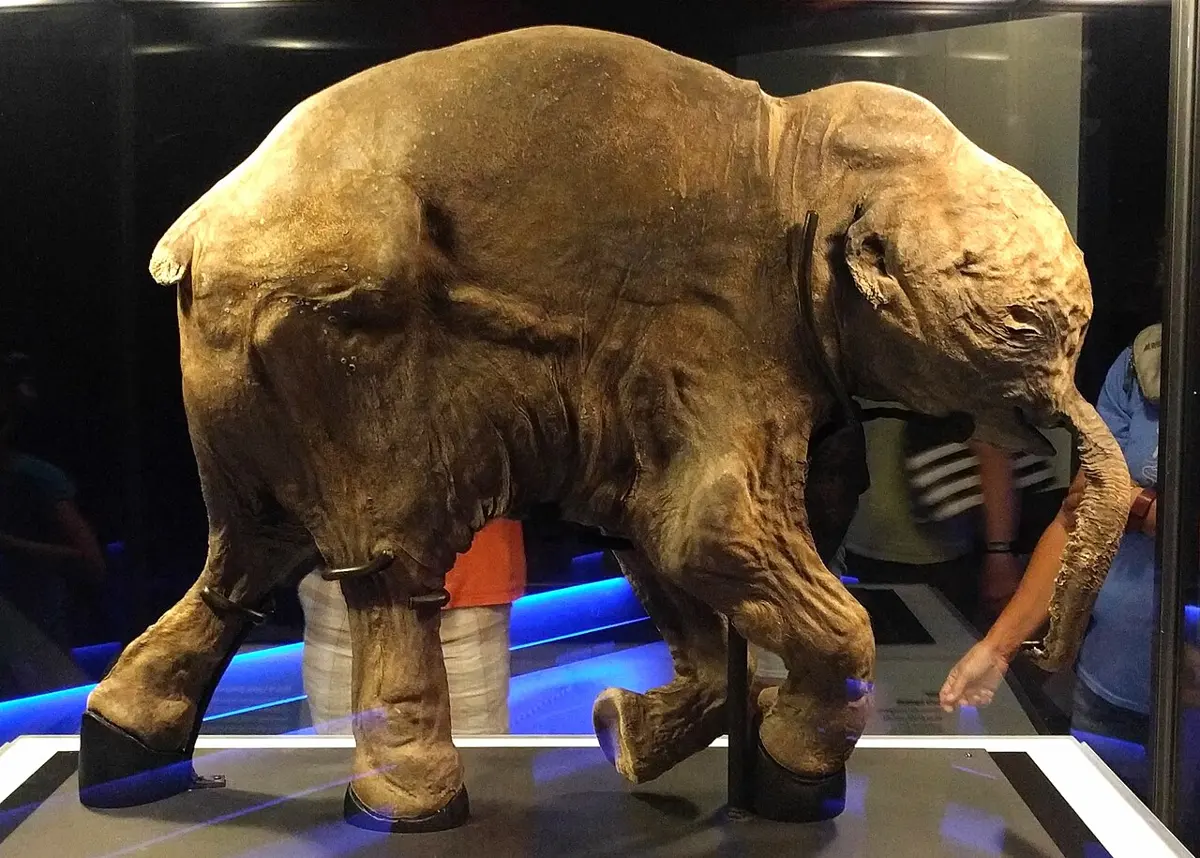
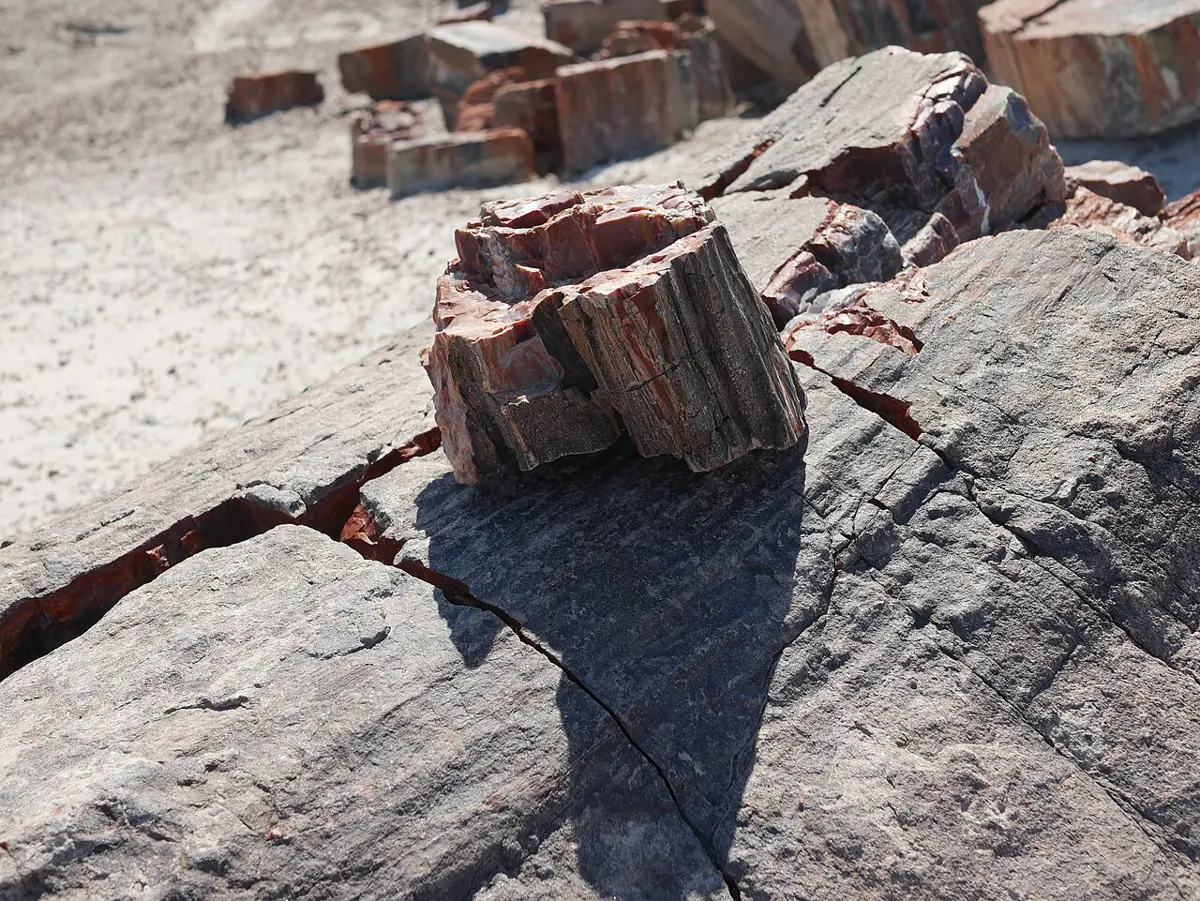
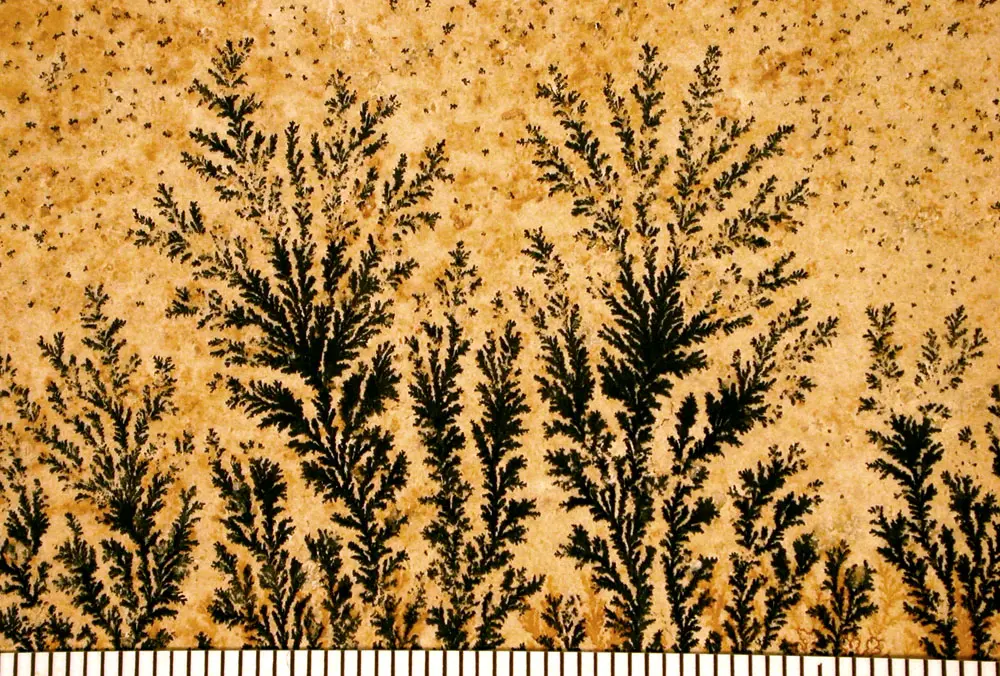
Significance of paleontology
- It shows the evolutionary history (phylogeny) of groups of organisms, such as the horse and the elephant.
- It is direct proof that different groups lived at different times, and that many groups (trilobites, dinosaurs) lived once and are now extinct.
- In rocks from older to younger strata, life is seen to go from simple to complex: bacteria alone in the oldest, then simple animals, fishes, amphibians, reptiles, and mammals and birds in the youngest.
- Fossils of intermediate forms (connecting links) show how one group arose from another.
- Fossils date rocks, and help find oil and coal.
How are fossils dated?
There are two ways to tell a fossil’s age.
Relative dating puts fossils in order, older and younger, without giving an age in years.
- i.Stratigraphy: the study of the layers (strata) of sedimentary rock. It rests on the principle of superposition: in undisturbed rocks, each layer was laid down on top of the one before, so younger layers lie above older ones, and a fossil is older than the fossils above it.
- ii.Biostratigraphy: some fossils, called index fossils, belonged to species that were common, widespread and lived for only a short time (such as particular trilobites and ammonites). Where an index fossil is found, the rock must be of the age when that species lived, so it dates the layer and matches it with layers of the same age in other parts of the world.
Absolute (radiometric) dating gives an age in years. Some atoms are radioactive: they decay into other atoms at a steady rate that heat, pressure and chemistry don’t change. The time in which half of any amount of them decays is the half-life. Measure how much of the parent atom is left, and how much of its product has formed, and you can work out how long it has been decaying.
- i.Carbon-14 dating: living things take in carbon, including a tiny, constant share of radioactive carbon-14, until they die. Then the carbon-14 decays (half-life 5,730 years) and isn’t replaced. The share left in bone, wood or charcoal gives the time since death. It works for remains up to about 50,000 years old; after that too little is left to measure.
- ii.Potassium–argon dating: potassium-40 decays into argon-40 with a half-life of about 1.25 billion years. When volcanic lava or ash solidifies, its argon gas escapes; after that, the argon builds up, trapped in the crystals. It dates volcanic rocks, from about 100,000 years old to billions of years, and through them the fossils in the layers between them.
- iii.Uranium-series dating: it uses the decay of uranium isotopes (uranium-234 into thorium-230) in materials that took up uranium from water as they formed, such as cave deposits, corals and teeth. It is useful from a few thousand to about 500,000 years.
Fossils usually lie in sedimentary rock, which can’t be dated by these clocks directly. So a fossil is dated by the volcanic ash layers above and below it: it must be younger than the ash below and older than the ash above.
The Penny Magazine (1833), Public domain, via Wikimedia Commons
Pearson Scott Foresman, Public domain, via Wikimedia Commons
In a cliff of undisturbed sedimentary rock, a fossil fish is found in a layer 20 m below a layer with fossil leaves. The fish is:
Pick an answer to see why.
Connecting links
Organisms that have characters of two different groups, one more primitive and one more advanced, are called connecting links. They fill the gap between the groups and show how one could have arisen from the other. Some are known only as fossils (Archaeopteryx); these are often called missing links or transitional fossils. Others are still living (the platypus).
| Between | Connecting link |
|---|---|
| living and non-living things | virus |
| plants and animals | Euglena |
| Protozoa and Porifera | Proterospongia |
| Annelida and Mollusca | Neopilina |
| Annelida and Arthropoda | Peripatus |
| non-chordates and chordates | Balanoglossus |
| cartilaginous and bony fishes | Chimaera |
| fishes and amphibians | Protopterus (lungfish) |
| reptiles and birds | Archaeopteryx |
| reptiles and mammals | duck-billed platypus (Ornithorhynchus) and spiny anteater (Echidna) |
How each one links its groups:
- Virus: like non-living matter, it can be crystallized and has no metabolism of its own outside a cell; like living things, it has genes and multiplies, though only inside a living cell.
- Euglena: has chloroplasts and makes food by photosynthesis like a plant, but has no cellulose wall, swims with a flagellum and can take in food in the dark like an animal.
- Proterospongia: a colony of collared, flagellated cells (choanoflagellates) in jelly, like the collar cells that line a sponge.
- Neopilina: a mollusk with a shell, but with its gills, muscles and kidneys repeated along the body, like the segments of an annelid.
- Peripatus (a velvet worm): a soft, segmented, worm-like body with paired kidneys in each segment (annelid features), but with claws on its legs, jaws, a tracheal breathing system and an open blood system (arthropod features).
- Balanoglossus (an acorn worm): a worm-like animal of the sea floor with gill slits and a hollow nerve cord in its collar, two chordate features.
- Chimaera: a fish with a cartilage skeleton like a shark, but with a flap of skin (operculum) over its gills like a bony fish.
- Protopterus: a fish with gills and fins, but with lungs too, and a heart partly divided, so it can breathe air when its pond dries up.
- Platypus and echidna: they have hair and feed their young on milk like mammals, but they lay eggs like reptiles, and have a cloaca and reptile-like shoulder bones.
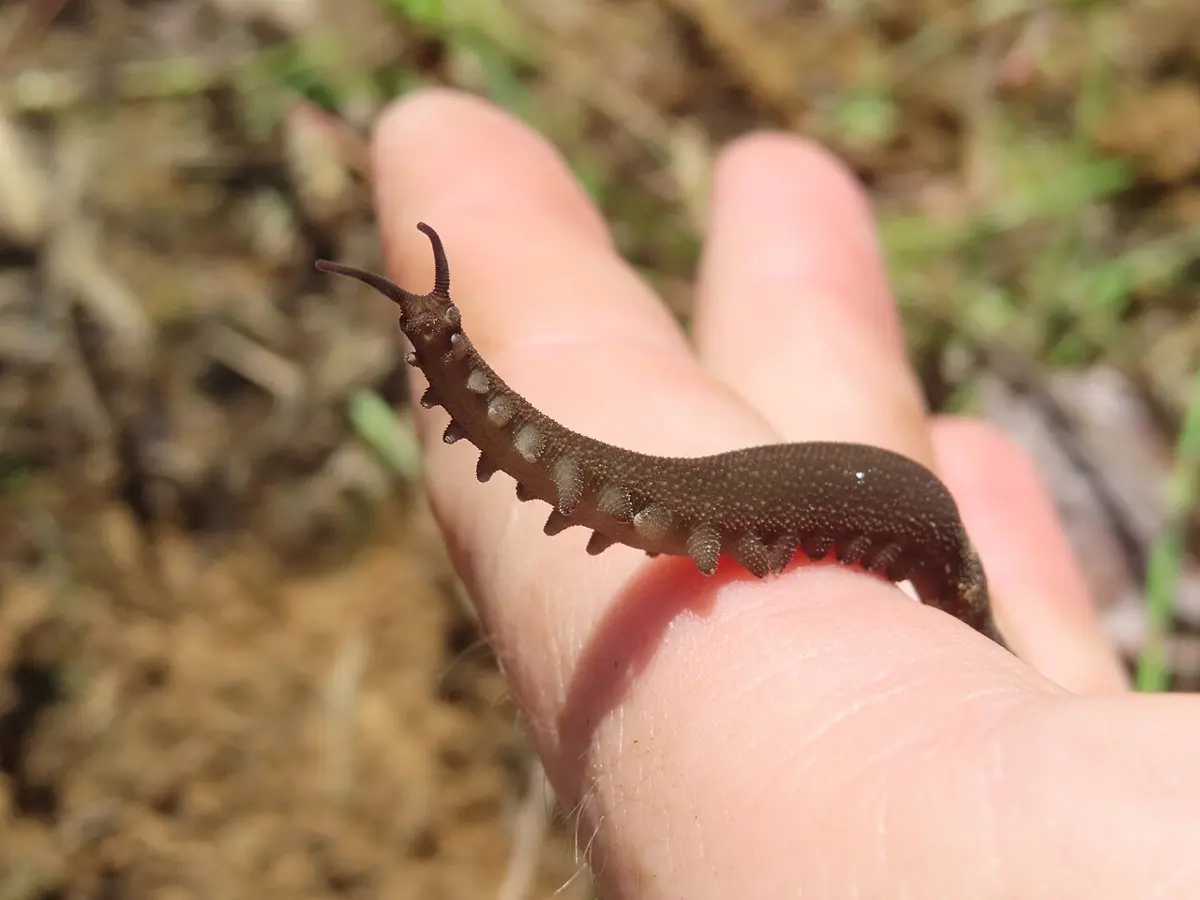
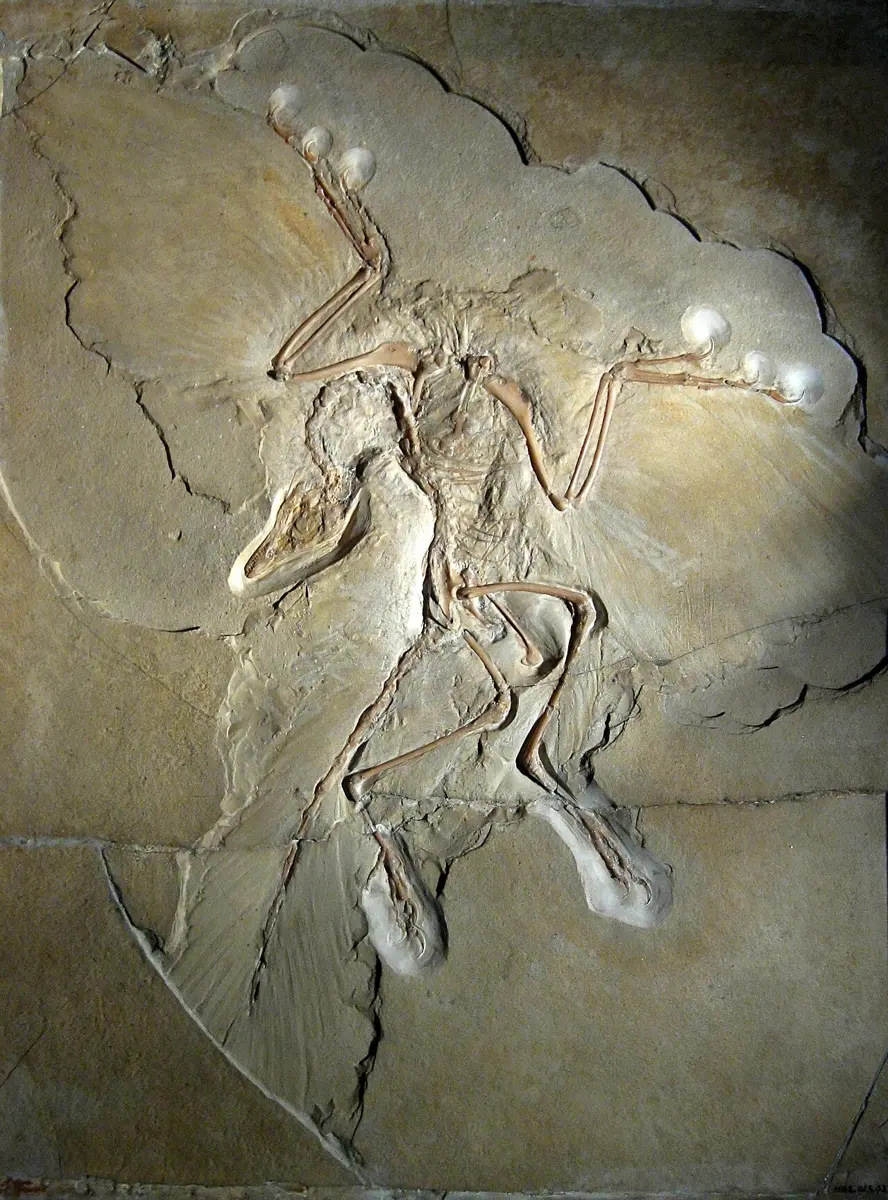
Archaeopteryx
Archaeopteryx (Greek, “ancient wing”) is a fossil from limestone at Solnhofen in southern Germany, about 150 million years old, from the Jurassic period. The first skeleton was found in 1861, two years after Darwin’s Origin of Species, and it was exactly the kind of in-between creature his theory predicted. About a dozen skeletons are now known. It was about the size of a crow, and it links reptiles and birds: birds evolved from reptiles, in fact from small, feathered, meat-eating dinosaurs.
Table 7.1 The characters of Archaeopteryx
| Like a reptile | Like a bird |
|---|---|
| jaws with teeth set in sockets | feathers, including long, uneven flight feathers on its wings |
| three clawed fingers on each wing, free, not fused | wings: forelimbs shaped for flight |
| a long, bony tail of about 21 vertebrae | a wishbone (fused collarbones, the furcula) |
| a skull and brain much like a small dinosaur’s | a skull with large eye sockets, and partly fused bones |
| no keel on the breastbone; belly ribs (gastralia); ordinary vertebrae | flight feathers in a fan along each side of its tail |
So it had a reptile’s skeleton dressed in a bird’s feathers. (Modern birds have a beak with no teeth, a short tail of fused vertebrae bearing the tail feathers, fingers fused into the wing, and a keeled breastbone for the large flight muscles; Archaeopteryx had none of these yet.)
Geological time scale
Using the order of the rock layers and their fossils, and radiometric dates, geologists have built the geological time scale: the calendar of the Earth’s history. It is divided into eras, each with its own forms of life, its changes of climate and its upheavals of the crust; the eras are divided into periods, and these into epochs.
| Era | Means | Time (million years ago) | Life |
|---|---|---|---|
| Archeozoic (Archean) | age of primitive life | about 4,000–2,500 | the first life: bacteria and cyanobacteria |
| Proterozoic | age of early life | 2,500–539 | eukaryotic cells, algae; at the end, the first soft-bodied animals |
| Paleozoic | age of ancient life | 539–252 | invertebrates of the sea; fishes; the first land plants; amphibians; the first reptiles; forests of ferns and clubmosses |
| Mesozoic | age of middle life | 252–66 | age of reptiles (dinosaurs); the first mammals and birds; gymnosperms, then the first flowering plants |
| Cenozoic | age of recent life | 66–now | age of mammals and flowering plants; the first humans in the last few million years |
Some books count six eras, adding the Azoic era (Greek, “without life”) before the Archeozoic: the Earth’s first 500 million years or so, from about 4,600 million years ago, of which no rocks with fossils survive. The Cenozoic is often divided into the Tertiary period (66–2.6 million years ago) and the Quaternary (2.6 million years ago to now, the time of the ice ages and of humans).
Phylogeny of the horse
The evolution of the horse is one of the best known in paleontology, from a long and nearly complete series of fossils, most of them from North America.
The earliest member of the horse family, Hyracotherium, also called Eohippus (“dawn horse”), lived about 55 million years ago, at the start of the Eocene epoch. It was about the size of a fox, roughly 30 cm high at the shoulder, and lived in forests, browsing on soft leaves and fruit. It had 44 teeth, with low-crowned cheek teeth, and walked on padded feet with four toes on each front foot and three on each hind foot, with small splints left of the others.
The line passed, with many side branches, through Mesohippus and Miohippus (three toes on each foot, the size of a sheep), Parahippus and Merychippus (three toes but standing on the middle one, high-crowned grinding teeth for grass), and Pliohippus (one toe), to the modern horse, Equus, which appeared about 4 million years ago.
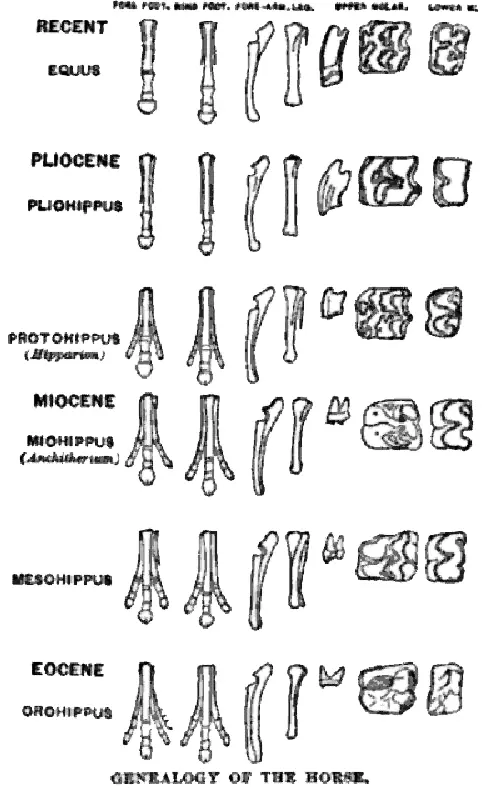
Along this line, these changes took place:
- a.the body grew larger, from fox-size to the modern horse;
- b.the neck became longer and more mobile;
- c.the number of toes was reduced from four to one: the middle (third) toe grew large and bore the weight on a hoof, and the side toes shrank to splint bones;
- d.the front of the skull and face became longer, holding the grinding teeth;
- e.the lower parts of the legs became longer, lifting the wrist and ankle high off the ground: the horse runs on the tip of one toe;
- f.the premolars and molars became large, high-crowned and ridged, for grinding tough grasses;
- g.the metacarpals and metatarsals of the middle toe became one long cannon bone, and the radius and ulna, and the tibia and fibula, fused.
These changes followed a change in the world: as the climate became cooler and drier, forests gave way to open grasslands, and horses that could run fast over hard ground and chew gritty grass survived better.
Which change did NOT happen in the evolution of the horse?
Pick an answer to see why.
3. Evidences from embryology
Embryology is the study of how animals develop from the egg (zygote) to the adult. It gives strong evidence of common ancestry.
a. Early development is alike. Every multicellular animal begins as a single cell, the zygote. It divides into a ball of cells (the morula), then a hollow ball (the blastula), then a cup of layers (the gastrula), and forms the three germ layers: ectoderm, mesoderm and endoderm, from which all the organs grow. These early stages are strikingly similar across animals.
b. Vertebrate embryos are alike. The early embryos of a fish, a frog, a tortoise, a pigeon, a rabbit and a human are hard to tell apart. Each has a notochord, a row of pharyngeal pouches and arches in the neck (“gill slits”), a tail, and a simple tube-shaped heart with two chambers, like a fish’s. As they grow, they become more and more different: in a fish the pouches become gills, in a human they become parts of the ear, the throat and the glands of the neck. The kidneys, heart and main arteries also develop from the same early pattern in every vertebrate.
Early: zebrafish DBCLS (CC BY 4.0); the others public domain (Eycleshymer and Wilson; H. J. Clark for Agassiz; Keibel; Keibel and Elze)
Later: zebrafish fry DBCLS (CC BY 4.0); turtle Parexocoetus (CC BY-SA 4.0, our tracing CC BY-SA too)
Later still: tortoise traced from Berthold Werner's photo; the others too, all public domain or CC0
c. The recapitulation theory (biogenetic law). In 1866 the German biologist Ernst Haeckel proposed that “ontogeny recapitulates phylogeny”: that the development of an individual (ontogeny) repeats, in brief, the evolutionary history of its ancestors (phylogeny). The tadpole of a frog, for example, lives in water, breathes with gills, has a two-chambered heart and a tail with a fin, and swims like a fish; only later does it grow legs and lungs and become a frog, as though replaying the move of its ancestors from water to land.
The larva of the sea squirt Herdmania is another example. It swims like a tiny tadpole, with a notochord in its tail, a dorsal nerve cord and a tail: the marks of a chordate. Then it settles on a rock, head down, and changes into a sac-like adult that filters food from water: it loses its tail and notochord, and its nerve cord shrinks to a small ganglion. Only the larva shows that the sea squirt is a chordate, a relative of the vertebrates.
“Ontogeny recapitulates phylogeny” means:
Pick an answer to see why.
4. Evidence from biochemistry and comparative physiology
The strongest evidence that all living things share a common ancestor lies in the chemistry they share, from bacteria to banyan trees to people.
a. The same chemical composition. All living things are made of the same few elements, mainly carbon, hydrogen, oxygen and nitrogen (with phosphorus and sulphur), built into the same kinds of organic compounds: carbohydrates, lipids, proteins and nucleic acids. Their protoplasm is alike in composition. All of them store their genetic information in DNA (some viruses in RNA), written in the same four bases, read through RNA, and turned into proteins using the same genetic code, in which the same three-letter codons stand for the same amino acids in almost every organism. All build their proteins from the same 20 amino acids, and all use ATP as their energy currency. There is no chemical reason why life had to use this particular code; that every organism uses it is best explained by descent from one ancestor that used it.
b. Serological (precipitin) tests. Serum is the clear yellowish liquid left after blood has clotted; it contains the blood’s proteins. Proteins from one animal, injected into another, act as antigens: the second animal’s immune system makes antibodies against them. When serum containing these antibodies (an antiserum) is mixed with the antigens, the two bind into clumps that settle as a white precipitate. (The antibodies that do this are called precipitins.)
The test of relationship, worked out by the British biologist George Nuttall around 1904, goes like this. Human serum is injected into a rabbit. The rabbit makes antibodies against human serum proteins; its serum is now anti-human serum. This is mixed, in turn, with the sera of other animals. The more alike their serum proteins are to a human’s, the more of the antibodies bind, and the more precipitate forms. With anti-human serum, Nuttall found the most precipitate with the sera of the great apes, less with Old World monkeys, still less with New World monkeys, little or none with lemurs, and practically none with dogs and other mammals: exactly the order of relationship that comparative anatomy had given.
Ferran Sayol, CC0, via PhyloPic
Serology has settled real puzzles:
- Whales look like fish, but their serum proteins react most strongly with those of even-toed hoofed mammals (Artiodactyla: pigs, cattle, deer, hippos), suggesting that whales evolved from early artiodactyl stock. Fossils found since, of walking whales in Pakistan and India, and DNA studies have confirmed it: the whale’s nearest living relative is the hippopotamus.
- The king crab (horseshoe crab, Limulus) was once classed with the crabs (Crustacea). Tested against the sera of many arthropods, its proteins proved closer to those of spiders and scorpions than to those of crabs, and it is now classed with the arachnid group of arthropods.
c. Enzymes and hormones. The same digestive enzymes (trypsin, amylase, lipase) do the same jobs in animals from sponges to mammals. Hormones are so alike that they work across species: for years, diabetics were treated with insulin taken from cattle and pigs, and thyroxine from one vertebrate affects the development of another (the thyroid of a mammal makes a frog tadpole turn into a frog early).
d. Comparing protein and DNA sequences. Today the same idea is used with far more precision: the order of amino acids in a protein, or of bases in a gene, is read and compared across species. Cytochrome c, a protein that every organism that breathes oxygen needs, has 104 amino acids in humans; the chimpanzee’s is identical, the rhesus monkey’s differs in one, a dog’s in about 11, a yeast’s in about 44. The fewer the differences, the more recently the two shared an ancestor, and the tree drawn from these numbers matches the tree drawn from bones and fossils.
In a precipitin test with anti-human serum, which serum would give the most precipitate?
Pick an answer to see why.
Exercise
A. Tick the correct alternative
- Which scientist is often regarded as the father of organic evolution?
Pick an answer to see why.
- What is microevolution primarily concerned with?
Pick an answer to see why.
- Which type of evolution involves a reversal from complex to simple organisms?
Pick an answer to see why.
- What type of organs share a similar origin but serve different functions?
Pick an answer to see why.
- What term describes the sudden appearance of ancestral characteristics lost during evolution?
Pick an answer to see why.
- Which branch of paleontology focuses on the study of animal fossils?
Pick an answer to see why.
- What type of fossilization involves the preservation of hard parts like bones and teeth through mineralization?
Pick an answer to see why.
- What is the term for fossils that are the impression left behind by organisms when surrounding materials harden?
Pick an answer to see why.
- What field of study provides strong evidence supporting the theory of organic evolution by comparing the early stages of animal development?
Pick an answer to see why.
- What is the primary function of serological tests in understanding evolutionary relationships between different organisms?
Pick an answer to see why.
- Which theory, proposed by Ernst Haeckel, suggests that the developmental history of an organism repeats its ancestral history?
Pick an answer to see why.
- What type of evidence supporting organic evolution is derived from the remarkable similarities found in digestive enzymes and hormones across large groups of animals?
Pick an answer to see why.
B. Answer the following questions
Provide an example of convergent evolution.
Answer
List three features of Archaeopteryx that exhibit bird-like characteristics.
Answer
Name one connecting link between:
- a.reptiles and mammals
- b.reptiles and aves
- c.annelida and arthropoda
- d.fishes and amphibians
Answer
What are vestigial organs, and how do they provide evidence for organic evolution?
Answer
Explain the significance of fossils in understanding the evolutionary history of organisms.
Answer
Describe the process of fossilization and the different types of fossils that are formed.
Answer
What are connecting links in the context of organic evolution, and why are they significant?
Answer
Explain the characteristic features of Archaeopteryx and its role as a connecting link between reptiles and birds.
Answer
How does embryology provide evidence for organic evolution, particularly concerning the recapitulation theory?
Answer
Describe the key evolutionary changes that occurred in the lineage leading from Hyracotherium to modern Equus.
Answer
Printable PDFs
- Study notes 3 pages
- Worksheet 5 pages Answer key
Quiz yourself: Heredity and Evolution, Grades 5–12 →
Practice every question in the book, and keep track of the ones you miss →
A companion to your textbook, not a replacement for it: study from the book your school uses, and where the two differ, follow your teacher. Found a mistake? Please tell us.