
About one and a half million kinds of animal have been named so far, and new ones are described every week: beetles in the forests of Ilam, worms in the mud of a rice field, fish in the deep sea. Yet every one of them is built on one of a small number of plans. Does it have a gut with one opening or two? A space round the gut, or none? Can it be cut into matching halves, and how many ways? Is its body made of repeated segments? A zoologist who knows the answers can place almost any animal in its phylum at a glance.
This unit is that toolkit. It first sets out the words used to describe an animal’s body, then walks through the kingdom Animalia phylum by phylum, from sponges to mammals, with each phylum’s characters, the features that make it unique, its classes and their examples.
8.2.1 Some terms used in biology
Before sorting animals, we need words for the features we sort them by. Five matter most: how the cells are organized, the body plan, symmetry, the body cavity and segmentation.
1. Level of organization
As animals become more complex, their cells are organized in more and more elaborate ways. Depending on how many kinds of cell an animal has and how far they work together, we recognize three levels (grades) of body organization:
i. Cellular level. The body is a loose collection of cells. Each cell does its own work and there is little co-ordination among them; cells do not form true tissues. Example: sponges. (Push a living sponge through a fine cloth and its separated cells will crawl back together into a new sponge: each cell is almost an animal in itself.)
ii. Tissue level. Some cells of the same kind work together as tissues, but tissues are not yet built into organs. Example: coelenterates: in Hydra, nerve cells are linked into a nerve net, a tissue that spreads signals across the whole body.
iii. Organ-system level. Tissues form organs, and organs work together in organ systems that each do one job: digestion, circulation, respiration, excretion. Found in all animals from Platyhelminthes to Chordata.
In Hydra, nerve cells are joined into a nerve net, but there is no brain or other organ. Its level of organization is:
Pick an answer to see why.
2. Body plan
An animal’s body plan is, above all, the plan of its gut: how food gets in and how what is left gets out.
i. Cell aggregate plan. The body is a mass of cells, each working on its own; there are no tissues and no gut. Water flows through a central cavity, the spongocoel, and the cells lining it catch food from it. Found only in Porifera (sponges).
ii. Blind sac plan. The gut is a sac with one opening, the mouth, which takes food in and also lets undigested waste out; the sac ends blindly at the other end. Found in coelenterates (Hydra) and flatworms (Planaria, Fasciola). A blind sac can do only one thing at a time: a Hydra cannot eat its next meal while it is still getting rid of the last.
iii. Tube-within-tube plan. The body is one tube, the body wall, and inside it lies a second tube, the digestive tract, open at both ends: a mouth in front and an anus behind. Food moves one way, so different parts of the tube can specialize, one to grind, one to digest, one to absorb, like a factory line. Found in all animals from Aschelminthes (roundworms) to Chordata.
The tube-within-tube animals split into two great lines, depending on what the first opening of the embryo becomes. Early on, an embryo folds in at one point to form a pouch, the archenteron (primitive gut); the opening of that pouch is the blastopore.
a. Protostomes (protos, first; stoma, mouth). The blastopore becomes the mouth, so the mouth forms first and the anus later. Examples: roundworms, annelids, arthropods and mollusks.
b. Deuterostomes (deuteros, second). The blastopore becomes the anus, and the mouth forms later, as a second opening at the other end. Examples: echinoderms and chordates (with the hemichordates).
In the embryo of an animal, the blastopore becomes the anus. The animal could be:
Pick an answer to see why.
3. Body symmetry
An animal is symmetrical if a plane through it cuts it into two halves that match like an object and its mirror image.
i. Asymmetrical body. No plane gives two similar halves. Examples: Amoeba (a protist that keeps changing its shape), most sponges, and the coiled body of a snail (its organs are twisted by torsion as it grows).
ii. Symmetrical body. One or more planes cut the body into two similar halves. There are four kinds:
a. Spherical symmetry. The body is a ball, and any plane through its center gives two similar halves. It is found in floating, ball-shaped single cells and colonies, such as the green alga Volvox, sun animalcules (Actinophrys) and round (coccus) bacteria; there is hardly a true animal with it.
b. Radial symmetry. The body is like a cylinder or a cake: several vertical planes through the central (oral–aboral) axis each give two roughly equal halves, and similar parts are arranged in a ring round that axis. Most coelenterates (Hydra, sea anemones, jellyfish) and adult echinoderms (the starfish’s five arms).
c. Bilateral symmetry. Only one plane, the median (sagittal) plane from head to tail, divides the body into matching right and left halves. All animals from Platyhelminthes to Chordata are bilateral, with a few exceptions: snails (twisted) and adult echinoderms (radial again, though their larvae are bilateral).
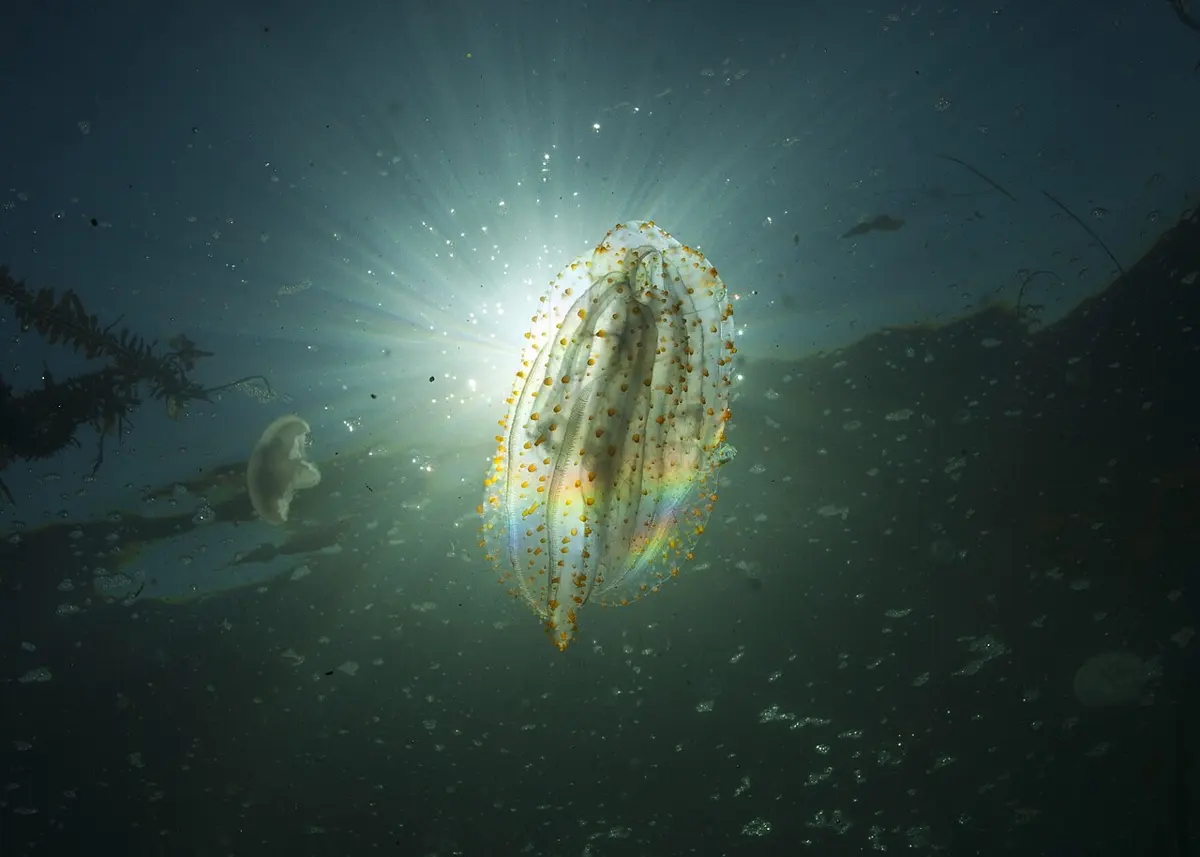
d. Biradial symmetry. A mixture of radial and bilateral: two planes at right angles each cut the body into matching halves, but no others do. Example: comb jellies (ctenophores), whose two tentacles break the radial pattern; sea anemones with two siphonoglyphs are biradial too.
Starfish and sponge: Pearson Scott Foresman, public domain, via Wikimedia Commons
Why does symmetry matter? A radial animal is usually fixed or drifting, and meets food and danger from every side, so it is built the same all round. A bilateral animal moves head first: its sense organs and brain gather at the front (cephalization), and its left and right sides match so that it can travel straight.
A comb jelly can be cut into two matching halves along exactly two planes. Its symmetry is:
Pick an answer to see why.
4. Body cavity (coelom)
Between the gut wall and the body wall, many animals have a large fluid-filled space: the body cavity or coelom (koiloma, a hollow). A cavity lets the gut move and grow independently of the body wall, gives room for organs, acts as a water-filled skeleton for burrowing worms, and carries substances round the body. Animals are of three types by their cavity:
i. Acoelomate (a, without). There is no cavity: the space between the body wall and the gut is packed with tissue. In flatworms, it is filled with a spongy mesodermal tissue, the parenchyma. Sponges and coelenterates also have no coelom (they have no mesoderm to make one).
ii. Pseudocoelomate (pseudo, false). There is a cavity, but it is a leftover of the embryo’s first cavity, the blastocoel, and it is not lined by mesoderm all round: mesoderm (muscle) lines its outer side, against the body wall, but the gut on its inner side is only endoderm. This cavity is the pseudocoelom. Found only in Aschelminthes (roundworms such as Ascaris).
iii. Eucoelomate or coelomate (eu, true). The true coelom is a cavity that forms within the mesoderm, so it is lined by mesoderm on both sides: the parietal layer against the body wall and the visceral layer round the gut. Three kinds are named: two by the way the coelom forms, and a third in which it has been taken over by blood.
a. Schizocoel (schizo, split): the coelom forms by splitting of solid blocks of mesoderm in the embryo. Found in annelids, arthropods and mollusks, the protostomes. (In vertebrates too, the coelom appears as a split in a sheet of mesoderm, so many books list the higher chordates here.)
b. Enterocoel (enteron, gut): the mesoderm and coelom form as pouches budding off the archenteron (the embryo’s primitive gut), which pinch off and join to make the coelom. Found in echinoderms, hemichordates and the protochordates (such as the lancelet), all deuterostomes.
c. Hemocoel (haima, blood): in arthropods, mollusks and a few annelids such as leeches, the true coelom (formed as a schizocoel) becomes very small and the main body cavity is a space filled with blood, the hemocoel, part of an open circulatory system (8.2.7).
Which animal has a body cavity lined by mesoderm on one side only?
Pick an answer to see why.
5. Segmentation
Segmentation is the division of an animal’s body into a linear series of similar parts (segments) along its length.
i. Unsegmented body. No segments. Sponges, coelenterates, roundworms, mollusks (except Neopilina, which has some organs repeated) and echinoderms.
ii. Metameric segmentation (true segmentation). The body is divided into segments (metameres or somites) that are repeated in a fixed pattern, outside and in: each has its own muscles, nerves, blood vessels and excretory organs. All the segments form together in the embryo, are of the same age and work as one body; none can live alone. Examples: annelids (the earthworm’s rings), arthropods and chordates (the blocks of muscle along a fish, and our own vertebrae and ribs).
iii. Pseudosegmentation (false segmentation). The body is a chain of independent parts that are not all the same age. In a tapeworm, new parts, the proglottids, keep budding off just behind the head (strobilization), so the youngest are near the head and the oldest at the tail: immature, then mature (with ripe sex organs), then gravid (a bag of eggs) at the end, which break off and leave the host.
In a tapeworm, where are the oldest proglottids?
Pick an answer to see why.
Words to know
These are the words used in this unit and the next two (the earthworm and the frog) to describe an animal. Learn them in their groups.
Germ layers, and directions on the body
| Term | Meaning |
|---|---|
| Diploblastic | developed from two germ layers, ectoderm and endoderm (with a jelly-like mesoglea between): Porifera and Coelenterata |
| Triploblastic | developed from three germ layers, ectoderm, mesoderm and endoderm: all other animals |
| Anterior / posterior | the front (head) end / the rear (tail) end |
| Dorsal / ventral | the back, the upper surface of most animals / the belly, the lower surface |
| Lateral | either side, away from the middle line |
| Dorso-lateral / ventro-lateral | towards the back and the side / towards the belly and the side |
| Mid-dorsal / mid-ventral | along the middle line of the back / of the belly |
Where and how they live
| Term | Meaning |
|---|---|
| Freshwater / marine | living in rivers, ponds and lakes (water with little salt) / in the sea |
| Amphibious | living both on land and in water |
| Solitary / colonial / gregarious | living alone / joined in a colony with the work divided among members (corals, Obelia) / living in groups of separate individuals (a herd, a flock) |
| Sedentary (sessile) / free swimming | fixed to a surface (the substratum), like a sea anemone / swimming freely |
| Pelagic / benthic | living in the open water / on or near the bottom |
| Lentic / lotic | standing water (ponds, lakes) / running water (rivers, streams) |
| Warm-blooded (homeothermic) / cold-blooded (poikilothermic) | keeping a nearly constant body temperature (birds, mammals) / taking the temperature of the surroundings (fish, frogs, reptiles) |
Organs of locomotion
| Term | Found in |
|---|---|
| Flagellum (long whip) | Euglena, many bacteria, a sponge’s collar cells |
| Cilia (many short hairs) | Paramecium, planarians, comb jellies |
| Pseudopodia (“false feet”) | Amoeba |
| Setae (bristles) | earthworm |
| Parapodia (fleshy paddles) | Nereis |
| Muscular foot | mollusks: apple snail (Pila), garden snail (Helix) |
| Tube feet | echinoderms: starfish, sea cucumber |
| Fins | fishes |
| Limbs | tetrapods: amphibians, reptiles, birds, mammals |
| Appendages | any outgrowth of the body: legs, antennae, tentacles |
Nutrition
| Term | Meaning |
|---|---|
| Holozoic | taking in solid or liquid food and digesting it inside the body, as animals do |
| Holophytic | making its own food by photosynthesis, as green plants do |
| Mixotrophic | both: Euglena photosynthesizes in light and absorbs food in the dark |
| Saprotrophic | absorbing food from dead and decaying matter |
| Intracellular / extracellular digestion | digestion inside cells (sponges, Amoeba) / outside cells, in the gut cavity (most animals; Hydra does both) |
Respiration, circulation and excretion
| Term | Meaning |
|---|---|
| Aerobic / anaerobic respiration | using oxygen / without oxygen (gut parasites such as Ascaris) |
| External gills / internal gills | gills on the outside of the body (tadpoles, some larval fishes) / gills inside, grown from the pharynx (fishes) |
| Tracheae | branching air tubes (insects, centipedes) |
| Book lungs | stacked plates like the pages of a book (spiders, scorpions) |
| Pulmonary sac | a lung formed from the mantle cavity (land snails; Pila has one beside its gill) |
| Open circulation | blood pumped out of vessels into open spaces (sinuses) round the organs; no capillaries or veins (arthropods, most mollusks) |
| Closed circulation | blood always inside vessels (annelids, cephalopods, vertebrates) |
| Myogenic heart / neurogenic heart | the beat starts in special muscle of the heart itself (vertebrates) / in nerve cells on the heart (many arthropods) |
| Contractile vacuole | pumps extra water out of a protist (osmoregulation) |
| Flame cells (protonephridia) | excretory cells of flatworms |
| Nephridia | excretory tubes of annelids |
| Malpighian tubules | excretory tubes of insects, centipedes and spiders |
| Green glands / coxal glands | excretory organs of crustaceans / of Limulus and spiders |
| Organ of Bojanus | kidney of bivalve mollusks (Unio) |
Nitrogenous waste
| Term | Main waste | Examples |
|---|---|---|
| Ammonotelic | ammonia (very toxic; needs much water to wash away) | freshwater bony fishes, tadpoles, most aquatic invertebrates |
| Ureotelic | urea | adult frogs, mammals including humans, sharks |
| Uricotelic | uric acid (a paste; saves water) | birds, land reptiles, insects |
| Aminotelic | amino acids | some mollusks (Unio) and echinoderms (starfish) |
Reproduction and development
| Term | Meaning |
|---|---|
| Hermaphrodite (monoecious, bisexual) | male and female sex organs in the same individual (earthworm, tapeworm) |
| Unisexual (dioecious) | separate males and females |
| Sexual dimorphism | males and females look different (the peacock and peahen; male Ascaris is smaller, with a curved tail) |
| Protandry | in a hermaphrodite, the male organs ripen first (earthworm), so it can’t fertilize itself |
| Protogyny | the female organs ripen first; some fishes even change sex, female first, then male (many wrasses and groupers) |
| External / internal fertilization | sperm meets egg outside the body, in water (most fishes, frogs) / inside the female (reptiles, birds, mammals, insects) |
| Oviparous | laying eggs that develop outside the mother (birds, most reptiles, frogs) |
| Viviparous | giving birth to young that grew inside the mother, fed through her (most mammals) |
| Ovoviviparous | eggs kept inside the mother’s body until they hatch, the young living on the egg’s yolk, then born alive (many sharks, some snakes) |
| Direct development | the young is a small adult; no larva |
| Indirect development | through a larva, which changes into the adult by metamorphosis |
| Retrogressive metamorphosis | the larva is more advanced than the adult: the free-swimming tadpole of a sea squirt (Herdmania) has a notochord and nerve cord, which the fixed adult loses |
A shark keeps its eggs inside its body until they hatch, the young feeding only on the yolk, and then gives birth to live young. It is:
Pick an answer to see why.
Which animal excretes mainly uric acid?
Pick an answer to see why.
8.2.2 Phylum Porifera
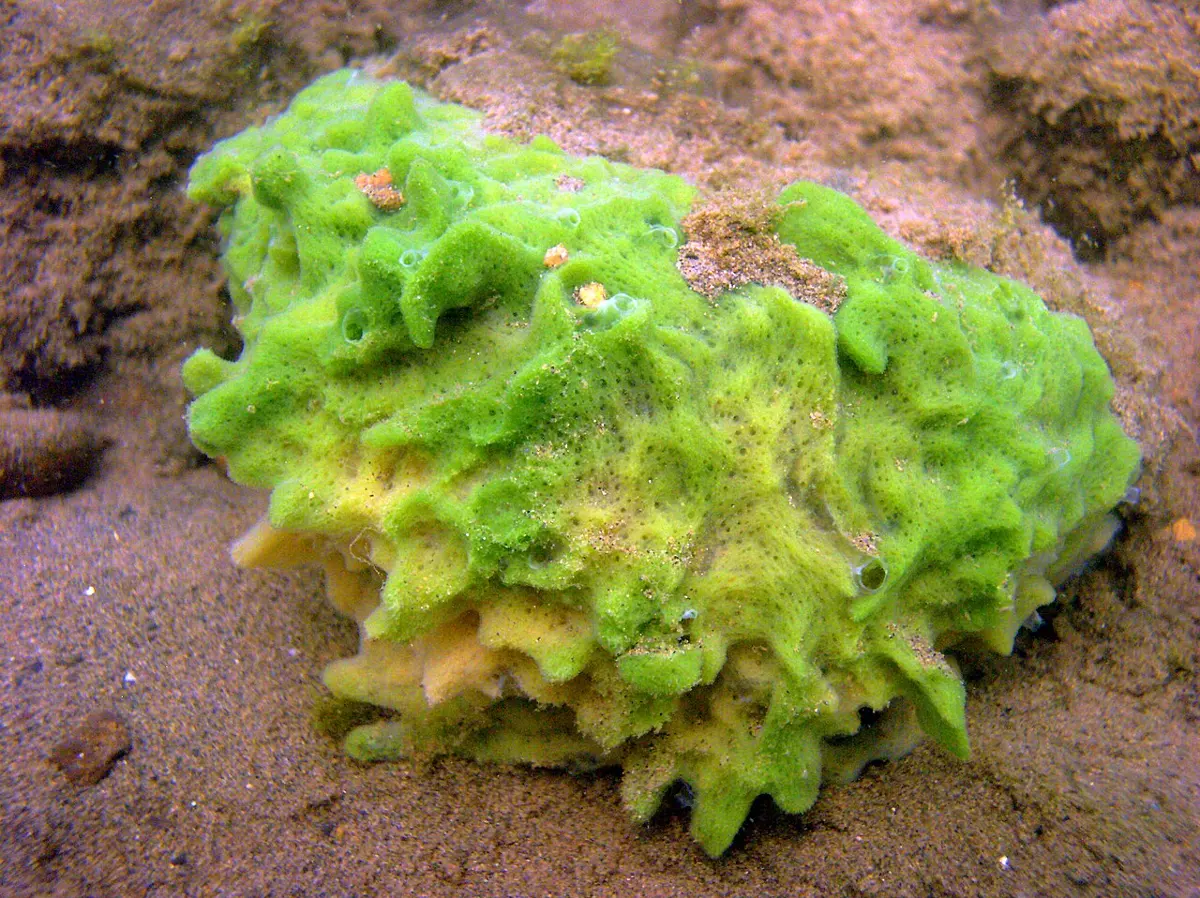
The name Porifera (Latin porus, pore; ferre, to bear) was given by the British zoologist Robert Grant in 1836. For centuries people thought sponges were plants. In 1765 the naturalist John Ellis watched water flowing in and out of living sponges and argued that they were animals. Porifera are commonly called sponges, and their study is spongiology (some books call it parazoology, after the Parazoa below). (Sponges are so unlike other animals that they are often put in a sub-kingdom of their own, Parazoa, “beside the animals”, while all the rest are Eumetazoa.)
General characters
Habitat and form
- All are aquatic: most live in the sea; a few, such as Spongilla, in fresh water.
- They are the most primitive multicellular animals, with the cellular grade of body organization.
- The adults are sessile and sedentary, fixed to rocks, shells or plants (the substratum).
- Their shape varies: vase-like or cylindrical, tubular, cushion-like or branching.
- Their body is asymmetrical or radially symmetrical.
Body wall and canal system
- They are diploblastic. The body wall has an outer layer of flat cells, the pinacoderm (dermal epithelium), and an inner layer of choanocytes, the choanoderm (gastral epithelium), with a jelly-like mesenchyme (mesohyl) between them: not a layer of cells itself, but a jelly in which lie skeletal elements and wandering amoebocytes.
- The body is pierced by many pores. Water enters through many small pores, the ostia, and leaves through a large opening, the osculum. This flow through the body is the water canal system, and it does almost everything for the sponge: it brings food and oxygen and carries away wastes (and sperm).
- The internal hollow cavity is the spongocoel (paragaster), lined by choanocytes: flagellated collar cells, whose beating flagella drive the water, and whose collars catch food particles.
- The skeleton is of spongin fibers (a protein), or of siliceous (silica) or calcareous (calcium carbonate) spicules.
Life processes
- There is no gut: food is digested inside cells (intracellular digestion).
- There are no respiratory, excretory or nervous systems; gases and wastes diffuse through the body surface into the passing water.
- Nerve and sense cells are not differentiated; each cell responds to stimuli by itself.
Reproduction
- Most are hermaphrodite, but cross-fertilization takes place: sperm from one sponge is carried by water into another.
- Asexual reproduction by budding, gemmules (internal buds that survive cold and drought) and regeneration (fragments).
- Sexual reproduction by sperm and egg; fertilization is internal (inside the parent’s body wall). Cleavage is holoblastic (the whole zygote divides), and development is indirect: a free-swimming ciliated larva, the parenchymula or amphiblastula, settles on a substratum and changes (metamorphoses) into a fixed sponge.
Sponge: Encyclopaedia Britannica (1911), after Haeckel, public domain, via Wikimedia Commons
Classification
Porifera are classified by their skeleton into three classes.
Class 1: Calcarea (Latin calcarius, of lime) or Calcispongiae
- i.A skeleton of calcareous spicules (calcium carbonate), with one, three or four rays: monaxon, triradiate and tetraxon.
- ii.Body vase-like or cylindrical.
- iii.In shallow sea water.
- iv.Small and dull-colored.
- v.Solitary or colonial.
Examples: Sycon (Scypha, the urn or crown sponge), Grantia, Leucosolenia, Clathrina.
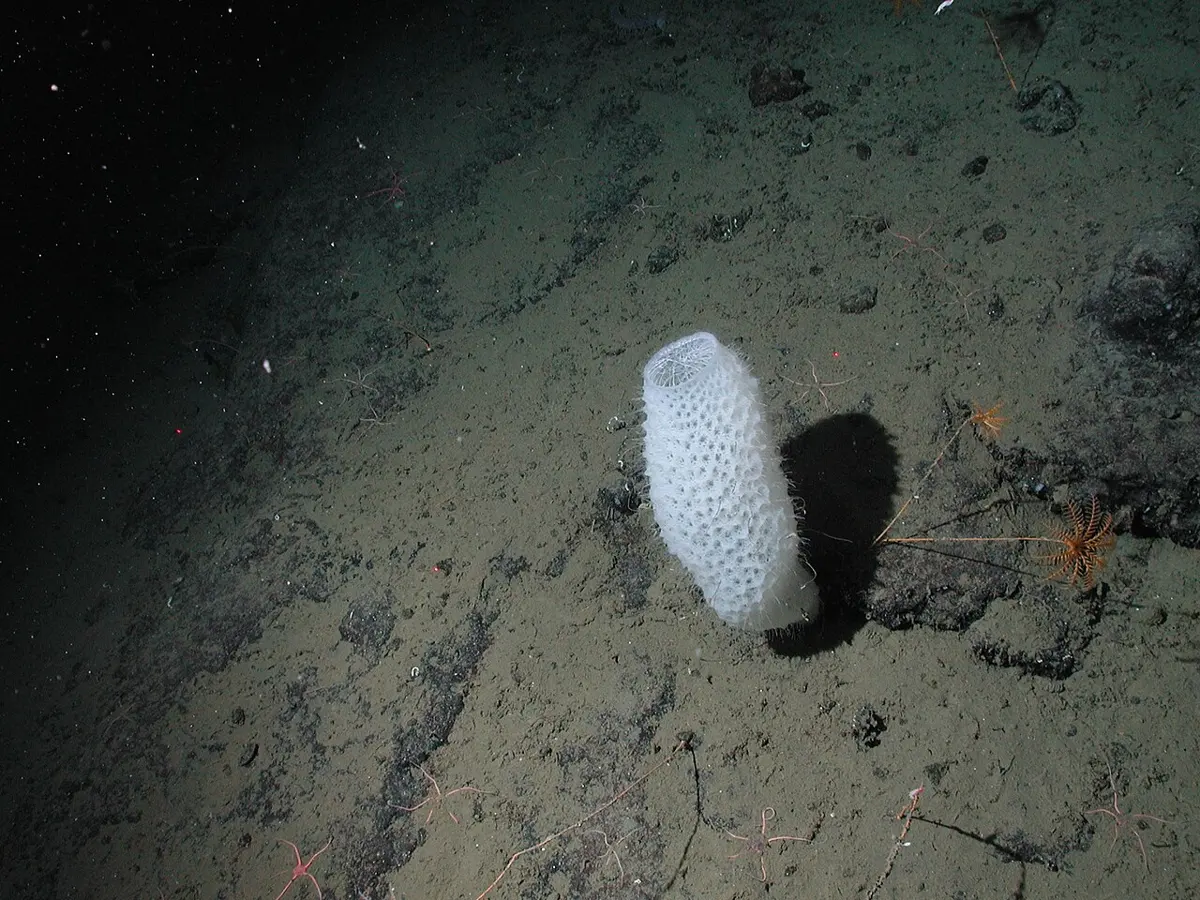
Class 2: Hexactinellida (Greek hex, six; aktis, ray) or Hyalospongiae (hyalos, glass; spongos, sponge)
- i.A skeleton of six-rayed siliceous spicules, rays along three axes (triaxon), often fused into a glassy lattice.
- ii.In the deep sea.
- iii.Shaped like a cup or vase.
- iv.Moderate in size; called glass sponges.
- v.Mostly solitary.
Examples: Euplectella (Venus’s flower basket), Hyalonema (glass rope sponge), Pheronema (bowl sponge), Farrea.
Class 3: Demospongiae (Greek demas, body; spongos, sponge)
- i.A skeleton of spongin fibers, or of siliceous spicules with spongin, or none; the spicules are never six-rayed.
- ii.Mostly marine; a few in fresh water, such as Spongilla and Ephydatia.
- iii.Shaped like a vase, a cup or a cushion.
- iv.The largest class, with most sponges, many of them large.
- v.Solitary or colonial.
Examples: Euspongia (bath sponge), Chalina (mermaid’s glove), Phyllospongia (leaf sponge), Cliona (boring sponge, which drills into shells and corals), Spongilla (freshwater sponge).
A sponge has a skeleton of six-rayed silica spicules. It belongs to:
Pick an answer to see why.
8.2.3 Phylum Coelenterata
The German zoologist Rudolf Leuckart set up the phylum Coelenterata (Greek koilos, hollow; enteron, gut) in 1847, and Berthold Hatschek named them Cnidaria (knide, nettle) in 1888. They are the stinging animals: their bodies carry special stinging cells, the cnidoblasts (nematoblasts), each with a nematocyst, a capsule holding a coiled, often poisoned thread.
Tetsuo Kon, CC0, via PhyloPic
Stinging cells: after A. N. and D. McAlpine, Biological Atlas, Plate X, public domain, via Wikimedia Commons
General characters
Habitat and form
- All are aquatic, mostly marine; a few, such as Hydra, live in fresh water.
- They have the tissue grade of organization: cells form tissues, but there are no true organs or systems.
- Solitary or colonial; many are sedentary, fixed to rocks, stones or other hard objects; some are free swimming.
- They are diploblastic: an outer epidermis (ectoderm) and an inner gastrodermis (endoderm), with a jelly-like mesoglea between them, which may be non-cellular or contain cells and fibers.
- They are acoelomate.
- The body is a hollow tube, an umbrella or a large bell.
- The mouth, or the margin of the bell, is ringed by slender tentacles.
- The tentacles capture prey and push it into the mouth, and in some help in locomotion; the cnidoblasts on them paralyze prey and defend the animal.
Polymorphism and skeleton
- Many show polymorphism: one species has two (or more) body forms, zooids. The polyp is the fixed, tube-like form that reproduces asexually (by budding); the medusa is the free-swimming, bell-like form that reproduces sexually. When polyps and medusae follow each other in the life cycle, it is an alternation of generations (metagenesis), as in Obelia.
- Some have an exoskeleton: of chitin (the perisarc round Obelia’s colony) or of calcium carbonate (in corals).
Life processes
- Inside is a single cavity, the gastrovascular cavity or coelenteron, lined by gastrodermis. It opens by the mouth and ends blindly: the gut is incomplete (blind sac plan).
- They are carnivores. Digestion begins outside cells in the coelenteron (extracellular) and is finished inside gastrodermis cells (intracellular).
- No respiratory, circulatory or excretory systems: gases and wastes diffuse through the body surface.
- Radial or biradial symmetry, about the long oral–aboral axis (from the mouth to the opposite end).
- A simple, diffuse nervous system: a nerve net of cells in the epidermis and gastrodermis, against the mesoglea; no brain or central nervous system.
- Sense organs in free-swimming forms: ocelli (light receptors) and statocysts (balance organs).
Reproduction
- Hermaphrodite or unisexual; reproduction both asexual and sexual.
- Asexual by budding, fragmentation and regeneration.
- Sexual by gametes; fertilization usually external; development indirect, through a free-swimming ciliated larva, the planula.
In Obelia, which form reproduces sexually?
Pick an answer to see why.
Classification
Coelenterata are classified into three classes by the body forms they have and the nature of their mesoglea.
Class 1: Hydrozoa
- i.Mostly marine; a few in fresh water.
- ii.As polyps only (Hydra) or with both polyp and medusa (Obelia); most show alternation of generations.
- iii.The mesoglea is non-cellular.
- iv.A few help to build coral reefs (the fire corals).
- v.Colonial or solitary, free-swimming or sessile.
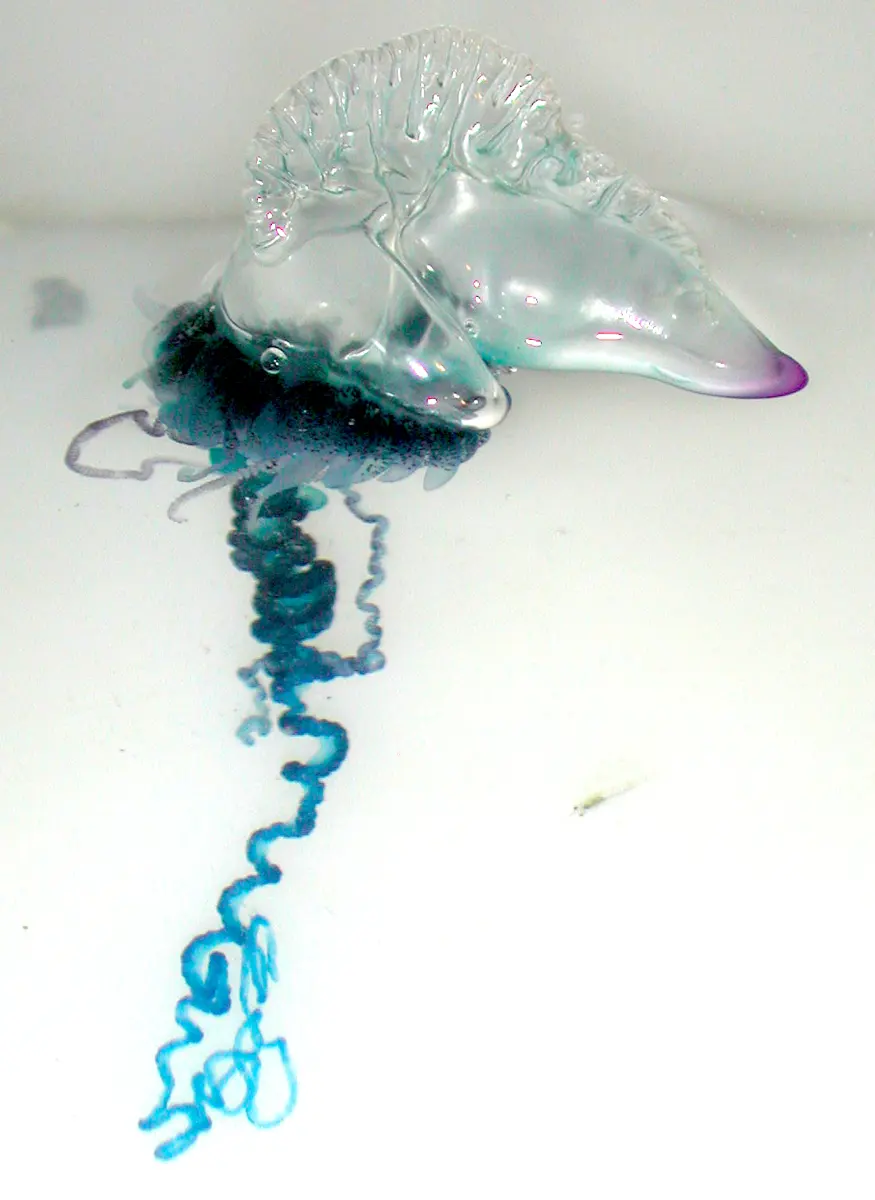
Examples: Hydra (freshwater polyp), Obelia (sea fur), Physalia (Portuguese man o’ war), Porpita, Tubularia.
Class 2: Scyphozoa (the true jellyfish)
- i.All solitary and exclusively marine.
- ii.The medusa is the main form; the polyp is small or absent. Some show alternation of generations.
- iii.The medusae are large bells or umbrellas, free-swimming, with tentacles round the margin.
- iv.The mesoglea is jelly-like and contains amoeboid cells.
- v.They do not form corals.
Examples: Aurelia (moon jellyfish), Rhizostoma, Pericolpa, Lucernaria (a stalked jellyfish).
Class 3: Anthozoa (Greek anthos, flower; zoon, animal)
- i.Solitary or colonial; all marine.
- ii.Polyps only, no medusa, so no alternation of generations.
- iii.The mesoglea is thick, with amoeboid cells and fibers.
- iv.The gastrovascular cavity is divided by partitions, the septa (mesenteries).
- v.The great reef builders: stony corals lay down limestone skeletons.
Examples: Tubipora (organ-pipe coral), Alcyonium (soft coral), Heliopora (blue coral), Gorgonia (sea fan), Metridium (sea anemone).
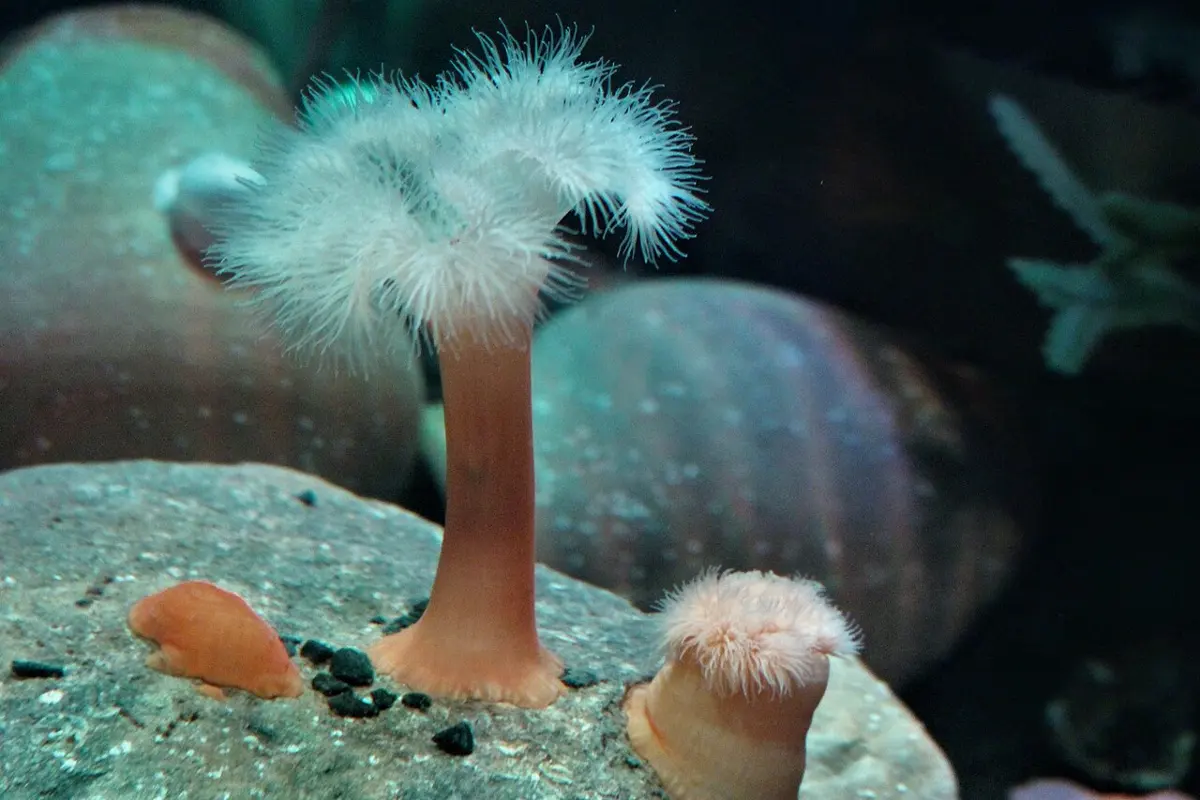
Which class of coelenterates has no medusa stage?
Pick an answer to see why.
8.2.4 Phylum Platyhelminthes
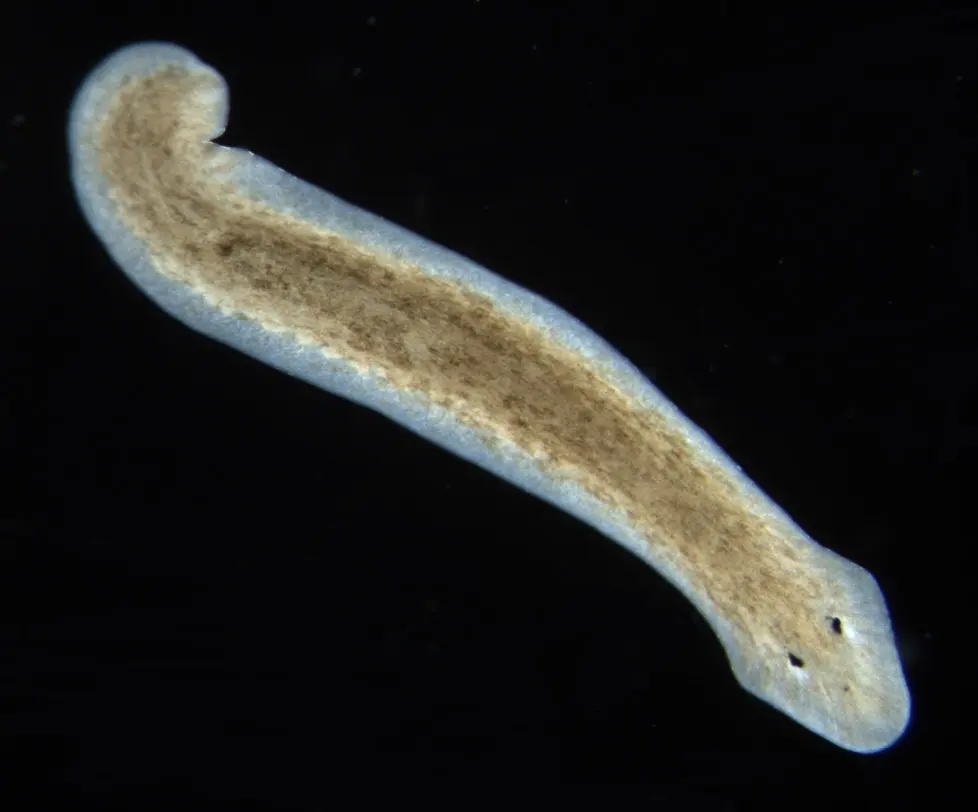
The name Platyhelminthes (Greek platys, flat; helminthes, worms) was proposed by the German anatomist Carl Gegenbaur in 1859 for the flatworms. Their body is flattened from top to bottom (dorso-ventrally) and is bilaterally symmetrical. They are the first animals with the organ-system level of organization, and the first with three germ layers.
General characters
- Mostly parasites, living inside organs such as the liver, intestine and blood of animals; a few are free-living or commensal, in fresh water, the sea and damp places.
- Bilaterally symmetrical and dorso-ventrally flattened; the mouth and genital openings are on the ventral surface.
- Organ-system grade of organization.
- The body is worm-like (vermiform), long and ribbon-like, or leaf-like.
- From microscopic to very long: the beef tapeworm, Taenia saginata, is usually 4–10 m long.
- The first triploblastic animals.
- Free-living forms are covered by a ciliated epidermis (cellular or syncytial); parasites have a tough tegument (a non-ciliated living outer layer, often called a cuticle) that resists the host’s digestive juices.
- Under the epidermis lie muscles of mesodermal origin, in circular, longitudinal and oblique layers.
- Parasites have spines, hooks, suckers and sticky secretions to hold on to the host.
- Acoelomate: the spaces between the organs are filled with mesodermal parenchyma.
- The gut is incomplete (no anus) and often branched; in tapeworms there is no gut at all: they absorb digested food from the host through their body surface.
- No respiratory, circulatory or skeletal systems.
- Excretion by protonephridia with flame cells: cells whose tuft of beating cilia flickers like a candle flame under the microscope, driving fluid into excretory tubes.
- A simple nervous system: a pair of cerebral ganglia in front and longitudinal nerve cords joined by cross-connections (transverse commissures), like the rungs of a ladder.
- Free-living forms have eye spots (photoreceptors); in parasites sense organs are reduced or absent.
- Mostly hermaphrodite (a few unisexual, such as Schistosoma); fertilization internal, self or cross.
- Parthenogenesis (eggs developing unfertilized) and polyembryony (one egg giving many embryos) are common in the parasitic forms, multiplying them in their hosts.
- Reproduction asexual (by regeneration and fission) and sexual.
- Development direct (free-living forms) or indirect, with several larval stages, in the endoparasites.
Classification
Platyhelminthes are classified by their way of life and their gut into three classes.
Class 1: Turbellaria (the free-living flatworms)
- i.Mostly free-living, in fresh water, the sea and damp soil.
- ii.Unsegmented and flat, covered by a ciliated epidermis; no cuticle.
- iii.No suckers.
- iv.The gut is incomplete, with a pharynx that can be pushed out of the mouth (eversible) to feed.
- v.Touch, chemical and light receptors (eye spots).
- vi.Mostly hermaphrodite; reproduce sexually and asexually; a remarkable power of regeneration.
Examples: Planaria (Dugesia), Bipalium (a land planarian, with a hammer-shaped head, found in gardens).
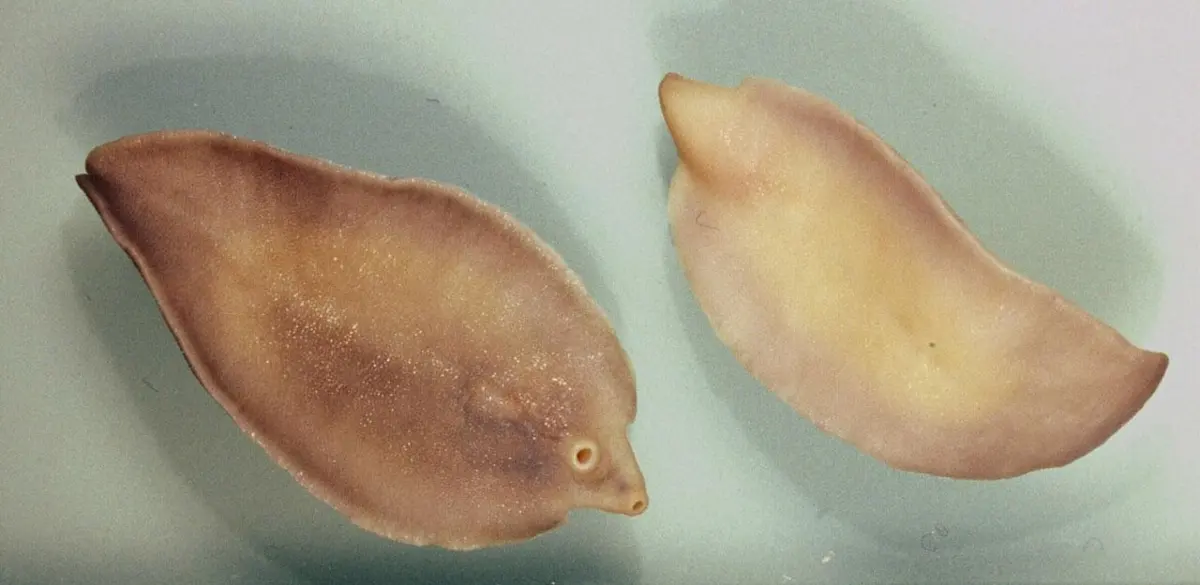
Class 2: Trematoda (the flukes)
- i.Ectoparasites or endoparasites of animals.
- ii.Leaf-shaped and dorso-ventrally flat.
- iii.Covered by a tegument (cuticle).
- iv.The gut is incomplete, the intestine forked and branched.
- v.Suckers to hold on to the host.
- vi.Mostly hermaphrodite.
- vii.Development direct in the ectoparasites, indirect in the endoparasites.
Examples: Fasciola (liver fluke), Schistosoma (blood fluke), Diplozoon and Gyrodactylus (gill flukes of fish).
Class 3: Cestoda (Greek kestos, girdle; eidos, form): the tapeworms
- i.Endoparasites in the intestine of vertebrates.
- ii.The body is long, flat and ribbon-like, and pseudosegmented.
- iii.Its segments, the proglottids, are immature near the head, mature in the middle and gravid at the end; each mature proglottid is hermaphrodite.
- iv.The head, the scolex, bears hooks and suckers.
- v.No gut and no sense organs.
- vi.A complex life cycle, usually with two hosts; the embryo inside the egg has six hooks (the onchosphere).
Examples: Taenia solium (pork tapeworm), Taenia saginata (beef tapeworm), Echinococcus (dog tapeworm), Hymenolepis (dwarf tapeworm).
Which class of flatworms has no gut at all?
Pick an answer to see why.
8.2.5 Phylum Aschelminthes
The Austrian zoologist Karl Grobben introduced the name Aschelminthes (Greek askos, sac or bladder; helmins, worm), for worms with a body cavity like a sac, in place of the older Nemathelminthes (nema, thread), the roundworms. The main group in it is the nematodes. They live everywhere: free in soil and water, as parasites of plants and animals, and on the surface of other animals (epizoic).
Planarian and roundworm: PhyloPic (CC0); earthworm: Pearson Scott Foresman, public domain
Earthworm section: traced from the British Museum (public domain)
Roundworm section: traced from FishtailBob, CC BY 4.0, via Wikimedia Commons
General characters
- In water and soil, and as parasites of plants and animals; some are free-living.
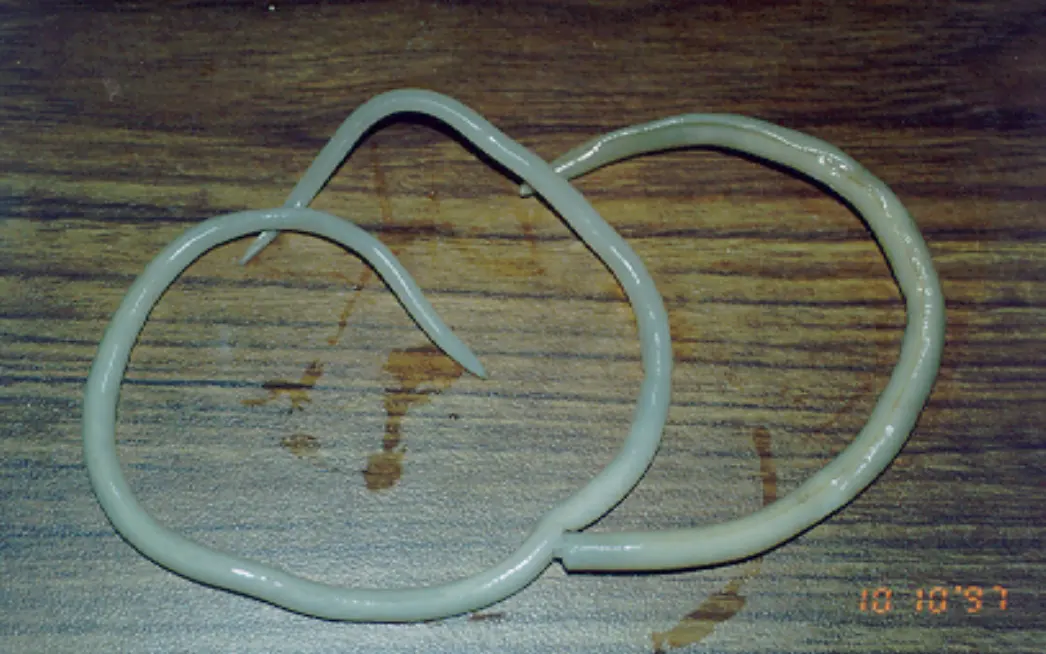
- Bilaterally symmetrical, triploblastic, unsegmented, thread-like worms with the organ-system grade of organization.
- The body is slender, round (cylindrical) in section and pointed at the ends, with no clear head.
- Pseudocoelomate: the body cavity comes from the blastocoel.
- The body wall: a tough, non-living cuticle outside, a syncytial epidermis without cilia, and a layer of longitudinal muscles only. The cuticle is shed (molted) four times as the worm grows.
- The gut is complete and straight, with mouth, pharynx, intestine and anus.
- No circulatory or respiratory organs: the fluid of the pseudocoelom carries substances; free-living forms take oxygen through the body surface; gut parasites respire anaerobically.
- Excretion through a system of canals (an H-shaped system, formed from renette cells), or protonephridia in some.
- The nervous system: a nerve ring round the pharynx, with ganglia, and several longitudinal nerve cords.
- Sense organs: papillae, eye spots, bristles and pits (amphids at the front, phasmids at the tail in some).
- Mostly unisexual, with clear sexual dimorphism: males are usually smaller, with a curved tail.
- No asexual reproduction; only sexual.
- Fertilization internal; the eggs have a tough shell; the life cycle is simple or complex, usually with no larva (the young look like small adults).
Classification
Nematodes are classified into two classes by whether they have phasmids, small sense organs at the tail.
Class 1: Phasmida (Secernentea)
- i.Many parasites; the free-living ones mostly live in soil.
- ii.Amphids are pore-like, on the side lips.
- iii.A pair of phasmids at the tail.
- iv.A single testis in the male.
- v.A well-developed excretory system with renette canals (the H-shaped system of Ascaris).
- vi.A glandular tail.
Examples: Ascaris (roundworm), Wuchereria (filarial worm, which blocks lymph vessels and causes elephantiasis), Loa loa (eye worm), Ancylostoma (hookworm).
Class 2: Aphasmida (Adenophorea)
- i.Mostly free-living, in water and soil; some parasites.
- ii.Amphids of various shapes, behind the lips.
- iii.No phasmids.
- iv.Testes paired.
- v.The excretory system reduced or absent.
- vi.A non-glandular tail.
Examples: Mermis, Enoplus, Dorylaimus, Trichinella (which causes trichinosis, from undercooked pork).
Which feature appears first in the roundworms?
Pick an answer to see why.
8.2.6 Phylum Annelida
Annelida (Latin annulus, little ring; Greek eidos, form), the segmented worms, were named by the French naturalist Jean-Baptiste Lamarck. They are the first animals with a true coelom and true segments, and are often called the first “higher” invertebrates.
General characters
- Mostly aquatic, in the sea and in fresh water; some live on land and burrow (earthworms).
- Free-living or sedentary (in tubes); a few are parasites or bloodsuckers.
- The body is long, worm-like, bilaterally symmetrical and triploblastic.
- Organ-system grade of organization.
- Metamerically segmented: the rings on the outside match the divisions inside. The segments (metameres, somites) are separated outside by grooves and inside by partitions, the septa.
- The body wall: a thin non-living cuticle secreted by the epidermis below it, then circular and longitudinal muscle layers.
- A schizocoelous (true) coelom, divided by the septa into chambers; its fluid works as a hydrostatic skeleton for burrowing. In leeches it is filled with tissue and blood channels (hemocoel).
- Locomotion by setae (chitin bristles in each segment), fleshy parapodia at the sides, or suckers (leeches).
- A complete, straight gut; digestion is extracellular.
- A closed blood vascular system. The blood is red because the oxygen-carrying pigment, hemoglobin or erythrocruorin, is dissolved in the plasma, not held in red cells.
- Respiration through the moist body surface, or through gills on the parapodia or the head.
- Excretion by coiled tubes, the nephridia, repeated segment by segment.
- The nervous system: a nerve ring round the pharynx (with a pair of ganglia above it, the “brain”) and a double ventral nerve cord with a ganglion in each segment and lateral nerves.
- Sense organs: touch receptors, taste buds, statocysts, photoreceptors and, in some, eyes.
- Many are hermaphrodite (earthworms, leeches); others unisexual (most marine worms).
- Asexual reproduction by regeneration is common; sexual by gametes.
- Development direct in the hermaphrodite annelids; indirect in the unisexual ones, through a free-swimming trochophore larva.
Classification
Class 1: Polychaeta (Greek polys, many; chaite, hair or bristle)
- i.Mostly marine; a few in fresh water.
- ii.A distinct head with eyes, palps and tentacles.
- iii.Locomotion by fleshy paddles at the sides, the parapodia, with many setae.
- iv.No clitellum.
- v.Sexes separate.
- vi.Fertilization external; a trochophore larva.
Examples: Nereis (sandworm, ragworm), Aphrodite (sea mouse), Glycera, Arenicola (lugworm).
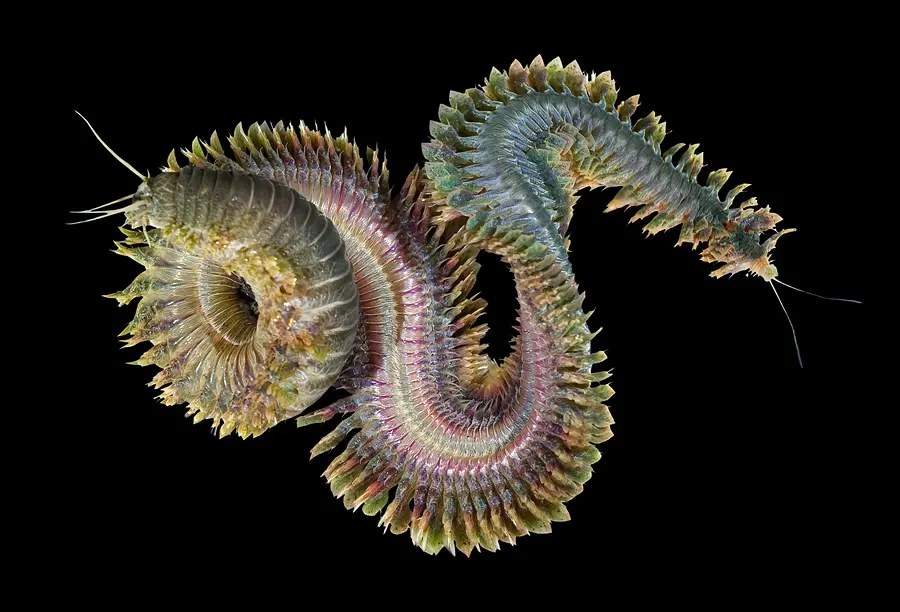
Class 2: Oligochaeta (Greek oligos, few; chaite, bristle)
- i.Mostly on land; some in fresh water.
- ii.No distinct head, no eyes or tentacles.
- iii.Locomotion by a few setae set in the skin; no parapodia.
- iv.A glandular girdle, the clitellum, which makes the cocoon.
- v.Hermaphrodite; fertilization external, inside the cocoon.
- vi.Development direct: no larva.
Examples: Pheretima (Metaphire, earthworm), Tubifex (sludge worm), Lumbricus, Megascolex.
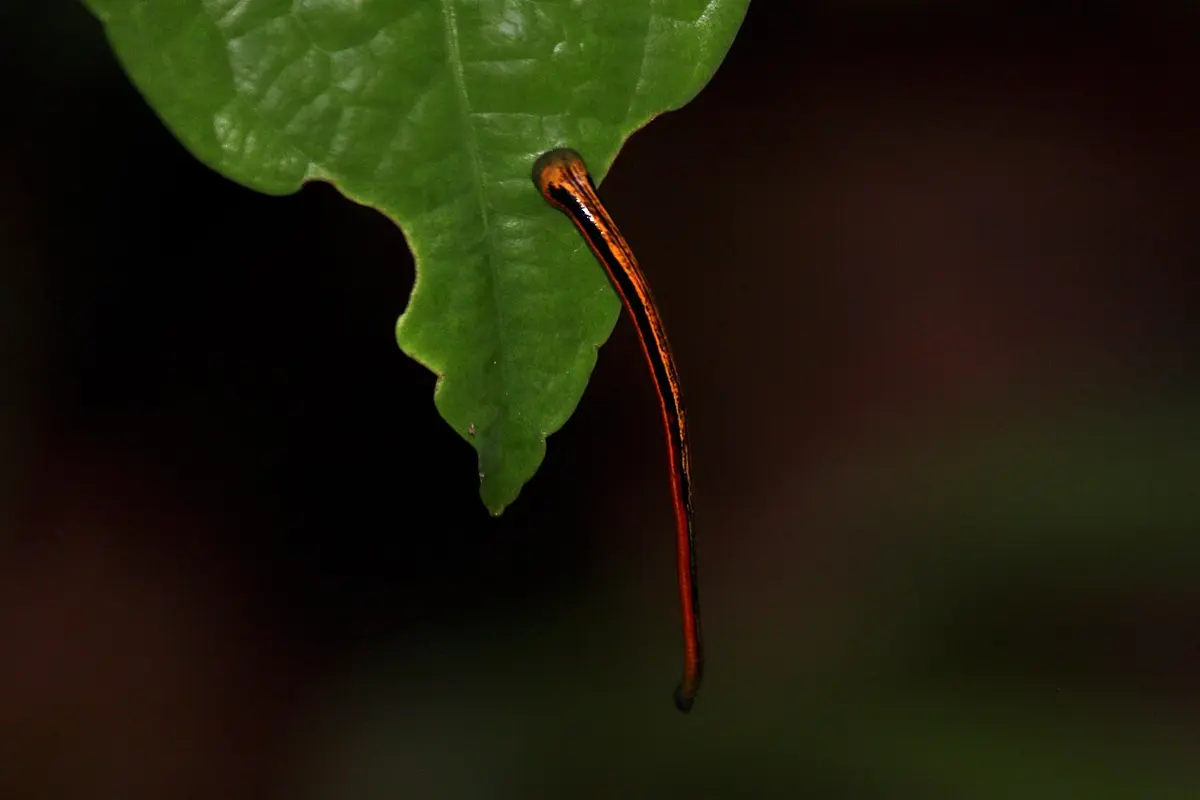
Class 3: Hirudinea (the leeches)
- i.On land and in water; mostly ectoparasites that suck blood (sanguivorous).
- ii.The body is long, dorso-ventrally flattened or cylindrical.
- iii.A sucker at each end, for clinging to the host and for moving (they loop like a measuring tape); no parapodia and no setae.
- iv.The coelom is greatly reduced, filled with botryoidal tissue and blood channels.
- v.The clitellum appears only in the breeding season.
- vi.A fixed number of segments, usually 33 (34 in some counts), each divided on the surface into several rings, the annuli, so there are many more rings than segments.
- vii.Hermaphrodite; fertilization internal; development direct.
Examples: Hirudinaria (cattle leech), Hirudo (medicinal leech), Piscicola (fish leech), Haemopis, and the land leeches (Haemadipsa) of Nepal’s monsoon forests.
Class 4: Archiannelida (“primitive annelids”)
- i.Exclusively marine; small, simple worms of about a dozen genera.
- ii.Segmented clearly inside, but only faintly outside.
- iii.No parapodia or setae (in most).
- iv.Sexes usually separate; a trochophore larva.
- v.The front part (prostomium) bears two or three tentacles.
Examples: Polygordius, Dinophilus, Protodrilus.
A worm has a clitellum, a few setae, no parapodia and no distinct head. It belongs to:
Pick an answer to see why.
The earthworm (Pheretima), an oligochaete, is studied in full in the next unit.
8.2.7 Phylum Arthropoda
Arthropoda (Greek arthron, joint; pous, podos, foot) is the largest phylum of the animal kingdom: well over a million species have been described, more than 80% of all known kinds of animal, and they live in every habitat on land, in water and in the air.
General characters
Body and skeleton
- The most diverse animals, on land, in water and in the air; mostly free-living, some parasites of plants and animals.
- Bilaterally symmetrical, triploblastic and metamerically segmented.
- The segments carry jointed appendages, modified in many ways: jaws, antennae, gills; and legs for walking, swimming, catching and tearing food, and defense.
- Organ-system grade of organization.
- The coelom is true but reduced; the main body cavity is a blood-filled hemocoel.
- The body is covered by a thick, tough cuticle of chitin, an exoskeleton secreted by the epidermis below it. Because it cannot stretch, it is shed from time to time as the animal grows: molting (ecdysis).
- The body is divided into head, thorax and abdomen, or the head and thorax are joined into a cephalothorax (prawn, spider) with an abdomen behind.
- The muscles are not a continuous sheet but separate bundles attached to the inside of the exoskeleton, which allows quick, precise movements.
Life processes
- Respiration by gills in aquatic forms, and tracheae or book lungs on land; some small ones through the body surface.
- A complete gut, mouth and anus at opposite ends. The mouth is surrounded by appendages, the mouthparts, adapted for biting and chewing, piercing and sucking, sponging or siphoning.
- Excretion by Malpighian tubules (insects, spiders), green glands (crustaceans), coxal glands (Limulus, spiders) or coelomoducts.
- An open circulatory system: a dorsal heart pumps blood into arteries that open into spaces (sinuses, lacunae) round the organs; there are no veins or capillaries.
- A nervous system like an annelid’s: a dorsal brain, a nerve ring, and a ventral nerve cord with ganglia and lateral nerves.
- Sense organs: simple eyes, compound eyes, antennae, sensory hairs, statocysts and hearing organs, for light, chemicals, touch and sound, and for balance while moving.
- The compound eye is made of many separate units, the ommatidia, each with its own lens; it sees a mosaic picture and is very good at detecting movement, which is why a fly is so hard to swat.
Reproduction
- Usually unisexual, often with clear sexual dimorphism.
- Fertilization mostly internal; development direct or indirect (with larvae and metamorphosis); some show parental care.
- Parthenogenesis in some (aphids, male honey bees).
Classification
Classifying arthropods is complicated and is argued over; older schemes give up to seven subphyla. Here we follow the scheme of three subphyla of true arthropods: Trilobitomorpha (the trilobites, all extinct, so not described here), Chelicerata and Mandibulata.
Bee and spider: Pearson Scott Foresman, public domain, via Wikimedia Commons
Subphylum Chelicerata (Greek chele, claw; keras, horn)
The body is a cephalothorax and an abdomen; there are six pairs of appendages on the cephalothorax (the first, the chelicerae, are pincer-like jaws), and no antennae. Two classes:
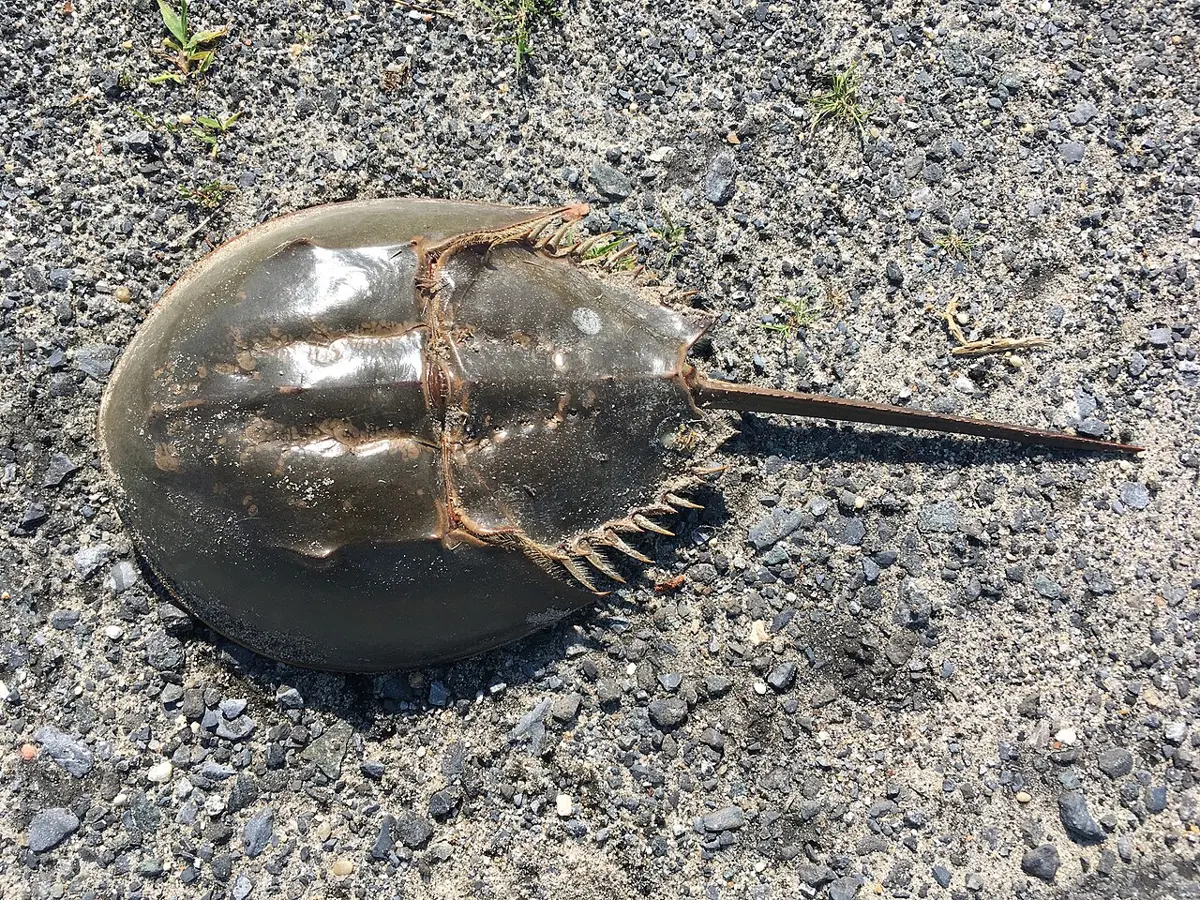
Class 1: Merostomata (Greek meros, thigh; stoma, mouth: their legs surround the mouth and help chew)
- i.All marine; simple eyes in the middle and compound eyes at the sides.
- ii.Five or six pairs of abdominal appendages, carrying book gills for respiration.
- iii.Excretion by coxal glands.
- iv.The abdomen ends in a sharp spine, the telson.
Example: Limulus, the king crab or horseshoe crab, a living fossil and not a crab at all. The oldest horseshoe crab fossils are about 445 million years old, and fossils from the age of the dinosaurs look much like the living ones.
Class 2: Arachnida
- i.Mostly on land; a few aquatic (some mites).
- ii.Only simple eyes.
- iii.The cephalothorax carries a pair of chelicerae, a pair of pedipalps and four pairs of walking legs; no appendages on the abdomen (except the spinnerets of spiders and the comb-like pectines of scorpions).
- iv.Excretion by coxal glands and Malpighian tubules.
- v.Respiration by book lungs, tracheae, or both.
- vi.No antennae and no wings.
- vii.Mostly carnivores, predators of insects.
Examples: Araneus (garden spider), Palamnaeus (scorpion), ticks and mites.
Subphylum Mandibulata (Latin mandibula, jaw)
On land and in water. The body is head, thorax and abdomen, or cephalothorax and abdomen; compound eyes; three to five pairs of appendages on the head, including antennae and mandibles (jaws). Three classes:
Class 3: Crustacea (Latin crusta, shell)
- i.Mostly aquatic, breathing by gills; a few on land (the woodlouse).
- ii.The body is a cephalothorax, covered by a hard shield, the carapace, and a segmented abdomen covered by plates (sclerites).
- iii.The head is of five segments, carrying two pairs of antennae, the mandibles and two pairs of maxillae; most appendages are biramous (two-branched).
- iv.Excretion by green glands (antennal glands).
- v.Sexes separate, with sexual dimorphism.
- vi.Development direct or indirect (with larvae).
Examples: Palaemon (prawn), Cancer (crab), lobster, shrimp, Cyclops (copepod), Daphnia (water flea), Oniscus (woodlouse).
Turn this freshwater prawn, of the same genus as Nepal’s river prawns, and count: its head and thorax are one piece under the carapace (a cephalothorax), and it walks on five pairs of jointed legs, the first two pairs ending in claws.

A dried freshwater prawn from Nicaragua, of the same genus (Macrobrachium) as Nepal’s jhinge machha, scanned at the Smithsonian’s natural history museum. Its long feelers broke off when it dried, and so did one of its two big claws: the stump hangs below.Drag to turn it, pinch to zoom. Tap a name to go to that part; tap it again to see the whole.
Front partThe head and thorax, joined under one hard shell. The whole body is covered by a hard outer skeleton, the exoskeleton.
Walking legsAll five pairs of legs grow from the front part. The last three pairs are thin, for walking on the river bed.
ClawThe second pair of legs is long and ends in claws, for catching food and for fighting.
JointEach leg is hard pieces joined end to end. It bends only at the joints, where the covering is thin.
TailThe tail is made of segments, each with its own piece of hard covering, so it can bend. Small swimming legs grow under it.
Macrobrachium sp.: Smithsonian, National Museum of Natural History, USNM 1699485 (CC0)
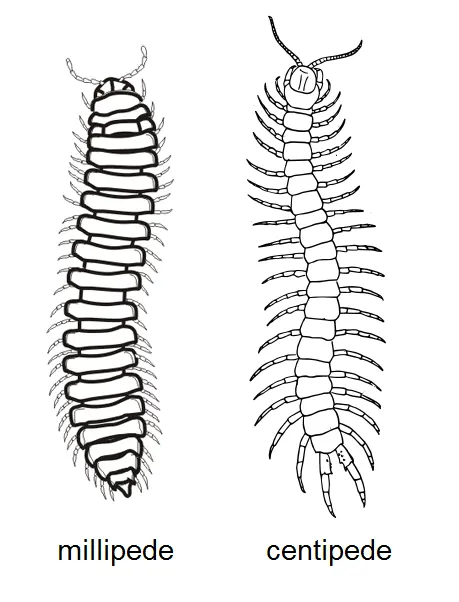
Class 4: Myriapoda (Greek myrioi, countless; pous, foot)
- i.Only on land; they breathe air.
- ii.The body is a head and a long trunk of many segments, each with jointed legs.
- iii.One pair of antennae, jaws (mandibles and maxillae), and many pairs of legs (from nine to several hundred).
- iv.Breathing by tracheae, which open through small pores, the spiracles.
- v.Excretion by Malpighian tubules.
- vi.Sexes separate.
Examples: Julus (millipede), Scolopendra (centipede), Spirobolus, Pauropus.
Class 5: Insecta (Latin insectus, cut into: the body is cut into three parts)
- i.Mostly on land and in the air; they breathe air.
- ii.The body is a head, thorax and abdomen.
- iii.The head carries a pair of compound eyes, a pair of antennae, a pair of mandibles, a pair of maxillae and a labium (the second pair of maxillae, joined).
- iv.The mouthparts are adapted to the food: chewing (cockroach, grasshopper), piercing and sucking (mosquito), sponging (housefly), siphoning (butterfly).
- v.Three pairs of legs, on the thorax; two pairs of wings, one pair (flies) or none (silverfish, worker ants).
- vi.Respiration by branching tracheae, opening through spiracles.
- vii.Excretion by Malpighian tubules.
- viii.Sexes separate; fertilization internal. Most develop indirectly: either through a larva and a pupa that look nothing like the adult (complete metamorphosis: butterfly, housefly, honey bee), or through young, called nymphs, that look like small wingless adults and grow wings over several molts (incomplete metamorphosis: cockroach, grasshopper). A few wingless insects develop directly.
Examples: Pieris (cabbage white butterfly), Bombyx (silkworm), Melanoplus (grasshopper), Periplaneta (cockroach), Apis (honey bee), Musca (housefly).
An animal has two body parts, four pairs of walking legs and no antennae. It belongs to:
Pick an answer to see why.
8.2.8 Phylum Mollusca
The Greek philosopher Aristotle called the cuttlefish and octopus ta malakia, “the soft ones”, and the Latin Mollusca (from mollis, soft) keeps that meaning: soft-bodied animals. Mollusca is the second largest phylum, with about 85,000 living species described, most of them gastropods (snails and slugs).
General characters
- Mostly aquatic, especially marine; some in fresh water and some on land. Mostly free-living; a few gastropods are parasites.
- The body is soft and unsegmented (except Neopilina, with some organs repeated), bilaterally symmetrical, but asymmetrical in the snails, twisted as they grow.
- Usually protected by a calcareous shell (an exoskeleton); in some the shell is inside (cuttlefish, squid) or absent (slug, octopus).
- The body has a head, a foot, a mantle and a visceral mass.
- The head has the mouth, eyes, tentacles and other sense organs; it is not distinct in the bivalves (Pelecypoda) and tusk shells (Scaphopoda).
- On the ventral side is a flat or plow-shaped muscular foot, modified for creeping, burrowing or swimming.
- The mantle (pallium) is a thick, glandular fold of the body wall over the back; it secretes the shell, and the space under it, the mantle cavity, holds the gills.
- The visceral mass holds the main organs, packed together inside the shell.
- The gut is simple, from the mouth in front to the anus behind; but in gastropods, tusk shells and cephalopods the intestine bends into a U, bringing the anus forward. In the mouth (buccal cavity) is usually a radula, a ribbon of tiny teeth that rasps food.
- An open circulatory system (except the cephalopods, whose system is closed); the heart has one or two auricles and one ventricle. The blood carries hemocyanin, a respiratory pigment containing copper, which makes it pale blue when it carries oxygen.
- Respiration by gills (ctenidia) in water, and a pulmonary sac (lung) on land.
- Excretion by a pair of metanephridia, the kidneys (in bivalves called the organs of Bojanus).
- The nervous system: paired ganglia (cerebral, pleural, pedal and visceral) joined by connectives and nerves.
- Sense organs: eyes, statocysts, tentacles and the osphradium, a patch near the gills that tests the water flowing in.
- Usually unisexual; some hermaphrodite (the garden snail).
- Fertilization internal or external; development direct, or indirect with a larva (trochophore and veliger).
Snail: Pearson Scott Foresman, Public domain, via Wikimedia Commons
Classification
Mollusca are classified into six classes by their symmetry, foot, shell, mantle, gills and radula.
Class 1: Monoplacophora (Greek monos, one; plax, plate)
- i.All marine, mostly in the deep sea.
- ii.Bilaterally symmetrical, with some organs repeated along the body (gills, kidneys, muscles), and a dome-shaped mantle.
- iii.A single flat, limpet-like shell, and a broad, flat ventral foot.
- iv.The head without eyes or tentacles.
- v.Sexes separate.
Example: Neopilina, known only from fossils until living ones were dredged up from the Pacific in 1952: another living fossil.
Class 2: Amphineura (Greek amphi, both; neuron, nerve)
- i.All marine.
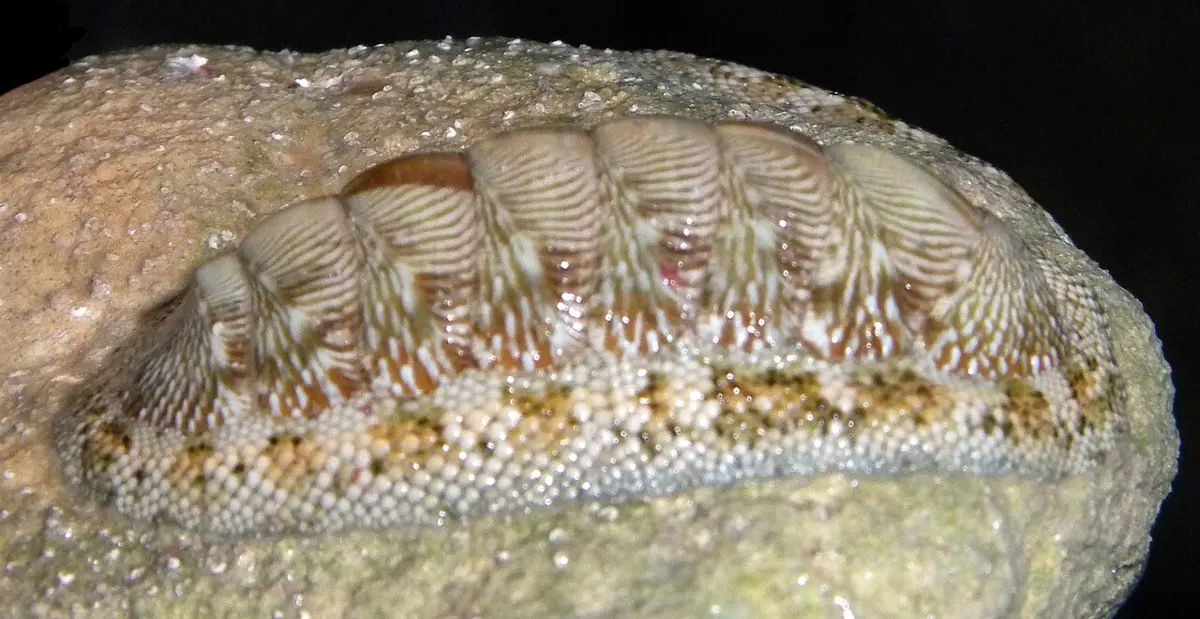
- ii.The body is flattened dorso-ventrally, with a shell and a foot; some are worm-like, without shell or foot.
- iii.The shell, when present, is of eight plates (overlapping, like a tiled roof).
- iv.A small head without eyes or tentacles.
- v.Radula, mantle and gills present.
Examples: Chiton, Neomenia. (Many books now split this class into Polyplacophora, the chitons, and Aplacophora, the shell-less worm-like ones.)
Class 3: Scaphopoda (Greek skaphe, boat; pous, foot): the tusk shells
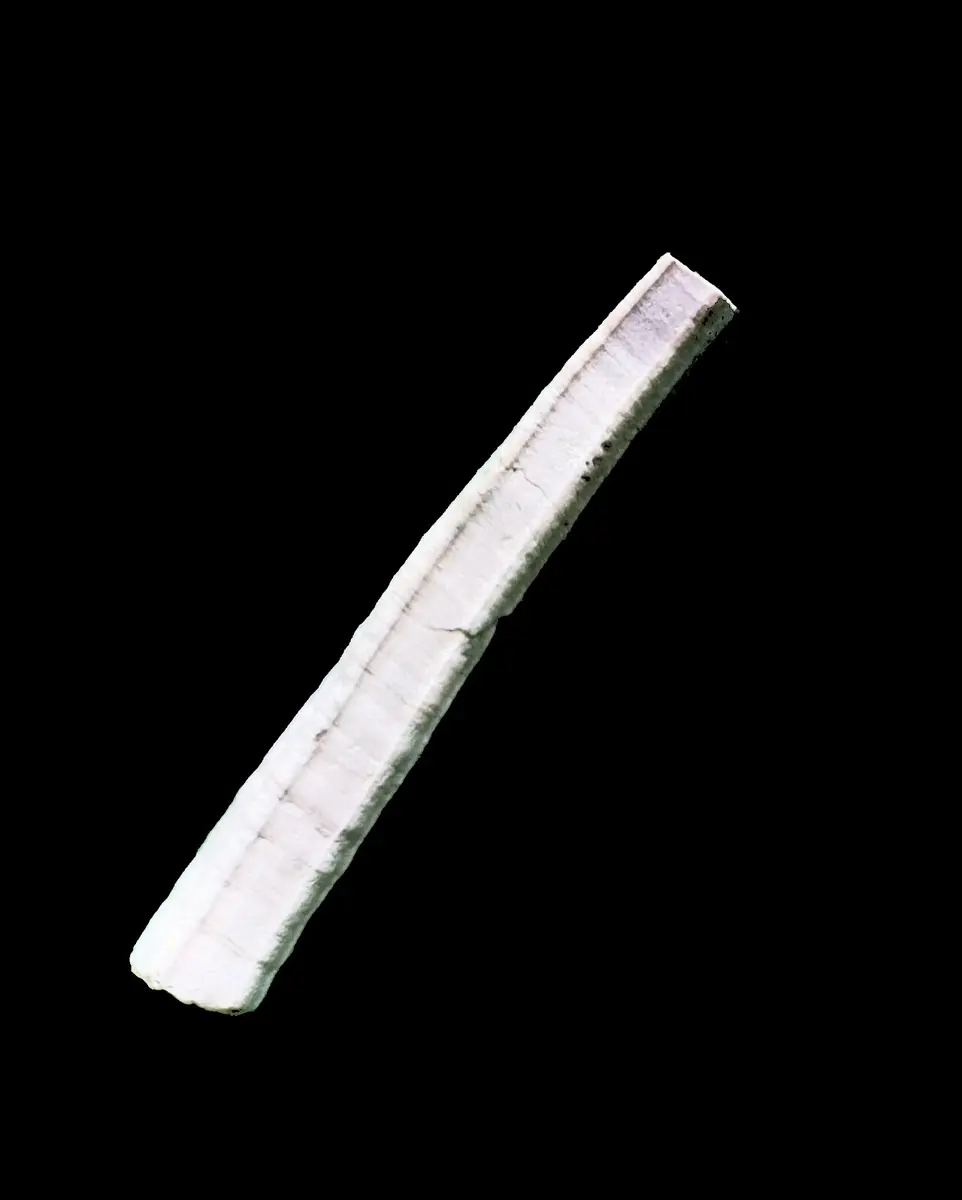
- i.Exclusively marine, buried in sand.
- ii.Bilaterally symmetrical, inside a tusk-shaped shell open at both ends.
- iii.The head small and not distinct; no eyes and no gills (they breathe through the mantle).
- iv.Fine tentacles round the mouth catch food; a radula is present.
- v.A conical foot for digging.
Examples: Dentalium (elephant tusk shell), Cadulus.
Class 4: Gastropoda (Greek gaster, belly; pous, foot)
- i.In the sea, fresh water and on land; a few are parasites inside echinoderms.
- ii.The body is unsegmented and asymmetrical: during development the visceral mass twists through 180° (torsion).
- iii.The shell is in one piece (univalve) and spirally coiled; reduced or absent in some.
- iv.A distinct head, with tentacles carrying eyes, and a mouth.
- v.A broad, flat, muscular foot on the ventral side.
- vi.A radula in the buccal cavity; the anus is near the front.
- vii.Respiration by ctenidia (gills), a pulmonary sac, or the body surface.
Examples: Pila (apple snail), Helix (garden snail), Limax (slug), Achatina (giant African land snail).
Class 5: Pelecypoda or Bivalvia (Greek pelekys, hatchet; pous, foot)
- i.Mostly marine; a few in fresh water.
- ii.Bilaterally symmetrical and flattened from side to side (laterally compressed), inside a shell of two valves hinged together.
- iii.No distinct head: no tentacles, eyes, pharynx or radula. Most filter food from water drawn over their large gills.
- iv.A hatchet-shaped (plow-shaped) foot for burrowing.
- v.Some form pearls: a grain or parasite caught under the mantle is coated, layer by layer, with mother-of-pearl.
Examples: Unio (freshwater mussel), Pecten (scallop), Pinctada (pearl oyster).
Class 6: Cephalopoda (Greek kephale, head; pous, foot)
- i.Exclusively marine.
- ii.A long, bilaterally symmetrical body, divided into head and trunk.
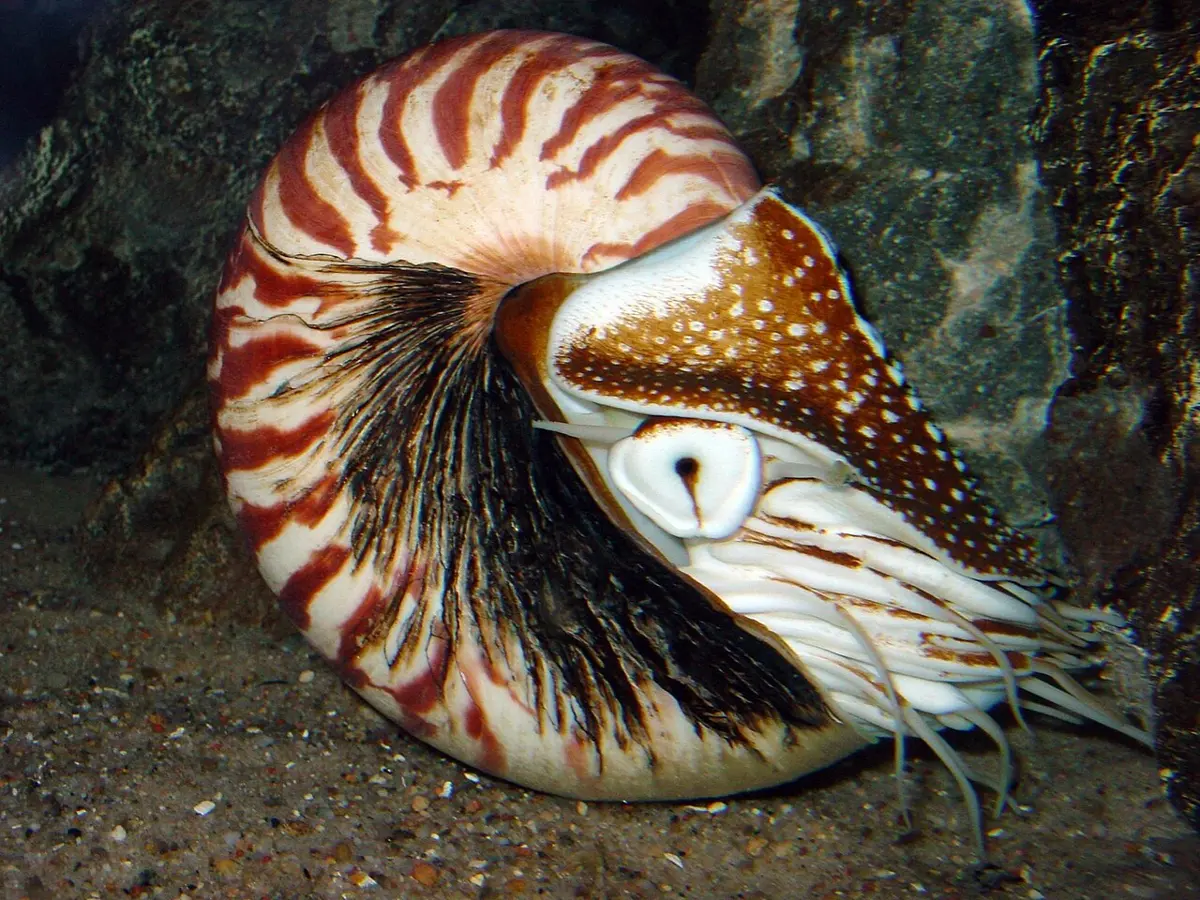
- iii.The shell is external (Nautilus), internal (the cuttlebone of Sepia, the pen of the squid) or absent (Octopus).
- iv.The head has large eyes, the mouth (with a beak and a radula) and arms or tentacles; the foot has become the arms and a siphon used for jet propulsion.
- v.Suckers on the arms or tentacles round the mouth.
- vi.Sexes separate.
Examples: Sepia (cuttlefish), Loligo (squid), Octopus (devil fish), Nautilus.
A mollusk has a shell of two hinged valves, no head and a hatchet-shaped foot. Its class is:
Pick an answer to see why.
8.2.9 Phylum Echinodermata
Echinodermata (Greek echinos, hedgehog; derma, skin) means “spiny-skinned”. The name was first used by the German naturalist Jacob Klein in 1734 for sea urchins. Because they are radially symmetrical, echinoderms were long kept together with the coelenterates in one group, the Radiata; Rudolf Leuckart separated them in 1847. They form a peculiar group: all live in the sea, most of them creeping slowly over the sea floor, though some can swim.
General characters
- Exclusively marine, mostly on the sea floor, so they are called benthic invertebrates.
- The body is cylindrical or long, globular, star-shaped, disc-like or flower-like.
- Triploblastic, with the organ-system grade of organization, though several systems are simple or absent.
- Adults have pentamerous radial symmetry (in fives); the larvae are bilaterally symmetrical.
- Enterocoelomate.
- No head. The body has an oral surface (with the mouth) and an aboral surface; the oral surface has five radiating bands, the ambulacra (where the tube feet are), alternating with five interambulacra.
- The body wall: an outer epidermis, a dermis, a muscle layer and an inner ciliated epithelium lining the coelom.
- Many bear tiny pincers, the pedicellariae, among the spines; they keep the body surface clean of debris and of larvae trying to settle on it.
- An endoskeleton of calcareous plates (ossicles) of mesodermal origin, in the dermis, often bearing spines.
- A water vascular system (ambulacral system), formed from the coelom: canals filled with sea water, opening to the outside through a sieve plate, the madreporite, and joined to the tube feet.
- The tube feet (each with an ampulla, a podium and often a sucker) are the organs of locomotion, and also catch food and exchange gases.
- The gut is straight or coiled; the mouth on the oral surface, the anus usually on the aboral surface.
- Circulation is open and simple: haemal and perihaemal channels and sinuses, with no heart; there is no true blood vascular system.
- No excretory system: nitrogenous wastes diffuse out through the skin gills (papulae) and the tube feet.
- A simple nervous system: a ring round the mouth (circum-oral ring) and radial nerves into the arms; no brain.
- Sexes separate, with few exceptions. Reproduction sexual, and asexual by regeneration: a lost arm grows back, and in some a single arm with part of the disc can grow a whole new animal.
- Fertilization external; development indirect, through larvae.
- The larvae swim freely and are bilaterally symmetrical; they metamorphose into the radial adult. A few echinoderms brood their young.
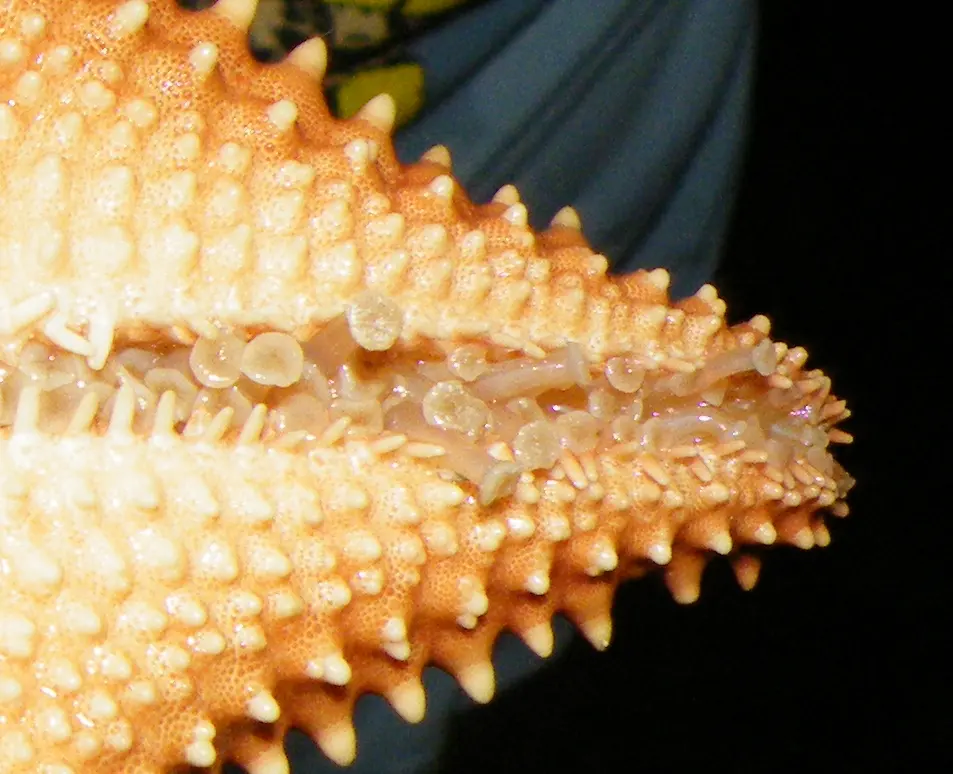
Turn the starfish over. On top (the aboral surface) are its spiny plates; underneath (the oral surface) is the mouth at the center, with a groove running along each of the five arms, where the tube feet would be in a living starfish.

A dried starfish (Goniaster tessellatus, about 16 cm across) from the Atlantic Ocean off Florida, scanned at the Smithsonian’s natural history museum. Turn it over to see its underside.Drag to turn it, pinch to zoom. Tap a name to go to that part; tap it again to see the whole.
ArmOne of its five arms. All five are alike and spread evenly round the middle, like the spokes of a wheel.
Central discThe middle of the body, where the arms meet. There is no head. The skin is rough with spines and knobs of calcium carbonate.
MouthThe mouth is in the middle of the underside, facing the sea floor.
Groove of tube feetA groove runs from the mouth along the underside of each arm. In a living starfish it is lined with rows of tube feet. This one was dried, and its soft tube feet shrank into the groove, so they hardly show.
Goniaster tessellatus: Smithsonian, National Museum of Natural History, USNM E43116 (CC0)
Classification
Echinodermata are divided into two subphyla: Eleutherozoa and Pelmatozoa.
Subphylum Eleutherozoa (Greek eleutheros, free; zoon, animal)
Free-living, not attached; four classes, told apart by the shape of the body.
Class 1: Asteroidea (the starfishes)
- i.Commonly called starfishes or sea stars.
- ii.Usually five arms, not sharply marked off from the central disc.
- iii.Tube feet with suckers, and pedicellariae.
- iv.Larvae: the bipinnaria and then the brachiolaria.
Examples: Asterias (sea star), Solaster (sun star).
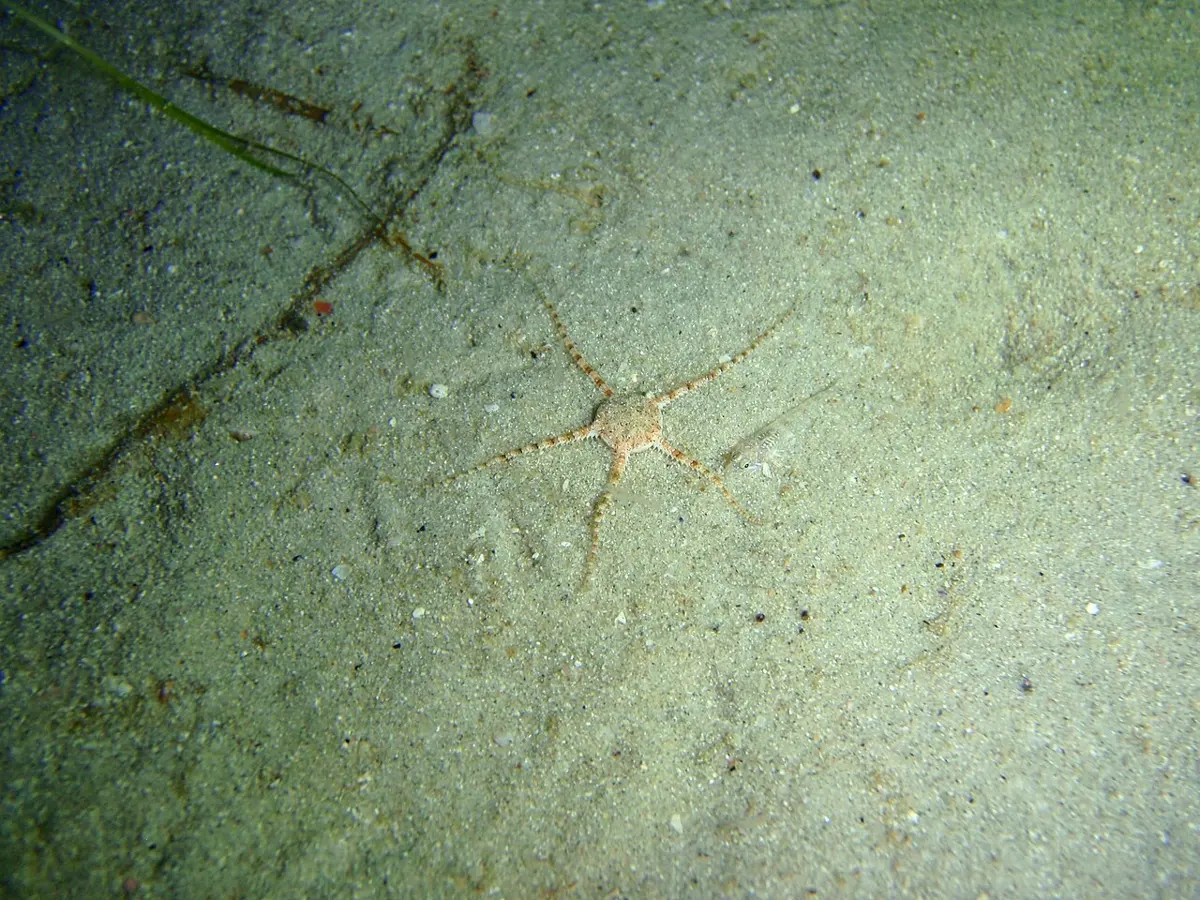
Class 2: Ophiuroidea (Greek ophis, snake; oura, tail; eidos, form)
- i.Commonly called brittle stars.
- ii.Star-shaped, but the thin, snake-like arms are sharply marked off from the round central disc.
- iii.No pedicellariae; the tube feet have no suckers.
- iv.Larva: the ophiopluteus.
Examples: Ophioderma, Ophiura.
Class 3: Echinoidea (Greek echinos, hedgehog)
- i.Commonly called sea urchins.
- ii.The body is round (globular), disc-shaped or oval, with no arms, inside a rigid shell (test) of fused plates covered with movable spines.
- iii.Pedicellariae with three jaws.
- iv.A complex chewing apparatus of five teeth, Aristotle’s lantern, which scrapes algae off rocks.
- v.Larva: the echinopluteus.
Examples: Echinus (sea urchin), Echinocardium (heart urchin), Clypeaster (sand dollar).
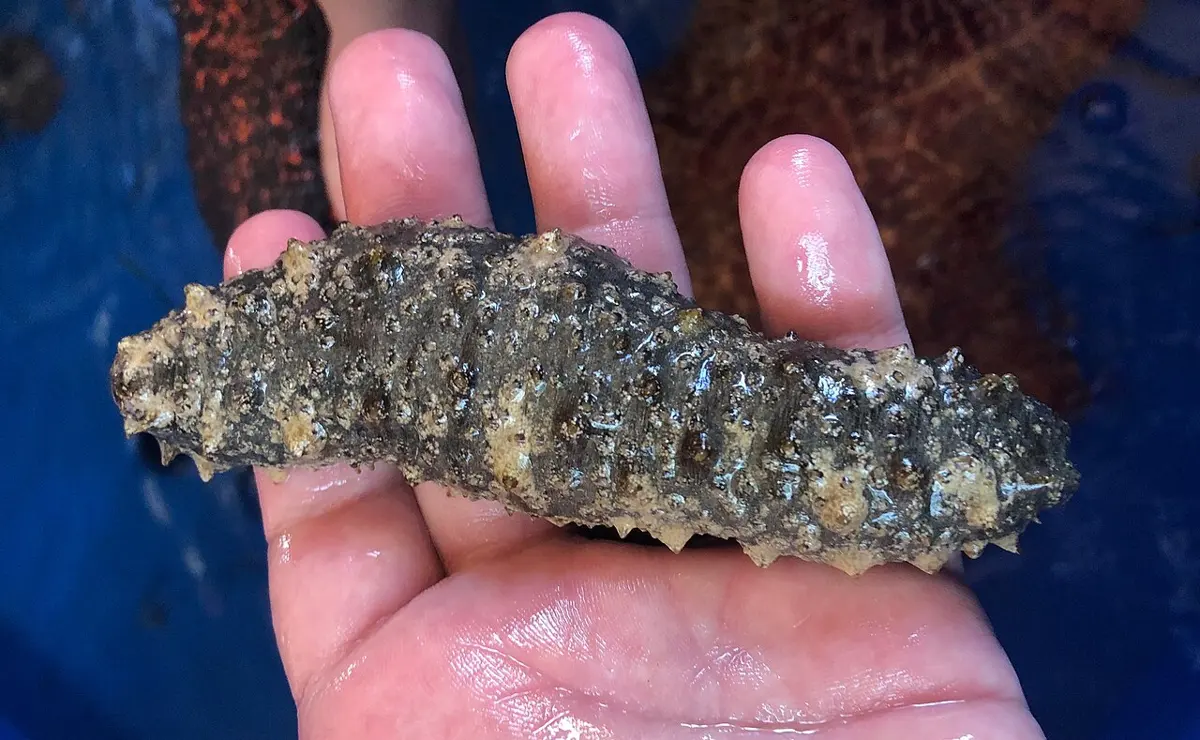
Class 4: Holothuroidea (Greek holothourion, sea cucumber)
- i.Commonly called sea cucumbers.
- ii.The body is long along the oral–aboral axis, the mouth at one end and the anus at the other; it lies on its side.
- iii.The mouth is ringed by tentacles (modified tube feet).
- iv.Tube feet for locomotion; the skeleton is reduced to tiny ossicles in a leathery skin. They breathe by a pair of branched respiratory trees that open into the cloaca, pumping water in and out.
- v.Larvae: the auricularia and then the doliolaria.
Examples: Holothuria and Cucumaria (sea cucumbers).
Subphylum Pelmatozoa (Greek pelma, sole or stalk; zoon, animal)
Stalked echinoderms, fixed to the sea floor for at least part of their life; one living class.
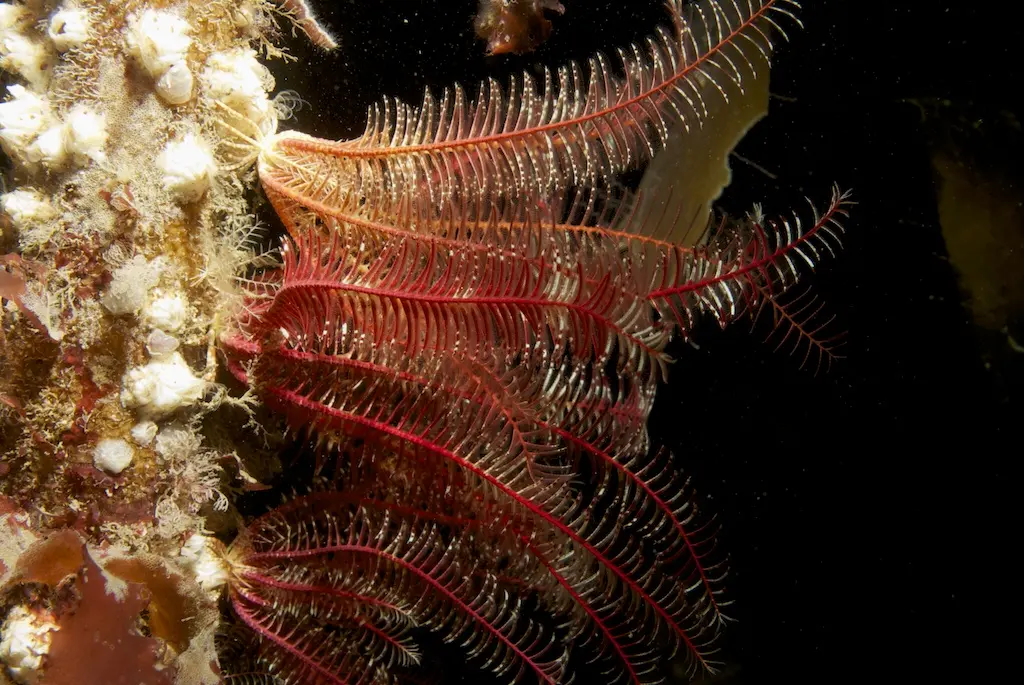
Class 5: Crinoidea
- i.Commonly called sea lilies and feather stars.
- ii.The body is fixed to the substratum by a stalk from the aboral side, most of the time; feather stars break free of the stalk and swim or crawl.
- iii.Mouth and anus both on the oral surface, which faces up.
- iv.No pedicellariae, spines or madreporite; the tube feet have no suckers (they pass food along the arms).
- v.Larva: the doliolaria.
Examples: Antedon (feather star), Metacrinus and other sea lilies.
Which echinoderm has its mouth and anus both on the upper (oral) surface?
Pick an answer to see why.
8.2.10 Phylum Chordata
Chordata is the last major group of the animal kingdom, named by the British embryologist Francis Balfour in 1880. The name comes from Greek chorde, a string or cord, and -ata, bearing: these animals all have, at some stage of their life, a stiff but flexible supporting rod along the back, the notochord (Greek noton, back; Latin chorda, cord). Three characters, found at least in the embryo, mark every chordate:
- A notochord. A long, flexible, supporting rod in the mid-dorsal line, from head to tail, lying below the nerve cord and above the gut. It lasts all life in the lower chordates (the lancelet), but in the vertebrates the embryo’s notochord is replaced by the vertebral column. (A trace of it survives in you, as the soft center of each disc between your vertebrae.)
- A dorsal, hollow (tubular) nerve cord. A single nerve cord, formed from ectoderm and hollow, runs along the back above the notochord. In vertebrates its front end becomes the brain, protected by the cranium (skull), and the rest the spinal cord, protected by the vertebral column. (Compare an earthworm or insect: its nerve cord is solid, double and ventral.)
- Pharyngeal gill slits. A series of paired openings in the side walls of the pharynx, at some stage of development. In the protochordates and fishes they stay for life, for filter feeding or breathing; in land vertebrates they appear only in the embryo and close up (parts of them become the middle ear canal and some glands).
Lancelet: Gervais and Boulart, public domain, via Wikimedia Commons
Many books add a fourth: a post-anal tail, a tail that continues behind the anus (yours is the tailbone, the coccyx).
Other general characters
- Aquatic, terrestrial and aerial; mostly free-living, very few parasites (the lamprey).
- Triploblastic, metamerically segmented (blocks of muscle, the vertebrae) and bilaterally symmetrical.
- A true coelom: in vertebrates it forms by the splitting of a sheet of mesoderm, so it is listed as a schizocoel; the protochordates have an enterocoel.
- An exoskeleton of scales, feathers, hair and the like in most vertebrates, and an endoskeleton of cartilage or bone in most chordates.
- A complete gut with digestive glands (liver, pancreas).
- A closed circulatory system, with a ventral heart, and arteries, veins and capillaries.
- Many have a post-anal tail.
- A well-developed respiratory system: gills, lungs or moist skin.
- Kidneys for excretion.
- A well-developed nervous system.
- Most have well-developed sense organs: eyes, ears, nose (olfactory organs), taste buds.
- Sexes separate; development mostly direct, in some indirect (the frog’s tadpole).
In a chordate, where is the nerve cord?
Pick an answer to see why.
Classification of Chordata
Phylum Chordata has four subphyla: Hemichordata, Urochordata, Cephalochordata and Vertebrata. The first three are the primitive chordates, the protochordates: all marine, small, with no vertebral column and no cranium, so they are also grouped as the Acraniata (without a skull). The fourth, Vertebrata, holds the more advanced chordates, the Euchordata: their notochord is replaced by a vertebral column in the adult, and they have a cranium, so they are also called Craniata.
1. Hemichordata (Greek hemi, half; chorde, cord)
- i.Exclusively marine, solitary or colonial, mostly living in tubes or burrows they make in sand and mud (tubicolous).
- ii.A soft, worm-like body.
- iii.A short rod-like outgrowth in the front part of the body (the stomochord) was taken to be a notochord, hence the name “half-chordates”.
- iv.The body in three regions: proboscis, collar and trunk.
Examples: Balanoglossus (tongue worm or acorn worm), Saccoglossus.
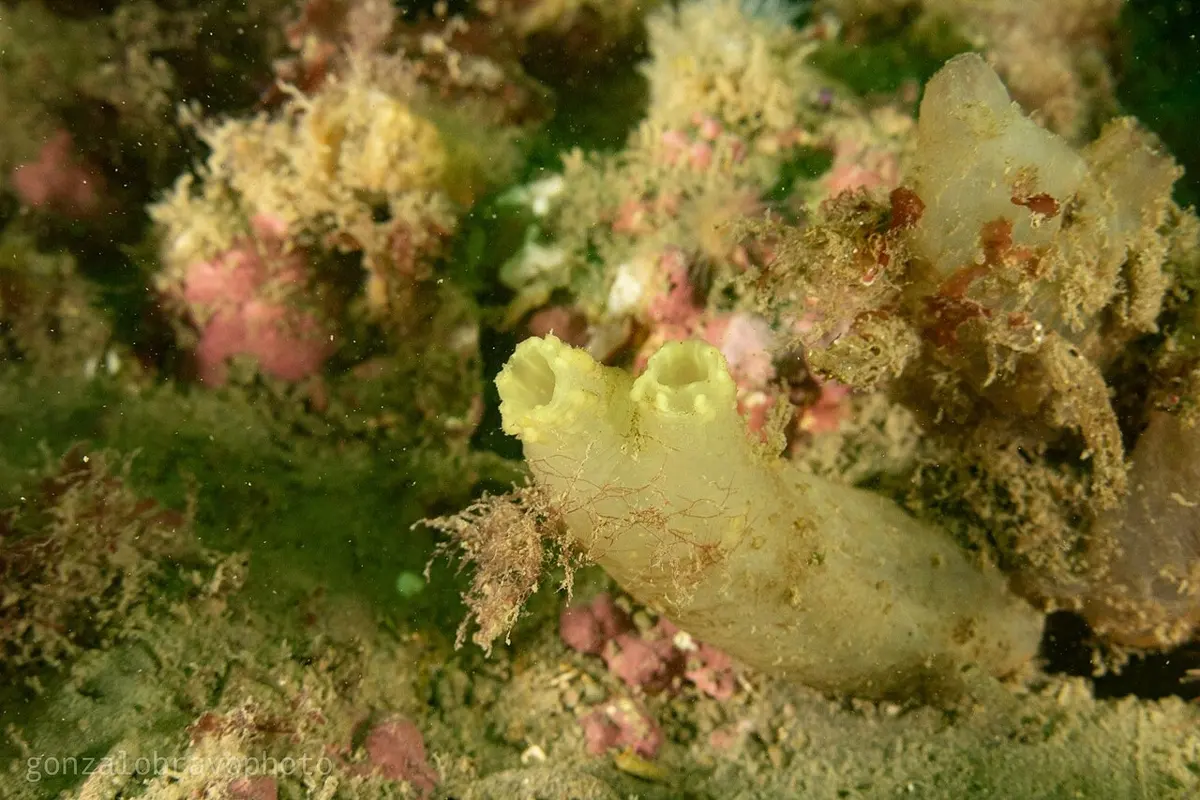
2. Urochordata (Greek oura, tail; chorde, cord) or Tunicata
- i.Exclusively marine, at all depths; commonly called tunicates or sea squirts.
- ii.The notochord and nerve cord are present only in the larva (and only in its tail, hence the name), not in the adult.
- iii.Retrogressive metamorphosis: the free-swimming, tadpole-like larva is more advanced than the adult. It settles head down on a rock, absorbs its tail with the notochord, and becomes a fixed, filter-feeding bag.
- iv.The adult is mostly sedentary, enclosed in a leathery covering, the test or tunic.
Examples: Herdmania (sea squirt), Ascidia, Ciona.
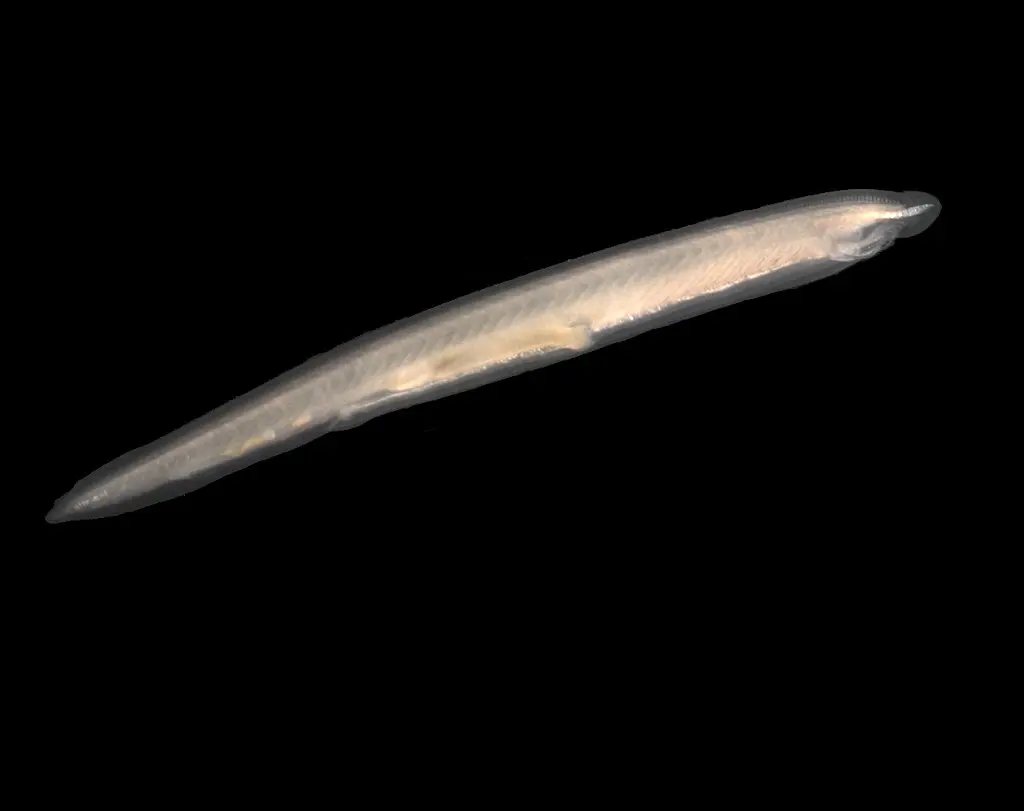
3. Cephalochordata (Greek kephale, head; chorde, cord)
- i.Marine, widely found in shallow water, commonly called lancelets.
- ii.A transparent, slender, fish-like body, with clear blocks of muscle (segmented).
- iii.The notochord and nerve cord run the whole length of the body, right into the head, throughout life.
- iv.Mostly buried in sand with only the head out, filtering water; some swim freely.
Example: Branchiostoma (Amphioxus, the lancelet).
In which protochordate is the notochord found only in the larva’s tail?
Pick an answer to see why.
4. Vertebrata (Latin vertebratus, jointed)
A vertebrate is a chordate with a bony or cartilaginous endoskeleton that includes a cranium round the brain and a vertebral column round the nerve cord.
General characters:
- The lower vertebrates are aquatic; the higher ones live on land.
- The body is usually divided into head, neck, trunk and a post-anal tail.
- An exoskeleton of protective scales, feathers or hair grows from the skin, with nails, claws, hoofs and horns.
- The skin (integument) has an outer epidermis and an inner dermis, with skin (cutaneous) glands.
- The notochord of the early embryo is replaced by a vertebral column of cartilage or bone in the adult.
- The endoskeleton, of cartilage or bone, carries the muscles.
- Well-developed organ systems.
Vertebrata is divided into two divisions.
Division 1: Agnatha (Greek a, without; gnathos, jaw)
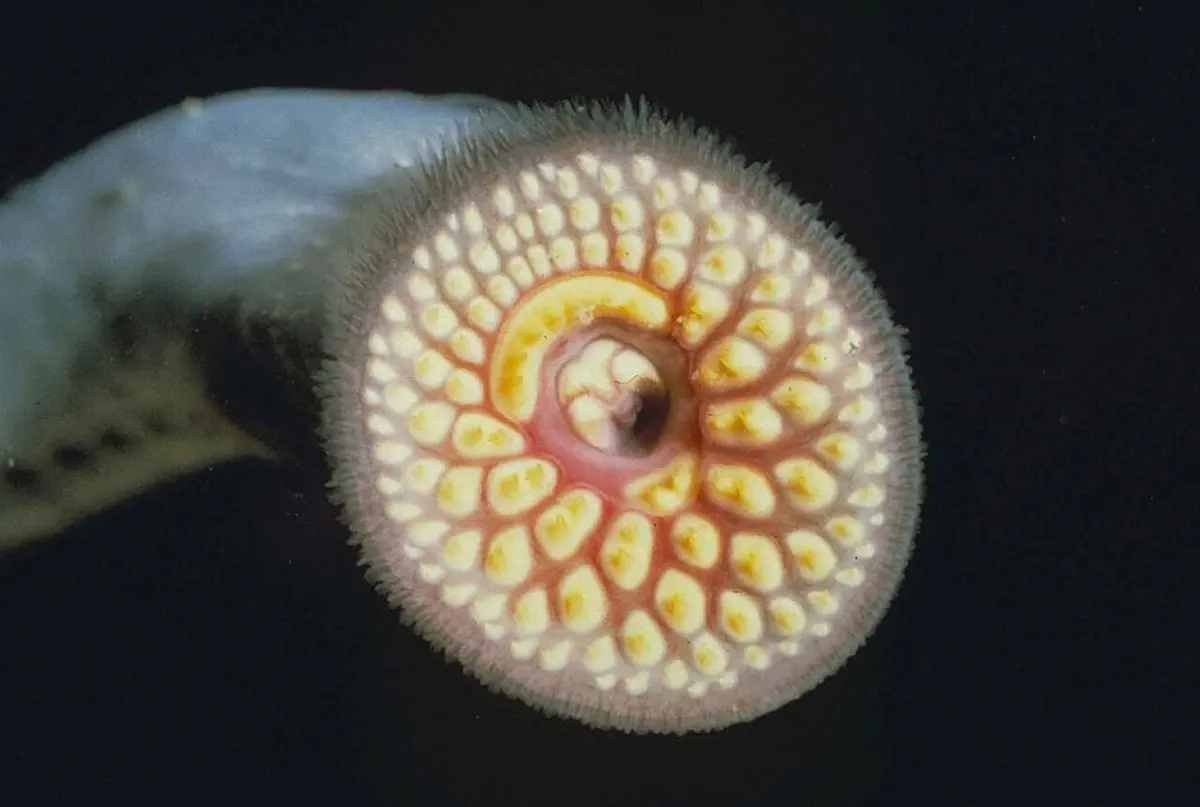
The jawless vertebrates. Living ones form one class, Cyclostomata (Greek kyklos, circle; stoma, mouth).
- i.Exclusively aquatic, many in the sea; parasites (lampreys, which suck the blood of fishes) or scavengers (hagfishes).
- ii.A long, eel-shaped body.
- iii.Unpaired fins only; no paired fins.
- iv.A soft, smooth, slimy skin without scales.
- v.A round, sucking mouth with no jaws.
- vi.A single nostril, and 5–16 pairs of gills opening by round gill pores.
- vii.A two-chambered heart.
- viii.Sexes separate (lampreys) or not clearly so (hagfishes); a single gonad; fertilization external.
Examples: Petromyzon (lamprey), Myxine (hagfish).
Division 2: Gnathostomata (Greek gnathos, jaw; stoma, mouth)
The jawed vertebrates, with paired fins or limbs. Two superclasses: Pisces and Tetrapoda.
Superclass 1: Pisces (Latin piscis, fish)
All fishes: essentially aquatic, with three main characters: a streamlined body covered with scales, gills for breathing, and paired fins for swimming.
- Always aquatic, in fresh water or the sea.
- A streamlined (spindle-shaped) body of head, trunk and tail; no neck.
- Swimming by paired fins (pectoral and pelvic) and unpaired median fins (dorsal, anal and tail fins); the muscular tail is the propeller and the rudder.
- Usually covered by waterproof dermal scales.
- An endoskeleton of bone or cartilage.
- Breathing mainly by gills, bare or covered by a gill cover (operculum); 5–7 pairs of gill slits.
- A complete gut, ending in a cloaca or an anus.
- A two-chambered heart (one auricle, one ventricle), carrying only deoxygenated blood; red blood cells nucleated.
- Poikilothermic (cold-blooded).
- Mesonephric kidneys; excretion ammonotelic (most bony fishes) or ureotelic (sharks and rays).
- A brain, spinal cord and nerves, with 10 pairs of cranial nerves. Sense organs: nasal sacs for smell, the inner ear, and the lateral line system, which feels movements and vibrations in the water.
- Sexes separate; fertilization external or internal; females lay large yolky eggs (oviparous) or are ovoviviparous; development usually direct.
Carp: DBCLS (CC BY 4.0)
Pisces is divided into two classes.
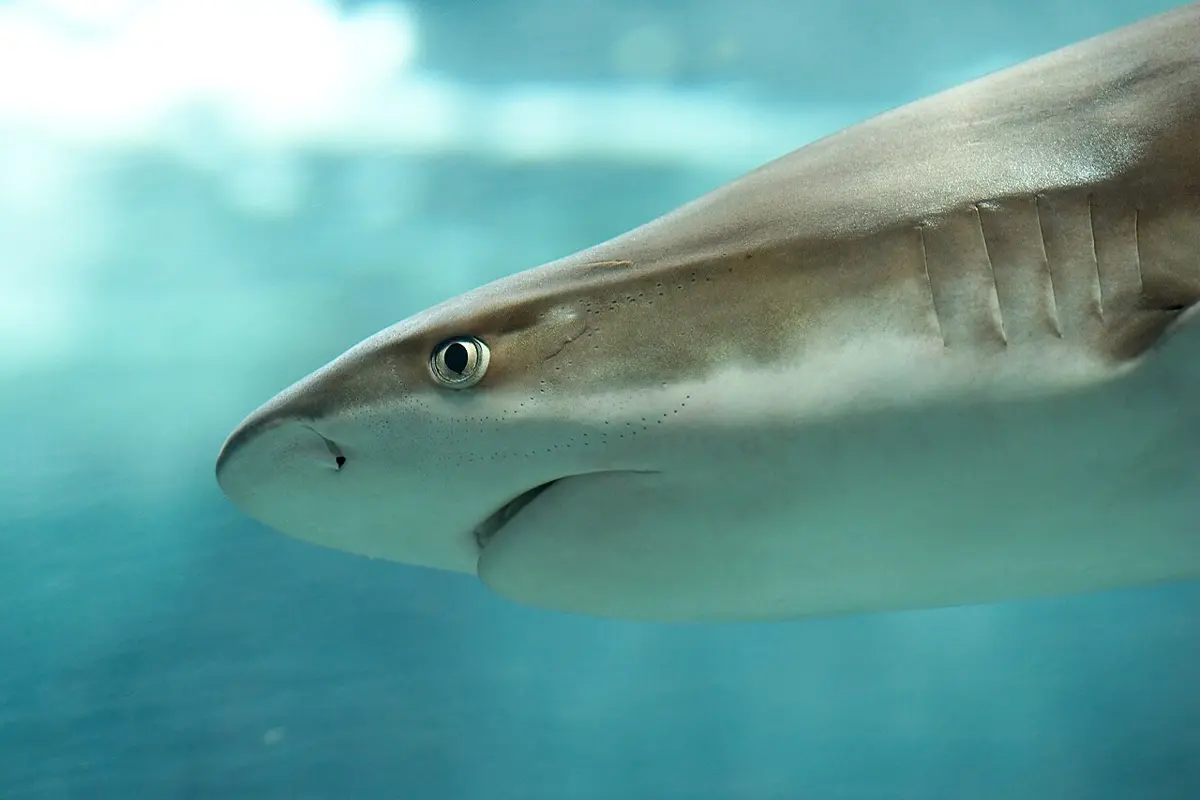
Class 1: Elasmobranchii or Chondrichthyes (Greek chondros, cartilage; ichthys, fish): the cartilaginous fishes
- i.Marine, predatory fishes.
- ii.A tough skin with tiny tooth-like placoid scales (some naked, with mucous glands).
- iii.A heterocercal tail: its upper lobe is larger, with the backbone running into it.
- iv.An endoskeleton of cartilage.
- v.The mouth on the ventral side.
- vi.5–7 pairs of gills, the gill slits not covered by an operculum (in chimaeras a fold of skin covers them).
- vii.No swim bladder (they keep from sinking by an oily liver and by swimming).
- viii.Fertilization internal: males have claspers on the pelvic fins to pass sperm into the female. Many are ovoviviparous; others lay eggs in leathery cases or are viviparous.
Examples: Scoliodon (dogfish, a small shark), Trygon (stingray), Torpedo (electric ray), Chimaera (ratfish).
Class 2: Osteichthyes (Greek osteon, bone; ichthys, fish): the bony fishes
- i.In fresh water, the sea and brackish water.
- ii.An endoskeleton mostly of bone.
- iii.A homocercal tail: two equal lobes.
- iv.Most have a swim bladder, an air sac (in many joined to the gut), for buoyancy; in some it works as a lung.
- v.The mouth terminal (at the front) or nearly so.
- vi.Ganoid, cycloid or ctenoid scales; a few have none.
- vii.Four pairs of gills on bony arches, covered by an operculum. Some breathe air too, with a swim bladder or lungs (lungfishes, and Nepal’s magur, Clarias, with extra air-breathing organs).
- viii.Fertilization mostly external; males usually have no copulatory organ (a few, such as the guppy, have a modified fin to pass sperm).
- ix.Mostly oviparous.
Examples: Labeo rohita (rohu, रहु), Cyprinus (carp), Cirrhinus (naini, mrigal), Hippocampus (seahorse), Exocoetus (flying fish), Anguilla (eel), and Nepal’s Tor (mahseer, सहर).
A fish has a skeleton of cartilage, five pairs of uncovered gill slits and no swim bladder. It is:
Pick an answer to see why.
Superclass 2: Tetrapoda (Greek tetra, four; pous, foot)
Vertebrates with two pairs of limbs from the trunk (lost again in snakes and some others). Mostly land animals; some lead an amphibious life. Four classes.
Class 1: Amphibia (Greek amphi, both; bios, life)
- i.A double life: on land and in water.
- ii.The body is mainly head and trunk; some have a neck and a tail (salamanders).
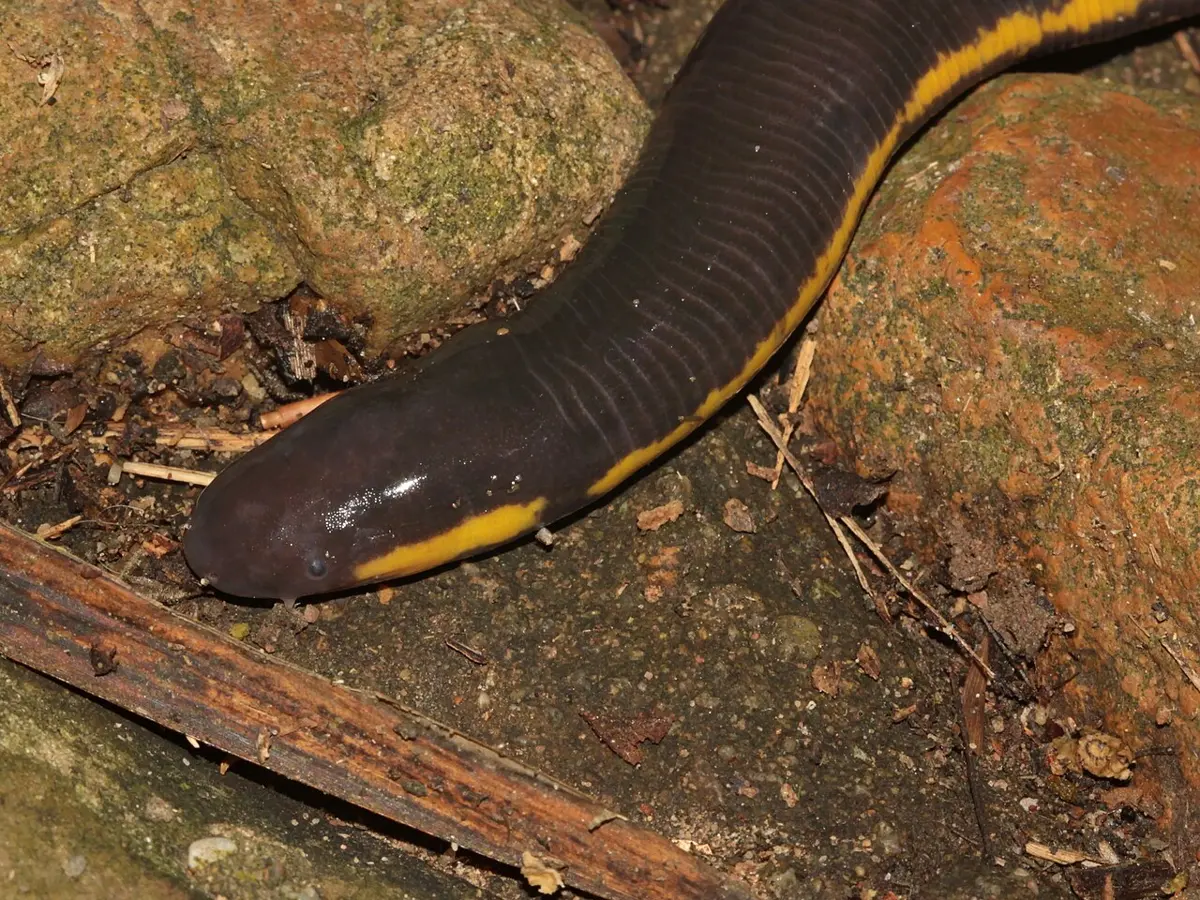
- iii.Two pairs of pentadactyl limbs (five-toed; the frog’s forelimbs have four fingers); some have no limbs (caecilians).
- iv.A soft, moist, glandular skin, with pigment cells (chromatophores).
- v.No exoskeleton (no scales, in most); a bony endoskeleton, and a skull with two knobs where it joins the backbone (dicondylic).
- vi.A complete gut; a wide mouth with jaws; a tongue that can often be flicked out (protrusible).
- vii.Breathing through the skin, the lungs and the lining of the mouth (buccal cavity); in some, the larva’s external gills stay in the adult (the axolotl).
- viii.A three-chambered heart (two auricles, one ventricle), with an extra chamber, the sinus venosus; a renal portal and a hepatic portal system.
- ix.Mesonephric kidneys; adults ureotelic (tadpoles ammonotelic).
- x.A simple brain, with 10 pairs of cranial nerves.
- xi.Sense organs: nasal chambers, an ear with a single ear ossicle (the columella), and a lateral line system in the larvae and aquatic forms.
- xii.Sexes separate.
- xiii.Fertilization mostly external; the male has no copulatory organ. The females are oviparous, laying eggs in water; the eggs hatch into larvae (tadpoles) that live wholly in water and breathe by gills, then metamorphose.
Examples: Hoplobatrachus tigerinus (once Rana tigrina, the Indian bullfrog), Bufo (toad), Triturus (newt), Salamandra (salamander), Siren (mud eel), Hyla (tree frog), Rhacophorus (flying frog), Ichthyophis (a caecilian, recorded in Nepal’s eastern hills).
Class 2: Reptilia (Latin repere, to creep)
- i.Mostly land animals that crawl; some burrow, and some (turtles, crocodiles) live in water but breed on land.
- ii.Bilaterally symmetrical; the body is head, neck, trunk and tail.
- iii.A dry skin with almost no glands, covered by an exoskeleton of horny epidermal scales, shields and scutes.
- iv.Two pairs of pentadactyl limbs from the trunk, the toes with horny claws; snakes and some lizards have no limbs.
- v.The mouth at the front, the jaws with simple conical teeth.
- vi.A bony endoskeleton; the skull monocondylic (one knob joins it to the backbone).
- vii.A three-chambered heart, the ventricle partly divided; four-chambered in crocodiles. Red blood cells oval and nucleated.
- viii.Breathing by lungs only.
- ix.Metanephric kidneys; excretion mostly uricotelic (crocodiles and water turtles also give out much ammonia or urea).
- x.A brain more advanced than an amphibian’s, with 12 pairs of cranial nerves.
- xi.Jacobson’s organs, smell organs in the roof of the mouth (a snake flicks its tongue to bring scent to them).
- xii.Fertilization internal; mostly oviparous.
- xiii.Large, yolky eggs with a protective shell, laid on land.
- xiv.Development direct; the embryo grows inside membranes: the amnion, chorion, yolk sac and allantois.
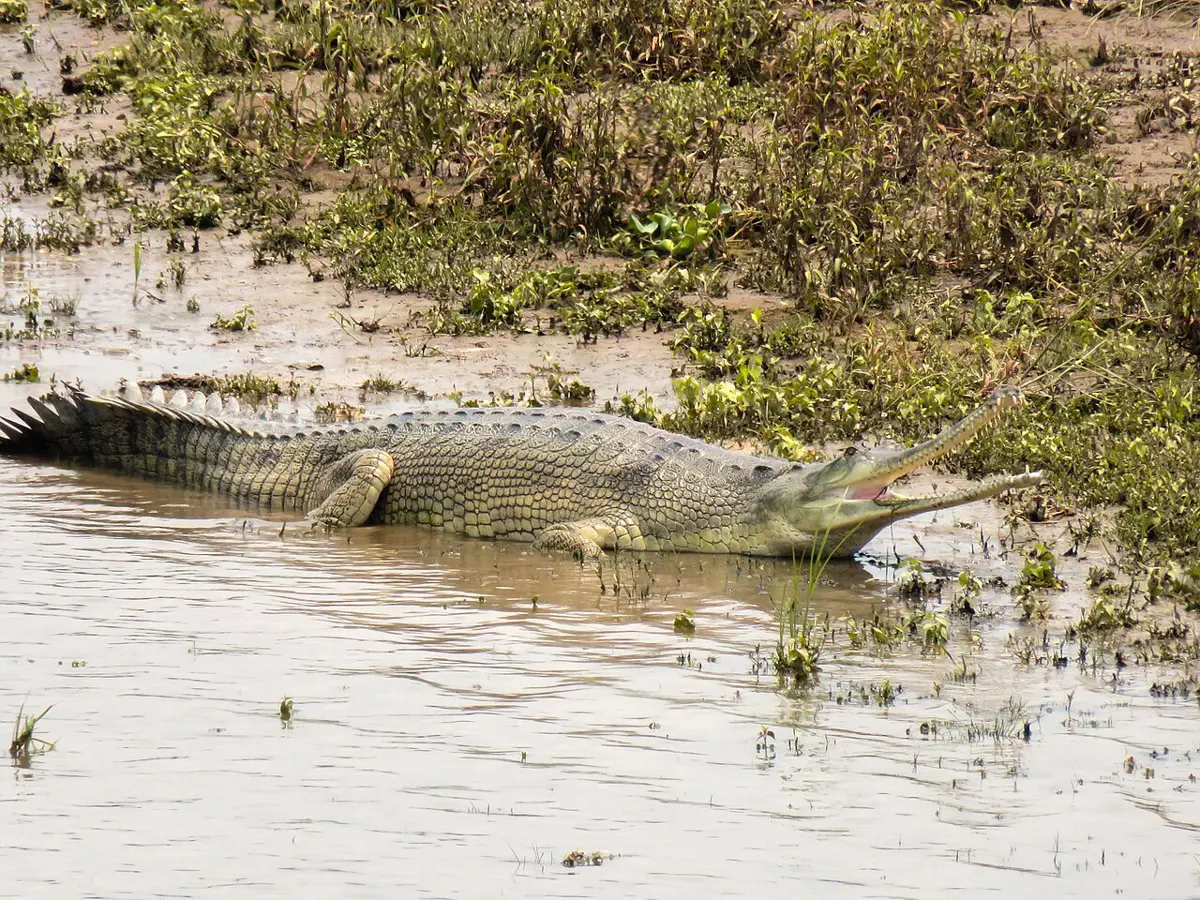
Class 3: Aves (Latin avis, bird)
- i.Two-legged (bipedal), feathered and warm-blooded (homeothermic): they keep a constant body temperature; most can fly.
- ii.A streamlined body of head, neck, trunk and tail.
- iii.Two pairs of limbs: the forelimbs are wings; most fly, but not the flightless birds (ostrich, kiwi). The legs are adapted for walking, hopping, grasping, perching, wading and swimming, and are covered by horny scales.
- iv.One skin gland, the preen gland (uropygial, oil gland) at the base of the tail; no other skin glands.
- v.The jaws form a toothless beak, adapted to the food: picking seeds, scooping fruit, tearing flesh, sipping nectar, chiseling wood.
- vi.A bony endoskeleton; the long bones are hollow, filled with air spaces (pneumatic), to save weight, and the hollow bones have little or no marrow. The skull is monocondylic. The breastbone (sternum) has a mid-ventral keel for the big flight muscles.
- vii.A complete gut, opening behind by the cloacal aperture, with extra chambers: the crop stores and softens food, the gizzard grinds it (often with swallowed grit).
- viii.Spongy, non-elastic lungs joined to air sacs, so air flows through the lungs one way; the voice comes from the syrinx, at the base of the windpipe.
- ix.A four-chambered heart; the renal portal system reduced; red blood cells oval, nucleated and biconvex.
- x.Metanephric kidneys; uricotelic; no urinary bladder.
- xi.A brain more developed than a reptile’s; 12 pairs of cranial nerves.
- xii.Excellent sight, but a poor sense of smell (except the kiwi and vultures). The eye has a third eyelid (nictitating membrane), a ring of bony sclerotic plates and a comb-like pecten. The ear has one middle-ear bone.
- xiii.Sexes separate, often with clear sexual dimorphism. The female has only the left ovary and oviduct working (saving weight).
- xiv.All oviparous: large, yolky eggs in a hard calcareous shell; the embryo has four membranes, chorion, amnion, allantois and yolk sac.
- xv.Rich behavior: migration, courtship, nest building, parental care and territories.
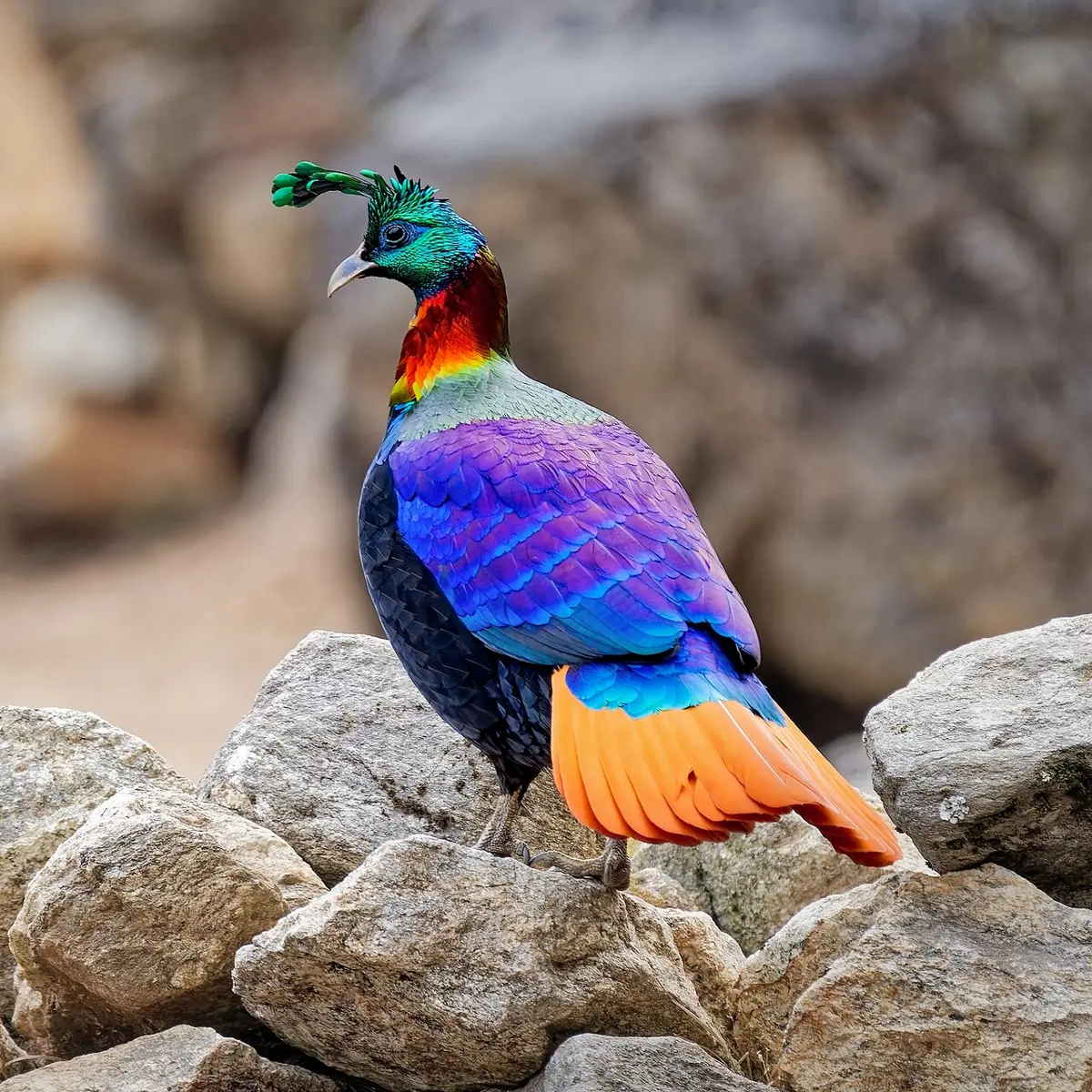
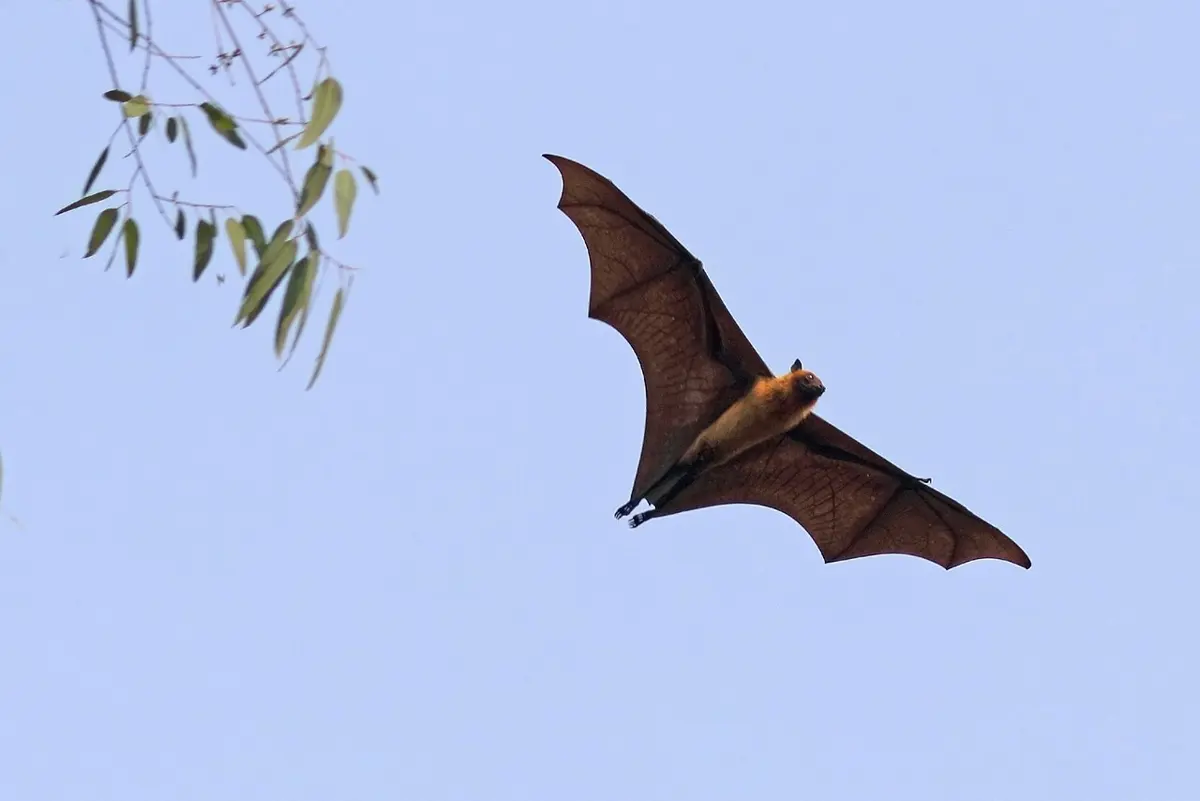
Class 4: Mammalia (Latin mamma, breast)
- i.Mostly on land; hair-covered, air-breathing and warm-blooded.
- ii.The body clearly in head, neck, trunk and tail.
- iii.Two pairs of pentadactyl limbs, each with five or fewer digits, adapted for walking, climbing, burrowing, swimming or flying; the hind limbs are absent in whales and dolphins.
- iv.An exoskeleton of hair (and horns, spines, scales, claws, nails, hoofs).
- v.The skin has sweat glands, oil (sebaceous) glands and mammary glands (non-functional in males).
- vi.A muscular diaphragm separates the chest (thoracic) cavity in front from the abdominal cavity behind.
- vii.A fully bony endoskeleton; the skull is dicondylic, with an ear bone capsule (tympanic bulla), and each half of the lower jaw is a single bone, the dentary.
- viii.A complete gut ending in an anus. Teeth heterodont (of different kinds: incisors, canines, premolars, molars), thecodont (set in sockets) and diphyodont (two sets: milk teeth, then permanent).
- ix.Breathing always by lungs.
- x.A four-chambered heart; no renal portal system; red blood cells without a nucleus.
- xi.A pair of metanephric kidneys; excretion ureotelic.
- xii.The most developed brain, with 12 pairs of cranial nerves.
- xiii.Well-developed sense organs: eyes with eyelids; the ear opening guarded by an external ear (pinna); three middle-ear bones (malleus, incus, stapes); a coiled cochlea in the inner ear.
- xiv.Sexes separate, with sexual dimorphism; the male has a copulatory organ (penis), and the testes usually lie in a pouch (scrotum); the eggs are small, with little yolk.
- xv.Fertilization internal; nearly all are viviparous (except the egg-laying monotremes, the platypus and echidnas). The young develop in the uterus, joined to its wall by the placenta for food and oxygen; the embryonic membranes are the amnion, chorion, allantois and yolk sac.
Which pair is uricotelic, with a monocondylic skull?
Pick an answer to see why.
The phyla side by side
The table brings the unit together. Read it down a column to see an idea appear for the first time: tissues with the coelenterates, three layers and organ systems with the flatworms, a complete gut with the roundworms, a true coelom and segments with the annelids.
| Phylum | Grade | Germ layers | Symmetry | Body cavity | Gut | Segmentation | Excretion |
|---|---|---|---|---|---|---|---|
| Porifera | cellular | 2 | none or radial | none | none (spongocoel) | none | body surface |
| Coelenterata | tissue | 2 | radial or biradial | none | blind sac | none | body surface |
| Platyhelminthes | organ system | 3 | bilateral | none (acoelomate) | blind sac or none | none; pseudo in tapeworms | flame cells |
| Aschelminthes | organ system | 3 | bilateral | pseudocoelom | complete | none | renette cells |
| Annelida | organ system | 3 | bilateral | schizocoel | complete | metameric | nephridia |
| Arthropoda | organ system | 3 | bilateral | hemocoel | complete | metameric | Malpighian tubules, green glands |
| Mollusca | organ system | 3 | bilateral or none | hemocoel (coelom small) | complete | none | kidneys (Bojanus) |
| Echinodermata | organ system | 3 | radial (larva bilateral) | enterocoel | complete | none | none |
| Chordata | organ system | 3 | bilateral | coelom (enterocoel in protochordates) | complete | metameric | kidneys |
Exercise
A. Choose the correct option
- Which of the following is a freshwater sponge?
Pick an answer to see why.
- A body plan in which the gut is a sac with a single opening, which takes food in and lets waste out, is found in:
Pick an answer to see why.
- Hyalonema is commonly called:
Pick an answer to see why.
- The water canal system is the unique character of the phylum:
Pick an answer to see why.
- The internal hollow cavity of a poriferan is the:
Pick an answer to see why.
- Which animal is commonly called the freshwater polyp?
Pick an answer to see why.
- In sponges, the larva is:
Pick an answer to see why.
- Nematocysts are found in:
Pick an answer to see why.
- Which animals are called cnidarians?
Pick an answer to see why.
- A diffuse nervous system is found in:
Pick an answer to see why.
- Which of the following animals show polymorphism?
Pick an answer to see why.
- Metagenesis is a characteristic feature of:
Pick an answer to see why.
- Identify the larval form of coelenterates.
Pick an answer to see why.
- What are the excretory organs of Platyhelminthes?
Pick an answer to see why.
- Planaria is:
Pick an answer to see why.
- Which of the following is acoelomate?
Pick an answer to see why.
- A pseudocoelom is found only in the phylum:
Pick an answer to see why.
- Which phylum consists of diploblastic animals?
Pick an answer to see why.
- Ascaris lumbricoides is:
Pick an answer to see why.
- A long, flat, ribbon-like worm made of many proglottids, with hooks and suckers on its head, lives in the human intestine. Which disease does it cause?
Pick an answer to see why.
- Locomotion in Nereis takes place by:
Pick an answer to see why.
- The excretory organs of Annelida are:
Pick an answer to see why.
- Which animal is commonly called the sea mouse?
Pick an answer to see why.
- In Archiannelida, the locomotory organs are:
Pick an answer to see why.
- Which phylum is the largest in the animal kingdom?
Pick an answer to see why.
- A cephalothorax is a structure in which:
Pick an answer to see why.
- Which arthropod is called a living fossil?
Pick an answer to see why.
- The periodic shedding of the outer cuticle is called:
Pick an answer to see why.
- Compound eyes consist of a number of:
Pick an answer to see why.
- How many pairs of walking legs does a prawn have?
Pick an answer to see why.
- Which of the following is a terrestrial crustacean?
Pick an answer to see why.
- Scolopendra is:
Pick an answer to see why.
- Soft-bodied animals are the:
Pick an answer to see why.
- The dorsal glandular fold of the body wall of the apple snail is called:
Pick an answer to see why.
- Which animals are called benthic invertebrates?
Pick an answer to see why.
- Animals that are exclusively marine belong to the phylum:
Pick an answer to see why.
- What is the common name of a mollusk with a long, curved, tusk-shaped shell open at both ends?
Pick an answer to see why.
- The locomotory organ of mollusks is the:
Pick an answer to see why.
- In echinoderms, locomotion takes place by:
Pick an answer to see why.
- Which organ is the rasping organ of mollusks?
Pick an answer to see why.
- Which respiratory pigment is found in the blood of a land snail?
Pick an answer to see why.
- The water vascular system is a unique characteristic of some invertebrates. To which phylum do they belong?
Pick an answer to see why.
- Which animal is called the feather star?
Pick an answer to see why.
- In vertebrates, the heart is located:
Pick an answer to see why.
- Which of the following vertebrates is jawless?
Pick an answer to see why.
- Which of the following animals is poikilothermic?
Pick an answer to see why.
- To which class of vertebrates does the seahorse belong?
Pick an answer to see why.
- How many pairs of cranial nerves are there in amphibians?
Pick an answer to see why.
- Which statement is true of reptiles?
Pick an answer to see why.
- Which type of kidney is found in reptiles?
Pick an answer to see why.
- Which of the following has a dicondylic skull?
Pick an answer to see why.
- In birds, sound is produced by the:
Pick an answer to see why.
- Which of these animals has only a left ovary that works?
Pick an answer to see why.
- Which of the following is true of the diaphragm?
Pick an answer to see why.
- How many chambers does a crocodile’s heart have?
Pick an answer to see why.
- Sweat glands and sebaceous glands are found only in:
Pick an answer to see why.
B. Answer the following questions
Compare and contrast Hydra and Sycon.
Answer
Mention any six unique features of the phylum Porifera. Classify this phylum, with examples.
Answer
In which phylum does metagenesis occur? Also mention any six unique features of this phylum.
Answer
In the biology laboratory, a student observes Ascaris of both sexes. How can the student tell the male from the female?
Answer
What are mouthparts? What is a cephalothorax? Write any four peculiar features of Arthropoda.
Answer
Classify the phylum Mollusca, with two characters and examples of each class.
Answer
What are the three main features of the phylum Chordata?
Answer
Why is the hagfish not a true fish? Give reasons.
Answer
Complete the table.
| Phylum | Coelom type | Alimentary canal | Segmentation | Excretory organ |
|---|---|---|---|---|
| Platyhelminthes | pseudosegmentation | |||
| Annelida | complete | nephridia | ||
| Nemathelminthes |
Answer
Write any four differences between a spider and a prawn.
Answer
What are the unique features of Aves?
Answer
Echinoderms are unique animals among the invertebrates. Justify the statement.
Answer
Identify the animals A and B and write any three differences between them.
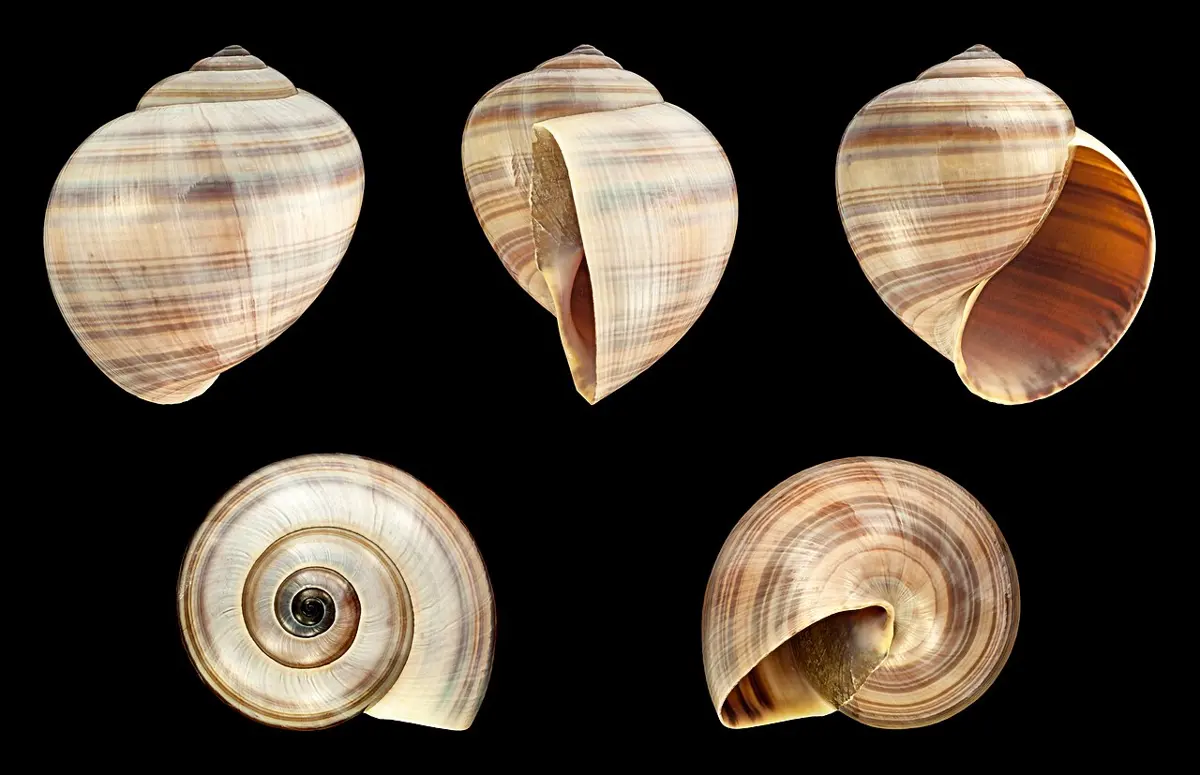
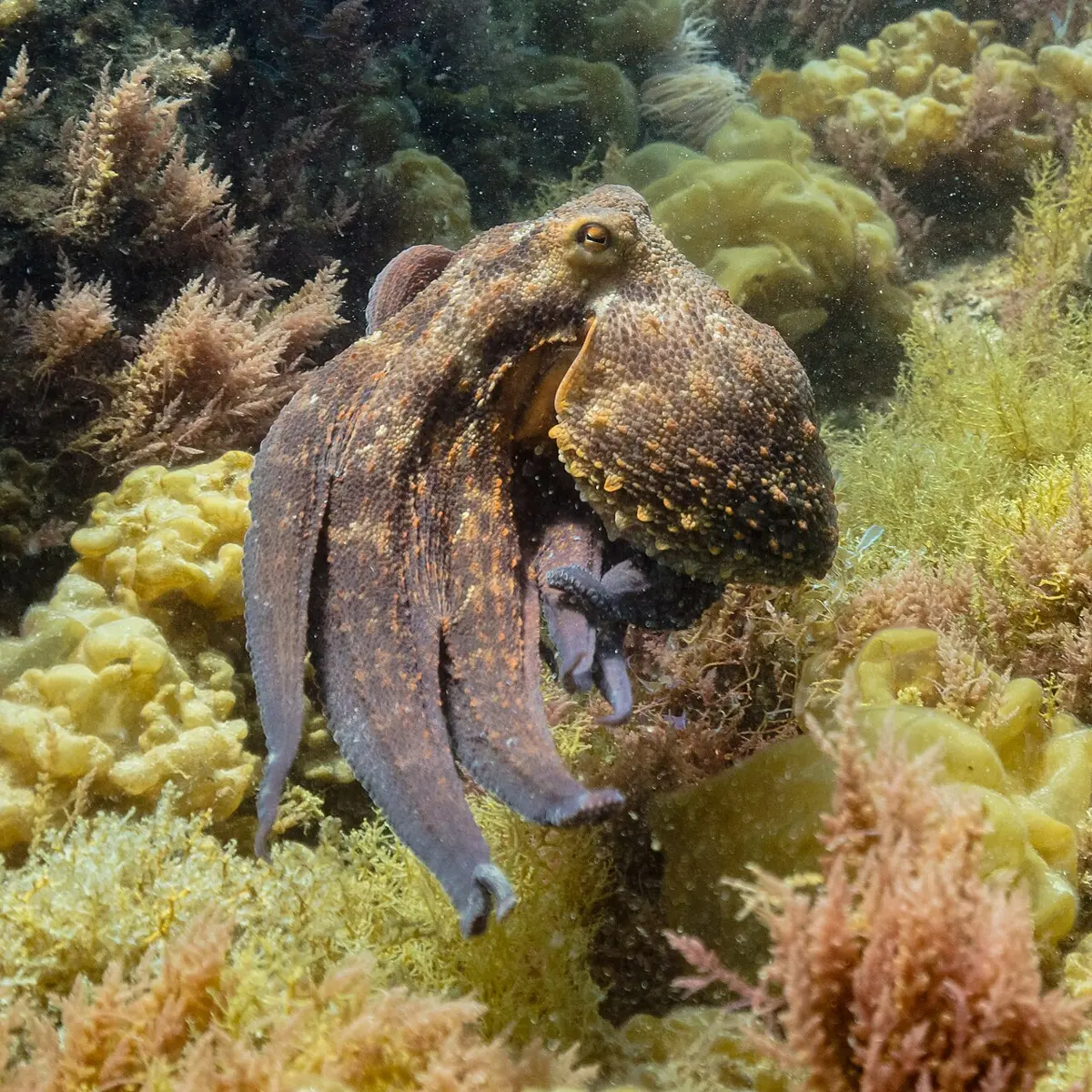
Answer
How do you tell a millipede from a centipede?
Answer
Mention any five characters of Osteichthyes and of Chondrichthyes.
Answer
What are the differences between a pigeon and a bat?
Answer
Printable PDFs
- Study notes 5 pages
- Worksheet: Body plans, sponges to annelids 5 pages Answer key
- Worksheet: Arthropods to chordates 5 pages Answer key
Quiz yourself: Classification of Living Beings, Grades 5–12 →
Practice every question in the book, and keep track of the ones you miss →
A companion to your textbook, not a replacement for it: study from the book your school uses, and where the two differ, follow your teacher. Found a mistake? Please tell us.