
When an earthquake shakes Nepal, every seismograph that records it can tell how far away it started, from the gap between the arrival of its fast and slow waves, but not in which direction. One station knows only that the start lies somewhere on a circle round it. A second station’s circle cuts the first in two points; a third circle picks out one of them. Seismologists call this trilateration.
So here is this unit’s question: how does a computer find the one point where three circles meet? It can’t draw them and look. It has to do it with equations.
Two kinds of equation will answer it, at the end of 8.4: the equation of a straight line (8.1, 8.2) and the equation of a circle (8.4). On the way, 8.3 shows where the circle comes from: a slice of a cone, like the ellipse, the parabola and the hyperbola.
8.0 Introduction
Coordinate geometry describes geometry with numbers. Every point gets an address, an ordered pair (x, y); then a straight line, a circle or any other curve becomes an equation that its points, and only its points, satisfy. A question about a shape (do these lines meet? is this point inside the circle?) becomes a sum.
The French mathematician René Descartes set out this idea, and the Cartesian coordinate system is named after him. Pierre de Fermat found it at the same time on his own. Long before them, the Greek geometer Apollonius of Perga had studied the circle, the ellipse, the parabola and the hyperbola so thoroughly that his book was still the standard work on them two thousand years later. Because it joins algebra and geometry, coordinate geometry is used wherever positions and shapes are computed: in physics, computer graphics, engineering, maps and astronomy.
Which of these can coordinate geometry do that drawing alone can’t do exactly?
Pick an answer to see why.
What you need from Grade 9
This unit builds on these. For two points A(x₁, y₁) and B(x₂, y₂):
| Idea | Formula |
|---|---|
| distance AB | |
| midpoint of AB | |
| slope of AB | |
| slope from the angle θ with the X-axis | m = tan θ |
| slope of ax + by + c = 0 | , that is |
| slope–intercept form | y = mx + c (c is where the line cuts the Y-axis) |
| double-intercept form | (cuts the axes at (a, 0) and (0, b)) |
A line that rises from left to right has a positive slope; one that falls has a negative slope; a level line has slope 0; an upright line (x₁ = x₂) has no slope at all, since the formula would divide by 0.
8.1 Equation of Lines Passing through Two Points
Two points fix a straight line. If a road on a map runs through two places whose coordinates you know, its equation tells you, for any other place, whether the road passes through it. This section finds that equation, in two steps.
a. Point–slope form
Suppose a line has slope m and passes through a known point Q(x₁, y₁). In slope–intercept form it is
with some value of c we don’t know yet. Since Q is on the line, its coordinates satisfy (i):
Subtract (ii) from (i), and c disappears:
So the line with slope m through (x₁, y₁) is
This is the point–slope form. Read it as a sentence: for every point (x, y) on the line, the rise from (x₁, y₁) is m times the run.
b. Two-point form
Now suppose we know two points on the line, A(x₁, y₁) and B(x₂, y₂), and let C(x, y) be any other point on it. Three points on one line all have the same slope between them, so
Multiply both sides by (x − x₁):
This is the two-point form. It is just the point–slope form with the slope worked out from the two points.
Another way: similar triangles
The same formula comes from a picture. A line MN passes through B(x₁, y₁) and C(x₂, y₂), and P(x, y) is any point on it. Drop perpendiculars BG, PR and CD to the X-axis, and draw BE level, meeting PR at F and CD at E.
The sides of the two triangles are differences of coordinates:
In similar triangles the sides are in the same ratio, so
and again . (The ratio “up over across” is exactly the slope, which is why it is the same along the whole line.)
A line has slope −2 and passes through (3, 1). Which is its equation?
Pick an answer to see why.
Worked examples
Exercise 8.1
Question 1
A. Which is the equation of a straight line in two-point form?
Pick an answer to see why.
B. Which is the equation of the line through (2, 3) and (−1, 0)?
Pick an answer to see why.
C. Which is the equation of the line through (a, 0) and (0, b)?
Pick an answer to see why.
D. Which is the equation of the line through (−4, −2) and (−3, 5)?
Pick an answer to see why.
Question 2
How can the equation of a straight line be found when two points on it are given? Explain.
Answer
Question 3
Find the equation of the line in each graph.
Answer
Answer
Answer
Answer
Question 4
Find the equation of the straight line through the two points.
(2, 3) and (−1, 0)
Answer
(4, 3) and (−2, 4)
Answer
(6, −3) and (−1, −5)
Answer
(0, −a) and (b, 0)
Answer
(p, 0) and (0, q)
Answer
(4, 3) and (5, 6)
Answer
Question 5
Prove that the three points are collinear.
(1, −1), (5, 2) and (9, 5)
Answer
(−3, 0), (0, −6) and (−1, −4)
Answer
(2, 4), (4, 6) and (6, 8)
Answer
(1, −1), (2, 1) and (4, 5)
Answer
(7, −2), (2, 3) and (−1, 6)
Answer
(0, −4), (3, −2) and (6, 0)
The textbook prints (0, 4) here. Those three points are not on one line (the slope from (0, 4) to (3, −2) is −2, from (3, −2) to (6, 0) it is 2/3), so the question doesn’t work with the book’s numbers; a minus sign was probably lost.
Answer
Question 6
The points A(b, 0), B(0, c) and C(3, 3) lie on one straight line.
Can B(0, c) be called the midpoint of AC? Give a reason.
Answer
Using the equation of a line through two points, prove that .
Answer
Question 7
The points A(p, 0), B(0, q) and C(5, 5) lie on one straight line.
What does it mean to say that the points are collinear?
Answer
Using the equation of a line through two points, prove that .
Answer
Question 8
P(1, 0), Q(0, 1) and R(2, 3) are the vertices of △PQR.
Draw △PQR.
Answer
Find the midpoint of QR.
Answer
Find the equation of the median from P to the midpoint of QR.
Answer
Question 9
A(2, 2), B(2, 8) and C(−6, 2) are the vertices of △ABC.
Find the midpoint M of BC.
Answer
Find the length of the median AM.
Answer
Prove that the median from A is 3x + 4y = 14.
Answer
Question 10
X(−1, 3), Y(1, −1) and Z(5, 1) are the vertices of △XYZ.
Find the length of the median XD.
Answer
Find the equation of the median XD.
Answer
Question 11
The point A(a, b) lies on the line 6x − y = 1, and B(b, a) on the line 2x − 5y = 5.
Find a and b.
Answer
Write the coordinates of A and B.
Answer
Find the distance AB.
Answer
Find the equation of the line AB.
Answer
8.2 Angle between Two Straight Lines
Where two roads meet, the angle between them matters: a junction at a small angle is hard to see round, and engineers try to bring roads together nearly at right angles. With coordinates, the angle between two lines comes straight from their slopes.
Take two lines that meet at E: L₁, y = m₁x + c₁, cutting the X-axis at C at an angle θ₁, and L₂, y = m₂x + c₂, cutting it at A at an angle θ₂. Their slopes are the tangents of those angles:
The formula
In △EAC, the angle θ₁ at C is an exterior angle, so it equals the sum of the two interior angles opposite it, θ at E and θ₂ at A:
Take the tangent of both sides, using the formula for tan (A − B) from Unit 7:
Two lines that cross make two adjacent angles, θ and , side by side on a straight line. Since ,
Together, (i) and (ii) give the angle between two lines:
A positive value of tan θ gives the acute angle; a negative value gives the obtuse one. In practice: work out , take the acute angle whose tangent is its size, and the obtuse angle is 180° minus that.
Parallel lines
Parallel lines make the same angle with the X-axis: θ₁ = θ₂, so tan θ₁ = tan θ₂:
The formula agrees: the angle between parallel lines is 0°, and makes the top, m₁ − m₂, zero.
Perpendicular lines
If the lines are perpendicular, . Since ,
The slopes of perpendicular lines are negative reciprocals of each other: 2 and −1/2, −3/4 and 4/3. In the formula, 1 + m₁m₂ = 0 makes the bottom zero, and tan θ has no value: that happens only at . (This needs both slopes to exist: an upright line and a level line are perpendicular too, but an upright line has no slope.)
Relations between two lines
| angle between them | |
| parallel | m₁ = m₂ |
| perpendicular | m₁m₂ = −1, that is |
| parallel to ax + by + c = 0 | ax + by + k = 0 |
| perpendicular to ax + by + c = 0 | bx − ay + k = 0 |
Which pair of lines is perpendicular?
Pick an answer to see why.
Worked examples
Exercise 8.2
Question 1
A. Which is the formula for the angle θ between y = m₁x + c₁ and y = m₂x + c₂?
Pick an answer to see why.
B. Which is the condition for two lines to be parallel?
Pick an answer to see why.
C. Which is the condition for two lines to be perpendicular?
Pick an answer to see why.
D. What is the angle between 3x − y − 7 = 0 and x + 3y − 6 = 0?
Pick an answer to see why.
E. What is the acute angle between x − 3y − 2 = 0 and 2x − y − 1 = 0?
Pick an answer to see why.
F. What is the obtuse angle between and y + 10 = 0?
Pick an answer to see why.
Question 2
Find the acute angle between the lines.
y − 3x − 4 = 0 and y = −2x + 1
Answer
y = 3x + 2 and x + 2y − 2 = 0
Answer
Question 3
Find the obtuse angle between the lines.
y = 3x + 4 and y = −2x + 1
Answer
2x + 3y − 4 = 0 and x + 2y − 3 = 0
Answer
Question 4
Find the angles between the lines.
3x + y − 2 = 0 and x + 3y + 12 = 0
Answer
2x − y + 3 = 0 and
Answer
Question 5
Prove that the lines are parallel.
2x − 3y − 5 = 0 and 2x − 3y = 12
Answer
x − 5y = 4 and 3x − 15y + 12 = 0
Answer
Question 6
Prove that the lines are perpendicular.
and
Answer
ax + by + c = 0 and bx − ay + c = 0
Answer
Question 7
The lines are parallel. Find the unknown.
px + 3y − 12 = 0 and 4y − 3x + 7 = 0
Answer
2x − 8y + 6 = 0 and qx − 12y − 4 = 3
Answer
ax + 3y − 4 = 0 and 3x + 9y − 5 = 0
Answer
3x + my = 5 and
Answer
Question 8
The lines are perpendicular. Find the unknown.
px + 3y − 12 = 0 and 4y − 3x + 7 = 0
Answer
2x + 3y + 6 = 0 and mx − 5y + 20 = 0
Answer
4x + 3y − 7 = 0 and 3x + qy − 5 = 0
Answer
ax + 5y − 16 = 0 and 6x + 10y − 9 = 0
Answer
Question 9
The lines are px + qy + r = 0 and lx − my + n = 0.
Find the slope of px + qy + r = 0.
Answer
If the lines are perpendicular, prove that pl = qm.
Answer
Question 10
Find the line through (3, 4) parallel to 3x + 4y − 12 = 0.
Answer
Find the line through (3, 1) parallel to the line joining (2, 3) and (3, −1).
Answer
Question 11
Find the line through (2, 5) perpendicular to 2x + 5y + 31 = 0.
Answer
Find the line through (3, 1) perpendicular to the line joining (4, 7) and (2, −3).
Answer
Question 12
The lines 3x + 4y − 7 = 0 and 5x − 2y − 3 = 0 meet at Z.
- i.Find the coordinates of Z.
- ii.Find the line through Z perpendicular to 2x + 3y = 5.
Answer
The line passes through the point where x + y − 3 = 0 and 2x − 3y − 1 = 0 meet, and is parallel to x − y − 6 = 0. Find a and b.
Answer
Question 13
Find the perpendicular bisector of the segment joining the points.
(−2, 3) and (4, 7)
Answer
(4, −2) and (−8, 9)
Answer
(6, −5) and (−8, 9)
Answer
Question 14
Find the two lines through (3, −2) that make 45° with 2x − 3y + 10 = 0.
Answer
Find the two lines through the origin that make 60° with x + y + 3 = 0.
Answer
8.3 Conic Section
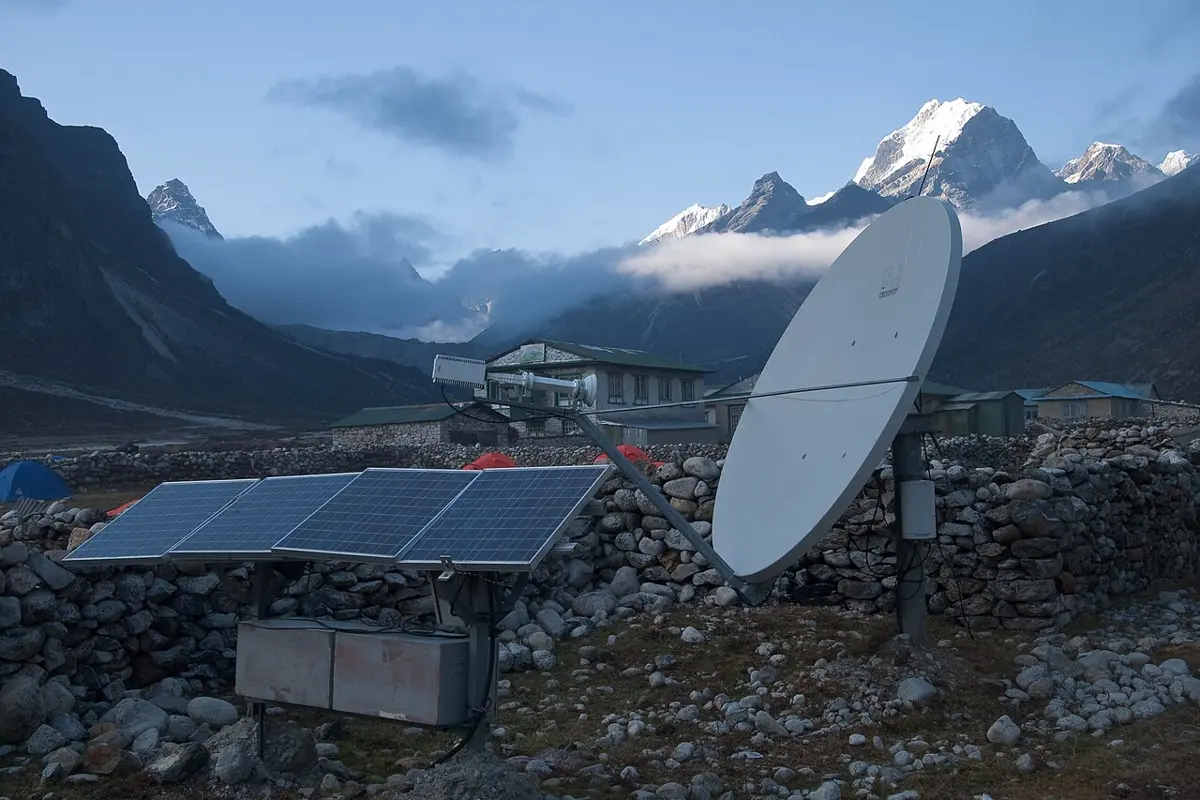
All four shapes come from one solid: a cone, cut by a flat plane. They are called the conic sections.
8.3.1 Parts of a cone
A right circular cone has a circular base, and its tip, the vertex, is straight above the center of the base.
- The axis is the line from the vertex to the center of the base, at right angles to the base: AB, the cone’s height.
- A generator is a straight line on the cone’s surface from the vertex to the rim: AC, the slant height. Turning AC round the axis sweeps out (generates) the whole surface, hence the name.
- The angle between the axis and a generator, ∠BAC = α, is the semi-vertical angle: half the angle at the vertex.
Double-napped right circular cone
Put two equal cones tip to tip, on one axis, and you get a double-napped right circular cone. Each cone is a nappe: the upper nappe and the lower nappe. Think of the generators as whole straight lines through the vertex, going on in both directions, and they sweep out both nappes at once.
The four sections
Cut a cone with a flat plane that doesn’t pass through the vertex. The cut edge is a curve, the section. Which curve depends only on the angle θ between the plane and the cone’s axis, compared with the semi-vertical angle α.
| The plane’s angle with the axis | Section |
|---|---|
| (parallel to the base) | circle |
| ellipse | |
| θ = α (parallel to a generator) | parabola |
| θ < α (cuts both nappes) | hyperbola |
- Circle. A plane at right angles to the axis, that is parallel to the base, cuts the cone in a circle.
- Ellipse. A plane tilted at an angle θ between α and 90° cuts right across one nappe in a closed oval, an ellipse.
- Parabola. A plane parallel to a generator (θ = α) cuts one nappe in a curve that never closes: its two arms open out for ever. That is a parabola.
- Hyperbola. A plane steeper than the generators (θ < α) cuts both nappes, so the curve has two separate branches. That is why the double cone is needed: a single cone gives only half of a hyperbola.
A plane cuts one nappe of a cone in a closed curve that is not a circle. What is the curve, and what can you say about θ?
Pick an answer to see why.
Exercise 8.3
Question 1
A. A plane cuts a cone parallel to its base. Which conic section is formed?
Pick an answer to see why.
B. A plane cuts a cone at right angles to its axis, not through the vertex. Which conic section is formed?
Pick an answer to see why.
C. A plane cuts a right circular cone at an angle to the axis smaller than the semi-vertical angle. Which conic section is formed?
Pick an answer to see why.
D. A plane cuts a cone parallel to a generator. Which conic section is formed?
Pick an answer to see why.
E. The semi-vertical angle is α and the plane makes θ with the axis, where . Which section is formed?
Pick an answer to see why.
F. If θ = α, which section is formed?
Pick an answer to see why.
G. If θ < α, which section is formed?
Pick an answer to see why.
H. Which of these is not a conic section?
Pick an answer to see why.
Question 2
Name the parts of the cone marked (1) to (6).
Answer
Question 3
Name the curves (a) to (d).
Answer
Question 4
Define each conic section.
Parabola
Answer
Ellipse
Answer
Circle
Answer
Hyperbola
Answer
Question 5
Under what condition is each formed? (θ is the angle between the plane and the axis, α the semi-vertical angle.)
a circle
Answer
an ellipse
Answer
a parabola
Answer
a hyperbola
Answer
8.4 Circle
A circle can be defined in two ways:
- As a conic section: the curve in which a plane parallel to the base cuts a right circular cone (8.3).
- As a locus: the path of a point that moves so that it is always the same distance from a fixed point. The fixed point O is the center, the fixed distance OP = r the radius.
The second is the one that gives the equation: “a point P(x, y) is on the circle” means “OP = r”, and the distance formula turns that into an equation in x and y.
8.4.1 Equation of a circle
a. Center at the origin, radius r
Let P(x, y) be any point on the circle with center O(0, 0) and radius r. By the distance formula,
Square both sides:
b. Center (h, k), radius r
Now let the center be C(h, k), and P(x, y) any point on the circle. CP = r, so :
This is the center–radius form. With h = k = 0 it is again.
c. The endpoints of a diameter are (x₁, y₁) and (x₂, y₂)
Let AB be a diameter, with A(x₁, y₁) and B(x₂, y₂), and P(x, y) any other point of the circle. The angle in a semicircle is a right angle, so : .
The slopes of AP and BP are and . Perpendicular, so m₁m₂ = −1:
(When P is A or B itself, the slopes can’t be formed, but A and B plainly satisfy the final equation: one bracket in each product is 0. So the equation holds for every point of the circle.)
d. The general form
Multiply out the center–radius form:
Write g = −h, f = −k and :
This is the general form of the equation of a circle. Going back, h = −g, k = −f and :
So an equation is a circle’s when:
- it is of degree 2 in x and y;
- the coefficients of and are equal (divide by them first if they aren’t 1);
- it has no xy term;
- is positive, so that there is a radius.
To read off the center, halve the coefficients of x and y and change their signs: has 2g = −6, 2f = 4, so the center is (3, −2) and .
Circles in special places
| Where the circle is | Equation |
|---|---|
| center at the origin | |
| center (h, k) | |
| diameter from (x₁, y₁) to (x₂, y₂) | (x − x₁)(x − x₂) + (y − y₁)(y − y₂) = 0 |
| touches the X-axis () | |
| touches the Y-axis () | |
| touches both axes () | , h = ±r, k = ±r |
A circle that touches the X-axis meets it at one point, straight below (or above) the center, so the radius there is the center’s height above the axis, |k|.
What are the center and radius of ?
Pick an answer to see why.
Worked examples
Back to the earthquake
Now the opening question can be answered. Three stations record an earthquake (the numbers are made up; 1 unit = 10 km):
| Station | Position | Distance to the start |
|---|---|---|
| A | (0, 0) | 5 |
| B | (10, 11) | 10 |
| C | (−8, −2) | 13 |
Exercise 8.4
Question 1
A. Which equation is the circle with center (0, 0) and radius 10 units?
Pick an answer to see why.
B. Which point lies on the circle ?
Pick an answer to see why.
C. A circle with center (0, 0) passes through (−8, −15). What is its radius?
Pick an answer to see why.
D. What are the center and radius of ?
Pick an answer to see why.
E. Which is the circle with center (1, −2) and radius 4 units?
Pick an answer to see why.
Question 2
Find the equation of the circle with the given center and radius.
center (−4, 1), radius 4 units
Answer
center (−3, −4), radius 7 units
Answer
center (2, −1), radius 3 units
Answer
center (0, 10), radius 5 units
Answer
center (−a, −a), radius units
Answer
center (a, b), radius b units
Answer
Question 3
Find the center and radius of each circle.
Answer
Answer
Answer
Answer
Answer
Answer
Answer
Answer
Question 4
Find the circle whose diameter has the given ends.
(a, −1) and (−a, 2)
Answer
(2, −6) and (3, −7)
Answer
(0, −7) and (−3, 2)
Answer
Question 5
The equation of a circle is .
Find its center.
Answer
One end of a diameter is (5, 1). Find the other end.
The textbook gives (5, 3), but (5, 3) is not on this circle: 25 + 9 − 20 + 18 − 12 = 20, not 0. So it can’t be the end of a diameter, and the book’s numbers don’t work. (5, 1) is on the circle.
Answer
Question 6
The equation of a circle is .
Find its center.
Answer
Find its radius.
Answer
One end of a diameter is (3, −2). Find the other end.
The textbook gives (−2, −3), but it is not on this circle: 4 + 9 + 12 + 24 − 11 = 38, not 0. So the book’s numbers don’t work; (3, −2) is on the circle.
Answer
Question 7
The equation of a circle is .
Find its center.
Answer
Find its radius.
Answer
One end of a diameter is (−1, 1). Find the other end.
The textbook gives (5, 3), but it is not on this circle: 25 + 9 + 10 − 3 + 1 = 42, not 0. So the book’s numbers don’t work; (−1, 1) is on the circle.
Answer
Question 8
Find the circle.
In the third quadrant, touching both axes, radius 5 units.
Answer
In the fourth quadrant, touching both axes, radius 6 units.
Answer
Question 9
The circle passes through the origin and cuts the given lengths from the positive axes. Find it.
4 units on the X-axis, 6 units on the Y-axis
Answer
5 units on the X-axis, 10 units on the Y-axis
Answer
12 units on the X-axis, 8 units on the Y-axis
Answer
Question 10
Find the circle.
It passes through M(−2, 0) and N(0, −2), and its center C(h, k) is on the line 2x − 3y + 1 = 0.
Answer
It passes through P(4, 1) and Q(6, 5), and its center C(h, k) is on 4x + y = 16.
Answer
Question 11
Find the circle through the three points.
(0, 0), (4, 0) and (0, 2)
Answer
(0, 0), (5, 0) and (0, 5)
Answer
Question 12
Find the circle concentric with that passes through (4, 2).
Answer
Question 13
Find the circle with center (−1, 2) that passes through the center of .
Answer
Question 14
A round flower bed is made in the middle of the school playground. On a grid in meters, its center is (2, −1) and its radius is 7 m.
Write the equation of the edge of the flower bed.
Answer
A student stands at (8, −1). Is the student inside the bed, outside it, or on its edge? Give a reason.
Answer
Practice every question in the book, and keep track of the ones you miss →
How the SEE asks it
In the SEE’s Optional Mathematics paper (75 marks, 3 hours), Coordinate Geometry and Transformation (Unit 9) together make up Geometry. CDC’s specification grid gives Geometry 20 marks, in three kinds of question:
| Group | Kind of question | Geometry’s marks | Levels |
|---|---|---|---|
| A | multiple choice, 1 mark each | 3 | knowledge 1, application 1, higher ability 1 |
| B | within the content area: questions on Geometry alone, each of 2 to 4 parts | 11 | knowledge 2, understanding 3, application 6 |
| C | across content areas: one question joining Geometry with another area | 6 | understanding 2, application 1, higher ability 3 |
In CDC’s model paper this unit gives a 1-mark choice (the diameter of a circle ); in group B, the acute angle that a line through two points makes with a given line (tan θ, 2 marks), and a circle in general form: the center–radius form (1 mark), its center and radius (2 marks), and the equation of a radius by the two-point form (2 marks); and in group C, which conic section a plane cutting a cone makes at a given angle.
What each kind asks, and where its marks are:
- A line’s equation: through two points, parallel or perpendicular to a line, through the meeting point of two lines, a median or a perpendicular bisector. A mark for the slope, a mark for the equation.
- The angle between two lines: both slopes, then tan θ and the angle; or an unknown from “parallel” or “perpendicular”.
- Conic sections: naming a section from the angle of the plane, or the condition for one.
- The circle: an equation from its center and radius, or a diameter; the center and radius from the general form; a circle through given points, touching the axes, or concentric with another.
Here is a question of the longer kind, written for this book, with how it is marked.
Where these facts come from
- Descartes and Fermat, independent inventors of analytic geometry; Fermat’s manuscript circulating in Paris in 1637, and the difference between their approaches (8.0): Wikipedia, “Analytic geometry”, read October 2026.
- La Géométrie, 1637, an appendix to the Discourse on the Method; the first work to unite algebra and geometry; x, y, z for unknowns and a, b, c for constants; the rectangular grid not in the text itself (8.0): Wikipedia, “La Géométrie”, read October 2026.
- Apollonius of Perga (died about 190 BC), his eight books of Conics, the plane cutting a double cone at any angle, and the names ellipse, parabola and hyperbola (8.0, 8.3): Wikipedia, “Conic section”, read October 2026.
- Kepler’s first law, published in Astronomia nova in 1609 from Tycho Brahe’s observations of Mars (8.3): Wikipedia, “Kepler’s laws of planetary motion”, read October 2026.
- A parabolic dish focusing waves parallel to its axis to one point, and home satellite dishes (8.3): Wikipedia, “Parabolic antenna”, read October 2026.
- Locating an earthquake’s start from three stations’ distances, each a circle; two circles leave two places and a third decides (opening, 8.4): Wikipedia, “Epicenter”; two circles round known points narrowing a position to two places: Wikipedia, “True-range multilateration”, read October 2026.
- CDC’s specification grid and model paper for Optional Mathematics, 2082 (How the SEE asks it): the textbook folder,
Specification Grids/grid-Opt. Math-G10.
A companion to your textbook, not a replacement for it: study from the book your school uses, and where the two differ, follow your teacher. Found a mistake? Please tell us.