
A visitor lands in Kathmandu, and within an hour she has seen red-brick houses, smiling faces, cows in the street and traffic going every way at once. A week later she is watching a rhino in Chitwan, and then the sun rising over the Annapurnas from a hill above Pokhara. How would you tell the story of a trip so that someone else could see it too?
This unit reads a visitor’s travel blog about Kathmandu, Chitwan and Pokhara, and a short poem by Thomas Hardy about two kinds of weather. Along the way you will learn to agree and disagree in a few words (So do I. Neither does mine. But I don’t.), to add the little questions at the end of a sentence that ask someone to agree, called question tags (It’s beautiful, isn’t it?), and to write two things the SEE asks for: a travelogue and a brochure.
Getting started
The unit opens with four photos of holy places in Nepal and asks which one you would like to visit.
| Picture | Where it is | Something to say |
|---|---|---|
| Swargadwari Temple | a hilltop in Pyuthan, about 2,100 meters up | Its name means “the gate of heaven” (swarga, heaven; dwar, door). It is one of Nepal’s great places of pilgrimage, and it honors the cow: its founder spent his life herding thousands of cows there. |
| Ugratara Temple | Dadeldhura, in the far west | A pagoda-style temple of the goddess Ugratara, a form of Bhagwati, and the best-known place of pilgrimage in Dadeldhura. |
| Mahabouddha | Patan (Lalitpur) | A tall, pointed Buddhist temple in the shikhara style, its walls covered with small images of the Buddha. It was built in the late 16th century and rebuilt after the great earthquake of 1934. |
| Boudhanath | Kathmandu | One of the largest stupas in the world, with the Buddha’s eyes painted on its tower; one of the seven World Heritage monument zones of the Kathmandu Valley. |
Reading I: Expect the Unexpected
Before you read
Do you enjoy traveling? Why?
A model answer
Which is your favorite tourist place? Why?
A model answer
What kind of text it is
The text is a travel blog, a kind of travelogue: a visitor, Mathilda Wu, writes about a trip in the first person (I, we), mixing what she saw and did with what she felt. She did the “classic Nepal triangle”: Kathmandu, Chitwan and Pokhara, three places a first-time visitor often sees in one trip. The blog has a heading for each place, so you can find any part at once. You will write a travelogue of your own in Writing I.
The blog, part by part
1. The opening: a bold claim
She starts by saying that all three places have a charm (a special attraction) that very few places have all at once, and she dares you to read on and see why she has the nerve (the courage) to say so. It is a hook: she makes a claim, and the rest of the blog is her proof.
2. Kathmandu: the first impression
For her, the saying “the first impression is a lasting impression” is true of Kathmandu. The city is huge, nestled (lying snugly, as if in a nest) in a green valley ringed by enormous mountains. On the short drive from the airport she was amazed by three things: the red-brick houses, the smiling faces of the people, and the cattle wandering among the busy traffic. It was like a scene from a film, but more sophisticated (more complex, richer) when you are really there.
3. A riot of color on the walls
She noticed a riot of colors (a mass of bright colors) on the city’s walls: murals, paintings made directly on walls, showing symbols, people, animals and imaginative designs, stretching for more than a mile. She was told that street art is on the rise: artists from Nepal and abroad are starting projects to send messages through beauty made by people.
4. Patan Durbar Square
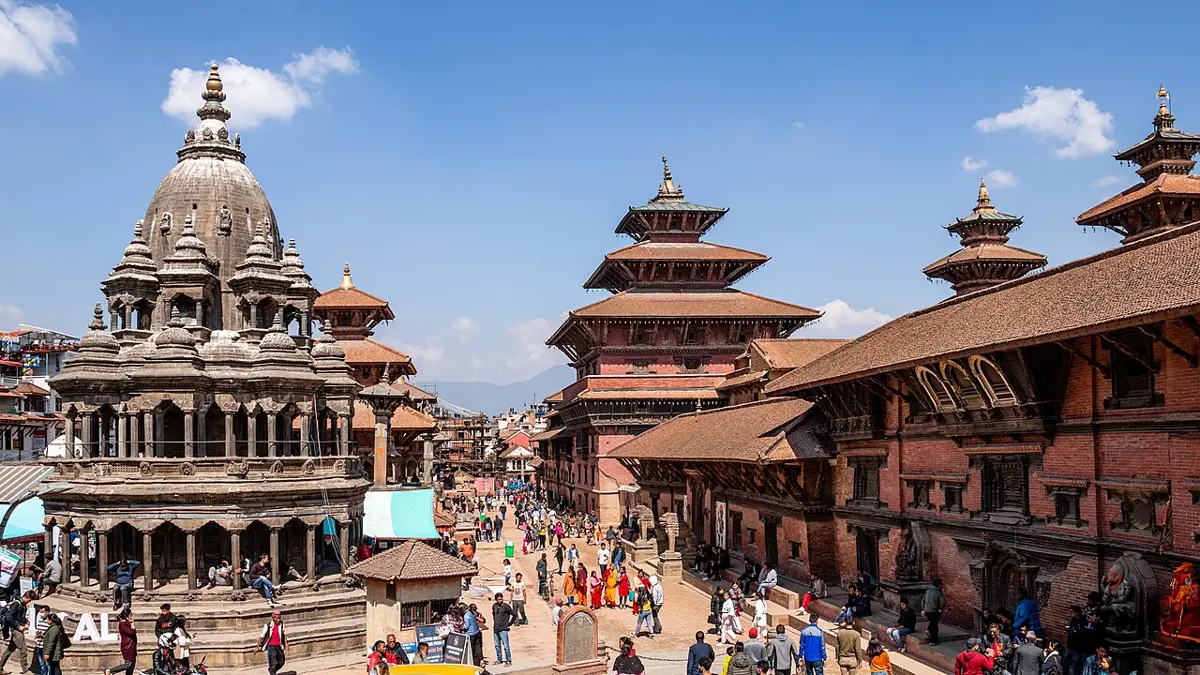
She points out that Nepal was never colonized (never ruled by a foreign country). Before the country was unified in the 18th century, it was ruled by several kings, who built three splendid Durbar Squares as royal palaces; all three are now monument zones of the UNESCO World Heritage Site of the Kathmandu Valley. She visited Patan Durbar Square. Its quiet courtyards hold well-kept pagodas and stone temples. Their guide, Kshitij, explained what the wood carvings, symbols and ornaments meant, and brought the old place to life. As they walked, flocks of pigeons circled above the temples.
5. Students in the square
It was the off season, so the squares were less full of tourists than of local people passing the time. She talked to a group of college students taking a break, and what they firmly believed surprised her: that in today’s Nepal, skill matters more than education.
6. Pashupatinath
At Pashupatinath Temple she was struck by how Nepalis see death as part of everyday life. Families bring their dead to be cremated (burned, as Hindu funerals do) in the open air on the banks of the Bagmati River. She had expected to find it grisly (horrible to see), but she found it calm instead, and she was surprised that the families didn’t mind visitors being there. She saw families holding memorial rites for their dead, making offerings and shaving the heads of the male relatives. Here, too, she met sadhus, holy men in yellow and orange robes, with ash on their bodies and long hair and beards.
7. Thamel at night
Kathmandu also has a name for its nightlife in Thamel, a lively area full of restaurants and shops. She says it is as safe as anywhere they went, and so many local people spend time there that it never feels like a place only for tourists.
Why did the writer find Pashupatinath surprising?
Pick an answer to see why.
8. Chitwan: the jungle
In Chitwan they explored the jungle and came close to wildlife: one-horned rhinos, deer, wild boars, monkeys and countless birds. Chitwan National Park covers a huge area and offers many activities: jeep safaris, canoeing, jungle walks and cycling around the villages. Theirs was the only group on the boat that afternoon, and she calls it a privilege (a special chance) to enjoy the whole tranquil (calm and peaceful) view of the water alone. In short, Chitwan is perfect for physically active travelers who want to see wild animals in an undisturbed place; the only other place she knows like it is probably in South Africa.
9. Pokhara: the lake and the mountains
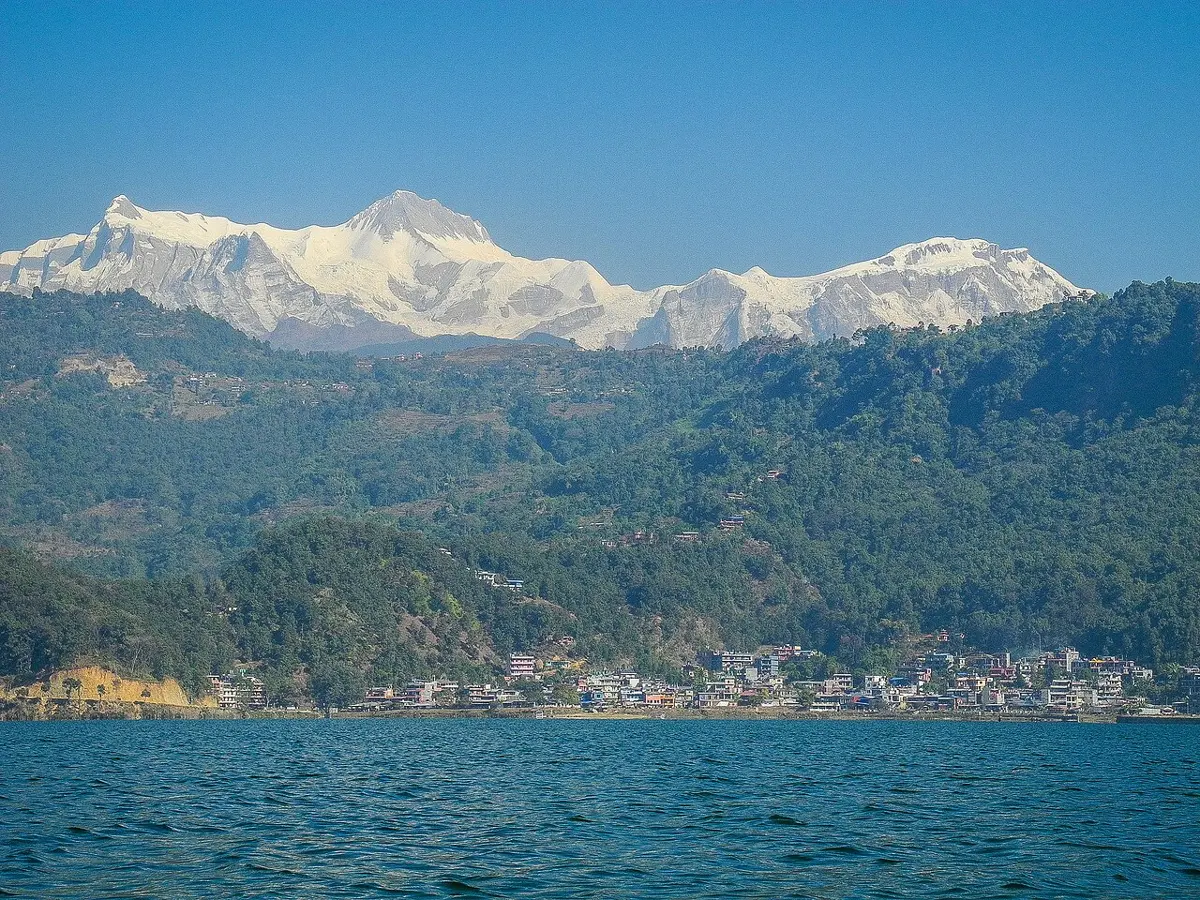
“Is there any place better than Pokhara in the world? Not in my dictionary”, she writes: not as far as she is concerned. About 200 km west of Kathmandu, Pokhara is a different picture from the crowded capital: clean streets, snow mountains, a laid-back (relaxed) feel and plenty of adventure. The middle of the city is ruled by Phewa Lake, with a clear view of the snowy Annapurna range; some lakeside hotels have rooms where you can see the mountains from your bed. An easy walk up a hill with the World Peace Pagoda on top gave them a view of the white peaks and the whole city. Then she tried paragliding, and agrees that Pokhara may well be the best place in the world for it: flying with the birds over that scenery is something she will never forget.
10. Sarangkot and goodbye
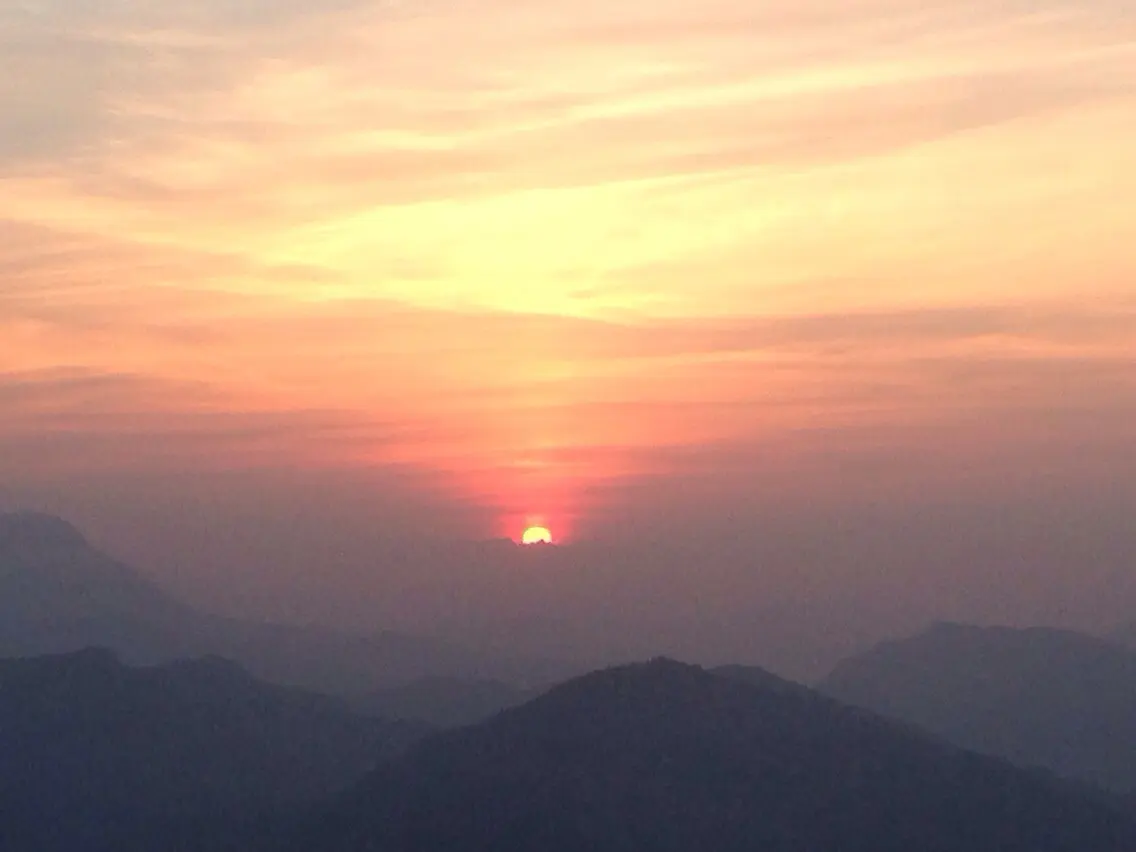
On the last morning they went up to Sarangkot, a village known as the best place to watch the sunrise over the Annapurna Himalaya. The snow peaks turned from purple and pink to gold, and the whole valley below woke up as the sun rose. She almost cried when it was time to leave and would go back in a heartbeat (at once, without thinking twice). She ends with a message to her readers: don’t stay away from Nepal because of hoaxes (false stories) in the media; the other Western visitors she met would see eye to eye with her (agree completely).
Words from the blog
Words linked here open in English Vocabulary, where you can see an example and practice them in the word game. The meanings below are the ones the words have in this blog.
| Word | Meaning here |
|---|---|
| charm | a quality that attracts and pleases people |
| have the nerve to | to be bold enough to do or say something |
| nestled | lying in a sheltered place, as if in a nest |
| enormous | very big |
| sophisticated | complex and refined, not simple |
| a riot of color | a mass of many bright colors |
| mural | a painting made directly on a wall |
| colonized | ruled and settled by another country |
| grisly | horrible to see, because it has to do with death |
| cremation | burning a dead body, as at a Hindu funeral |
| the deceased | the person who has died |
| genuine | real, not pretending |
| privilege | a special chance or right that not everyone has |
| tranquil | calm, quiet and peaceful |
| vestige | a small part or sign of something that is left; the blog’s “vestiges of wild species” are the wild animals still left |
| laid-back | relaxed, not in a hurry |
| breathtaking | so beautiful that it surprises you |
| hoax | a trick that makes people believe something false |
| see eye to eye | to agree completely |
A. Complete the sentences
Complete the sentences with the correct words from the text.
- a.The village ……… comfortably among the hills.
- b.The garden was a ……… of color.
- c.Sophie liked cooking, gardening and painting ……… .
- d.Prita screamed loudly when she saw the ……… spider on her foot.
- e.This is our ……… to study in such a resourceful school.
- f.He showed no ……… of regret for his crime.
- g.We have been the victim of a computer virus ……… .
- h.We were never ……… by any foreign country.
Answer
B. Where can a traveler do it?
Read the text again and find where a traveler can do each thing: Kathmandu, Pokhara or Chitwan. Example: enjoy a collection of different colors on the street walls: Kathmandu.
- a.Cycle around the village.
- b.Visit Durbar Squares.
- c.Go paragliding.
- d.Hang out with local people even at night.
- e.Meet sadhus and take photographs with them.
- f.Walk up to the hill and view the Himalayan ranges.
- g.Watch the sunrise.
Answer
C. Answer the questions
Mention the three things that amazed the writer in Kathmandu.
Answer
What indicates that street art is rising in Kathmandu?
Answer
Name the two World Heritage Monuments located in Kathmandu that the writer visited.
Answer
How do the Nepalis perceive death, according to the writer?
Answer
What two special things does the writer mention about Pashupatinath Temple?
Answer
What does Chitwan National Park offer to its visitors?
Answer
Whom does the writer recommend to visit Chitwan?
Answer
Write any two things that visitors can do in Pokhara.
Answer
What is Sarangkot known for?
Answer
How did the writer feel when leaving Nepal?
Answer
D. Your choice
If you were given the opportunity to visit one of the places mentioned in the text, which one would it be? Give reasons for your choice.
A model answer
Pronunciation: the letters ch and c
The same letters can stand for different sounds. ch is usually /tʃ/ (bench), but in many words from Greek it is /k/ (character), and in words from French it is /ʃ/ (machine). c is /k/ before a, o, u or a consonant (comfort), /s/ before e, i, y (cell), and /ʃ/ in -cian (musician).
Group the words by the sound of the letters ch (or c) in each: attach, electrician, ache, chaos, much, musician, architect, mechanic, sandwich, beautician, chemical, technology, which, decent, chemist, scheme, detach, incident, mechanical, cholera, ostrich, cordial, chorus, brochure, spinach, traffic, echo, champagne, enrich, club.
Answer
Speaking: agreeing and disagreeing
When someone tells you something, you can say you are the same or you are different in two or three words, without repeating the whole sentence. The trick is the helping verb (auxiliary) of what they said:
| They say | You agree (the same) | You disagree (different) |
|---|---|---|
| My father works in a factory. (no helper → does) | So does mine. | But mine doesn’t. / But mine works in a bakery. |
| I visit my parents regularly. | So do I. | But I don’t. |
| Mr. Joshi is strict. | So is Mrs. Karki. | But Mrs. Karki isn’t. |
| I can swim. | So can I. | But I can’t. |
| I don’t like spicy food. | Neither do I. (or Nor do I.) | But I do. |
| I haven’t seen the sea. | Neither have I. | But I have. |
- To agree with a positive sentence: So + helping verb + subject.
- To agree with a negative sentence (with not, never, hardly…): Neither / Nor + helping verb + subject. The verb after neither is positive: Neither do I, never ✗ Neither don’t I.
- To disagree: But + subject + the opposite helping verb.
- In everyday speech, Me too (positive) and Me neither (negative) do the same job.
“I have never been to Mustang.” “……… . I’d love to go.”
Pick an answer to see why.
“My sister plays the madal.” “……… . They practice together.”
Pick an answer to see why.
A. Three model conversations
The book’s three short conversations show each pattern: Reema agrees with Abhi (So does mine), and Bikalpa disagrees (But mine works in a bakery); Angel agrees with Namita about visiting her parents (So do I), and Pratik doesn’t (But I don’t); and Saru answers Nita’s he is rather strict with So is Mrs. Karki. In the third, Lumanti also uses a question tag, Mr. Joshi looks so intelligent, doesn’t he?, which you will learn in Grammar I.
B. Your own conversations
Have similar conversations in threes about these situations.
- a.A friend’s interests in sports: agree or disagree with the views.
- b.You want to be a teacher: talk to your friends to see if they agree.
- c.A friend has a keen interest in drawing maps and figures: agree or disagree.
Model conversations
C. Complete the broken dialogue
Complete the dialogue with these expressions: I don’t have such an opportunity; So does my uncle; But I live with my parents; don’t you; Neither does my mother.
Puja: Sushma, you live with your aunt, (a) ……… ?
Sushma: Yes, I do. I’ve been living with her since I came to the city.
Puja: (b) ……… . My mother is a mason and my father teaches in a primary school.
Sushma: Oh, does he? (c) ……… . He teaches secondary students. He finds some time to help me with my studies.
Puja: Really? You are very fortunate. (d) ……… . Anyway, my father always encourages me to be a good human being.
Sushma: Well, my aunt always thinks about how I can get good results in my studies. She hardly teaches me life skills.
Puja: (e) ……… . She only tells me to read and write.
Answer
Grammar I: Question tags
A question tag is a short question added to the end of a statement: Pokhara is beautiful, isn’t it? It doesn’t really ask for information: it asks the listener to agree or to check something you think is true. Tags are mostly spoken; in writing, they belong in dialogues and friendly letters.
How to build a tag
- Find the helping verb of the statement (is, are, was, have, has, had, can, will, would, should, must…). If there is none, use do, does or did, as you would to make a question.
- Turn it the other way: a positive statement takes a negative tag; a negative statement takes a positive tag.
- Add a pronoun for the subject: Pokhara → it, Rina → she, the guides → they. A tag never repeats a noun.
| Statement | Helping verb | Tag |
|---|---|---|
| You are tired, | are | aren’t you? |
| She can swim, | can | can’t she? |
| The bus has left, | has | hasn’t it? |
| They won’t come, | will (won’t = will not) | will they? |
| You live in Bhaktapur, | none: live → do | don’t you? |
| Ram went to Chitwan, | none: went → did | didn’t he? |
| He didn’t call, | did | did he? |
Words that make a statement negative
A statement can be negative without not. Never, no, nothing, nobody, no one, none, hardly, scarcely, barely, seldom, rarely all make it negative, so the tag is positive:
- He never came again, did he?
- She can rarely come these days, can she?
- You hardly ever came late, did you?
- I barely know you, do I?
- Nothing will happen, will it?
The special cases
| Statement | Tag | Why |
|---|---|---|
| I am right, | aren’t I? | there is no amn’t in standard English |
| Let’s go, / Let’s not go, | shall we? | a suggestion for us all |
| Open the door, (an order) | will you? (or won’t you? would you? can you?) | asks politely; Don’t forget, will you? |
| There is a shop near the gate, | isn’t there? | there stays in the tag |
| Nothing / everything / something is ready, | is it? / isn’t it? | these take it |
| Nobody / everyone / someone came, | did they? / didn’t they? | these take they |
| I think he’s busy, | isn’t he? | the tag is about what you think, not I think |
| I don’t think he’ll come, | will he? | I don’t think makes the idea negative, so the tag is positive |
| I’d rather go, | wouldn’t I? | I’d rather = I would rather |
| You’d better go, | hadn’t you? | You’d better = you had better |
| He’s got a car, | hasn’t he? | has got: the helper is has |
| You have a bath daily, | don’t you? | have as a main verb takes do (British English also says haven’t you?) |
How you say it
The tone of your voice changes what a tag means.
- Falling at the end (↘): you are sure, and you expect the listener to agree. It’s a lovely day, isn’t it? ↘
- Rising at the end (↗): you are not sure, and you are really asking. You’ve got the tickets, haven’t you? ↗ (I hope so, but I am checking.)
To answer a tag, answer the fact, not the tag: “You aren’t hungry, are you?” “No, I’m not.” (I am not hungry.) or “Yes, I am.” (I am hungry.)
Nobody phoned while I was out, ……… ?
Pick an answer to see why.
I’m on the list for the trip, ……… ?
Pick an answer to see why.
Let’s rest under that tree, ……… ?
Pick an answer to see why.
A. Match the statements with their tags
Match the sentences in column A with their question tags in column B.
- a.They don’t need to come this evening,
- b.James is working on that,
- c.Punam’s parents have retired,
- d.It was raining that day,
- e.You hadn’t met me before,
- f.He never came again,
- g.She can rarely come these days,
- h.You hardly ever came late,
- i.I barely know you,
- j.You would scarcely expect her to know that,
- k.Nothing will happen,
- l.I am right,
- m.You have to go,
- n.I have been answering,
- o.Nothing came in the post,
Column B: can she? / did it? / will it? / wasn’t it? / would you? / do I? / don’t you? / haven’t I? / did he? / haven’t they? / had you? / do they? / did you? / aren’t I? / isn’t he?
Answer
B. Supply the tags
Supply the correct question tags.
- a.This’ll work, ……… ?
- b.Well, I couldn’t help it, ……… ?
- c.But you don’t really love her, ……… ?
- d.We’d never have known, ……… ?
- e.The weather’s bad, ……… ?
- f.You won’t be late, ……… ?
- g.Nobody knows, ……… ?
- h.You have a bath daily, ……… ?
- i.You couldn’t help me, ……… ?
- j.Shut up, ……… ?
- k.She’s been working hard the whole day, ……… ?
- l.He was admitted to Patan Hospital last night, ……… ?
- m.You can make it, ……… ?
- n.Don’t forget, ……… ?
- o.Let’s have some fun, ……… ?
- p.Let us chat, ……… ?
- q.Your phone didn’t break down, ……… ?
Hint
Answer
Writing I: A travelogue
Write a short travelogue about a place you have recently visited. Use these clues: Where did you go? How did you plan it? Who did you travel with? Did you have any special purpose for this travel? What are some memorable activities and experiences? Have you learned anything important?
Hint
A model travelogue
How to write a travelogue
A travelogue is a true account of a journey, written in the first person (I, we) and mostly in the past tense. It tells what happened and what you saw, but what makes it good is how you felt and what you noticed that others might miss.
- Title: the place, and a hint of the experience (Three Days in Bandipur, Expect the Unexpected).
- Opening: when, where, with whom, and why you went, in one short paragraph.
- The journey and the place: in time order, with a few vivid details: what you saw, heard, smelled and tasted. Pick the best moments; don’t list every meal.
- People: one person you met, and something they said or did.
- Ending: what the trip taught you, or how you felt leaving.
Reading II: Weathers
Before you read
Look at the two pictures before the poem: a bird on a snowy landscape, and a bird on a branch of a green tree. What seasons do they represent?
A model answer
What differences do you notice between the two pictures?
A model answer
The poet and the poem
Thomas Hardy (1840–1928) was an English novelist and poet who wrote about the countryside of south-west England, which he called Wessex. His last novel came out in the 1890s; after that, for the last thirty years or so of his life, he published only poems. Weathers is the first poem of his collection Late Lyrics and Earlier (1922). It is light and musical, like a folk song, and the composer John Ireland set it to music in 1925.
The poem has two stanzas of nine lines, each the opposite of the other:
- the first is the weather of late spring and early summer, which the cuckoo likes;
- the second is the cold, wet weather of late autumn and winter, which the shepherd avoids.
Each stanza begins This is the weather… and ends with the refrain And so do I, so the poem itself uses the pattern you practiced in Speaking.
The poem, part by part
Stanza 1: the weather the cuckoo likes
This is the weather the cuckoo likes, and the speaker likes it too. Light showers (short, gentle falls of rain) betumble (toss about) the spiky flowers of the chestnut trees, and nestlings (baby birds) leave the nest and learn to fly. The little brown nightingale bills (sings) his best song. People sit outside the village inn, The Traveller’s Rest. Maids (young women) come out in light summer dresses of sprig-muslin, a thin cotton printed with little sprays of flowers. And citizens (townspeople) dream of holidays in the warm south and west of England, by the sea. The speaker dreams of it too.
Stanza 2: the weather the shepherd shuns
This is the weather the shepherd shuns (avoids, because he dislikes it), and so does the speaker. The beech trees drip with rain, their leaves turned brown and dun (a dull grayish-brown), and their branches thresh and ply (toss and bend) in the wind. Hidden in the hills, swollen streams throb (beat strongly), wave after wave, throe on throe; rivulets (little streams) in the meadows overflow; raindrops hang in a row on the bars of the gates. And the rooks, big black birds of the crow family, fly home in families to their nests in the tall trees, out of the weather. The speaker goes home too.
What does “And so do I” at the end of the second stanza mean?
Pick an answer to see why.
The poet’s devices:
- Contrast: the two stanzas mirror each other, line for line: liked weather and disliked weather, going out and going home.
- Refrain and repetition: This is the weather… and And so do I open and close both stanzas, like a song.
- Listing with “And…”: line after line begins with And, piling up the signs of each season.
- Rhyme: both stanzas rhyme ababccccb: lines 1 and 3 (likes, spikes; shuns, duns), lines 2, 4 and 9 (I, fly, I; I, ply, I), and four lines in a row on one rhyme (best, Rest, drest, west; throe, overflow, row, go).
- Sound: hard, heavy words for the winter (thresh, throb, throe on throe) and light ones for the spring (showers, nestlings, sprig-muslin).
- Imagery of sight and sound: chestnut flowers, raindrops on a gate, a nightingale’s song.
Words from the poem
| Word | Meaning |
|---|---|
| shower | a short, usually light fall of rain |
| betumble | to tumble about; throw into disorder (Hardy’s own word) |
| nestling | a baby bird too young to leave the nest for long |
| bill | (of a bird) to sing; usually to bill means to touch beaks |
| maid | (old) a young woman, a girl |
| sprig-muslin | fine cotton cloth printed with small sprays of flowers |
| drest | old spelling of dressed |
| shun | to avoid, because you dislike it |
| dun | a dull grayish-brown color |
| thresh, ply | (of branches) to toss about, and to bend |
| throb | to beat or sound with a strong, regular rhythm |
| throe | a violent pain or struggle; throe on throe, one surge after another |
| rivulet | a small stream |
| rook | a large black bird of the crow family that lives in groups |
A. Find the words
Find the words from the poem that are similar in meaning to these.
- a.a brief and usually light fall of rain
- b.sings
- c.young women
- d.to tumble about; throw into disorder
- e.baby birds
- f.dislikes
- g.a dull grayish-brown color
- h.beat or sound with a strong, regular rhythm
- i.small rivers; streams
Answer
B. Answer the questions
What do the nestlings do in the spring?
Answer
What does the nightingale do?
Answer
How do the girls come out in spring?
Answer
What plan do people make?
Answer
What happens to beeches in winter?
Answer
Where do rooks go? Why?
Answer
Does the poet enjoy the winter or the spring? Why?
Answer
C. Complete the interpretation
Complete the interpretation of the poem with these words and phrases: chestnut, young girls, south and west, Thomas Hardy, severity, sunny, beeches, rooks, hang.
The poem Weathers was composed by an English poet, (a) ……… . He talks about two different seasons, the spring and the winter.
In the first stanza, the pleasant spring season is described. The cuckoo and the nightingale feel good in this season. The light rain falls on the pointed flowers of the (b) ……… tree. The poet is pleased as the nightingale sings its best tune. People come out of their houses to enjoy the weather and the birds’ song. The (c) ……… are seen in their fine clothes. People plan to visit the (d) ……… . To an English person, the south and the west are summer holiday places, where the weather is often warm and (e) ……… , and many coastal towns welcome visitors.
In the second stanza, he talks about the winter’s coldness and (f) ……… . All the natural beauty turns into dullness and discomfort. The shepherd avoids this weather. The (g) ……… turn brown as their leaves are threshed by the wind. The water drops (h) ……… from the wooden bars of gates. Streams overflow because it has been raining a lot. The (i) ……… fly to their homes as the harshness of winter grows. The poet dislikes this season because it is cold and wet.
Symbolically, the two weathers can stand for the bright and dark sides of human life: the spring for its happy times, the winter for its sad ones.
Answer
D. Your season
In which season would you like to travel? Why?
A model answer
Listening: travel experiences
A. Before you listen
a. Do you love traveling? b. How do you often travel, by road or by air?
A model answer
The textbook’s listening task is six short conversations, in each of which someone is asked about a journey. CDC’s own recording is below: look at the three pictures first (A: people stopped at a roadside rest stop with cold drinks and a picnic; B: a woman at an airline’s check-in desk being handed money; C: a young man asleep in a train seat, a book in his hand), then listen, as many times as you need.
B. The textbook’s audio: answers
Different people are talking about their travel experiences. Listen and number the pictures A, B and C according to the order of the information in the audio. (B is done for you: 1.)
Answer
C. Your own travel story
Recount a memorable experience you had during your travel, and share it with the class.
A model answer
Practice listening alone
Grammar II: More question tags
Grammar II practices the special cases. Before you start, look again at the table of special cases and the words that make a statement negative.
Everyone will be happy with the result, ……… ?
Pick an answer to see why.
None of the guests complained, ……… ?
Pick an answer to see why.
A. Add suitable question tags
Add suitable question tags.
- a.I’d rather go traveling, ……… ?
- b.Everything is okay, ……… ?
- c.I shan’t be in your position, ……… ?
- d.I don’t think he’ll come soon, ……… ?
- e.Let’s not have cold drinks, ……… ?
- f.All is well, ……… ?
- g.There is a coffee shop near the gate, ……… ?
- h.Nothing was there, ……… ?
- i.The car sped along the road, ……… ?
- j.He’s got a very peculiar voice, ……… ?
- k.Asmina, bring me your pen, ……… ?
- l.Nawaraj seldom plays cards, ……… ?
- m.Everyone will be satisfied with my job, ……… ?
- n.None met me last week, ……… ?
- o.Everything is perishable, ……… ?
- p.I think he’s busy, ……… ?
Answer
Writing II: A brochure
A brochure is a small printed booklet or folded sheet that tells visitors about a place (or a product, or a service) and makes them want to go. It is short, bright and easy to scan: a catchy title, headings, short lines and bullet points, contact details, and usually photos.
Prepare a brochure of a tourist place in your locality. Include: the name of the place, its location, accessibility (how to get there), major attractions, entry requirements (if any), and contact information.
Hint
A model brochure
How to make a brochure
- A catchy title with the place’s name, and a slogan under it (a living museum of Newar art).
- Headings for each part, so a reader can find what they need at a glance.
- Short points, not long paragraphs; the most exciting attractions first.
- Practical facts: how to get there, opening times, tickets, rules, contacts. Check them: a brochure with a wrong bus route or phone number sends visitors the wrong way.
- A closing line that invites the reader (Come for a day…).
- In a real brochure: photos, a small map, and lots of space.
Project work
Contractions
A contraction is two words joined and shortened, with an apostrophe (’) where letters are left out: is not → isn’t, they have → they’ve. The apostrophe marks the missing letters, not the join: *did**n’*t (the o of not is missing), not ✗ did’nt.
Contractions are informal. Use them in speech, dialogues, personal letters, messages and emails to friends. Don’t use them in formal writing: official letters, applications, reports, essays and exam answers that ask for formal writing.
| Contraction | Meaning | Contraction | Meaning |
|---|---|---|---|
| could’ve | could have | you’d | you had, you would |
| he’d | he had, he would | you’ll | you will |
| he’ll | he will | you’re | you are |
| he’s | he has, he is | you’ve | you have |
| here’s | here is | isn’t | is not |
| how’d | how did, how would | aren’t | are not |
| how’ll | how will | can’t | cannot |
| how’re | how are | couldn’t | could not |
| how’s | how has, how is | didn’t | did not |
| I’d | I had, I would | doesn’t | does not |
| I’ll | I will | don’t | do not |
| I’m | I am | hadn’t | had not |
| somebody’s | somebody has, somebody is | hasn’t | has not |
| someone’s | someone has, someone is | haven’t | have not |
| something’s | something has, something is | mustn’t | must not |
| that’s | that has, that is | shouldn’t | should not |
| there’s | there has, there is | shan’t | shall not |
| won’t | will not | weren’t | were not |
Which sentence uses the apostrophe correctly?
Pick an answer to see why.
Write the full forms, then the question tag for each sentence.
- a.She’s finished her homework.
- b.He’d better leave now.
- c.They’re from Ilam.
- d.You’d like some tea.
Answer
Exercise
SEE-style practice on this unit. Try each one as in the exam, then open the answer.
Write True or False after each statement about Reading I.
- a.The writer visited all three Durbar Squares of the Kathmandu Valley.
- b.The college students believed that skill is more important than education.
- c.The writer found the cremation at Pashupatinath frightening.
- d.The writer’s group was the only one on the boat ride that afternoon.
- e.The writer watched the sunrise from Sarangkot on her last morning in Pokhara.
Answer
Add suitable question tags.
- a.Nobody has seen my bag, ……… ?
- b.Let’s visit Lumbini this winter, ……… ?
- c.You hardly ever eat meat, ……… ?
- d.I’m late again, ……… ?
- e.There were many tourists in Thamel, ……… ?
- f.Close the window, ……… ?
- g.Sarita can’t swim, ……… ?
- h.Everything went well, ……… ?
Answer
Agree or disagree as shown in brackets, in three or four words.
- a.I love trekking. (agree)
- b.My brother doesn’t eat fish. (agree: your sister)
- c.Suman can play the guitar. (agree: Anil)
- d.I haven’t finished my project. (disagree)
- e.We went to Chitwan last year. (agree: we)
Answer
Read the passage and answer the questions.
Rara Lake, in Mugu district of Karnali Province, is the largest freshwater lake in the Nepal Himalaya. It lies at almost 3,000 meters, surrounded by thickly forested hills. Few tourists reach it, because the journey is long: the nearest airport is at Talcha, and from there the last part of the way is on foot. From December to March heavy snow blocks the way, so visitors come between April and November. Most of them stay in a few simple lodges or camp, as there are no big hotels near the lake.
- a.Where is Rara Lake?
- b.How high is the lake?
- c.Why do few tourists reach it?
- d.Why don’t visitors come in winter?
- e.Where do visitors stay?
Answer
Write a travelogue of about 200 words about a trip you made to a religious or historical place.
Hint
A plan
Practice every question in the book, and keep track of the ones you miss →
A companion to your textbook, not a replacement for it: study from the book your school uses, and where the two differ, follow your teacher. Found a mistake? Please tell us.