
A young man with forty dollars in his pocket gets off a train in Los Angeles. His first company has gone bankrupt, and in a few years he will lose his best cartoon character and most of his artists. On the train home after that loss, he draws a mouse.
This unit reads the life of that man, Walt Disney, and a famous poem of advice, “If” by Rudyard Kipling. Along the way you will learn to congratulate people, in speech and in writing, to read a dictionary entry for pronunciation, to use prepositions of time and the fixed prepositional phrases that exams love (at large, on board, in cash), and to write a speech about failure.
Getting started
The unit opens with two pictures of people celebrating, and asks what it takes to achieve success.
| Picture | What it shows | Something to say |
|---|---|---|
| Four young people jumping in the air with their arms raised | joy after a success: an exam passed, a goal reached | Success feels like flying, but it usually comes after months of quiet work that nobody sees. |
| Footballers in light blue and white stripes holding up a gold trophy, with fireworks behind them | Argentina celebrating the 2022 FIFA World Cup | A team wins when every player does a job for the others; Argentina had lost the final in 2014 and came back. |
Reading I: Walt Disney: An Example of Struggle and Success
Before you read
Look at the picture: an older man in a suit, smiling, with a fairy-tale castle with blue towers behind him. Who do you think this person is?
Answer
What is he known for?
Answer
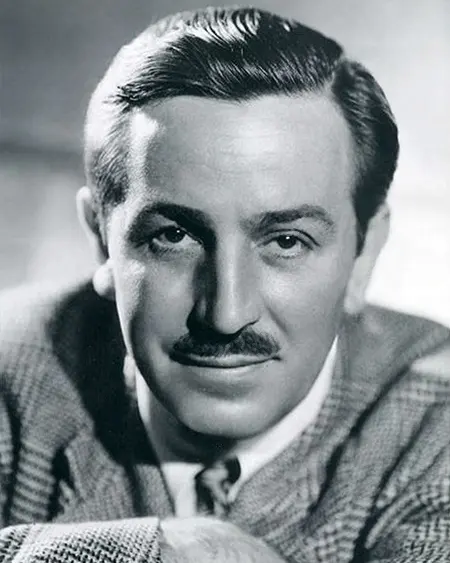
What kind of text it is
The text is a short biography: the story of a real person’s life, written by someone else, in the third person (he, his) and mostly in the past tense. This one is not a full life story. It picks out one thread, as its title says: struggle and success. Each paragraph follows the same rhythm: a failure, then how Disney got up again. Watch for that pattern; it is what makes the text persuasive.
The biography, part by part
1. From humble beginnings
The text opens with a question: when you think of great people who started from humble (poor, ordinary) beginnings, who comes to mind? For many, it is Walt Disney, an extraordinarily creative man whose ideas as an animator (a maker of cartoons), filmmaker and theme park builder changed entertainment in the 20th century. But, the writer says, dig a little deeper and you find that his road to success was paved with an unhappy childhood and many business failures.
2. An unhappy childhood
Disney was born in Chicago in 1901 and grew up in Missouri, the fourth of five siblings (brothers and sisters). His father, Elias, was domineering (he tried to control everyone) and is said to have been harsh with his sons; he also struggled to make ends meet (to earn enough for the family’s needs). To escape from all this, young Walt found solace (comfort) in drawing, while his older brothers, one by one, ran away from home to escape their father.
At 16 he dropped out of school to join the army, but was turned down for being too young. So he joined the Red Cross, and was sent to France to drive an ambulance. He came back to the United States in 1919.
3. The first business fails
Back home, he became an apprentice (a learner who works under a skilled person) at a commercial art studio in Kansas City, where he met his lifelong friend, the animator Ub Iwerks. Itching to set off on his own (eager to start), he started his own cartoon company, Laugh-O-Gram Studio, in 1921. It went bankrupt (it could not pay its debts) about two years later.
4. Forty dollars and a move west
With the loss of his first business, he packed his bags and went to Los Angeles in 1923 with about forty dollars, to try his hand at acting. He failed at that too. But there was a silver lining (something good in a bad situation): he noticed that California had no animation studios. He persuaded his brother Roy to join him, and they set up a studio together, the start of today’s Disney company. Soon he had his first big success, a cartoon character called Oswald the Lucky Rabbit.
5. Losing Oswald, finding Mickey
Oswald became a star, but Disney’s luck ran out. When he traveled to New York to renegotiate his contract (agree new terms) in 1928, he found that the man who distributed his films had hired away most of his animators, and that the rights to Oswald belonged to the film company, not to him. Instead of fighting or plotting revenge, he walked away and started again. On the train back to California, he created Mickey Mouse.
After more hard years, “eating beans” and running up debts, he brought Mickey to the screen in 1928 and was back at the top of his field.
6. Overwork and a breakdown
Even with Mickey’s success, keeping the business afloat (able to pay its way) was hard. Disney was overworked, and quarrels with the businessman who distributed his films, who took away his oldest friend and best animator, Ub Iwerks, ended in a nervous breakdown (a time of mental illness caused by stress) in 1931. After a long rest with his wife, he came back with a bold idea: a full-length cartoon film. Snow White and the Seven Dwarfs (1937) was a huge hit at the box office (in ticket sales). But the next films, Pinocchio and Fantasia (1940) and Bambi (1942), lost money at first: the text calls them duds, failures.
7. War, a strike and a gamble on television
More burdens came. In 1941 his animators went on strike (stopped work to demand better pay and conditions), and his mounting (growing) debts rose to about four million dollars. After the Second World War the company was slow to recover. Disney diversified (spread his business into new areas) and turned to television, although the film studios wanted everyone to stay on the big screen. The gamble paid off: TV shows such as The Mickey Mouse Club and Davy Crockett let him harness (gather and use) enough money for his biggest venture (risky business project): Disneyland.
8. “Black Sunday”
Disneyland opened on July 17, 1955, in Anaheim, California, and the first day went badly. Forged (fake) tickets brought in far more people than expected, and the queue of cars was about seven miles (11 km) long. It was 100 degrees Fahrenheit, about 38 °C: the new asphalt (the black road surface) was so soft that women’s high heels sank into it, drinking fountains didn’t work (were defunct), and some rides broke down. Critics called the day “Black Sunday”.
But with determination and perseverance (continuing in spite of difficulties), Disney turned it around. Disneyland became a colossal (huge) success, paid off his debts, and is still at the heart of the company today.
9. A kick in the teeth
The text ends with Disney’s own words about failure: all the adversity (hard times) and obstacles in his life had made him stronger. You may not realize it at the time, he said, but “a kick in the teeth” (a painful setback) may be the best thing in the world for you.
What is the main idea of the biography?
Pick an answer to see why.
What was the silver lining of Disney’s move to Los Angeles?
Pick an answer to see why.
Words from the biography
| Word | Meaning here |
|---|---|
| humble | ordinary, not rich or important (“humble beginnings”) |
| sibling | a brother or sister |
| domineering | trying to control other people, not caring how they feel |
| make ends meet | to have just enough money for what you need |
| solace | comfort when you are sad or worried |
| drop out (of) | to leave school or a course before finishing it |
| apprentice | a young person learning a trade by working for a skilled person |
| set off | to start a journey; here, to start out on your own |
| bankrupt | unable to pay your debts, so a business has to close |
| silver lining | something good that comes out of something bad (“Every cloud has a silver lining”) |
| renegotiate | to discuss and agree the terms of a contract again |
| plotting | secretly planning something harmful |
| afloat | (of a business) having enough money to keep going |
| nervous breakdown | a period of mental illness caused by stress or worry, when a person cannot carry on with ordinary life |
| box office | the place where tickets are sold; the money a film earns |
| dud | something that fails or doesn’t work |
| mounting | increasing, growing |
| diversify | to start doing new kinds of business |
| harness | to collect and use something (energy, money) for a purpose |
| venture | a new business project with some risk |
| forged | fake, made to cheat (“forged tickets”) |
| defunct | no longer working |
| perseverance | continuing to try in spite of difficulties |
| colossal | very large |
| adversity | a difficult or unlucky situation |
| a kick in the teeth | a painful disappointment or setback |
A. Complete the sentences
Use the correct words or phrases to complete the sentences: domineering, solace, apprentice, bankrupt, plotting, afloat, mounting, harness, perseverance, colossal.
- a.Kisan had to sell his house to keep his business ……… .
- b.He was accused of ……… the robbery of the bank.
- c.Scientists are trying to ……… the sun’s rays as a new source of energy.
- d.Many companies went ……… during the economic depression.
- e.Courage and ……… are the keys to success in life.
- f.The government had ……… pressure from the public to withdraw the bill.
- g.After his graduation, he worked as an ……… electrician in a company.
- h.The government spent a ……… amount of money on the renovation of the historical buildings.
- i.Kathy was brought up by an unkind, ……… stepmother.
- j.Patrick took ……… in the company of his mates.
Answer
B. Phrases and idioms
Find the meanings of these phrases and idioms, and use each in a sentence of your own: make ends meet, silver lining, nervous breakdown, kick in the teeth, drop out, set off.
Answer
C. Put the events in order
These sentences are events in Disney’s life. Rewrite them in the order in which they happened.
- a.He shifted his focus from big screens to television shows.
- b.He successfully founded the famous Disneyland.
- c.He returned to Kansas City and worked as a trainee at an art studio.
- d.He created the characters Oswald the Lucky Rabbit and Mickey Mouse.
- e.The cartoon company collapsed.
- f.Disney suffered severe mental and emotional illness.
- g.Disney left home and went to France to work as an ambulance driver.
Hint
Answer
D. Answer the questions
How was Walt Disney’s childhood?
Answer
Describe Disney’s family background.
Answer
What did Disney do after his failure in the first business?
Answer
How was the character of Mickey Mouse created?
Answer
Why did Disney have a mental breakdown?
Answer
Which of his films were commercially useless?
Answer
Which films produced him great financial returns?
Answer
Why do you think the opening of Disneyland was called “Black Sunday”?
Answer
What special quality of Disney made him finally a successful entrepreneur?
Answer
What lesson do you learn from Disney’s life?
A model answer
E. Someone who has inspired you
Who has inspired you significantly in your life? Share her or his life story with the class.
A model answer
Pronunciation: reading a dictionary entry
A dictionary tells you much more than a word’s meaning. Next to each word you will find:
- its pronunciation, in phonemic symbols between slashes, like /ˈsɪblɪŋ/;
- its part of speech (noun, verb, adjective, adverb…);
- its stress, shown by a high mark ˈ before the syllable said strongest (and a low mark ˌ before a syllable with a lighter stress).
Count the syllables by counting the vowel sounds: sib·ling has two.
Look up each word. Write its pronunciation, part of speech, number of syllables and stressed syllable. One has been done: extraordinarily /ɪkˈstrɔːdnrəli/, adverb, six syllables, stress on the second.
Answer
Speaking: congratulating
When someone shares good news, we congratulate them: we tell them we are happy for them and proud of what they did. A good congratulation has three parts: react (That’s wonderful news!), congratulate (Congratulations on…), and add something personal (You deserve it; all those early mornings paid off).
| Informal (friends, family) | Formal (teachers, officials, at work) |
|---|---|
| Well done! | My sincere congratulations to you. |
| That’s wonderful news! | Please accept my heartfelt congratulations. |
| You did it! So proud of you. | I commend you on your accomplishment. |
| Congratulations! You deserve this. | Allow me to congratulate you on your success. |
The reply is simple: Thank you (so much)! / Thanks a lot, that’s very kind of you.
A. The model conversation
Asha tells Bhanu that she has some good news to share with him: she has won a scholarship (money given to a student to pay for study) for her further studies. Bhanu congratulates her warmly, and Asha thanks him.
B. Congratulate people
Congratulate people in these situations, using the expressions above.
- a.Your friend got a GPA of 4.0 in the first terminal examination.
- b.Your uncle and aunt have a new baby girl.
- c.Your cousin got a new job in a bank.
- d.Your sister got promoted from Sales Assistant to Account Manager.
- e.Your brother has graduated from a university.
- f.Your neighbor has won a trophy in a tennis tournament.
Model replies
Grammar I: Prepositions of time, and more
You met prepositions of time and place in Unit 15. This unit adds the time words that come in pairs or with lengths of time, and prepositions that belong to a verb or noun.
| Preposition | Use | Example |
|---|---|---|
| at | a clock time, an exact point | at 9:15; at noon; at the age of 20 |
| on | a day or date | on Sunday; on July 17, 1955 |
| in | a month, year, season, part of the day; a decade of your age | in 1955; in winter; in the morning; in her twenties |
| in + a length of time | within that time, or at the end of it | Finish the test in the next 30 minutes. |
| between … and | the time from one point to another | between 9:00 and 9:15 |
| from … to / until | the start and end | from 10 a.m. to 4 p.m. |
| since | from a point in the past until now | since 2010 |
| for | a length of time | for ten years |
| by | not later than | by Friday |
| until | up to that time, then it stops | He worked there until 2010. |
Some prepositions don’t show time or place at all: they belong to the word before them, and you learn them as a pair.
- verbs: look for (try to find), turn into (become), depend on, knock at/on the door
- nouns: a great deal of, a lack of
- position in a group: ten people working under him (he is their boss)
- measurements: water boils at 100 °C; developed at a great pace
- fixed phrases: in the dark, in my opinion, at the moment, on the radio, go on a trip, at the young age of 20
Disneyland opened ……… July 17, 1955.
Pick an answer to see why.
Disney ran his studio in California ……… more than forty years.
Pick an answer to see why.
Disney turned a small cartoon studio ……… one of the biggest companies in the world.
Pick an answer to see why.
A. Choose the correct prepositions
Choose the correct prepositions.
- a.A: When did you reach school? B: I reached ……… 9:00 and 9:15 a.m. (at, between, on, next to)
- b.I usually stay in my office ……… 10 a.m. to 4 p.m. (at, on, in, from)
- c.You should finish your test ……… the next 30 minutes. (at, by, in, of)
- d.Noor worked in the hotel ……… 2010. (for, in, until, by)
- e.I have been looking ……… my spectacles. I don’t remember where I kept them. (of, to, at, for)
- f.Mr. Shahi has ten members working ……… him. (under, above, beside, on)
- g.There is a knock ……… the door. Who can be calling us now? (on, at, in, for)
- h.Kritika is ……… her twenties. (on, in, at, during)
- i.There is a great deal ……… violence in some countries. (of, for, at, about)
- j.Their discussion turned ……… an unpleasant quarrel. (to, into, on, onto)
Answer
B. In, on or at
Complete the sentences with in, on or at.
- a.Water boils ……… 100 degrees Celsius.
- b.Last year, we went ……… a trip to the National Botanical Garden, Godawari, from our school.
- c.Can you turn the light on, please? I don’t want to sit ……… the dark.
- d.She was married ……… the young age of 20.
- e.Science and technology have developed ……… a great pace.
- f.……… my opinion, violent films should be banned for children.
- g.I heard the news ……… the radio this morning.
- h.My father is not at home ……… the moment.
Answer
Writing I: Congratulations
A. A message of congratulation
Your school football team has won the title of the Inter-school Football Tournament organized by the District Sports Development Committee. Write a message of congratulation to the team on behalf of the school, to appear on the school notice board. Use these clues: feeling happy and proud; hard work and dedication of the team; trophy and cash prizes; congratulations and best wishes.
A model message
How to write a message of congratulation
- A heading that catches the eye: CONGRATULATIONS!
- Who it is from, and the date (on a notice: the school’s name at the top, the writer at the bottom).
- The congratulation: who, and what they achieved, in the first sentence.
- Why it matters: the effort behind it, and a detail or two (the score, the prize).
- Thanks to those who helped (optional), and good wishes for the future.
Keep it short (about 100 words), warm and positive. On a notice it speaks for the whole school, so use we and our.
B. A letter of congratulation
Your maternal uncle has recently been promoted to the post of Inspector of Nepal Police. Write a letter of congratulation, extending him your best wishes.
A model letter
How to write a letter of congratulation
It is a personal letter: your address and date at the top, Dear Mama / Dear Uncle, then:
- Paragraph 1: how you heard the news, and your congratulations.
- Paragraph 2: why it is deserved: the effort or quality behind it, with a real detail.
- Paragraph 3: your good wishes for the future, and something personal.
- Close: congratulations again, an invitation or a hope to meet; With love, / With love and respect, and your first name.
Reading II: If
Before you read
What conditions do you think one has to fulfill to be a successful person in life?
A model answer
Which of them have you been following?
A model answer
The poet and the poem
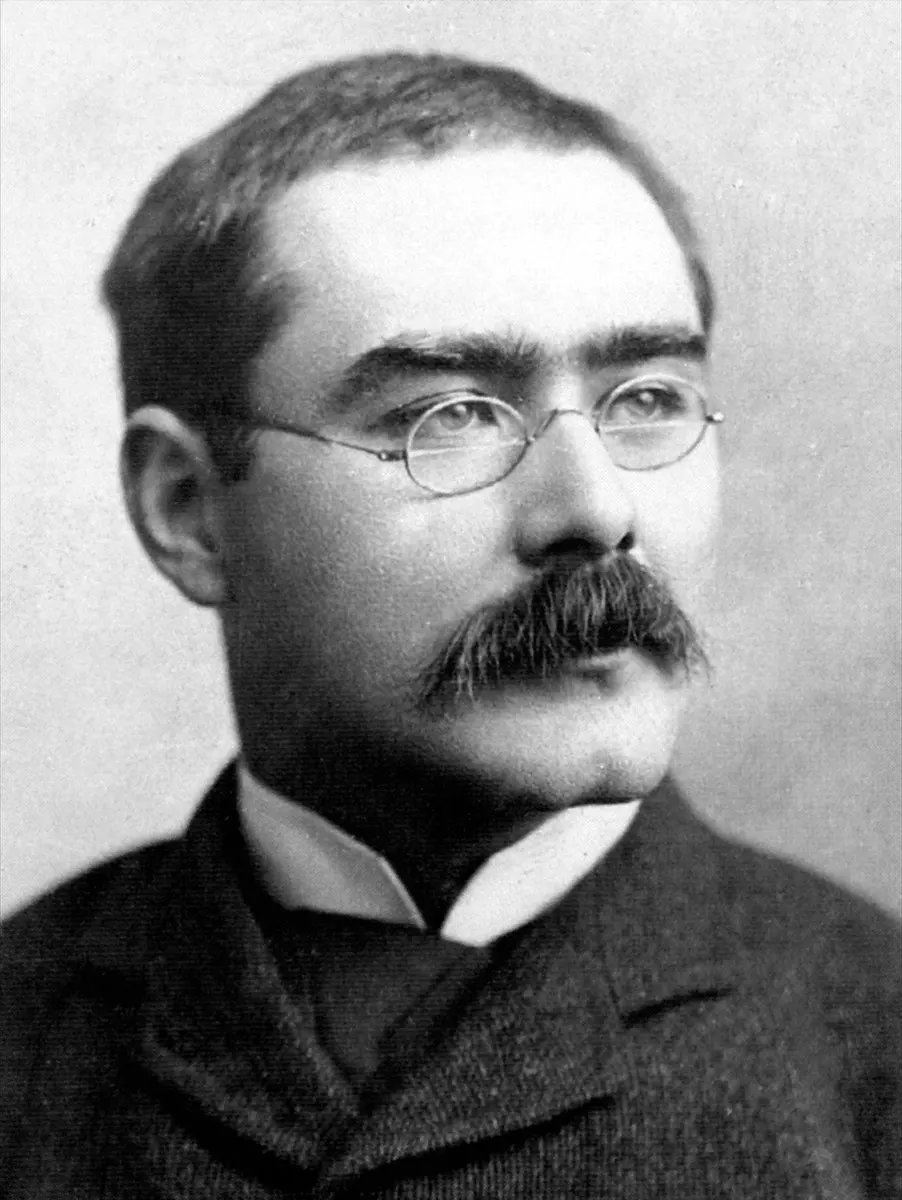
Rudyard Kipling (1865–1936) was a British writer born in Bombay (now Mumbai), India, famous for The Jungle Book, the stories of Mowgli. He wrote “If—” for his son, and it was first printed in 1910 in his book Rewards and Fairies. Kipling said that the poem was inspired by a man he admired, the colonial leader Leander Starr Jameson. Today many people find Kipling’s praise of the British Empire hard to accept; the poem itself, though, is about qualities anyone can admire.
The poem is one long sentence, in four stanzas of eight lines. Almost every line begins with If you can…: a list of conditions. Only in the last two lines does the main clause arrive, the reward for meeting them all: the Earth is yours, and you will be a Man, my son. This is a giant conditional sentence Grade 10: Unit 5, and holding back the main clause until the very end builds suspense.
The poem, stanza by stanza
Stanza 1: calm, trust and patience
- Keep calm when everyone around you is losing theirs (keeping your head: staying calm), and blaming you for it.
- Trust yourself when everyone doubts you, but understand why they doubt (make allowance for it).
- Wait patiently without getting tired of waiting.
- If people tell lies about you, don’t lie back (don’t deal in lies); if people hate you, don’t hate them back (don’t give way to hating).
- And yet don’t look too good or talk too wise: be good without showing off.
Stanza 2: dreams, thoughts, triumph and disaster
- Dream, but don’t let dreams become your master: dreams should push you to act, not replace action.
- Think, but don’t make thinking your aim: thought is for doing something.
- When you meet Triumph (great success) and Disaster (great failure), treat them the same: both are impostors (people pretending to be what they are not). Success is never as permanent as it feels; failure is never as final as it feels.
- Bear it when knaves (dishonest people) twist your true words to trap fools.
- And when the things you gave your life to are broken, stoop (bend down) and build them up again with worn-out tools.
Stanza 3: risk and endurance
- Be brave enough to put all your winnings on one turn of pitch-and-toss (an old game of throwing coins: a risk), and if you lose, start again from the beginning without ever complaining about your loss.
- Force your heart and nerve and sinew (your courage, your nerves and your muscles) to keep working long after they are exhausted, and hold on when nothing is left in you except the Will that says Hold on!
Stanza 4: people and time
- Talk with crowds and keep your virtue (goodness); walk with Kings and don’t lose the common touch (the ability to get on with ordinary people).
- Let neither foes (enemies) nor loving friends hurt you: don’t be controlled by either.
- Let all men count with you, but none too much: value everyone, but depend too much on no one.
- Fill the unforgiving minute with sixty seconds’ worth of distance run: a minute won’t wait and can never be lived again, so use every second of it.
- Then the Earth and everything in it is yours, and, more than that, you will be a Man: a truly grown-up, complete human being.
Why does the poet call Triumph and Disaster “impostors”?
Pick an answer to see why.
Which line of advice is about time?
Pick an answer to see why.
A. Match the words with their meanings
Match the words and phrases with their meanings.
- a.unforgiving
- b.virtue
- c.sinew
- d.pitch-and-toss
- e.worn-out
- f.stoop
- g.knave
- h.triumph
- i.impostor
- i.a dishonest person
- ii.badly damaged and no longer useful
- iii.behavior showing high moral standards
- iv.a great success, achievement or victory
- v.a game of skill and chance
- vi.a strong band of tissue in the body
- vii.not giving a second chance; not happening again
- viii.a person who cheats by pretending to be somebody else
- ix.to bend the body forwards and downwards
Answer
B. Complete the summary
Complete the summary of the poem with these words and phrases: will, importance, success and failure, value, inspirational, truthfulness, virtue.
In “If”, Rudyard Kipling gives (a) ……… insights into life. In the first stanza, the poet advises us to keep calm, trust ourselves and keep to (b) ……… . According to the poet, it is important to think about an action before undertaking it. Similarly, balancing between (c) ……… is another important quality of a successful person. In the third stanza, the poet advises us how to (d) ……… our winnings. We must devote our intellect, heart and muscle to the work we do, and we should always have a strong (e) ……… to achieve success. In the final stanza, the poet advises us to keep our (f) ……… no matter who we are with. Most importantly, we must realize the (g) ……… of time.
Answer
C. Answer the questions
What does the poet suggest about dealing with lies?
Answer
What do you mean by “not be tired by waiting”?
Answer
Why should we not aim only to dream in life?
Answer
How do you think we can achieve our dream?
Answer
What can knaves do to us?
Answer
Why should we forget our failures in life?
Answer
What should we do if we lose the “pitch-and-toss”?
Answer
D. Advice from home and school
What suggestions do your parents and teachers give you to be successful in life?
A model answer
Listening: a speech to students
A. Before you listen
Look at the picture of a smiling man in a dark suit and blue tie, in front of an American flag. a. Who do you think the person is? b. What is he popular for?
Answer
The textbook’s audio is part of a speech that Obama gave to schoolchildren at the start of the school year, on September 8, 2009, at Wakefield High School in Arlington, Virginia. CDC’s own recording is below: read the questions in B and C first, then listen, as many times as you need.
B and C. The textbook’s audio: answers
Listen and choose the correct answers.
- a.What is the responsibility of every individual? i. to find what they are weak at ii. to find what they are good at iii. to find what their personality traits are
- b.Who was the speaker raised by? i. his mother ii. his father iii. his grandparents
- c.Why does the speaker consider himself lucky? i. because he got second chances ii. because he got to be focused iii. because he had the opportunity to go to school
- d.Why did Michelle Obama work hard? i. to be able to support her parents ii. to be able to go to the best schools iii. to be able to follow her dreams
- e.Who are the most successful people in the world, according to the speaker? i. those who have tried the most ii. those who have failed the most iii. those who have done everything right
- f.How many times was Harry Potter rejected before it was finally accepted? i. 12 times ii. 13 times iii. 14 times
Answer
Listen again and fill in the blanks.
- a.The speaker was just ……… old when his father left his family.
- b.His mother had to struggle to ……… .
- c.He does not feel ……… of what he did in school.
- d.He was lucky that he got ……… to follow his dreams.
- e.Our present status does not ……… what we will become in the future.
- f.We may not ……… in everything we try the first time.
- g.Michael Jordan was not selected in ……… team.
Answer
D. A motivational speech
Practice listening alone
Grammar II: Prepositional phrases
A prepositional phrase is a preposition and the noun (or -ing form) after it, used together as one unit: in a hurry, on board, at large. Many are fixed: you can’t change the preposition or add an article, so learn them whole, with their meaning.
| Phrase | Meaning | Example |
|---|---|---|
| in cash | in coins and notes, not by card or cheque | She paid Rs. 500 in cash. |
| at large | (of a criminal) free, not yet caught | The thief is still at large. |
| on board | on a ship, plane, bus or train | All 70 passengers on board were safe. |
| on a diet | eating less or only certain foods | He is on a diet to lose weight. |
| in a hurry | needing to do something quickly | Sorry, I’m in a hurry. |
| out of reach | too far away to touch or to contact | Keep medicines out of reach of children. |
| out of hand | out of control | The crowd got out of hand. |
| in control (of) / take control of | having power over | The police took control of the situation. |
| with each other | between two or more people (collide with) | The bus and the truck collided with each other. |
| good / brilliant at | skilled in | She is brilliant at playing the sarangi. |
| interested in | wanting to know about | Are you interested in politics? |
The bus driver was ……… and didn’t stop at our stop.
Pick an answer to see why.
Complete the sentences
Complete the sentences with the correct prepositional phrases: in cash, at playing, interested in, with each other, out of hand, in a hurry, out of reach, on a diet, at large, on board, of the situation.
- a.The accident took place as the bus and the lorry collided ……… .
- b.Amin is brilliant ……… the violin.
- c.Mr. Sharma is not ……… politics.
- d.The criminal who took the lives of five people is still ……… .
- e.I cannot contact him. His phone is ……… .
- f.The concert went ……… . They had to call the police to take control ……… .
- g.Sanskriti is ……… these days for fear that she will put on weight.
- h.I cannot talk to you now. I am ……… .
- i.Even though the plane had to make an emergency landing, all the passengers ……… were safe and sound.
- j.Would you like to make the payment ……… or by cheque?
Answer
Writing II: A speech
Many people believe that we should not be discouraged by our failures, but should take them as a chance to correct our mistakes and succeed next time. Draft a speech on Failure as the Pillar of Success, with examples from famous, successful people.
Hint
A model speech
How to write a speech
- Salutation: greet the audience in order of importance: Respected Chairperson, Principal, teachers and my dear friends,
- Introduction: say who you are if needed, the topic, and your view in one clear sentence.
- Body: two to four points, each with an example (here, famous people who failed first), in their own paragraphs.
- Conclusion: sum up in a sentence, and end with something to remember or do.
- Thank the audience.
Project work
Archaic words
Archaic words are old words that are no longer used in everyday English, though you still meet them in old poems, plays, prayers and stories. The ones below come from Early Modern English, the English of Shakespeare (around 1600) and of the old English Bible. (Old English, a thousand years ago, is so different that a modern reader can’t understand it without study.)
| Archaic | Modern | Example |
|---|---|---|
| an | if | An you be willing… = If you are willing… |
| anon | soon, in a moment | I’ll come anon. |
| art | are (with thou) | Thou art kind. = You are kind. |
| aye | yes | Aye, my lord. |
| beseech | to beg | I beseech you, help me. |
| betwixt | between | betwixt the hills |
| dost / doth | do / does | What dost thou want? The lady doth protest too much. |
| ere | before | ere long = before long, soon |
| fain | gladly, willingly | I would fain go. = I would gladly go. |
| fie | shame! | Fie upon you! |
| forsooth | indeed, truly | Forsooth, it is so. |
| hast / hath | have / has (with thou / he, she) | He hath a son. |
| hither | here, to this place | Come hither. = Come here. |
| morrow | the next day (also morning) | on the morrow = the next day; Good morrow! = Good morning! |
| nay | no | Nay, I will not. |
| soft | wait! quiet! | But soft, what light through yonder window breaks? |
| ’tis | it is | ’Tis true. |
| thee / thou | you (thou the subject, thee the object) | Thou lovest me; I love thee. |
| thine / thy | your, yours (thine before a vowel) | thy name; thine eyes |
| thither | there, to that place | hither and thither = here and there |
| whence | from where | Whence comest thou? = Where do you come from? |
| whither | to where | Whither goest thou? = Where are you going? |
| wherefore | why | Wherefore art thou Romeo? = Why are you Romeo? (not where) |
Write these in modern English.
- a.Whither goest thou, my friend?
- b.’Tis late; I shall come anon.
- c.I beseech thee, tarry here till the morrow.
- d.Wherefore dost thou weep?
Answer
Exercise
SEE-style practice on this unit. Try each one as in the exam, then open the answer.
Put these events of Reading I in the order in which they happened.
- a.Disneyland opened in Anaheim.
- b.Disney drove an ambulance for the Red Cross in France.
- c.Disney turned to television.
- d.Snow White and the Seven Dwarfs became a box-office hit.
- e.Disney lost the rights to Oswald the Lucky Rabbit.
Answer
Fill in the blanks with suitable prepositions.
Walt Disney was born (a) ……… Chicago (b) ……… 1901. He worked (c) ……… a Kansas City studio (d) ……… two years. He created Mickey Mouse (e) ……… a train journey, and his park opened (f) ……… a hot Sunday (g) ……… July. Critics were unhappy (h) ……… the opening, but the park soon turned (i) ……… a success. Today it is open (j) ……… morning till night.
Answer
Read the passage and answer the questions.
Pasang Lhamu Sherpa was born in 1961 in Solukhumbu. As a young woman she worked as a trekking guide, and she tried to climb Everest three times without reaching the top. In April 1993, on her fourth attempt, she became the first Nepali woman to stand on the summit. On the way down, a storm trapped her near the South Summit, and she died there. The government of Nepal honored her with the Nepal Tara and later named her a national luminary, and a mountain, a highway and a statue in Kathmandu now carry her name.
- a.Where was Pasang Lhamu Sherpa born?
- b.How many times did she try to climb Everest before she succeeded?
- c.What record did she set in 1993?
- d.What happened to her on the way down?
- e.How has she been remembered?
Answer
Your friend has been selected to represent Nepal in the International Mathematical Olympiad. Write a message of congratulation of about 80 words.
A model message
Write a short speech of about 200 words on “Hard work is the key to success” for your school assembly.
Hint
Practice every question in the book, and keep track of the ones you miss →
A companion to your textbook, not a replacement for it: study from the book your school uses, and where the two differ, follow your teacher. Found a mistake? Please tell us.