
What do you do when nobody tells you what to do? Some people paint, some knit, some climb the nearest tree just to see how far they can see. A hobby is the thing you choose, and it often says more about you than your marks do.
This unit reads an article about the hobbies most loved around the world, and a short poem about a child climbing an apple tree, higher than ever before. Along the way you will learn the passive voice in the present (The dogs are fed by Ganga), and after verbs like like, hate and mind (I don’t mind being praised), and you will write an essay on your hobbies, a job advertisement, and a paraphrase.
Getting started
The unit opens with three drawings of young people doing what they love. Here is what each shows, and something you could say about it.
| Picture | The hobby | Something to say |
|---|---|---|
| A boy kneeling on the floor, coloring a picture of a temple under a blue sky | painting and drawing | He has painted the sky and is now coloring the temple and the green below. Painting lets him show what he sees in his own way. |
| A girl in a cultural dress dancing, a boy beside her playing the madal | dancing and folk music | They are enjoying a traditional dance. Dancing keeps the body fit and keeps a culture’s songs alive. |
| A boy singing into a microphone while he plays the madal | singing and playing an instrument | He is singing and keeping the beat at the same time, which takes a lot of practice. |
Reading I: Common Hobbies
Before you read
What kind of text it is
The text is an informative article, the kind found on a website or in a magazine. It starts with a short introduction, then gives each hobby a heading of its own and a few paragraphs: what the hobby is, why it is good, and how to start. It talks straight to the reader (“you can…”, “simply head to…”), which makes it friendly and easy to read.
The article, part by part
The introduction
Hobbies are more than fun, the writer says: they ignite (set on fire, start up) our creativity and help us discover hidden talents, things we are good at without knowing it. Choosing one can be hard, because you want something you enjoy alone, but perhaps also something to share with friends.
People differ: some like the outdoors (fishing, camping, hunting, hiking), others stay indoors with a good book or online courses that hone (sharpen) their skills. Which hobbies are popular also depends on the person and on their culture; the writer gives the example of fishing in England and hiking in China. The best news: most of the hobbies on the list cost little, and the ones that need learning are easy to pick up.
According to the introduction, what decides which hobbies are popular in a place?
Pick an answer to see why.
Reading
Reading is popular in almost every culture, and it is a way of improving yourself as well as having fun. Whether you read for information or entertainment, there is a book for you among the many genres (kinds of writing: adventure, mystery, science, poetry…). It needs no special gear: a library or a free download is enough. To meet people and share your views, you can join a book club. And you can read anywhere.
Dancing
Almost everyone loves dancing, even those who are “terrible dancers”: put on music and move. It improves your flexibility (how far you can bend and stretch) and mobility (how easily you move), and lets you let off extra energy and steam (calm down by using up energy or strong feeling). You can dance in your living room, or take it up a notch (go one level higher) by joining a dance studio or an online course.
Collecting antiques
Antiques are old objects valued for their age, beauty or quality: furniture, coins, lamps, clocks. More people now appreciate old, well-made things. If you have an eye for tasteful decor (attractive decoration in a home), collecting may suit you, and “the older, the better”: every piece may carry years of stories. You can also make a hobby of refurbishing (repairing and making like new) old furniture.
Painting
Painting lets you be creative, relaxed and expressive (showing your feelings). All you need is paint and brushes from an art shop. You don’t have to be great: start simple and paint whatever comes to mind. The writer calls it therapeutic (healing, good for your mind). You can paint on an easel (a wooden frame that holds the picture up) or go wild with murals (large paintings on walls).
Photography
Take your phone or camera to a park in a break. You don’t need to be a pro (professional) or own the best equipment. You need a good eye, a camera or smartphone, and the basics: lighting, depth and exposure (how much light reaches the camera). The reward: you keep your memories and have beautiful pictures for your walls.
Writing
People love writing because of the freedom: you can write about anything, from your day to a new recipe. A journal (a diary of your day) helps you handle stress, relax and get more done, and the writer adds that studies show successful people keep journals. You can also start a blog (a website where you post your writing) on a niche (a small special subject you know well) and meet people who think like you, or try a book or a poem.
Knitting
Knitting (making cloth from wool with two long needles) is a good use of free time: you fill your winter wardrobe (the clothes you own) with mittens, hats, scarves and blankets, and make gifts for family and friends. It also exercises your hands and improves coordination (making your hands and eyes work together). Best of all, you can knit almost anywhere: on the bus, watching TV, listening to music or hanging out (spending time, relaxed) with friends.
Which two hobbies does the article say you can enjoy almost anywhere?
Pick an answer to see why.
Words from the text
Words linked here open in English Vocabulary, where you can see an example and practice them in the word game. The meanings below are the ones the words have in this article.
| Word | Meaning here |
|---|---|
| ignite | to start something, like a fire; to make it burst into life |
| hone | to sharpen; to make a skill better by practice |
| prevalent | common, found in many places |
| in-demand | wanted by many people, popular |
| genre | a kind of book, film or music (mystery, comedy…) |
| flexibility | being able to bend and stretch easily |
| mobility | being able to move easily |
| let off (steam) | to get rid of extra energy or strong feelings |
| take it up a notch | to raise it one level; a notch is a small cut, used as a mark or a step |
| passionate | having very strong feelings for something |
| antique | an old object, valued for its age and beauty |
| refurbish | to repair and decorate something so it looks new |
| therapeutic | good for your health or your mind, healing |
| easel | a wooden stand that holds a painting while it is painted |
| mural | a large painting on a wall |
| exposure | how much light reaches a camera’s sensor or film |
| blog | a website where someone posts their writing regularly |
| niche | a small, special area of interest |
| productivity | how much you get done |
| wardrobe | all the clothes a person owns; also the cupboard they hang in |
| coordination | making different parts of the body work well together |
| hang out | to spend time somewhere in a relaxed way, often with friends |
A. Synonyms and antonyms
Find words in the text that are synonyms or antonyms of these words.
- a.unrevealed (synonym)
- b.sharpen (synonym)
- c.boring (antonym)
- d.unexcited (antonym)
- e.healing (synonym)
- f.frame (synonym)
Answer
B. Meanings and sentences
Find the meanings of these words and phrases in a dictionary and use them in your own sentences.
a. ignite b. in-demand c. let off d. a notch e. passionate f. refurbishing g. a blog h. hanging out
Answer
C. True, False or Not Given
A statement is True if the text says the same thing, False if the text says the opposite, and Not Given if the text doesn’t say either way.
Outdoor hobbies are more popular than indoor hobbies.
Pick an answer to see why.
You need more effort for reading than for other hobbies.
Pick an answer to see why.
Only good dancers choose dancing as their hobby.
Pick an answer to see why.
Antiques are also used for interior decoration in a house.
Pick an answer to see why.
Paintings can be used to express your feelings.
Pick an answer to see why.
People who choose photography as their hobby are pro photographers.
Pick an answer to see why.
Keeping journals helps people become successful.
Pick an answer to see why.
Flexibility in time and place is the best part of knitting.
Pick an answer to see why.
D. Answer the questions
What aspects of our life influence the hobbies we choose?
Answer
What makes reading the most popular hobby?
Answer
How can people practice dancing?
Answer
What things are necessary for one to go with painting?
Answer
Write the benefits of doing photography.
Answer
Why has writing become a popular hobby?
Answer
How can knitting be rewarding to a person?
Answer
E. Hobbies and careers
Do you think a person’s hobby really helps him or her in a professional career? Discuss.
A model answer
Pronunciation: consonant clusters
A consonant cluster is two or more consonant sounds together with no vowel between them: str in string, lk in milk. Nepali puts a short vowel into many clusters (istation for station, iskul for school), so English clusters need practice. Notice that a cluster is about sounds, not letters: in scratch the final tch is one sound, /tʃ/.
| Word | Cluster(s) | Say it |
|---|---|---|
| scout | /sk/ at the start | /skaʊt/ |
| instant | /nst/ in the middle, /nt/ at the end | /ˈɪnstənt/ |
| pulp | /lp/ at the end | /pʌlp/ |
| help | /lp/ at the end | /help/ |
| street | /str/ at the start | /striːt/ |
| frustrating | /fr/ at the start, /str/ in the middle | /frʌˈstreɪtɪŋ/ |
| golf | /lf/ at the end | /ɡɒlf/ (American /ɡɑːlf/) |
| twelfth | /tw/ at the start, /lfθ/ at the end | /twelfθ/ |
| scratch | /skr/ at the start | /skrætʃ/ |
| spurious | /spj/ at the start | /ˈspjʊəriəs/ |
| spleen | /spl/ at the start | /spliːn/ |
| sprout | /spr/ at the start | /spraʊt/ |
| blog | /bl/ at the start | /blɒɡ/ (American /blɑːɡ/) |
| sclerosis | /skl/ at the start | /skləˈrəʊsɪs/ |
| trout | /tr/ at the start | /traʊt/ |
| hundredth | /ndr/ in the middle, /dθ/ at the end | /ˈhʌndrədθ/ |
Speaking: likes, dislikes and preferences
A. Ways to say what you prefer
Here are three people saying what they like: one would rather stay home and read classics than go out; one hates outdoor games and would rather sleep; one prefers lying on a sandy beach to hang-gliding and canoeing. Each uses a different pattern. Learn them as patterns:
| To say… | Pattern | Example |
|---|---|---|
| you like something better (in general) | prefer + -ing + to + -ing | I prefer reading to watching TV. |
| prefer + noun + to + noun | She prefers tea to coffee. | |
| you like something better (now, this time) | would prefer to + verb + rather than + verb | I’d prefer to stay home rather than go out. |
| would rather + verb + than + verb | I’d rather sleep than play outside. | |
| you like or love it | like / love / enjoy / adore + -ing | I love visiting new places. |
| it doesn’t bother you | don’t mind + -ing | I don’t mind helping passengers. |
| you dislike it strongly | hate / can’t stand / loathe / detest + -ing | I hate being kept waiting. |
| you are very keen on it | be crazy about / be fond of / be into + noun or -ing | I’m crazy about sandy beaches. |
Which sentence is correct?
Pick an answer to see why.
My brother doesn’t mind ……… the dishes after dinner.
Pick an answer to see why.
B. Three people, one plan
In this example, A suggests going to the countryside, B agrees with joy (“Wow! That’s a great idea. I love visiting greenery.”), and C says no politely with a reason (“No, thanks. I don’t like walking long distances.”).
Make similar conversations of three for these plans: a. fly to India b. play cricket c. ride a bike d. go to the stadium e. watch the premiere show of Pratigya f. go swimming
Model conversations
C. Likes and dislikes about careers
The example for a driver: A likes driving a private car better than a taxi; B doesn’t mind helping passengers in a hurry; C hates being kept waiting by customers.
Take turns to express likes, dislikes or preferences about these careers: a teacher, a scientist, a sweeper, a beautician, a police officer, a businesswoman, a journalist, a singer.
Model sentences
Grammar I: The passive in the present simple
You met the active and passive voice in earlier grades. Here is a quick reminder, then the new part: the passive after verbs like like and mind.
Active and passive
In an active sentence the subject does the action: Ganga feeds the dogs. In a passive sentence the subject is the one the action happens to: The dogs are fed by Ganga.
To make the passive in the present simple:
- The object of the active sentence becomes the subject: the dogs → The dogs.
- The verb becomes am / is / are + past participle, agreeing with the new subject: feeds → are fed. (The tense stays present simple; only be shows it.)
- The doer goes after by, or is left out: by Ganga.
Questions keep the question order, with am/is/are first: Do you turn the laptop on first? → Is the laptop turned on first? Negatives put not after am/is/are: They don’t rent cars there. → Cars aren’t rented there.
When to use the passive
Use the passive when the one the action happens to matters more than the doer, or when the doer is unknown, obvious or unimportant:
- Rice is grown in the Terai. (By farmers, obviously.)
- Many criminals are caught in London every year. (By the police: no need to say.)
- These shawls are made in Bhaktapur. (The shawls are the topic.)
Leave out by + a doer that says nothing: by people, by someone, by them, by us. ✗ The dogs are fed by someone. ✓ The dogs are fed.
After like, love, hate, mind
After verbs that take an -ing form (like, love, adore, enjoy, hate, loathe, detest, can’t stand, don’t mind), the passive is being + past participle:
- I like journalists following me. → I like being followed (by journalists).
- Deuniya doesn’t mind anyone mocking him. → Deuniya doesn’t mind being mocked.
When the action is done to something of yours (your hair, your notebook, your photo), use having + it + past participle:
- I loathe people pulling my hair. → I loathe having my hair pulled.
- Ashmina adores teachers checking her notebooks. → Ashmina adores having her notebooks checked.
Sanjay hates people calling him by a nickname. In the passive:
Pick an answer to see why.
Which is the passive of “Tourists visit the Changunarayan temple every day”?
Pick an answer to see why.
Mother likes visitors praising her garden. In the passive:
Pick an answer to see why.
A. Complete with the passive
Complete the sentences with the correct passive forms of the verbs.
- a.Ganga feeds the dogs. → The dogs ……… by Ganga.
- b.The police catch a lot of criminals in London. → A lot of criminals ……… in London.
- c.They often help us. → We ………
- d.They don’t rent cars there. → Cars ……… there.
- e.Do you turn the laptop on first? → ……… the laptop ……… first?
- f.Somebody follows me home every evening. → Every evening ……… home.
- g.We usually leave a saucer of milk for the cat. → A saucer of milk ……… for the cat.
- h.I like journalists following me on the way. → I like ……… on the way.
- i.I loathe people pulling my hair. → I loathe ………
- j.Ashmina adores teachers checking her notebooks. → Ashmina adores ………
- k.Deuniya does not mind anyone mocking him. → Deuniya does not mind ………
Answer
B. Change into the passive
Change these sentences into the passive voice.
- a.The gardener waters the flowers every day.
- b.People see foxes in their gardens at night.
- c.We expect students not to talk during examinations.
- d.Rivers of fresh water form this lake.
- e.National parks attract many domestic and foreign tourists.
- f.They promise him higher wages.
- g.Does Biraj always beat Balgopal?
- h.Nobody knows the secret.
- i.They are sure to help the helpless.
- j.Scientists have to discover a more effective vaccine for Covid-19.
- k.What do they prefer to eat?
- l.Sources say most people in the region are still illiterate.
Answer
Writing I: An essay on your hobbies
People have different hobbies and interests, which may lead them to the careers they adopt. Write an essay on your hobbies, explaining how they might influence your career.
Hint
A model essay
How to write an essay
An essay gives your thoughts on one topic, in paragraphs, for a general reader. In the SEE, an essay is one of the free writing tasks (about 200 words, 8 marks). Its parts:
- Title: short and clear (My Hobbies and My Future).
- Introduction (one paragraph): catch the reader’s interest and say what the essay is about.
- Body (two or three paragraphs): one main idea each, with an example from your own life. Link them: My second hobby…, These hobbies have given me…, For example….
- Conclusion: sum up and end with a thought of your own.
Reading II: Climbing
Before you read
The picture shows three children sitting and standing on the low, spreading branches of a big old tree in a park, smiling and talking.
The poet and the poem
Amy Lowell (1874–1925) was an American poet from Boston. She became a leader of the Imagists, poets who used clear, sharp pictures (images) and everyday words instead of long, decorated lines, and she won the Pulitzer Prize for poetry in 1926, the year after she died. Climbing is one of her verses for children, from her first book, A Dome of Many-Coloured Glass (1912). It is short and musical, and it sounds like a child talking.
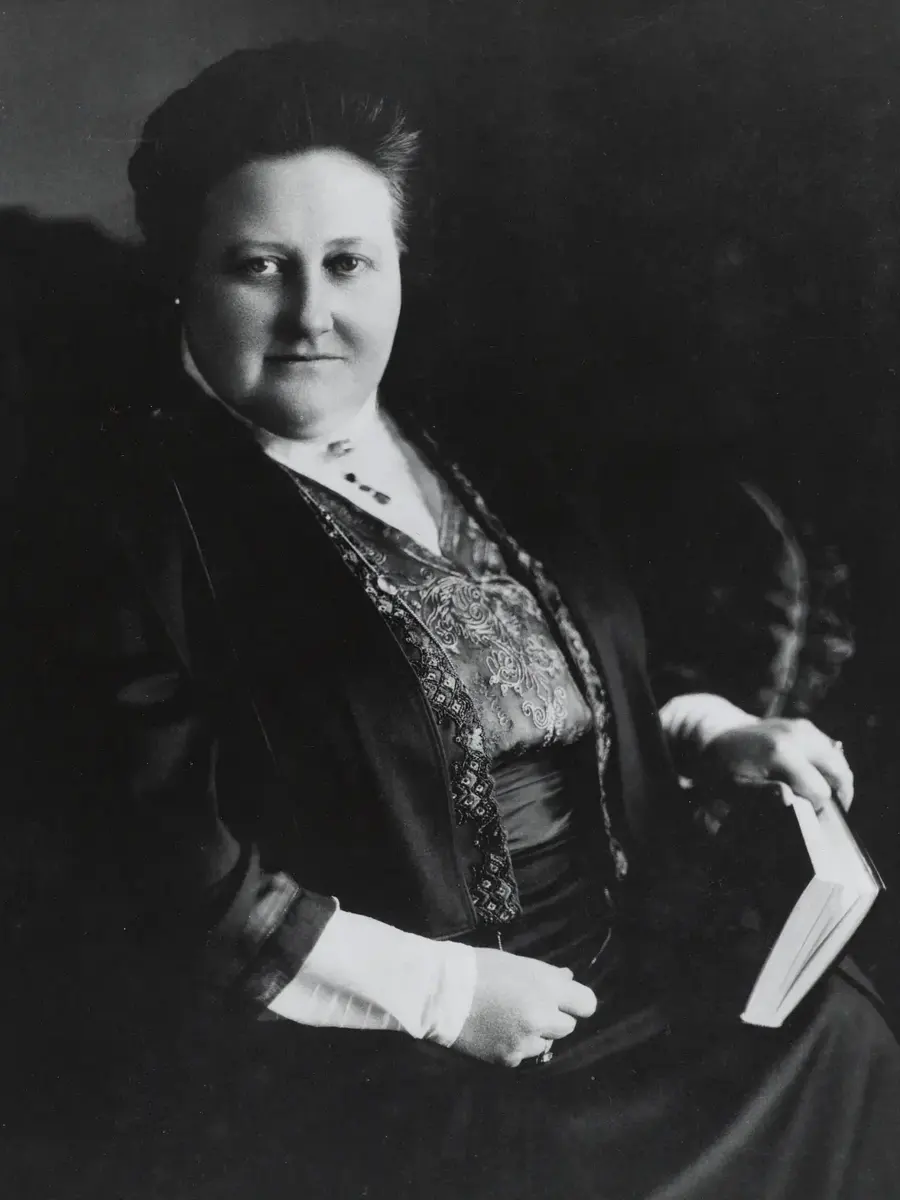
The poem, part by part
The poem has four stanzas of four lines each. The speaker is a child climbing an apple tree, telling us what happens as it happens, in the present tense.
Stanza 1: The tree is a staircase
The child goes up the apple tree, with the sky above and the earth below. Each branch is like a step of a wonderful stair that leads up towards a town the child can see shining far away. The tree has become a magic staircase to somewhere bright.
Stanza 2: The shining town
Climbing higher and higher, as the branches sway in the wind, the child begins to see the town’s tall buildings: a spire (the pointed top of a tower), the gleam of a turret (a small tower on a castle or large building), the glint of a dome (a round roof). Everything sparkles, bright like white sea foam.
Stanza 3: Higher than ever before
The child moves on from bough (main branch) to bough, pushing through thick leaves. And here is the turn: before, the child always had to stop somewhere on the way; today, they are sure they will reach the top.
Stanza 4: The top
Today they will go all the way to the end of the marvelous stair, where the glittering pinnacles (tall pointed tops) flash in the air. The last two lines echo the first two, with one change: now the sky is close above and the earth far below.
The poet’s devices:
- Metaphor: each branch is the step of a stair; the tree is a staircase.
- Simile: the shining buildings are like white sea foam.
- Imagery of light: shining, gleam, glint, sparkling, bright, glittering, flash. The higher the child goes, the brighter the world looks.
- Repetition: Climbing, climbing, higher and higher sounds like steady steps up.
- Rhyme in pairs (couplets): go / below, stair / there, higher / spire, dome / foam, stop / top. (Bough / through look alike but sound different: an eye rhyme.)
- A frame: the poem ends where it began, sky and earth, but changed: the sky is now close, the earth far. That small change shows how far the child has come.
What is different in the last two lines compared with the first two?
Pick an answer to see why.
Words from the poem
| Word | Meaning here |
|---|---|
| stair | a set of steps from one level to another (also one step of it) |
| spire | a tall pointed top on a tower, especially of a church |
| gleam | a soft, steady shine |
| turret | a small tower on a castle or large building |
| glint | a small, quick flash of light, often reflected |
| dome | a round roof, shaped like half a ball |
| sea foam | the white bubbles on top of waves |
| bough | a main branch of a tree |
| marvelous | wonderful, causing great wonder |
| pinnacle | a tall pointed top of a building or a mountain; also the highest point of success |
| glittering | shining with many small flashes of light |
A. Find the words
Find words from the poem that have these meanings.
- a.a small flash of light, especially a reflected one
- b.a main branch of a tree
- c.a little tower of a building or a castle
- d.a set of steps leading from one floor of a building to another
- e.causing great wonder; extraordinary
Answer
B. Choose the correct answers
What does the speaker view from the branch of the tree?
Pick an answer to see why.
What helps the speaker go up and up?
Pick an answer to see why.
What does the speaker compare the glow of the dome with?
Pick an answer to see why.
Which of the following statements is true?
Pick an answer to see why.
Which statement carries the message of the poem?
Pick an answer to see why.
C. Answer the questions
Why does the speaker want to climb the tree?
Answer
What things are shining brightly when viewed from above?
Answer
Is it the first time that the speaker has climbed the tree? How do you know?
Answer
Make a list of words from the poem which describe light or brightness.
Answer
What do the sky and the earth symbolize in the poem?
Answer
D. Determination
“The more determined you are, the better opportunity you will achieve in life and obtain what you want in life.” Do you agree with this statement? Discuss.
A model answer
Listening: ten popular hobbies
The textbook’s listening task is a talk counting down the ten most popular hobbies in the world. CDC’s own recording is below: read the tasks in B and C first, then listen, as many times as you need. The answers are hidden under the tasks; after that, practice with a talk of our own that your browser reads aloud.
A. Before you listen
B and C. The textbook’s audio: answers
Listen and number the hobbies in the order you hear them (1–10): a. Reading b. Crafting c. Bird watching d. Gardening e. Playing video games f. Traveling g. Fishing h. Watching television i. Listening to music j. Collecting
Answer
Listen again and match the first halves of the sentences with their endings.
- a.Traveling b. Ice fishing c. Craft websites d. Watching television e. Birding f. Music g. Playing video games
- i.are inspiring people to be creative. ii. has changed dramatically in recent years. iii. is an excellent intergenerational activity. iv. makes the memories long lasting. v. gets a bad rap. vi. is more challenging. vii. brings people together.
Answer
Rank the ten hobbies according to your own choice.
A model answer
Practice listening alone
Grammar II: being, having, and passive to active
A. Being or having
In these two short conversations, Punya likes people praising him, while Siddhartha doesn’t mind being praised; Rama doesn’t like having her photographs taken, but Mina adores having her photographs taken. The rule from Grammar I: being + past participle when the action is done to you; having + something of yours + past participle when it is done to your thing.
Change these sentences into the passive, using being or having.
- a.Puja hates people shouting at her in the street.
- b.Jahagir can’t stand beggars wiping his feet.
- c.Our class teacher detests students flattering her.
- d.The headteacher likes teachers checking students’ homework.
- e.The actress does not mind journalists following her.
- f.Rebika prefers people writing to her rather than people talking to her on the phone.
Answer
It is said that…: the impersonal passive
News and history often use verbs like say, think, believe, expect, know, suppose in the passive, when the speaker is “people in general” or unknown. People say that he is rich has two passives:
- It + is said + that + the clause unchanged: It is said that he is rich.
- The clause’s subject first, then is said + to + verb: He is said to be rich.
If the action in the clause is earlier than the saying, use to have + past participle: People think that the criminal has fled. → The criminal is thought to have fled.
To turn these back into the active, put in a general subject, people, they, or whoever is meant: It is expected that the war will end soon. → People expect that the war will end soon.
People believe that the Kasthamandap was built from the wood of a single tree. Which passive is correct?
Pick an answer to see why.
Passive into active
To change a passive sentence into the active, work backwards:
- Find the doer after by, or, if there is none, choose a fitting subject (people, they, we, someone, or the obvious doer).
- Make the doer the subject, and put the verb in the same tense, active: is caused → causes.
- The old subject becomes the object: Many accidents are caused by speeding. → Speeding causes many accidents.
After like, hate, love: I hate being kept waiting. → I hate people keeping me waiting.
B. Change into the active
Change these sentences into the active voice.
- a.A lot of books are stored online by various sites.
- b.Computers are repaired with a warranty here.
- c.Chinese is rarely spoken in our community.
- d.The criminal is thought to have fled to another country.
- e.It is believed that the film can spellbind the spectators.
- f.It is expected that the war is going to end soon.
- g.She is supposed to be married.
- h.I hate being kept waiting.
- i.She loves having her clothes praised.
- j.This road is not very often used.
- k.Ajima is never punished by teachers.
- l.Many accidents are caused by speeding.
Answer
Writing II: An advertisement and a paraphrase
A. A vacancy advertisement
A vacancy advertisement (a job advertisement) tells people that a job is open and invites them to apply. Readers skim it fast, so it is short, set out in clear parts, with the important facts easy to find.
Imagine you are the headteacher of a school with a vacancy for a Secondary Level English teacher. Write an advertisement for the post, mentioning the academic qualification, experience, deadline and other necessary information.
A model advertisement
B. Paraphrasing
To paraphrase is to say the same thing in your own words: the same meaning, different words and sentences, and about the same length. (A summary is shorter and keeps only the main points.) You paraphrase when you explain a text, when you take notes, and whenever you write from a source, so that you don’t copy it.
The book’s example retells a short news report: a 68-year-old man in Gastonia scared off two masked men who tried to break into his home, using the gun he keeps on his walking frame, and then taped a note to his door warning that he would be waiting if they came back. The paraphrase keeps every fact but changes the order and the words: it starts with the two men, uses attempted to break into, were scared off, afterwards, warning, and burglars.
Paraphrase these texts.
- a.Women have traditionally been seen as mothers and homemakers, and it is only in recent years that they have been making significant inroads into the job market. There is still a long way to go before they achieve complete equality with men, but the situation has definitely improved.
- b.In the 1920s, Elton Mayo, an Australian-born academic working in the United States, researched the effects of the physical environment on the productivity of workers. The result, known as the Hawthorne Studies, named after the electrical company’s works where it took place, showed that workers could be motivated to work harder by making small changes to the workplace, such as altering the lighting or the layout of a room.
Model paraphrases
Project work
Idioms
An idiom is a group of words whose meaning is different from the meanings of its single words: spill the beans has nothing to do with beans. Idioms make speech lively, but use them in informal writing and speech; in a formal letter, use plain words.
| Idiom | Meaning | Example |
|---|---|---|
| spill the beans | to tell a secret | Promise me you will never spill the beans about the surprise party. |
| pull someone’s leg | to tease someone by telling them something untrue as a joke | Don’t worry, I’m only pulling your leg: the exam isn’t tomorrow. |
| sit on the fence | to avoid choosing a side | You can’t sit on the fence any longer: tell us whom you support. |
| through thick and thin | loyally, in good times and bad | A true friend stands by you through thick and thin. |
| once in a blue moon | very rarely | We go to the cinema only once in a blue moon. |
| take something with a pinch of salt | to doubt that something is completely true | Take his stories about meeting film stars with a pinch of salt. |
| when pigs fly | never; something that will not happen | “He’ll clean his room without being asked?” “Yes, when pigs fly.” |
| go down in flames | to fail completely, often suddenly | Without proper planning, the project will go down in flames. |
| cost an arm and a leg | to be very expensive | That new phone cost an arm and a leg. |
| see eye to eye | to agree | My brother and I don’t see eye to eye about music. |
| a piece of cake | something very easy | The first question was a piece of cake. |
| beat around the bush | to avoid saying the main thing | Stop beating around the bush and tell me what happened. |
| hit the sack | to go to bed | I’m really tired; let me hit the sack. |
| (as) fit as a fiddle | very healthy and strong | At eighty, my grandfather is as fit as a fiddle. |
| (straight) from the horse’s mouth | from the person who knows best, directly | I got the news straight from the horse’s mouth: the principal told me herself. |
| actions speak louder than words | what you do shows more than what you say | Don’t just promise to help. Actions speak louder than words. |
| bite off more than you can chew | to take on more work than you can manage | I bit off more than I could chew when I joined three clubs before the exams. |
“Will you finish that 500-page novel tonight?” “Sure, ……… !”
Pick an answer to see why.
The news that the school will close early came straight from the horse’s mouth. This means:
Pick an answer to see why.
Our trip to Rara cost an arm and a leg. The trip was:
Pick an answer to see why.
Exercise
SEE-style practice on this unit. Try each one as in the exam, then open the answer.
Read the text and answer the questions.
Sunita Tamang, a Grade 10 student from Dhulikhel, started keeping bees on her family’s roof two years ago. At first she was stung often, but she learned to move slowly and to work in the early morning, when the bees are calm. Today her five hives give about 40 kilograms of honey a year, which her mother sells in the local market. Sunita says the hobby has taught her patience and taught her about plants, and she now wants to study agriculture after the SEE.
- a.Where does Sunita keep her bees?
- b.How did she stop being stung so often?
- c.How much honey do her hives give?
- d.What has the hobby taught her?
- e.How might her hobby influence her career?
Answer
Change these sentences into the passive voice.
- a.Sunita sells honey in the market.
- b.Do the villagers grow cardamom here?
- c.My grandmother doesn’t use a sewing machine.
- d.I hate people interrupting me.
- e.Sujan loves people praising his drawings.
- f.People say that bees can recognize human faces.
Answer
Choose the correct answer for each numbered blank.
My cousin Bikash (a) ……… (prefer, prefers, preferring, preferred) painting to (b) ……… (play, plays, playing, played) football. His paintings (c) ……… (sell, sells, are sold, is sold) at a small shop in Patan. He doesn’t mind (d) ……… (to criticize, criticizing, being criticized, criticized) by his teacher, because it helps him improve. But he hates (e) ……… (have, has, having, had) his brushes borrowed without asking. It (f) ……… (says, is said, said, saying) that he will open his own gallery one day.
Answer
Replace the underlined words with an idiom from the box: a piece of cake, hit the sack, see eye to eye, spill the beans, cost an arm and a leg.
- a.The final exam was very easy.
- b.Please don’t tell anyone the secret.
- c.That leather jacket is very expensive.
- d.My parents and I don’t agree about my future.
- e.It’s eleven o’clock; I’m going to bed.
Answer
Write an essay of about 200 words on “The hobby I would like to start”.
A plan
Practice every question in the book, and keep track of the ones you miss →
A companion to your textbook, not a replacement for it: study from the book your school uses, and where the two differ, follow your teacher. Found a mistake? Please tell us.