
Two little girls in new frocks splash in a puddle on a feast day. One gets mud on her dress, a mother slaps the other, and within minutes the whole village street is shouting, pushing and about to fight. Then the two girls, who have long forgotten the quarrel, come running through the crowd, laughing, chasing a chip of wood down a stream.
This unit is about right and wrong: a story by Leo Tolstoy about who is really wise, a TV comedy sketch about a man who will do anything for a world record, and a talk on what eagles can teach us. Along the way you will learn to turn sentences negative and back without losing their meaning, to make verbs agree with their subjects (both tested in every SEE), and to write a moral story, a message of condolence and a letter of sympathy.
Getting started
The unit opens with a poster, Ethics for Success, with six qualities round it. Ethics are the principles of right and wrong that guide how we behave; morality is behaving by them.
| Quality | What it means | An example |
|---|---|---|
| honesty | telling the truth and not cheating or stealing | returning extra change the shopkeeper gave you by mistake |
| integrity | keeping to your principles even when nobody is watching | not copying in an exam when the invigilator steps out |
| responsibility | doing what you are trusted to do, and owning your mistakes | finishing your part of a group project on time |
| trust and respect | being someone others can rely on, and treating everyone fairly | keeping a friend’s secret; listening to someone you disagree with |
| leadership | guiding and encouraging others towards a goal | a class monitor who helps the slow learners, not only the toppers |
| punctuality | being on time | arriving at school before the bell, every day |
Reading I: Wisdom of Little Girls
Before you read
What do you think the people in the picture are doing?
Answer
Is it good or bad? Why?
Answer
What kind of text it is
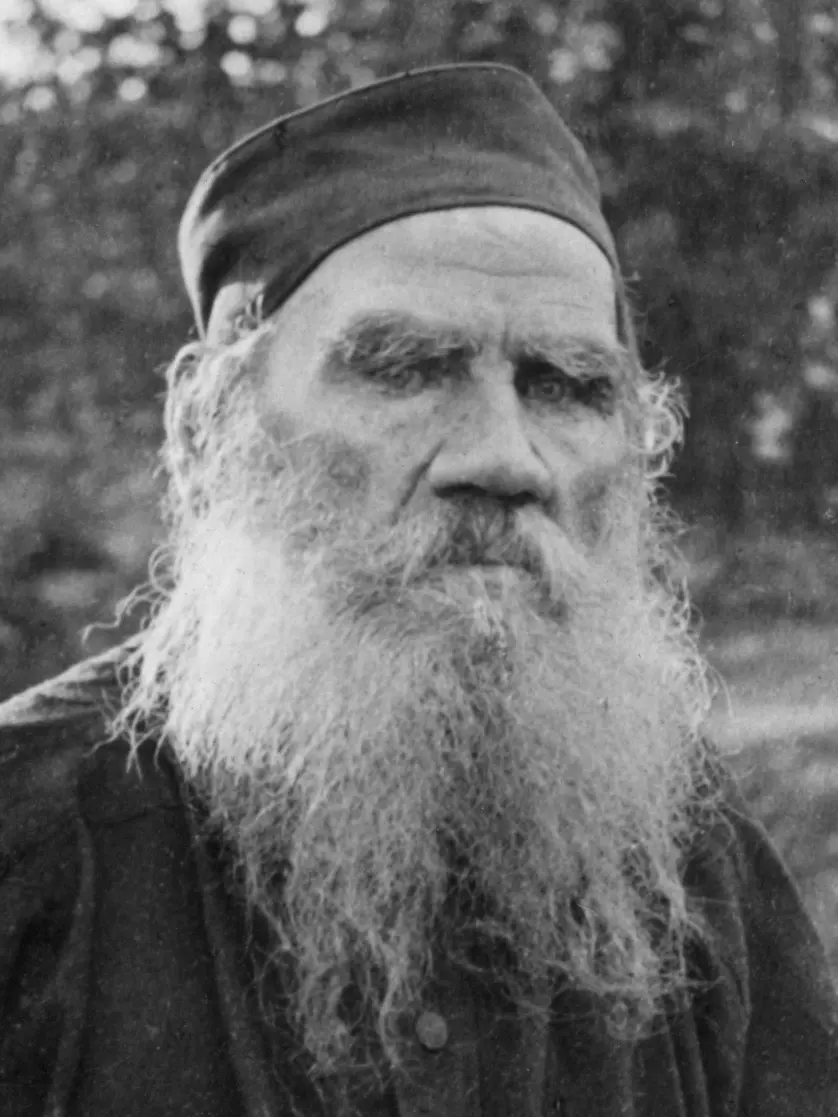
The text is a short parable, a simple story that teaches a moral lesson, by the Russian writer Leo Tolstoy (1828–1910), best known for his great novels War and Peace and Anna Karenina. In his later years Tolstoy wrote many short, plain stories for ordinary people, about forgiveness, greed and goodness. This one appeared in 1885; its Russian title means “Little Girls Are Wiser Than Old Men”. It comes to us in an English translation, which is why the girls’ clothes have old-fashioned names (frocks, kerchiefs) and the people say lassies and folly.
The story, part by part
1. Easter in the village
It is an early Easter, the Christian festival in spring. The snow has only just stopped being good for sledging (sliding downhill on a sled); snow still lies in the yards, and melting water runs in streams down the village street. Between two farmhouses, the dirty water from the farmyards has made a large puddle.
2. Two girls, two new frocks
Two little girls from different houses meet there. Malasha is very small; Akoulya is a little bigger. Their mothers have dressed them both in new frocks (dresses) for the festival, one blue, one yellow, with red kerchiefs (scarves) on their heads. Coming home from church, they show each other their finery (best clothes), and then begin to play.
The fancy takes them (they suddenly want) to splash in the water. Malasha is about to walk in, shoes and all, but Akoulya, the sensible older one, stops her: Malasha’s mother would scold her. They both take off their shoes and stockings, hold up their skirts, and walk towards each other through the puddle. Malasha is scared when the water reaches her ankles; Akoulya tells her it won’t get deeper, and warns her not to splash.
3. The splash
Just as Akoulya says “don’t splash”, Malasha stamps her foot down, and muddy water splashes all over Akoulya’s frock, and into her eyes and nose. Akoulya, angry at the stains, runs after Malasha to hit her. Malasha, frightened, scrambles (climbs quickly and clumsily) out of the puddle to run home.
Why did Akoulya get angry?
Pick an answer to see why.
4. The grown-ups take over
Akoulya’s mother passes by and scolds her daughter for her dirty frock. Akoulya says Malasha did it on purpose. At that, Akoulya’s mother grabs Malasha and hits her on the back of the neck. Malasha howls so loudly that the whole street hears, and her mother rushes out to ask why her girl is being beaten. The two mothers begin abusing each other (shouting insults). The men come out, a crowd gathers, and everyone shouts while nobody listens. Someone pushes someone else, and the quarrel is about to become a fight.
5. The grandmother’s words
Akoulya’s old grandmother steps in among them to calm them: is it right to behave like this, and on a holy day? It is a time for rejoicing, not for such folly (foolishness). But nobody listens; they nearly knock her off her feet.
6. The channel
Meanwhile the two girls have forgotten the whole thing. Akoulya wipes the mud off her frock and goes back to the puddle. With a stone she starts scraping a channel in the earth, so that the water can run out into the street. Malasha joins her and helps dig with a chip of wood. Just as the men are starting to fight, the water bursts through the channel and runs down the street, right towards the crowd. The girls run after it, one on each side, shouting and laughing, watching the chip float along, straight into the group of men.
7. Who is wiser?
The grandmother points to them: aren’t the men ashamed, fighting over these lassies (girls), when the girls themselves have forgotten all about it and are playing happily together? The children are wiser than the grown-ups. The men look at the girls, feel ashamed, laugh at themselves, and go home.
The story ends with a line from the Bible (the Gospel of Matthew), words of Jesus: unless you turn and become like little children, you will never enter the kingdom of heaven.
Words from the story
| Word | Meaning here |
|---|---|
| sledging | sliding over snow on a sled |
| homestead | a farmhouse with its land and buildings |
| frock | a girl’s or woman’s dress |
| kerchief | a square of cloth worn on the head or round the neck |
| finery | your best and most beautiful clothes |
| fancy | (noun) a sudden wish; (verb) to want or imagine |
| scramble | to climb or move quickly and awkwardly, using your hands |
| howl | to cry loudly, like an animal in pain |
| abuse | to speak to someone rudely and insultingly; to treat someone badly |
| folly | foolishness; a stupid act |
| chip | a small piece broken off wood or stone |
| pacify | to make someone calm |
| lassie | (Scottish and northern English) a girl |
| rejoicing | great happiness, shown by many people together |
A. Replace the words
Replace the words in bold with these words: abusing, finery, lassies, scrambled, fancy, folly, rejoicing, chip.
- a.The women were dressed in their best clothes to go to the party.
- b.Do you sometimes imagine living in a luxurious house?
- c.When Shila was chased by a dog, she managed to climb quickly onto the wall.
- d.The young girls impressed everyone with their performance.
- e.It was his stupidity to leave the bike unlocked in the street.
- f.Each one blamed the other for cheating. Soon they started mistreating each other.
- g.Could you please give me a piece of paper? I can’t find the duster.
- h.The farmers danced with happiness when it rained after a long drought.
Answer
B. Choose the correct answers
The two little girls were dressed in new frocks probably because …
Pick an answer to see why.
When Malasha was going to step into the puddle, …
Pick an answer to see why.
While running home, Malasha was caught by …
Pick an answer to see why.
Akoulya’s grandmother …
Pick an answer to see why.
While the men were busy fighting, the two girls …
Pick an answer to see why.
At the end, the men …
Pick an answer to see why.
C. Answer the questions
How were the girls dressed?
Answer
Where did the girls begin to play?
Answer
Why did Akoulya get angry with Malasha?
Answer
Why did the crowd gather in the street?
Answer
How did Akoulya’s grandmother try to calm down the crowd?
Answer
Why are the girls called wiser than the men?
Answer
What lesson do you learn from the story?
Answer
D. A story from your childhood
Remember a similar incident from your childhood and share it in class.
A model answer
Pronunciation: sentence stress
In English, the words in a sentence are not all equally loud. The important words, those that carry the meaning, are stressed: louder, longer, higher. The small grammar words between them are said quickly and softly. This gives spoken English its rhythm, like a drum beat on the stressed words.
The mark ˈ goes before the stressed syllable of each stressed word:
- The ˈman was ˈhappy to reˈceive the ˈgift.
- I ˈwant you to ˈstart the ˈparty.
- I ˈdidn’t ˈmean ˈthat.
- ˈWhere did he beˈgin his ˈschooling?
- ˈWhat did you ˈdo ˈyesterday?
Nouns, main verbs, adjectives, adverbs, question words and negatives are stressed; a, the, to, was, you, did, his are not. The Extra bit at the end of the unit lists them.
Mark the stressed syllables in these sentences.
- a.Have a seat, please.
- b.The story was interesting, but it did not contain enough messages.
- c.Would you like a cold drink?
- d.What did you tell her this morning?
- e.Don’t take it so easy. He won’t give up so quickly.
- f.Most people are fully aware that motorcycles can be dangerous to ride.
- g.“Does she work with you?” “Yes, she does.”
- h.He bought a red car for his daughter.
- i.I am Brazilian.
- j.We are not familiar with this new computer program.
Answer
Speaking: agreeing and disagreeing
When people plan something together, they agree and disagree. Doing it politely keeps the plan going.
| To agree | To agree in part | To disagree politely |
|---|---|---|
| I agree with you. | You may be right, but… | I don’t think that’s right. |
| That’s a great idea. | I agree up to a point. | I’m afraid I disagree. |
| Exactly! / Absolutely. | That’s true, but have you thought about…? | I see what you mean, but… |
| I couldn’t agree more. | Yes, but on the other hand… | I’m not sure about that. |
A. The Youth Club’s fair
In the model conversation, the President of a Youth Club asks whether everyone agrees to hold a fair to raise money. Surya agrees: the club needs money for prizes. Asmita disagrees politely: not all students will spend money at a fair, so they should look for other ways too. Notice that Asmita gives a reason and offers a way forward; that is what makes a disagreement useful, not rude.
B. Five situations
In groups of three, have similar conversations about these situations.
- a.The headteacher wants students to agree to extra classes.
- b.The zoo manager asks the committee members about adding a lion to the zoo.
- c.The ward chairperson wants everyone to take part in a cleanliness campaign.
- d.The class monitor asks everyone to make a job chart and follow it.
- e.The English teacher wants every student to give a presentation in class regularly.
Model conversations
Grammar I: Negatives and subject–verb agreement
Affirmative and negative
An affirmative sentence says that something is so; a negative sentence says that it is not. To make a sentence negative:
- Put not after the first helping verb: She can swim. → She cannot swim. They have finished. → They have not finished.
- If there is no helping verb, add do / does / did + not and put the main verb in its plain form: Manisha has a bath daily. → Manisha does not have a bath daily. (The tense is shown once, in does or did: ✗ did not liked.)
- Change the partner words that go with negatives: some → any, already → yet, too → either, somebody → nobody.
- For an order, put Do not / Don’t first: Have a cup of tea. → Do not have a cup of tea. For let’s: Let’s not listen to the music.
| Affirmative | Negative |
|---|---|
| He sometimes goes swimming. | He does not always go swimming. |
| Manisha has a bath daily. | Manisha does not have a bath daily. |
| Have a cup of tea. | Do not have a cup of tea. |
| I have already met him. | I have not met him yet. |
| Only he can solve it. | None but he can solve it. |
| Only this medicine could save him. | Nothing but this medicine could save him. |
| I want a little milk. | I do not want much milk. |
| Let’s listen to the music. | Let’s not listen to the music. |
| You must buy it. | You need not buy it. |
| I liked it, too. | I did not like it, either. |
| He had to do the job on time. | He did not have to do the job on time. |
Most of these make the opposite statement. A few are different: only → none but / nothing but, sometimes → not always and a little → not much say the same thing (or nearly) in negative words. Only he can solve it and None but he can solve it both mean that nobody else can.
Change into negative: “Bishal has already paid the fee.”
Pick an answer to see why.
Which sentence means the same as “Only Pasang knew the way”?
Pick an answer to see why.
B. Make the sentences negative
Change into the negative.
- a.My sister lives with my parents.
- b.Maryam knows the answer well.
- c.I want to leave now.
- d.Anusha agrees with me.
- e.The boy killed the cockroach with his shoe.
- f.His father recognized me at once.
- g.He apologized for his misconduct.
- h.He ate a few mangoes.
- i.We sold a little honey.
- j.The rich are sometimes happy.
- k.Kanchan frequently visits me.
- l.Shailesh bought several books.
- m.Garima let me use her toilet.
- n.All of them can help her.
Answer
Subject–verb agreement
The verb must agree with its subject: a singular subject takes a singular verb (is, was, has, goes), a plural subject a plural verb (are, were, have, go). You learned the basic rule in earlier grades. These are the cases that catch people out:
| Rule | Example |
|---|---|
| A number of + plural noun = many: plural verb | A number of soldiers were injured. |
| The number of = the number itself: singular verb | The number of soldiers is not known. |
| A collective noun for one group: singular | A pack of lions was approaching. The team is ready. |
| Nouns that are always plural (two parts): plural | His trousers were torn. The scissors are sharp. |
| The + adjective for a group of people: plural | The rich are not always happy. The truthful are trusted. |
| An -ing form or to-infinitive as subject: singular | To cry is never the solution. Swimming keeps you fit. |
| Each, every, everyone, everything, either, neither: singular | Each of the dancers twirls. Everything is fine. |
| Either … or, neither … nor: the verb agrees with the nearer subject | Either she or her friends are responsible. Neither she nor I am going. |
| Here / there + verb + subject: the verb agrees with what comes after it | Here lies the body of a brave soldier. There are two letters for you. |
| with, along with, as well as, together with do not add to the subject | I, along with my colleagues, am efficient. |
| All that (= everything that): singular | All that glitters is not gold. |
The number of students in our school ……… grown every year.
Pick an answer to see why.
Neither the players nor the coach ……… happy with the result.
Pick an answer to see why.
C. Choose the correct verbs
Complete the sentences with the correct verbs from the brackets.
- a.A number of soldiers ……… (was, were, are) injured in the war.
- b.The number of dead soldiers ……… (were, is, are) not recorded in the register.
- c.A pack of lions ……… (was, were, is) approaching the camp.
- d.His pants ……… (was, were, is) torn during the match.
- e.The truthful ……… (was, is, are) always trustworthy.
- f.To cry ……… (was, are, is) never the solution to any problem.
- g.Here ……… (lie, lies, lying) the body of a brave soldier.
- h.Either she or her friends ……… (was, is, are) responsible for this accident.
- i.None ……… (were, is, are) perfect under the sun.
- j.All that ……… (glitter, glitters, glittering) is not gold.
- k.Everything ……… (is, were, are) fine when it is done correctly.
- l.Either the sculpture or the paintings ……… (was, were, are) in the museum today.
- m.Each of the dancers ……… (twirl, twirls, twirling) brilliantly.
- n.Neither she nor I ……… (were, am, are) getting the lunch special.
Answer
Writing I: A moral story
You might have read or heard some moral stories. Write your favorite one in your own words.
Hint
A model story
How to write a story
- A title that hints at the story.
- The beginning: who, where and when, in a sentence or two (Once upon a time, a poor woodcutter…).
- The problem: something goes wrong, or a character must choose.
- The events, in the order they happen, in the past tense, with a little dialogue to bring it alive.
- The ending: what the choice led to.
- The moral, in one short sentence.
Reading II: World Record
Before you read
What kind of text it is
The text is a comedy sketch, a short, funny scene for the stage or television, written as a play script. A script gives the scene (where it happens: a big TV studio), the characters, then each speaker’s name followed by their words. Words in brackets in italics are stage directions: what the actors do (The audience laughs. She pours some boiling soup into the bucket.). It makes fun of TV shows where people do silly things to break records.
The characters: Michael Moonshine, the show’s cheerful host; Albert Hargreaves, standing on one leg in a bucket of hot soup; his wife Daisy, who keeps the soup hot; Mabel Phillips, leaning on a brush; and a man with no trousers.
The sketch, part by part
1. Albert in the soup
Michael welcomes the audience to the show that gives people the chance to break a world record. Two people are trying tonight. The first, Albert Hargreaves, is standing on one leg in a bucket of hot soup. He has been there for six hours and fifty-eight minutes; the record is seven hours and three minutes. The soup is still hot because his wife, Daisy, comes every half hour with more sizzling soup, and she pours some in now. Albert screams. Michael jokes that he is glad it is Albert’s leg and not his.
2. Mabel and her brush
The second contender (competitor) is Mabel Phillips, a charming young lady, who is leaning on a brush. That’s all. The joke is that this is no achievement at all, and Michael says that poor Mabel has a long way to go.
3. The man with no trousers
A young man with no trousers walks on. Michael asks how long he has been looking for his trousers and what the world record is. The man is confused: he isn’t trying to break any record; he took his trousers off for a bath, and when he got out, they were gone. Michael chases him away: they are on television!
4. The last minute
Back to Albert, with only a minute to go. Daisy brings more blistering soup; Albert screams again. Asked how it feels, Albert says “Scorching!” Michael meant how it feels to be close to the record. Albert says he has dreamed of this moment, practiced every day, twice on Sundays. Daisy comes again, this time only to count down the last seconds: ten, nine, eight, seven… and Mabel pushes Albert. Saying “Congratulations” ironically (meaning the opposite), she watches him fall. Michael ends the show: Albert hasn’t broken a world record, but he has broken … his leg!
Words from the sketch
| Word | Meaning here |
|---|---|
| a round of applause | clapping by an audience |
| sizzling | very hot, making a hissing sound like food frying |
| blistering | hot enough to raise blisters on the skin |
| scorching | extremely hot, enough to burn |
| contender | a person competing to win something |
| charming | pleasant and attractive |
| irony | saying the opposite of what you mean, often as a joke |
| ironic, ironically | meaning the opposite of what is said |
| giggle | to laugh quietly in a silly or nervous way |
| exploration | a search; here, a funny, grand word for looking for trousers |
A. Word classes
Complete the table with the words in other word classes.
| Verb | Noun | Adjective | Adverb | |
|---|---|---|---|---|
| 1 | ironize | irony | ironic, ironical | ironically |
| 2 | charm | charming | ||
| 3 | scorch | scorchingly | ||
| 4 | sizzle | |||
| 5 | beautify | |||
| 6 | purely | |||
| 7 | taste | |||
| 8 | surprise |
Answer
B. True or False
Two people are going to perform tonight to try to break world records.
Pick an answer to see why.
Michael is one of the contestants.
Pick an answer to see why.
Michael also tried dipping his foot in the bucket.
Pick an answer to see why.
Albert broke the world record for standing in a bucket of hot soup.
Pick an answer to see why.
The word “sizzling” is similar in meaning to “scorching”.
Pick an answer to see why.
The program is a comedy show.
Pick an answer to see why.
C. Answer the questions
Who is Mabel Phillips?
Answer
What is she trying to do?
Answer
How do they keep the soup hot?
Answer
How far was Albert from breaking the record?
Answer
How did the man lose his trousers?
Answer
Why do you think Mabel pushed Albert?
A model answer
D. Is it fair?
How would you feel if somebody interrupted you just as you were about to win? Do you think it is ethical?
A model answer
Listening: lessons from eagles
A. Before you listen
- a.Why do you think eagles are different from other birds?
- b.Write two features of eagles.
Answer
The textbook’s listening task is a short talk about the “mentalities” we can learn from eagles. CDC’s own recording is below: read the matching task first, then listen, as many times as you need.
B. The textbook’s audio: answers
Match each statement about eagles with its message. One has been done for you (a – iii).
Statements: a. Eagles fly alone. b. Eagles do not move their focus from the prey. c. Eagles never give in to the size or strength of their prey. d. Eagles love storms. e. Eagles do not eat dead things.
Messages: i. Don’t be afraid of challenges; face them. ii. Do not rely on your past success. iii. Stay away from narrow-minded people. iv. Remain focused in your life. v. Be fearless for your success.
Answer

Practice listening alone
Grammar II: Back to affirmative, and agreement in a letter
To make a negative sentence affirmative, reverse the steps: take out not (and do/does/did with it, putting the tense back on the main verb), and change the partner words back: any → some, nobody → somebody, never → always (or ever), neither … nor → both … and.
- She does not like tea. → She likes tea. (does not like → likes: the -s comes back.)
- Nobody came. → Somebody came.
- She does not have anything in her bag. → She has something in her bag.
A. Make the sentences affirmative
Change into the affirmative.
- a.Dev Narayan does not perform well.
- b.The dog did not bite Fatima.
- c.A room in the flat did not need painting.
- d.All the students did not have to sit the re-examination.
- e.He never drinks wine.
- f.Don’t pour much water into the curry.
- g.Nobody came to me.
- h.There is not anyone in the locality living in luxury.
- i.He does not have a bath every day.
- j.Neither the boy nor the man goes to school.
- k.She does not have anything in her bag.
- l.He does not work with us.
Answer
B. A letter with agreement errors
Rewrite the letter, correcting the errors in subject–verb agreement.
Dear Hiring Manager,
I feel that I am the ideal candidate for the position of Communication Manager in your company. I have three years of experience as a receptionist in a company that are similar to yours. My phone skills and written communication is excellent. These skills, and others that I have learned on the job, helps me understand that every person in a company help make the business a success. At my current job, the team always say that I am very helpful. Everyone appreciate when I go the extra mile to get the job done right. My current employer and co-workers feels that I am an asset to the team. I along with my colleagues are efficient and organized. Is there any other details about me that you would like to know? If so, please contact me. Here are my résumé. You can reach me by email or phone. I looks forward to speaking with you in person.
Sincerely yours,
Adara Banu
Answer
Writing II: Condolence and sympathy
When someone dies, people send a message of condolence: words of sorrow to the family and friends. When someone is ill or hurt, we write a letter of sympathy, sharing their pain and wishing them well. Both must be sincere, short and kind.
A. A message of condolence
The model is a message from the Newah Organization of America (NOA) on the death of Satya Mohan Joshi (12 May 1920 – 16 October 2022), the much-loved Nepali scholar, writer and historian, who died at the age of 102.
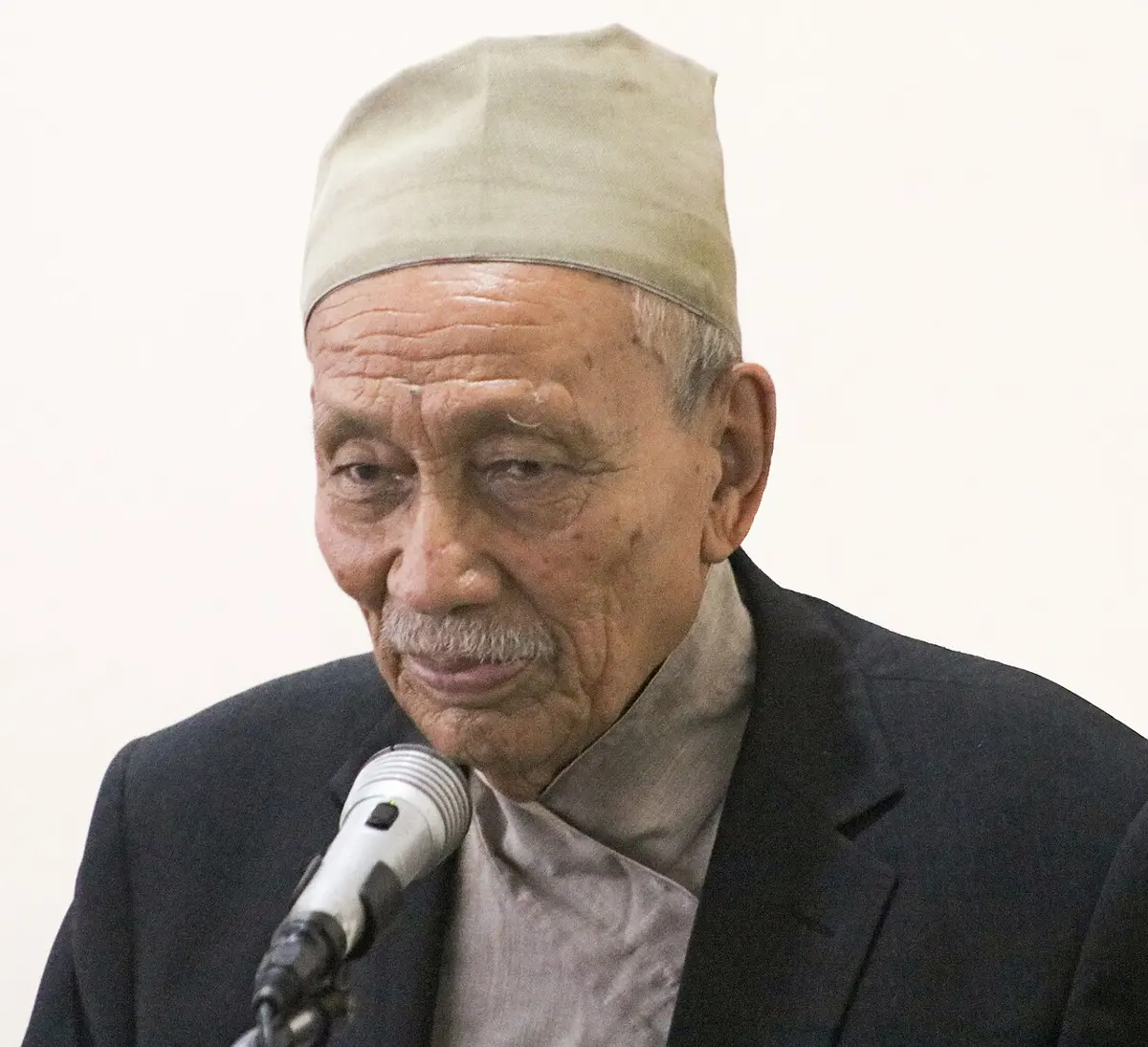
It is built in three paragraphs:
- The news and who he was. The organization is deeply saddened by his passing; it calls him a centenarian (someone over 100), a legend, a well-wisher of the organization, a three-time winner of the Madan Puraskar, Nepal’s best-known literary prize, and the author of more than 60 works on Nepal’s literature, culture and history.
- What he meant to the writers. He was their chief guest and keynote speaker at their 11th National Convention in May 2012 and at their Nepal Sambat 1141 celebration in November 2020. They grieve the loss of a great member of their community.
- Condolences and a prayer. They join the nation in mourning, offer their heartfelt condolences to the bereaved (grieving) family, keep the family in their thoughts and prayers, and pray for the eternal peace of the departed soul.
The title, Heartfelt Condolences!, the name, a photo, and the dates of birth and death come first; the sender’s name comes last.
| Useful phrases | |
|---|---|
| opening | We are deeply saddened to learn of the passing of… / It is with great sorrow that we… |
| about the person | …will always be remembered for… / His (her) contribution to… is unparalleled. |
| condolences | We extend our heartfelt condolences to the bereaved family. / Our thoughts and prayers are with… |
| closing | May his (her) soul rest in eternal peace. / Let us pray for the departed soul. |
B. Your message: Jayananda Lama
Write a message of condolence from these outlines: Jayananda Lama (1956–2022 A.D.) … passed away at his residence, Kaushaltar, Bhaktapur … senior folk singer and actor … incredible loss for the Nepali art sector … Kalakate Kainyo, Herda Ramro, Chuin Chuin Chuikane Joota, Mulako Chana … his super hit folk songs … acted in more than a hundred movies … heartfelt condolences.
A model message
C. A letter of sympathy
Imagine that you and your friend Purna work in a factory. He broke his hand while working with a machine. Write a letter of sympathy using these clues: Purna, 28 years old – working together for 3 years – regular and dutiful – a mechanical failure – hand broken on 20 October 2022 – in hospital under treatment – wish a speedy recovery.
A model letter
How to write them
| Message of condolence | Letter of sympathy | |
|---|---|---|
| when | after a death | after an illness, accident or loss |
| to whom | the family, or published for the public | the person, or their family |
| layout | a title, the name (and photo) and dates, the message, the sender | a letter: your address, date, Dear …, paragraphs, a warm close (Yours sincerely, With best wishes), your name |
| content | the sad news; who the person was and what they did; condolences and a prayer | what you heard and that you are sorry; something good about the person; an offer of help; good wishes |
| tone | formal and respectful | warm and personal |
Project work
Sentence stress
In spoken English, some words in a sentence are stressed and some are not. The one stressed most receives the sentence stress, and it often decides what the sentence means:
- They usually perform at public places. (public, not private)
- Rita is spending her holiday in England. (there, not anywhere else)
Content words are usually stressed: they still mean something on their own, out of the sentence. Grammatical words (function words) are usually not stressed.
| Content words (stressed) | Examples |
|---|---|
| main verbs | sell, give, constitute |
| nouns | car, music, Mary |
| adjectives | red, big, interesting |
| adverbs | quickly, why, never |
| negative contractions | don’t, aren’t, can’t |
| Grammatical words (unstressed) | Examples |
|---|---|
| pronouns | he, we, they |
| prepositions | on, at, into, behind |
| articles | a, an, the |
| conjunctions | and, but, because |
| auxiliary (helping) verbs | do, be, have, can, must |
But even a grammatical word can be stressed when it carries the point: “They’ve been to Mongolia, haven’t they?” “No, they haven’t, but we have.” Here the speaker wants to make clear who did it. And be, even as a main verb, is usually not stressed: I am Brazilian.
“I didn’t say she took the money.” With the stress on she, what does the speaker mean?
Pick an answer to see why.
Exercise
SEE-style practice on this unit. Try each one as in the exam, then open the answer.
Put these events of “Wisdom of Little Girls” in the order in which they happen.
- a.Akoulya’s mother strikes Malasha.
- b.The men go home, ashamed.
- c.The girls take off their shoes and stockings.
- d.Akoulya starts digging a channel with a stone.
- e.Malasha splashes Akoulya’s frock.
- f.The grandmother tries to calm the crowd.
Answer
Change as instructed in brackets.
- a.She has already finished her homework. (Make negative.)
- b.Only the captain knew the plan. (Begin with “None but…”.)
- c.You must wear a uniform on Saturdays. (Make negative, meaning there is no obligation.)
- d.I liked the film, too. (Make negative.)
- e.Nobody helped the old woman. (Make affirmative.)
- f.Neither Hari nor Sita was late. (Make affirmative.)
Answer
Choose the correct verbs.
- a.A number of trees (has / have) been cut down near the school.
- b.Each of the girls (has / have) a new frock.
- c.The rich (is / are) not always generous.
- d.Either the teacher or the students (has / have) to clean the board.
- e.Mathematics (is / are) my favorite subject.
- f.Here (come / comes) the bus.
Answer
Read the text and answer the questions.
A school in Kavre once held an “honesty week” for its exams: every student signed a promise not to cheat, and no teacher stood in the exam hall. At the end of the week, only two students out of four hundred were found to have copied, and both of them admitted it themselves. The principal said that trust had worked better than any invigilator.
- a.Where was the school?
- b.What did every student sign?
- c.What was unusual about the exam hall?
- d.How many students copied?
- e.What did the principal conclude?
Answer
Write a letter of sympathy, in about 150 words, to a friend whose house was damaged by a landslide during the monsoon.
Hint
A model letter
Practice every question in the book, and keep track of the ones you miss →
A companion to your textbook, not a replacement for it: study from the book your school uses, and where the two differ, follow your teacher. Found a mistake? Please tell us.